The busiest minutes at a vet clinic happen at the front door. Owners arrive with anxious animals. Some have appointments, some are walk-ins, and a few need urgent care right now. The front desk has to greet, sort, and reassure all at once, while the phone keeps ringing.
That first arrival sets the tone for the whole visit. A slow or confusing check-in stresses pets, frustrates owners, and pulls staff away from the animals who need them. A good vet clinic check-in app fixes that first impression by moving arrival off the counter and onto the owner’s phone.
Not every check-in tool is built for a clinic, and fewer still are built for animals. This guide covers what to look for at the moment of arrival, and how to tell a real fit from a generic sign-in screen.
What to look for in a vet clinic check-in app
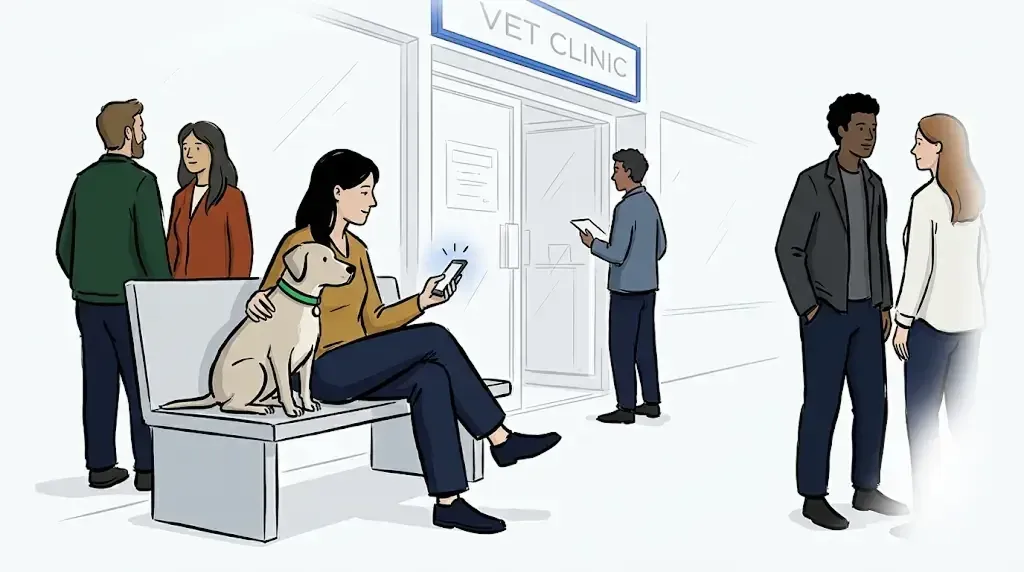
A good vet clinic check-in app lets pet owners check in from their phone or a front-desk device, adds them straight to the queue, and updates them by text while they wait, often from their car. The best options need no app download, handle walk-ins and appointments together, and let staff move urgent cases to the front.
When you compare tools, five things separate a check-in app built for veterinary clinics from a generic one.
- No app download for pet owners
- A check-in step that feeds directly into your queue
- Walk-ins and scheduled appointments in one view
- Species-aware and priority-based routing for urgent cases
- Clear wait updates by text, so owners can wait outside
No app download for pet owners
Most owners visit a clinic only a few times a year. They will not install an app for a single trip, and forcing one costs you check-ins right at the door.
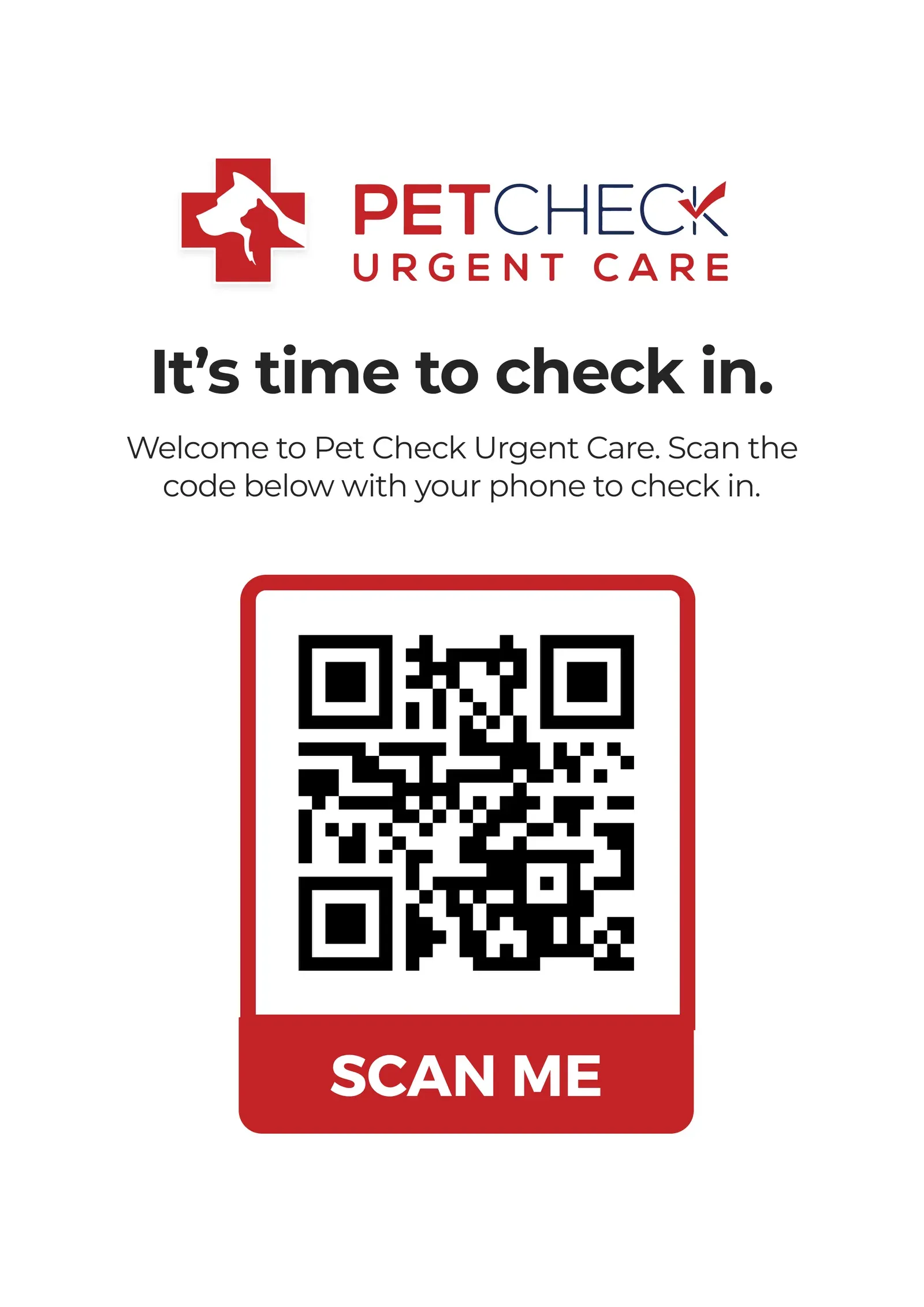
Look for a simple self check-in flow that opens in any browser. Owners scan a QR code, tap a link, or use a shared device at the front desk. The setup should work on hardware you already own, so a tablet at reception or a printed QR sign both lead to the same place. No installs, no logins, no counter pileup.
A check-in step that feeds your queue
A check-in app only helps if arrival connects to your queue instantly. When an owner checks in, they should appear on the staff dashboard in real time, ranked and timestamped, with no re-keying at the desk.
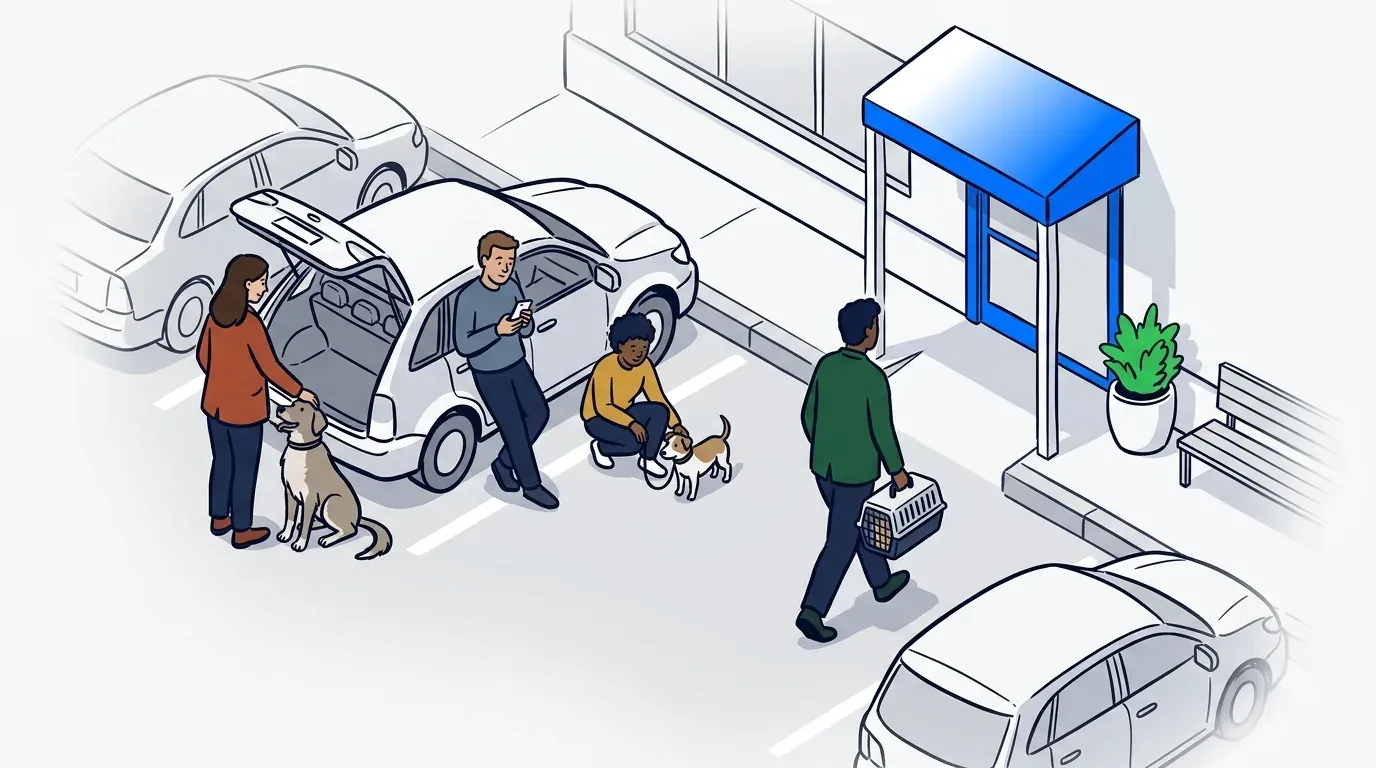
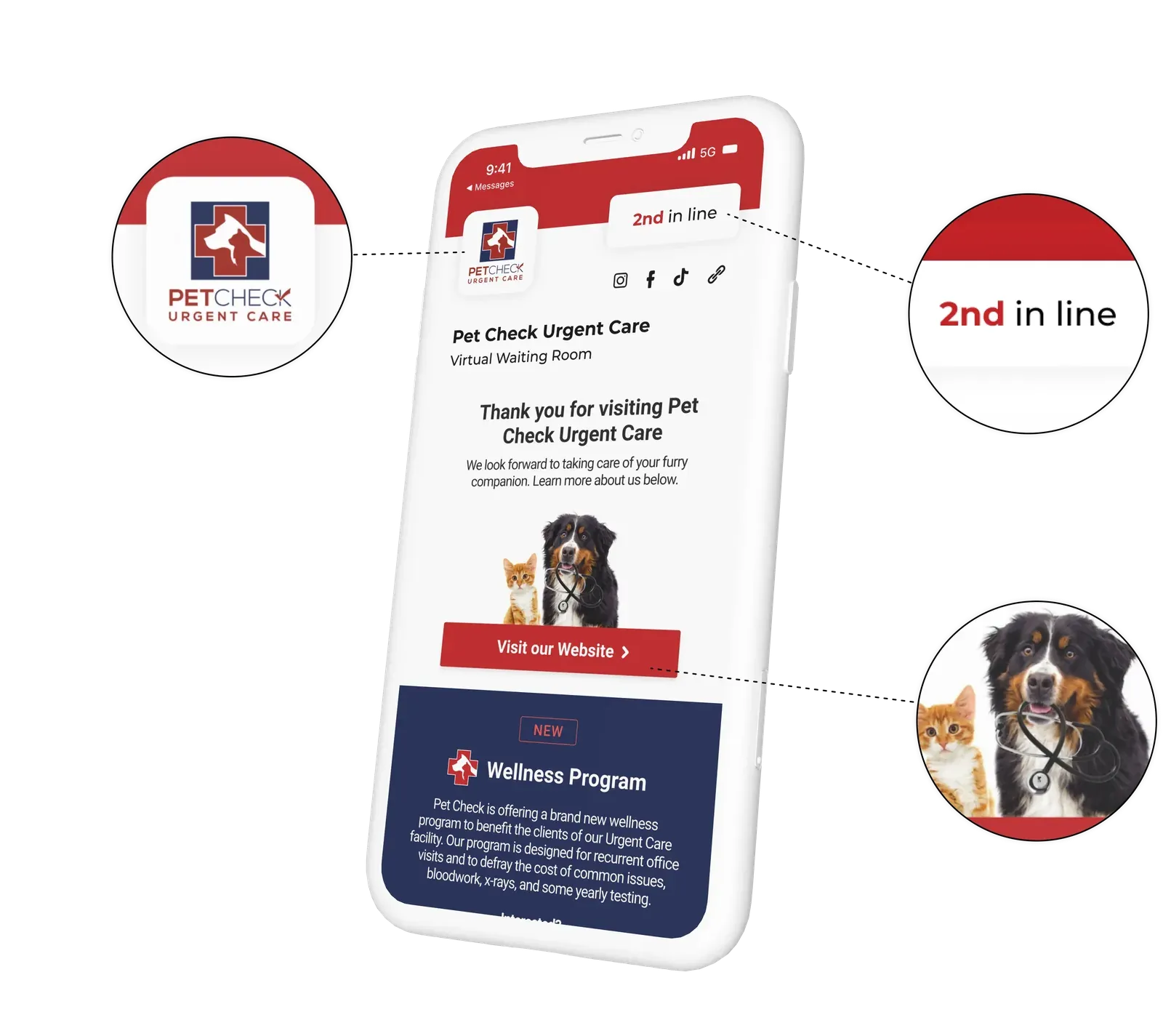
This is what makes waiting in the car possible. The owner checks in, steps outside with their pet, and gets a text when a room is ready. That single change clears the lobby and lowers stress for reactive animals. It works because check-in and the virtual waiting room are one flow, not two disconnected steps. For the mechanics behind it, see how a veterinary clinic queue system keeps patients moving.
Walk-ins and appointments in one place
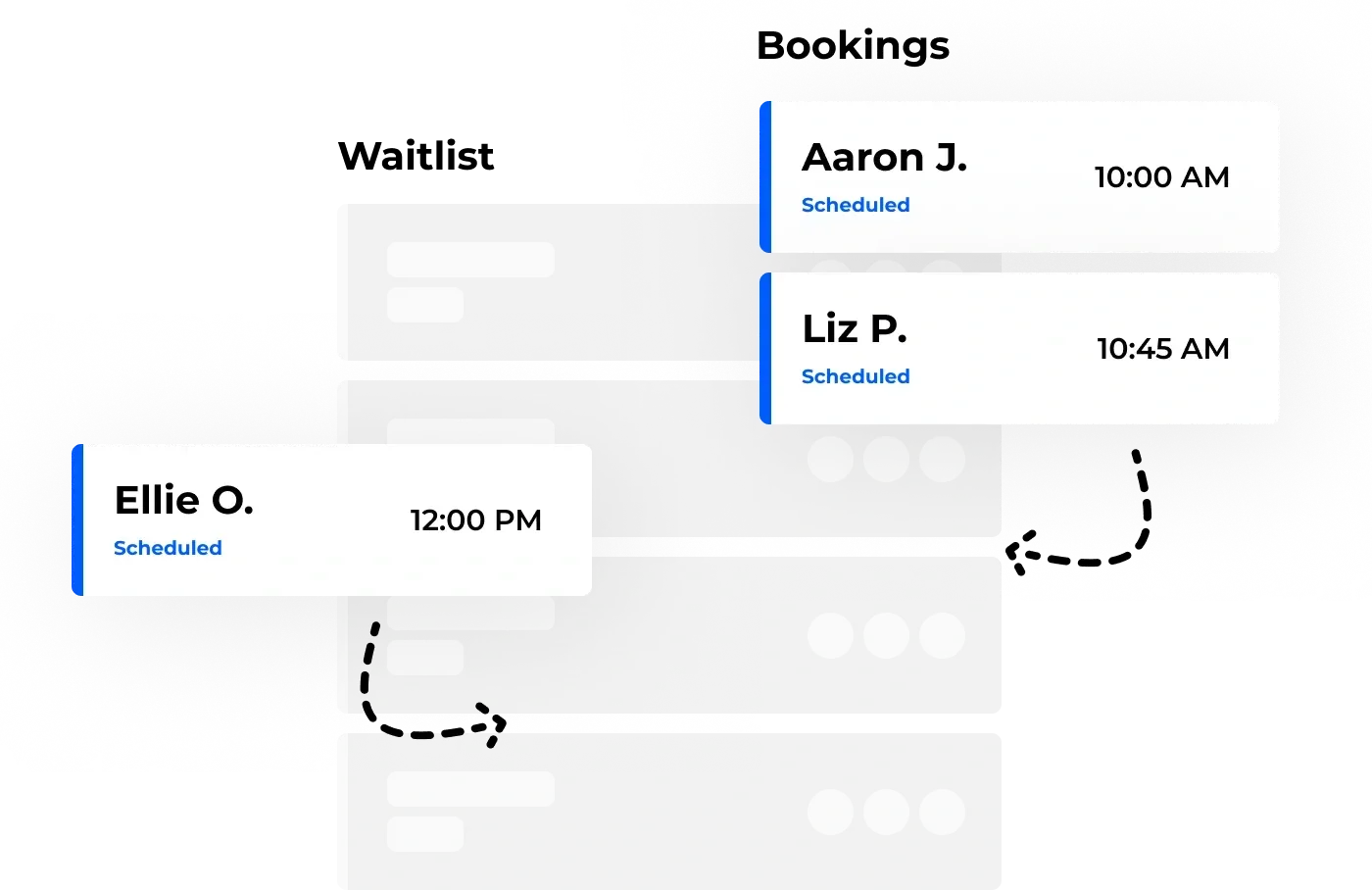
Vet clinics run a hybrid schedule, so your check-in app has to as well. A walk-in that arrives at 1:50 and a 2:00 appointment need to land in the same view, sorted correctly, without two systems fighting each other.
Look for a tool that manages walk-ins and appointments together. Staff see one ordered list, so nobody is skipped and no owner waits longer than they should because the desk lost track of who arrived when.
Species-aware, priority-based routing
This is the criterion generic tools miss. A dog and a cat in the same small lobby is a problem, and an urgent case stuck behind three routine visits is a bigger one.
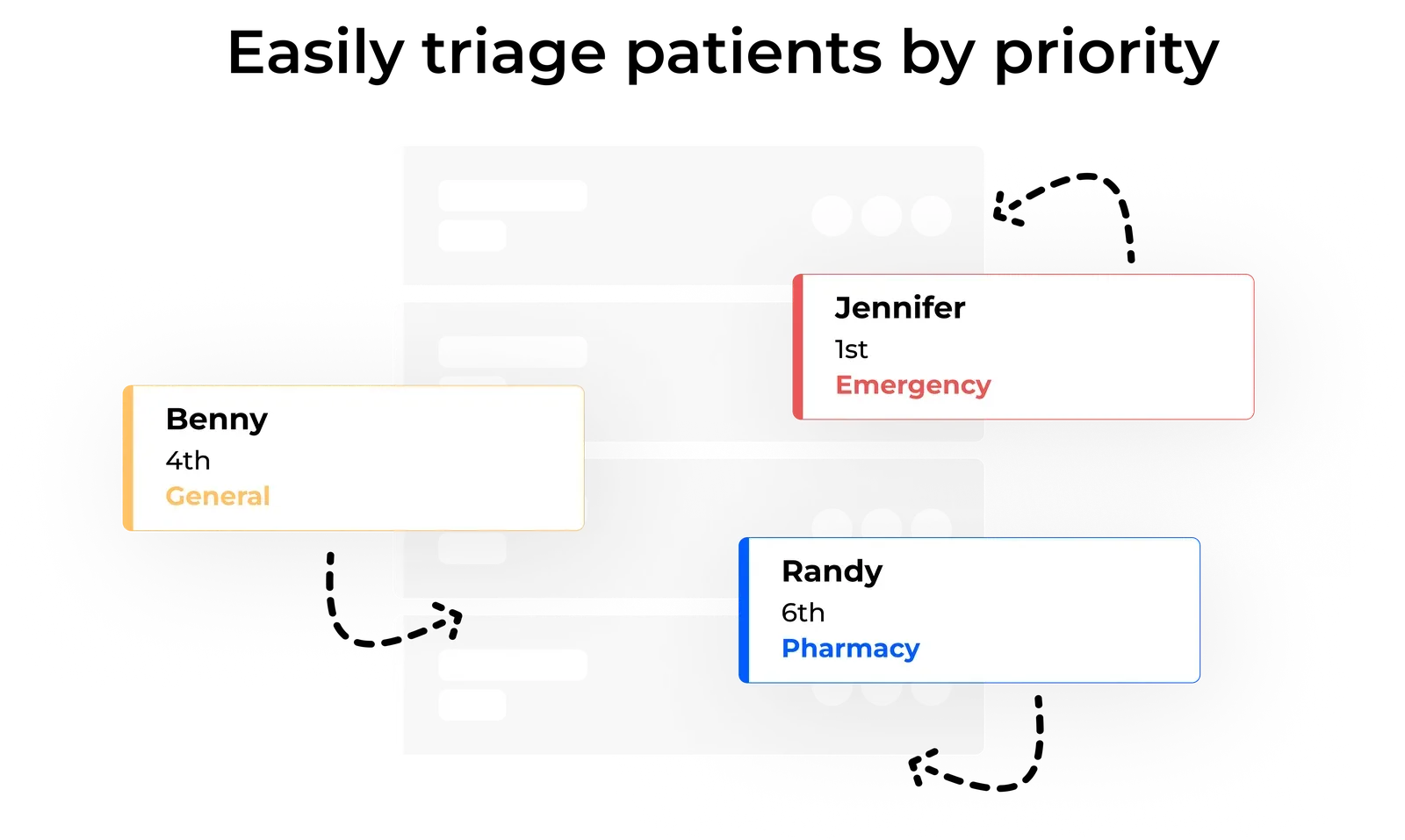
A veterinary check-in app should let staff rank by priority and move a critical patient to the front. It should also help separate arrivals by species where space allows. Ally Urgent Veterinary Care uses priority ranking to triage at intake, which improved staff efficiency and lifted their positive reviews.
The check-in step is one part of a wider software decision. For the fuller evaluation, see what to look for in a veterinary virtual waiting room and how vet clinics can choose the best waitlist app.
Why the check-in moment sets the tone
The real job of a check-in app at a vet clinic is not faster data entry. It is removing the uncertainty of arrival. An owner who knows they are checked in, knows their place in line, and knows a text is coming will relax, and a calm owner usually means a calmer animal.
That is why the check-in step is worth getting right before anything else. When arrival is uncertain, people crowd the desk to ask where they stand, which is the exact pressure that makes a lobby feel chaotic. The American Animal Hospital Association describes the front desk team as the bridge between clients and the medical team, and essential to keeping a practice running smoothly. A clear check-in answers the “how much longer” question before it gets asked, and the hidden costs of a disorganized waiting room show up in staff time, owner patience, and clinical accuracy.
Choosing the right fit for your clinic
The best vet clinic check-in app is the one your owners can use without thinking and your staff barely have to touch. Prioritize no-app access, a check-in step that feeds your queue in real time, one view for walk-ins and appointments, and routing that respects urgency and species.
Get the front door right and the rest of the visit runs calmer. See how NextMe handles arrival and the queue for veterinary clinics, and try it with your own front-desk flow.