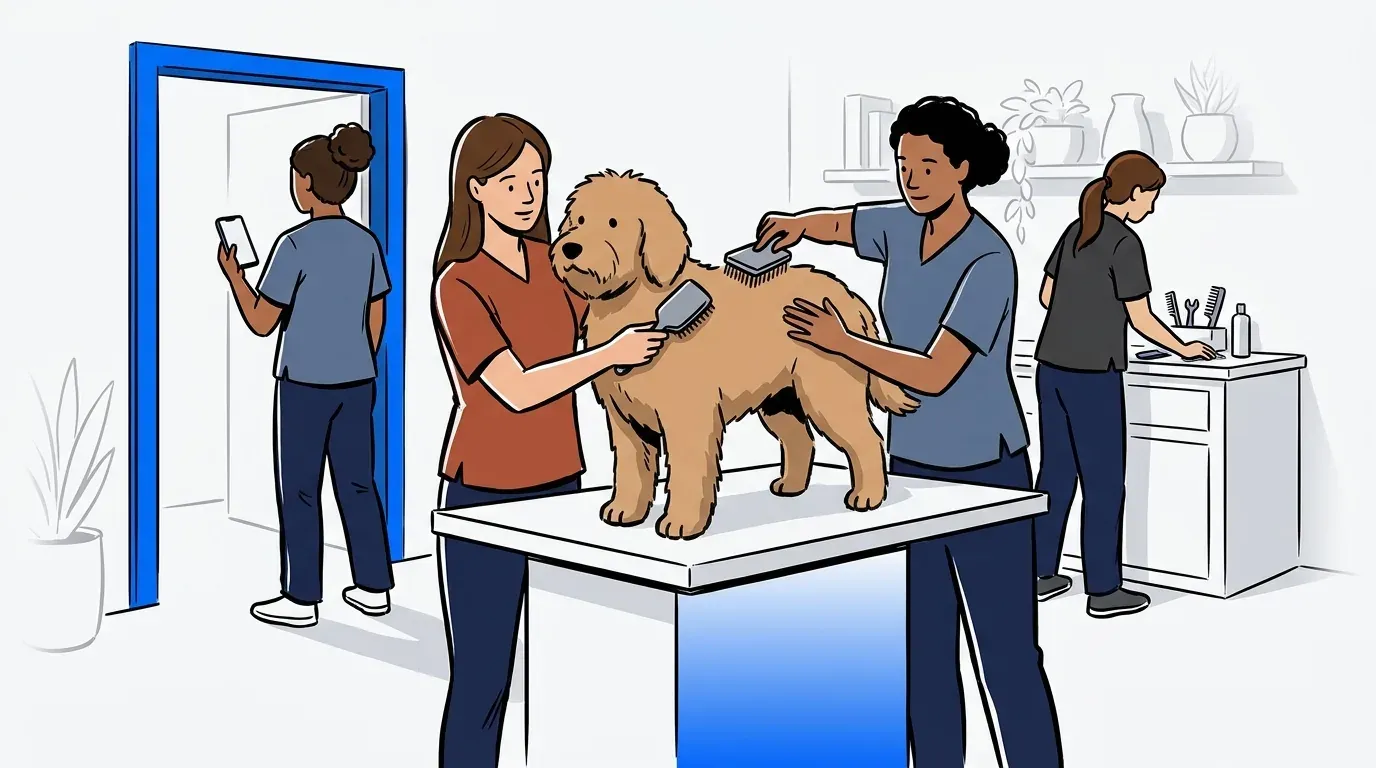
Your front desk handles two different jobs at once. One is clinical: appointments, walk-ins, and the occasional urgent case that jumps the line. The other is grooming, and it doesn’t behave the same way. A groom is booked in advance, runs for hours, and creates two arrival events instead of one.
Most clinics run both through the same queue and hope for the best. A vet groomer waitlist app exists for exactly this, because grooming isn’t a slower version of a clinical visit. It’s a different shape of work, and the pressure point sits somewhere a clinical queue isn’t looking.
This post covers why grooming breaks a clinical queue, where the friction actually lives, and how to run both through one system without the desk becoming the bottleneck.
What a vet groomer waitlist app actually does
A vet groomer waitlist app is queue software that tracks grooming drop-offs and pickups alongside clinical arrivals in a single list. It accounts for the booked nature of grooming, the long service window, and the second arrival when the owner comes back. Staff mark a pet as ready and the system texts the owner, so the desk stops fielding calls asking whether the dog is done.
Plenty of practices already own waitlist management software that could do this. The gap is usually configuration rather than capability. Grooming gets set up as just another appointment type when it needs its own queue behavior.
Why grooming breaks a clinical queue
Three things separate a groom from an exam, and each one strains a queue built for clinical flow.
Grooming is booked, not walk-in. A clinical queue orders pets by arrival and by priority. A grooming schedule is fixed days ahead. A 9:00 groom and an 11:00 groom aren’t competing for the next open slot, so putting them in an arrival-ordered list makes the list lie.
Grooming runs long. A wellness exam might take 20 minutes. A full groom can run 3 hours or more. Any queue that shows estimated waits will produce nonsense if it averages those together.
Grooming has two arrivals. The owner comes once to drop off and once to collect. Your clinical queue records a single event per visit. Grooming has two, and the second one isn’t scheduled.
Pickup is the event that actually matters
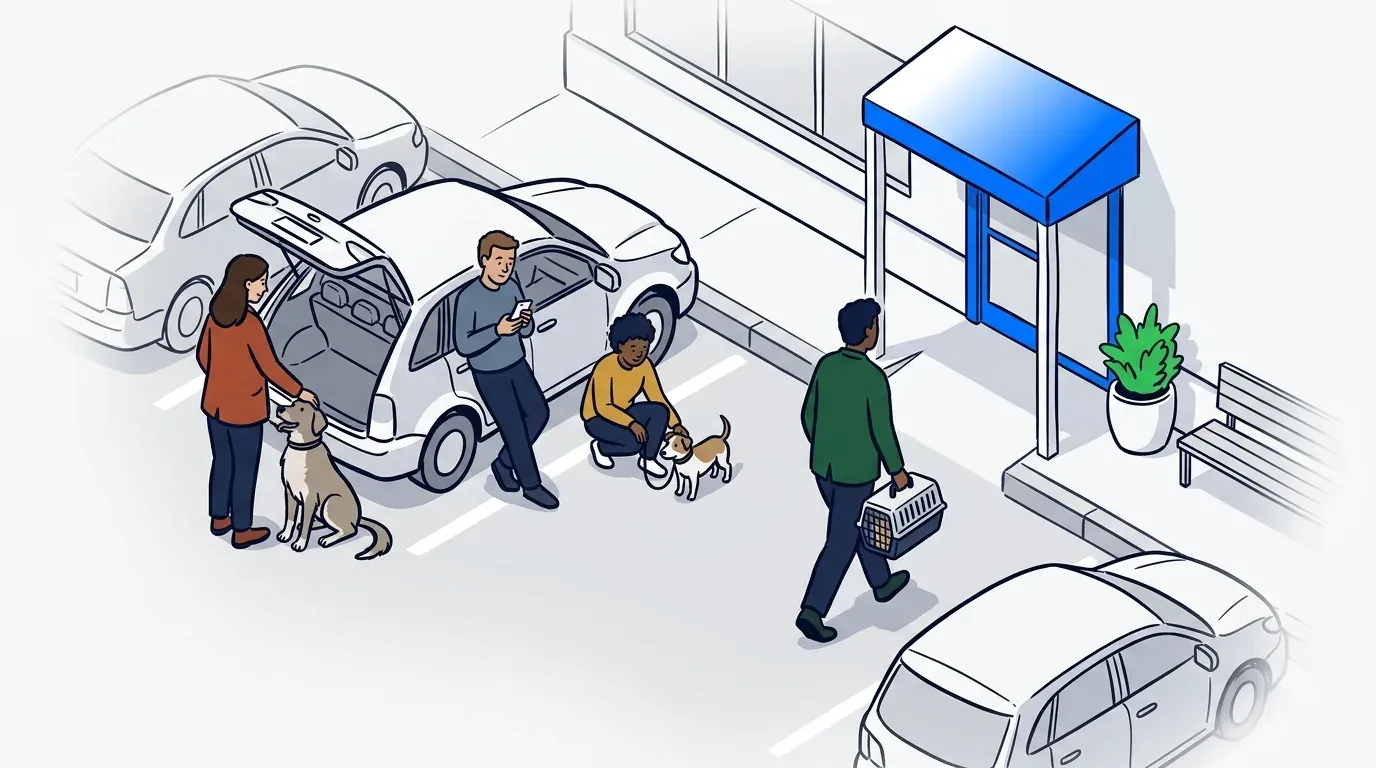
Here’s the part most practices have backwards. A clinical queue treats arrival as the event worth tracking, and everything flows from the moment the pet comes through the door. Grooming inverts that. Drop-off is the easy half. It’s scheduled, it’s predictable, and the owner is expecting it.
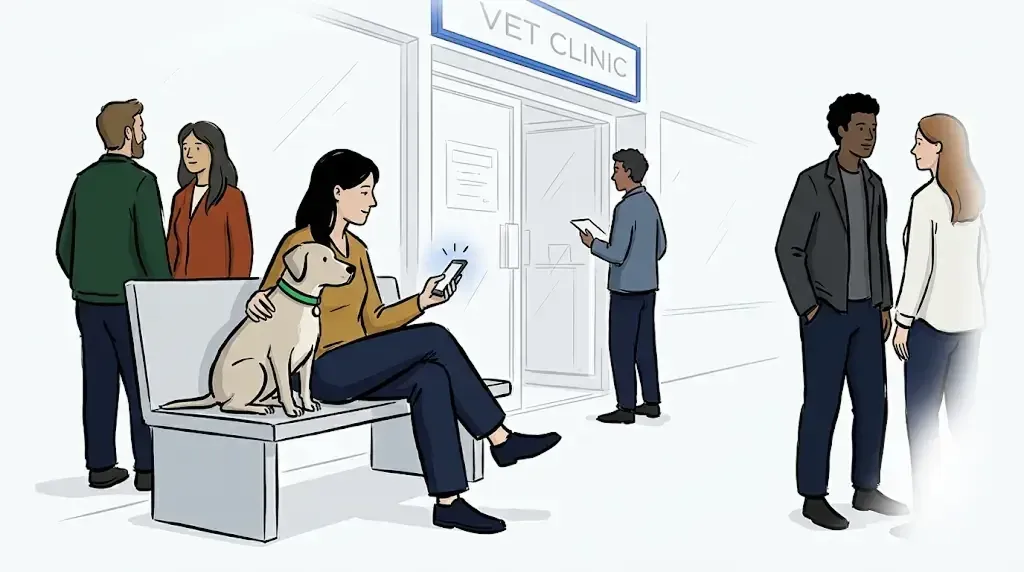
Pickup is where the friction sits. Owners return on their own schedule. Some arrive early and sit in the lobby while the pet is still on the table. Some arrive 2 hours late, and the dog waits in a kennel occupying space your afternoon needs. Neither owner knows where things stand, so they call. Then they call again.
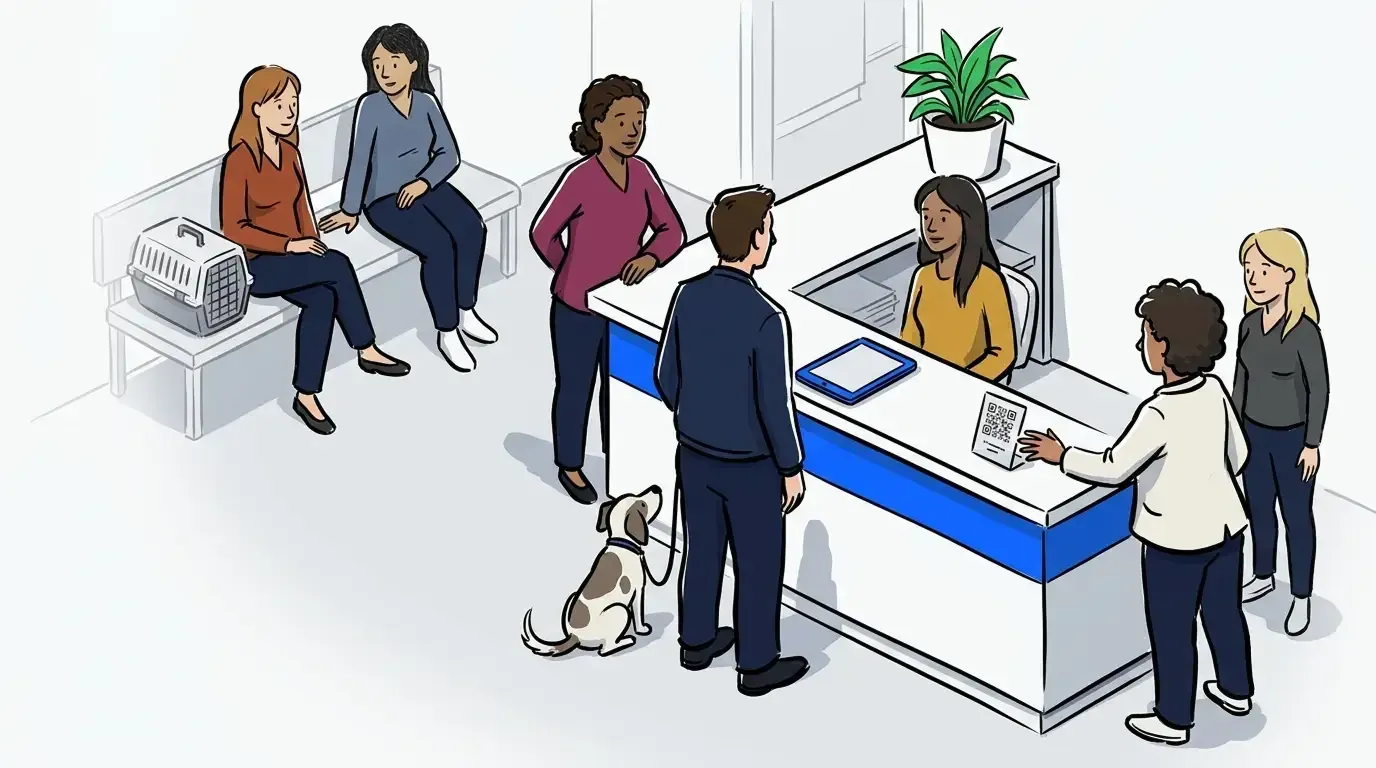
Drop-off still needs to be clean. A QR code at the door for self check-in lets owners hand off the pet and leave without queuing behind a clinical arrival. But the bigger win is treating “ready for pickup” as a tracked status that fires a notification on its own, rather than something the desk remembers between phone calls.
Notifying owners the moment the pet is ready
When a groom finishes, someone in the building knows. Usually it’s the groomer, and usually that knowledge stays with them until the desk has a free minute. That gap is the entire problem.
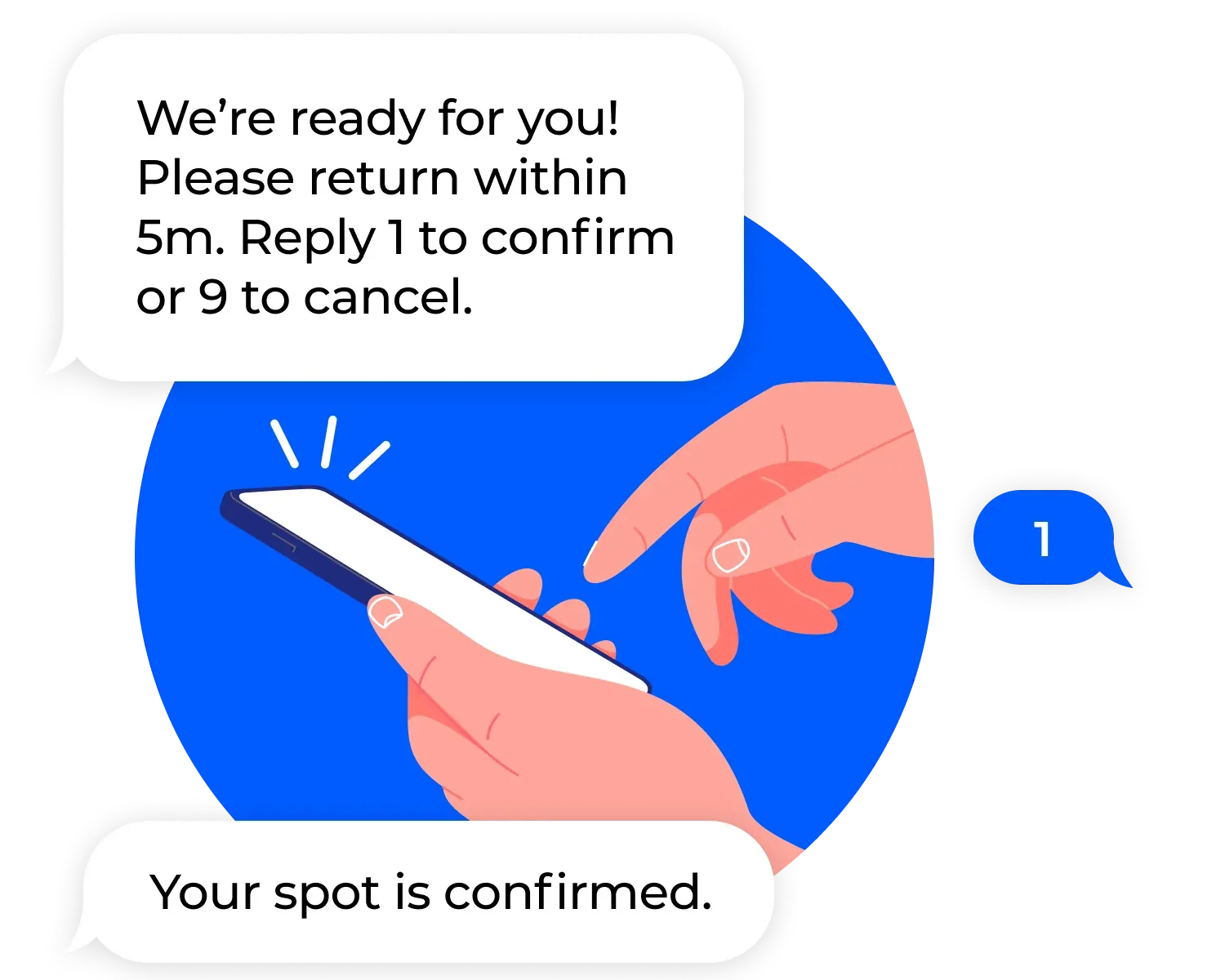
A grooming queue should let the groomer mark the pet ready and send a text straight away. Owners reply 1 to confirm they’re on the way, or 9 to cancel if something changed. The desk learns at the same moment the owner does, so nobody has to relay anything.
AAHA makes a related point about clinical visits: when the front desk knows what’s happening with a pet during the appointment, staff can prepare clients for what to expect instead of guessing. Their guidance on whole-team communication applies just as well across a 3 hour grooming window as it does across a 20 minute exam.
Running grooming and clinical visits in one view
Separate queues, one screen. That’s the setup that holds up on a busy Saturday.
Grooming gets its own queue with its own service times and its own statuses: dropped off, in progress, ready, collected. Clinical keeps the arrival-ordered behavior it needs, including the priority reordering that a veterinary clinic queue system depends on. The desk sees both without switching between screens.
Bookings covers the scheduled side, since grooming slots are set in advance and a groomer’s day is effectively a calendar. Walk-in clinical traffic keeps behaving like a queue. If that walk-in side is the messier half of your day, our guide to managing a walk-in vet clinic pairs well with this one.
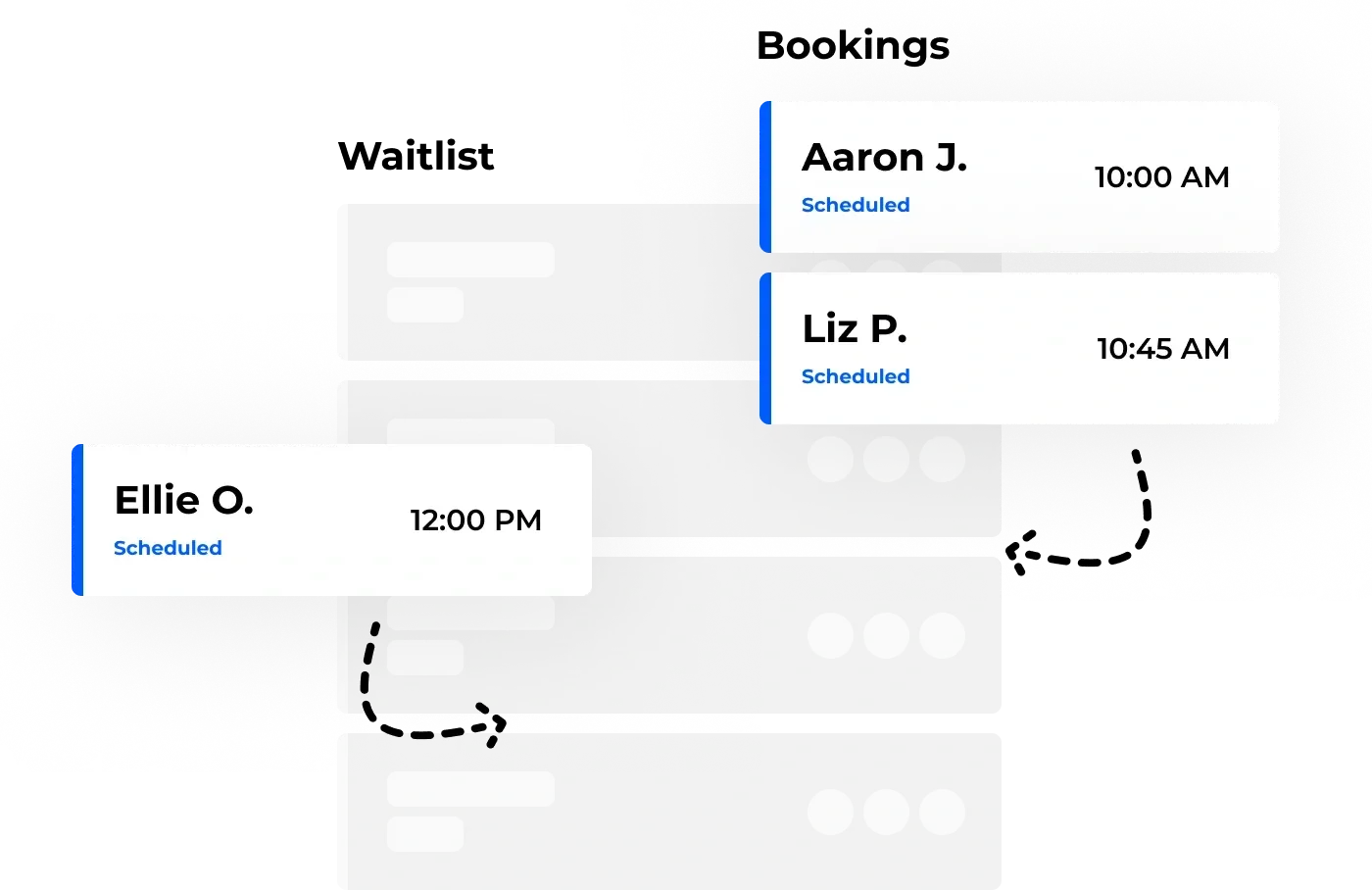
Both queues report together, which means you can see how grooming volume pushes clinical wait times rather than guessing at it. That’s the argument for queue software built for veterinary practices over a general scheduling tool: the two kinds of work stay distinct without living in separate systems.
Standalone and mobile grooming businesses
None of this needs a clinic attached to it. A grooming-only shop has the same two-arrival problem without a clinical queue beside it. Mobile groomers have their own version, where the van is the service point and the owner needs to know you’re close. The mechanics don’t change. Track the service, then notify at completion.
Grooming deserves its own queue behavior
Grooming isn’t a harder version of a clinical visit. It’s a different operating problem sharing the same front desk, and the difference is where the tracked event sits. Clinical flow hangs on arrival. Grooming hangs on completion and the notification that follows it.
Set the queue up to reflect that and the lobby settles down on its own. Owners stop calling for updates, kennels turn over faster, and the desk stops acting as a relay between the grooming room and the parking lot. See how NextMe handles both at the same front desk.