The challenge
Ally built its reputation on getting pets seen quickly. The problem was never the quality of care, it was everything that happened before the exam room: a waiting process that ran on phone calls, guesswork, and a front desk juggling all of it at once.
- Getting in line meant calling or showing up. The only ways to join the wait were a phone call or a walk-in. Both put the work on the front desk, and both meant a pet owner had to commit to the clinic before knowing what they were in for.
- Clients had no visibility into their wait. During peak hours the wait stretched longer than anyone expected, and owners sitting in the lobby had no way to tell where they stood. A wait that is merely long feels a lot worse when it is also invisible, and that frustration was showing up in feedback.
- Urgent cases had to be worked in by hand. Urgent care means the order changes constantly. Staff needed a way to move a critical case to the front without losing their place in the rest of the list or leaving other owners wondering why they had been passed over.
The solution
Ally moved its waitlist onto NextMe, so the queue lives on the client’s phone and the clinic’s screen at the same time.
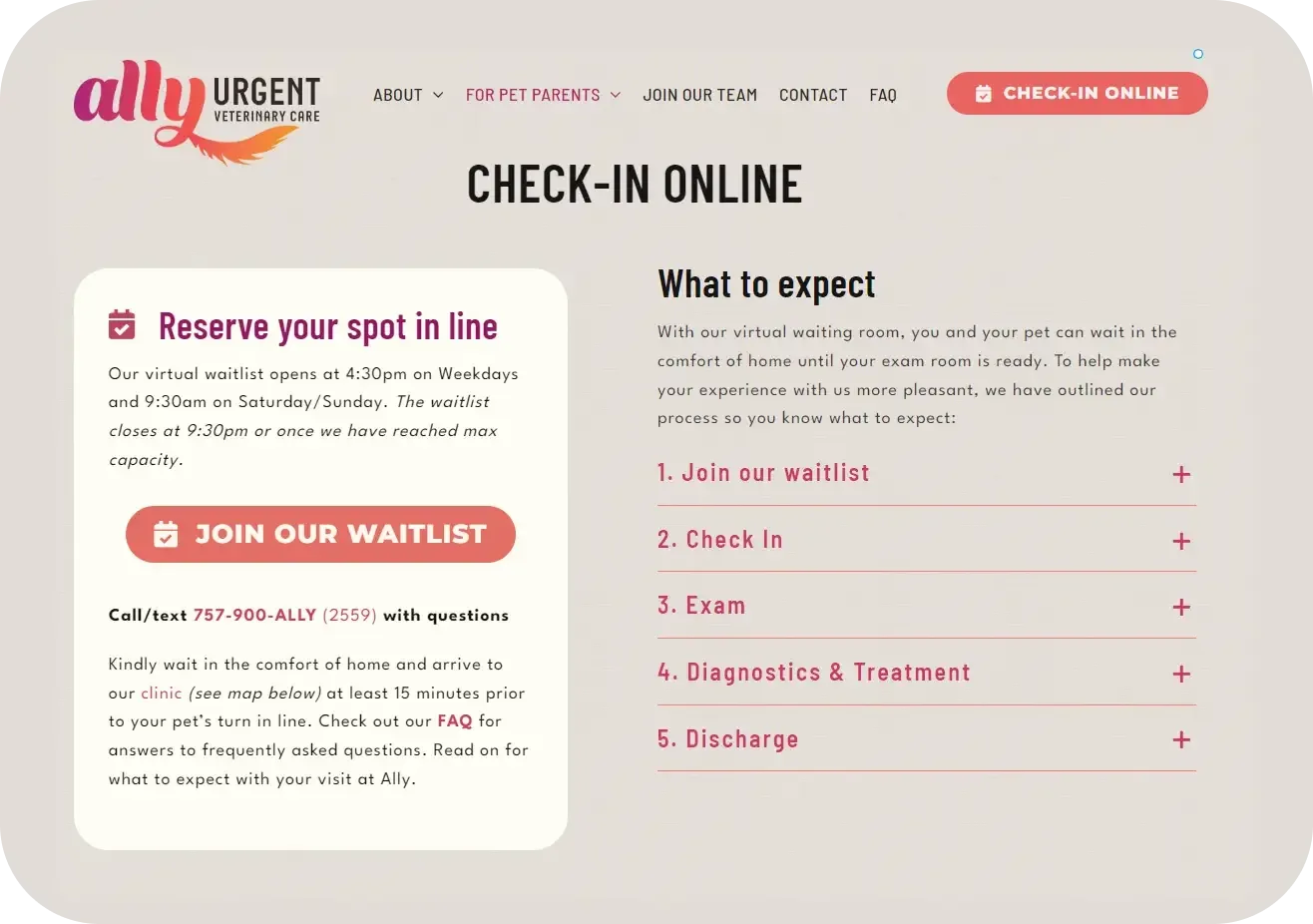
- Clients join the wait from home. Pet owners add themselves to the list through self check-in before they leave the house, with no call and no app download. They can see the wait before they commit to the drive, and the front desk stops fielding the same question all afternoon.
- Text updates replace the guesswork. Clients get real-time updates on where they stand and a text when the clinic is ready for their pet. The wait itself did not disappear, but the uncertainty around it did, and that is most of what made it frustrating.
- Triage built into the queue. Staff assign priority to urgent cases directly in waitlist management and reorder the list as conditions change. The triage decision and the queue are the same system, so nobody gets lost when a critical patient jumps the line.
The results
The clearest signal came from the clients themselves, in the place a veterinary practice can least afford to be criticized.
- 22% increase in positive online reviews. Positive reviews climbed 22% after the switch, and many of them called out the wait times and the check-in experience specifically. The thing clients used to complain about became a thing they mentioned favorably.
- A stronger reputation in Virginia Beach. Tackling the wait time problem head on strengthened Ally’s standing in the community. That shows up as repeat clients and word-of-mouth referrals, which is how urgent care practices grow.
- A calmer front desk. Staff spend less time on the phone repeating wait estimates and more time on patients. Better resource use and a smoother flow through the day came as a byproduct of fixing the client-facing problem.
“NextMe has transformed our operations - seamlessly managing client check-ins and wait times!”