Walk into most vet clinics on a Saturday morning and the lobby tells you everything about why owners dread the visit. An anxious dog straining at its leash. A cat crying inside a carrier two feet from that dog. An owner checking the time every ninety seconds, wondering if anyone at the front desk still remembers they’re there.
More clinics are solving this by moving the wait itself, not by adding staff or square footage. A virtual waiting room for vet clinic operations lets pets and owners wait in the car, on a walk outside, or anywhere but a shared lobby, while a text keeps them updated on when it’s their turn. It’s a small operational change with an outsized effect on stress, for the animal and everyone standing near it.
This shift didn’t come from software vendors pushing a new feature. It came from clinics noticing that the waiting room itself was the problem.
Why the shift is happening now
A virtual waiting room for vet clinic operations replaces the shared lobby with a text-based queue. Pets and owners check in, then wait wherever is calmest for that animal until a message tells them the exam room is ready.
The timing isn’t random. Fear Free veterinary practices, a movement built around reducing patient stress during visits, have pushed clinics to examine every part of the visit that causes anxiety, and the lobby is often the worst offender. A crowded waiting room puts unfamiliar animals in close proximity with no control over spacing. That raises cortisol in patients before they’ve even reached the exam table.
Owners now expect the kind of wait experience they get everywhere else. Restaurants text when a table opens. Retail stores text when a fitting room is free. Pet owners increasingly expect the same rather than sitting in a room full of nervous animals.
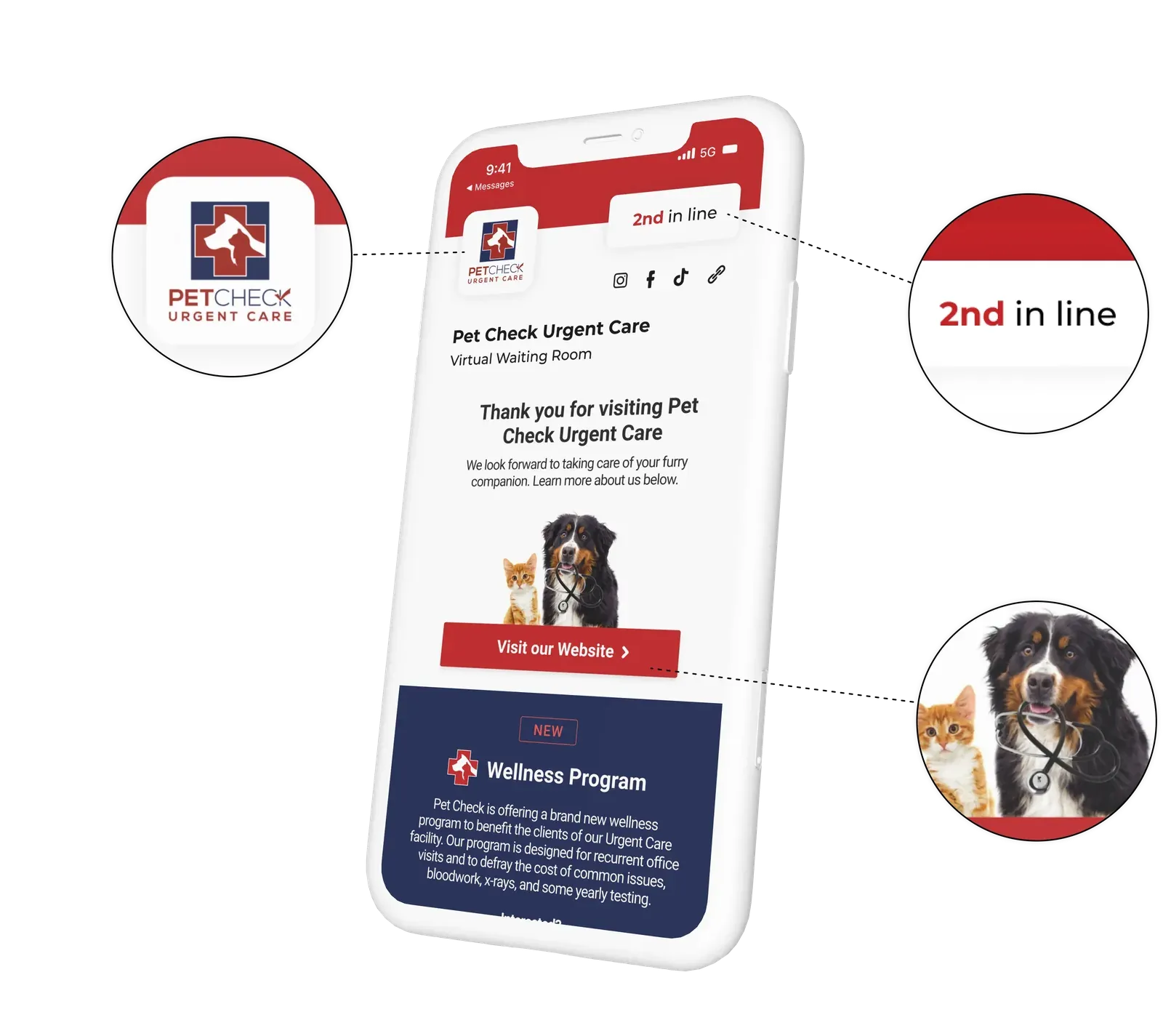
What it changes for pets and owners
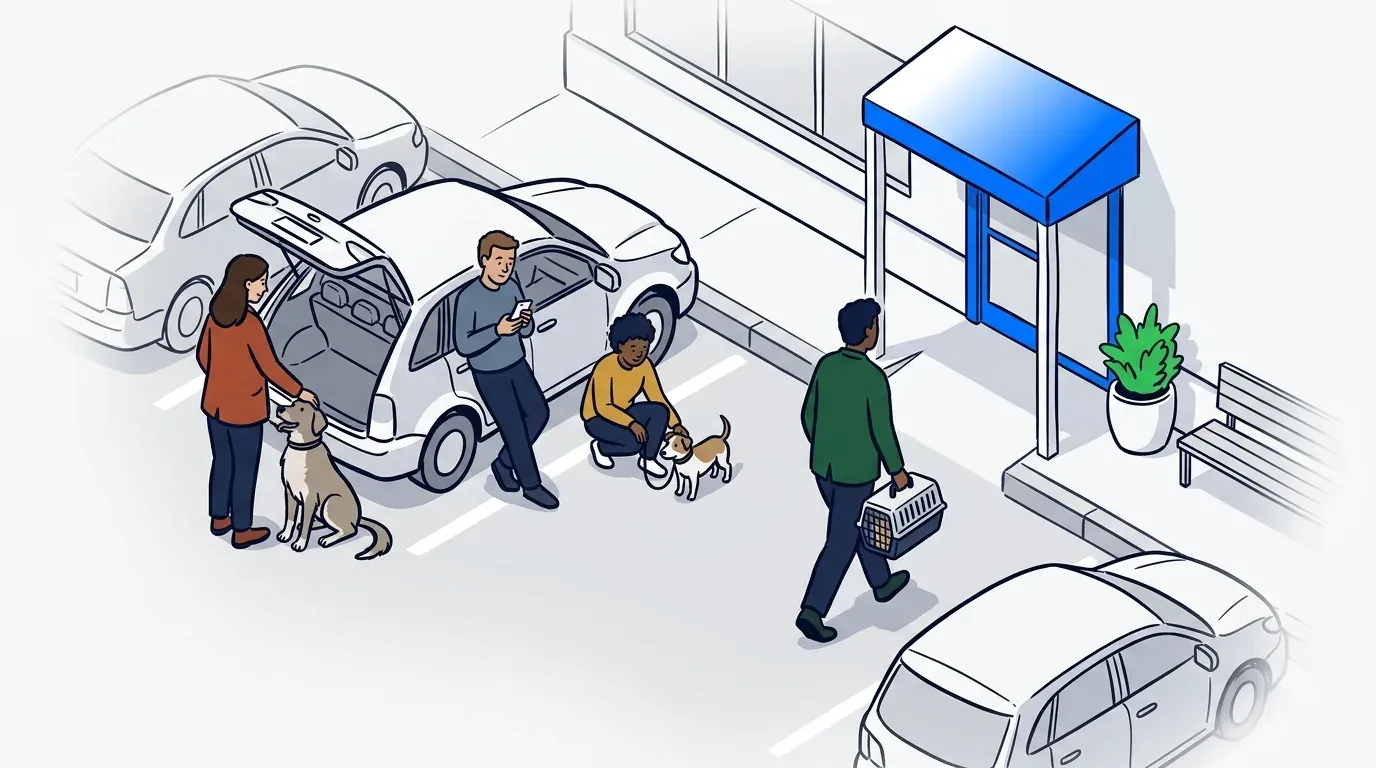
The clearest benefit is also the simplest. An anxious dog waits in a quiet car instead of a room full of triggers. A cat stays covered and still in a carrier in a parked vehicle rather than exposed to barking two feet away. Owners get a text the moment a room opens, so there’s no need to hover near the front desk watching for their name.
This matters most for two groups of patients. Fearful or reactive animals benefit from any reduction in unpredictable stimuli. Immunocompromised or unvaccinated puppies benefit from spending less time in shared airspace with unknown patients. Neither group is well served by a first-come, first-seen lobby model.
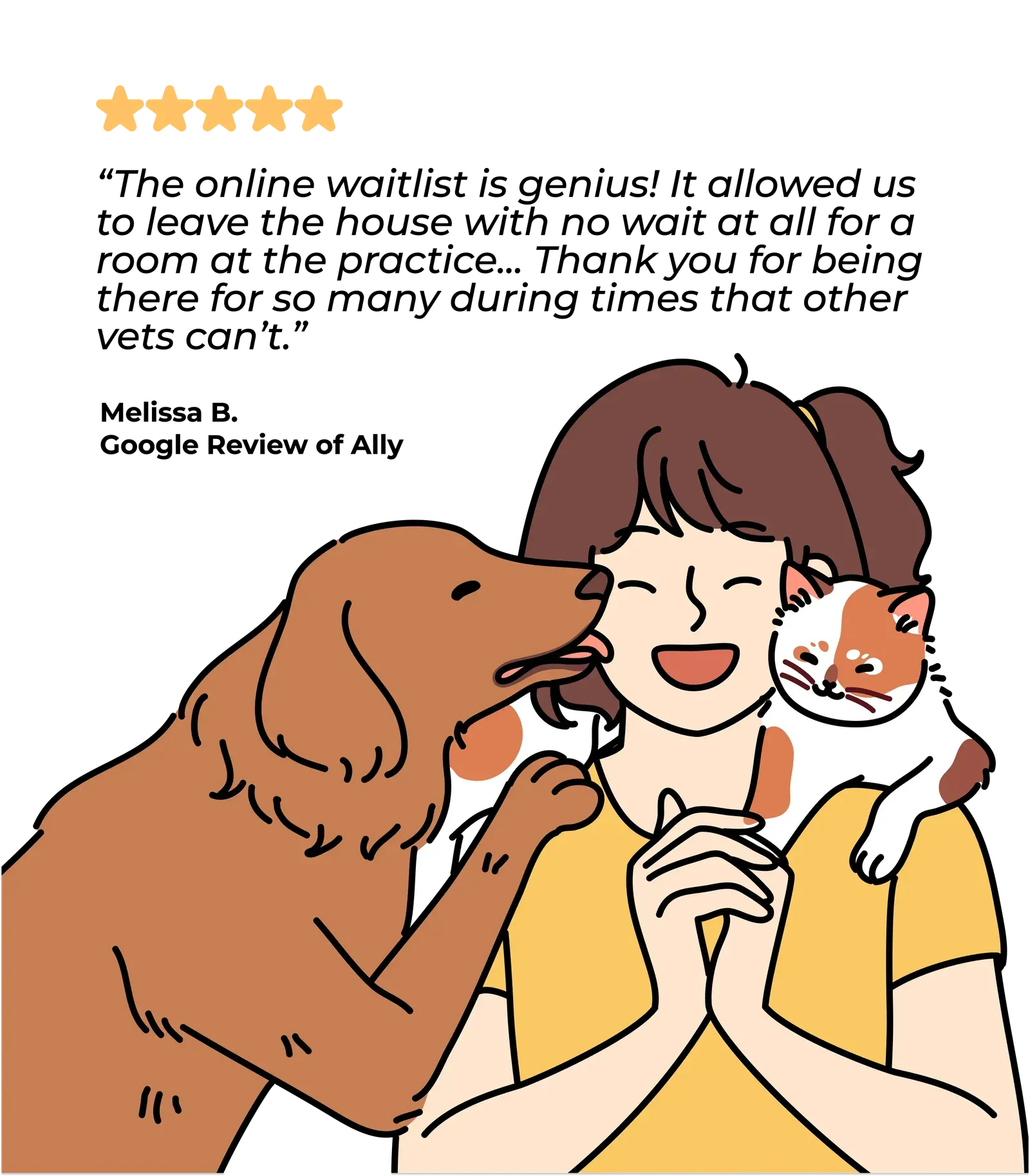
Ally Urgent Veterinary Care, a NextMe customer, has seen this play out in practice. Moving check-in out of the lobby contributed to a meaningful lift in positive online reviews, alongside better staff efficiency from more accurate triage. The clinic didn’t change its exam rooms or its staffing model. It changed where the wait happened.
Triage still comes first
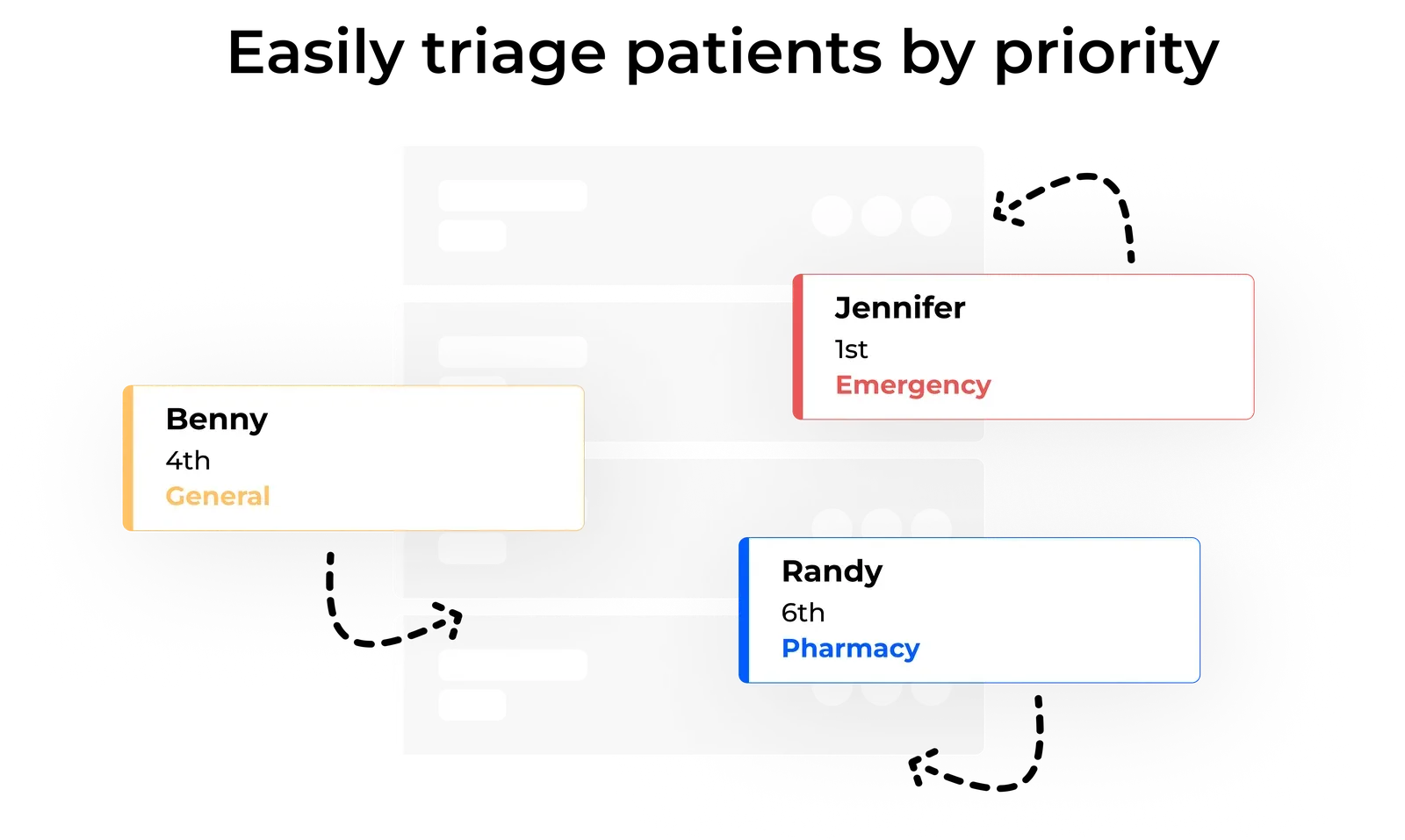
A virtual wait doesn’t mean first-come, first-served regardless of severity. The queue still needs to move urgent cases ahead of routine ones, and that’s a triage decision, not a scheduling one.
A well-run virtual queue captures triage information at check-in, so a limping patient or one with breathing trouble gets flagged and moved up automatically, while a routine nail trim waits its turn. This is the same clinical judgment front desk staff already make. It’s just applied consistently instead of depending on whoever happens to notice a limp across a crowded room.
How clinics are rolling it out
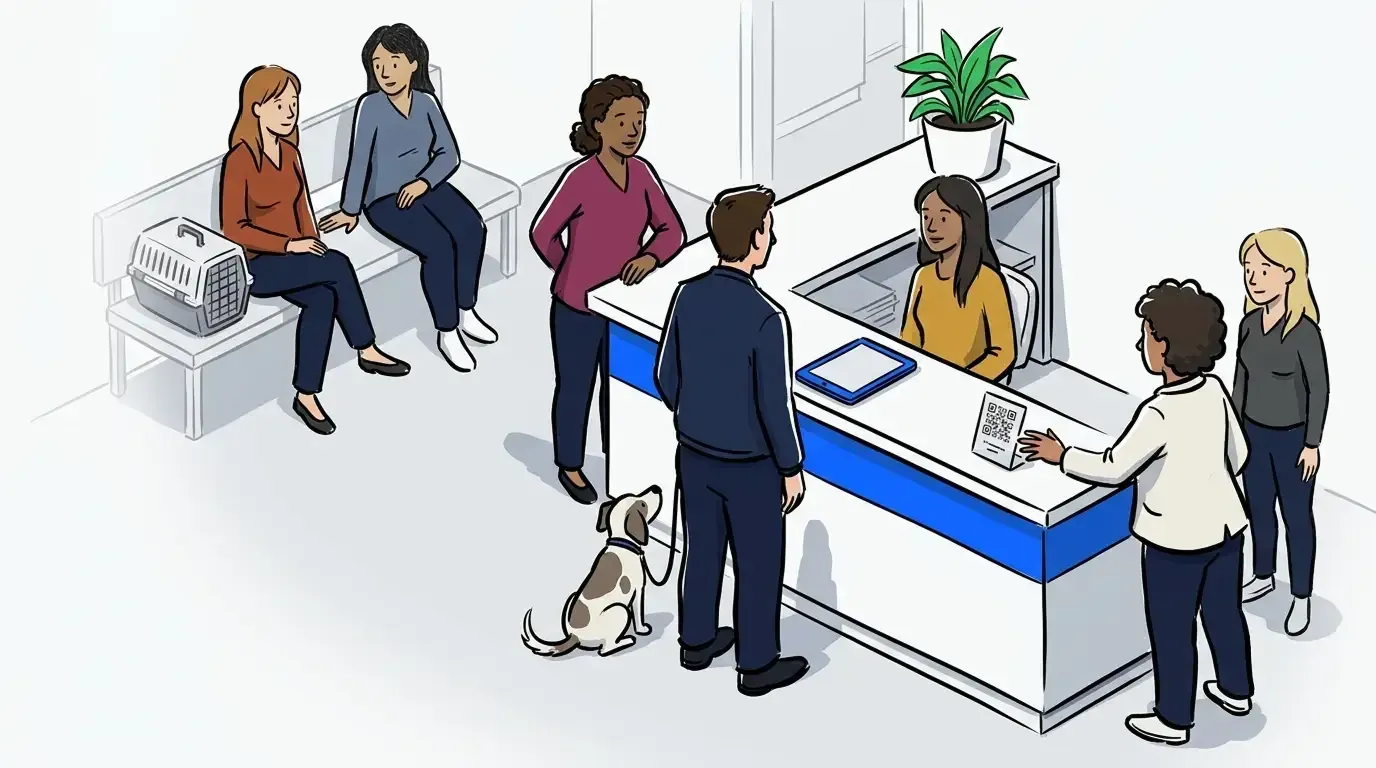
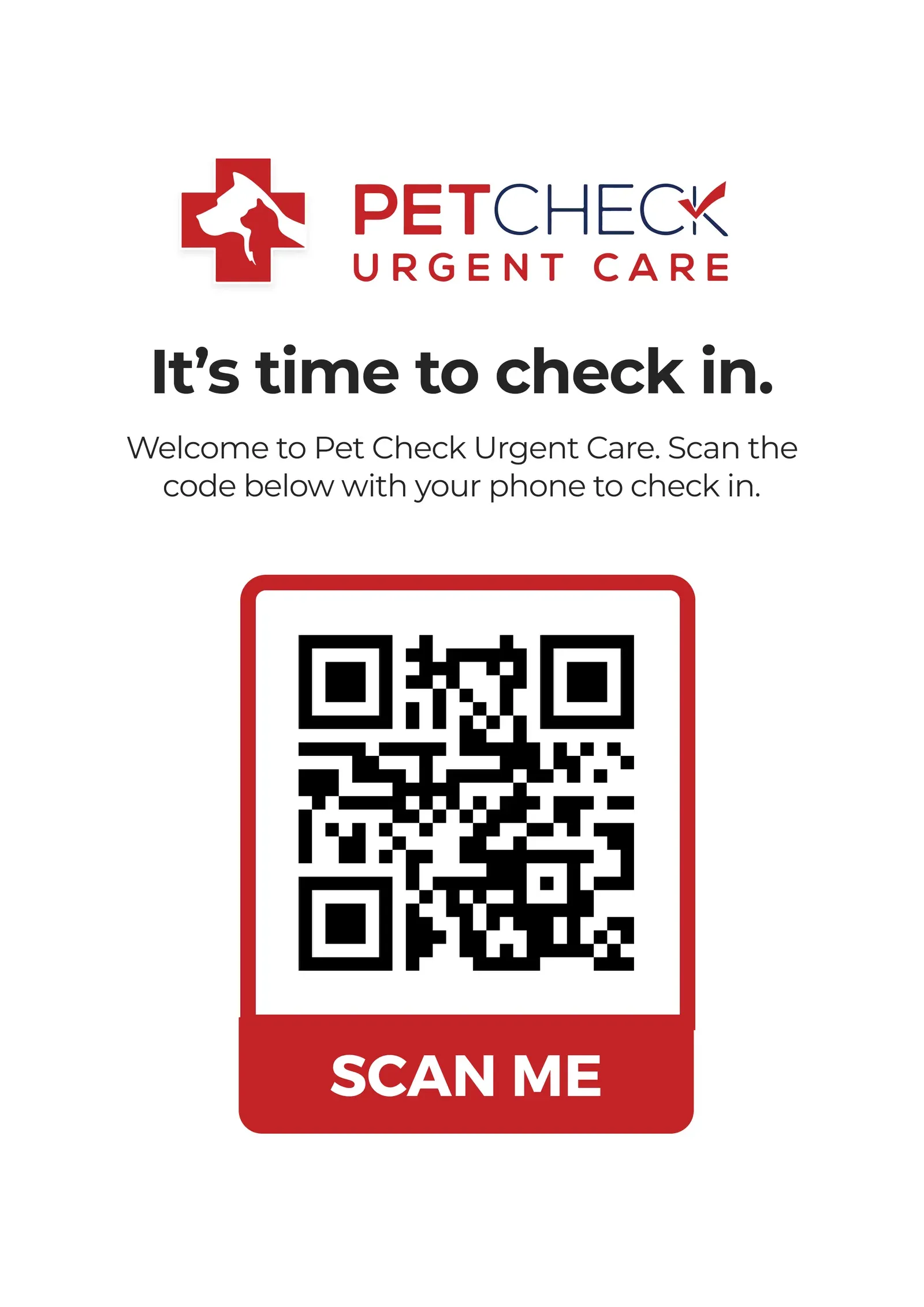
Most clinics start small. An owner scans a QR code posted at the entrance or included in an appointment confirmation text, checks in with a few details about their pet, and gets a queue position and estimated wait immediately.
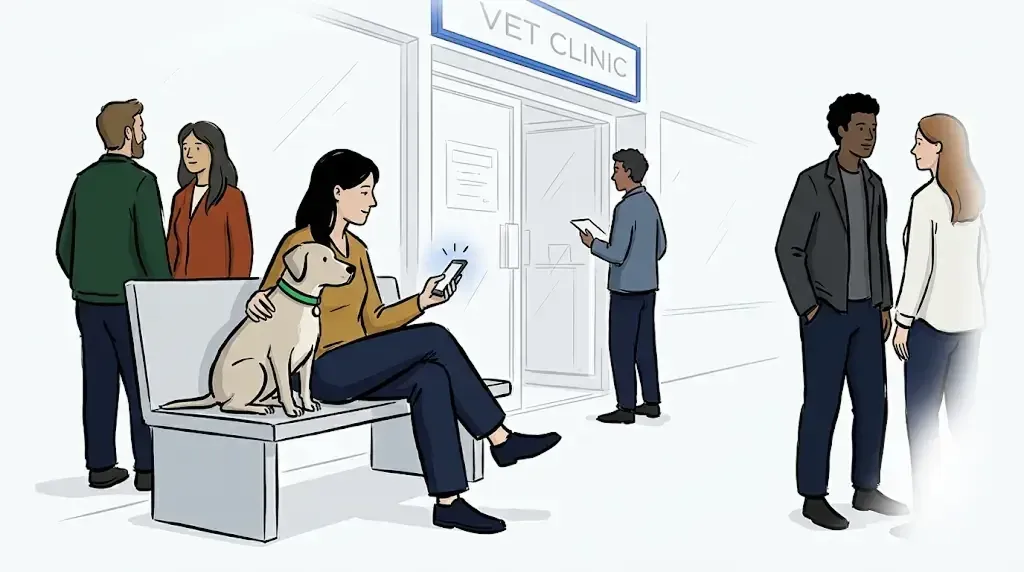
From there, they’re free to wait wherever works: the car, a walk around the block, or a bench outside if the weather’s good. A text arrives when a room is ready, with enough lead time to walk back in without a long second wait once they arrive. Staff see the same queue on their end, with triage flags visible before the patient is even called back. For clinics dealing with front desk workload and infection control alongside stress, the hidden costs of poor waiting room management are worth a closer look too.
Conclusion
The clinics adopting a virtual waiting room aren’t chasing a trend for its own sake. They’re responding to what a crowded lobby actually does to a stressed patient and a distracted staff, and choosing to fix the wait itself rather than absorb the cost of it every day. If your clinic is still running check-in the way it did five years ago, the lobby is worth a second look. See how NextMe supports veterinary clinics.