If you’re searching for the best waitlist app for vet clinics, you’ve probably already noticed the problem: most of the options out there were built for restaurants. Your front desk is juggling a packed appointment schedule, walk-ins with anxious dogs, and a waiting room that’s one more arrival away from chaos. A tool designed to manage dinner tables isn’t going to cut it.
Vet clinics are a different environment: pets escalate, owners stress, and your waiting room carries real welfare risks when it gets crowded. The right app isn’t the one with the most features. It’s the one that fits how your clinic actually operates.
This guide walks through what to look for, what to skip, and how to make a confident decision without wasting time on a free trial that goes nowhere.
What makes a waitlist app right for a vet clinic?
The best waitlist app for vet clinics solves three specific problems that general-purpose queue tools don’t address well: it keeps pets out of a crowded waiting room, it gives front desk staff a way to manage walk-ins and appointments from a single screen, and it communicates clearly with pet owners who are often anxious before they even walk through the door.
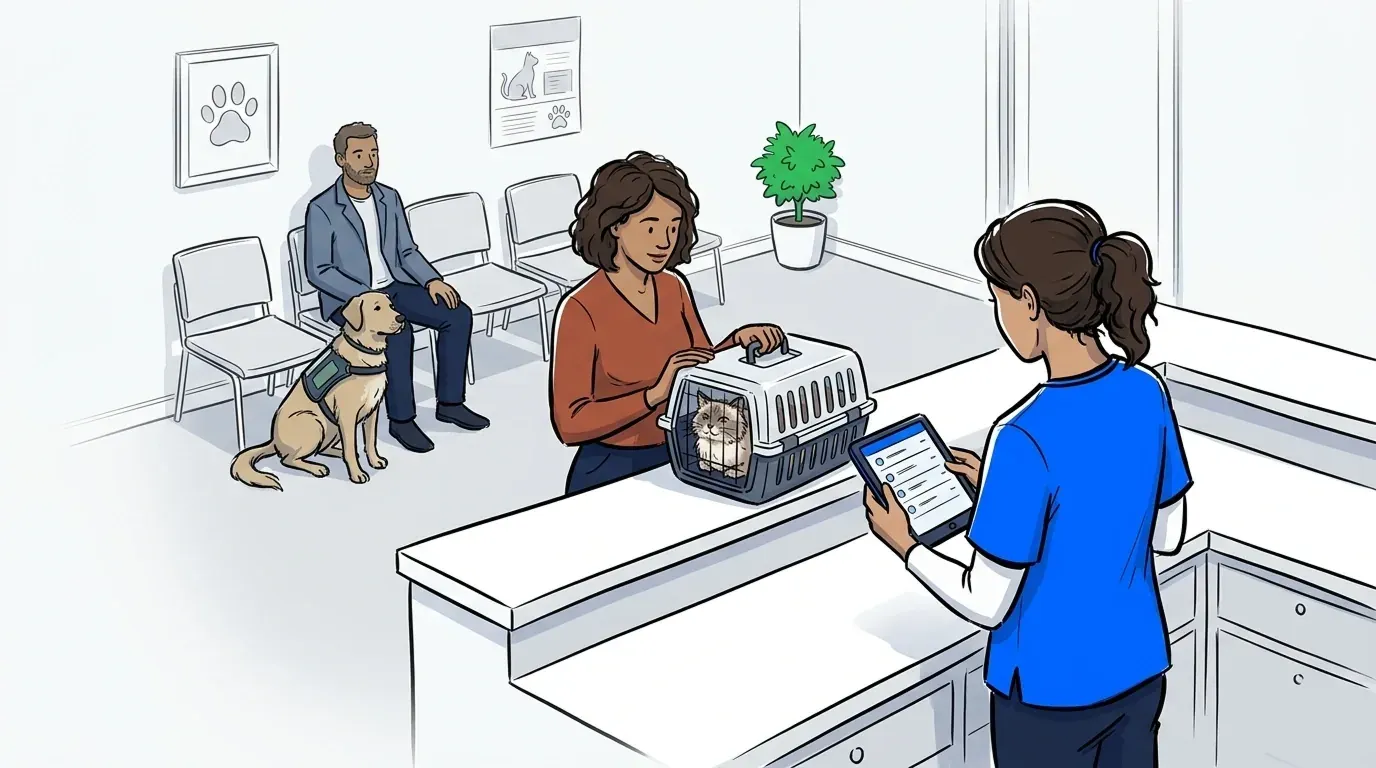
At a minimum, the right app should handle walk-in queue management, send automated SMS updates to owners, support curbside or car-based check-in via QR code or a clinic website link, and work on any tablet or computer your staff already uses. No proprietary hardware, no lengthy setup, and no training requirement that pulls a staff member away from patient care.
The 3-S framework for evaluating vet waitlist software
Before comparing apps, run any candidate through these three questions:
Simplicity: Can your front desk learn it in under 30 minutes? Vet clinic staff are not software administrators. If the app requires more than a brief walkthrough to get running, it will sit unused.
SMS reliability: Does it send automated text updates to owners the moment their pet moves up the queue? Car-based waiting only works if owners know when to come in. If your SMS delivery is unreliable or requires a staff member to trigger each message manually, the virtual waiting room breaks down.
Species-aware features: Does the app support any triage or priority flagging for urgent cases? A dog presenting with labored breathing needs to jump the queue. A basic restaurant waitlist app has no concept of patient acuity.
Features the best waitlist app for vet clinics should have
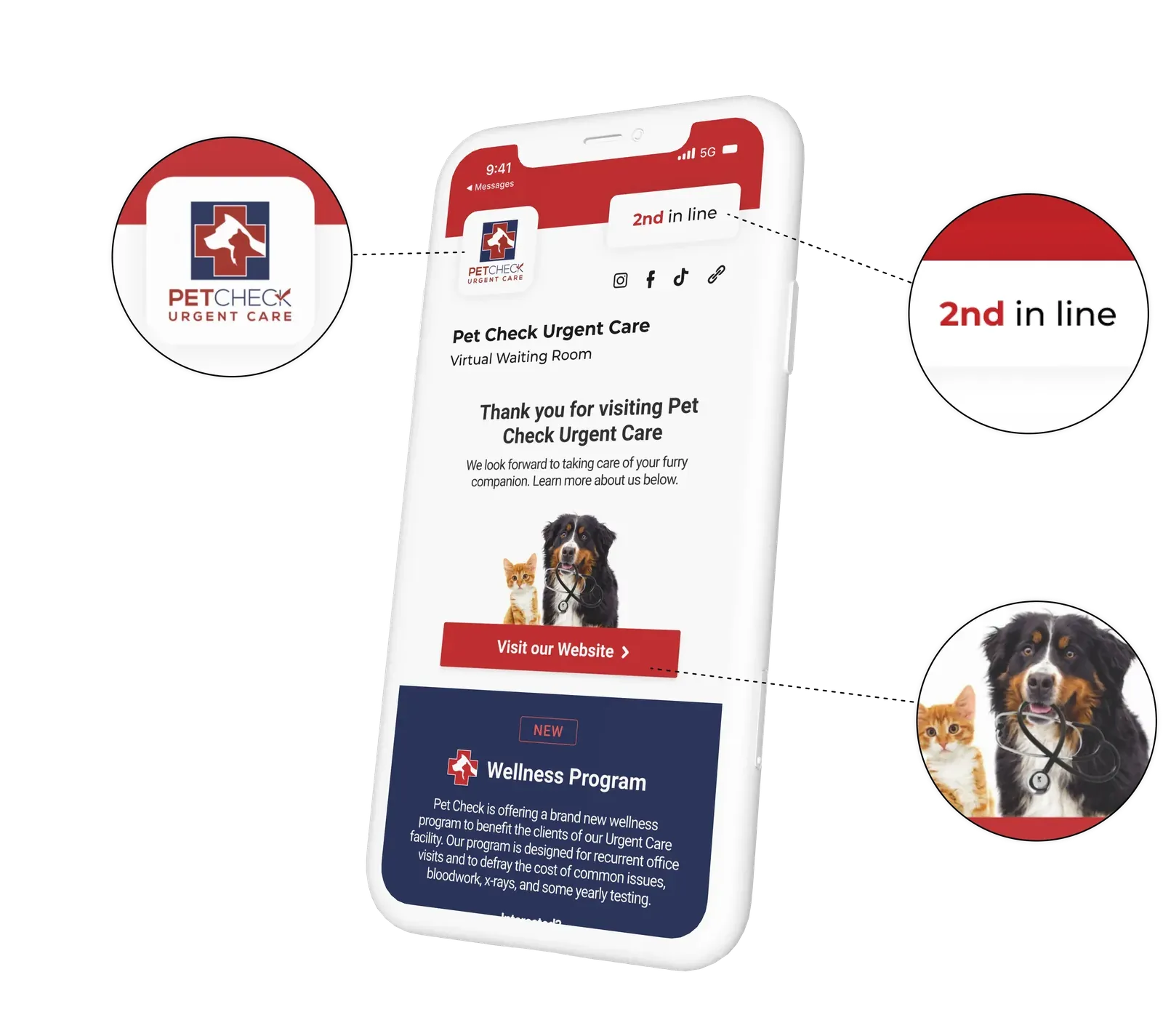
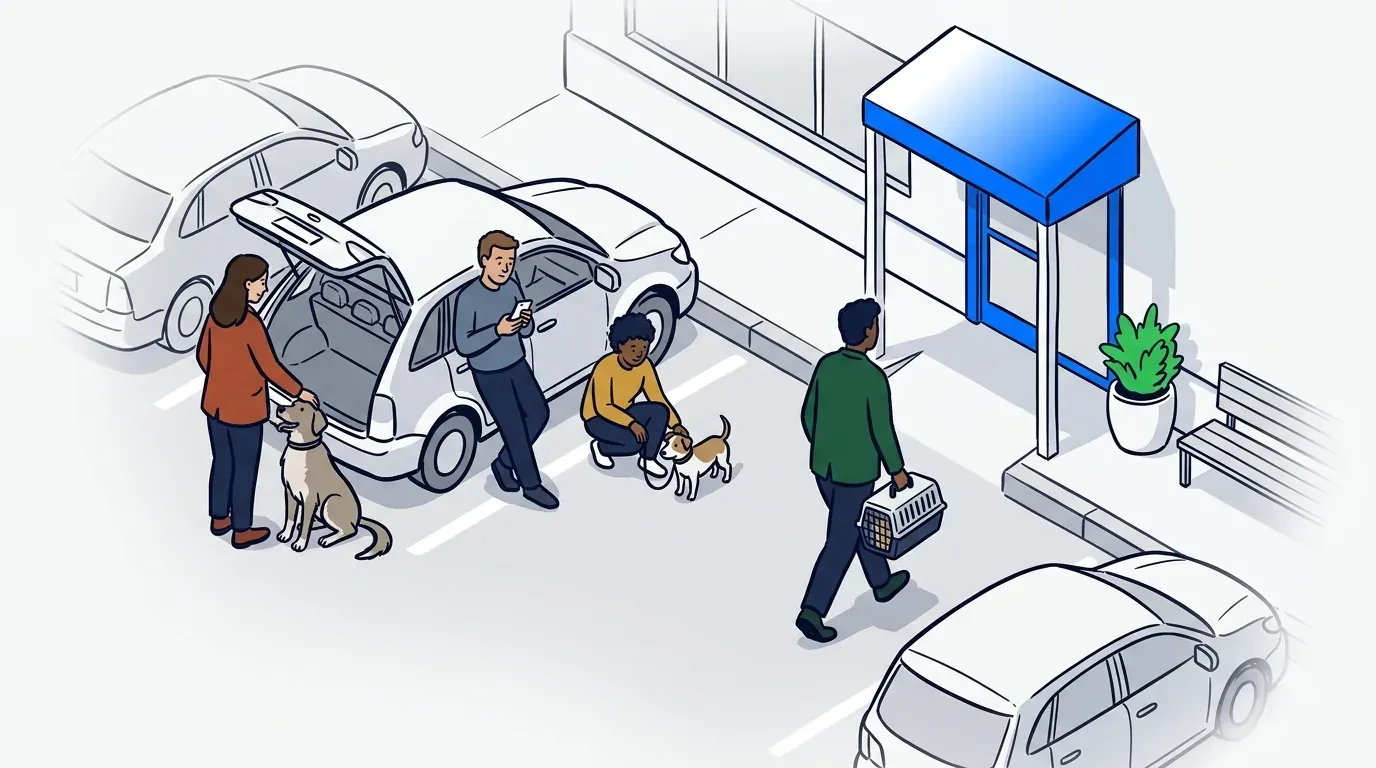
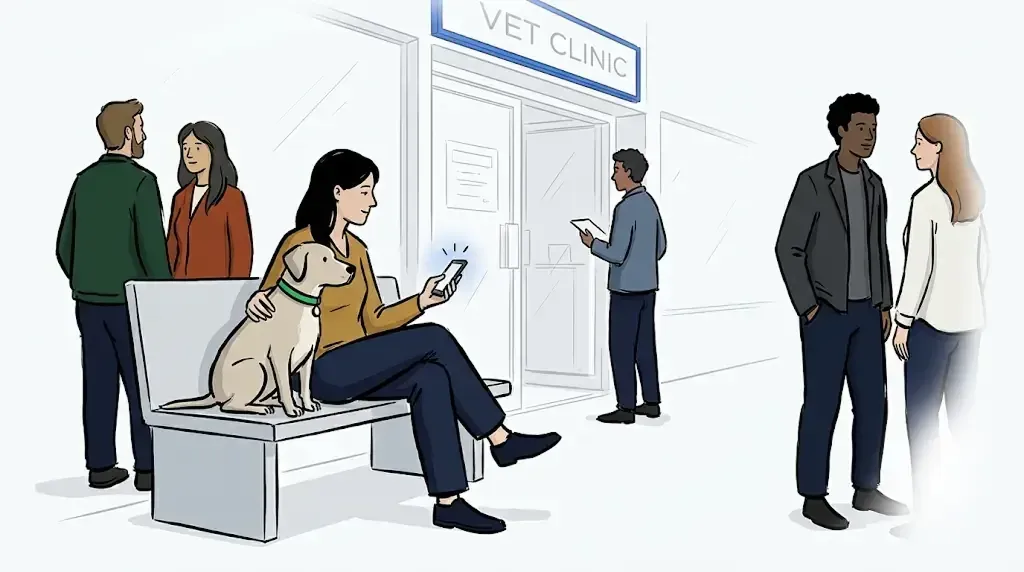
The single most valuable feature for a veterinary clinic is a virtual waiting room that lets pet owners wait in their car. Crowded physical waiting rooms create measurable problems: pet-to-pet disease transmission, stress reactions in anxious animals, and a negative first impression before the exam even begins. When an owner can check in from the parking lot and receive a text when it’s their turn, the entire dynamic changes.
Look for an app that supports multiple check-in methods. A QR code posted at your entrance works well for walk-ins. A check-in link on your clinic website allows owners to join the queue before they arrive. Both should feed into the same queue view on your staff’s screen, so nothing gets lost between channels.
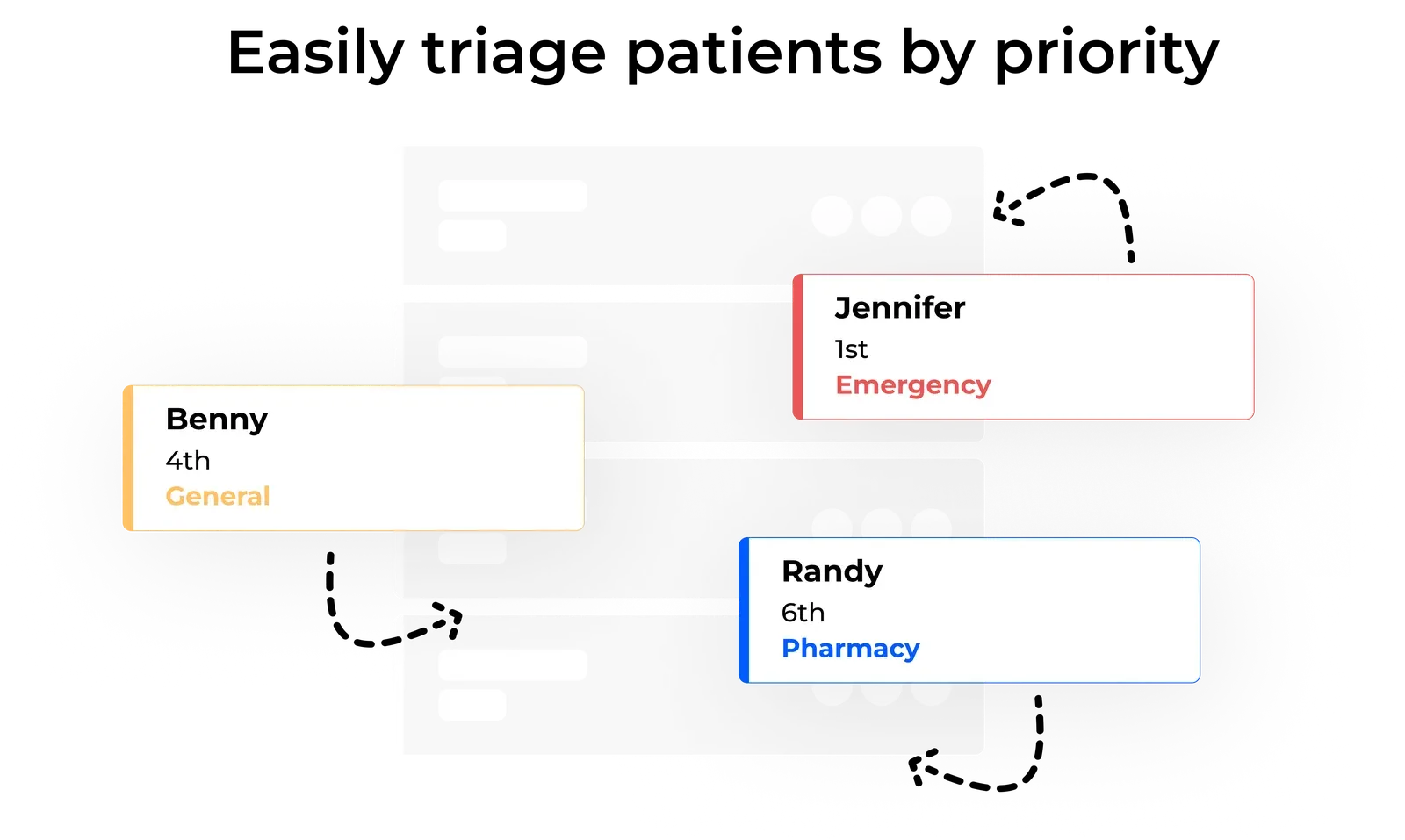
Priority triage is the second feature that separates vet-specific tools from general queue software. Your front desk needs to be able to flag urgent cases and move them forward without disrupting the rest of the queue. Veterinary waitlist apps that support priority-based reordering give staff a practical mechanism for this without requiring a separate workflow.
Third: two-way SMS. Owners who can reply to a text to confirm or update their arrival are far less likely to leave without being seen. This is especially important for walk-in urgent care practices, where no-shows represent lost revenue and wasted capacity.
Features that look useful but rarely are
Multi-location management sounds valuable on a spec sheet. In practice, most independent vet clinics operate from a single location. If you’re evaluating software that charges extra for multi-location features you won’t use for years, you’re paying for complexity you don’t need right now.
Loyalty programs and points systems are another common upsell in general-purpose queue tools. They’re designed for retail environments where repeat visits drive revenue per transaction. A vet clinic’s relationship with clients is built on trust and care outcomes, not points accumulation.
Deep EHR or practice management integrations can be valuable at scale, but they’re often out of reach for independent practices in terms of setup time and cost. A good waitlist app should work well alongside your existing practice management system without requiring a direct integration to deliver value.
What real vet clinics say

Ally Urgent Veterinary Care adopted a digital waitlist to manage the surge in emergency and urgent care walk-ins that followed pandemic-era pet adoption growth. The result was a more controlled patient flow, reduced lobby crowding, and a significant improvement in the owner experience from the moment of arrival.
Read the Ally Urgent Veterinary Care case study to see how a real clinic used a virtual waiting room to manage walk-in volume without adding front desk headcount.
The practices that see the most benefit from waitlist software tend to share a common profile: they handle a meaningful volume of walk-ins alongside scheduled appointments, their physical waiting area is small relative to patient volume, and their front desk staff is already stretched. According to AVMA research on pet owner economics, cost and perceived inconvenience are the leading reasons pet owners skip or delay veterinary visits - a virtual waiting room that makes arrival frictionless directly addresses the convenience side of that equation. If that describes your clinic, the ROI case for a waitlist app is straightforward.
For a deeper look at what to evaluate when choosing virtual waiting room software specifically, see our guide on what to look for in a virtual waiting room for your vet clinic.
Conclusion
Choosing the best waitlist app for your vet clinic comes down to fit: does it solve the specific problems your practice faces, and can your staff use it without friction? Prioritize SMS reliability, curbside check-in support, and the ability to flag urgent cases. Ignore features designed for retail or enterprise environments that don’t map to how a vet clinic actually runs.
NextMe was built for exactly this kind of practice: busy, walk-in-heavy, and focused on delivering a calm, organized experience for pets and owners alike. See how NextMe works for veterinary clinics and find out if it’s the right fit for your practice.