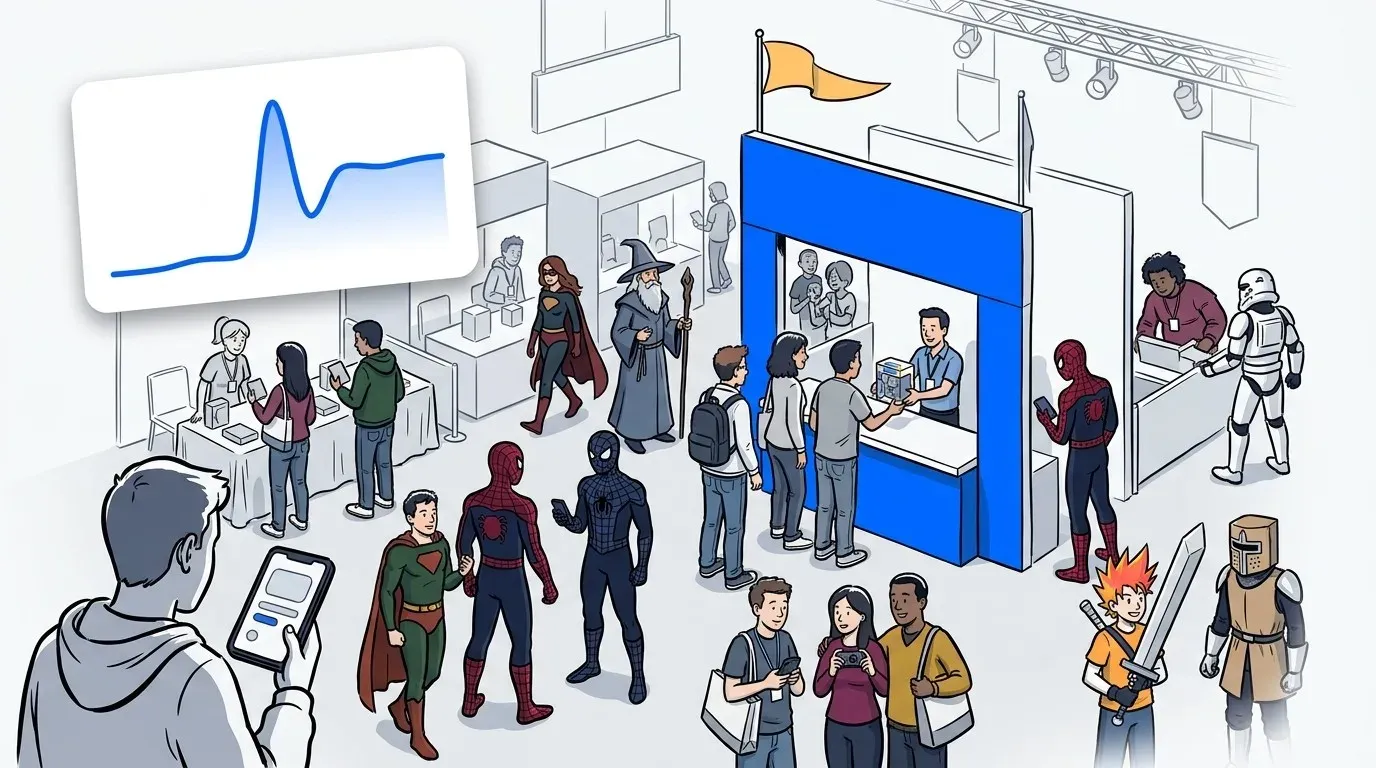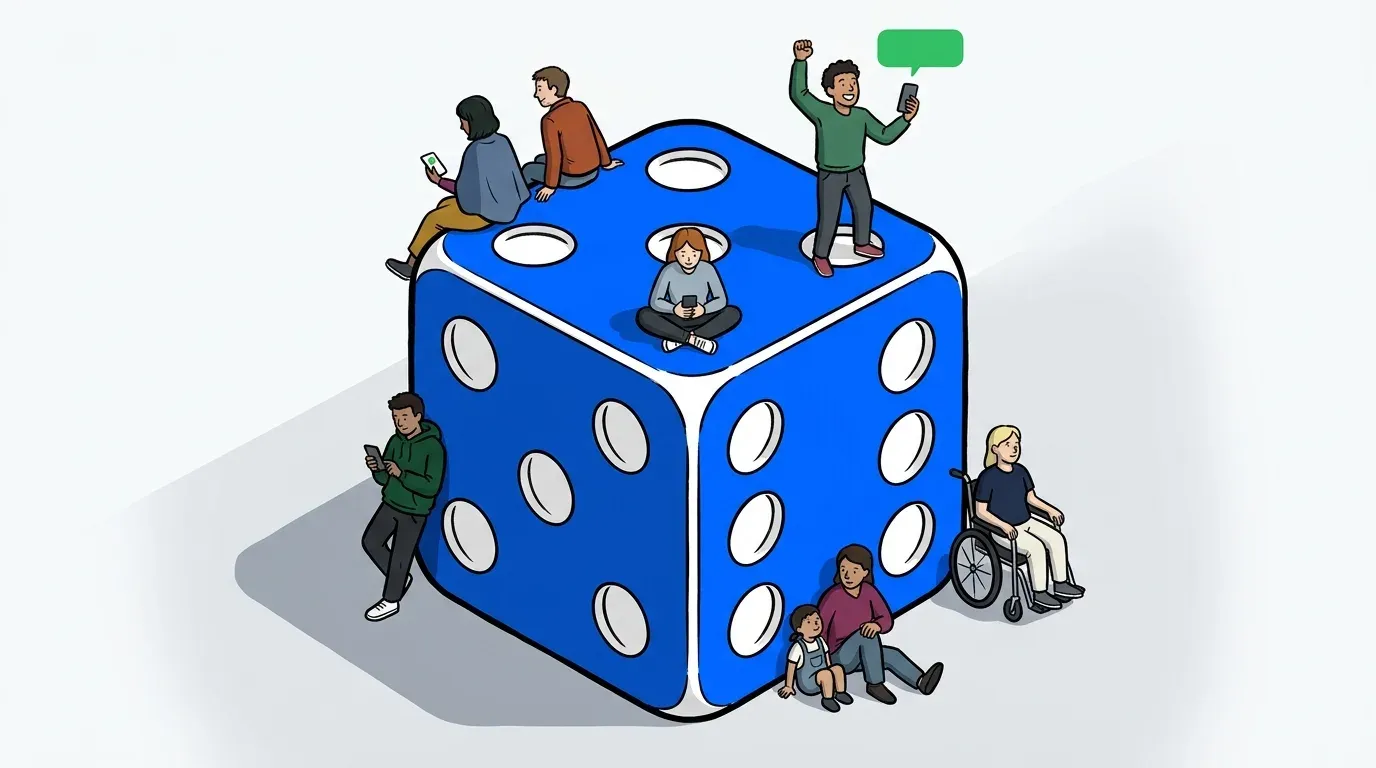
Fans will go a long way to be first in line. At San Diego Comic-Con, one fan started waiting at 5:30 a.m. on Friday for Saturday’s Hall H panels, and others spent the night in line. Fans who camped out overnight for a limited-edition collectible watched hundreds of people cut in front of them. At iPhone launches, buyers have paid strangers up to $200 to camp out in their place.
That’s first come, first served at its worst. When demand outweighs supply, arrival order hands the spots to whoever can wait longest, or pay someone else to. And how you hand out those spots is what fans remember.
NextMe’s random draw feature gives every fan who joins the same chance, however early they arrived. It runs inside the same queue your team already uses.
What is NextMe’s random draw feature?
NextMe’s random draw picks guests at random from everyone waiting in a queue, instead of serving them in arrival order. Fans join from their phones, staff choose how many to call, and NextMe selects that many and texts them in one tap. Every fan in the queue has the same chance, so there’s no reward for racing to be first.
It’s built for signings, product drops and any experience with more demand than spots.
How a random draw works
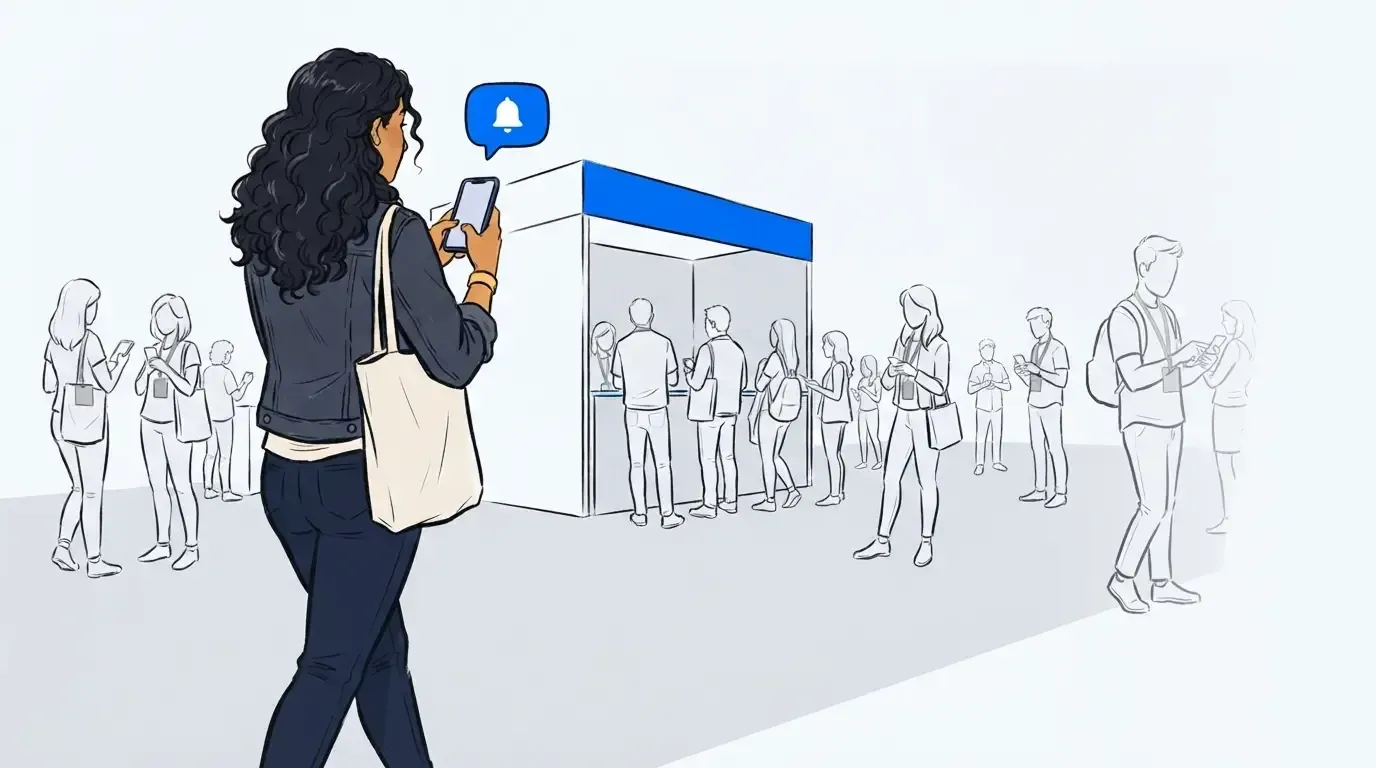
Fans join from their phone through self check-in, by scanning a QR code at the booth or opening a link. The form tells them up front that spots go out by random draw. Nobody has to stand anywhere to hold a place.
When the booth is ready for the next group, a staff member opens the waitlist and presses the dice. They enter how many guests to draw, up to 100 at a time. NextMe picks that many at random from everyone waiting in the queue, not just the guests on screen. One more tap texts each of them to head over.
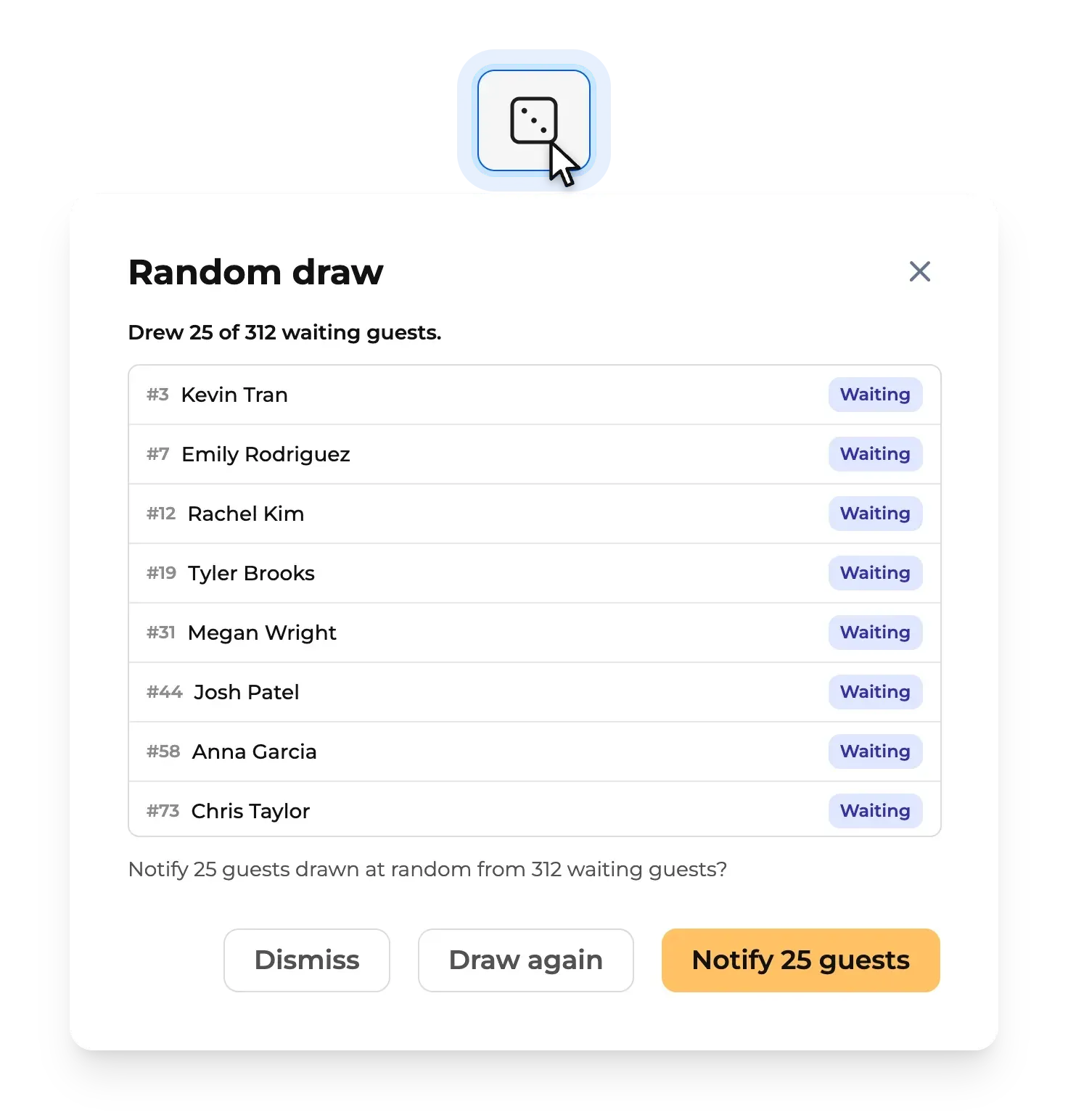
Selected fans get a set window to reach the booth. If plans change, they can reply to the text to release their spot. Everyone else keeps waiting in the virtual waiting room on their phone, free to walk the floor until the next draw.
A fan who joined in minute nine has exactly the same chance as a fan who joined in second one. There’s no reason to sprint, so the opening rush loses its heat.
Random draw vs first come, first served
First come, first served is fair when everyone will eventually be served, because order is the only thing at stake. A random draw is fair when there are more people than spots, because it gives everyone who joins the same chance. NextMe supports both, so you can pick the right one for each experience at your event.
If the line will clear, serve people in order. If it won’t, let the draw decide who gets in.
Why some fans prefer first come, first served
Plenty of fans will tell you first come, first served is the fairest system there is. If you want it badly enough, you show up at dawn and put in the hours. Effort decides, not luck.
That argument holds for the fans who are willing and able to put in the hours of standing in line all day. It doesn’t hold for everyone else. Fans who need ADA accommodations, older fans, parents with kids in tow and anyone who can’t stand for six hours never get a real shot. The same small group wins everything through pure endurance, show after show. Online, a first-come sign-up page rewards the fastest connection, and resellers and bots are very good at that.
A random draw opens the door to every fan. Anyone can join from their phone, wherever they are, and nobody has to spend their whole day in a line to have a chance. The fan in a wheelchair and the fan who camped out overnight hold exactly the same odds.
A calmer floor and a busier booth
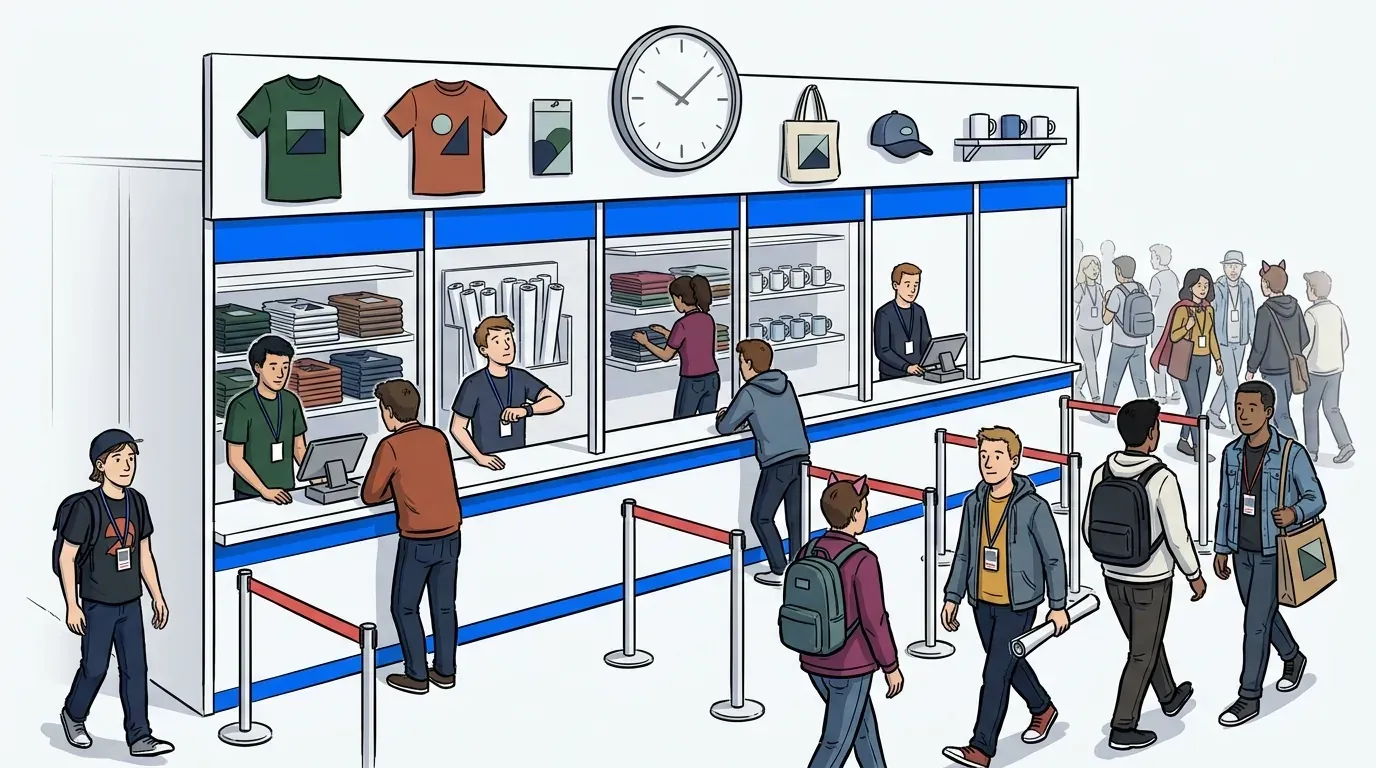
Fairness is only half of it. A long first-come line is also the part of a booth most likely to go wrong. Fans save places for friends, argue about who cut, and crowd the front when stock runs low. Staff end up refereeing instead of serving.
A draw takes the pressure out of the floor. There’s nothing to guard, so there’s nothing to fight over. Fans come back when they’re called, a few at a time. And because you size each draw to what the counter can serve, the booth runs at full capacity all day, without a crowd building in front of it.
Research on queues backs up what fans feel. MIT’s Richard Larson found that how people feel about a wait depends heavily on whether the queue seems fair. For lines where everyone gets served, strict arrival order still wins. We’ve written about why it became the default for most lines.
What about an exclusives lottery?
Big conventions often run a third option before the show starts. Fans enter an exclusives lottery weeks ahead, the show selects winners at random, and each winner gets a time slot. It’s fair at the moment of selection.
The catch is that everything settles before the doors open. A lottery can’t hand a slot to someone else when a winner doesn’t show, or give a Saturday arrival a chance. A random draw runs during the show, against what the booth can actually serve. The two work well together, and we’ve written about what reservation lotteries miss about running a booth.
Settings that keep it fair all show
One fair draw is easy. Staying fair over four days takes a few settings, and each one takes a minute to set up.
- Limit repeat joins. One entry per phone number keeps the odds even.
- Add a geofence if you need one. It keeps entries to fans who are actually at the show.
- Draw in rounds. Size each draw to what the counter can serve, and keep drawing through the day so late arrivals get a shot.
- Put no-shows back in play. A released or missed spot goes to the next draw.
- Keep a short physical line. NextMe runs a hybrid line, so you choose how many fans wait in person for buzz and draw the rest from the queue.
We’ve covered more of the settings that protect a limited drop, including geofences and queue caps.

Coming soon: draws that run themselves
Pressing the dice every half hour works, but it ties someone to the dashboard all day. We’re rolling out Auto-Notify to more teams. Set how many guests to call each round and how often, and NextMe keeps drawing at that pace while the queue is open. If you’d like it for your next event, ask us.
Random draw at New York Comic Con
NYCC this month put the random draw under real pressure. Across two activations that gave out spots by random draw, about 80% of the fans who signed up were selected at least once.
The spread mattered as much as the total. At one activation’s artist signings, only 2.2% of fans won 2 or more of the 5 most popular signings. Nobody won all three of the biggest. That’s what a fair draw is for: more fans getting something, rather than a few fans getting everything.
The same queues absorbed more than 40,000 joins over the show, and fans never had to refresh a stalled page to keep their chance.

The fair way to say no
When demand outweighs supply, most fans won’t get what they came for. You can’t change that. You can decide whether they lost to the earliest alarm clock or to a fair draw they understood from the start.
Fans forgive a draw they lost. They don’t forgive a line that was never theirs to win. If you’re planning a signing, a drop or an activation with more demand than spots, see how NextMe runs virtual queues for events.