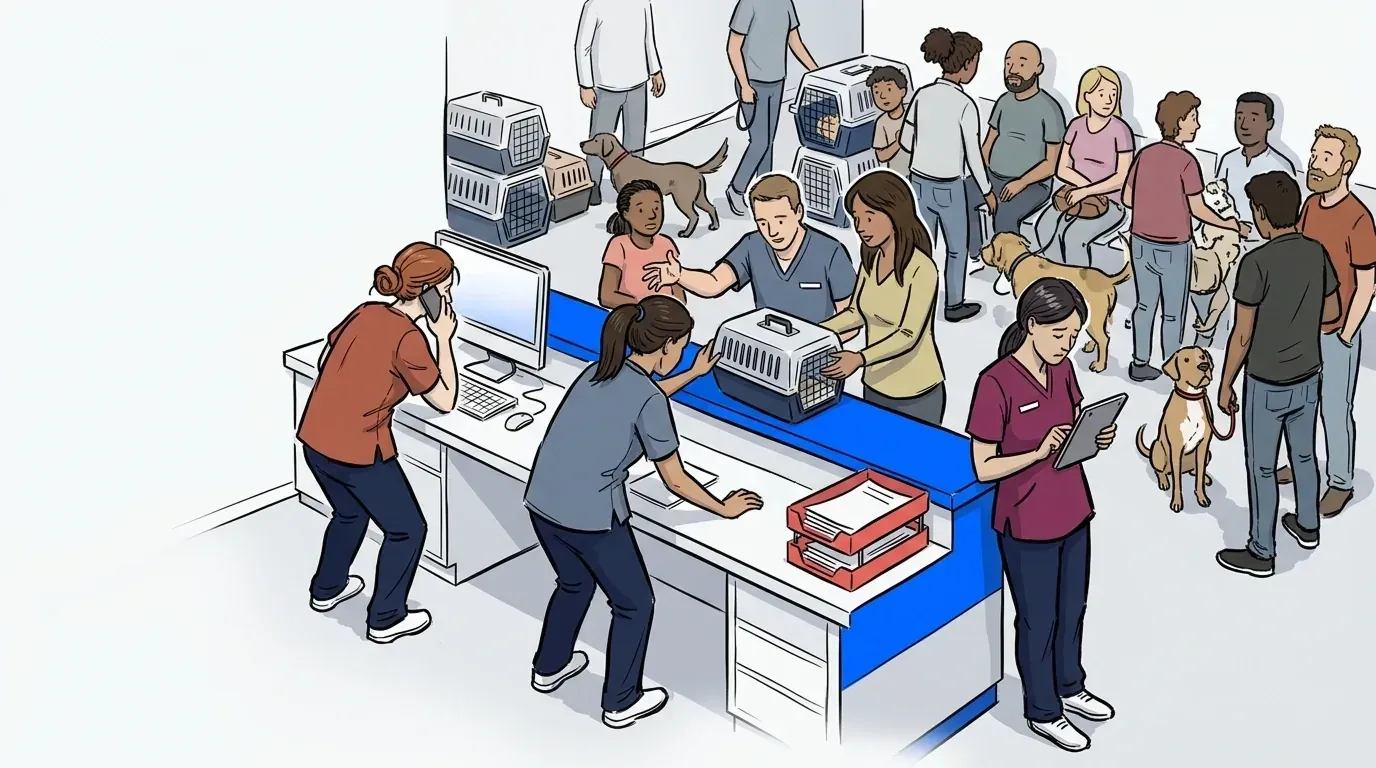
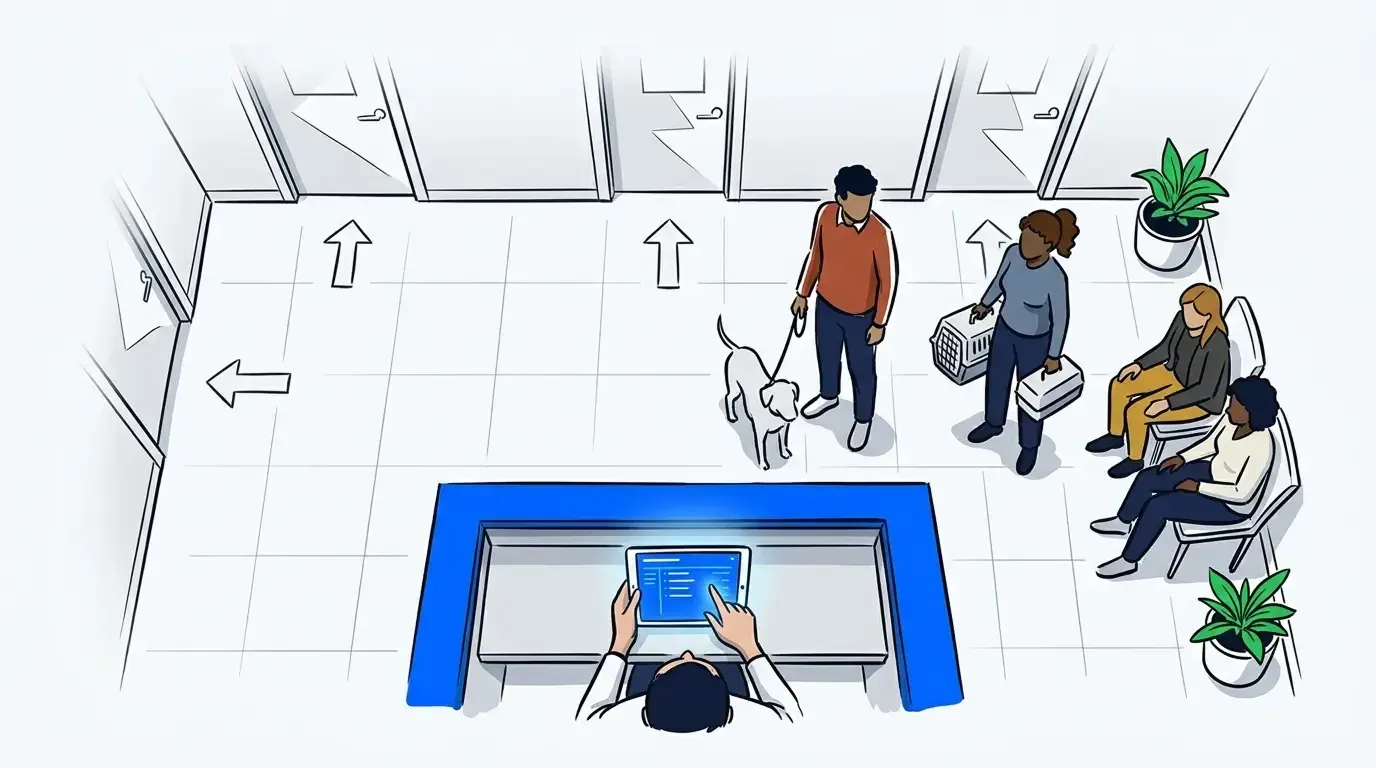
Ask a vet clinic front desk team what their hardest part of the job is and you will rarely hear “the clinical work.” You will hear about the lobby. The dogs pulling toward each other. The cat carriers stacked near the door. The owner at the counter asking for the third time how much longer it will be. And underneath all of it, the constant low-level awareness that you are one bad interaction away from something going wrong.
Veterinary waiting room management is usually framed as a patient comfort issue, and it certainly is. But the deeper cost is what an unmanaged lobby does to the people running it. Every interruption at the front desk is a clinical task that does not get done. Every “how long?” question is a staff member pulled away from intake, triage coordination, or phone triage to manage a problem that a queue system would have prevented.
This post is about what that actually costs: in staff capacity, infection risk, and the quality of care your team can deliver when the lobby is not actively working against them. If you have already read about how a waitlist app affects no-shows and pet stress, this covers the part of the equation that piece does not: what happens to your team.
What veterinary waiting room management actually means
Veterinary waiting room management is the set of systems a clinic uses to control how many animals are in the physical waiting area at any given time, in what order clients are seen, and how staff communicate queue status without being interrupted to do it. Effective waiting room management is not about making the lobby more comfortable. It is about keeping the lobby from becoming a source of clinical risk and staff overload in the first place.
The standard approach, a paper sign-in sheet and a front desk person fielding status questions, is not a system. It is an improvised response to an uncontrolled environment. A digital queue replaces that improvisation with a structure the whole team can see, update, and communicate from without breaking their workflow.
The triage problem that starts at the front desk
In an unmanaged lobby, triage happens visually and reactively. A staff member notices that a dog looks labored and flags the vet. An owner mentions something alarming while asking about wait time. A cat has been in the carrier for 45 minutes and is clearly deteriorating. None of this information was captured at check-in. It surfaced by accident, in a crowded room, after the clock was already running.
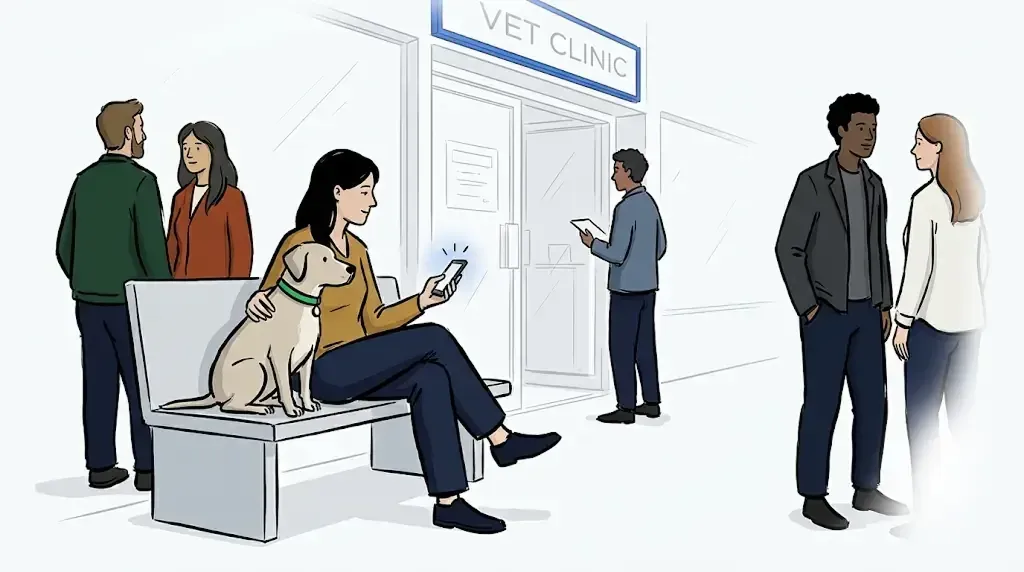
A queue system that captures chief complaint at check-in changes this completely. When a client checks in digitally - via QR code from the parking lot or a link on your website - they enter a brief description of why they are there. That information reaches the front desk and the clinical team before the animal enters the building. The vet is not walking into a room cold. The front desk is not triaging in the lobby. And the case that needs urgent attention gets flagged in the queue before the dog who needs a routine recheck.
This is the argument the 4-Stage Intake Loop makes at a systems level. The ground-level impact is that your front desk team stops triage-by-observation and starts working from structured intake data.
How a virtual waiting room gives your staff their attention back
The “how long?” question is not an unreasonable ask. Owners with a sick or anxious pet have no other way to get that information if the clinic is not proactively sending it. The problem is not the question - it’s that answering it falls on the front desk every single time, at random intervals, while they are trying to do everything else.
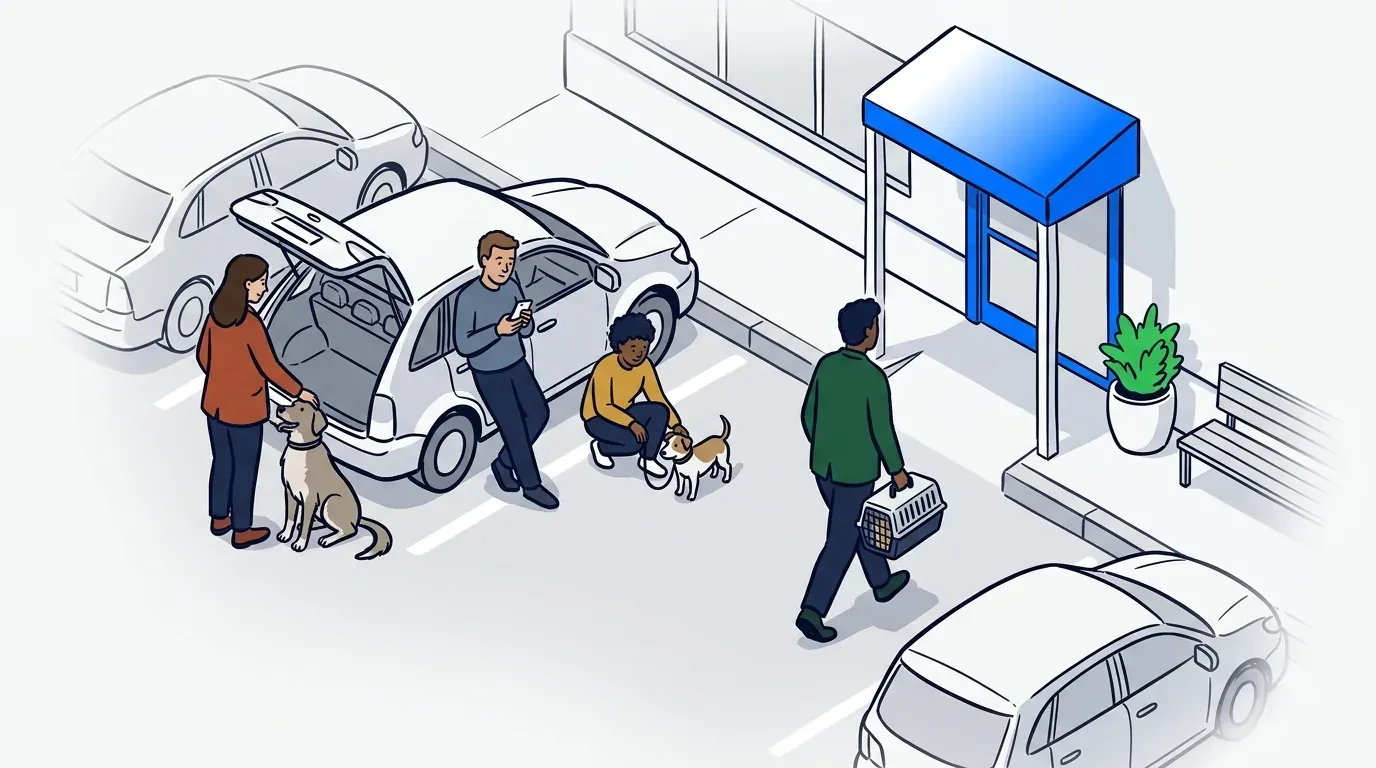
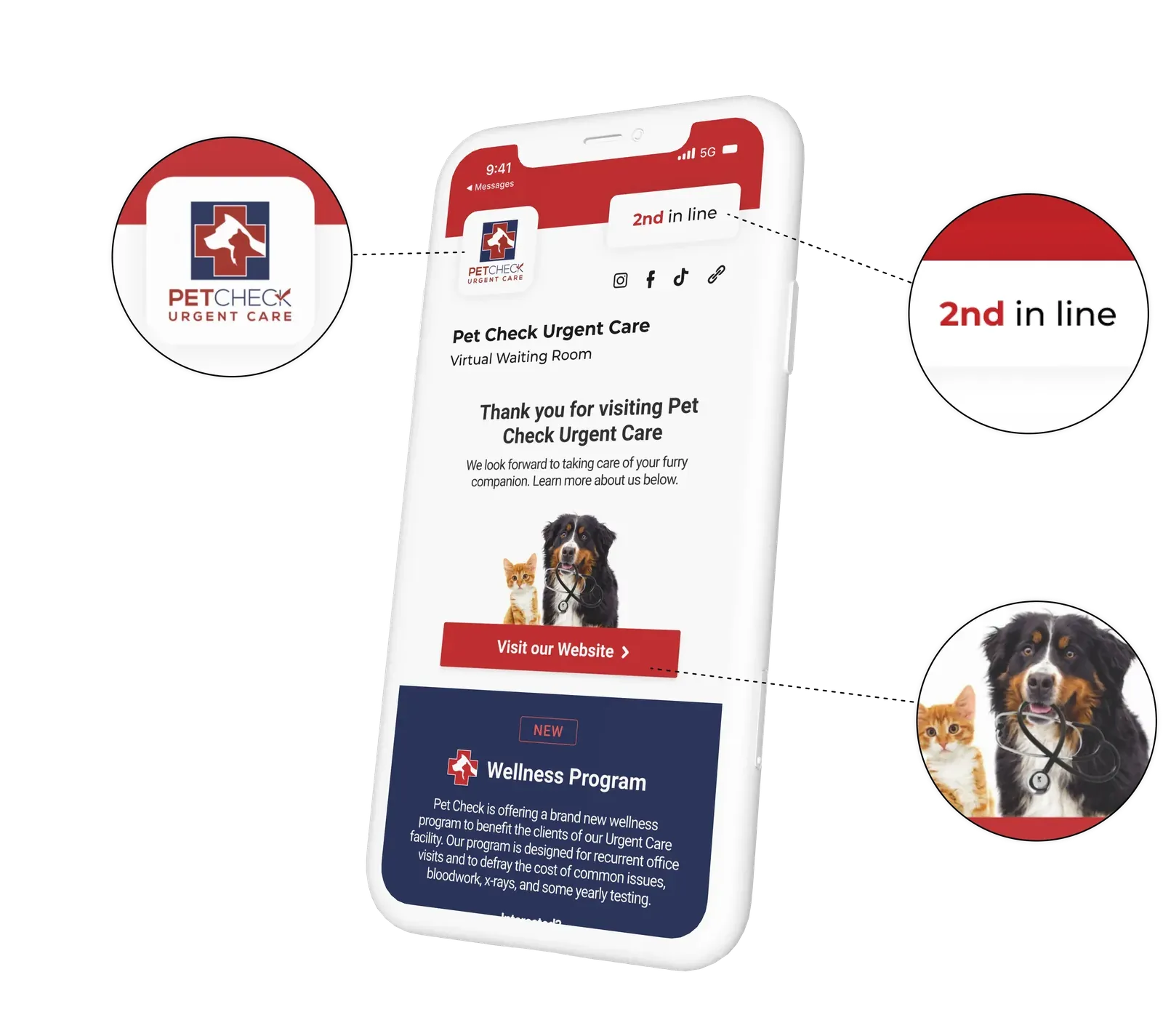
A virtual waiting room solves this at the source. Clients check in from the parking lot and wait in their cars. NextMe sends an SMS when the exam room is ready - with their position in the queue and an estimated wait. That message replaces every status question they would have asked at the counter. The front desk is not interrupted. The owner is informed. And the only animals in your building at any given moment are the ones actively being seen.
The staff impact compounds quickly. Fewer lobby interruptions means fewer incomplete intake tasks. Fewer incomplete intake tasks means fewer errors at check-in. And a front desk team that is not managing a crowded waiting room has cognitive capacity left over for the clinical support work that actually requires their attention.
Lobby density as an infection control issue
AAHA’s guidance on biosecurity planning includes instructing owners of animals presenting with potential infectious conditions to wait in their cars rather than enter the waiting area, keeping infectious material out of shared spaces as a first line of defense. The same principle applies at a lower-acuity level every day: every animal in your waiting room is an unscreened exposure risk for every other animal in it.
A virtual waiting room is one of the most direct tools a clinic has for managing this. When clients wait in their cars until the exam room is ready, lobby density drops to near zero between appointments. Cross-exposure between animals (including between species, which carries its own risk profile) is eliminated at the waiting stage rather than managed after the fact.
Species separation is worth naming specifically. Dogs and cats in a shared waiting area is stressful for the animals and presents a genuine physiological risk for cats in particular: the stress response triggered by proximity to predator species elevates cortisol and can affect diagnostic readings. A check-in system that captures species at intake and queues animals into separate call-back windows is a more defensible clinical approach than relying on lobby layout alone.
What this looks like at Ally Urgent Veterinary Care
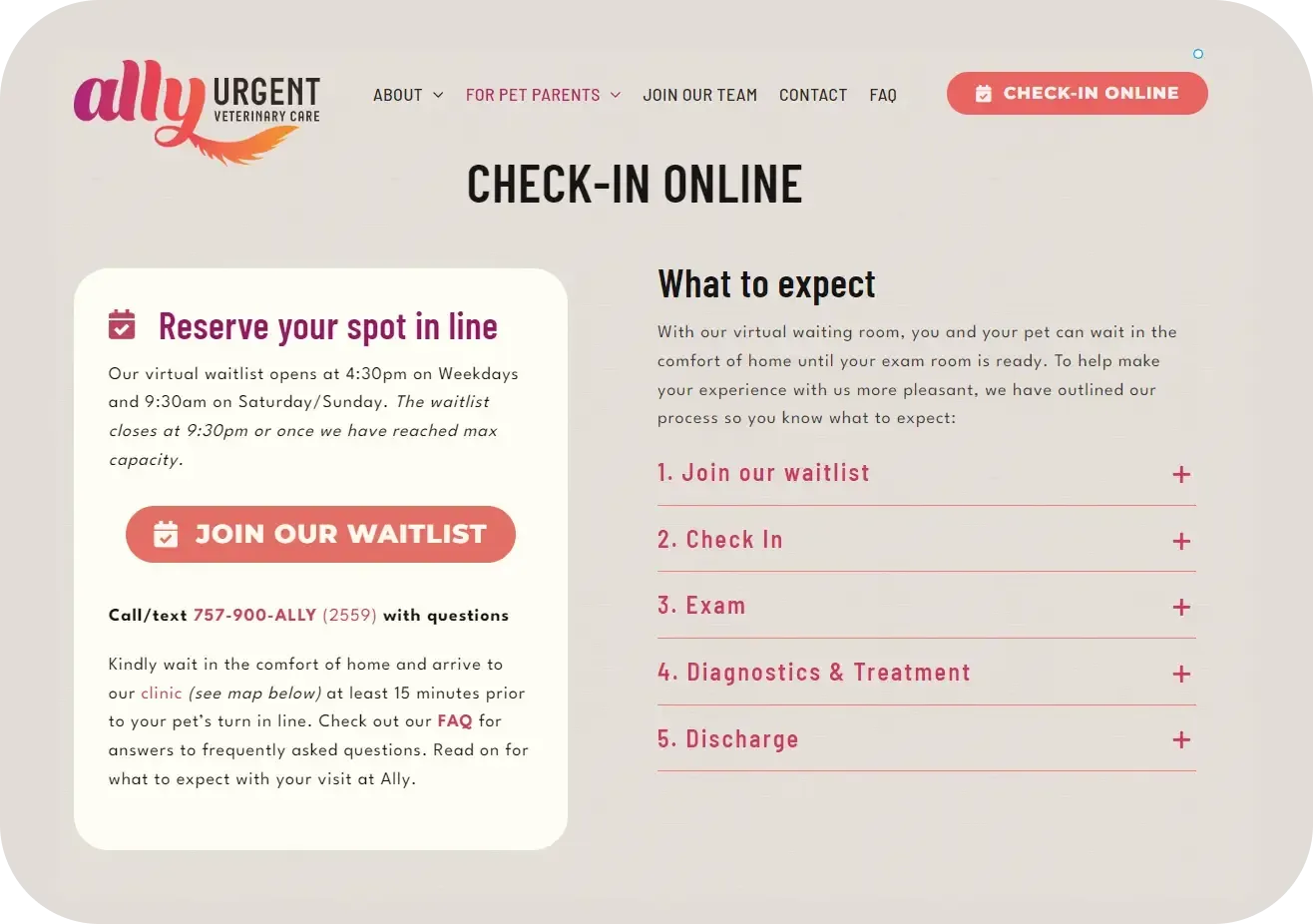
Ally Urgent Veterinary Care implemented NextMe at an urgent care clinic where walk-in volume is high and case urgency varies significantly. Moving from a paper sign-in process to a digital queue with triage flagging and SMS notifications changed what the front desk team was doing with their time. Staff efficiency improved, triage accuracy improved via priority ranking in the queue, and the clinic saw a measurable increase in positive online reviews - a direct reflection of a calmer, more organized client experience.
The full Ally Urgent Veterinary Care case study covers the specifics of how the transition worked and what changed for the team.
The lobby is a staff problem before it is a pet problem
Managing who is in your waiting area, in what order, and with what information is not a hospitality upgrade. It is a clinical operations decision that affects what your team can accomplish on any given shift. A front desk that is not managing a crowded lobby is a front desk that can do the rest of its job properly.
If you are ready to evaluate your options, the vet clinic waitlist app buyer’s guide covers what to look for before you commit. Or visit the NextMe veterinary page to see how the platform works in practice.