Running your vet clinic well means keeping animals calm, owners informed, and staff in control. The traditional waiting room works against all three. Anxious dogs stress out the cats in the next crate. Crowded lobbies overwhelm front desk staff. And owners who have been sitting for 40 minutes start to lose patience before they ever see the vet.
The Bayer Veterinary Care Usage Study found that 38% of cat owners and 26% of dog owners feel stressed just thinking about a vet visit, largely because of how anxious they know their pet will be. When the lobby amplifies that anxiety - unfamiliar animals, strange smells, unpredictable noise - the experience gets harder for everyone before the appointment even starts.
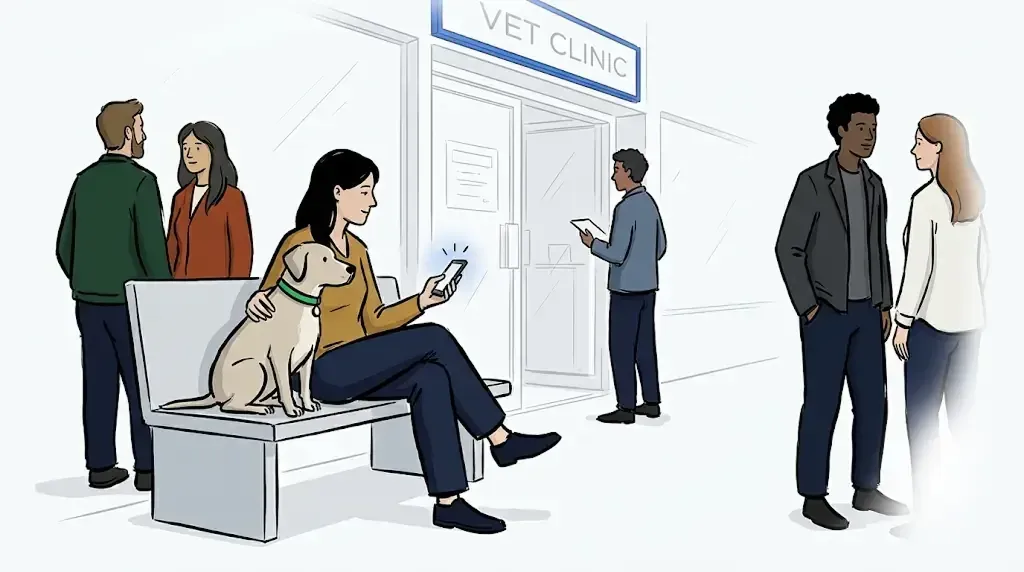
A veterinary virtual waiting room does exactly that. Pets and their owners wait outside until a staff member texts them to come in. The core idea is simple. But not every virtual waiting room is built for the specific demands of a vet clinic, and the differences matter more than you might expect.
If you are evaluating options for your practice, here is exactly what to look for.
The five features a veterinary virtual waiting room needs
Most virtual waiting room software was designed for restaurants or retail. Vet clinics have a different operating environment, a different patient population, and different compliance expectations. Before committing to any system, check for all five of the following.
1. Flexible remote check-in from the car or from home
The defining feature of a veterinary virtual waiting room is the ability to let pets and owners join the waitlist without entering the building. That can happen in two ways, and a good system supports both.
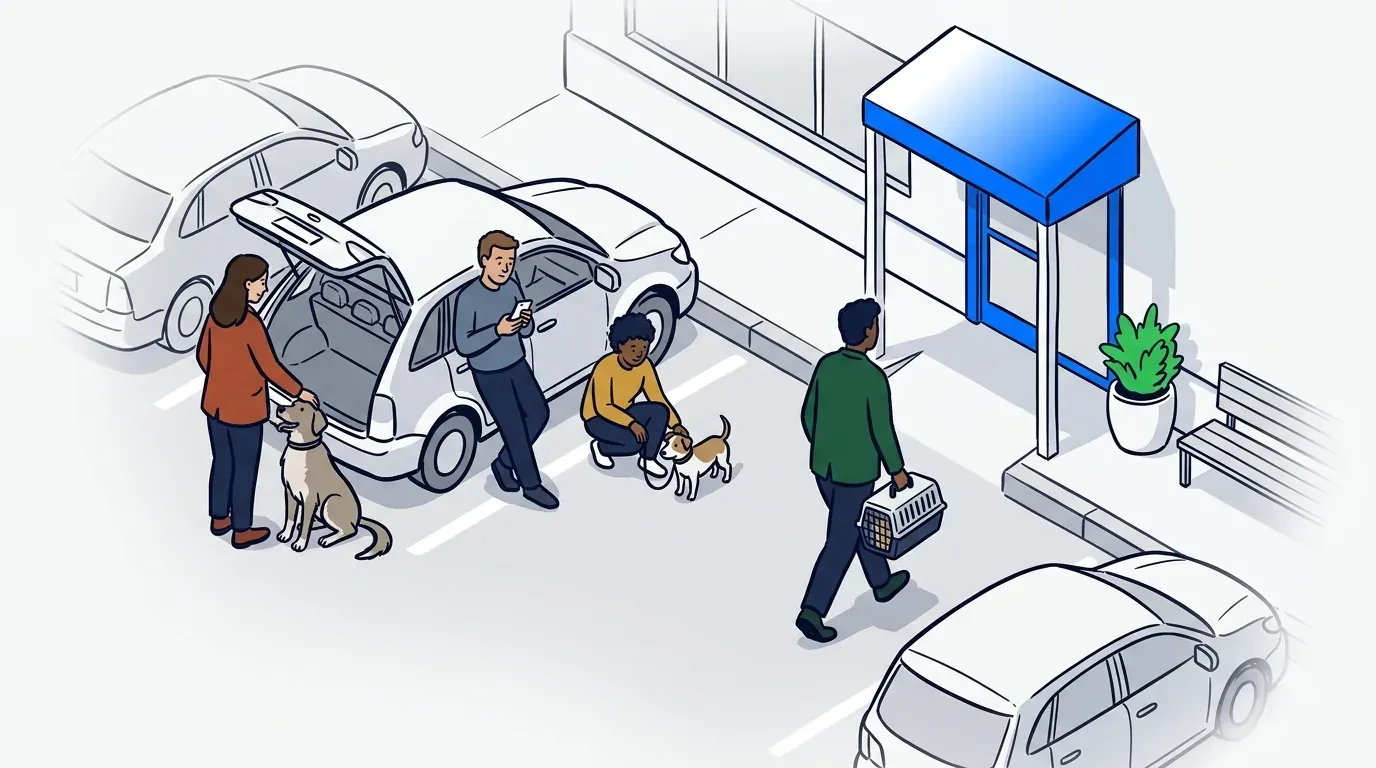
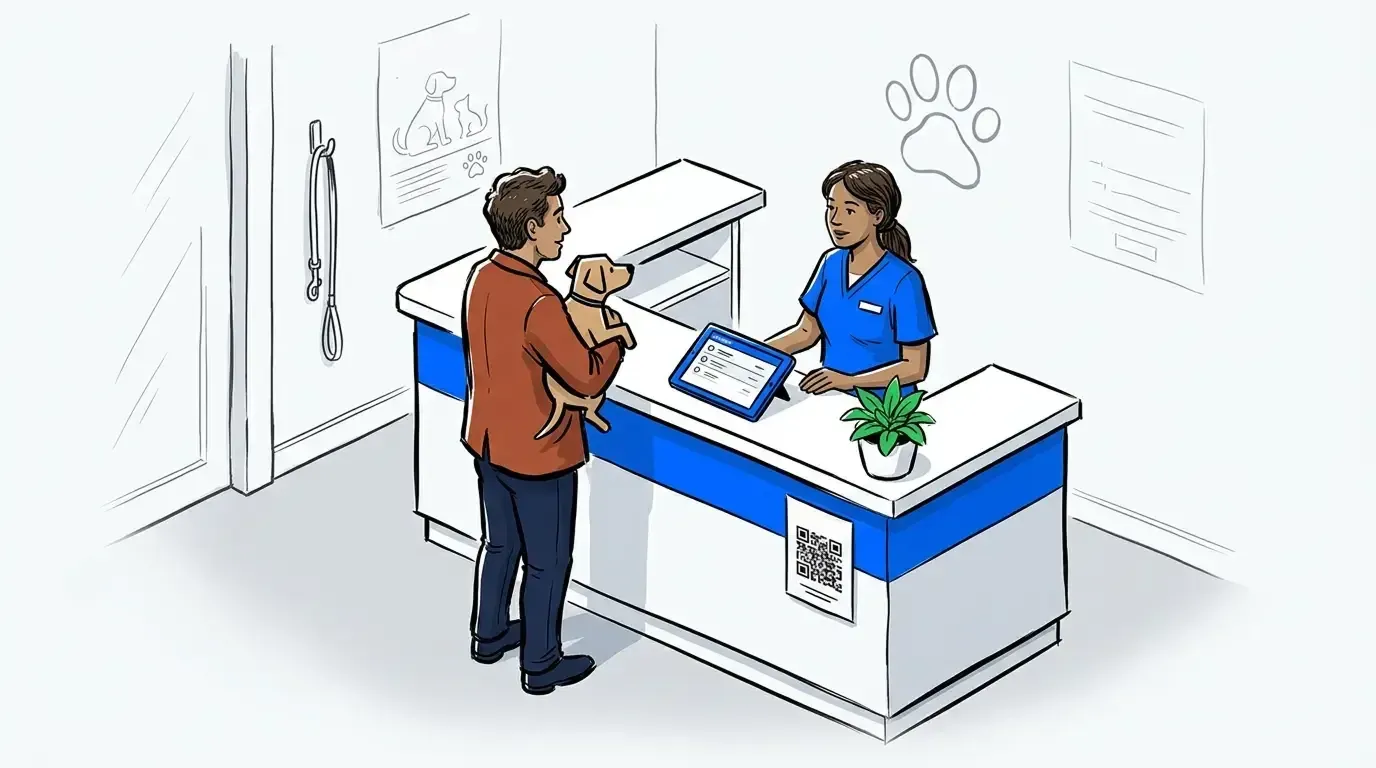
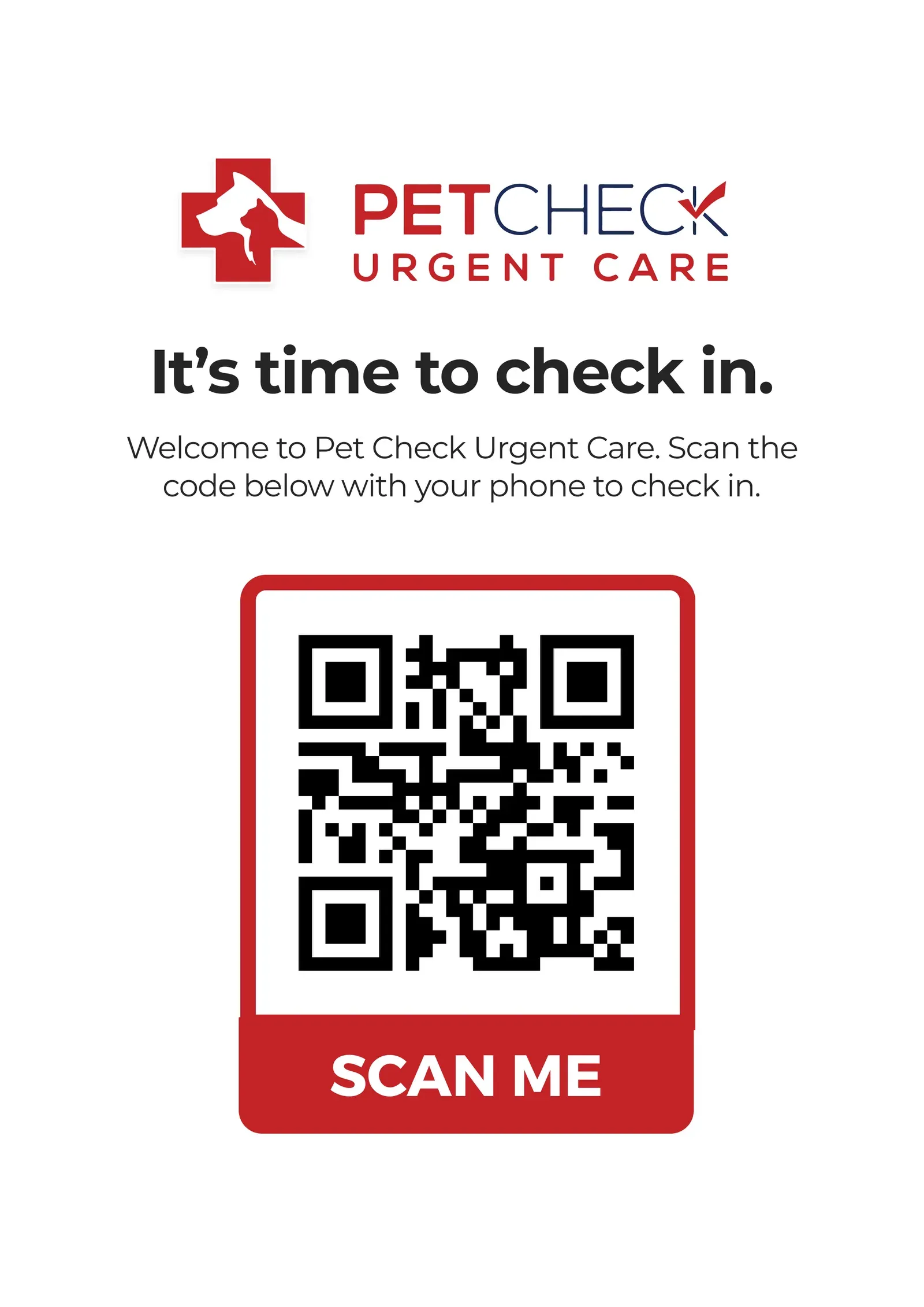
The first is QR-based check-in at the clinic: owners pull into the parking lot, scan a code on a sign at the entrance or in the lot, and join the queue from their phone without getting out of the car. The second is website check-in: owners join the waitlist directly from the clinic’s website before they even leave home, arriving already in the queue with no need to interact with any signage at all.
Both options work without an app download. The check-in flow should capture the owner’s name, pet name, and reason for visit in under 60 seconds. Anything that requires account creation will hurt adoption.
2. Two-way SMS communication
Calling owners back into the clinic is the most operationally critical moment in the flow. The system should send an automated SMS when it is their turn - not just a one-way push notification, but a message owners can respond to.
Two-way texting lets owners confirm they are in the lot and ready, flag that they need a few extra minutes, or ask a quick question before coming in. For busy clinics, this eliminates the phone calls that interrupt front desk staff and replaces them with a text thread that staff can manage at their own pace.
3. Priority triage queue management
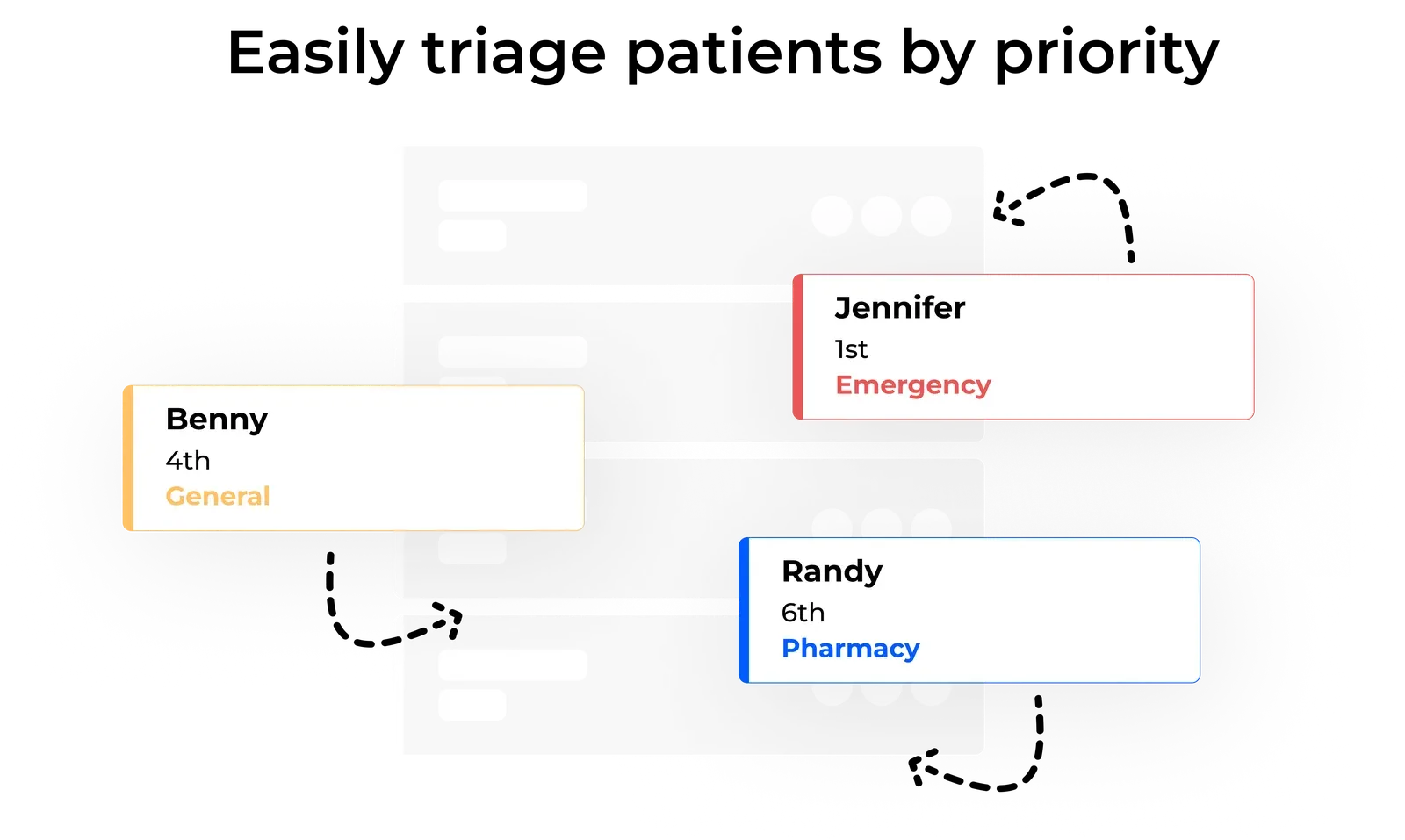
Not every walk-in can wait 20 minutes. A pet in respiratory distress or active trauma needs to be seen immediately, regardless of queue position. A veterinary virtual waiting room should support priority flagging at check-in - ideally with a field that lets the owner indicate urgency, or a staff-side override that moves a case to the front.
The system should display each patient in the queue with their priority status visible to staff at a glance, so front desk teams and technicians can make real-time triage decisions without having to pull cases manually.
4. A virtual waiting room that keeps owners engaged while they wait
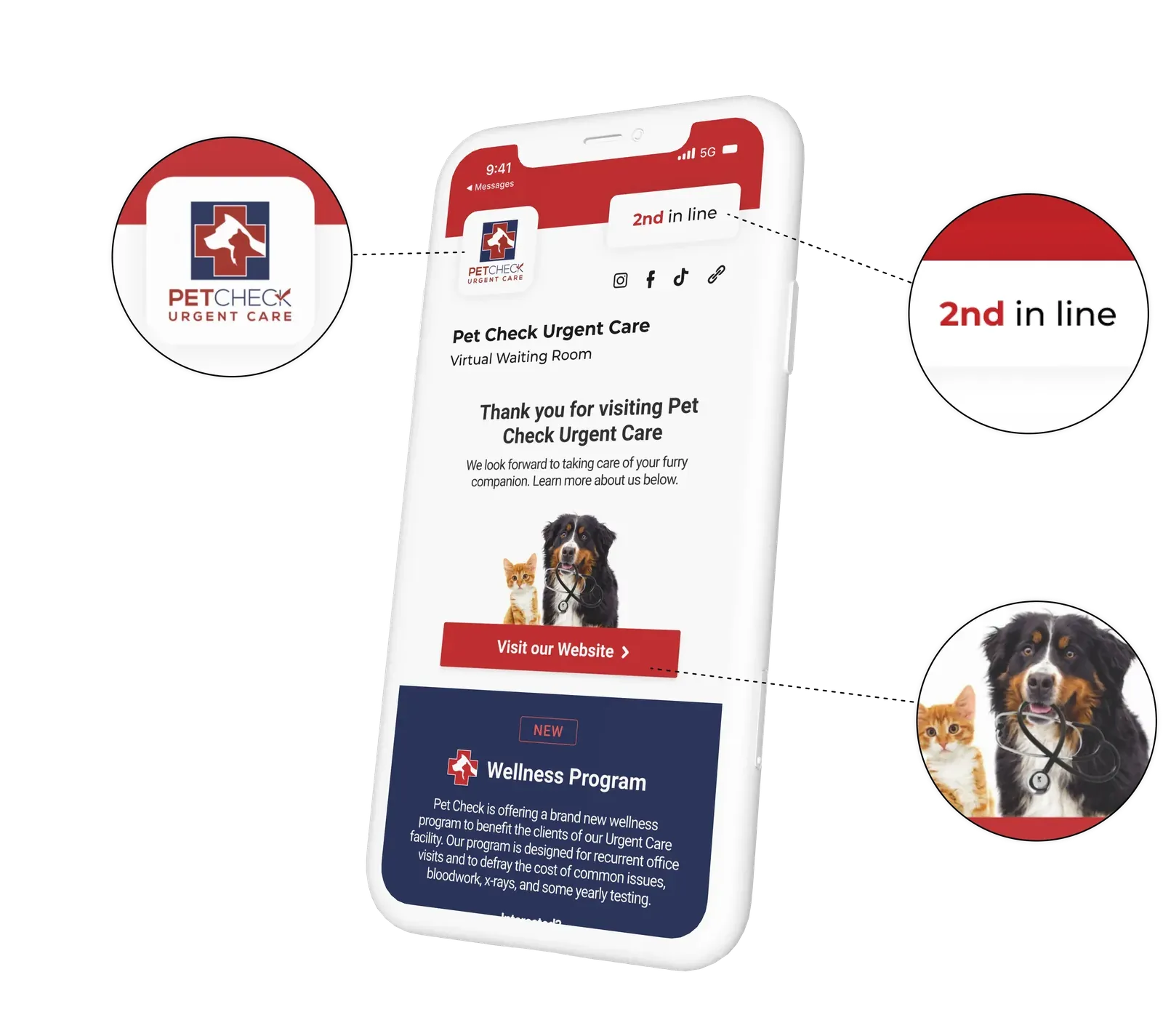
Owners sitting in a parking lot are anxious. A good veterinary virtual waiting room does not just hold their place in line - it gives them something useful while they wait. That means accurate, real-time wait time estimates and optional content in the waiting room screen.
For clinics that want to use the time strategically, the virtual waiting room can display aftercare reminders, preventive care tips, or information about services the clinic offers. It keeps the owner engaged and informed rather than sitting in silence watching the minutes pass. For practices working to reduce no-shows, an engaged owner who can see their queue position is far less likely to leave.
5. Simple setup and no hardware requirement
Vet clinic operators are not IT professionals. The system you choose should work on any device your staff already has - a tablet at the front desk, a phone in the back - without requiring proprietary hardware or a lengthy onboarding process.
Look for a system that is staff-ready within a day of signing up. Setup should mean placing a QR code at your entrance, adding a check-in link to your website, and showing your front desk team one screen. If a vendor is quoting you a multi-week implementation, that is a signal the product was not built for independent practices.
What this looks like in practice at a real vet clinic
Ally Urgent Veterinary Care deployed NextMe’s virtual waiting room to address two compounding problems: a crowded lobby that made anxious animals more anxious, and a no-show rate that disrupted the daily schedule.
After switching to a car-based check-in flow, the clinic reported meaningful improvements across both. Wait stress dropped for pets and owners alike, with animals no longer exposed to unfamiliar animals in a small enclosed space. No-show rates improved because owners who had checked in remotely were already committed and engaged with the queue rather than passively waiting on a list.
For urgent care clinics handling high-volume walk-in traffic, the virtual waiting room also improved triage speed. Staff could see the full queue with priority flags before patients entered, giving them a few minutes to prepare for incoming cases rather than reacting at the door.

The right system makes the waiting room invisible
The best veterinary virtual waiting room is the one your clients never have to think about. They join from home or scan a code in the lot, wait in the car with their pet, and come in when a text arrives. That simplicity requires a system built for the vet context - one with flexible remote check-in, triage priority, two-way SMS, and zero hardware overhead.
NextMe is built for exactly this environment. If your clinic is still managing walk-ins from a paper sign-in sheet or a generic waitlist app not designed for veterinary care, it is worth seeing what a purpose-built veterinary virtual waiting room can do. You can also revisit the operational case for the switch in our earlier post on how a veterinary waitlist app reduces no-shows and wait stress.