A single-doctor clinic and a multi-doctor animal hospital both run a front desk. They are not doing the same job. The clinic manages one stream of arrivals against one schedule. The hospital manages several at once, across longer hours, with a wider mix of reasons people walk through the door.
That mix is what makes an animal hospital waitlist app a different purchase than a general clinic tool. A wellness appointment, a same-day sick visit, a walk-in emergency, and a referral from another practice all reach the same counter. Each one carries a different expectation about what happens next. A single arrival-ordered list flattens every one of them into the same thing.
This post covers what changes when a practice scales past one doctor. It looks at how to give each arrival type its own path into one queue. It ends with what to look for when the front desk is the constraint.
What an animal hospital waitlist app does
An animal hospital waitlist app is queue software that captures every arrival at a multi-doctor hospital into one live list: walk-in, scheduled, emergency, and referral. Pet owners check in from their phone and wait wherever they are comfortable. A text arrives when the team is ready. Staff watch the whole floor on one screen.
The distinction matters because most waitlist tools assume one queue and one service point. An animal hospital runs several exam rooms, more than one doctor at a time, and often a treatment area alongside. The software has to hold all of that without the front desk maintaining it by hand.
It also has to work across a longer day. Our post on how a veterinary clinic queue system keeps patients moving covers the underlying mechanics. It follows a single patient from arrival to exam room. This post is about what changes when a hospital runs several of those at once.
Why an animal hospital front desk runs differently
Practice managers usually describe the problem as volume. More pets, more calls, more people in the lobby. Volume is real. It is not the thing that breaks a front desk.
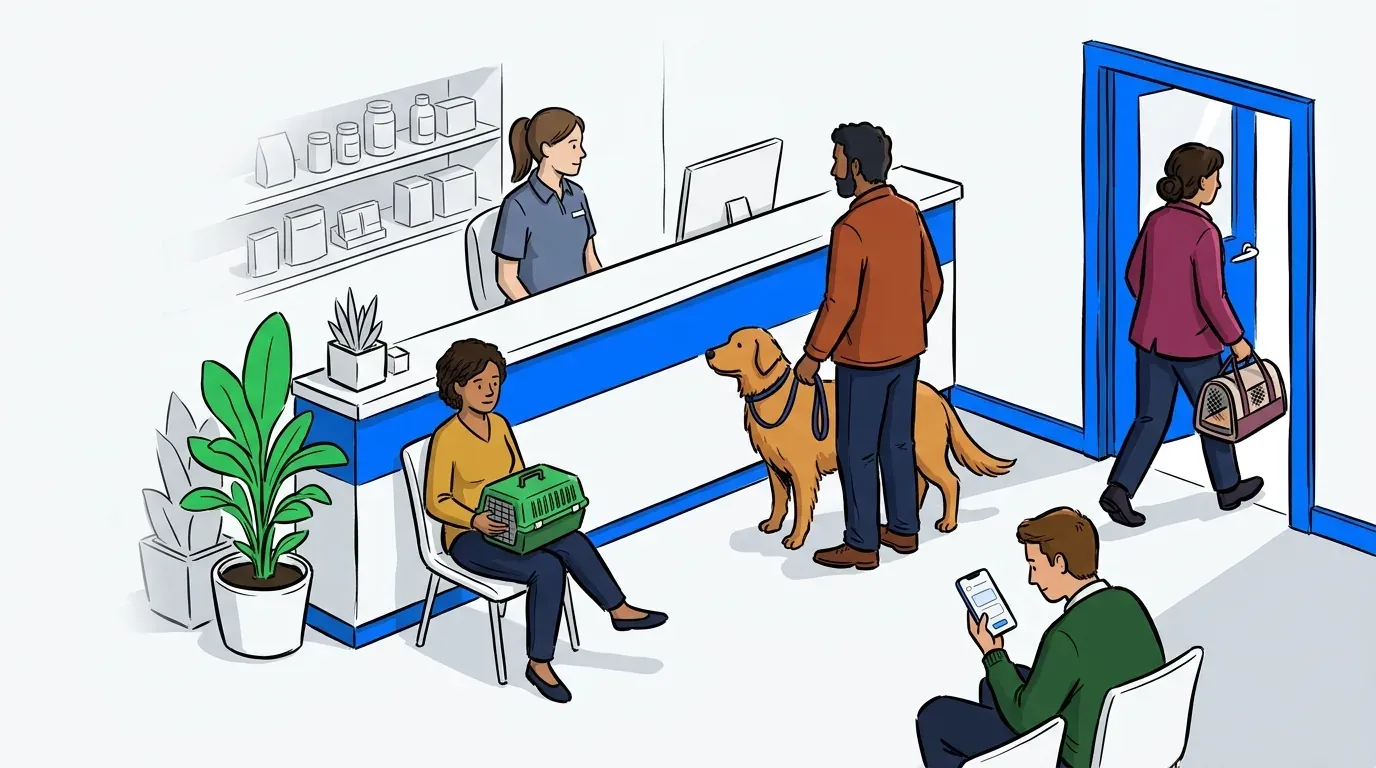
Variety is. A hospital counter absorbs at least four kinds of arrival in a single hour, and each one carries a different implied promise:
- A scheduled appointment expects a room near its appointment time.
- A same-day sick visit expects the team to fit it in today.
- A walk-in emergency expects an immediate assessment.
- A referral expects the hospital already knows the case is coming.
A receptionist holds all four promises in their head at once. When the list on the counter is only names in arrival order, that context lives nowhere else. A desk running with 2 people on a Saturday morning cannot keep it there.
The referral arrival is the one nobody plans for. The referring practice knows the case is coming. The receiving hospital’s queue usually does not. AAHA’s 2025 Referral Guidelines recommend a single point of contact on each side, plus clear expectations for the handoff. A referred client arrives mid-process, not at the start of one. The owner heard their case was urgent enough to send onward. They do not expect to explain it again at a counter.
Giving each arrival type its own path into one queue
The fix is not more queues. Separate lists for walk-ins, appointments, and referrals only move the problem, because someone still has to compare them.
Capture the difference at the point of arrival instead. A check-in form can ask what kind of visit this is. It can also ask which doctor the pet is seeing, and whether another practice sent them. That answer travels with the entry and shows on the staff view.
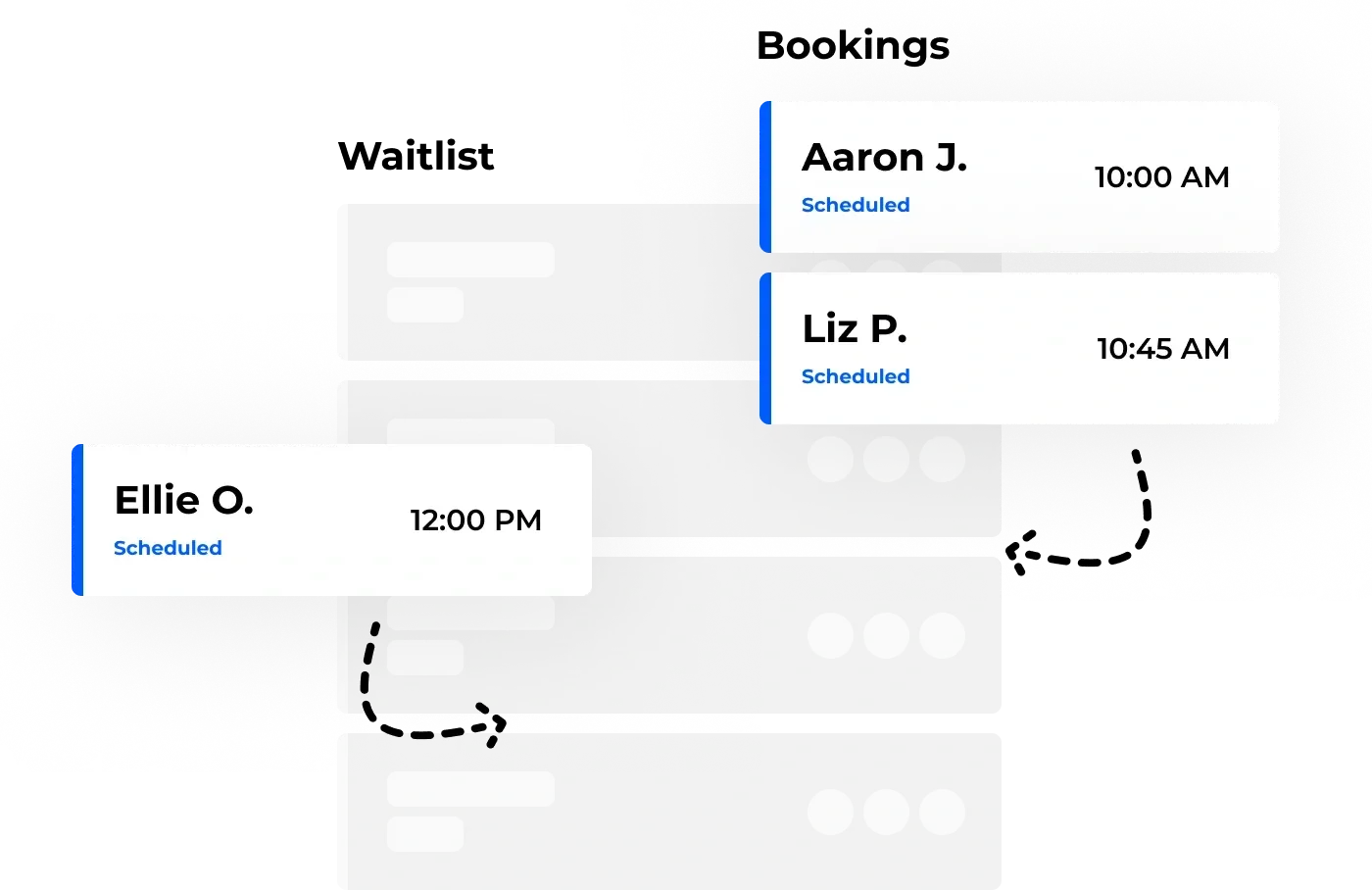
Bookings holds the scheduled side. A booked appointment and a walk-in sit in one view, not on a screen and a paper list. Staff stop reconciling two systems every time the door opens.
Reordering for clinical priority still happens. Our post on vet clinic triage queue management covers what a practice owes an owner whose visit slips behind an urgent case. The point here is narrower. Before anything gets reordered, the queue has to know what each arrival actually is.
Keeping the lobby workable across a longer day
An animal hospital that opens early and closes late never gets a quiet lobby. It gets a lobby that is busy in a different way at 8am than at 7pm.
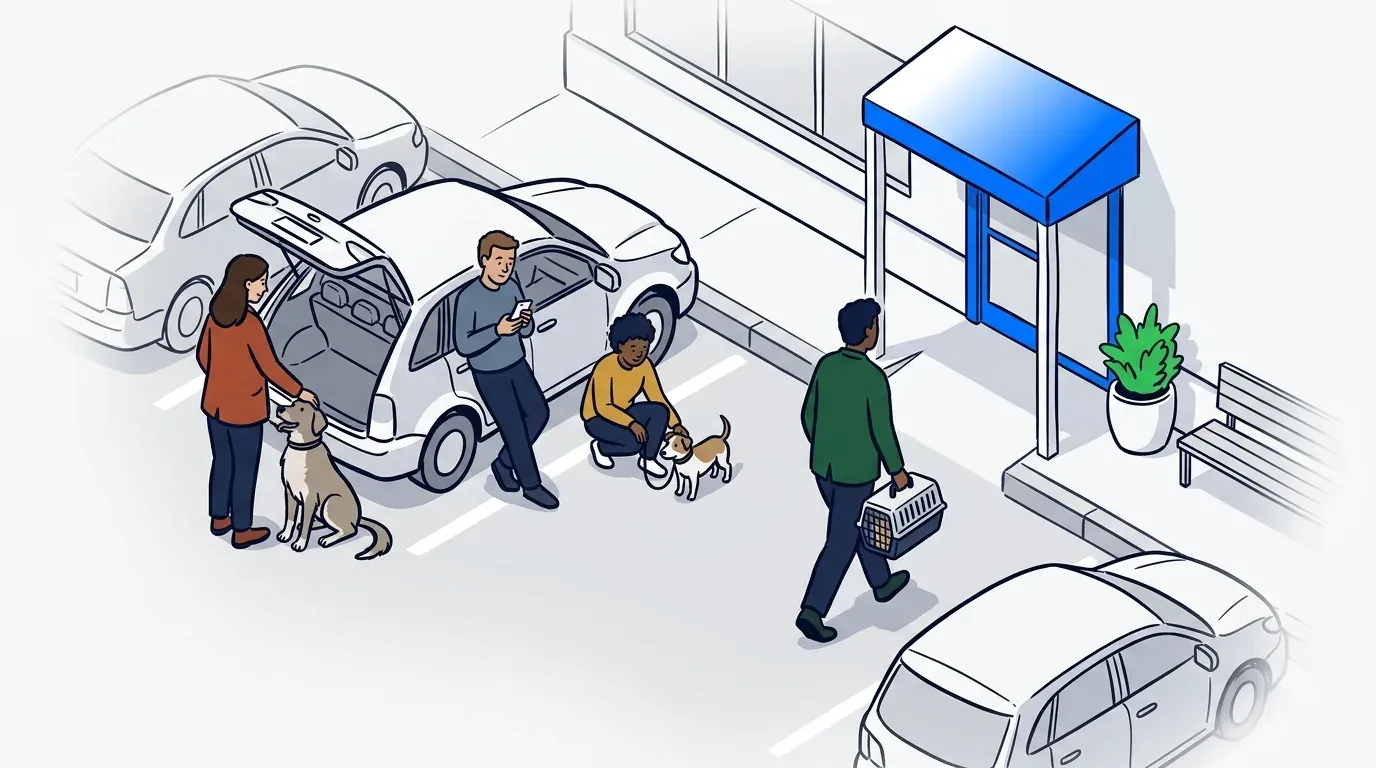
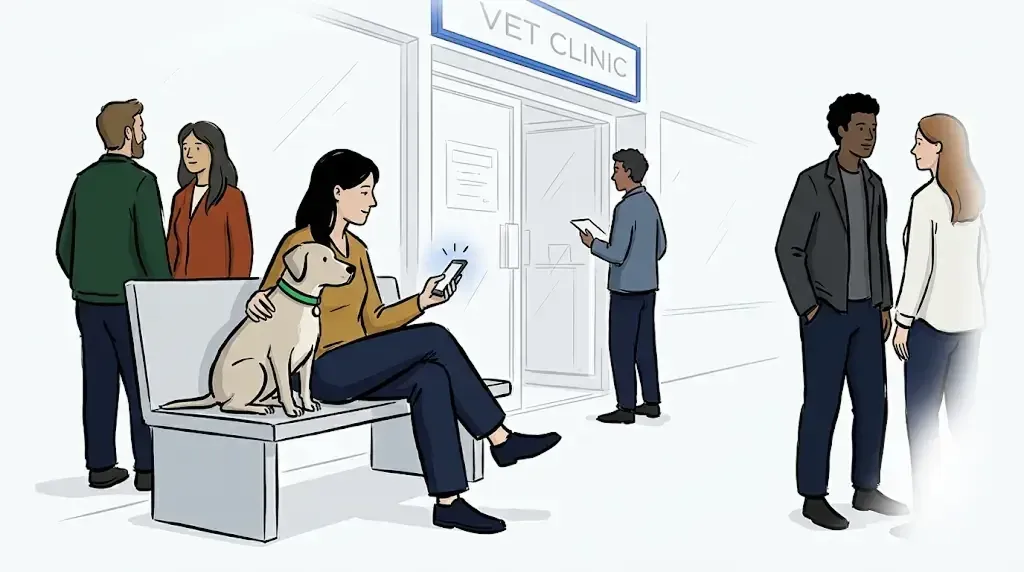
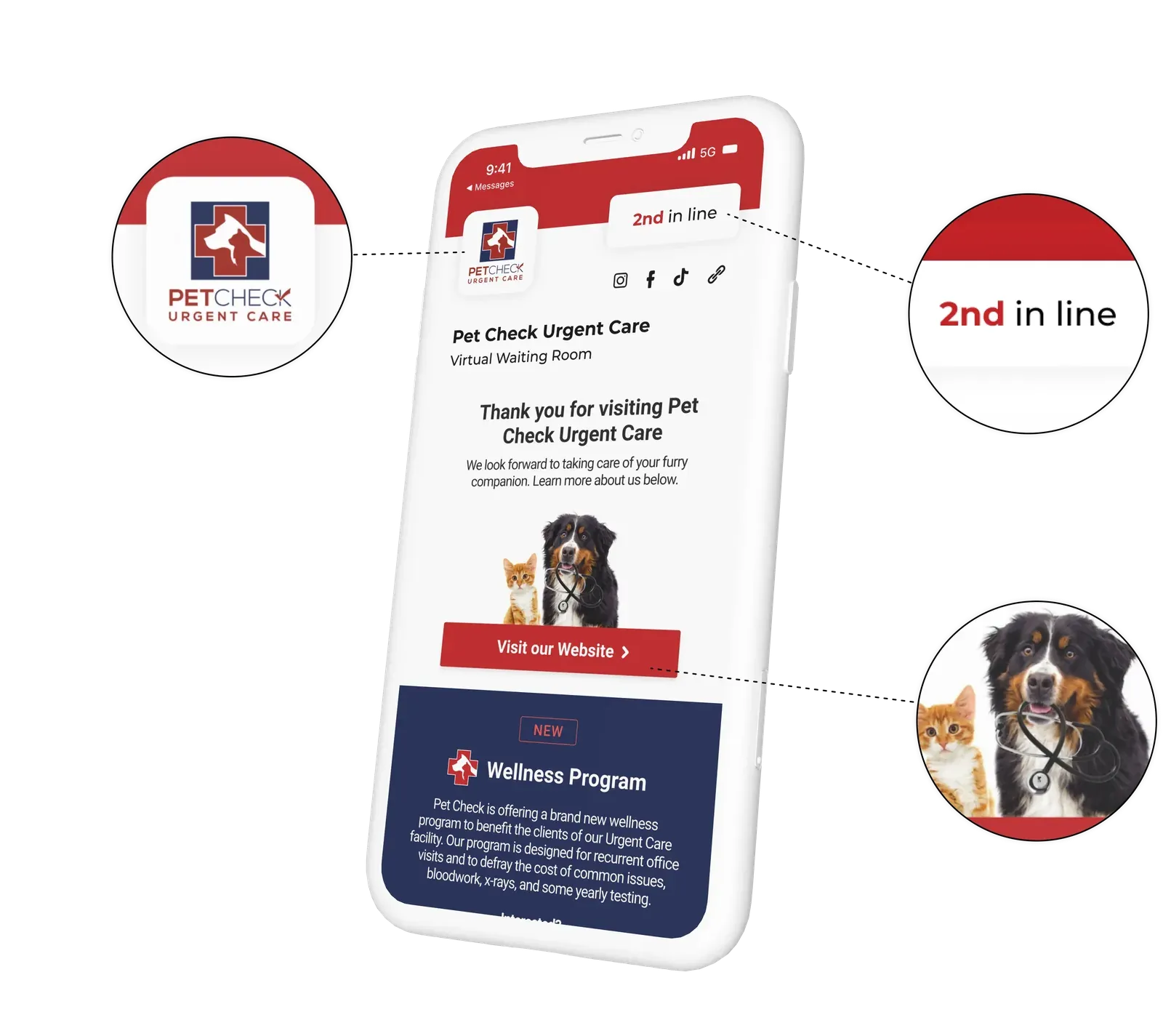
A virtual waiting room takes the pressure off the room itself. Owners hold their place from the parking lot, or from home when they live close by. An anxious dog is not sharing a bench with a row of carriers for 40 minutes.
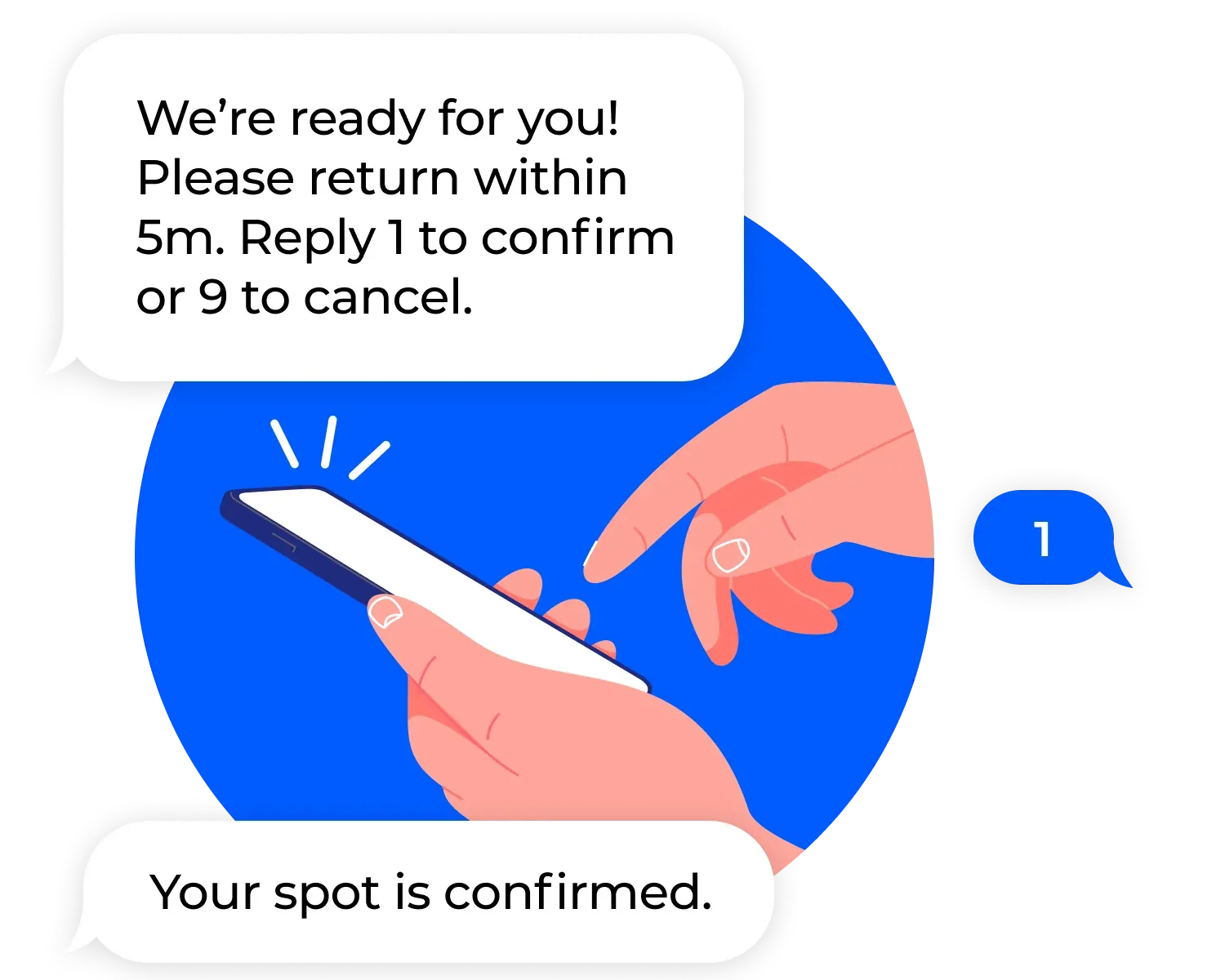
Text updates carry the wait. Guests get a message when the team is ready, and two-way SMS lets them reply 1 to confirm or 9 to cancel. The desk hears about a cancellation before the room sits empty.
What to look for when the front desk is the constraint
Three things separate a tool that fits a hospital from one built for a single-doctor clinic:
- Check-in captures the arrival type, so staff never type it in later
- Walk-ins and scheduled appointments share one view instead of two systems
- Per-doctor or per-service routing, so the list reflects how the floor actually runs
Ally Urgent Veterinary Care runs an urgent care practice on NextMe. The team has seen better triage accuracy through priority ranking and a lift in positive online reviews. Our post on running a walk-in vet clinic covers how a mostly unscheduled practice absorbs that volume.
One thing is worth tracking after rollout: what share of arrivals are genuinely unscheduled. Most hospitals guess low. The real number usually reshapes how the practice builds its schedule.
The front desk is the constraint worth fixing
An animal hospital does not need a bigger lobby or a longer counter. It needs a queue that knows the difference between the four kinds of people standing at it. Owners also need somewhere better to wait than a shared bench.
Queue management built for veterinary practices starts with the arrival, not the appointment. See how NextMe handles it.