Walk-in vet clinic management works differently than managing a mostly scheduled practice. None of that volume shows up far enough in advance to staff around it precisely. Same-day and walk-in visits stack on top of whatever the appointment book already has booked. The front desk has to absorb them as they come, not as they were planned. Doing that well takes a workflow built for unannounced arrivals. That workflow takes in a walk-in, captures how urgent it is, and routes it into the queue automatically. No one at the desk should have to sort it out by hand.
This post covers what that looks like in practice. It also covers where a walk-in-heavy front desk typically loses time. Then it shows how a digital queue keeps that volume moving without adding staff.
What walk-in vet clinic management actually involves
Walk-in vet clinic management is the process of absorbing same-day, unscheduled arrivals into a clinic’s workflow without letting them overwhelm the front desk or bump urgent cases out of order. For clinics whose volume is mostly walk-in rather than pre-booked, this isn’t a scheduling problem. It’s an intake problem, and it needs its own system rather than a busier version of the appointment book. For the operational infrastructure behind that system, the veterinary clinic queue system guide covers the full setup in more depth.
Why the front desk drowns first
Walk-in volume doesn’t arrive evenly. It clusters, and it clusters in fairly predictable windows: lunch, right after work, and weekend mornings. The problem isn’t that clinics can’t predict when walk-ins happen. It’s that most front desks are staffed and organized as if every arrival is a surprise, which means every cluster feels like a crisis even when it’s the same pattern every week.
According to AVMA workforce research, full-time veterinary staff already average close to a 42-hour week, and dvm360’s coverage of managing surprise walk-ins notes that a single unplanned visit can add another hour on top of an already full day. That math doesn’t work if every walk-in gets handled as an exception. It works better when the clinic has a system that expects the cluster and routes around it.
Scale changes the shape of the problem. At a larger practice the pressure comes less from when arrivals cluster than from how many different kinds show up at once, which is the case we make for an animal hospital waitlist app.
Absorbing arrivals with a digital queue
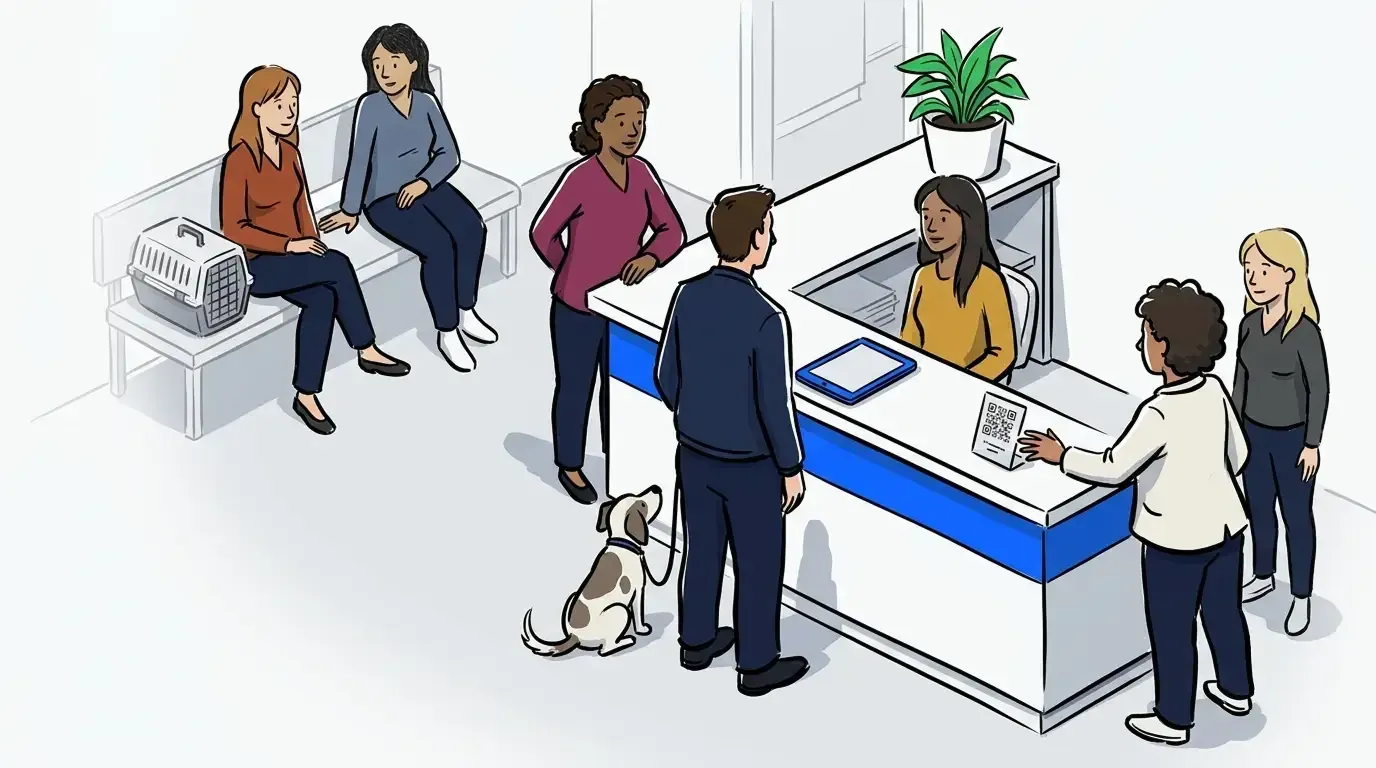
The fix isn’t more staff at the desk. It’s giving arrivals somewhere to go the moment they walk in, before anyone has to stop what they’re doing to acknowledge them. A pet owner can check in by scanning a code at the door, whether they had an appointment or not, and that single action puts them into the same queue as everyone else without a staff member typing anything into a system.
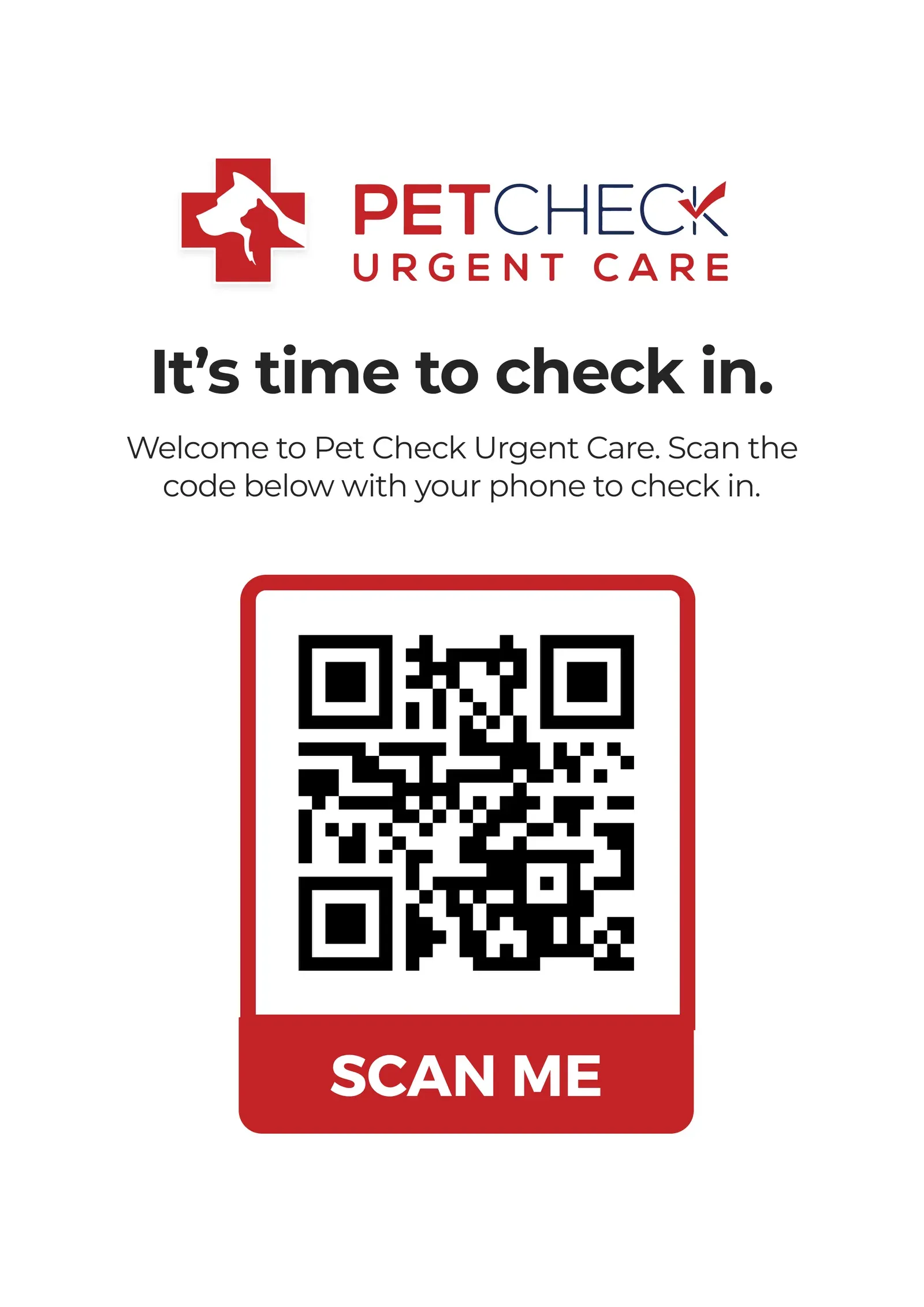
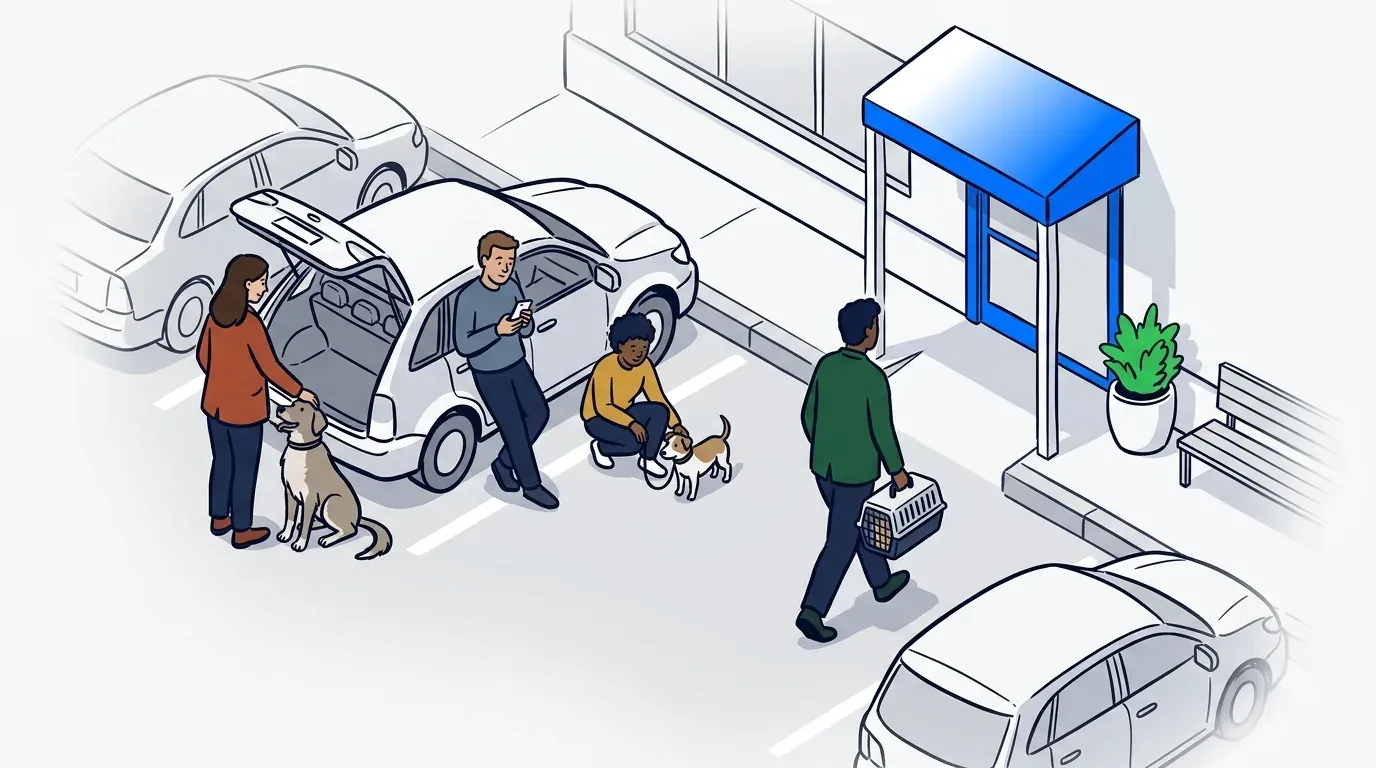
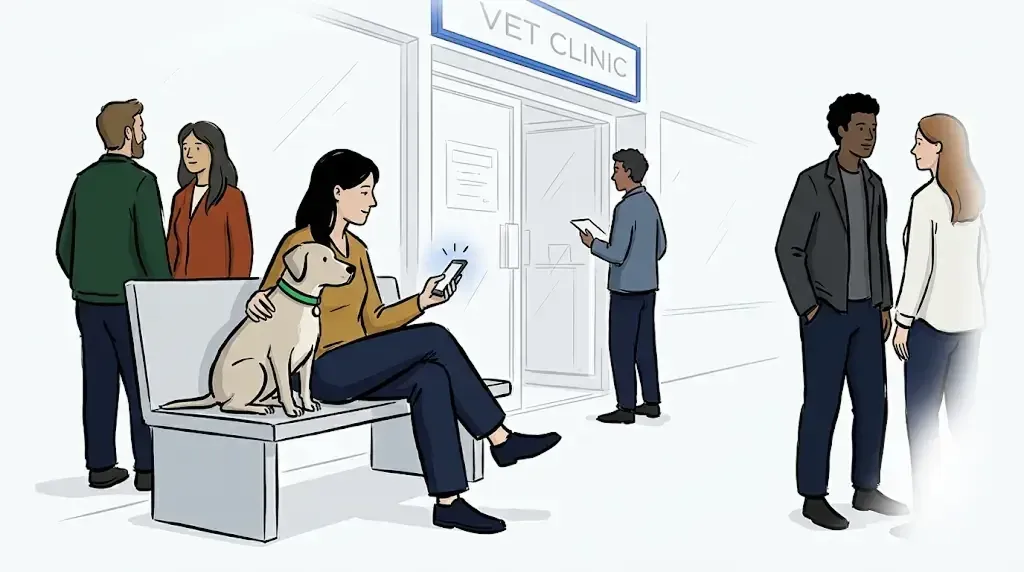
From there, the owner gets a text with an estimated wait and is free to wait in the car or step outside instead of standing at the counter. That single change removes the most disruptive part of a walk-in surge: five or six people all trying to get the front desk’s attention within the same ten minutes.
Triage that keeps urgent cases from getting lost
A queue that treats every arrival the same is only half the fix. Walk-in clinics need urgent cases to move ahead of routine ones without a staff member manually re-sorting the line. Capturing a quick triage flag at check-in, lethargic versus routine wellness versus a same-day recheck, lets the queue reorder itself instead of relying on whoever is at the desk to notice and intervene.
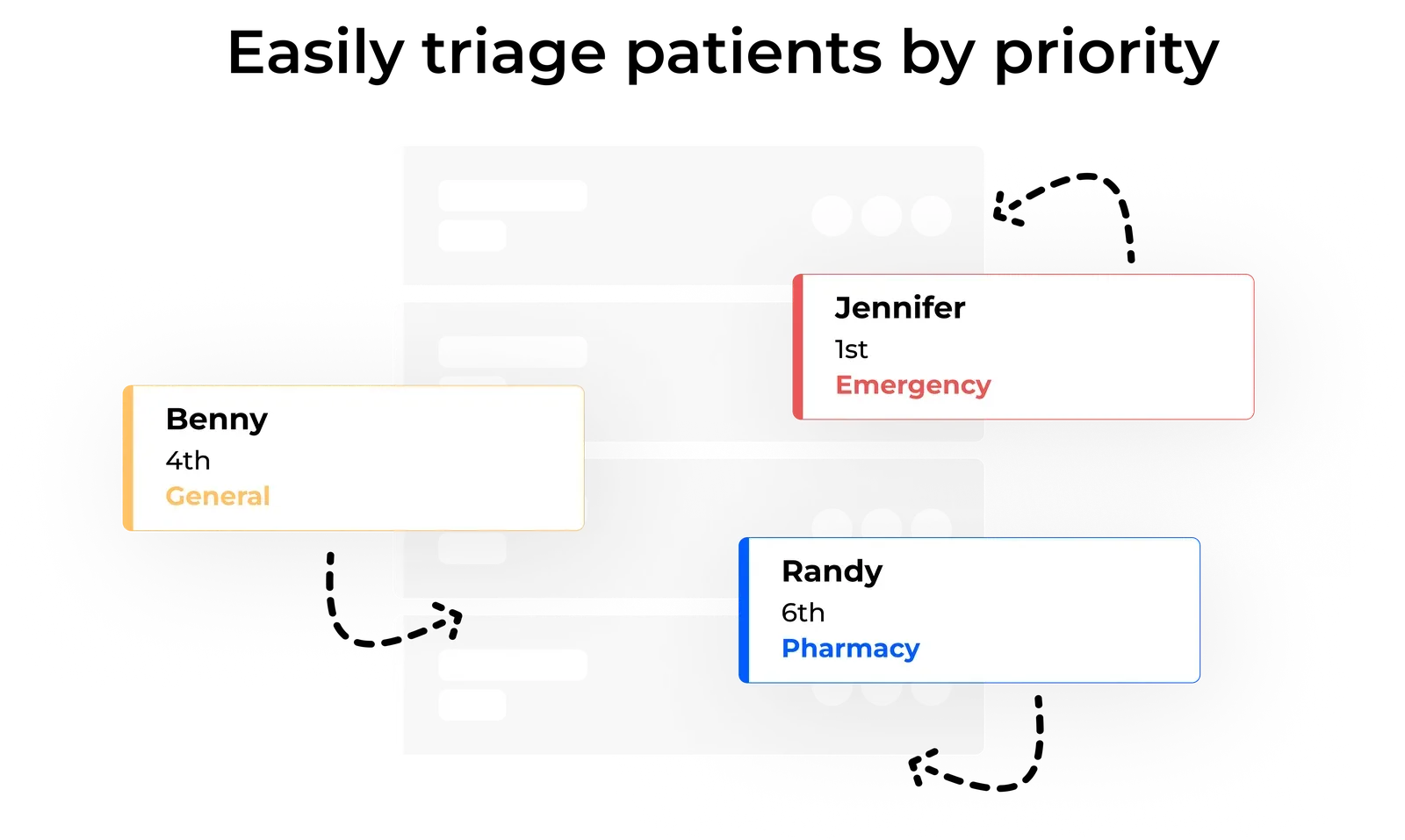
Ally Urgent Veterinary Care runs on this model for its walk-in-heavy volume, using triage capture at intake to keep urgent cases visible and moving even during its busiest windows, with staff reporting better tracking of who’s actually next and a lift in client reviews since making the switch.
Clean handoffs from lobby to exam room
The last failure point is the handoff itself. Even with a good queue, clinics lose time when a tech has to walk to the lobby, call a name, and wait for a response from someone who stepped out. A dashboard that shows exactly who’s next and where they are, in the car or in the lobby, lets staff send a callback text the moment a room opens instead of physically checking.
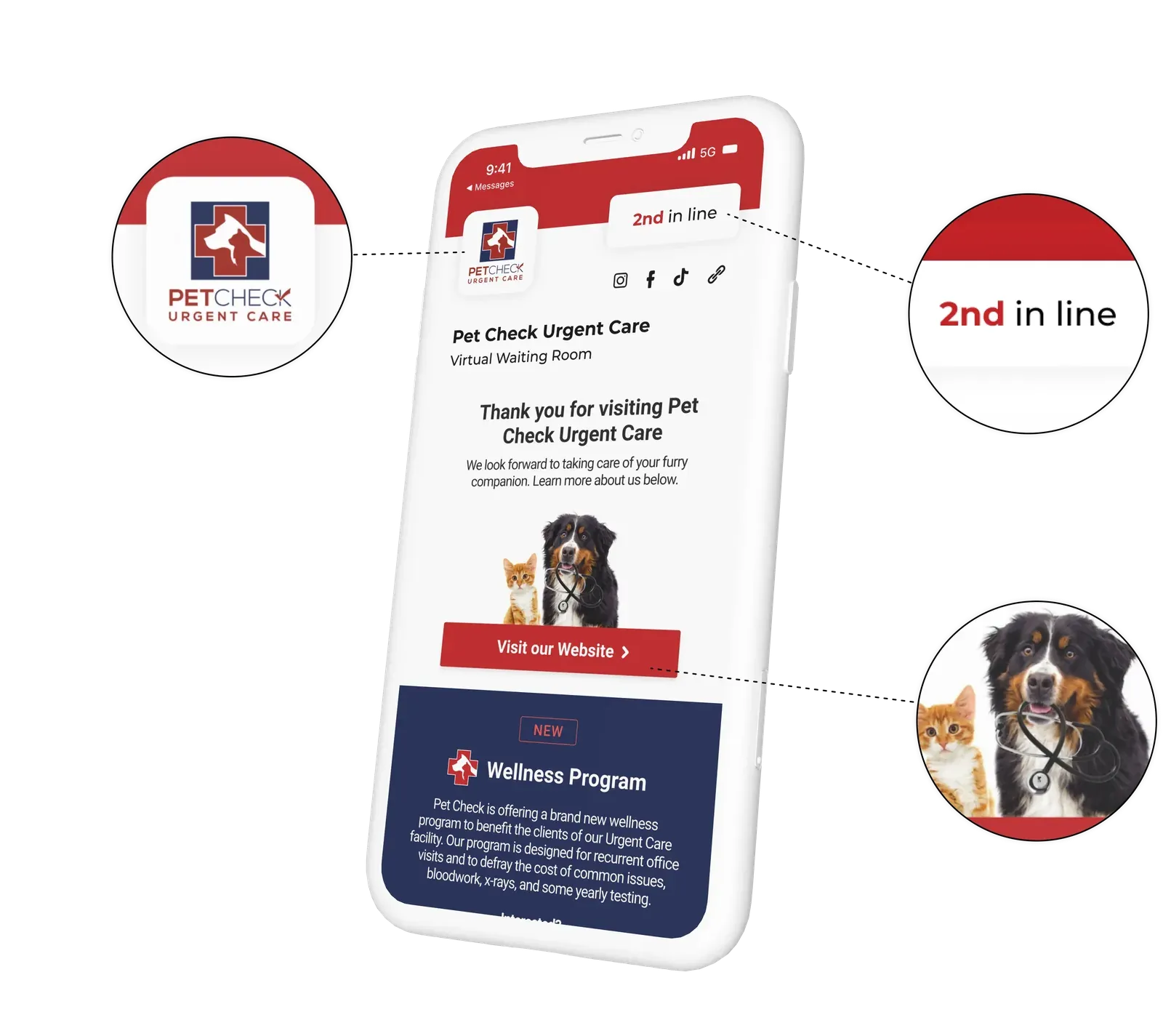
This also matters for mixed clinics running walk-ins alongside scheduled visits, since bookings and same-day arrivals can sit in one queue instead of two competing systems that staff have to reconcile by hand.
Conclusion
A walk-in-heavy clinic doesn’t need more staff to stop feeling chaotic. It needs a system that catches arrivals the moment they happen, sorts urgent cases automatically, and gets the handoff right without anyone standing in the lobby calling names. For more ways to bring down wait times without adding headcount, see the five practical fixes guide, or explore how NextMe works for veterinary clinics of any size.