There’s a moment most operators hit a year or so into an OpenTable contract. The invoice arrives, the cover fees have grown along with the covers, and it isn’t obvious what the extra spend bought. That’s usually when the search for an OpenTable alternative for restaurants starts.
It’s the right question asked slightly wrong. OpenTable and a waitlist app like NextMe aren’t two versions of the same product. One sells you diners. The other manages the diners already standing at your door. Before you swap anything, it’s worth knowing which of those two jobs you’ve been paying for.
Here’s an honest comparison, including where OpenTable wins outright.
What an OpenTable alternative for restaurants actually replaces
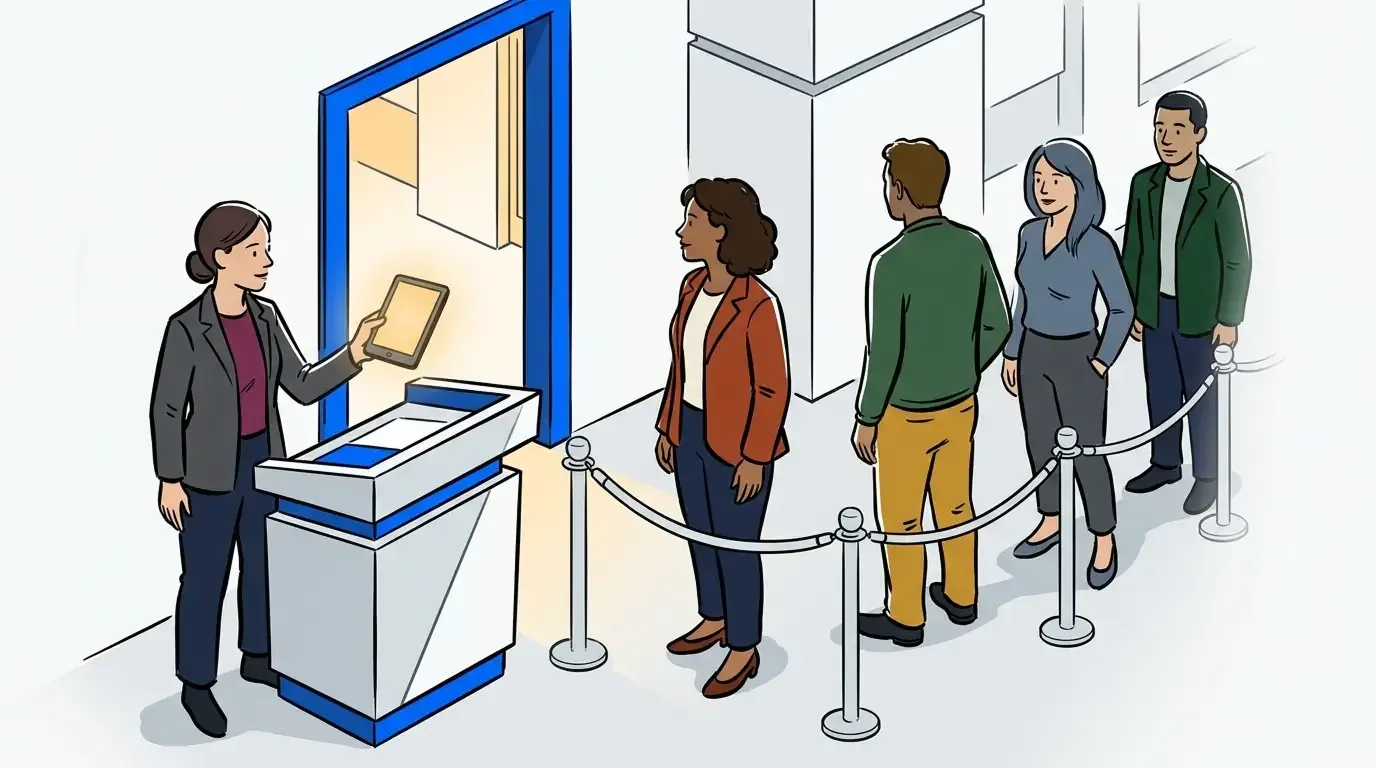
NextMe is the most common OpenTable alternative for restaurants that run on walk-in traffic. OpenTable is a reservation network. It charges a monthly subscription plus a fee for every diner seated through its platform, and it earns that fee by sending you diners who found you there. NextMe is a walk-in queue and virtual waiting room. Guests join from their phone, get a text when the table’s ready, and the price stays flat whether you seat 50 covers or 500.
That difference decides everything else. A reservation network’s job is to fill tomorrow’s book. A queue system’s job is to run tonight’s floor. Most restaurants need both jobs done. They rarely need both tools.
How NextMe and OpenTable compare
| NextMe | OpenTable | |
|---|---|---|
| Built for | Walk-in traffic and live guest flow | Advance reservations and diner discovery |
| Pricing model | One monthly rate | Subscription from $149 to $499, plus a fee on every diner seated through the network |
| Walk-in waitlist | Core product | Core and Pro plans only |
| During the wait | Branded virtual waiting room you control | Confirmation and reminder messaging |
| Guest discovery | None | 1.7 billion seated diners a year |
| Industries served | Restaurants plus 30 others | Restaurants only |
Pricing sourced from OpenTable’s published plan pages as of September 2026.
Our restaurant waitlist buyer’s guide scores the wider category if you’re still shortlisting. This post assumes OpenTable is already on your bill. And if you’re weighing two standalone tools instead, the NextMe vs TablesReady comparison goes deeper there.
When the network earns its fee
OpenTable sells something NextMe doesn’t have and can’t build: an audience. Roughly 1.7 billion diners a year get seated through the platform across more than 60,000 venues in 105 countries. Someone opens the app in a neighborhood they don’t know, and your restaurant appears next to 30 others.
That’s a marketing channel, and the per-diner fee is what renting it costs. For a destination room competing on visibility, that trade often makes sense. Look at where your covers originate before you touch anything. If a real slice of them started inside the app, you’re buying customers, not paying overhead.
Two other situations point the same way. A reservation-led room with few walk-ins doesn’t have a queue to manage. And if years of guest history live inside OpenTable’s profiles, unwinding that is a cost in itself.
What a queue system does that a network can’t
For most restaurants, though, the bottleneck isn’t getting people through the door. It’s what happens once they’re there.
The waitlist is the product, not an upgrade
OpenTable’s in-house waitlist only ships on the Core and Pro plans. Buy in at Basic and you get reservations, not a queue. That catches out a lot of operators who signed up for walk-in management and found it sitting behind a higher tier.
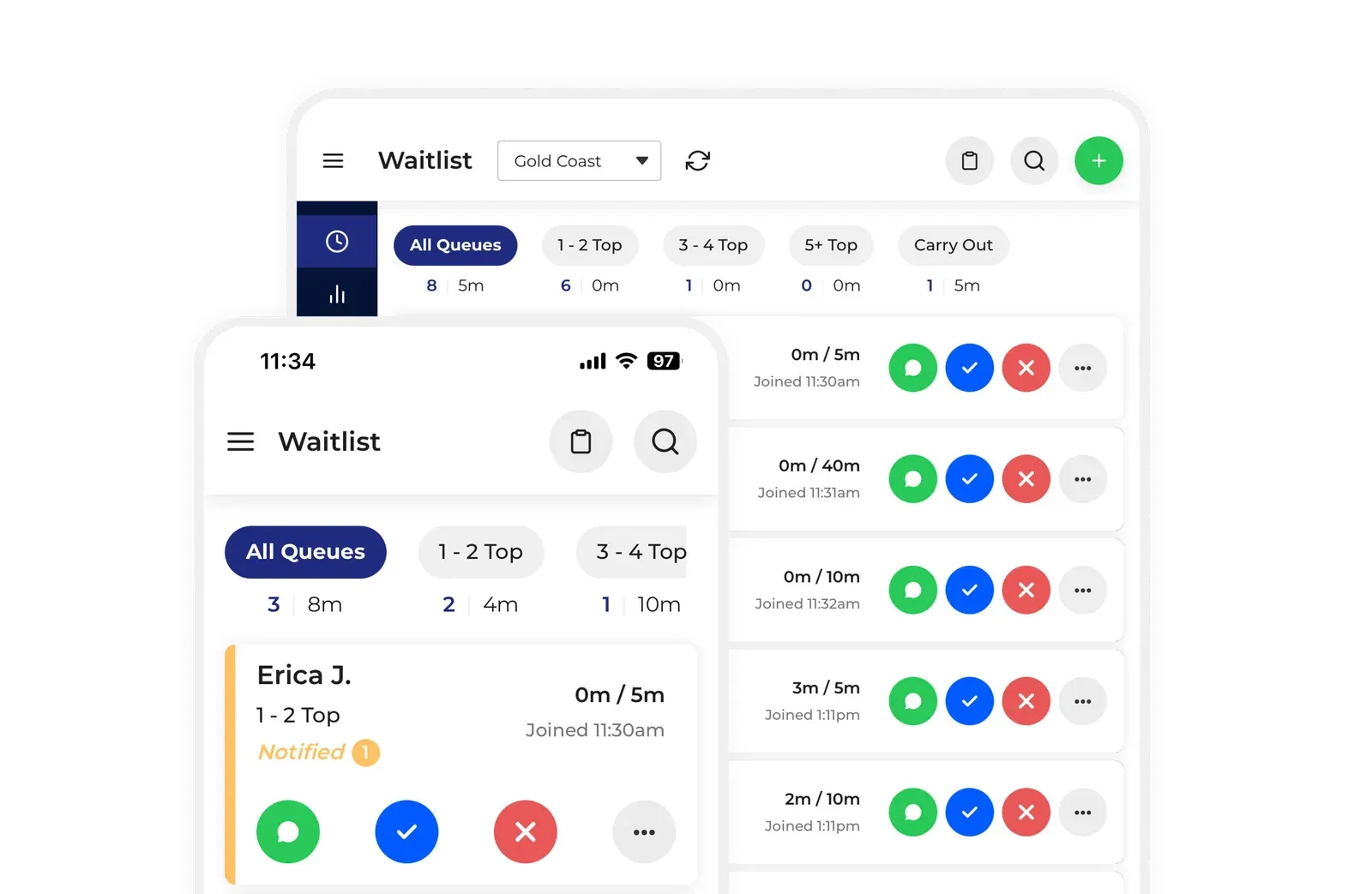
With NextMe, the waitlist is the whole point. Guests join from a QR code or a link, see their position, and move freely until you call them back. Your host stops managing a clipboard and starts managing a floor. Our guide to running a walk-in restaurant walks through how that changes a Friday service.
One rate, every service
NextMe charges a single monthly rate with no fee attached to individual guests. Whatever the room does on a Saturday, the number on the invoice is the one you budgeted for in January.
Notifications that guests actually answer
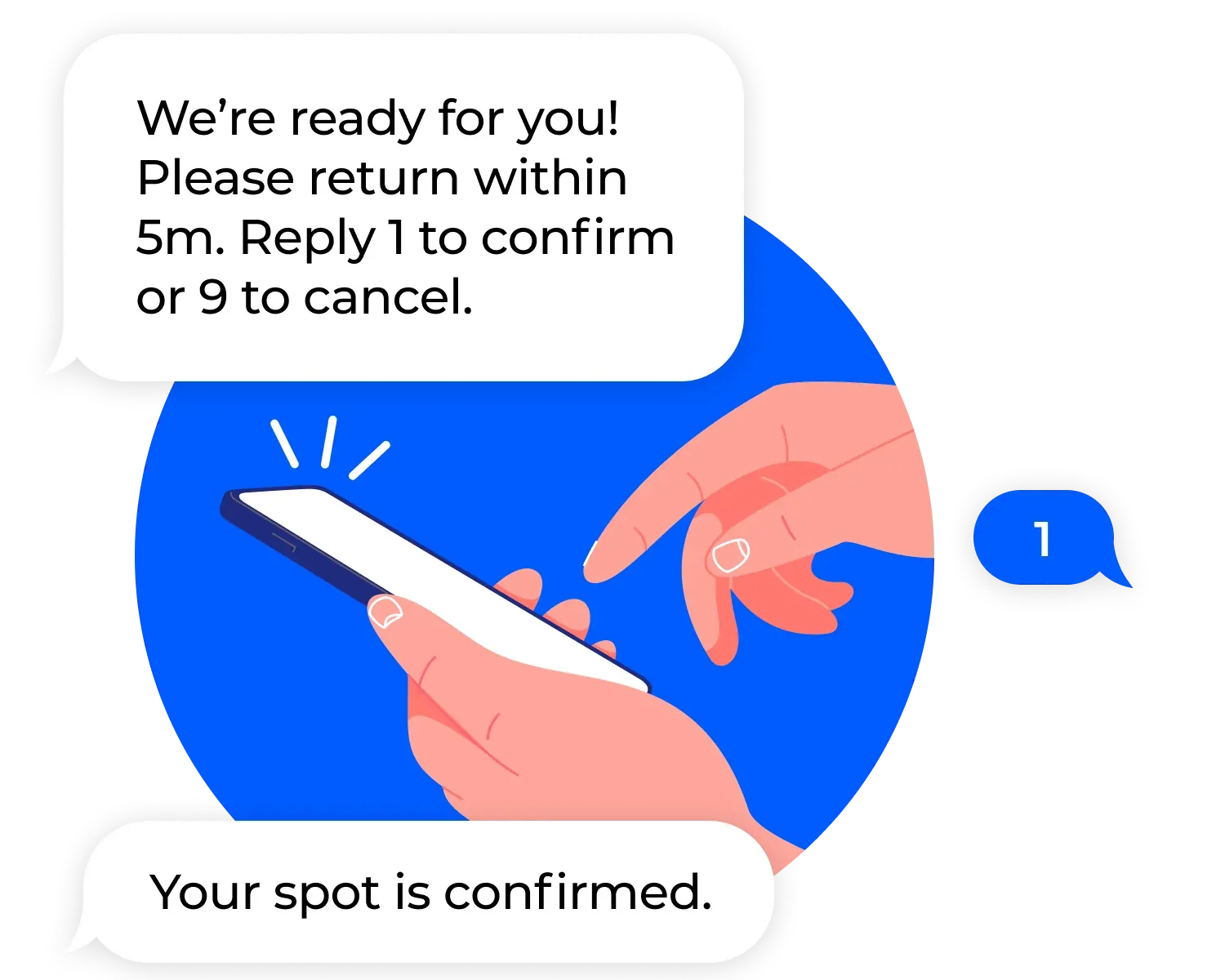
NextMe texts guests when their table’s ready. They reply 1 to confirm or 9 to cancel, which means you learn about a walk-off before the table sits empty. WhatsApp works alongside SMS for guests who prefer it.
A waiting room that works for you
This is the clearest gap. OpenTable’s messaging tells a guest where they stand. NextMe’s virtual waiting room is a branded page you own outright, and you decide what sits on it. Your cocktail menu. A merch link. An event you’re promoting next month. A reservation platform’s waiting screen serves the platform’s goals. Yours should serve yours.
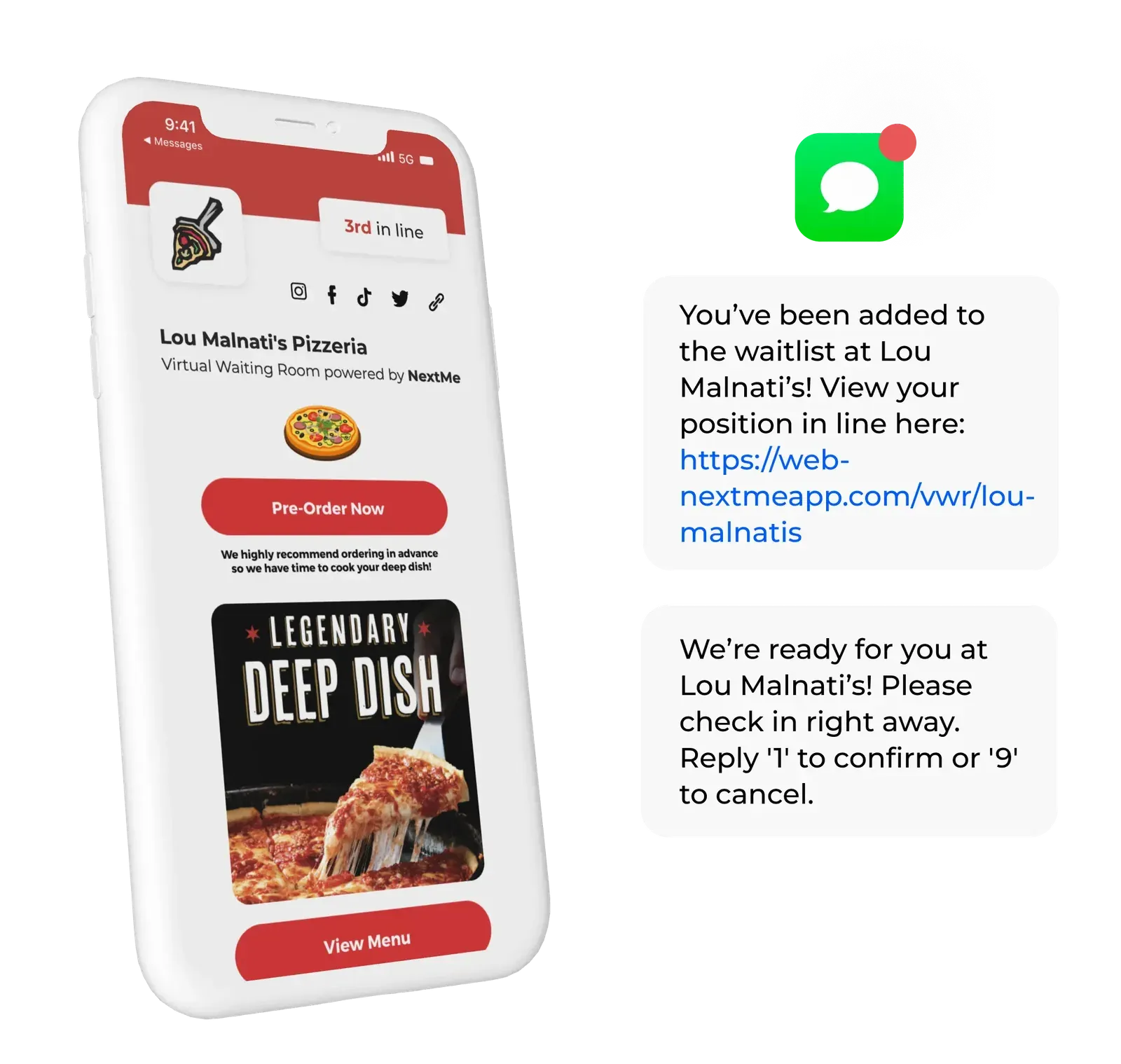
Lou Malnati’s retired pagers across 15 locations after switching to NextMe, saved more than $10,000 in hardware, and extended peak hours by 30 to 60 minutes. That’s a multi-location group running walk-in volume on a flat rate.
One list for walk-ins and booked tables
Bookings puts scheduled parties and walk-ups on the same guest list. Your host sees one queue, not two systems competing for the same tables.
Which one fits your restaurant
Ask what your actual problem is.
If your tables sit empty on a Wednesday and you need more people to know you exist, that’s a discovery problem. OpenTable solves discovery. Pay for it.
If your doorway is crowded on a Friday, guests are drifting off before they’re seated, and your host is fielding the same question every 4 minutes, that’s a flow problem. No amount of discovery fixes a flow problem. You need a queue, and a waitlist app for restaurants is the tool built for it.
Plenty of restaurants have both problems and run both tools. That’s a legitimate answer. What isn’t legitimate is paying network rates to manage a line, which is what happens when a reservation platform gets stretched to cover walk-in service.
Worth noting that walk-in volume is going up, not down. OpenTable’s own 2026 Dining Trends Report found nearly half of Americans want more spontaneous dining this year. Spontaneous diners don’t book. They show up.
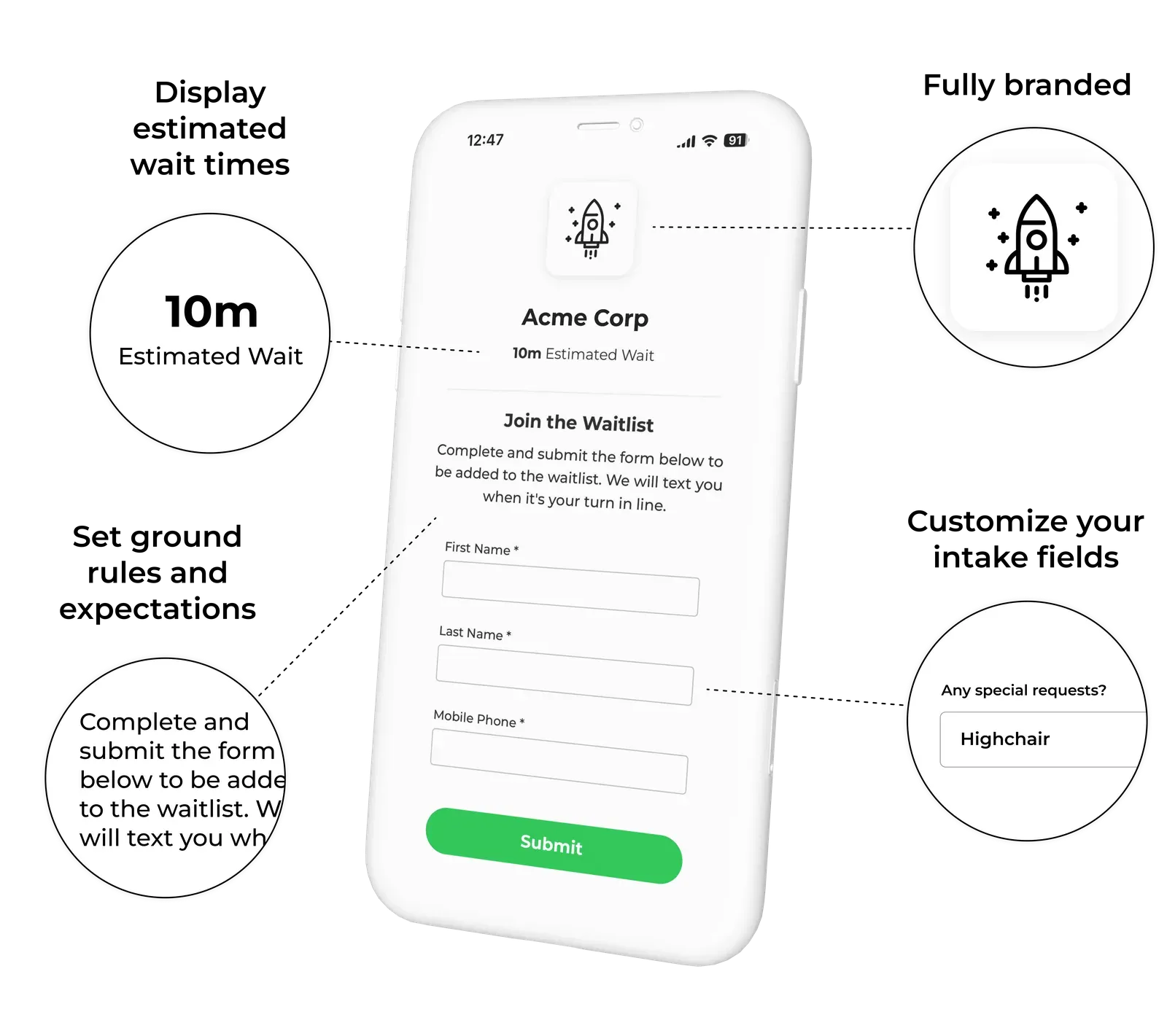
Whichever way you go, the self check-in experience is where guests form their first impression, so it’s worth testing on your own phone before you commit to anything.
The right tool depends on where your demand comes from
An OpenTable alternative isn’t automatically an upgrade. If the network is bringing you diners you couldn’t reach otherwise, it’s doing its job. If it’s mostly acting as an expensive front door for people who were already coming, a purpose-built queue does that job better and for less.
The restaurants that get this right decide before service breaks, not during it. Once there are 20 people in the doorway on a Saturday night, you’re not evaluating software, you’re surviving the shift. See how NextMe handles a walk-in floor while yours is still calm enough to think about it.