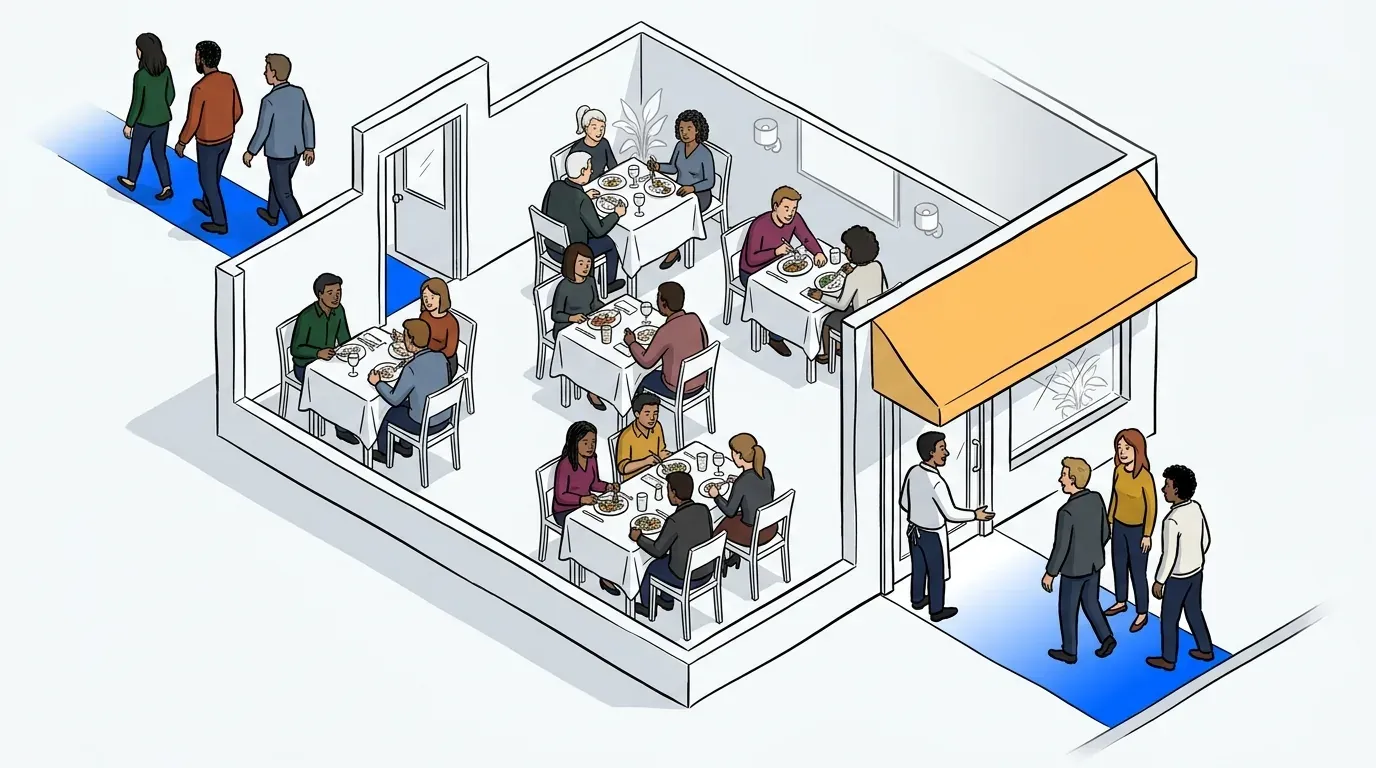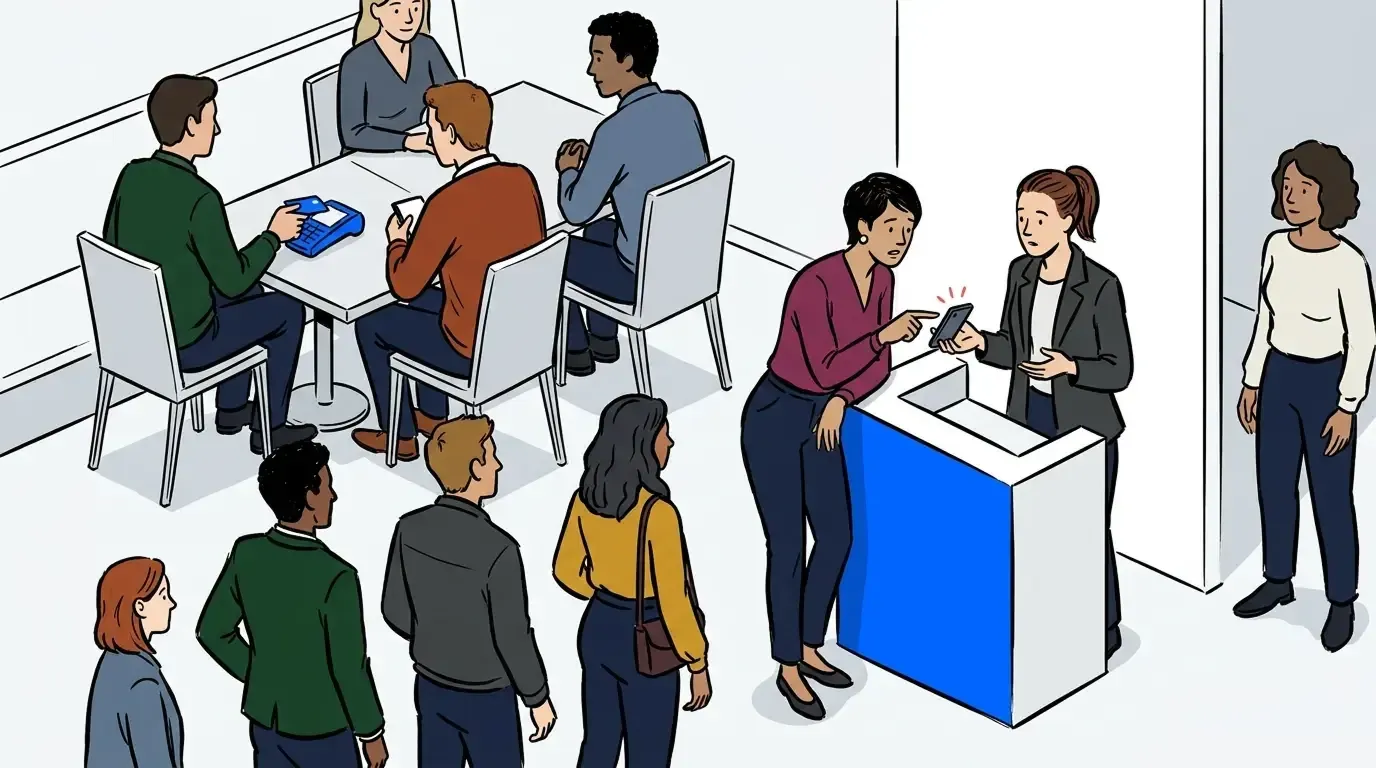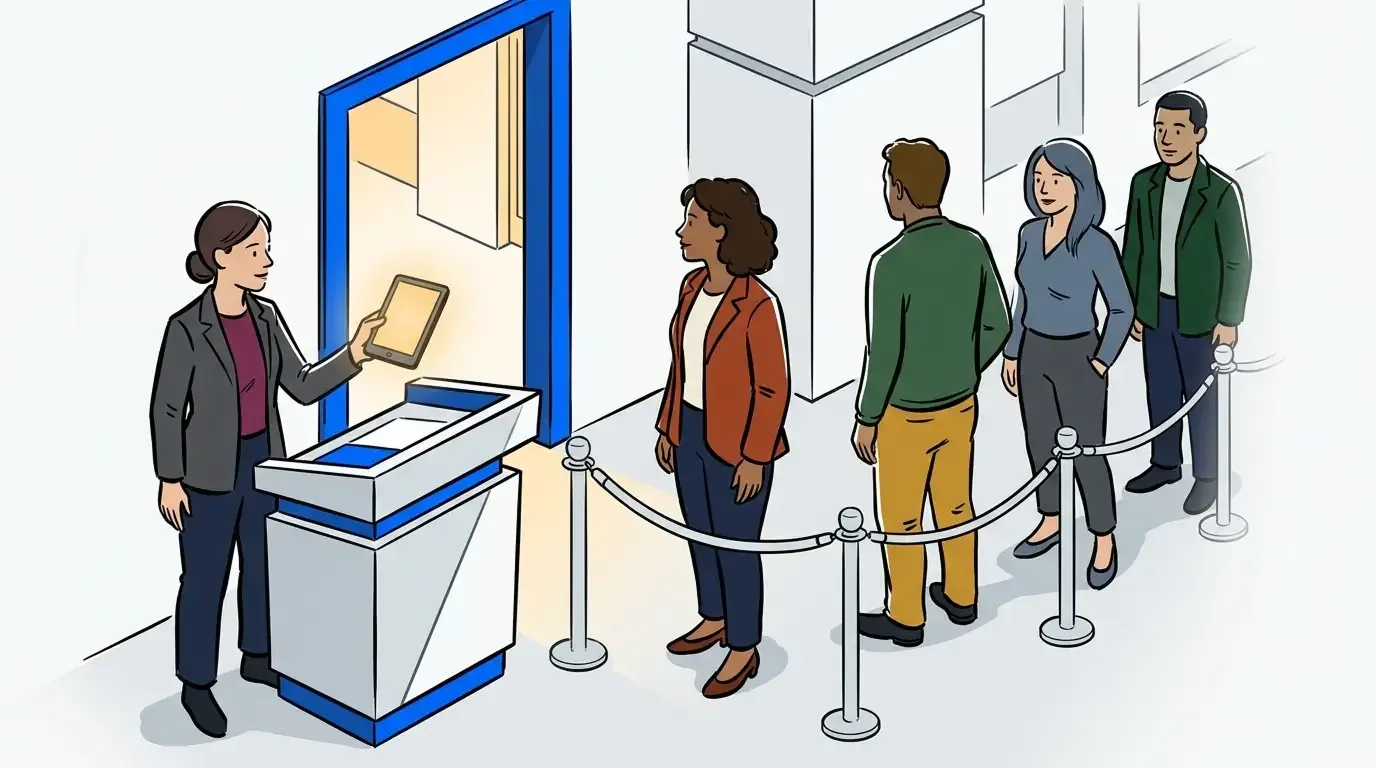
Restaurants comparing waitlist software eventually land on the same two names: NextMe and TablesReady. Both offer two-way texting, self check-in, and a branded waiting page, and both are built with a real restaurant’s Friday night in mind rather than a generic queue for any business. That similarity is exactly what makes the decision harder, since the features overlap enough on paper that picking one usually comes down to what a restaurant actually needs beyond the table.
This guide breaks down where TablesReady wins, where NextMe pulls ahead, and how to think about the decision if your restaurant runs anything beyond a standard dinner service, from a weekend pop-up to a multi-location group.
NextMe vs TablesReady at a glance
NextMe covers the core ground every restaurant needs, a waitlist, two-way texting, self check-in, and a branded guest experience, and starts with a free trial. TablesReady covers similar core ground, with a free tier for very small waitlists. Table management and a Square POS integration is reserved for its $79-a-month Business plan.
- Best for restaurants running a complex floor plan with multiple sections: TablesReady
- Best for most restaurants that just need a reliable, flexible waitlist: NextMe
- Best for a branded guest experience beyond the waitlist: NextMe
- Best if your restaurant might expand into events, pop-ups, or a second concept: NextMe
Where TablesReady wins
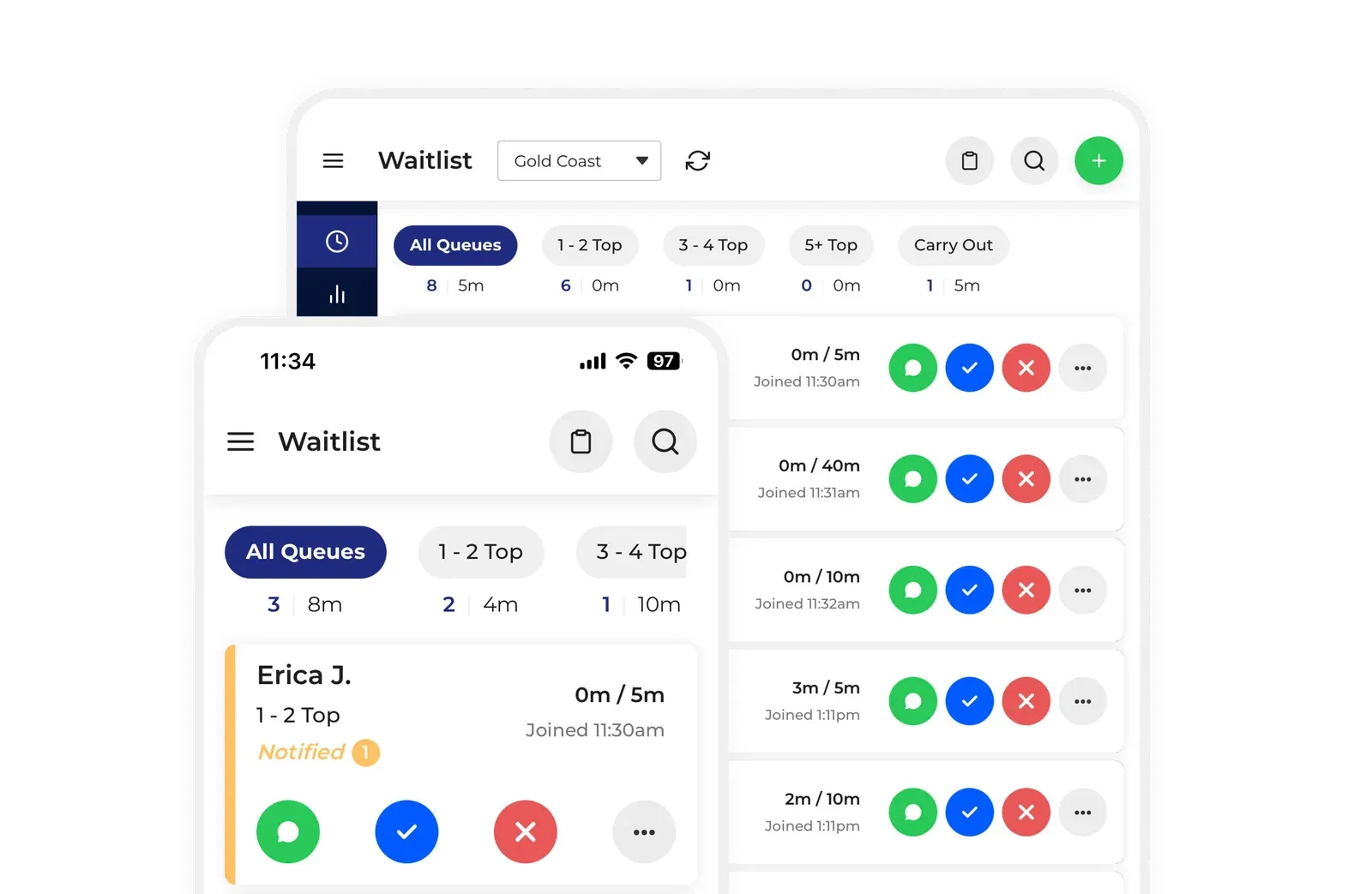
TablesReady’s one real edge is table management. Its Business plan adds floor plan and table tools built specifically around how a restaurant seats and turns tables, along with Square POS and Reserve with Google integrations, and that combination is hard to beat for a full-service restaurant juggling multiple sections and server rotations. Plenty of restaurants never touch that complexity. Counter-service spots, fast-casual concepts, breweries, cafes, and smaller full-service dining rooms with a simple layout would be paying for depth they don’t use, and everything else TablesReady offers, including its free tier, isn’t a meaningful differentiator from most modern waitlist tools.
Where NextMe wins
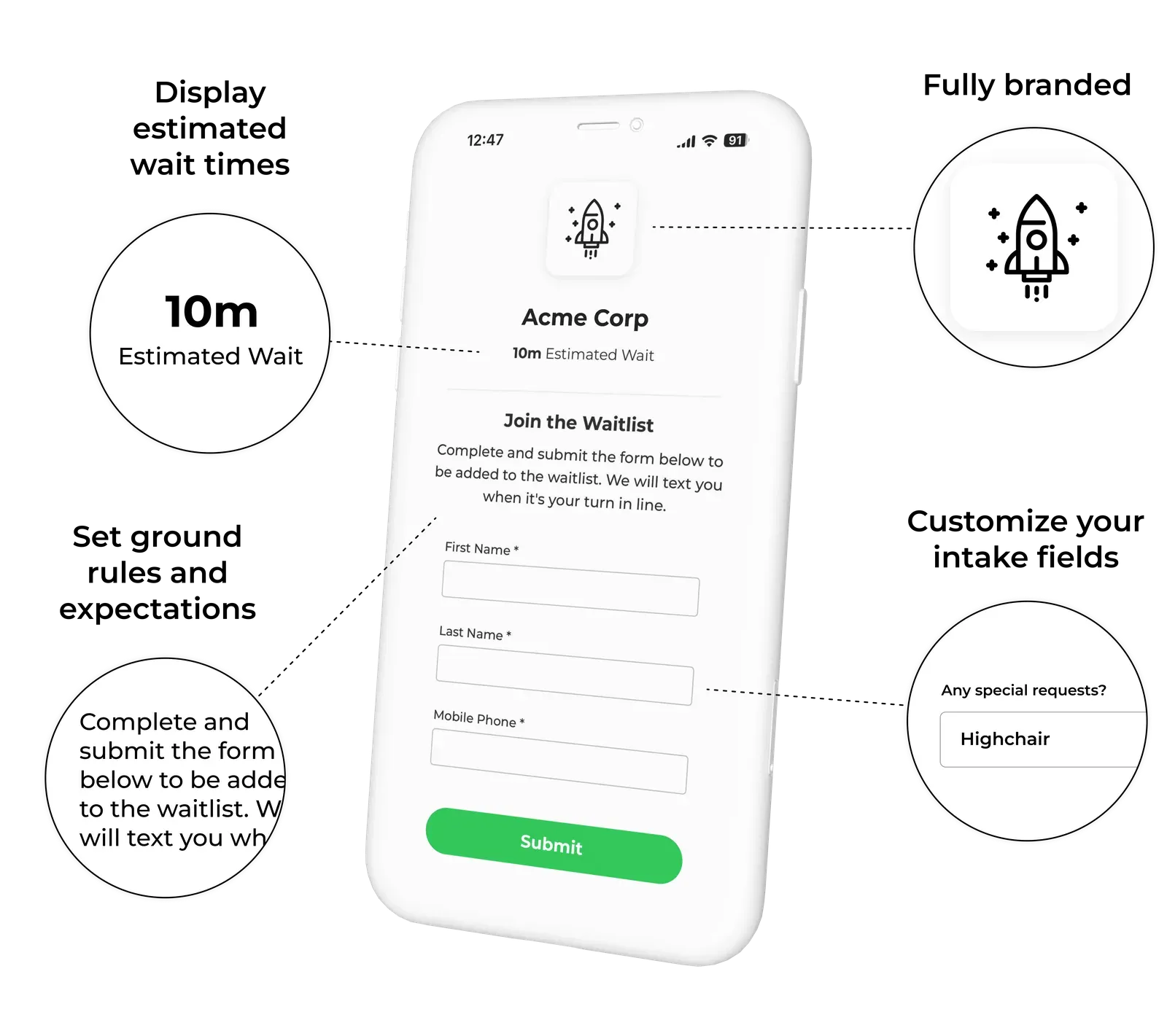
For most restaurants, and especially for anyone weighing a TablesReady alternative with a bit more range, NextMe pulls ahead. TablesReady treats the wait as a status update. NextMe treats it as a moment you can put to work, and that advantage doesn’t require a complex floor plan. A counter-service line with no seating chart gets the same branded wait experience and two-way texting as a full-service dining room. The virtual waiting room turns the wait itself into a branded page instead of a plain status screen, which restaurants use for specials, a menu preview, or a loyalty signup while guests wait. Self check-in works the same way whether a guest scans a QR code at the host stand or a staff member adds them manually. And because NextMe runs the same system across events, healthcare, veterinary clinics, and retail, a restaurant group that also runs pop-ups, catering activations, or a second concept doesn’t need a separate tool for that side of the business.
The two-way texting experience
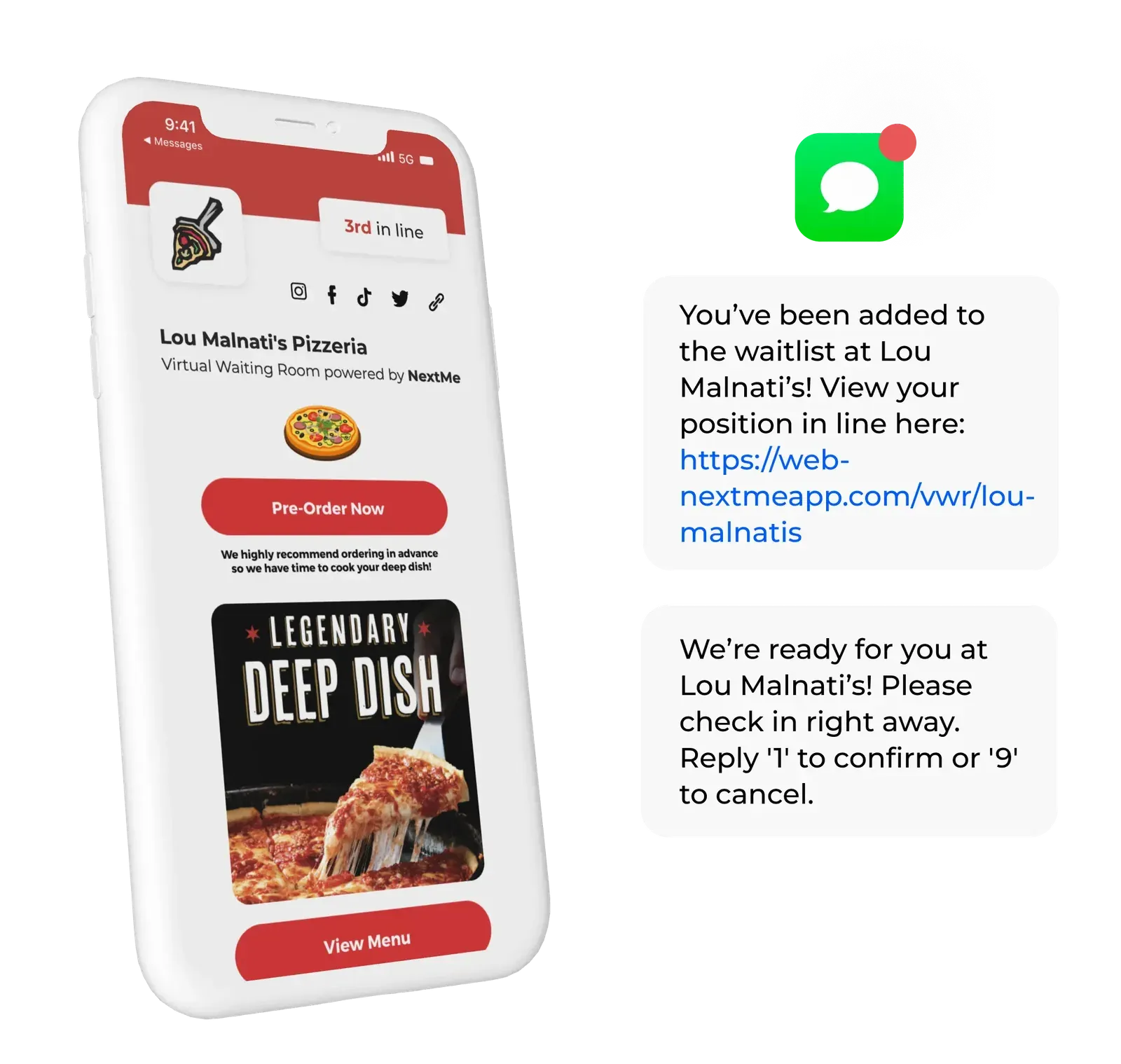
Both platforms text guests instead of relying on a pager or a shouted name, and both let a guest reply instead of just receiving a one-way alert. NextMe’s flow asks a guest to reply 1 to confirm they’re on their way, or 9 to cancel, a deliberately simple format that works on any phone. TablesReady runs a similar two-way flow through the browser. The practical difference shows up around that message: NextMe’s Virtual Waiting Room and bookings sit on the same guest record, so a text confirmation, a booking, and a return visit all connect to one profile instead of living in separate systems.
Which one fits your restaurant
A Restaurant Technology News recap of the 2026 National Restaurant Association Show described guest engagement as moving away from separate conversations, with reservations, waitlists, loyalty, and marketing increasingly expected to work as one connected relationship. That shift favors a platform built to grow with the guest relationship over one built narrowly for the table. If your restaurant runs a complex floor plan with multiple sections and server rotations, TablesReady’s depth on table management is hard to beat. Most restaurants don’t fit that description. A single dining room, a counter-service line, or a walk-in-heavy concept doesn’t need floor plan software to run a good waitlist, and paying for that depth adds cost without adding value. For that larger group, and for anyone weighing whether the waitlist can also carry marketing, loyalty, or a second line of business down the road, NextMe is built for the broader job today.
Lou Malnati’s is a useful proof point here: the chain used NextMe’s SMS-based waitlist to retire pagers across 15 locations, extending peak hours by 30 to 60 minutes and keeping the guest experience consistent chain-wide, the kind of multi-location standardization that sits outside TablesReady’s single-location floor plan focus.
Get the full picture before you switch
TablesReady and NextMe both solve the core problem of getting guests off a physical line and onto their phones. The right choice comes down to whether your restaurant needs best-in-class table management or a waitlist that doubles as a guest engagement channel and can grow with the business. If you’re already locked into a POS ecosystem and weighing whether to stay bundled, the Toast Tables Alternative breakdown covers that tradeoff in more depth, and our full buyer’s guide walks through the criteria that matter most when choosing a restaurant waitlist app. See how NextMe works for your restaurant today.