Managing a waitlist at one site is an operational problem: who’s at the door and how fast the line moves. Managing 20 sites is a scale problem, and it requires completely different infrastructure.
Most of the work isn’t managing the queue itself. It’s everything around it: setting up new stores consistently, pushing updates once instead of 20 times, and identifying which location is quietly losing guests when every floor feels slammed.
That’s the real job of multi-location waitlist software, and it’s exactly what NextMe was built to solve.
What multi-location waitlist software has to get right
Multi-location waitlist software lets you run every site from a single account. It combines a shared master setup you push out with local controls for each site, defined user roles, and reporting that pulls every location into one view. Most tools in this category make you choose between simple enough for one site and capable enough for 50. NextMe doesn’t. The same product runs a single barbershop and a statewide DMV, a 50-store retail rollout, and a brand tour that lands in a new city every weekend.
That range is the part worth paying attention to when you’re comparing options. Being easy for a small operator has nothing to do with where the ceiling is, though the two get conflated constantly. What sets the ceiling is whether the work grows with your location count. If changing the message guests receive means 50 separate logins, the software doesn’t really support 50 locations. It just tolerates them.
If you’re early in the process and still building a shortlist, our buyer’s guide to queue management systems walks through the full criteria.
Set it up once, then let each store be itself
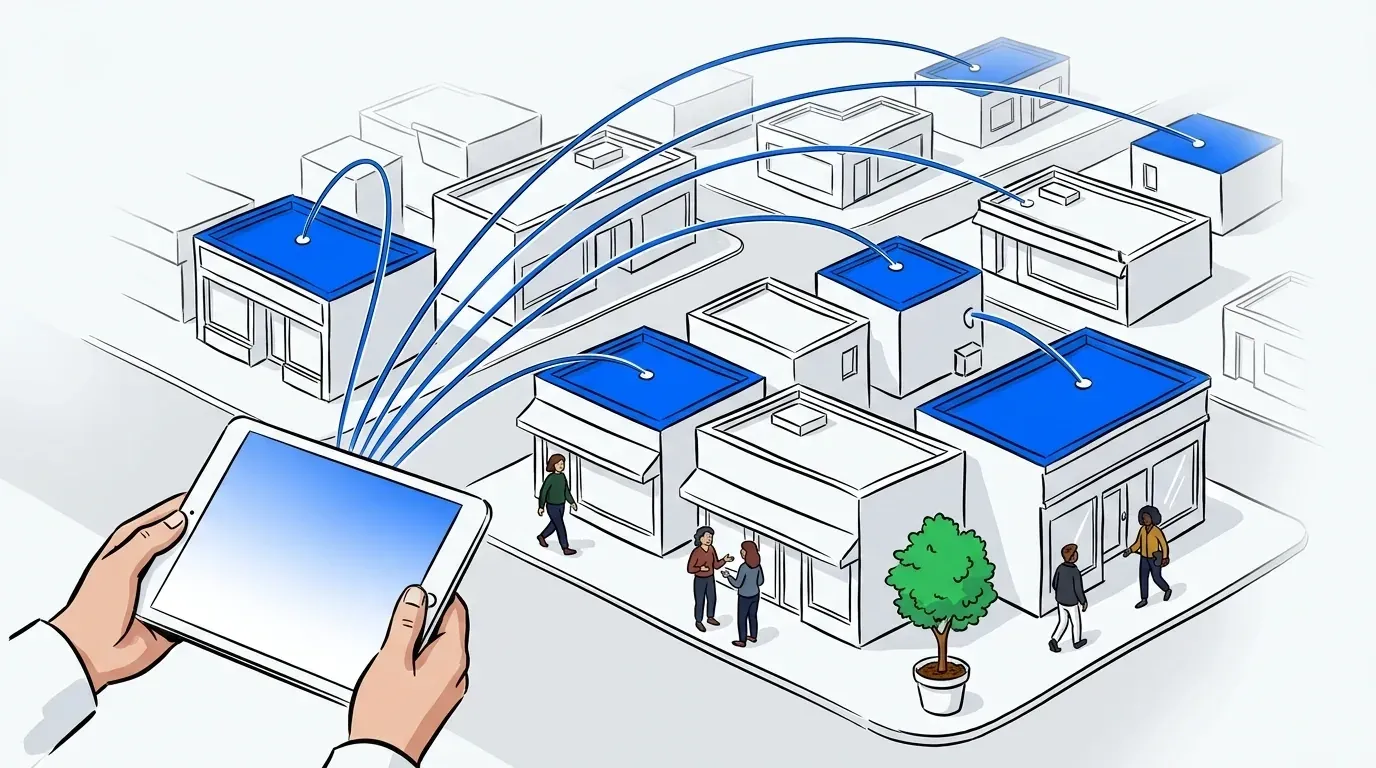
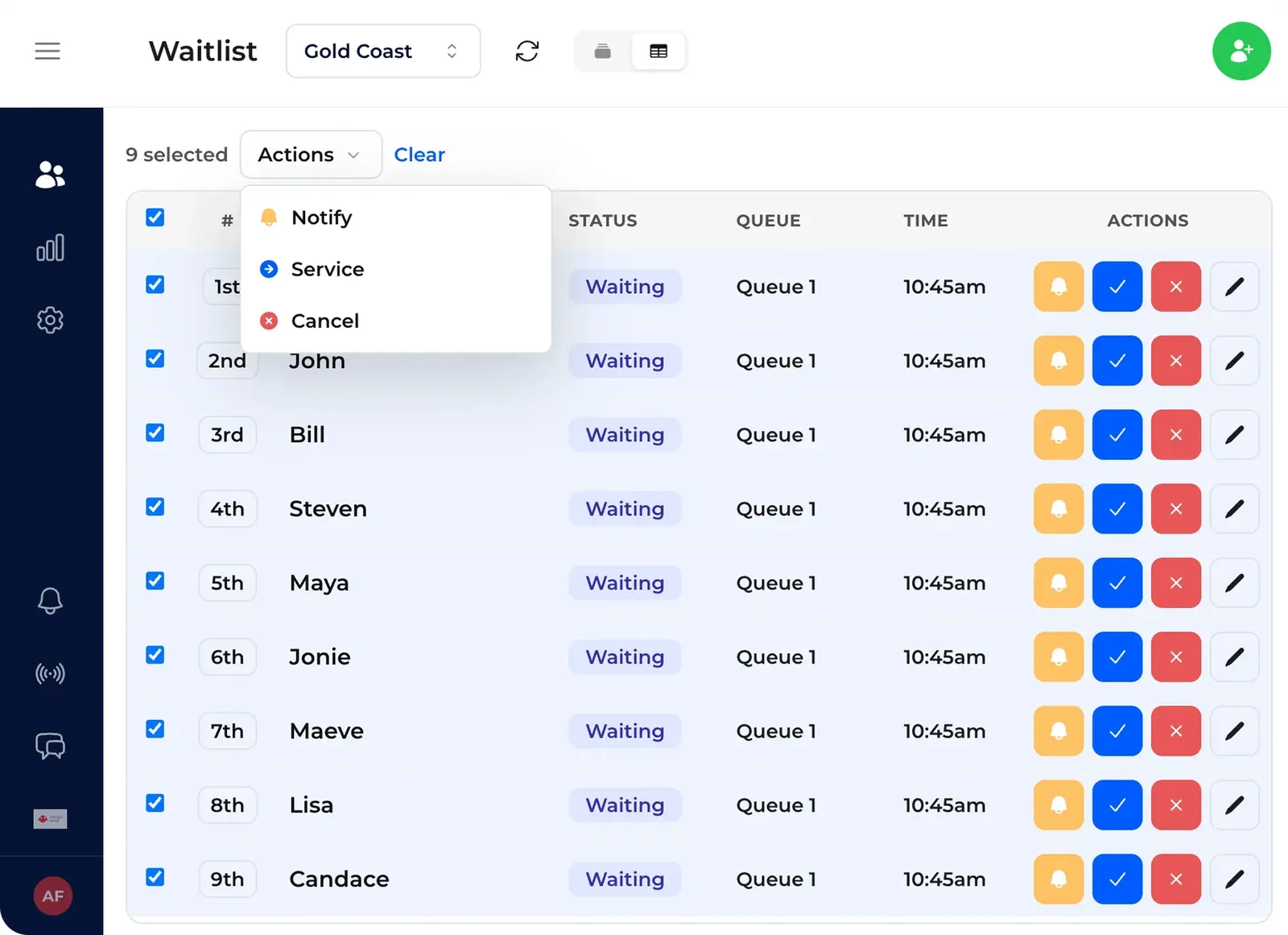
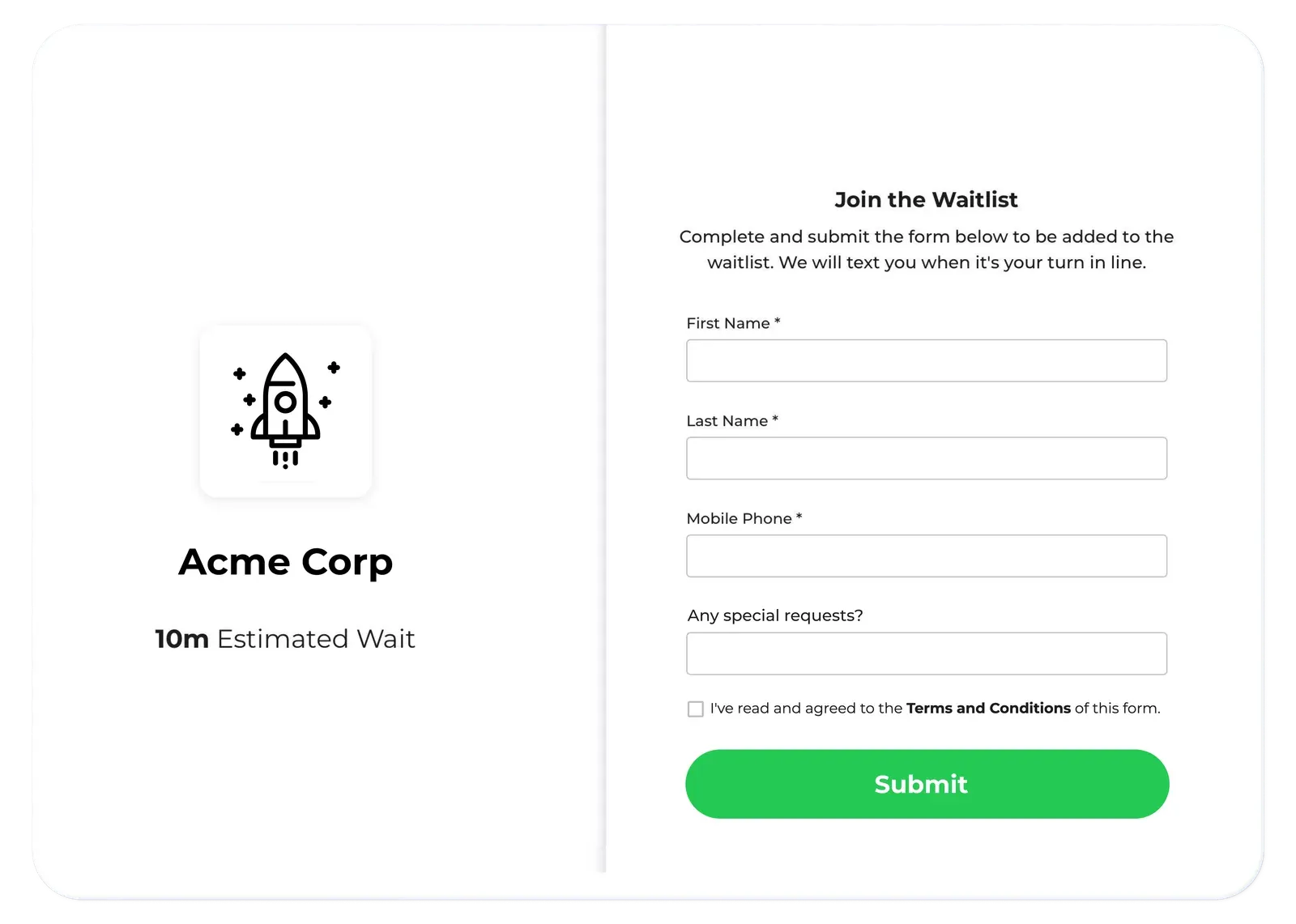
You build the queue the way you want guests to experience it. The join form, the fields you collect, the wording of the text they get, your branding, what happens when the line hits capacity. That becomes the house standard, and every new location opens with it already in place.
Then the local stuff stays local. A Tuesday downtown looks nothing like a Tuesday in the suburbs. Hours, capacity, service points, and staffing sit with the manager who knows the floor. They change what they need without touching what guests see at your other sites, and without waiting on anyone.
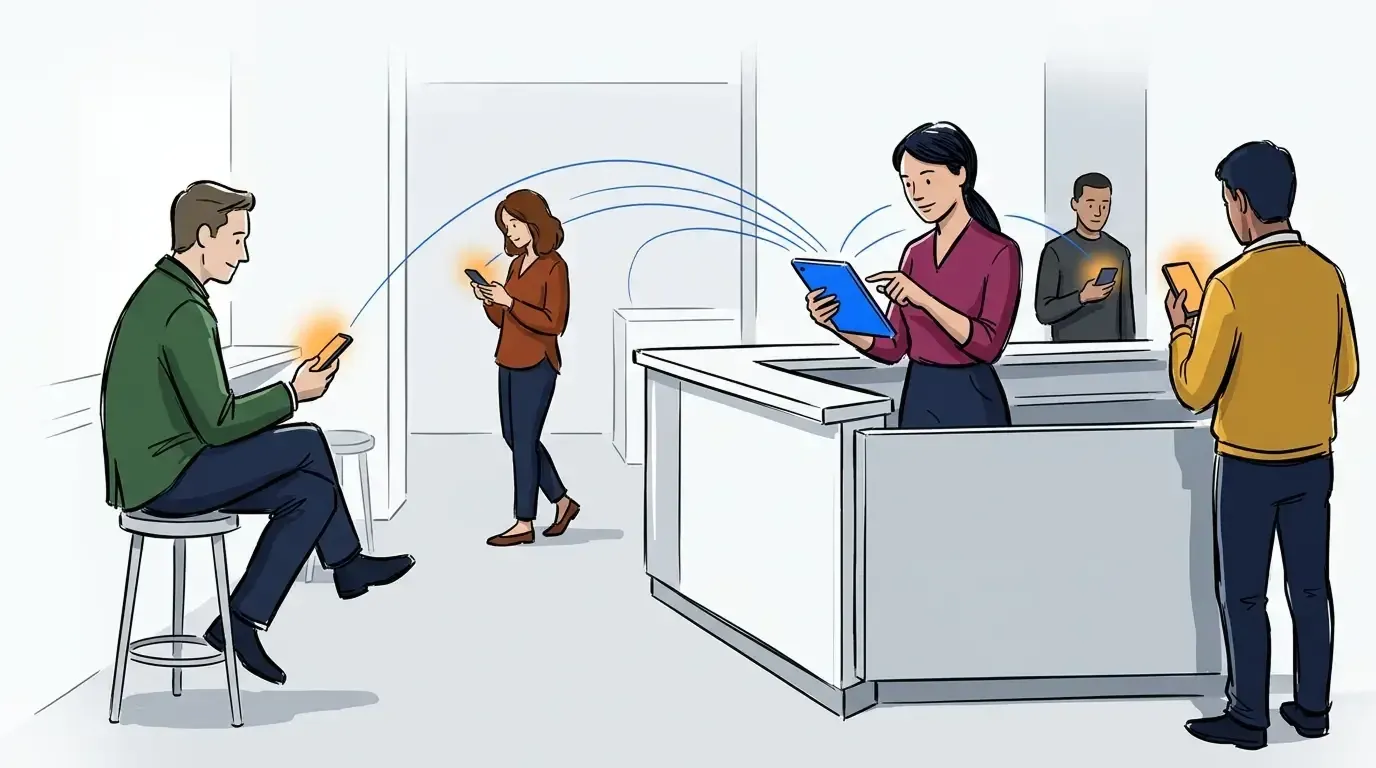
What surprises people is how fast a new location comes online. Nothing ships and nothing gets installed. A manager sets up self check-in on a tablet or prints a QR code, and they’re taking guests that afternoon. 2nd Street USA is rolling NextMe out across more than 50 stores on exactly this pattern right now.
Lou Malnati’s did it across 15 locations and threw their pagers in the trash. Over $10,000 saved, and peak hours stretched by 30 to 60 minutes because guests stopped leaving. Read the full story here.
Who gets the keys
Every multi-site business or franchise eventually runs into the same challenge. Corporate wants consistency. Individual sites want to fix things on a Saturday without calling anyone.
NextMe user roles solve this. A store manager runs their location. A district manager sees their group. Head office sees everything. A host on shift sees the queue and nothing else. Nobody’s locked out of their own store, and nobody can accidentally rewrite the guest experience for the whole company.
It sounds administrative until you’ve lived without it. The version without roles is one shared login making the rounds, settings drifting apart over 18 months, and no way to answer who changed what.
Spotting the trends you’d otherwise miss
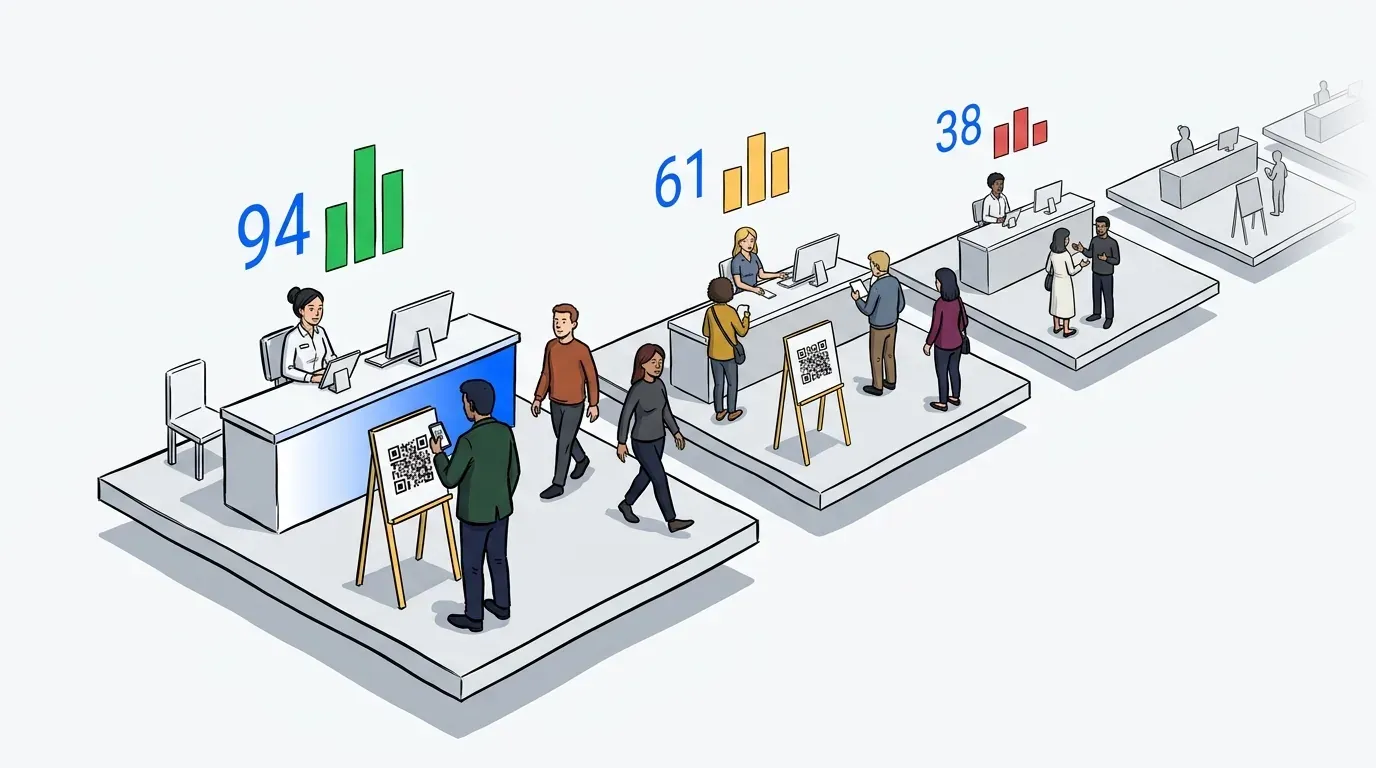
Reporting one site at a time tells you how that site did. Useful, but you probably had a feeling already. Putting every location side by side tells you something you didn’t know.
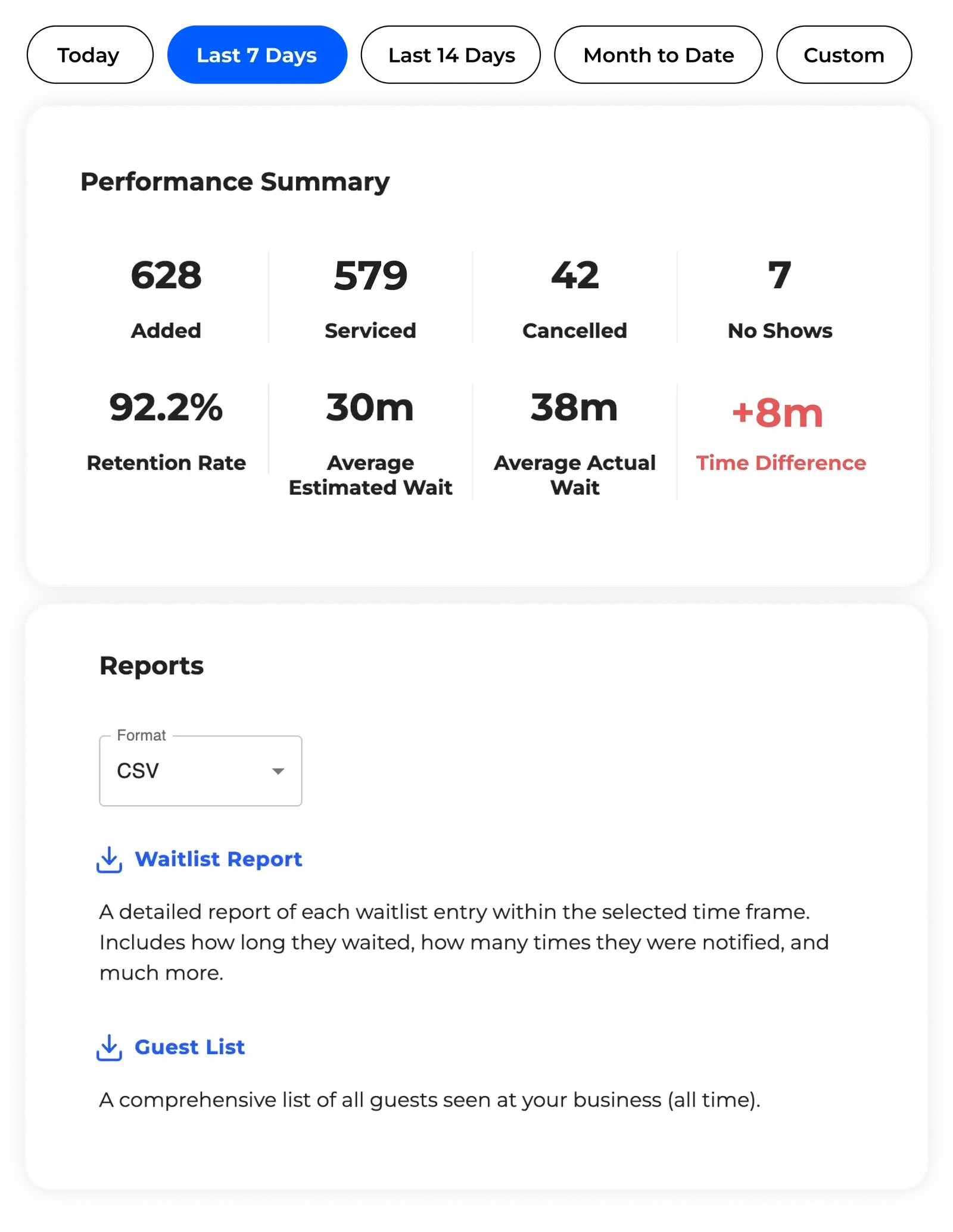
NextMe’s analytics dashboard puts all of this into one view. Same date range, every site, wait times and throughput and how many people gave up and left. Usually there’s one location quietly running double everyone else’s walkaway rate. Nobody flagged it, because from the inside it just feels like a busy store.
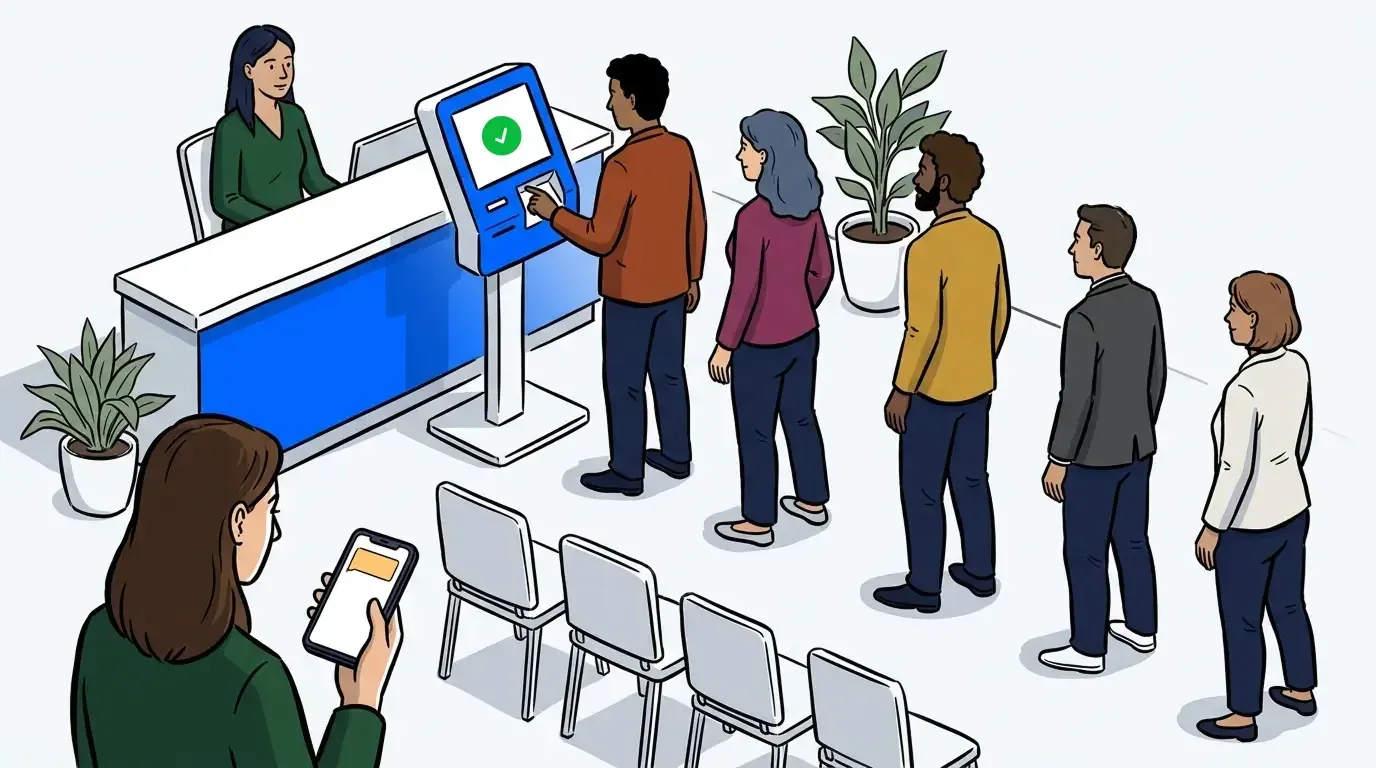
South Carolina’s DMV runs this at state scale. Guests fill out paperwork from their cars instead of a lobby, and throughput has increased by upwards of 25 percent. Our SCDMV case study has the whole picture.
Event agencies live this every weekend
A national tour is a multi-location business with the clock sped up. New city, new crew, new footprint, and the same guest experience expected every time.
Octagon ran BMW’s Ultimate Driving Experience across 25 U.S. cities on one configuration. XD Agency did LEGO’s five-city Formula 1 tour the same way and moved more than 4,000 guests through it. Neither team rebuilt anything between stops, which is the only reason a schedule like that is survivable.
Event organizers get something else out of it. When every exhibitor on the floor runs the same platform, each booth controls its own line without radioing anyone, and the organizer ends up with one dataset instead of a dozen exports in a dozen formats. That’s the difference between a post-event report you can stand behind and a folder of spreadsheets.
The bottom line
The thing that breaks at 20 locations usually isn’t the queue. It’s the 20 separate setups behind it, the change that takes three weeks to reach the floor, and the store nobody realized was struggling.
Set it up once, let each site handle what’s genuinely theirs, give people access to what they’re responsible for, and look at the whole business in one place. If your queue currently lives in a different tool at every site, that’s fixable. Take a look at how waitlist management works across locations, or at the virtual waiting room your guests see while they wait.