If you’re an event agency that pitches to brands, you probably have a standard capabilities list: strategy, creative, fabrication, production, staffing, measurement. Somewhere below all of it, if it makes the deck at all, is how guests are actually going to get into the thing.
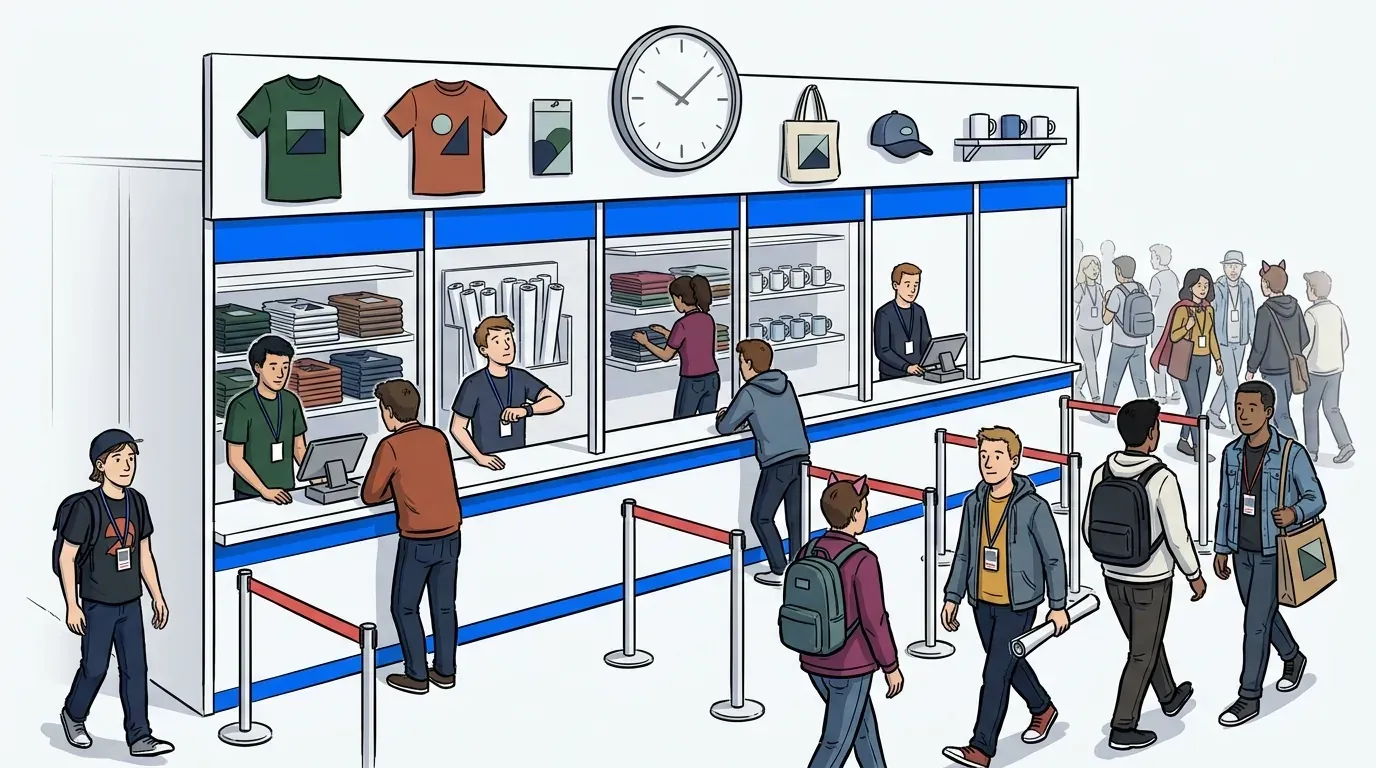
That ordering is backwards. You can build something beautiful and still have people walk away because the line was too long and nobody told them how long it would be. That’s not a production problem. It’s guest flow, and on most jobs nobody owns it.
Experiential marketing queue management belongs on that list with everything else, and in what you recommend to a client before they think to ask for it. Make queue management a standing part of what you sell and you separate yourself from the other agencies in the room. You already know where these things break down, and you have a standard plan for it.
Where the queue fits in what you sell
Queue management is your plan for how guests get into an activation and what happens while they’re waiting. It covers the way people join the line, how long the physical line runs, and what the client gets back afterward. It’s the one part of the guest experience you can describe as a process instead of a promise.
Most agencies get through it on the day, but if demand runs high it’s a scramble. Someone improvises, and it works or it doesn’t. Either way it never makes the deck. Production gets a schedule, creative gets renders, staffing gets a headcount, and the line gets a sentence about keeping things moving. The client reads that and learns nothing about whether you’ve thought it through.
The line item everyone leaves vague
Every other part of a pitch invites comparison. A client can hold two floor plans side by side and pick one, or weigh timelines and day rates against each other. Guest experience doesn’t work that way. Three agencies all promise a good one and none of them explain how, so the client goes back to the creative and decides on taste.
That’s your opening. If you describe the wait as a process, you’re the only agency in the room making a claim anyone can actually check. It also tells the client something you’d struggle to say directly, which is that you’ve run enough of these to know exactly where the pressure lands.
Be careful how you frame it, though. Don’t offer to get rid of the line, because most clients want the line. A queue outside the activation is great social proof. What they don’t want is an unmanageable line or a mob scene. Pitch control over how long the physical line runs, which is precisely what NextMe’s software gives you.
Describe the mechanics, not the mood
- How guests join. Self check-in by QR code or a link, no app download. Say how many scan points the footprint needs and where the signage sits.
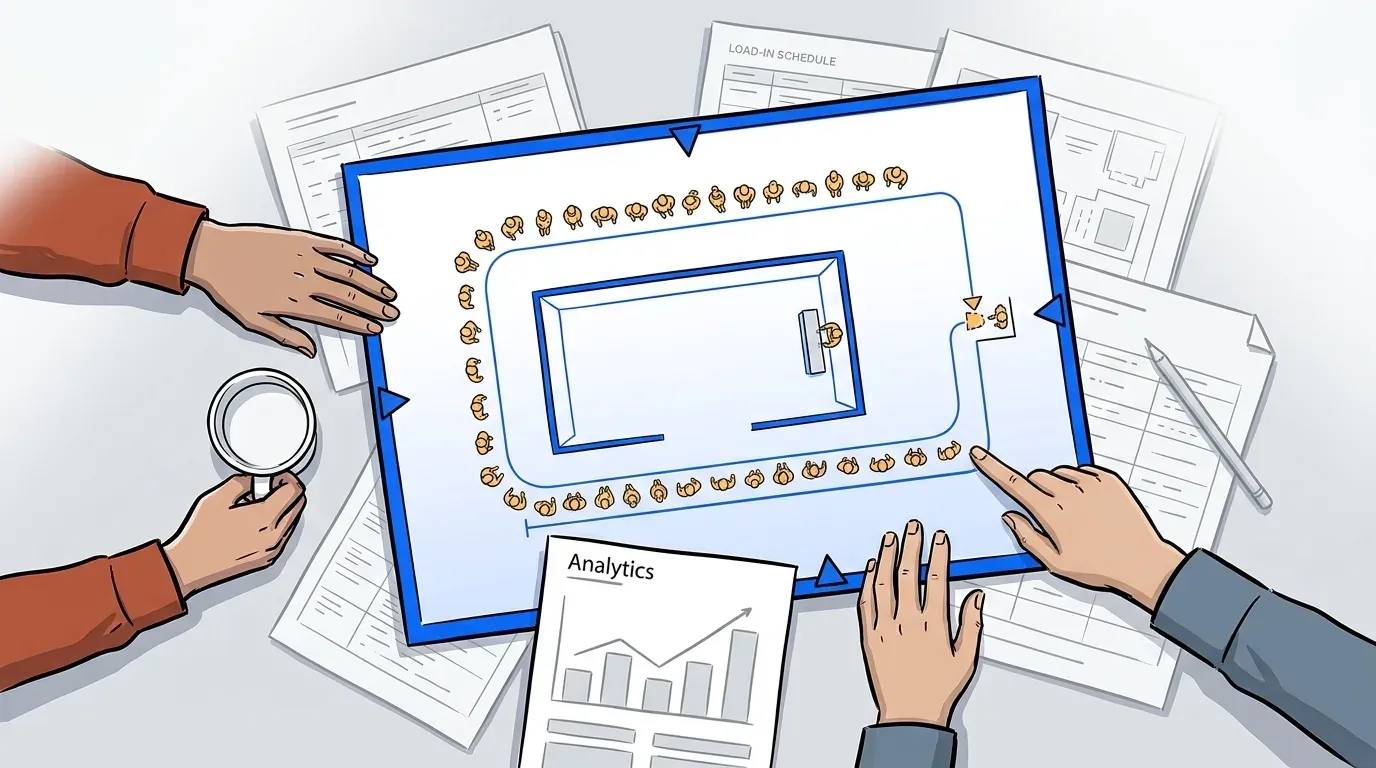
- How long the physical line runs. NextMe is a hybrid model. Part of the line stays physical at the activation, the rest moves into a virtual queue by text, and the operator sets that split.
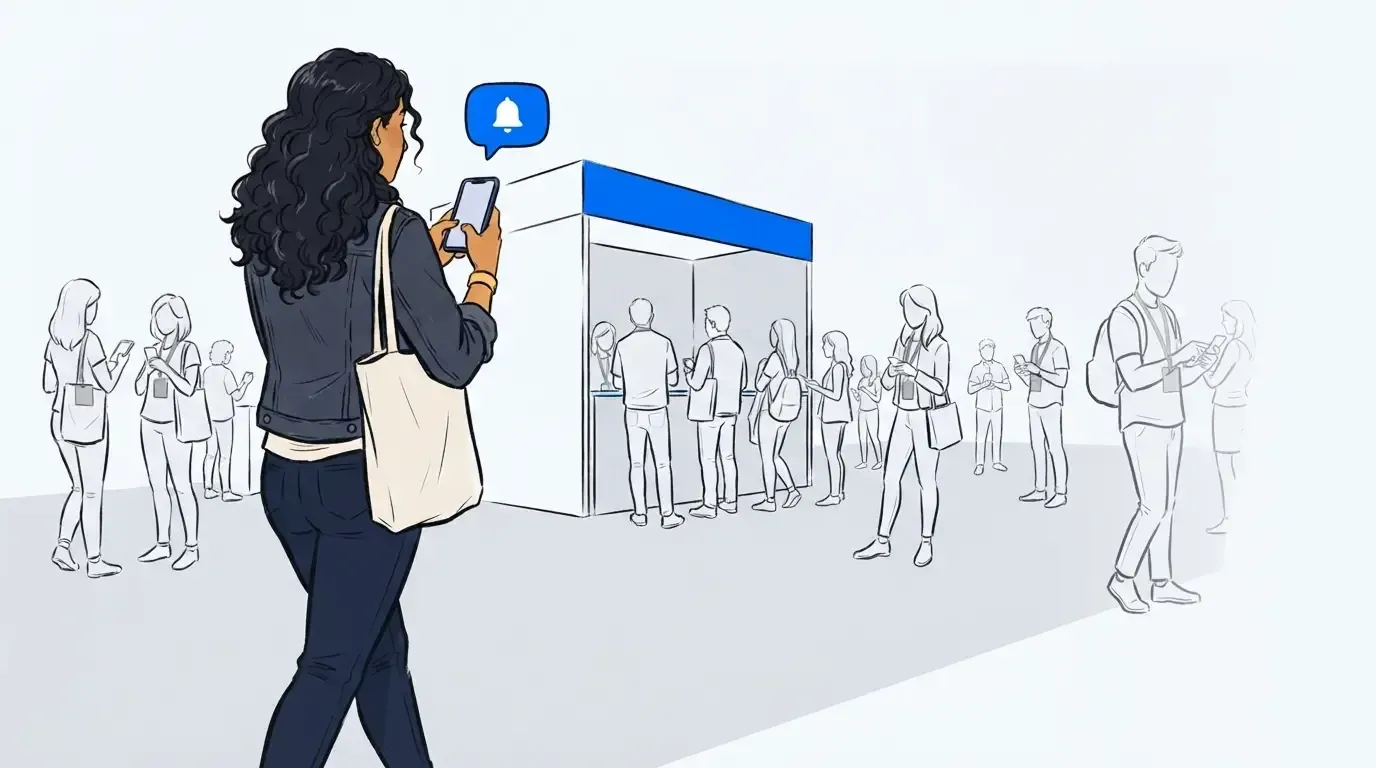
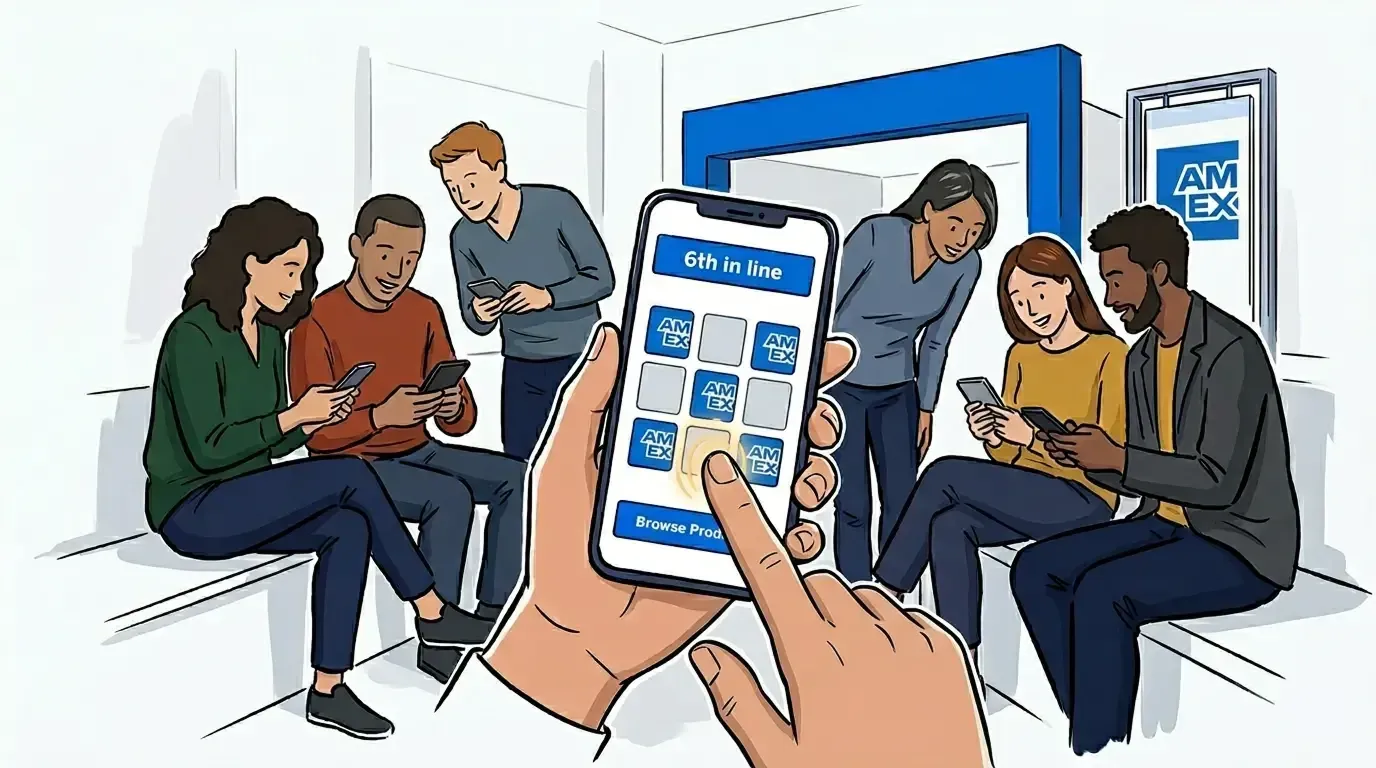
- What guests do while they wait. The virtual waiting room is a branded page the client owns for the length of the wait. Product carousels, polls, video, sponsor placement.
- How they get called back. SMS and WhatsApp, with two-way replies so a guest can reply 1 to confirm or 9 to cancel.
- Whether some guests move faster. You can run a general first-come line and a priority lane on the same queue, which is worth raising in any pitch involving VIPs, press, or a sponsor’s own guests. Our post on managing exclusive access at major events covers how the two lanes run together.
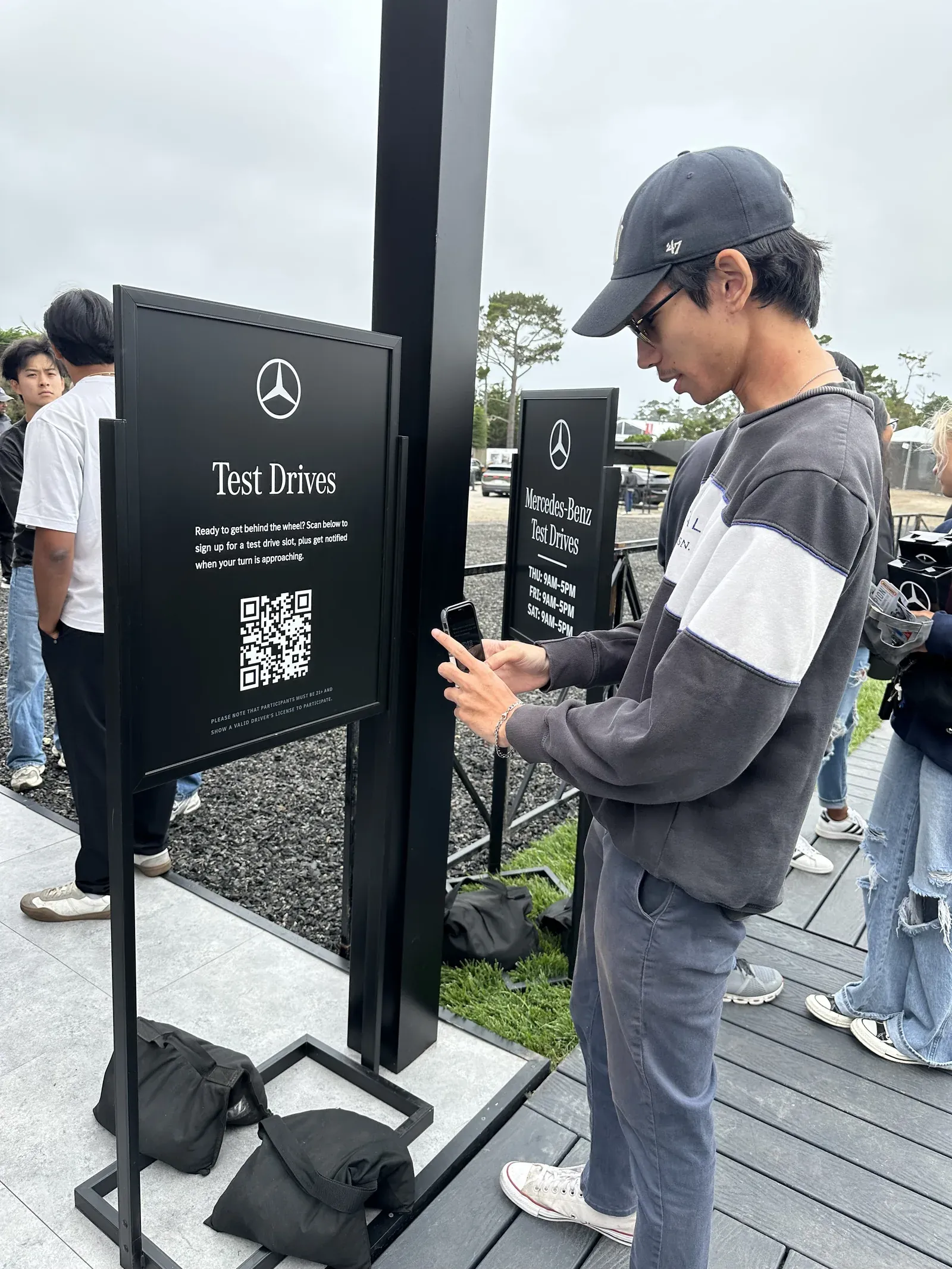
None of that is hard to say out loud in a meeting. All of it is specific enough to survive being repeated to someone who wasn’t in the room, which is usually where the decision actually gets made.
The waiting room is worth its own slide, because it changes what the wait is even for. A guest holding a phone with your client’s content on it is a guest the brand reached, not just one it processed. That’s inventory the client didn’t know they were buying.
Promise them a number they can check
The strongest thing you can put in a pitch isn’t a description of the experience. It’s an offer to prove what happened.
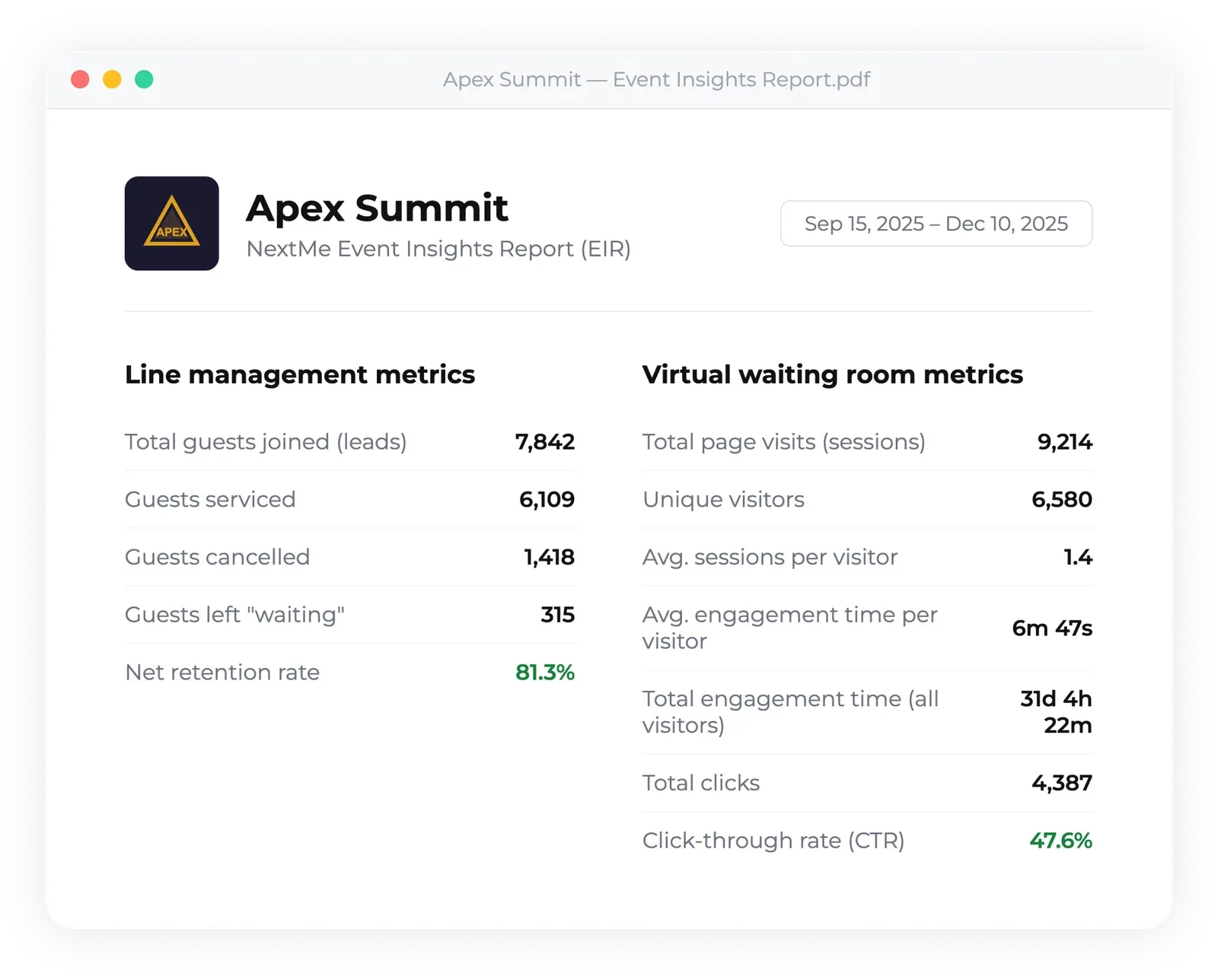
The platform does most of that for you. Joins, guests served, average wait, time spent in the waiting room, taps on whatever the brand put there. Analytics turn it into something the client can read the week after the event instead of a month later.
Waiting is an information problem long before it’s a capacity problem, and the same data that settles the guest settles the client. Most recaps still run on photos and a door count. A footfall number tells a brand how many people walked past. It doesn’t say how many stopped, or for how long, and every marketer reading it knows that.
So bring an example report to the pitch itself. Show them the fields you’ll be reporting on, and tell them when it lands. Proposing measurement before the contract exists is a small but powerful thing to offer, and almost nobody does.
Winning the account is one thing. Running the same setup across the rest of the roster afterward is a separate discipline, and it’s covered in how agencies standardize on one trade show waitlist app.
Bring precedent, not just a claim
Precedent does something in a pitch that a capability slide can’t. It answers what the client is really asking, which is whether anyone has trusted you with something this size before.
Octagon took BMW’s Ultimate Driving Experience through 25 U.S. cities, running the same test drive queue at every stop with a different local crew each time. The consistency is the story there. Anyone weighing a multi-market program is quietly wondering whether the fifth city will look like the first.
XD Agency hit the same problem on LEGO’s five-city Formula 1 Build the Thrill tour, and engaged more than 4,000 guests with an average of over four minutes each inside the branded waiting room. That’s the number to put on the slide. Four minutes of attention per guest sits comfortably next to anything else in the media plan.
The wider industry is already moving this way. When EXHIBITOR magazine built its 2026 FindIt Top 40, it scored entrants on the criteria its readers use to decide who makes an RFI or RFP shortlist, and the award categories reach well past creative into service, reliability, and capabilities. Brand teams are grading partners on how things run, not just how they look.
Conclusion
Most decks say the guest experience will be great and stop there. There’s nothing there that a client can push on, which is why it never stands out.
Give them the mechanics instead. Here’s how guests join, here’s how long the line runs, here’s what they’re looking at while they wait, and here’s what you’ll have in your hands next week. Four answers, all of them concrete. That’s what a client carries out of the room.
NextMe gives you the tools and expertise needed to level up your event queue management offering.