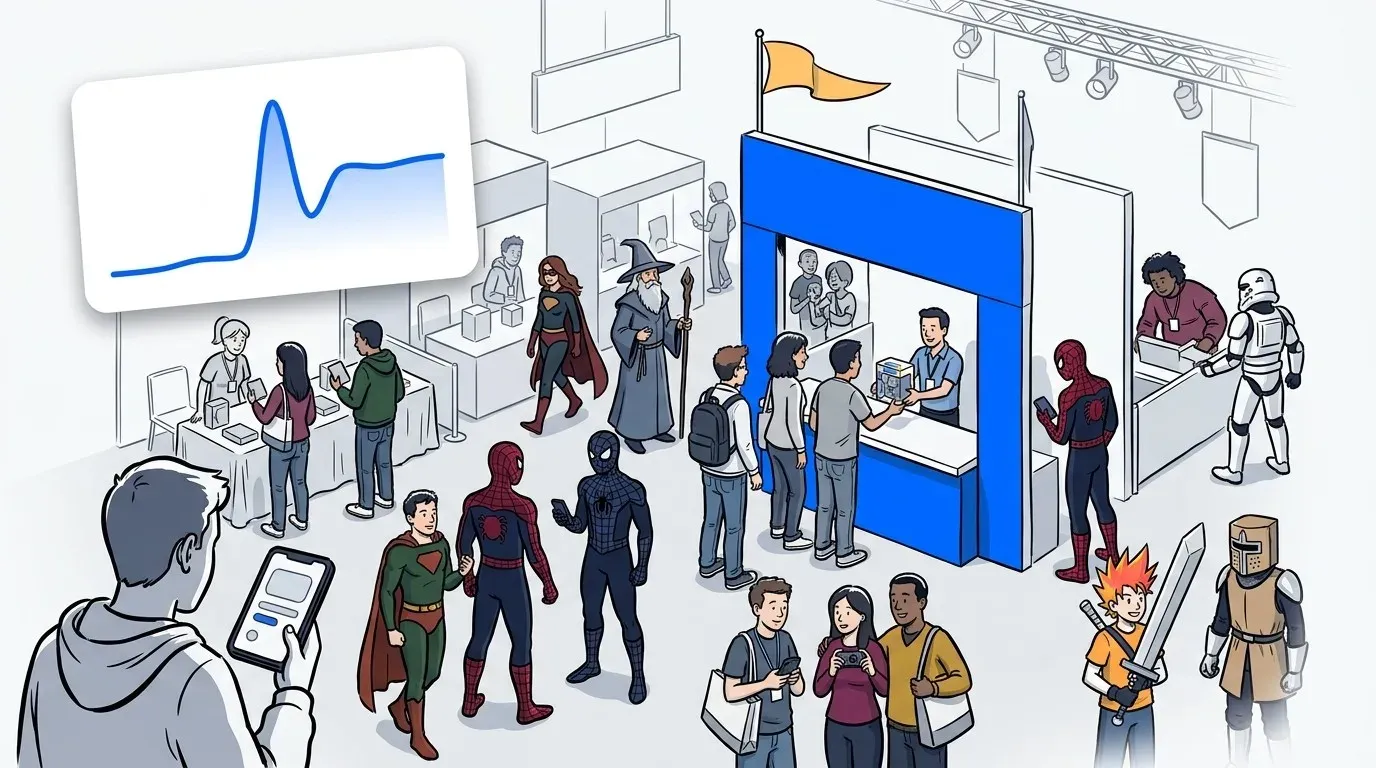
For years, the way into a big signing at a comic con was to be at the door at 6 a.m. and know how the wristbands worked. Fans lined up in the dark, the wristbands ran out, and most people went home with nothing but sore feet.
At New York Comic Con this October, fans took out their phones instead. NextMe ran a high-volume virtual queue for four major fandom activations at once. Over four days, fans joined those queues more than 40,000 times.
The total is impressive, but it isn’t the hard part. The hard part is the opening. At one shop, about 1,000 spots for the day were claimed in under 2 minutes on most days of the show.
What a high-volume virtual queue has to survive
A high-volume virtual queue takes in thousands of people in a few minutes, confirms each one by text, and keeps every line moving while it does. The daily total rarely breaks a system. The first few minutes after something opens do. That’s the moment to judge any queue by.
On opening day at NYCC, the quiet stretches ran at about 19 sign-ups a minute. Then registration opened for one of the show’s biggest draws, and within a minute the pace was about 28 times that. Nearly 2,000 fans signed up in the first ten minutes.
Festivals see the same shape when gates open or a headliner takes the stage. We’ve written about the surge moments festival teams plan for. Conventions add their own twist, because the rush happens on a schedule everyone knows in advance.
When registration opened
Picture what those minutes usually look like. A sign-up page spins. Fans refresh, then refresh again. Some give up and head for the booth to stand in the line the queue was supposed to replace. Staff spend the next hour answering the same question.
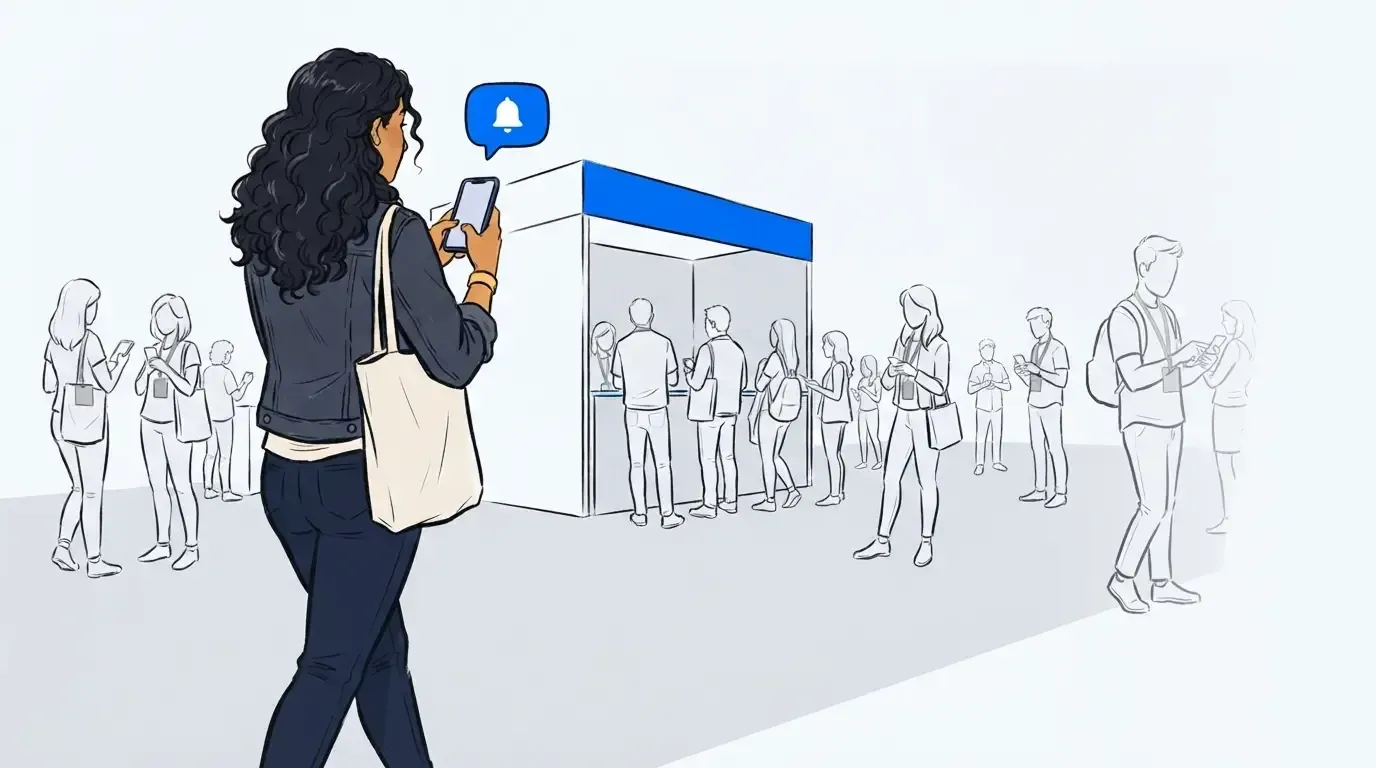
None of that happened. Each fan got a text within seconds confirming their place, with a link to check where they stood. Even at the peak, the slowest response NextMe gave all show took 0.1 seconds.
Two of the activations also ran access by random draw rather than arrival order. A fan who signed up in minute nine had the same chance as a fan who signed up in second one. That changes how a rush feels. There’s no reason to sprint, so people don’t. We’ve written about why draws and live queues work better together.

Four activations, one platform
The opening rush landed on top of everything else already running. Across the show floor, NextMe was handling more than 20 queues for shops, signings and photo experiences at the same time. Each team set its own rules, from first come first served to random draws, and worked from its own dashboard.
That separation matters on a day like this. A rush at one activation never slowed the others, and no team had to radio anyone else to keep its line moving. New York Comic Con also draws fans from overseas, where a US text can arrive late or not at all. So NextMe sent updates over WhatsApp as well as SMS, and each fan got their message on the channel that would reach them. By Sunday, the queues had sent 58,500 messages between them. Of the ones carriers reported back on, 99% arrived.
We’ve seen this shape before at very different events. Peacock ran a high-demand activation at San Diego Comic Con on NextMe. Hello Kitty Cafe Chicago moved 4,616 guests through its grand opening weekend. The crowd changes. The pattern of a sharp opening rush followed by a long, steady day stays the same.

Keeping bots and resellers out of the line
A sign-up page that thousands of fans can reach is one that bots and resellers can reach too. At a show where exclusives are worth reselling, a rush isn’t always made of fans. So the same system that absorbed the volume also had to decide which of it was real.
NextMe layers several protections for that, from checking that sign-ups come from people actually at the show to holding a sudden rush before it reaches the form and catching entries that don’t look like genuine fans. We don’t publish how they work, for the obvious reason. What we can share is the result: at one activation’s artist signings, only 2.2% of fans won two or more of the five most popular signings.
Together they meant the rush at every opening was made of people, each with one fair shot.
Inside the shops: a fast rush and an all-day line
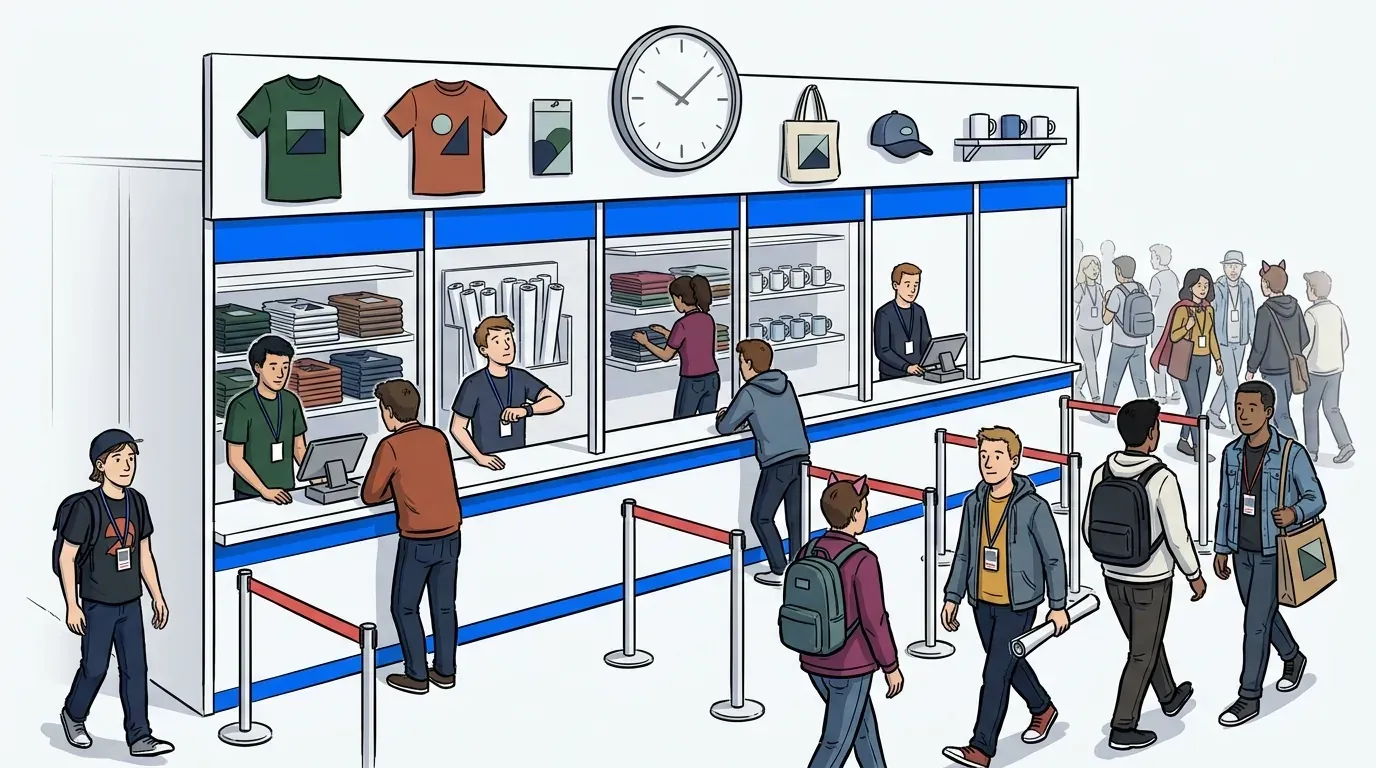
Zoom in on the retail shops and the reason a queue matters becomes obvious. At the first, the day’s 1,000 or so spots were claimed in under 2 minutes. At another, the counter served about 90 fans an hour, all day, however fast sign-ups came in.
No amount of staffing closes a gap like that, and you wouldn’t want it to. Arrivals spike, service stays steady, and the queue holds the difference. At that second shop, fans waited a median of 46 minutes, but they didn’t spend it standing still. They walked the floor, saw other booths, and checked their place in the virtual waiting room on their phones.
When their text came, they came back fast. The median fan was at the counter within 10 minutes of being called. That kept the counter busy all day without a crowd building in front of it. Those 46 minutes went back into the show. We’ve written about how one queue lifts a whole event.
How to plan for your own opening rush
You don’t need four activations and a convention center to hit the same problem. Any drop, launch or registration window can produce the same minute. We call this the first-ten-minutes test, and it’s worth running before any big event.
- Find your opening. Name the moment demand will spike: doors, a registration window, a product drop.
- Plan for the first ten minutes, not the day. At NYCC, a single ten-minute window held about a sixth of opening day’s sign-ups.
- Ask for real peak numbers. Ask your queue provider for sign-ups per minute and response times from a live event, not a load test.
- Check the texts too. Every sign-up sends a confirmation. A rush of sign-ups is also a rush of messages.
- Staff for service, not arrivals. Let the queue absorb the spike. NextMe runs a hybrid line, so you choose how many fans wait in person and everyone else waits on their phone.
Fans can join through self check-in by scanning a QR code at the booth or anywhere on the floor. Afterward, your event analytics show exactly when the rush hit and how fast the counter cleared it, so the next plan starts from real numbers.

Built for the busiest minute
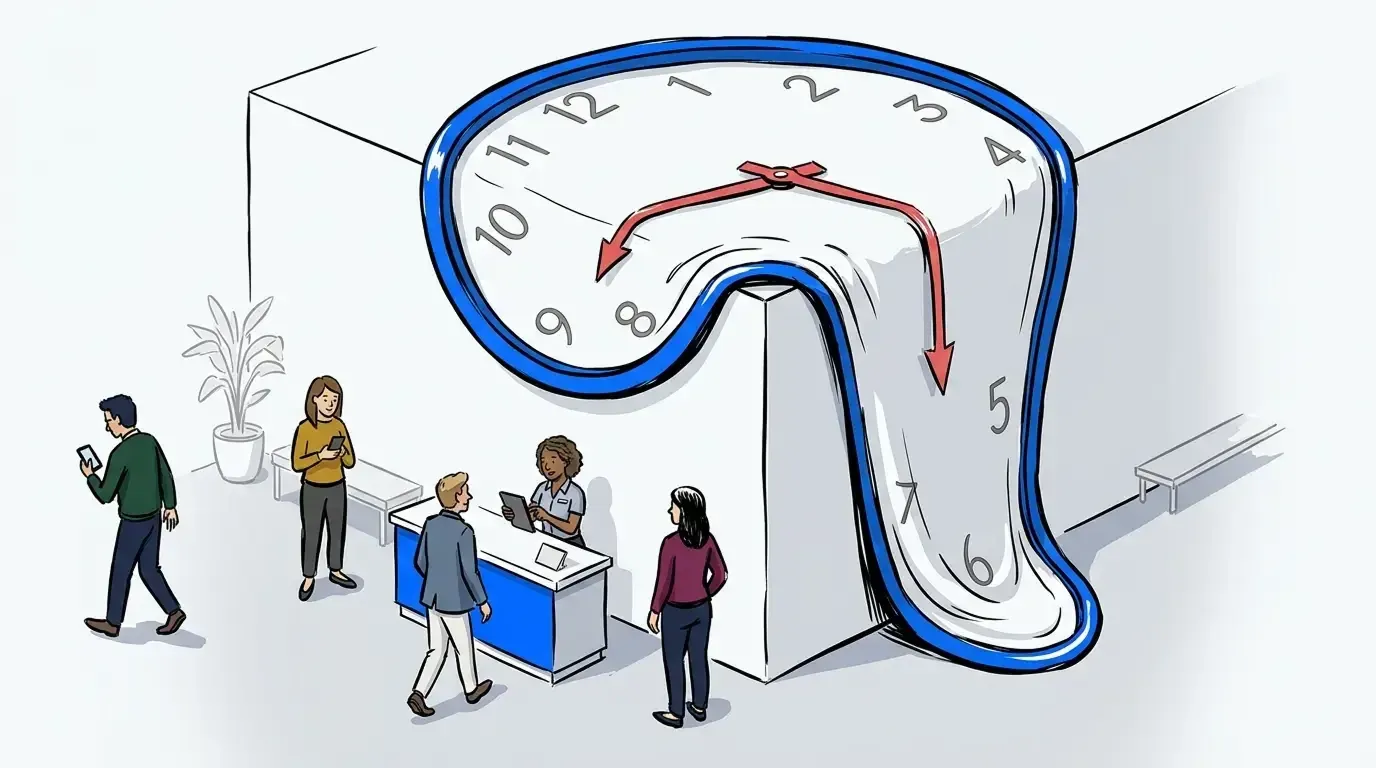
Big events are judged by their worst minute, not their average day. At NYCC, those minutes came on most days of the show, when a shop’s spots for the whole day were claimed in under 2 minutes. Fans never noticed. They got a text, went back to enjoying the show, and returned when it was their turn.
If you have an opening rush coming, see how NextMe runs virtual queues for events of any size.