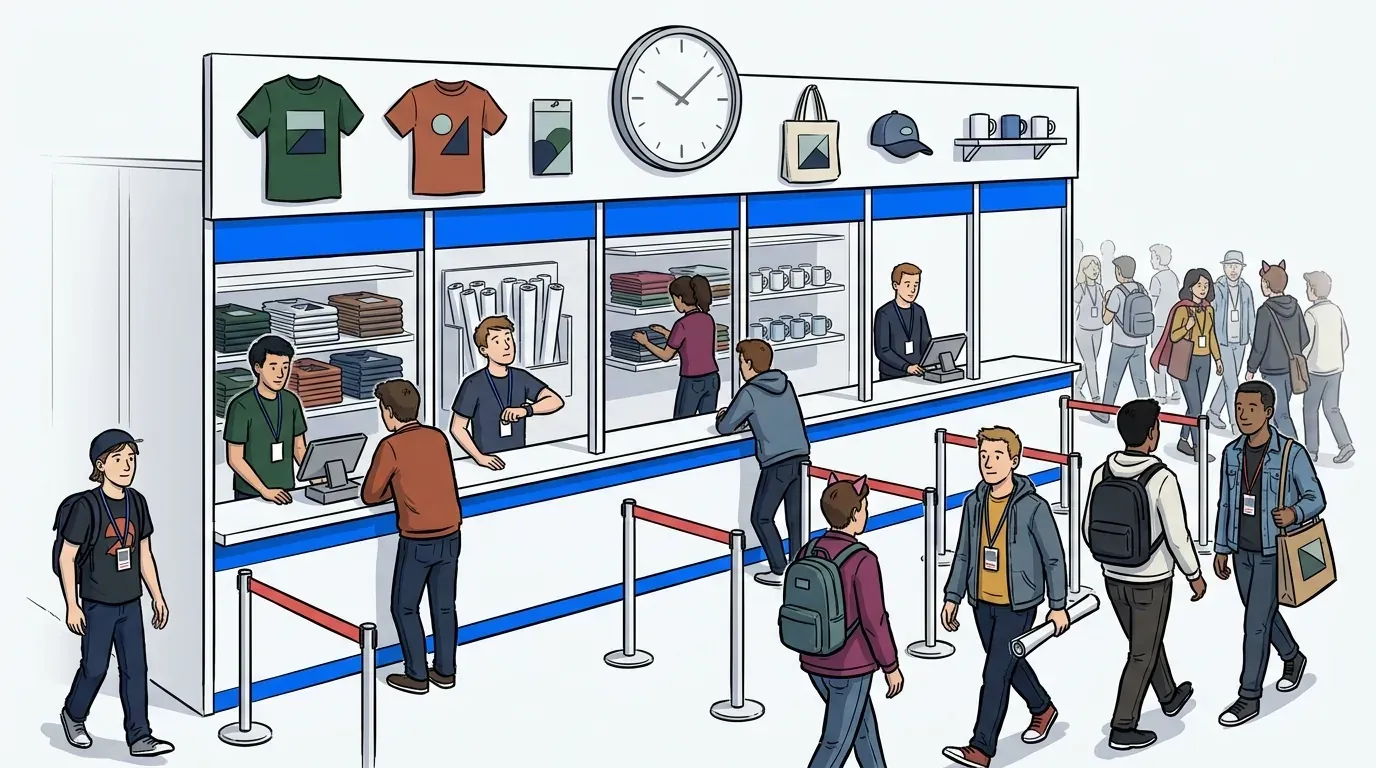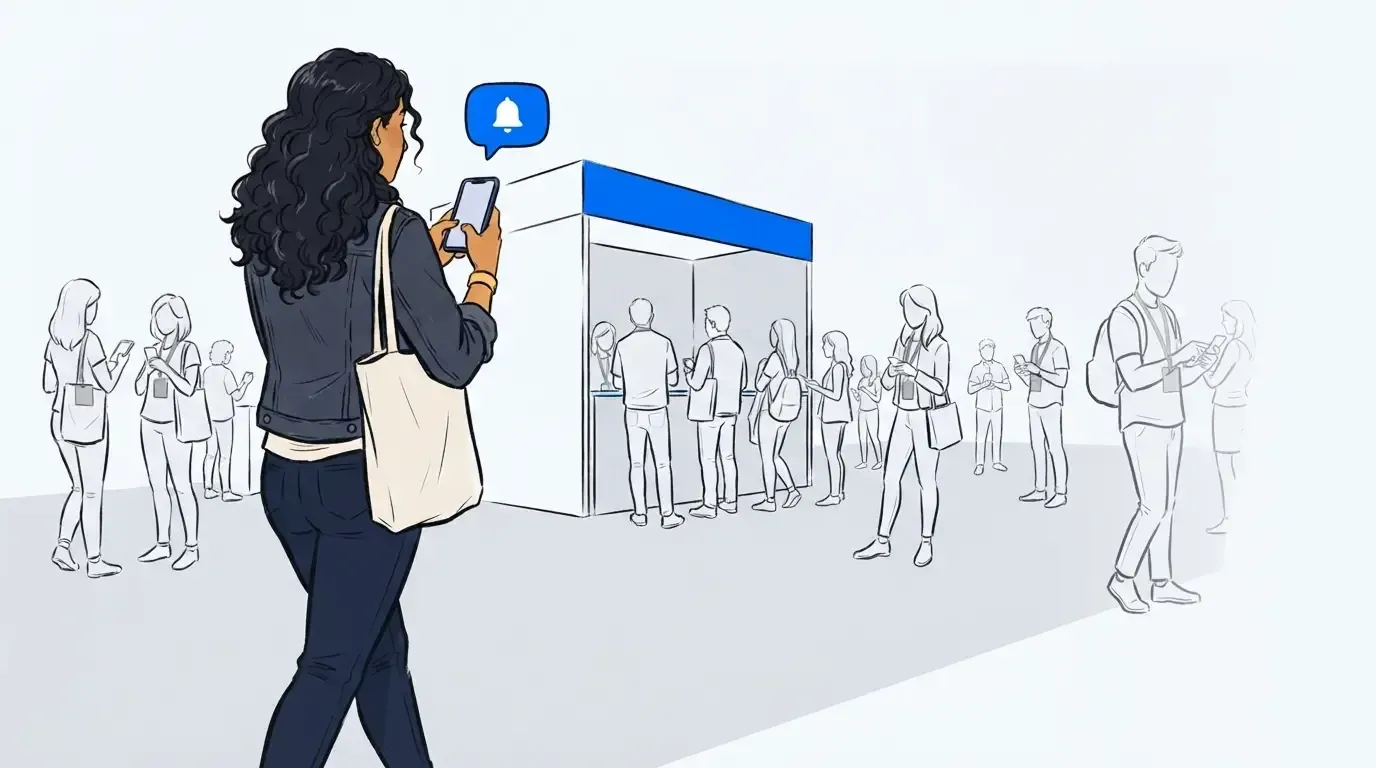
Three of the biggest events on this year’s calendar just happened back to back. Cvent Connect ran July 13 through 16. Fanatics Fest NYC followed July 16 through 19. San Diego Comic-Con closed out July 22 through 26. If your team ran a virtual queue at any of these, or at an activation nearby, you are sitting on a pile of guest data that most sponsors never see.
That data has a short shelf life. The renewal conversation with a sponsor or partner is easiest to win the week after a show wraps, while the numbers are fresh and the memory of the activation is still vivid. Wait a month, and the same data reads like an old invoice instead of a live case.
This post covers what belongs in a virtual waiting room sponsor report, why the timing matters as much as the content, and how NextMe customers are already turning July’s event wave into next year’s renewal.
What a virtual waiting room sponsor report needs to show
A virtual waiting room sponsor report should show three things: how many guests moved through the queue, how many of them interacted with sponsor content while they waited, and what that interaction looked like in measurable terms such as clicks, completions, or scans. Without all three, a sponsor ends up guessing at what their investment actually reached.
Most post-event recaps stop at attendance. A recap that only reports how many people came through the booth tells a sponsor how big the crowd was, not whether the message landed. The virtual waiting room sits at the exact point where that gap can close, because every guest who joins the queue already hands over a phone number and a timestamp before they ever reach the activation.
That distinction matters more than it sounds like it should. It is the difference between telling a sponsor a lot of people showed up and telling them how many of those people actually engaged with their content, and what they did next. One version renews a contract. The other one gives a sponsor nothing to point to internally.
Why the week after the show is the best time to make the case
Renewal conversations do not wait for a formal report to feel real. The highest-conversion moment for any sponsor renewal sits in the days right after a show closes, while the activation is still fresh in a sponsor’s mind and before their next event or their next quarter pulls their attention elsewhere.
Event teams already feel this pressure from the other direction. According to CEIR’s 2026 Marketing Spend Decision Report, exhibitors are becoming more disciplined about evaluating event performance and are steering more of their budgets toward sponsorship opportunities that come with measurable outcomes attached. A sponsor weighing whether to come back next year is asking the same question a budget committee asks: what did we actually get.
That is the argument for speed over polish. A rough but accurate report sent three days after a show beats a beautifully designed one sent three weeks later, because by week three the sponsor has already moved on to planning their next quarter without you in it.
What belongs in the report
A useful sponsor report does not need to be long. It needs to answer five questions a sponsor’s own team will ask before they sign off on next year’s budget.
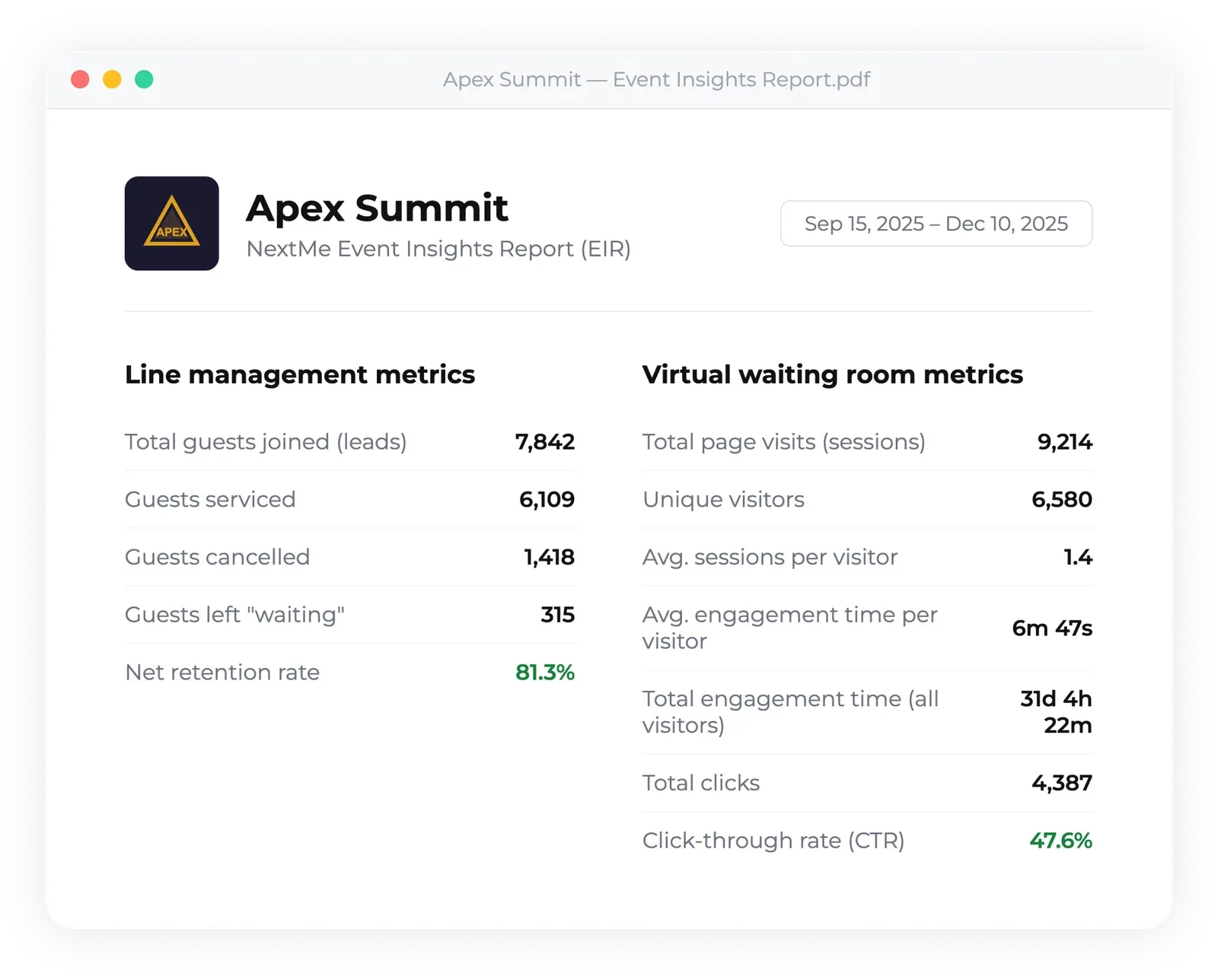
- Total queue joins: how many guests actually joined the virtual queue for the activation, not just how many walked by.
- Guests served: how many of those guests made it through to the sponsor’s activation, and how that compares to total joins.
- Content interactions: how many guests engaged with sponsor content inside the virtual waiting room itself, such as a poll, a quiz, or a product preview.
- Wait time and repeat visits: how much time the queue saved guests, and whether guests returned to the queue more than once during the event.
- One qualitative highlight: a specific moment, quote, or observation that a spreadsheet cannot capture on its own.
For our event customers, NextMe provides you with all of these metrics in a consolidated Event Insights Report (EIR) right after your event wraps. You can also pull this data from analytics rather than reconstructing it from memory after the fact. The report writes itself once the numbers are in front of you.
Proof from this year’s event wave
NextMe ran queues across several of July’s biggest activations, and the underlying pattern holds regardless of event type. At Cvent Connect, NextMe supported waitlist and queue management for a major B2B conference, giving the organizer a clearer picture of attendee flow across sessions and the show floor. See the Cvent Connect case study for the full picture. For the broader conference context, see our guide on how conference check-in apps connect registration to the floor.
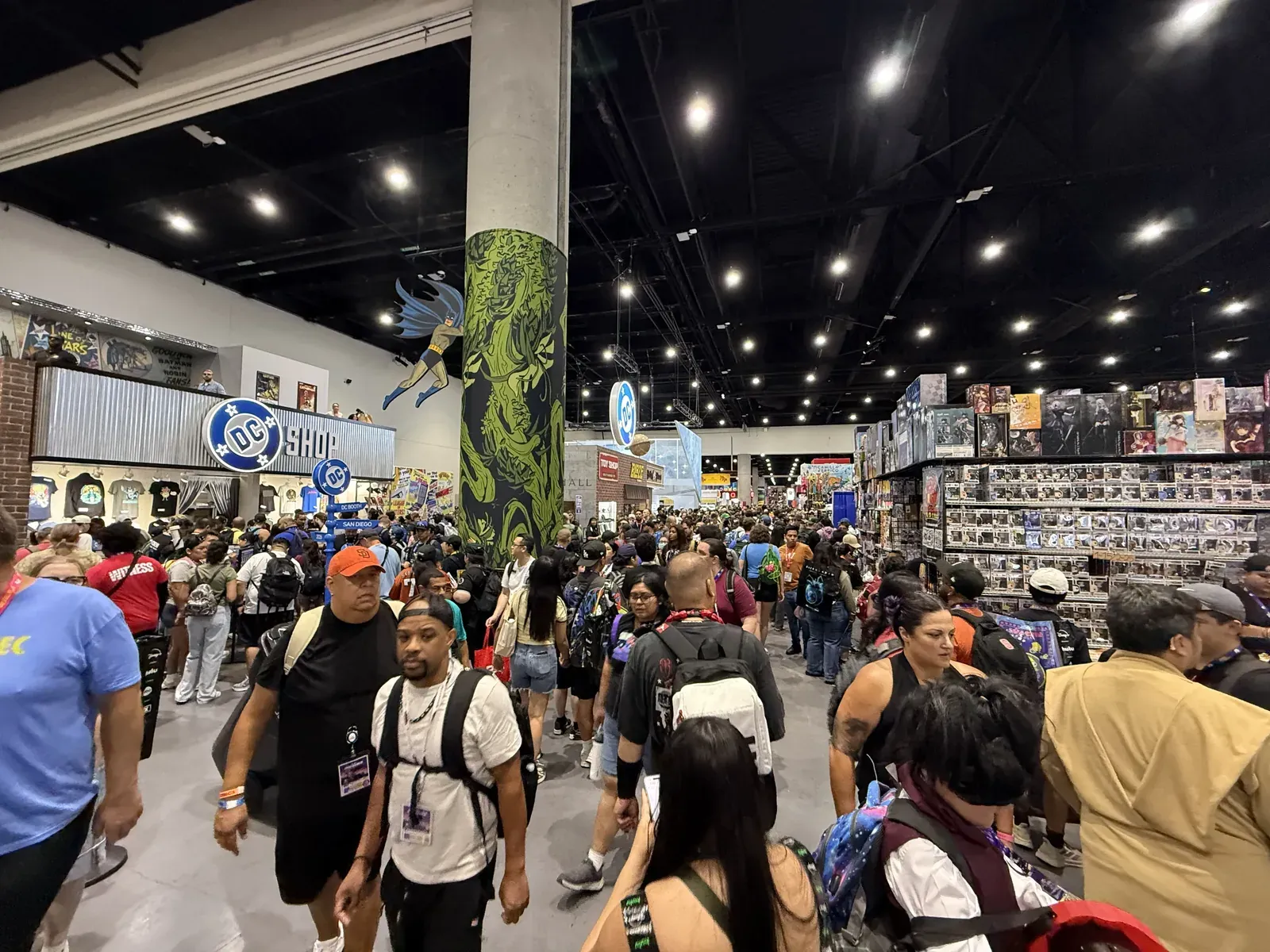
The same queue infrastructure ran at Fanatics Fest NYC and at San Diego Comic-Con this month. Activations ranged from fan meet-ups to major product drops. Each one generated the same raw material: who joined, how long they waited, and what they did once they reached the front of the line. That data does not care what kind of event produced it.
Turning the report into a renewal conversation
A report only does its job if it reaches the right person while the activation is still top of mind. Send it to the sponsor’s day-of contact within a week of the event. Do not let it sit in a general inbox for weeks, by which point the person who approved the budget has moved on to other priorities.
Frame the report around what the sponsor cares about, not around what NextMe measured. A marketing director wants to know if the activation reached the right audience and whether that audience did anything afterward. A finance stakeholder wants a number they can defend in a budget review. The same underlying data can answer both questions when you organize it around outcomes instead of features.
The wait window itself is premium sponsor real estate, not just a data source. For that fuller argument, see our post on turning event sponsor engagement into measurable ROI with a virtual waiting room. This post is about what to do with the data once you have it. That one is about why the data exists in the first place.
NextMe’s virtual queue software for events captures this data automatically as guests move through the queue. The report becomes a matter of pulling numbers together, not building a new tracking system after the fact.
Make the case while the data is still fresh
July delivered an unusually dense run of events, and most of that data is sitting untouched in queue and engagement dashboards right now. The teams that turn it into a report this week are the ones walking into 2027 renewal conversations with proof instead of a thank-you email.
None of this requires new tooling. If a virtual waiting room already ran the queue, you have already built half the report. See how NextMe’s virtual waiting room captures this data as part of every event, so the next report only takes minutes to pull together.