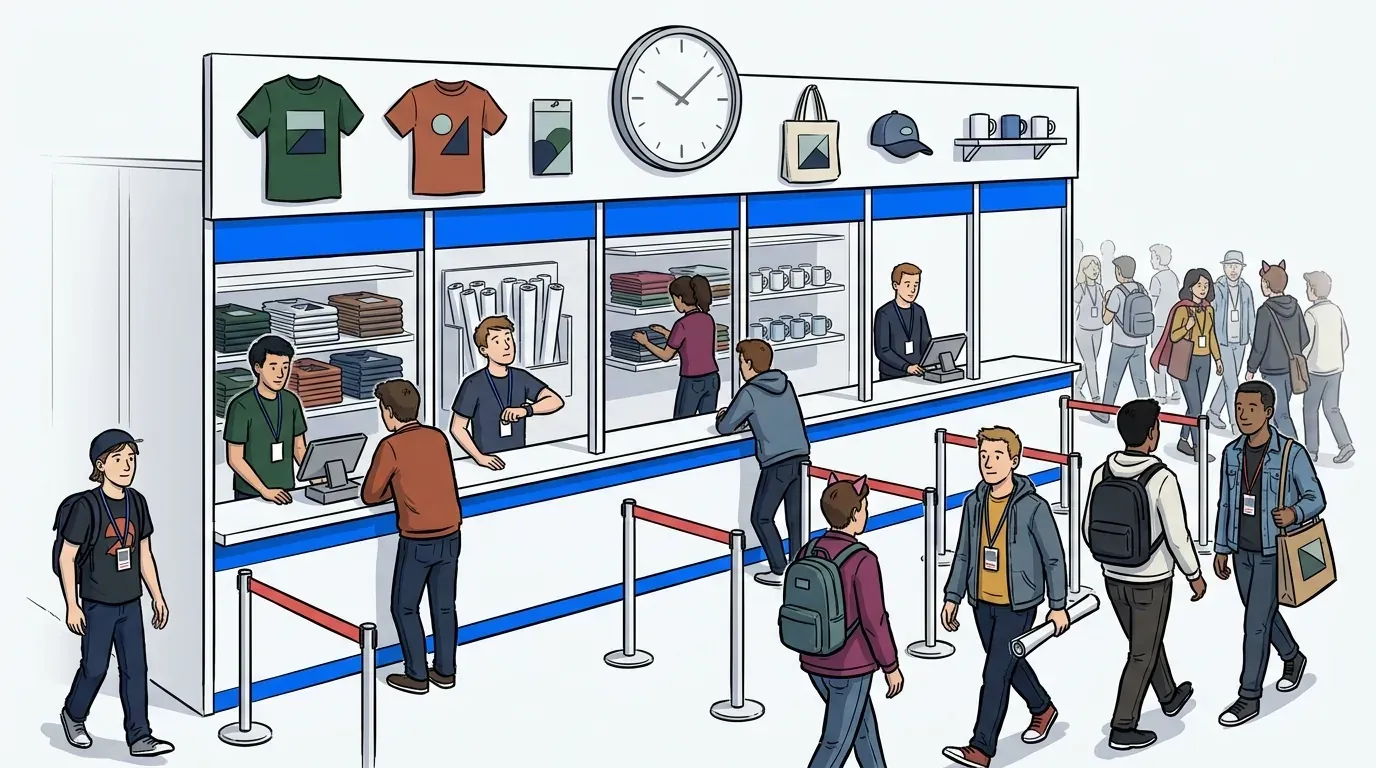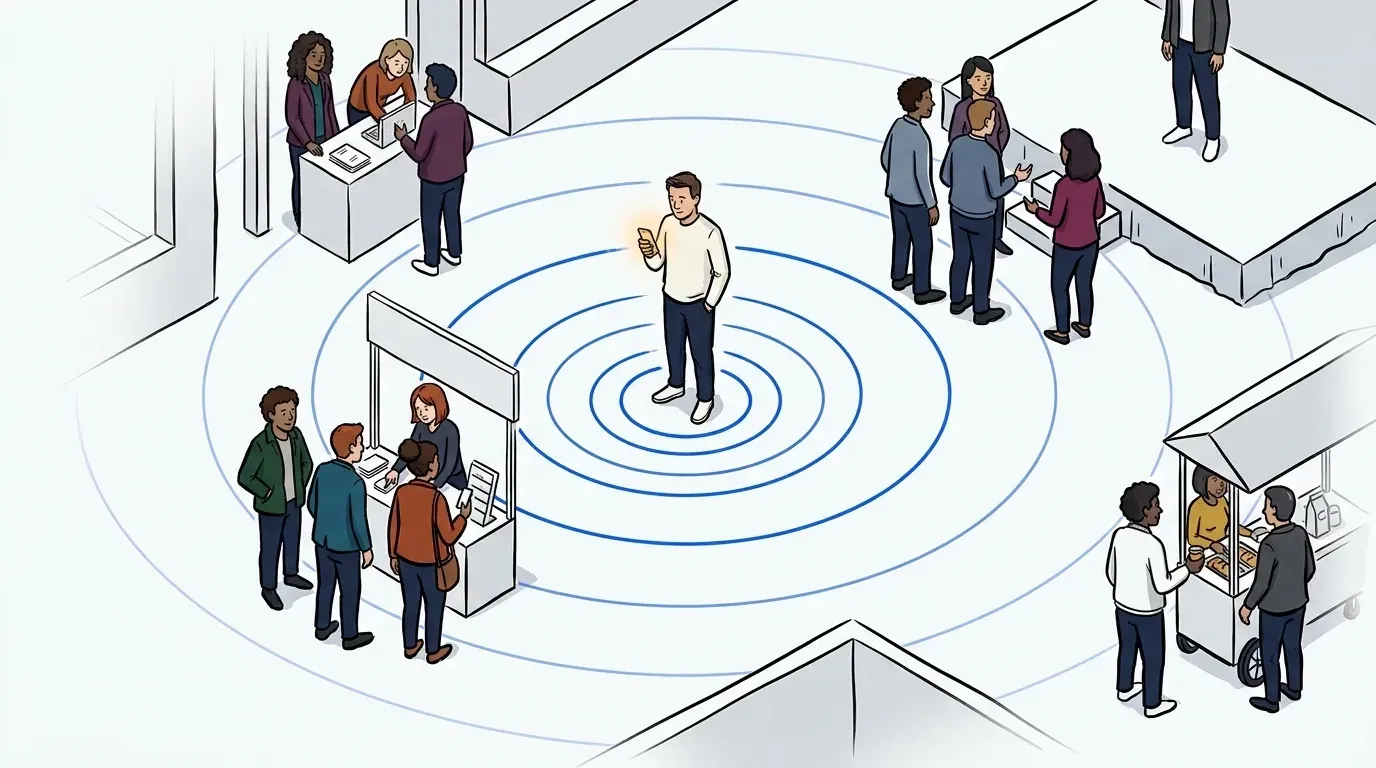
A long line at one activation doesn’t just cost that activation. It costs the whole event. Every attendee standing still at a trade show booth, a festival stage entrance, or a conference session door isn’t anywhere else, isn’t spending their attention, and isn’t adding to the energy of the rest of the floor. Most exhibitors and activation owners treat their own line as their own problem to solve or ignore. At any event with more than one thing to do, it’s really a shared resource question: where do those minutes go once they’re freed?
When one high-traffic activation switches from a physical line to a virtual queue, something bigger happens. Attendees get their time back, and they don’t leave the event with it. They spend it somewhere else on the footprint. That redistribution effect, sometimes called a halo effect, is what turns a single activation’s queue decision into an event flow management story rather than a booth story.
This post looks at what actually happens to freed-up attendee time, why the benefit spreads across an entire event instead of staying contained to whichever activation made the change, and how organizers running multi-activation events can plan for that spread on purpose instead of getting it by accident.
The mechanic behind the halo effect
The halo effect of virtual queuing on event flow management is the spillover benefit that happens when attendees freed from one physical line spend that reclaimed time at other activations, sessions, or areas of the event instead of leaving the footprint. One activation’s decision to run a virtual queue improves attendee flow, dwell time, and engagement across the whole event, not just at the activation that made the change.
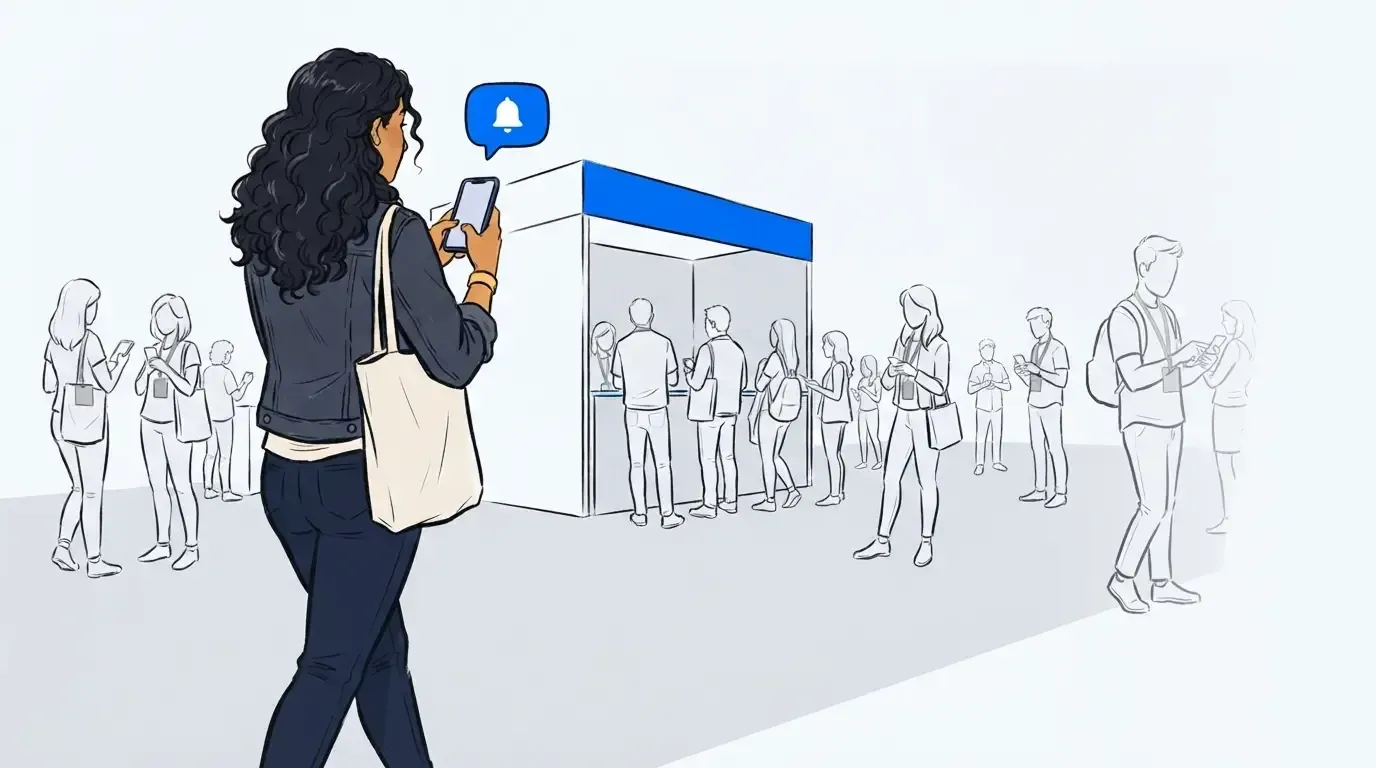
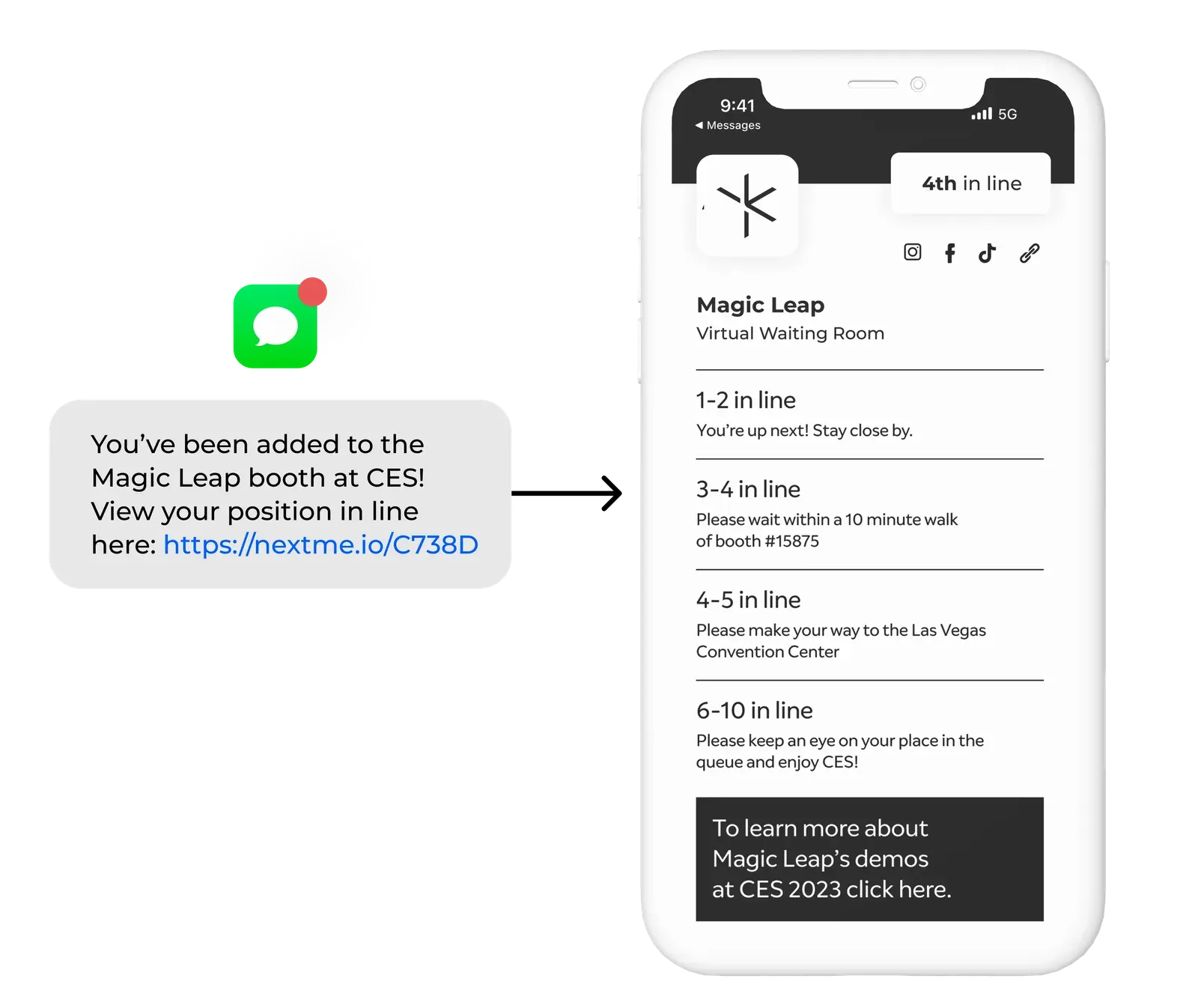
The mechanism is simple. An attendee who joins a virtual queue by text isn’t standing anywhere. They’re free to move through the event, and NextMe’s self check-in flow is what starts that clock: a guest scans a QR code or taps a link, gets a position and an estimated wait, and gets a text when it’s their turn to come back. Nothing about that requires them to stand still while they wait.
Freed time doesn’t disappear, it gets spent somewhere else at the event
Uncertainty is the real reason why people feel the need to stay tethered to a physical line, not the wait itself. A visible physical line answers one question, “am I in it?”, but leaves every other question open: “how long?”, “what if I step away, will I lose my spot?” A virtual queue answers all three at once, and once an attendee has that certainty, they behave like someone who isn’t waiting at all.
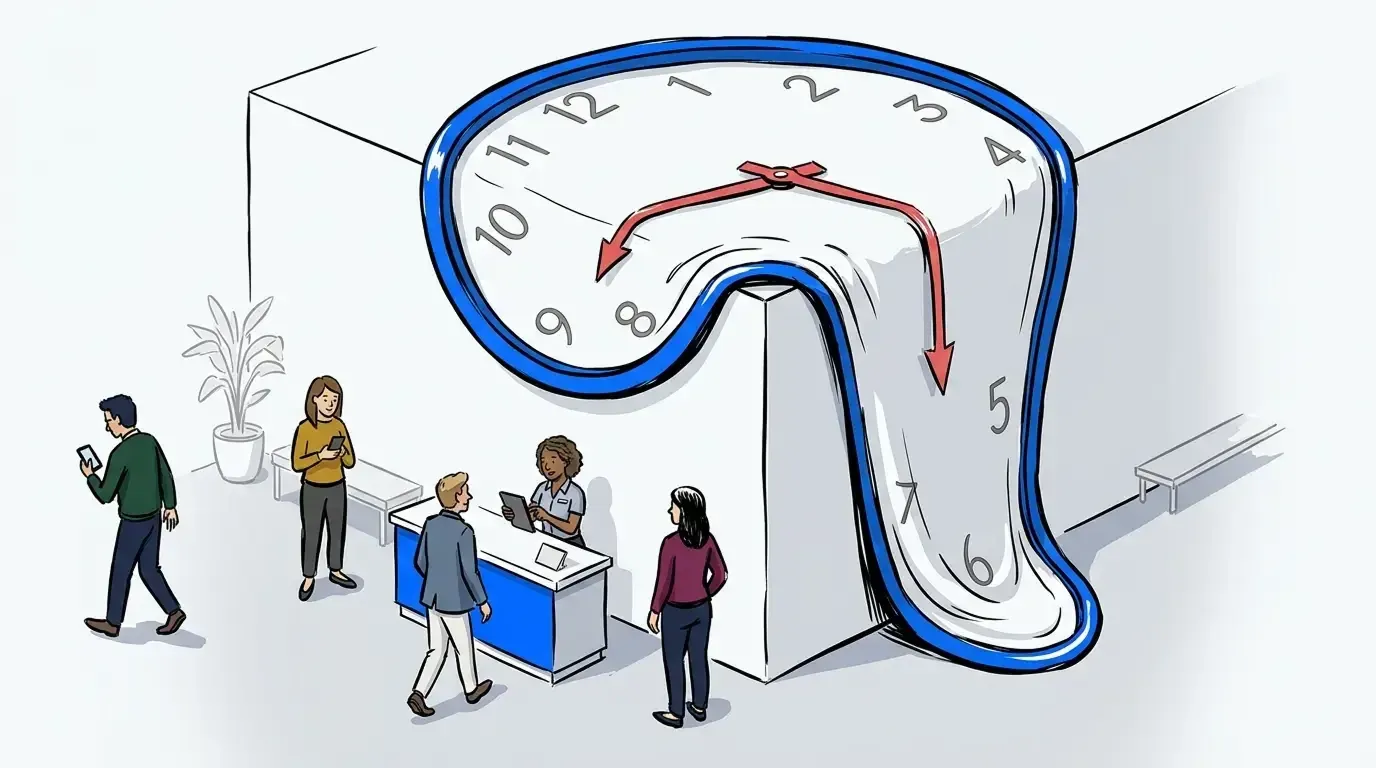
That’s the whole point of the redistribution. Trade shows are one setting where this shows up in the numbers: according to Trade Show PRO’s 2026 industry statistics, the average attendee visits between five and eight exhibitor booths in a day. Every minute an attendee loses standing in one line is a minute that doesn’t go toward that number, and the same logic holds whether the venue is a trade show floor, a festival ground with multiple stages, or a conference with parallel sessions and a sponsor hall. An activation that cuts its own wait by even ten or fifteen minutes per guest isn’t just improving its own numbers. It’s handing back time the attendee spends elsewhere on the event: another activation two aisles over, a session they’d have otherwise skipped, the merch table on the way out.
The ripple effect shows up in the data
This isn’t hypothetical. When The Shop ran its barbershop activation at Fanatics Fest NYC 2026, nearly 800 fans joined the virtual queue and spent that time roaming the rest of the festival instead of holding a physical spot. Nobody stood outside the booth when they could have been at another activation, and the festival’s overall attendee flow benefited from that redistribution, not just The Shop’s.
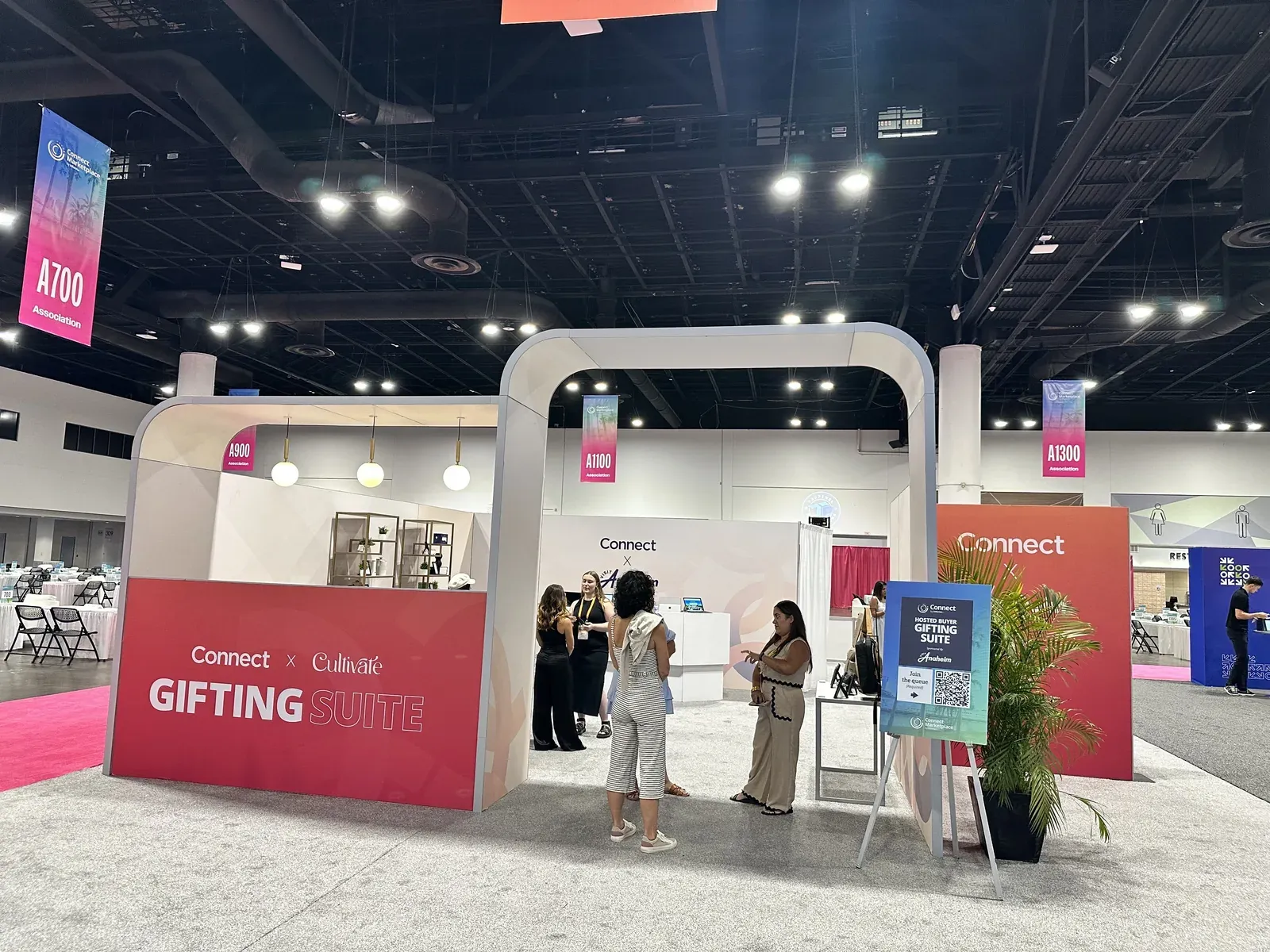
At Informa Connect’s 2026 Connect Marketplace event, NextMe ran a hybrid virtual queue and branded virtual waiting room for the Visit Anaheim Hosted Buyer Gifting Suite, an activation that in past years meant a physical line and waits that could stretch over two hours. NextMe served more than 900 hosted buyers across 20 kiosks with 84 percent retention and over 27 hours of sponsor brand engagement, all without the two-hour physical lines that the old format used to create. Attendees appreciated the freedom to explore the rest of what the event had to offer.
The virtual queue was great. I really appreciated the opportunity to go see some other booths, get some other things done, do some networking, all the while knowing I had a place in line.
Lisa P., Attendee at the Visit Anaheim Gifting Suite
The same pattern also holds outside a trade show or festival floor. At the BizBash Experiential Leadership Summit, NextMe worked with goMLR to bring a Glam Bar offering hair, makeup, and headshots to a three-day gathering of senior event professionals, a crowd with a packed agenda and little patience for standing around. Rather than pointing attendees to a separate tool or a QR code on a sign, NextMe’s self check-in was built directly into the summit’s official conference app: a simple “Join the waitlist” button pointed at the self check-in URL, no custom integration required. Attendees could find the Glam Bar, join the queue, and get back to sessions and networking without ever leaving the app they were already using. See how NextMe and goMLR ran the Glam Bar queue inside the conference app. That level of integration is a convenience, not a requirement. Conference apps are handy, but they rarely cover every corner of an event, so the same self check-in works just as well as a standalone link or QR code wherever the official app doesn’t reach.
Why event flow management matters more to organizers than to any single activation owner
An individual activation owner cares about their own conversion. An organizer cares about the whole event, and the halo effect of virtual queuing is a powerful reason to consider turning an activation-level tool into an event-wide one. If every activation’s wait time is a shared resource that either feeds or starves the rest of the footprint, an organizer’s incentive to standardize queue technology across the event isn’t just about consistent reporting. It’s about compounding the redistribution effect across every activation instead of leaving it to whichever exhibitor happens to solve their own line problem.
We’ve written before about how organizers get outsized value from offering the same virtual queue platform across their exhibitor roster, and about aggregating activation-level queue data into floor-wide occupancy visibility. The halo effect is the attendee-side version of that same argument: standardization doesn’t just make an organizer’s dashboard cleaner, it multiplies the amount of freed time circulating across the whole event.
The individual activation case still holds up on its own
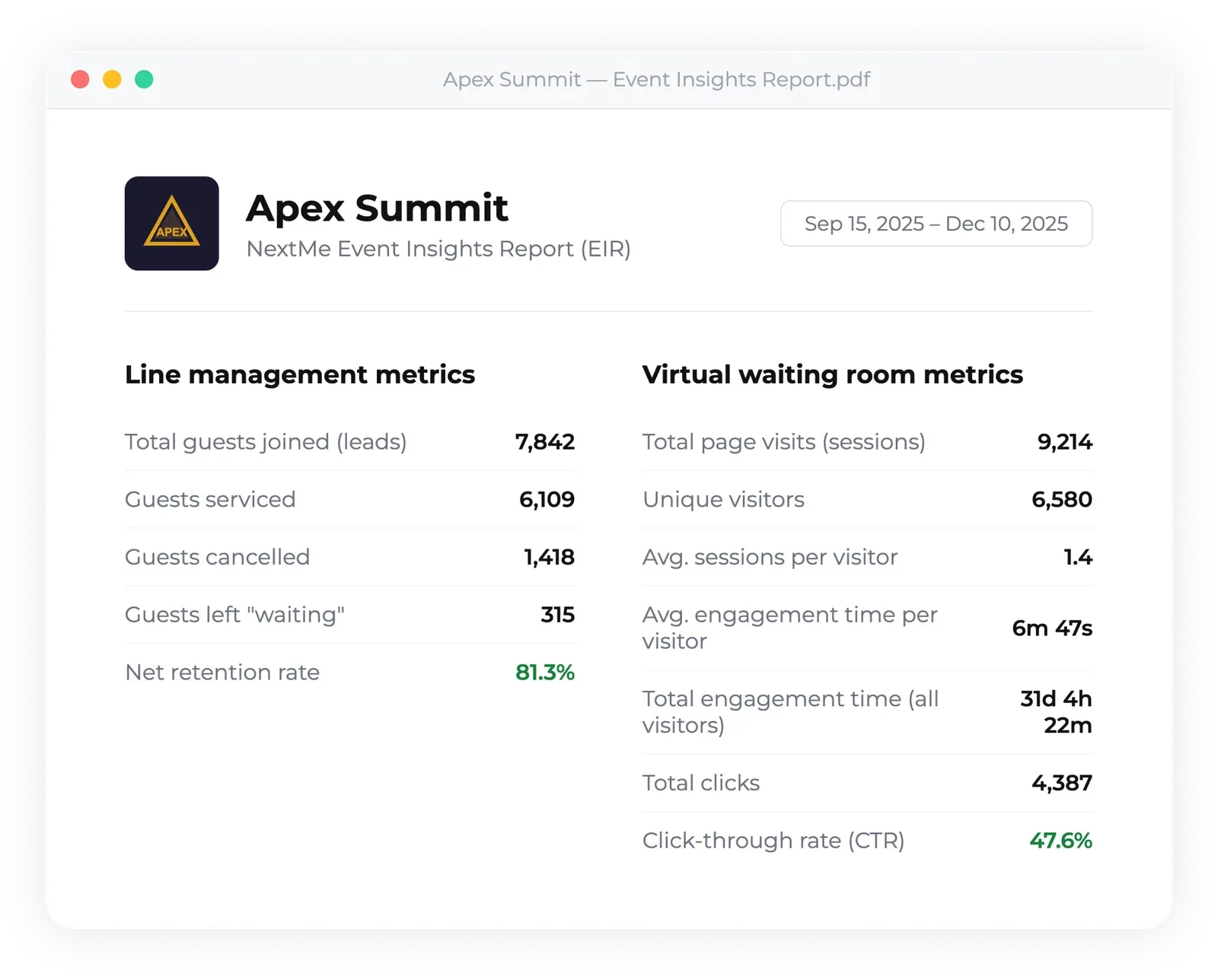
None of this requires an organizer’s mandate to start paying off. A single activation owner running a high-traffic booth, stage, or exhibit can adopt a virtual queue independently and see the halo effect at a smaller scale immediately: shorter perceived waits, more repeat visits during the virtual waiting room window, and a measurable lift in how many guests actually make it through instead of walking off. For booth-specific tactics on capturing that traffic once it arrives, our guide to converting every visitor at a trade show booth covers the setup in detail.
The event does better when one activation does better
A single activation’s virtual queue was never just an activation-level fix. Every minute an attendee gets back from one line is a minute they spend somewhere else on the event, which is exactly why event flow management benefits from activation-level decisions that most exhibitors never think to share credit for. The activation owner sees a shorter wait and a better conversion rate. The organizer sees an event that moves. The attendee just gets their day back.
If you’re planning queue technology for an upcoming event, see how NextMe’s virtual waiting room works across activations of every size, or visit our events page for the full picture.