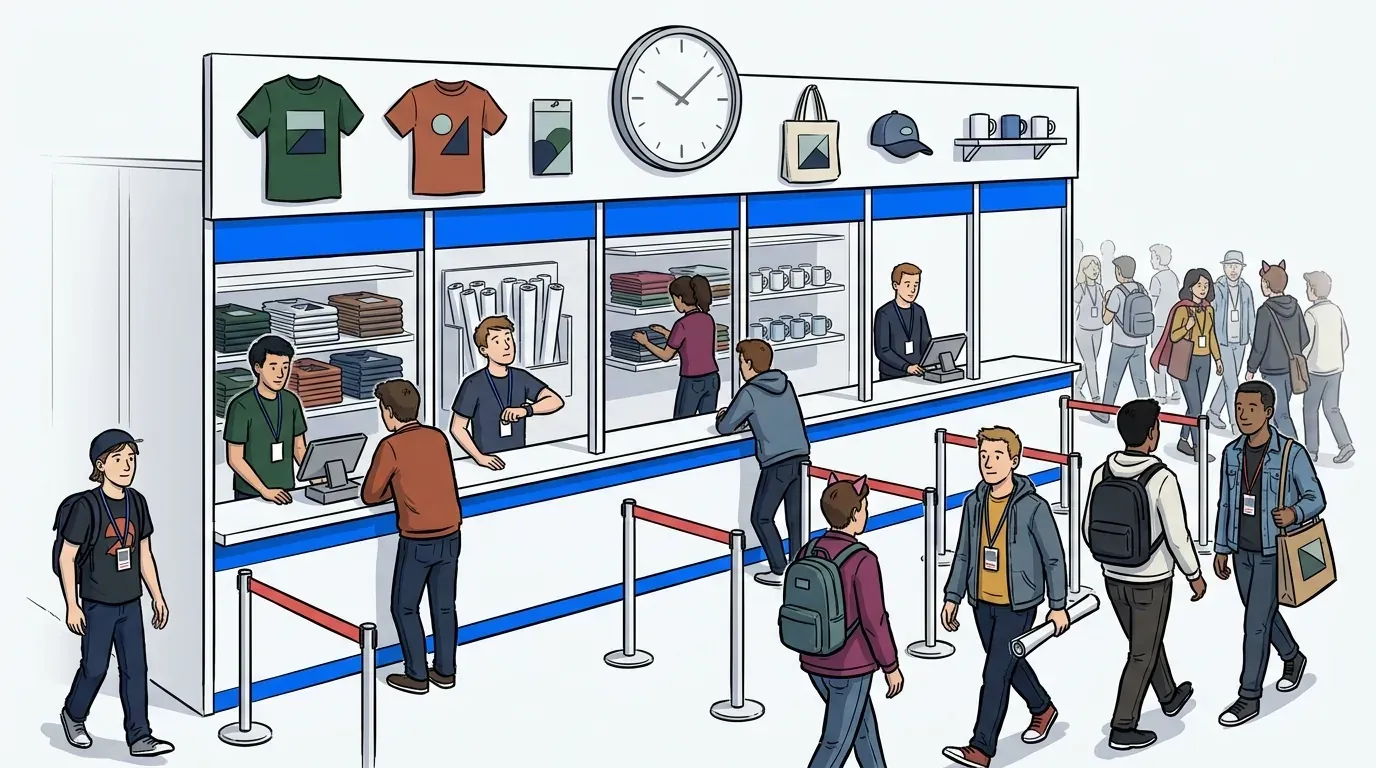
Most exhibitors at a large convention don’t decide who gets into their booth. The show runs the lottery, or a platform the show contracts does. Fans enter in advance, a system randomly selects who gets in, and selected fans are notified with a time slot. By the time anyone walks the floor, access is already settled.
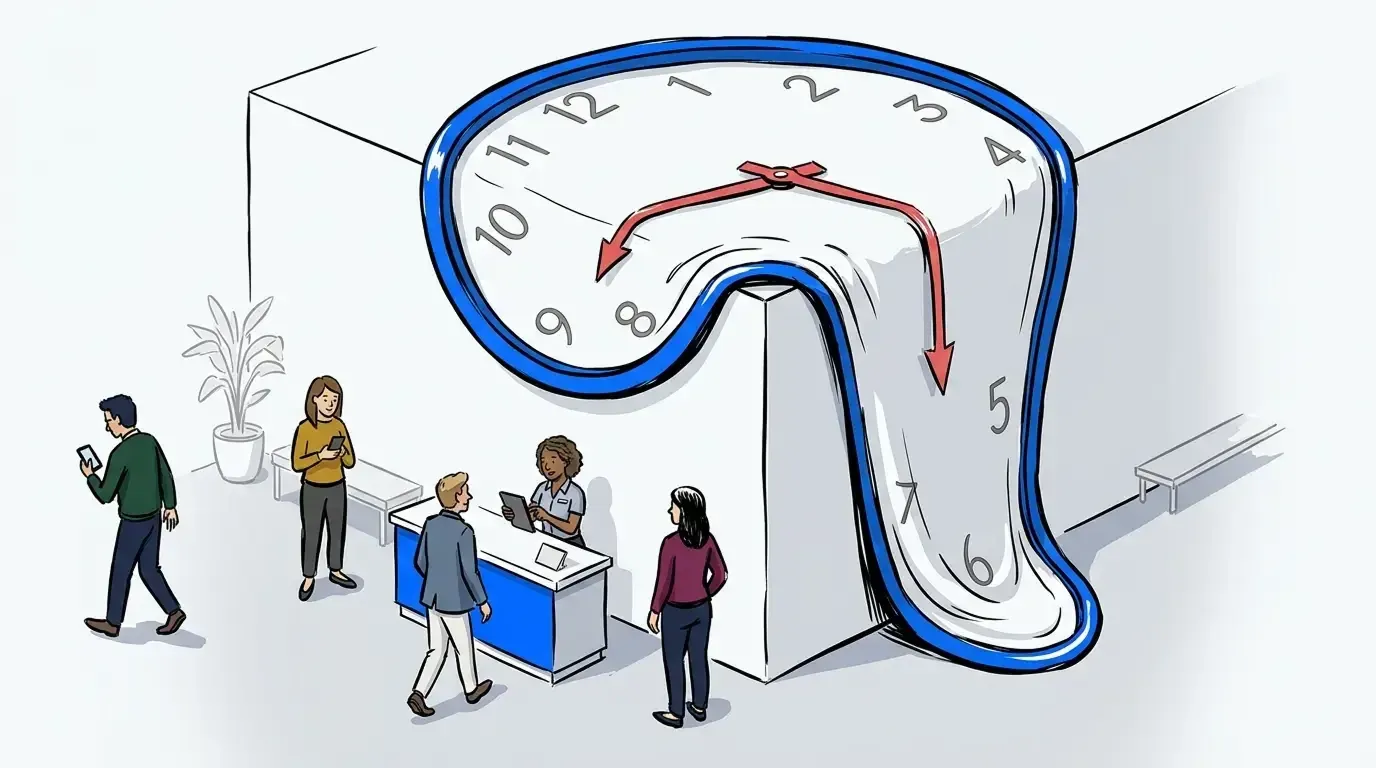
That works until people don’t show. Your booth serves everyone who did, and then it’s empty, with no way to pull in real time from the hundreds outside who would gladly take a spot. Nobody on your team can call them in without going around the lottery or starting a scramble at the counter.
A lottery settles a list weeks out, which is genuinely useful. The day itself is a different job. Fans drift across the hall, stock runs down, and a booth realizes mid-show it can move far more people than the schedule allowed. Those are the realities NextMe was designed for.
What a reservation lottery is, and how an Exclusives Portal works
A “reservation lottery” is our shorthand for how shows like SDCC run their exclusives portals today. A reservation lottery allocates limited access by random selection before an event starts. Fans submit entries during a set window, a system selects fans at random, and selected fans are assigned a slot. Shows name these systems differently, but the mechanics are the same. It’s run by the show, before the event starts, and it’s separate from any live queue on the floor. The selection settles who gets in. It doesn’t pace the booth on the day, and it can’t reuse a slot once a selected fan doesn’t show.
SDCC’s Exclusives Portal shows how these systems generally work. Fans with a valid badge submit entries during a fixed window. Once it closes, SDCC sends an email when the random selection is complete, which it anticipates taking at least 48 to 72 hours, and fans log back into the portal to see whether they were selected. A fan’s badge day also has to match the date of the exclusive, so access is bound to a day chosen weeks ahead.
Where the empty slots go
Historically, many high-demand signings ran on wristbands handed out in a physical line. That rewarded whoever queued earliest, and the wristbands were gone before most fans reached the front. A reservation lottery fixes that, and it’s a real improvement. What it doesn’t handle is anything past the moment of selection.
Every allocation system produces no-shows. Plans change, panels run long, and a fan who entered weeks ago forgets. What matters is whether the empty slot can go to someone else in real time. There’s usually a fan standing nearby who would take it. Whether your staff can give it to them depends on whether the selection system and your queue can work together.
When the selection sits outside your virtual queue, there’s no built-in way to hand a slot over. Your standby pool can fill the spots the lottery didn’t allocate. On its own, it can’t fill a reserved spot that nobody used. Closing that gap is where connecting the two systems matters, and it’s covered in the next section.
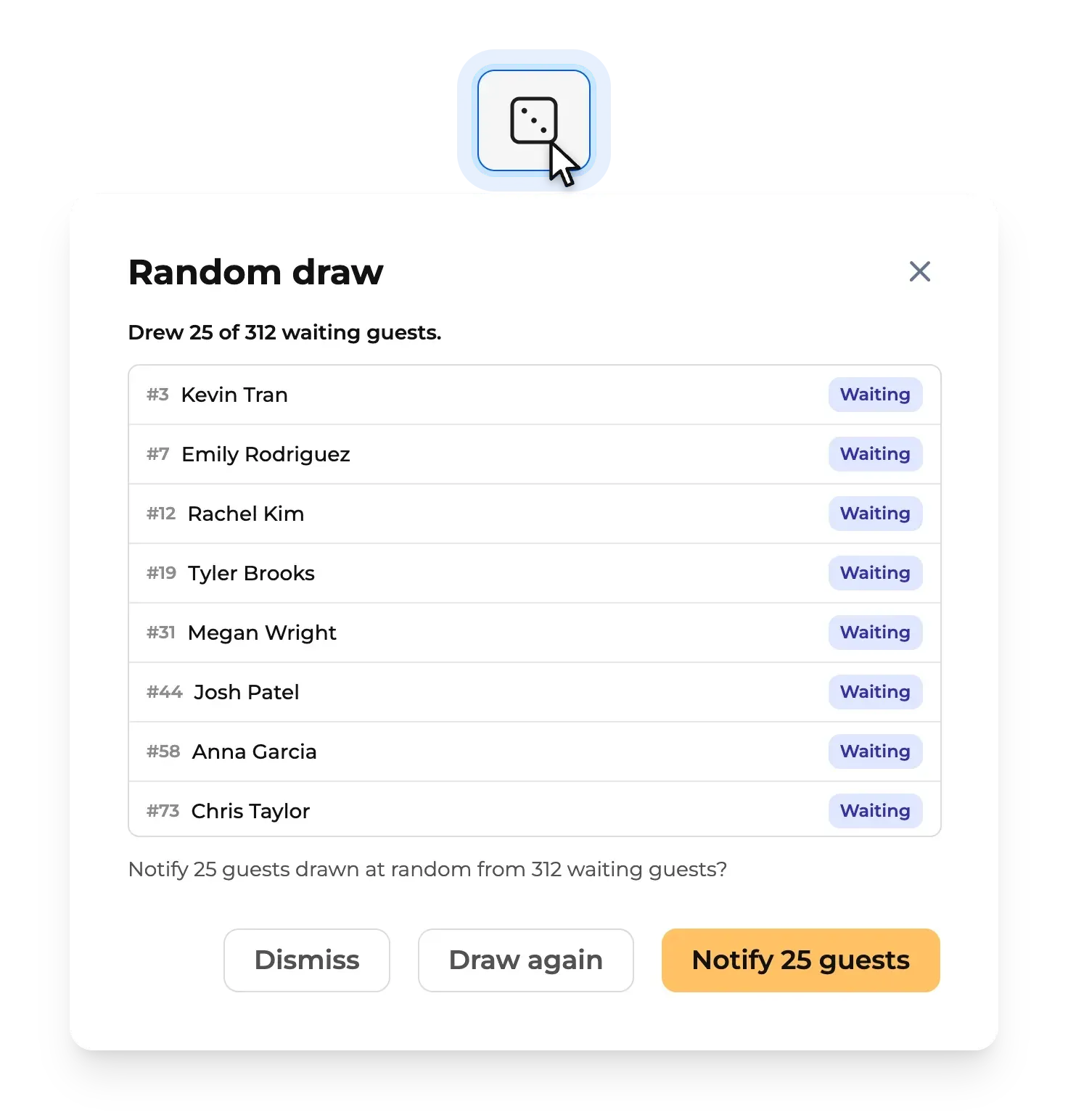
At NYCC this month, Funko ran reserved time slots from one system alongside a virtual standby queue from NextMe. A rolling random draw called fans in as space opened in real time, and the shop ran at capacity right up to sell-out with every reserved slot honored.
Filling no-shows in real time
A show’s selection system and your booth don’t have to stay separate. Where a show or its platform partner is open to it, NextMe can work with them to connect the virtual queue to the system that holds the reservations. When a reserved time passes and nobody is at the window, your team can notify fans from the standby pool and call them in, in real time, instead of letting the slot expire.
Connections like this are scoped with the organizer and their platform, so it’s worth raising early in planning. Either way, the standby queue already works alongside a show’s system today. Your team can notify the next fans in line from the dashboard the moment a window opens up, and fans can reply to release a place they can’t use, so capacity comes back in real time while it can still be used. Working with the organizer, registration can also be limited to verified attendees, for example by requiring the email used to buy an event ticket.
Email vs. text: what works once doors open
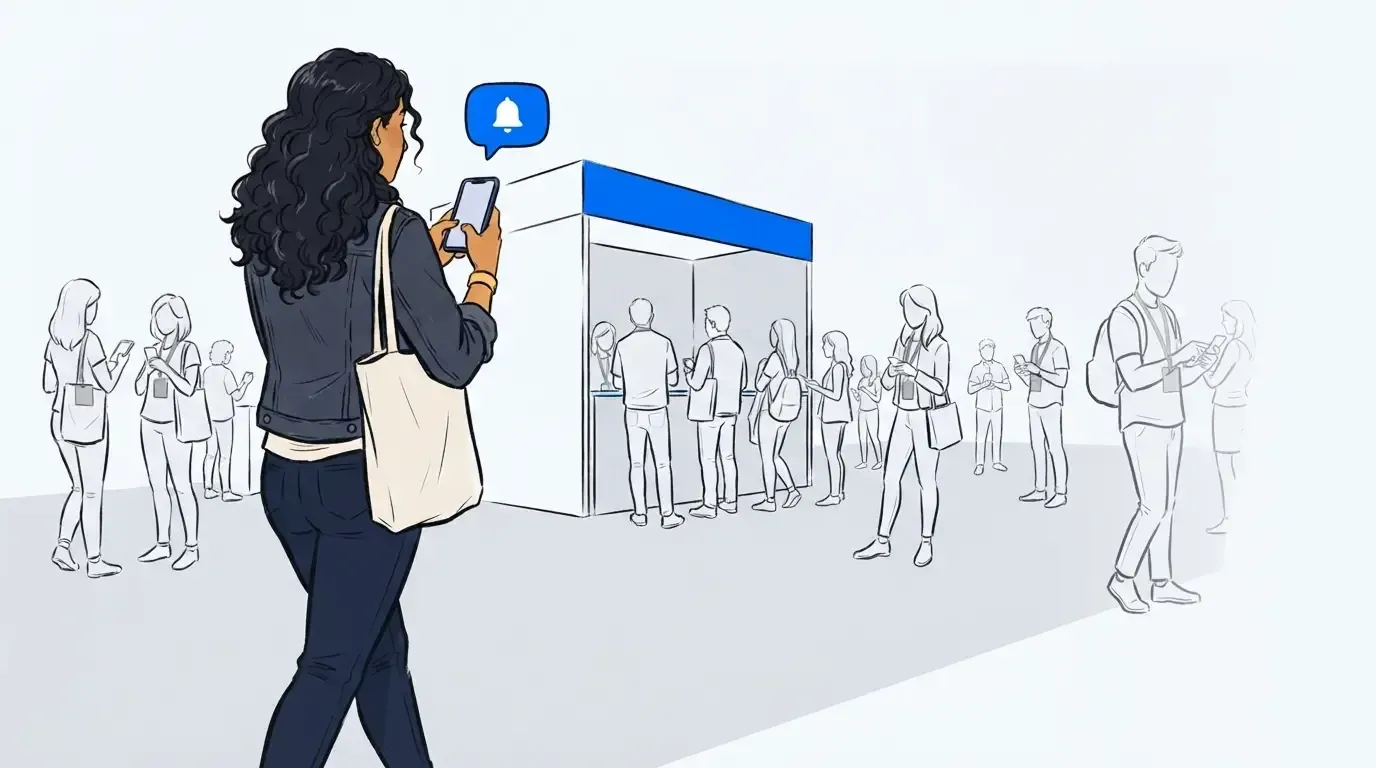
Email does its job for a lottery. A fan finds out weeks ahead that they won, and there’s plenty of time to read it. Calling someone back to a booth in the next ten minutes is a different job. The fan you’re trying to reach is in a hall with bad signal, a dying phone, and nine other things happening, and an inbox is easy to miss in that moment.
Text has an advantage that matters in a building like that. It runs over carrier networks rather than wifi, so it still arrives when 200,000 people are sharing congested access points and nobody’s email is loading. Our own numbers show what that looks like in practice. Across four activations at NYCC this month, the queues sent more than 50,000 texts, and fans came back within roughly 10 to 12 minutes of being called.
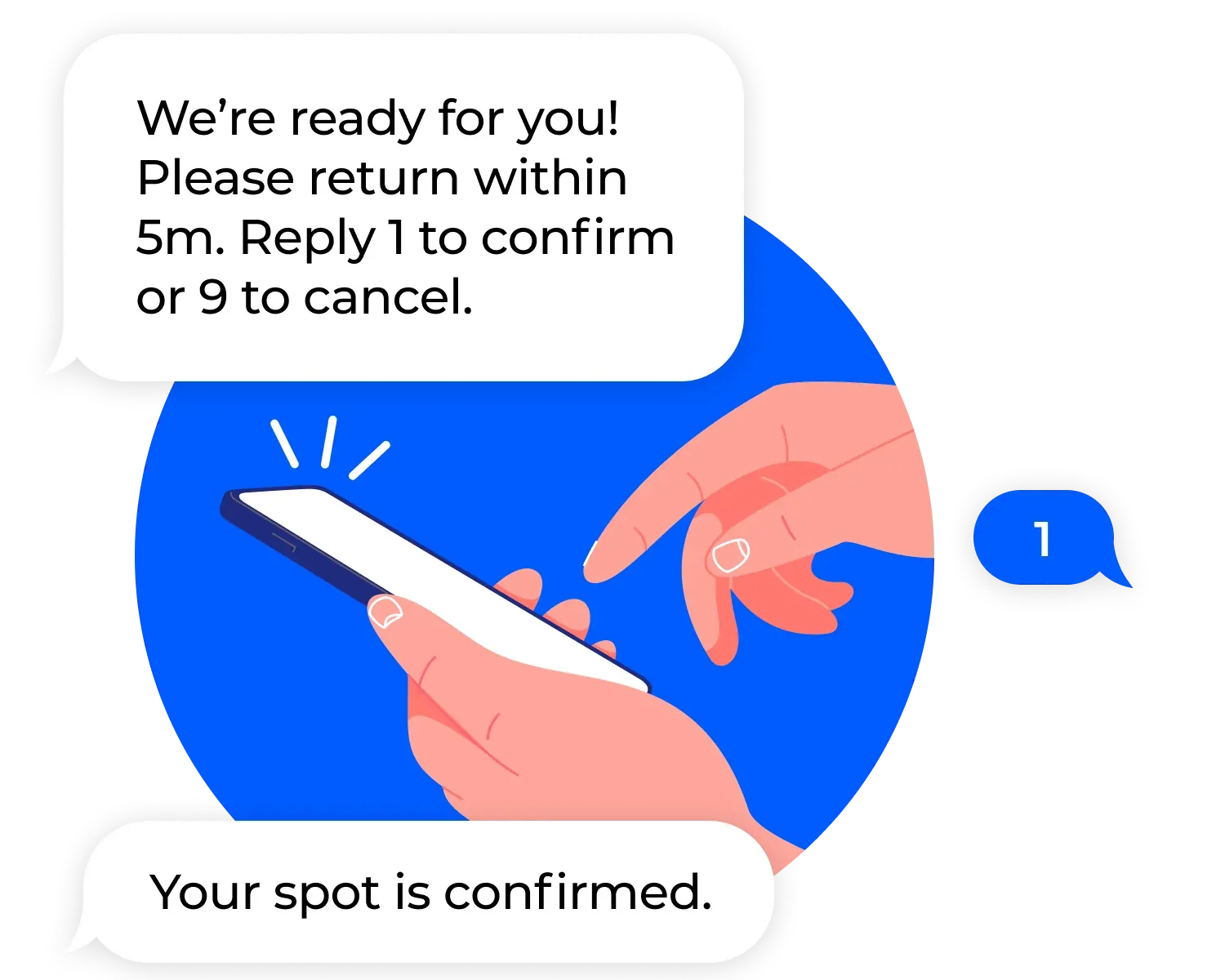
Timing is the other half. Instead of calling everyone at once, NextMe paces the selections and notifies fans early, so they have time to get back across the hall even if a message is slow on a busy network. The line for anyone on deck stays full and ready to go.
Text also runs both ways. When a fan can reply to release a place, capacity comes back while there’s still time to use it. If a fan can’t cancel, their spot stays reserved and nobody uses it.
For international guests, SMS isn’t always the right channel. Carrier restrictions and fraud filtering make delivery unreliable or expensive in plenty of countries, which is why NextMe sends through WhatsApp as well. That matters more at a show pulling fans in from overseas.
The wait is inventory most lotteries leave on the table
Think about what a fan does between finding out they’re in and actually reaching your booth. In a lottery, nothing. They got an email, they’ll show up at the time it named, and there’s no surface in between.
A virtual waiting room puts a branded page in their hand for that entire window. It updates in real time, and fans check it repeatedly because it tells them where they stand right now. People leave a line because they don’t know how long it will be, not because it’s long. Answering that question turns dead time into the one moment where a fan is paying close attention to your brand and has nothing else to do.
The numbers from four activations at NYCC this month: more than 160 hours of combined brand engagement in the waiting room, with fans opening it two to three times each. One retail queue drove nearly 3,500 clicks into a live inventory tracker, so fans could see what was still in stock before they were called.
That last one does more work than it looks. A fan watching the exclusive they came for sell out can decide not to bother, and reply to release their spot. On that same queue, more than 500 fans did exactly that. Nobody walks across a convention hall to find an empty shelf, and nobody else loses a slot waiting behind someone who was never going to buy. Give fans honest information in real time and the queue cleans itself up.
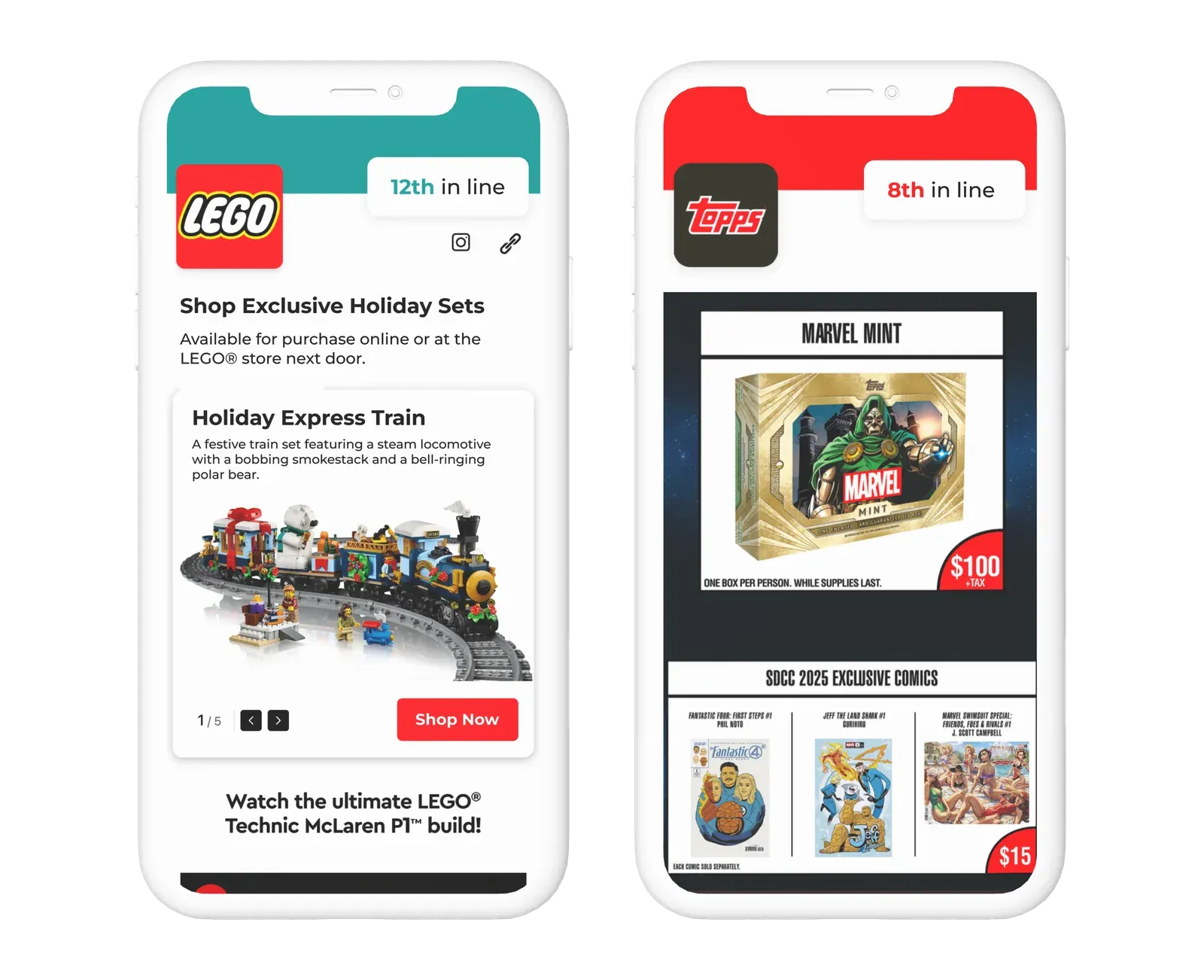
The rest of that attention is sponsor-grade. Position in line is what keeps fans returning to the page, and everything else you put on it comes along for the ride. A recent horror activation ran a trailer in the wait and drove more than 900 clicks. One booth put its show exclusives in the waiting room and most of the clicks went straight there.
You also leave with the data: at NYCC that meant thousands of opted-in email addresses and throughput and staffing data captured in real time to bring to the next show.
None of this can exist in a lottery email. It tells a fan they were selected and that’s about it, which is a missed opportunity to connect with the most engaged audience you’ll have all weekend.
A draw that runs against real capacity
A pre-event lottery guesses at throughput weeks ahead. A live random draw running during the show reads what the booth is actually doing in real time.
That’s the practical difference. Your team sets the pace and adjusts it live, calling fans back in waves instead of releasing them against a fixed clock.
Spreading the draw across the run helps too. A draw that keeps selecting all four days adjusts to the Saturday crowd and the Sunday lull, rather than settling everything in one window weeks earlier.
Fairness is a configuration question as much as a selection one, and we’ve covered the NextMe settings that protect a drop, including geofencing, queue caps, repeat-join limits, and bot protection.
Built for what actually happens on a floor
Most of what a booth needs on the day only exists once the show is open. Fans wander. A station backs up while another sits idle. Stock runs down faster on Saturday. Someone needs to pause intake for ten minutes. None of that is knowable in advance, which is why it has to be handled in real time, not settled by an allocation made weeks out.
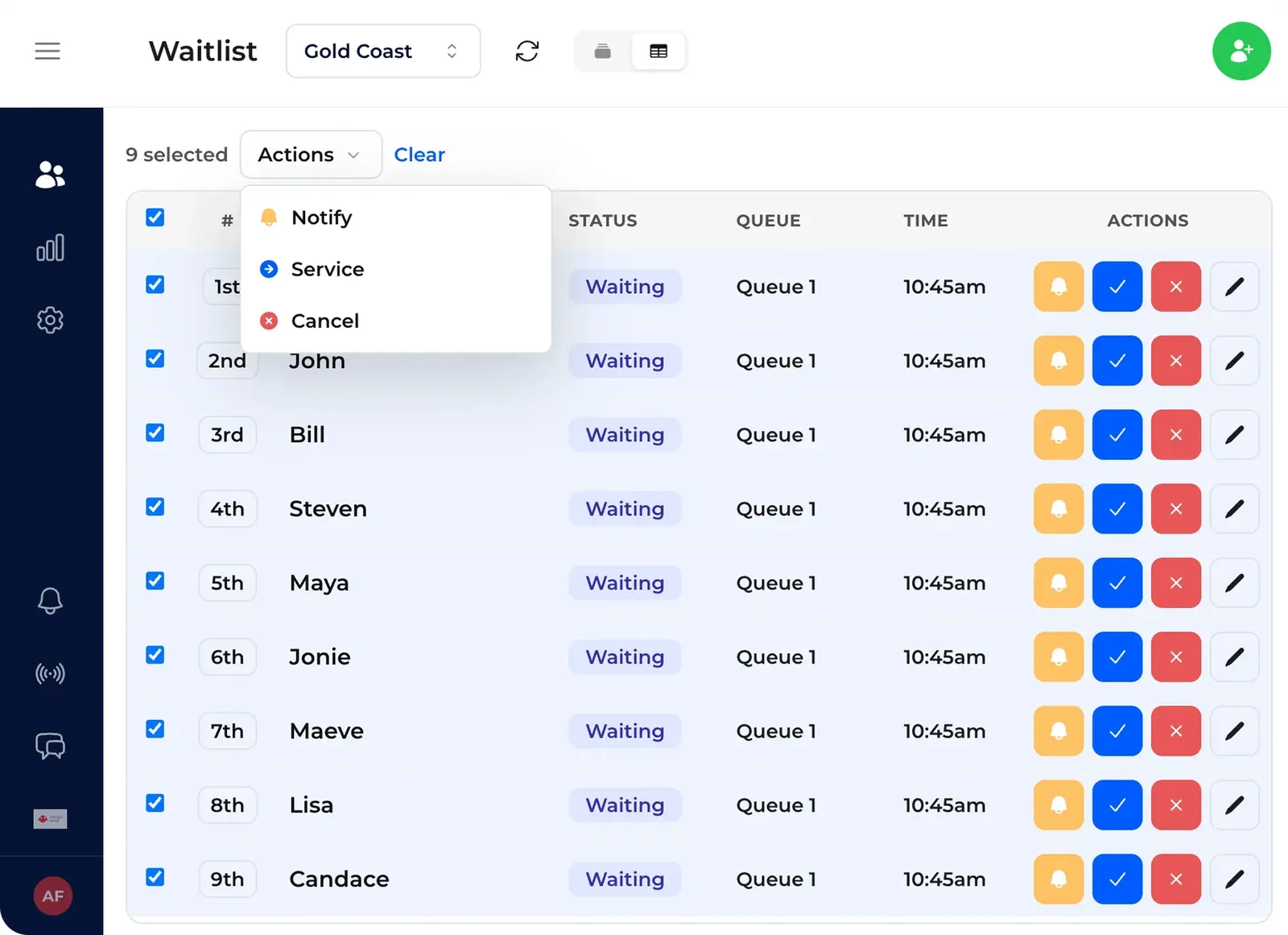
A virtual queue lets staff respond in the moment. Staff notify fans in waves from a dashboard and watch the line length as they do it. They pause and reopen intake without calling anyone. They set a grace period that matches their floor. They capture a waiver before a fan reaches the entrance. They see what a queue is doing while it’s doing it, then adjust.
Each of those is small on its own. Together they’re the difference between running a booth and working from a list set weeks ago.
What to run alongside a lottery you don’t control
You can keep the show’s lottery and still control your own booth. Six things to put in place before doors open:
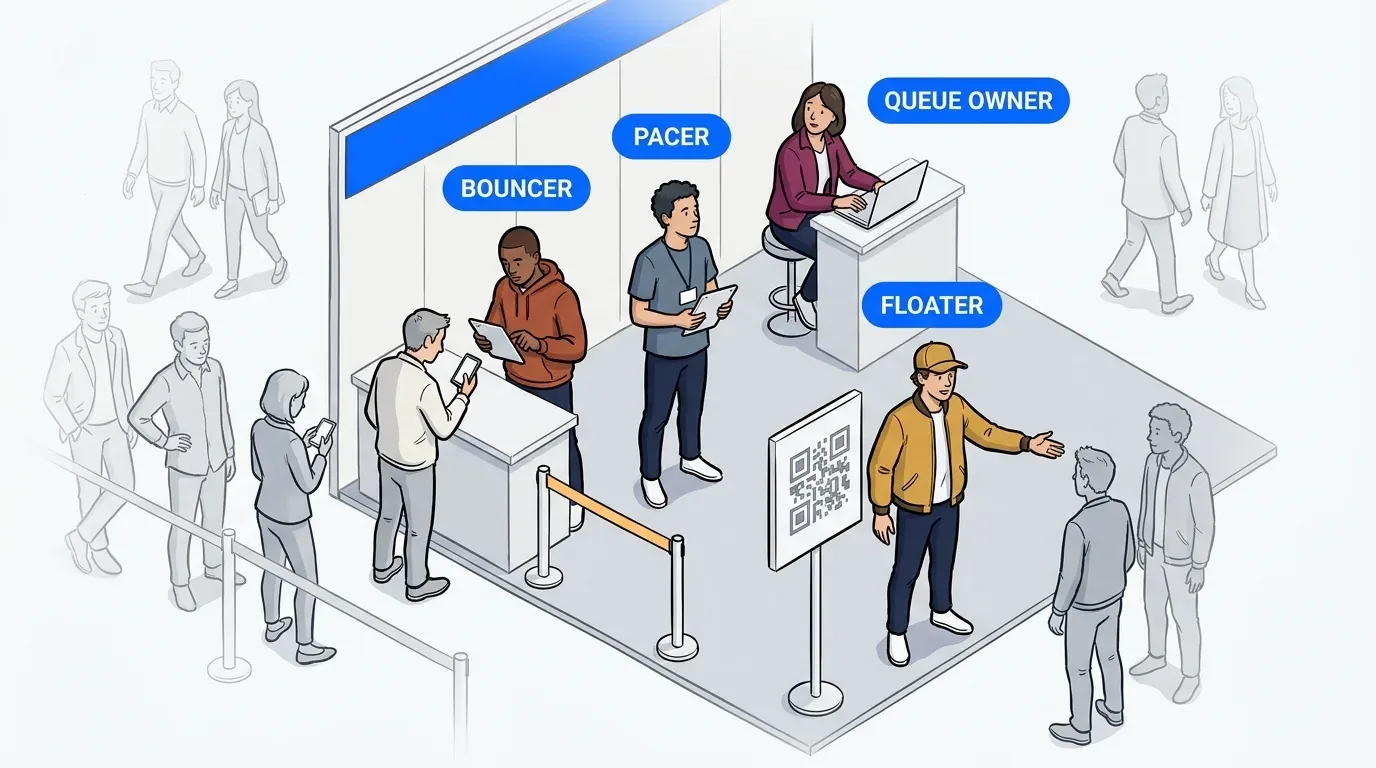
- Stand up a standby queue for the capacity the lottery doesn’t allocate, joined by self check-in from a QR code
- Cap the physical line and move everyone past that cap to their phones, so the line stays visible without becoming a crowd
- Notify by text or WhatsApp, paced out so randomly selected guests hear early enough to manage their commute back, with a reply option that lets fans release a place they can’t use
- Put live inventory and brand content in the waiting room, so fans know what’s left before they walk over
- Call fans back in waves your staff control, with a grace period set to match the size of your floor and an on-deck line that stays full
- Ask the show or its platform partner early whether your standby queue can be connected to the reservation system, so unclaimed reservations can be filled in real time
Where the experience needs a release, capture the waiver in the queue flow before fans reach the entrance. At one NYCC activation this month, more than 3,500 waivers were signed on phones before fans arrived, covering over 7,400 people. Staff never handled paper at the entrance. Peacock ran the same approach at an earlier convention activation, alongside city crowd-safety requirements.
Two settings worth deciding deliberately
Your grace period is the first, and it’s worth setting against your own floor rather than taking the default. A tight window keeps the line moving when fans stay close to the booth. A longer one suits a big venue, and it costs less than you’d think, because a fan already walking toward you isn’t a lost slot.
The end-of-day message is the second. The guests still in line when you close spent hours waiting and got nothing, so that last text is doing more work than it seems. Tell fans when they join that capacity is limited and joining doesn’t guarantee entry, so the closing message confirms something they already knew.
The takeaway
A lottery decides who gets in, and it does that before the doors open. Everything after is a live operations problem: the no-show, the empty slot, the pace of the booth, the waiver, the fan standing nearby who would take that spot, and the hour that fan spends waiting, which is either engagement time with your brand or nothing at all. Those are the problems NextMe was built around, with tools that work seamlessly alongside the show’s own system.
Plan for them before doors open. You can pull staff from a quiet corner or move a stanchion mid-show, but you can’t stand up a queue while 200 fans are already waiting. If you’re planning an activation around a show-run lottery, it’s worth looking at virtual queue software for events while the setup decisions are still open, including how your queue can work with the show’s reservation system.