Conference organizers spend months perfecting registration. The forms, the ticket tiers, the confirmation emails, the pre-event reminders all get attention. Then the doors open, and the carefully built system stops at the entrance. Attendees pile up at the registration desk. Sessions let out and hallways jam. The sponsored demo in the corner grows a line nobody planned for.
Registration tells you who is coming. It does not tell attendees where to go next, or keep them moving once they arrive. That gap is where conference attendee management software earns its place. The strongest on-site experiences connect registration data to live queue management, so the moment someone arrives flows straight into how you guide them through the rest of the day. This post breaks down how the two work together, and what conference organizers gain when they stop treating them as separate tools.
What is conference attendee management software?
Conference attendee management software is a system that manages the attendee journey from registration through on-site check-in and queue management. It connects the data you collect before the event to the live experience on the floor. Instead of a registration list that sits idle once doors open, it turns that information into faster arrival, organized session flow, and clear communication all day.
Where the registration-to-onsite handoff breaks down
Most conference tech stops working hard the moment attendees arrive. Registration platforms are built to sell tickets and collect data, not to move people through a venue. Three moments expose the gap.
The first is the door. A registration record does not speed up arrival on its own. Without a fast entry flow, the line at the entrance becomes the first impression of the whole event.
The second is the space between sessions. When a keynote ends, hundreds of people move at once. Popular breakouts hit capacity while staff have no live view of where the crowd is heading. This is the heart of managing crowd flow across a venue.
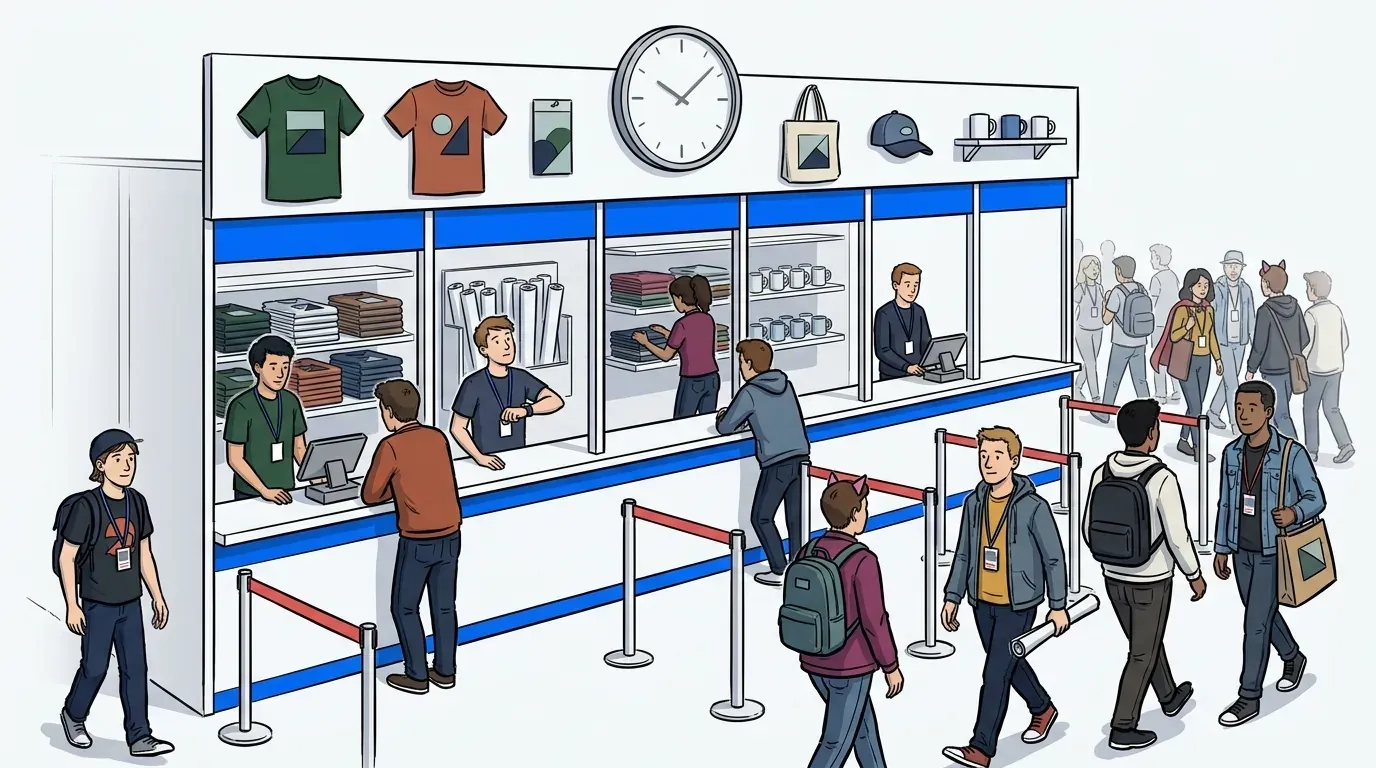
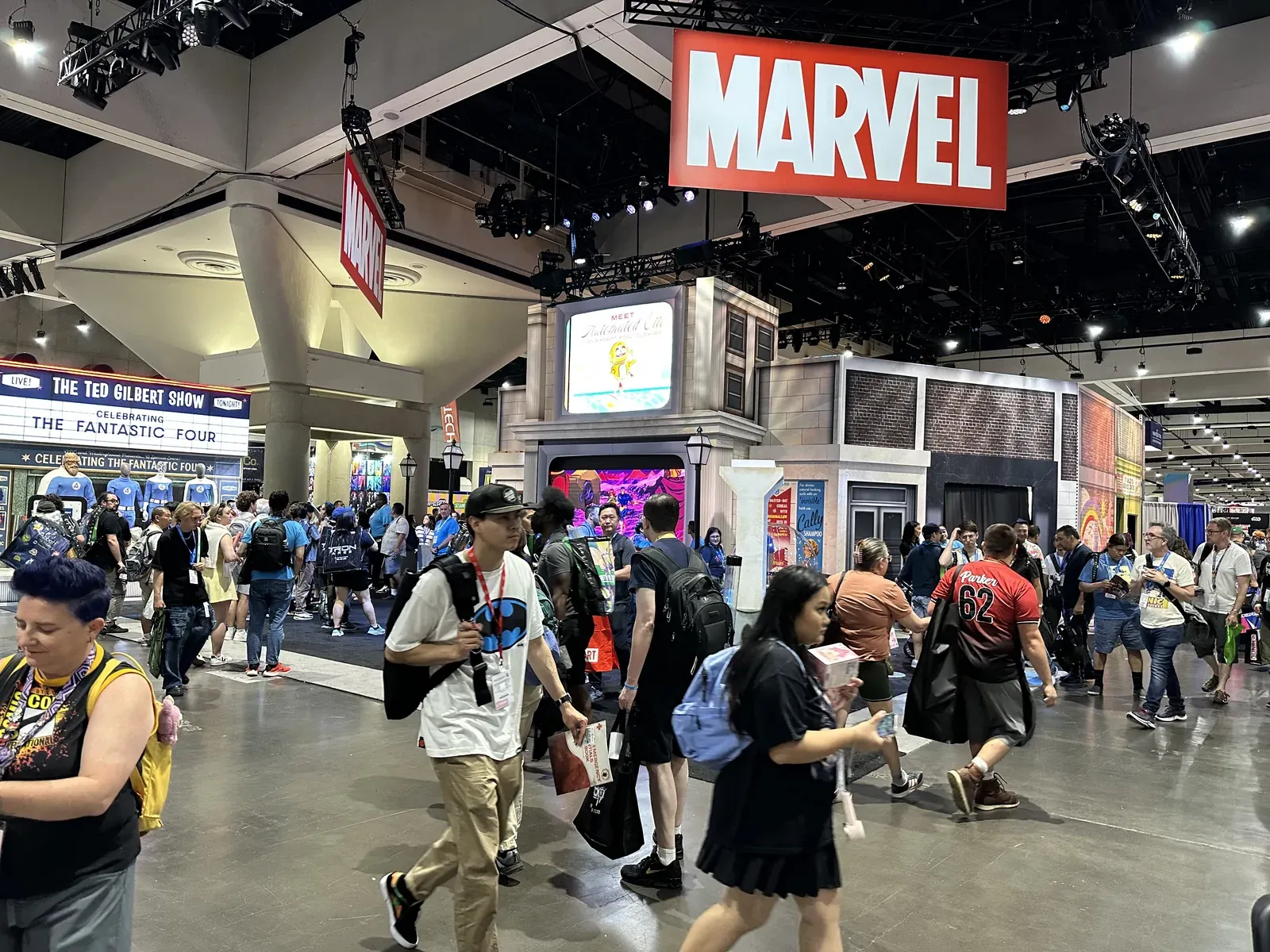
The third is the show floor. Sponsored demos, headshot lounges, and product activations each draw their own crowds. Every one needs its own queue, and most registration systems have no answer for booth and activation traffic.
How registration and queue management work together
PCMA’s Convene trends report notes that attendees now arrive with consumer-grade expectations, and friction-free experiences set the best events apart. Meeting that bar is less about new hardware and more about connecting systems you already use.
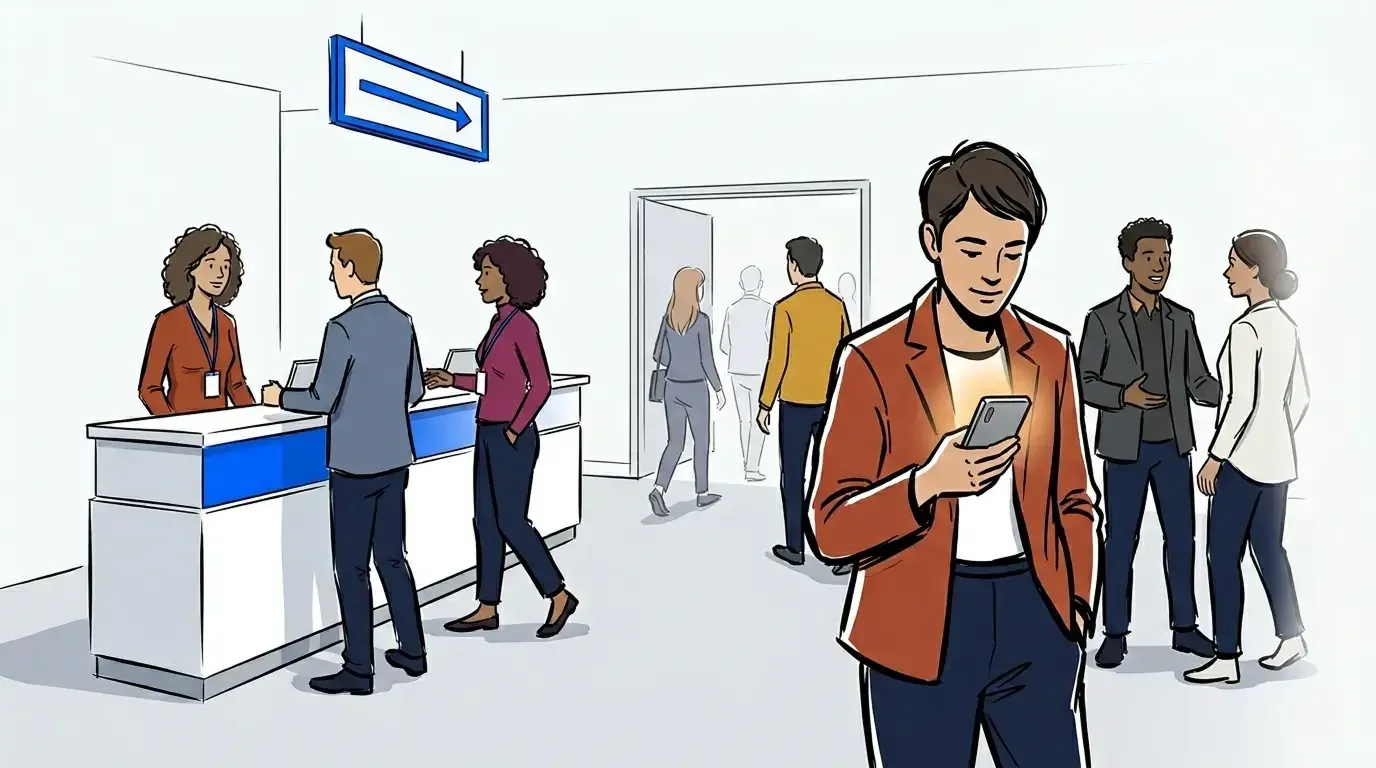
Start with arrival. When your registration data feeds the on-site tool, attendees check themselves in from their own phones or a tablet at the door, and staff see each arrival in real time. The entrance stays clear because nobody waits for a manual lookup.
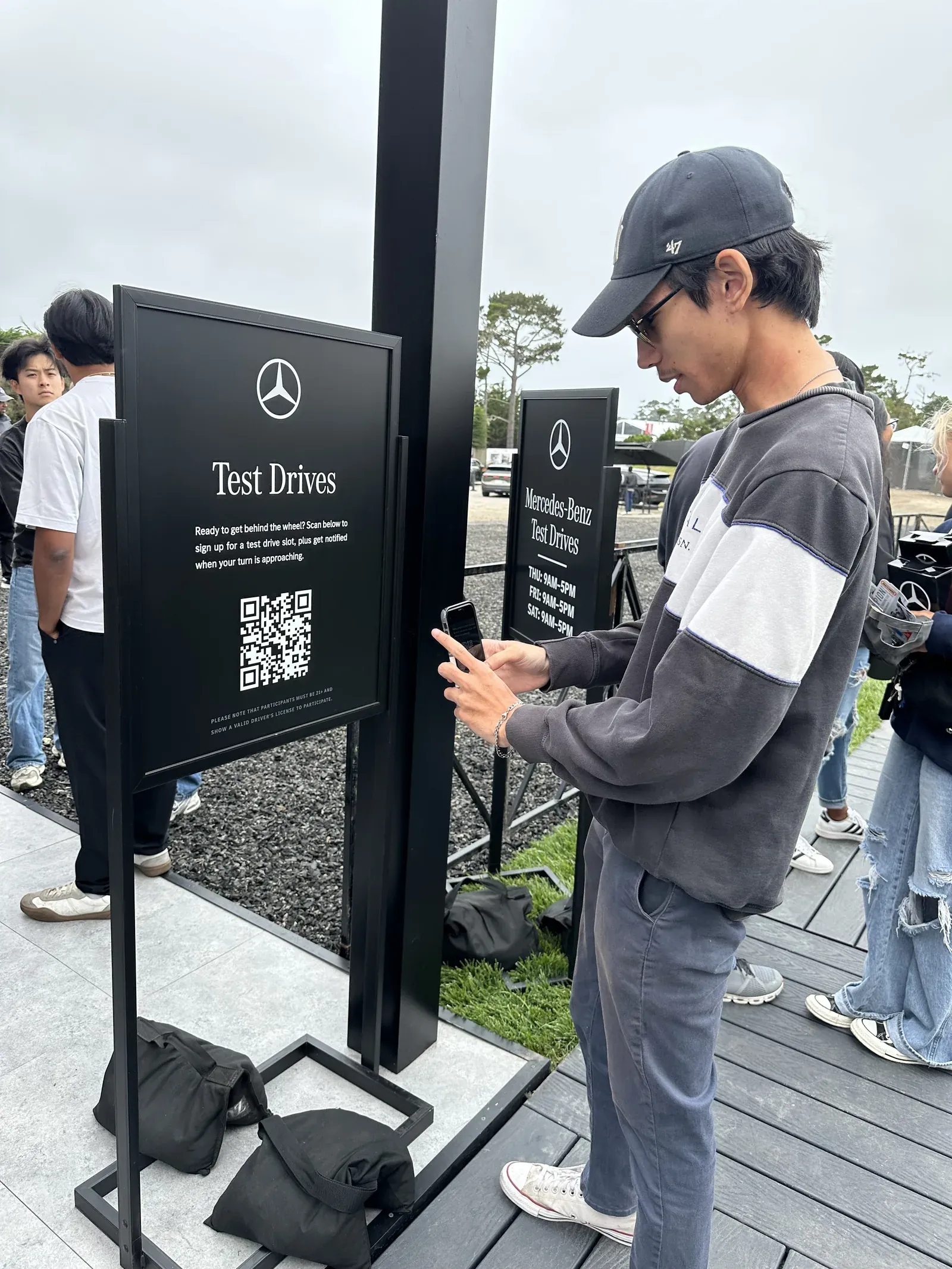
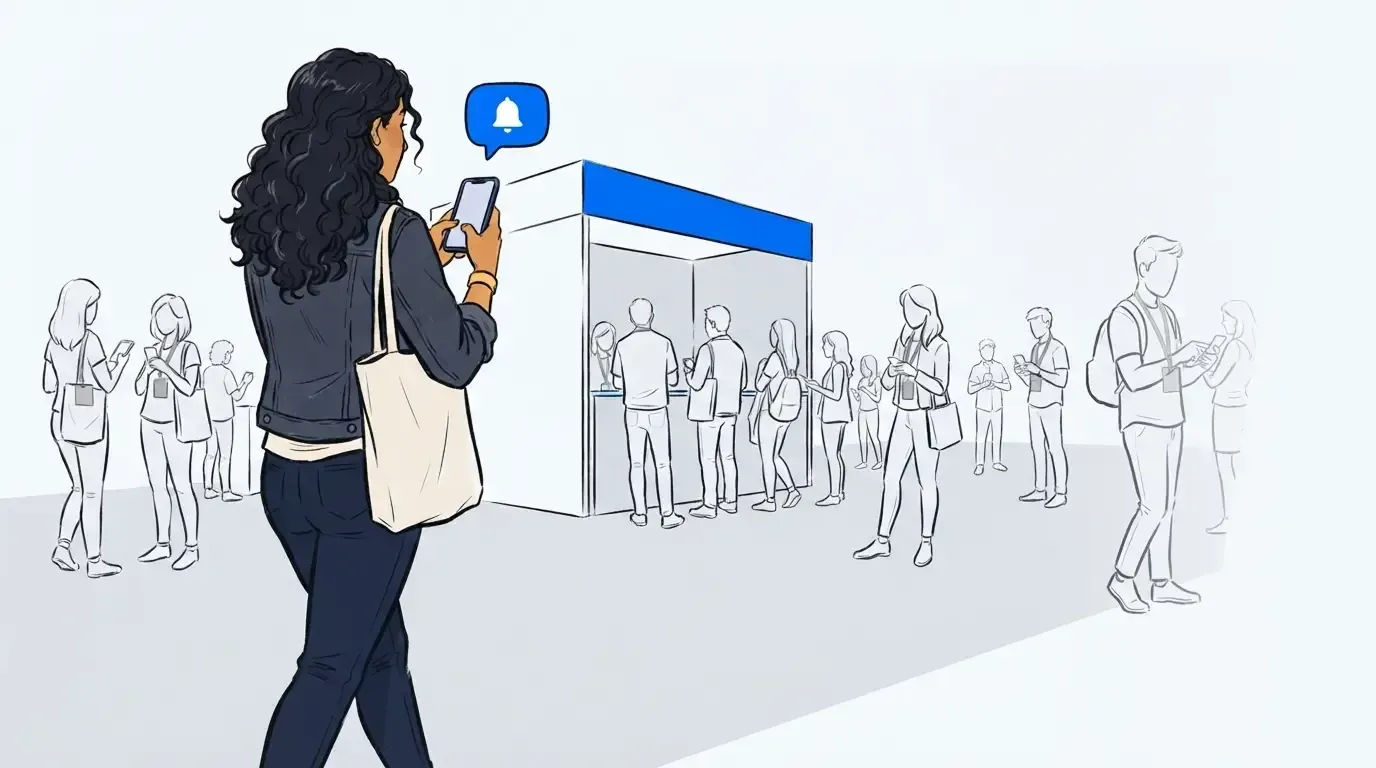
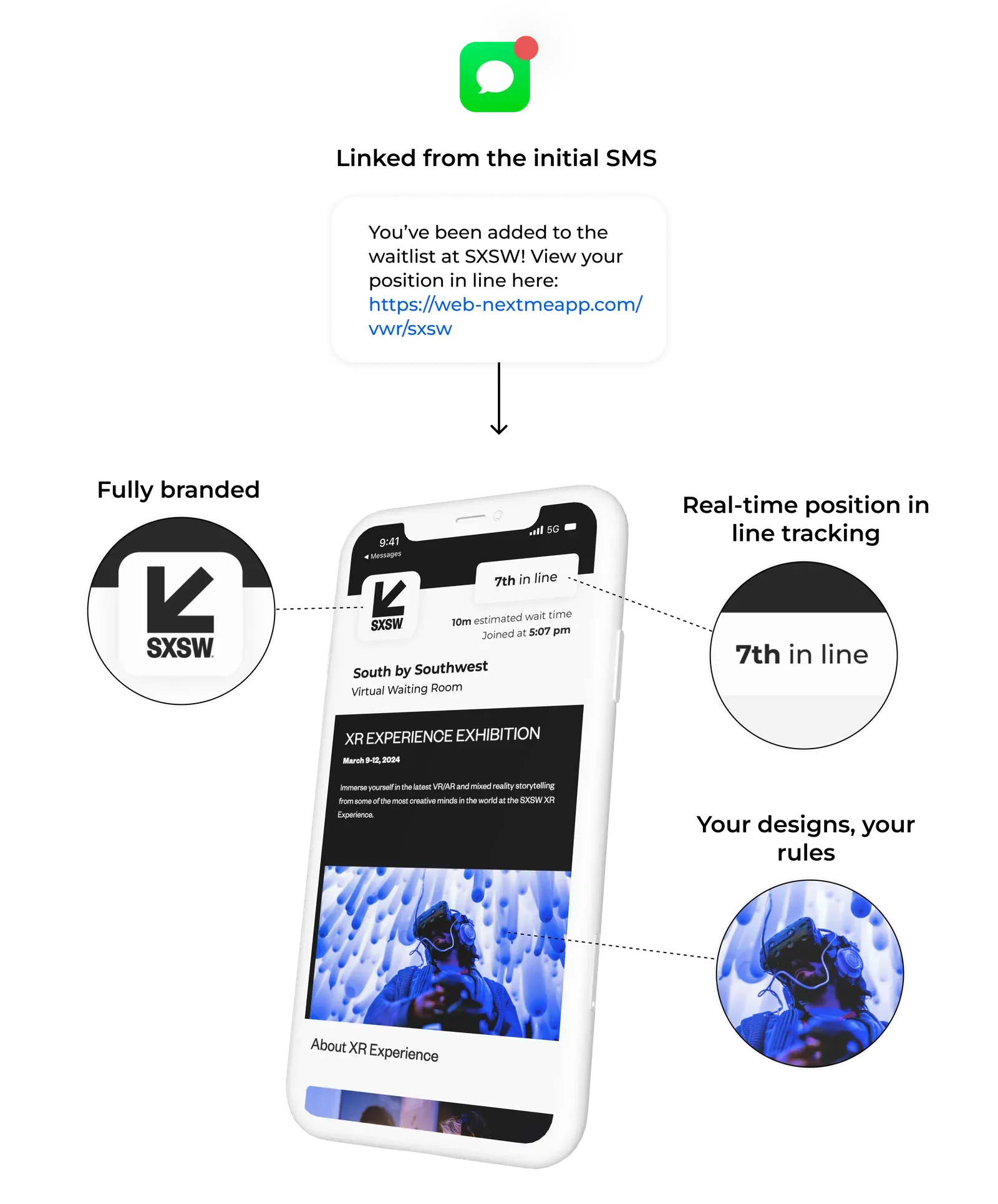
Then manage the flow. A virtual waiting room lets attendees join a queue for a busy session or activation and then walk away. They watch their place in line from their phone and get an SMS when it is their turn. Our guide to conference queue management covers the on-site mechanics in depth.
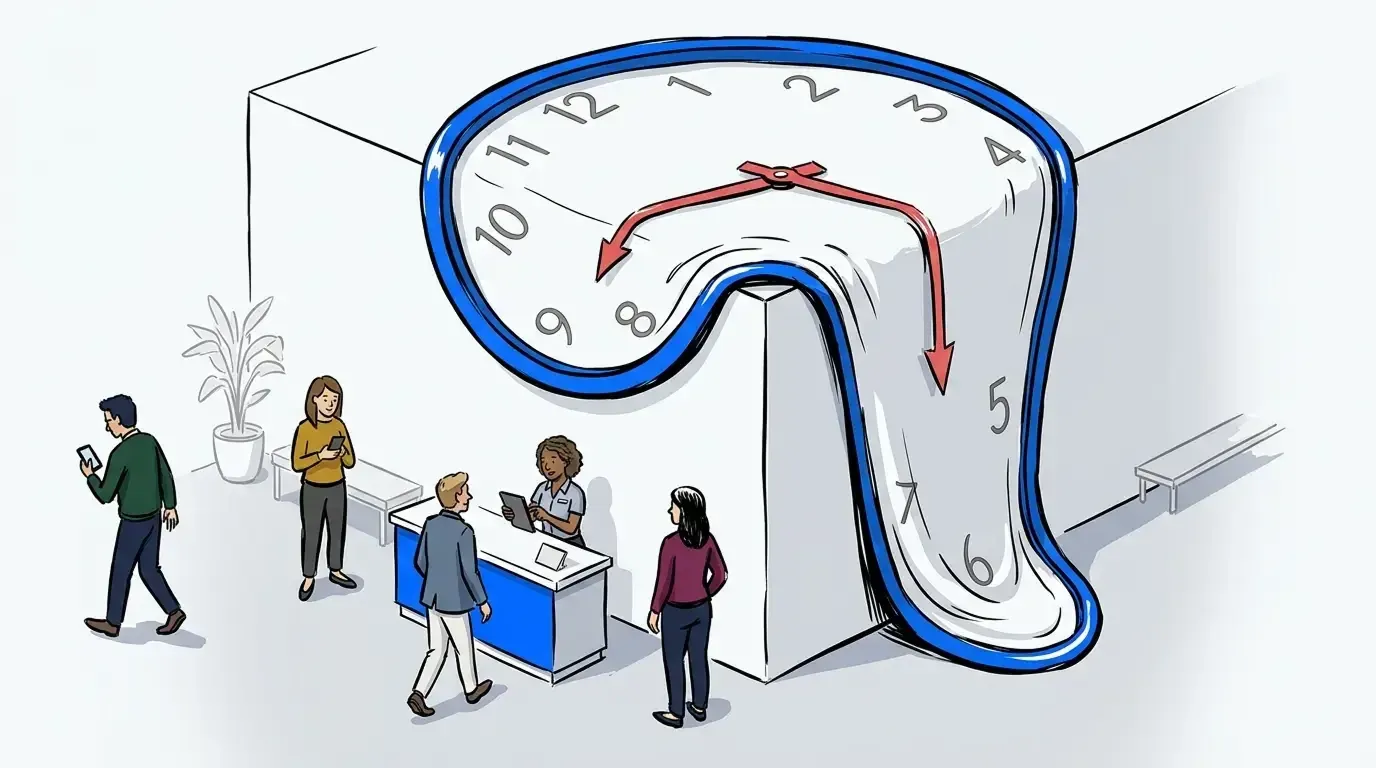
This matters because waiting itself is rarely the real problem. Uncertainty is. An attendee who knows they are seventh in line and will be called in ten minutes relaxes and keeps networking. An attendee staring at a line with no information leaves. Conference attendee management software closes that gap at every step.
A conference activation that connected the two
The BizBash Experiential Leadership Summit shows how this plays out. At the 2026 summit, BizBash and the agency goMLR ran a premium glam bar offering hair, makeup, and headshots between sessions. The challenge was familiar: high demand, limited capacity, and an audience too busy to stand in a line.
NextMe powered a virtual queue built directly into the summit’s official conference app. Attendees found the glam bar, tapped to join, and moved through the summit until a text told them it was their turn. The queue reset each day with clear, first-come expectations. Staff focused on the service instead of managing a crowd. You can read the full BizBash story for the details.
The lesson for organizers is simple. When the queue lives where attendees already are, inside the event experience, it stops feeling like a separate tool and starts feeling like the event itself.
Turning the wait into measurable sponsor value
For conference organizers, the wait is not just an operations problem. It is inventory. Every minute an attendee spends in a virtual queue is a minute of attention you can offer a sponsor.
A sponsored session queue can carry branded content, a short poll, a product showcase, or a quick quiz while attendees wait. Unlike a banner or a stage mention, these touchpoints are measurable. You can report views, clicks, poll responses, and leads back to the sponsor after the show.
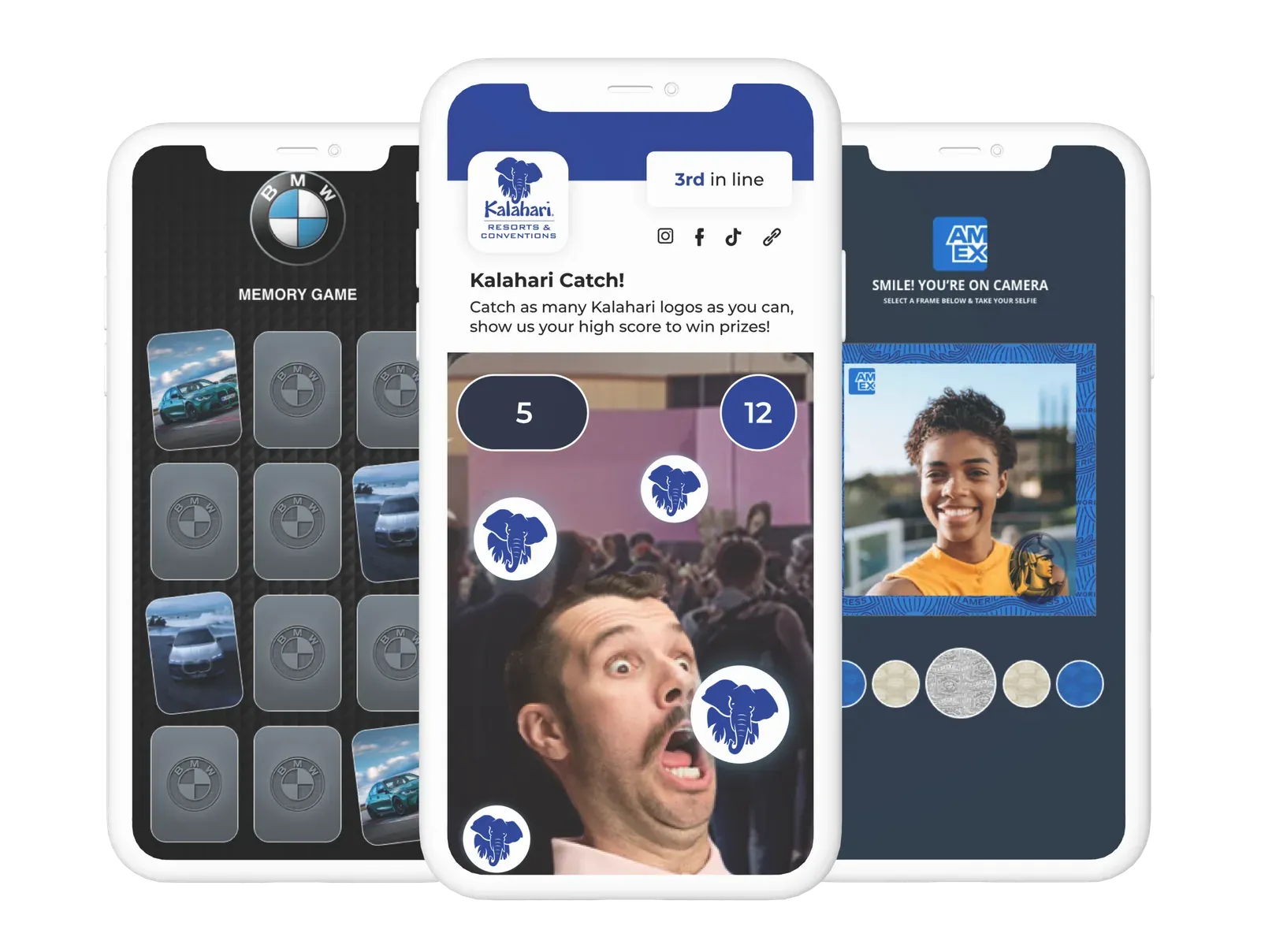
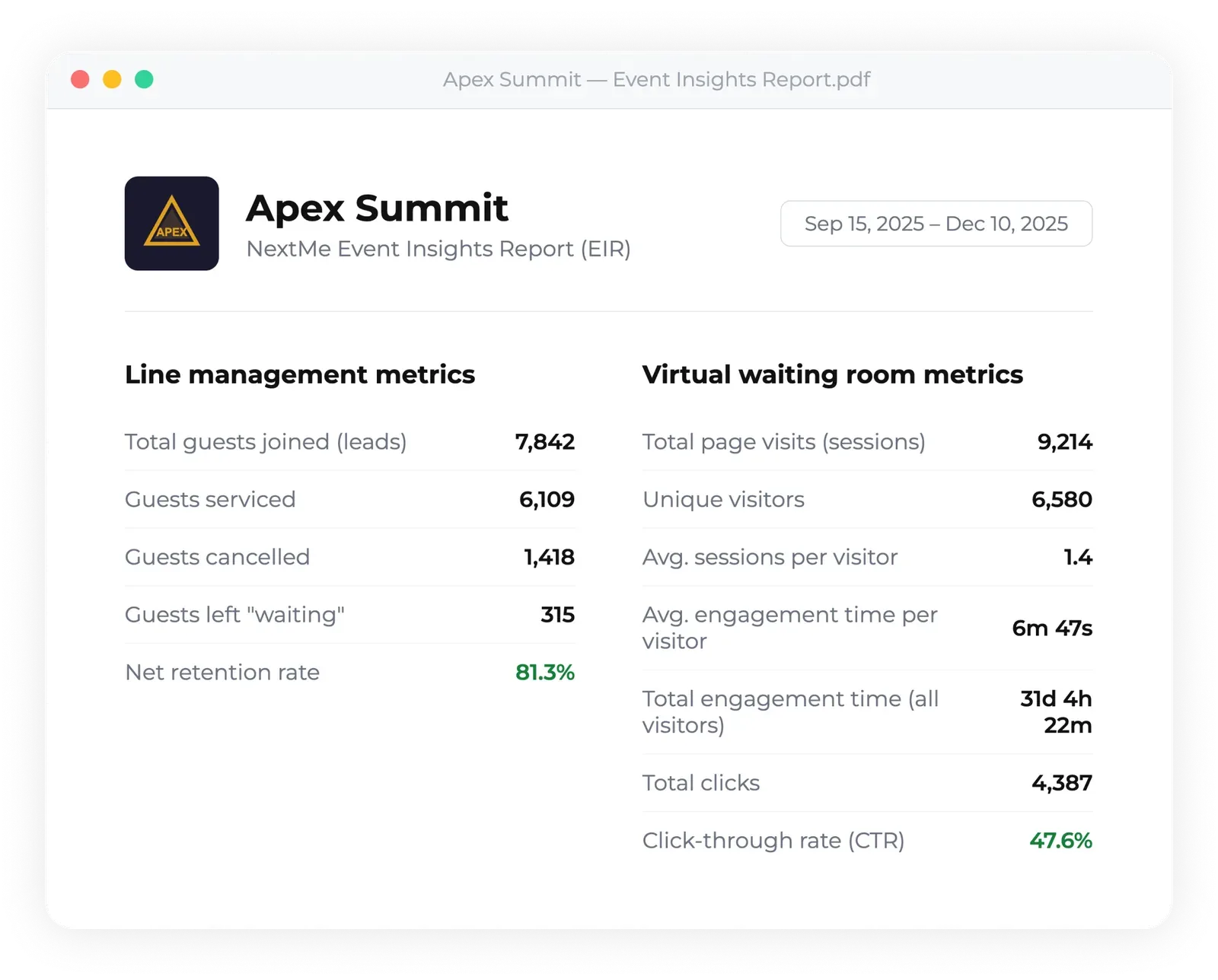
That reporting is the renewal argument. With analytics and a post-event report, you show a sponsor exactly how many attendees engaged and what they did. Traditional conference sponsorships are hard to measure. A queue you own is not.
Conclusion
Registration gets attendees to your conference. What happens next decides how they remember it. When registration data and queue management work together, arrival stays fast, sessions stay orderly, and the time people spend waiting becomes something you can use. Conference attendee management software is how those pieces connect.
If you are planning a conference and want the on-site experience to match the effort you put into registration, see how NextMe supports attendee management for events from the first scan to the final session.