Ask any experienced event operator what their biggest operational headache is, and they’ll rarely say “not enough staff” or “wrong venue.” The answer is almost always the same: crowds behaving unpredictably. Guests pile up at the wrong entrance. Session transitions create bottlenecks. F&B lines bleed into walkways. And somewhere in the middle of it all, a guest posts a frustrated photo that makes it onto social media before the event is halfway through.
Event crowd flow management is the discipline that prevents this. It’s the practice of intentionally designing and controlling how guests move through a venue, from arrival to exit, so that every transition stays safe, efficient, and on-brand. And as events grow in scale and complexity, the tools operators use to manage that flow have changed significantly.
This guide covers what event crowd flow management actually involves, where it breaks down most often, and how digital queue systems are becoming the infrastructure that makes it work at scale.
What is event crowd flow management?
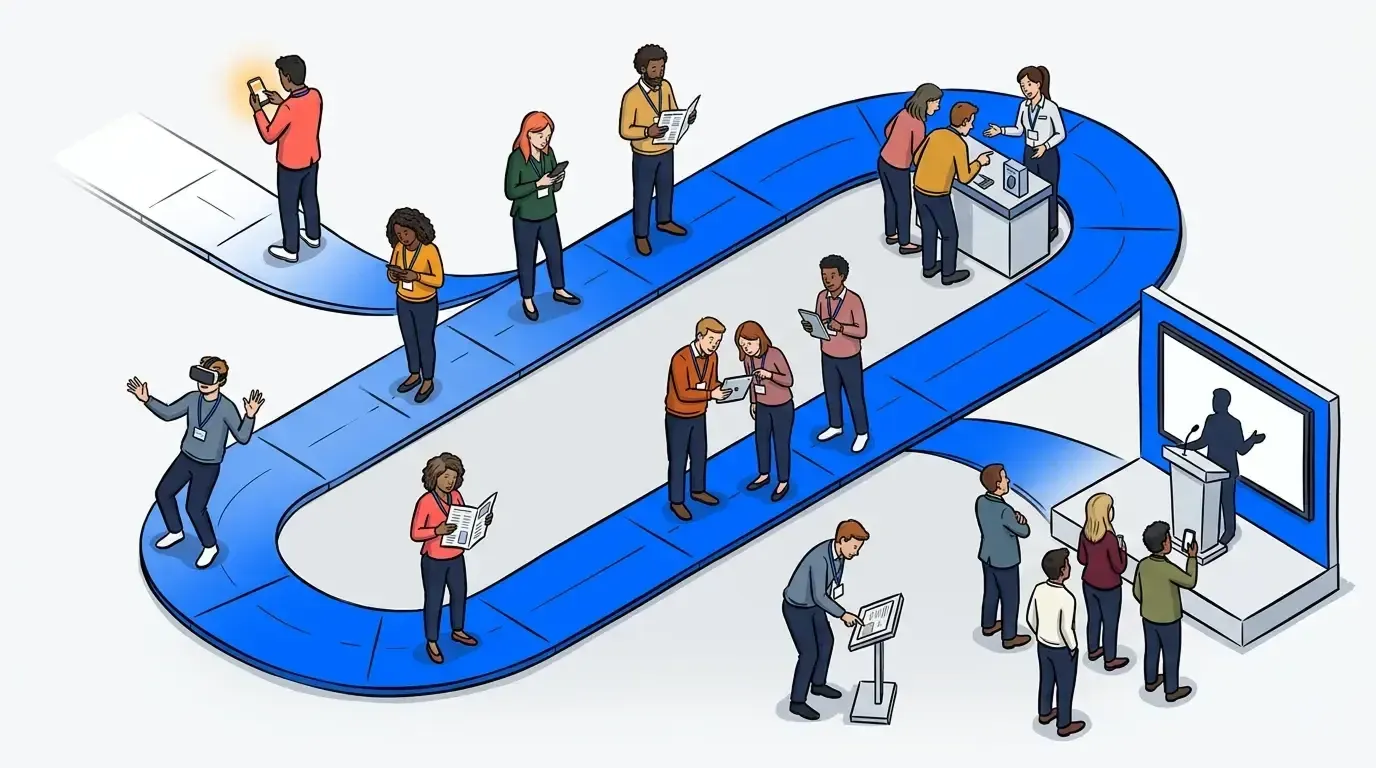
Event crowd flow management is the operational discipline of directing guest movement through a venue to prevent dangerous congestion, reduce perceived wait times, and protect the guest experience at every touchpoint. It covers entry queues, session and stage transitions, F&B service areas, merchandise lines, and exit routing. The goal is not to eliminate lines. It’s to keep lines from becoming unmanageable.
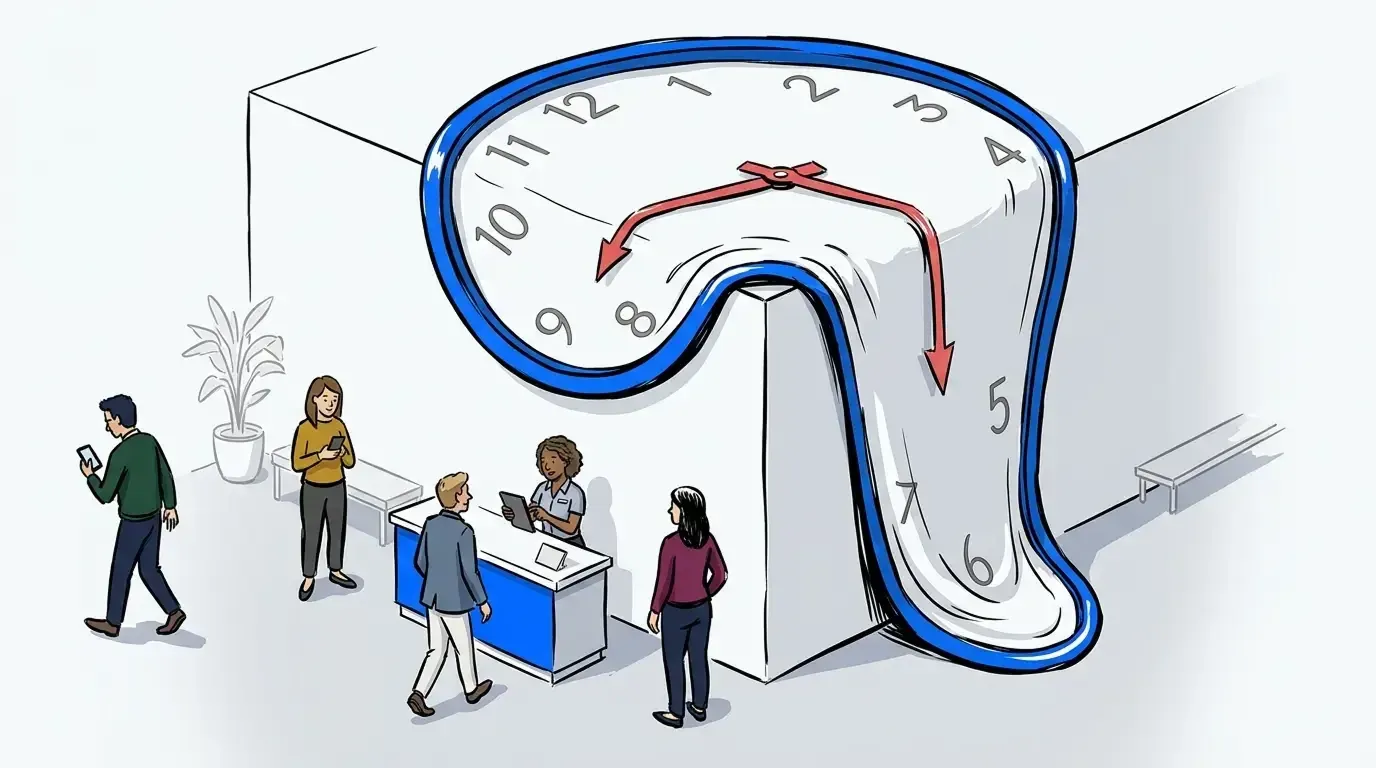
Traditional crowd flow relied on physical infrastructure: barriers, stanchions, signage, and staff positioned at known bottleneck points. That approach still matters, but it addresses only the physical dimension of the problem. Modern crowd flow management adds an information layer. Guests who know where they are in a queue, how long they’re likely to wait, and what they can do in the meantime are fundamentally easier to manage than guests who don’t. Uncertainty is what turns a manageable line into a frustrated mob.
For operators running large outdoor festivals, stadium activations, brand experiences, or trade show floors, that information layer is now delivered through digital queue systems: SMS-based virtual waitlists, QR check-in flows, and virtual waiting rooms that give guests a structured place to be while they wait. The Complete Guide to Event Queue Management covers the software evaluation side of this in depth. This guide focuses on the operational discipline itself.

Where event crowd flow typically breaks down
Most crowd flow failures at events don’t happen because the venue is too small or the attendance was higher than expected. They happen at predictable transition points that operators underestimated or planned for too late.
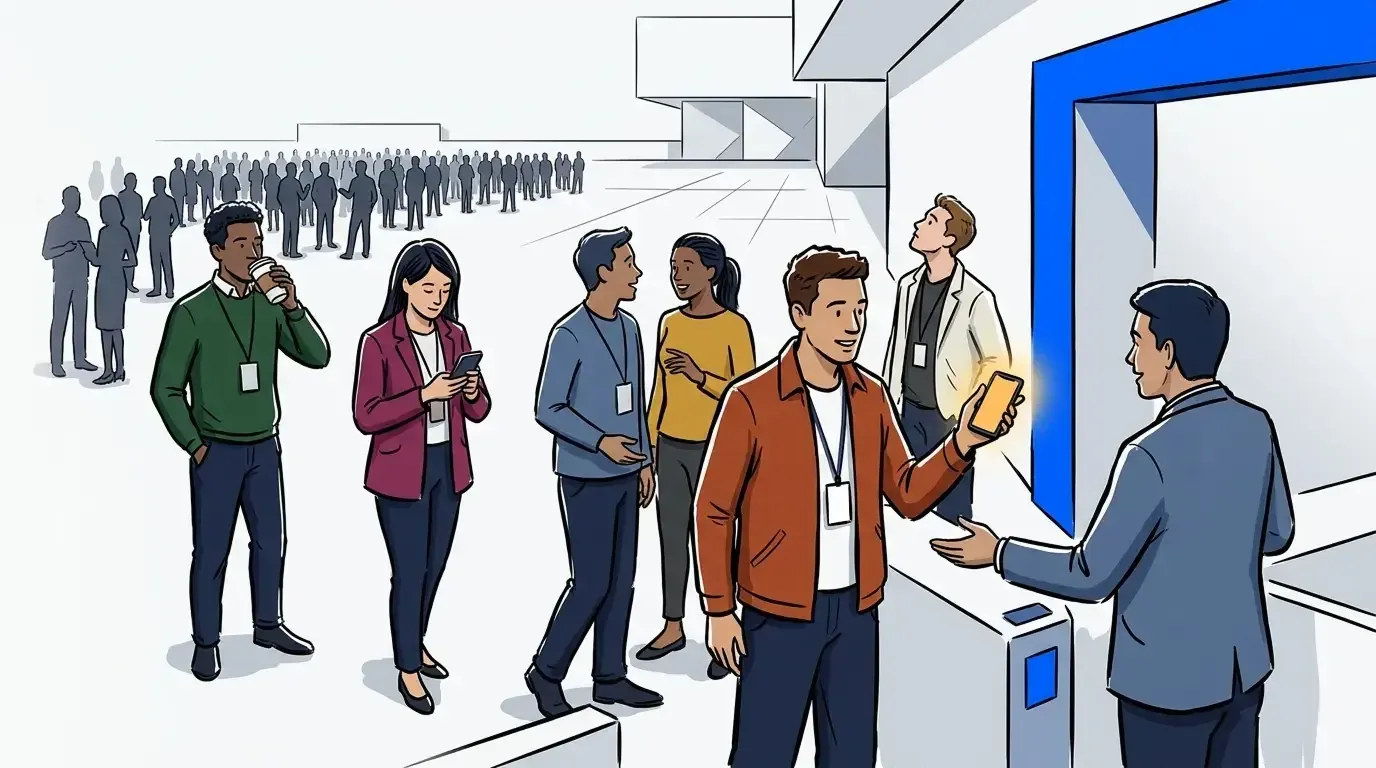
Entry is the most common failure point. When a large volume of guests arrives in a compressed window, even a well-staffed entry process creates a physical bottleneck if there’s no mechanism to distribute that volume. Guests who have no information about their queue position and no reason to stay calm will push forward. Staff spend their time managing anxiety rather than processing arrivals.
Session and stage transitions are the second. When a keynote ends or a headline set finishes, thousands of guests move simultaneously. If the next touchpoint, whether that’s a sponsor activation, a food station, or a secondary stage, doesn’t have a way to absorb that volume in a controlled way, the bottleneck compounds.
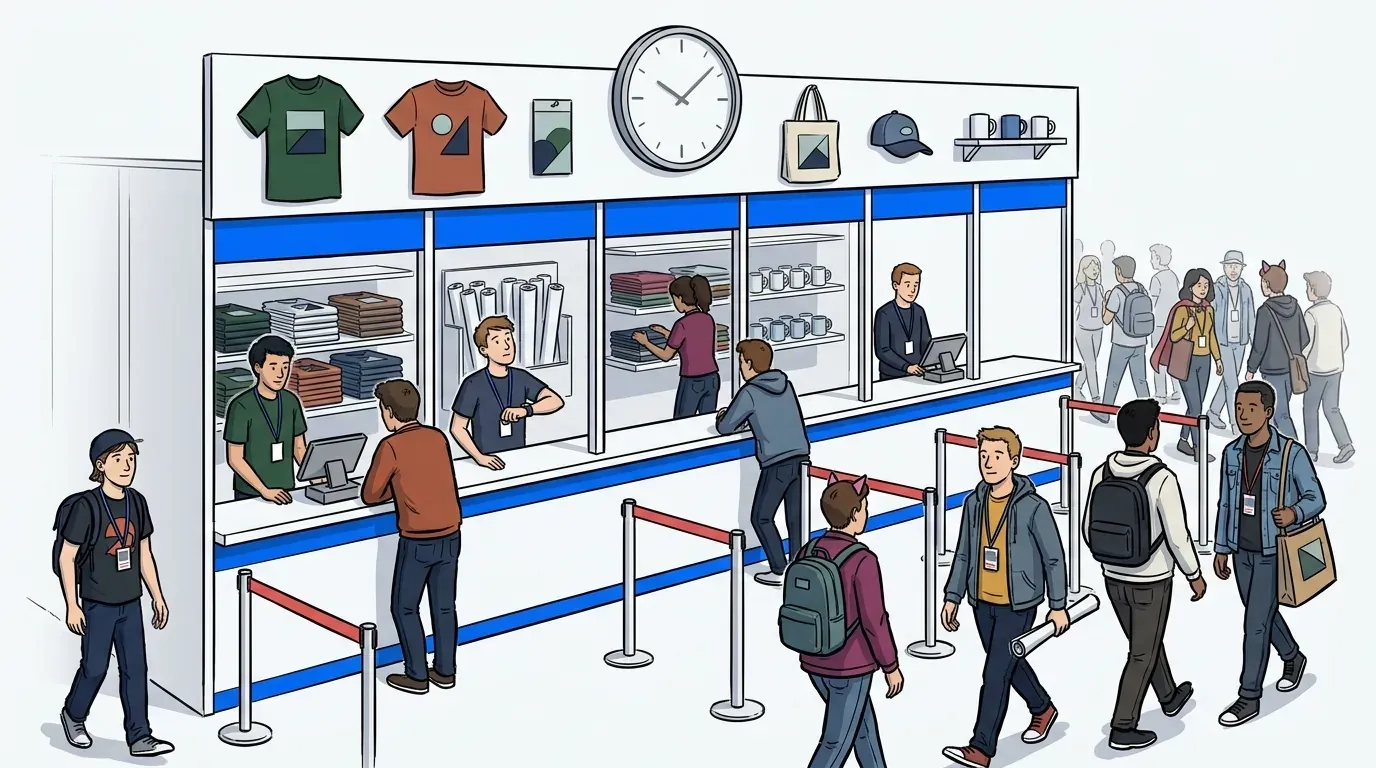
F&B and merchandise areas are the third. These lines form organically and without intervention they grow without bounds. They also have the highest walkaway rate. A guest who decides the merchandise line isn’t worth it is a missed revenue opportunity. A guest who walked away from a sponsor activation is a missed ROI moment for the brand paying to be there.
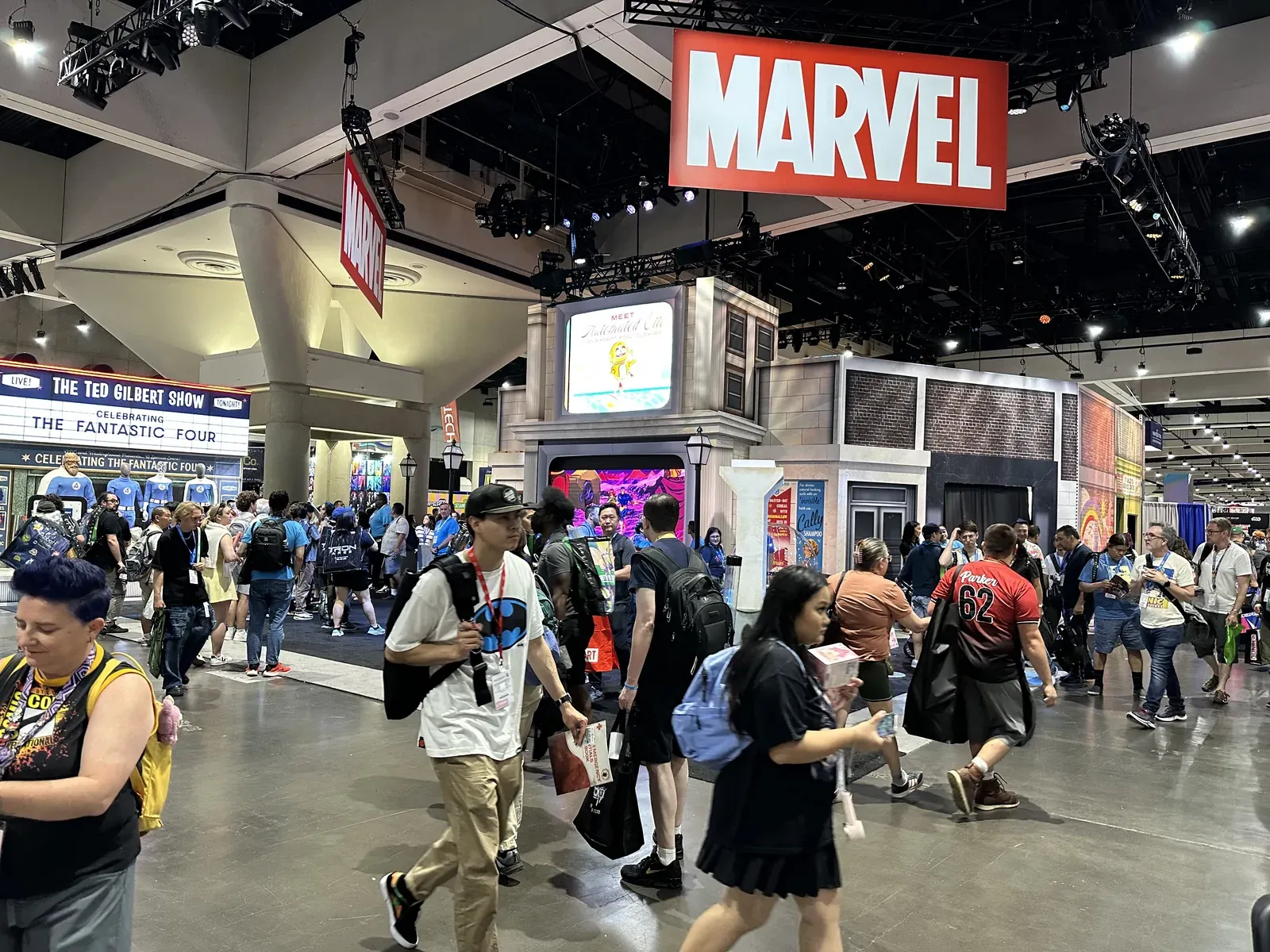
What these failure points share is not a capacity problem. They’re information problems. Guests don’t know if the line is moving, if they’ll get in, or whether to wait or go find something else to do. That uncertainty is what makes manageable volume feel chaotic. The Event Safety Alliance’s ANSI ES1.9 crowd management standard draws a clear line between crowd management (proactive, planning-based) and crowd control (reactive, intervention-based). The operational goal is always to stay on the management side of that line.
The core components of a crowd flow management plan
A practical crowd flow management plan for a large-scale event covers five areas. Each can be addressed independently, but the strongest plans treat them as a connected system.
Entry queue management. This is the first impression. For large events, distributing entry across multiple access points or using a virtual queue to stagger arrival reduces physical buildup at the gate. QR-based self check-in at entry kiosks removes a staff dependency and speeds throughput. SMS confirmation sequences give guests direction before they’ve even joined a physical line.
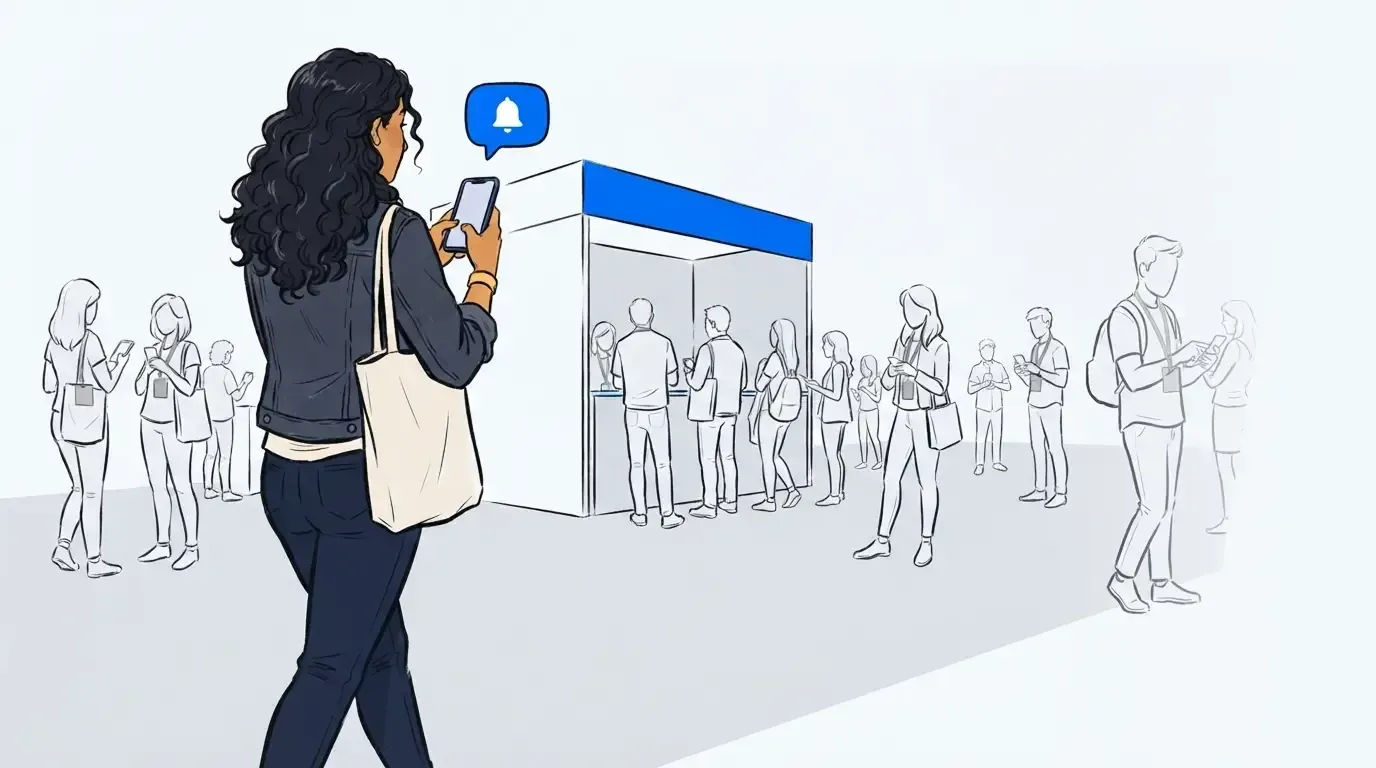
Session and activation transitions. Sponsor activations and scheduled experiences need a way to manage demand when the session before them releases. A virtual waitlist for high-demand activations lets guests join from their phones, explore the event, and receive an SMS when it’s their turn. This converts a static line into a mobile guest who’s still spending and engaging elsewhere.
F&B and merchandise flow. Long physical queues at these stations have one reliable cure: giving guests something to do instead of standing in them. The virtual waiting room solves this by letting guests join a queue digitally and receive updates on their phones while they move around the venue. Guests don’t leave because there’s no perceived line to abandon.
Capacity visibility for operators. Staff need real-time data to intervene before a bottleneck becomes a problem. Operator dashboards that show live queue depth, wait times by station, and guest throughput give the operations team the situational awareness to redirect staff, open secondary stations, or trigger a holding message before a situation escalates.
Exit routing and post-event flow. Exit management is the most frequently under-resourced part of crowd flow planning. Directional SMS messaging keeps pressure off single exit points and lowers the risk of a compressed crowd in a confined space.
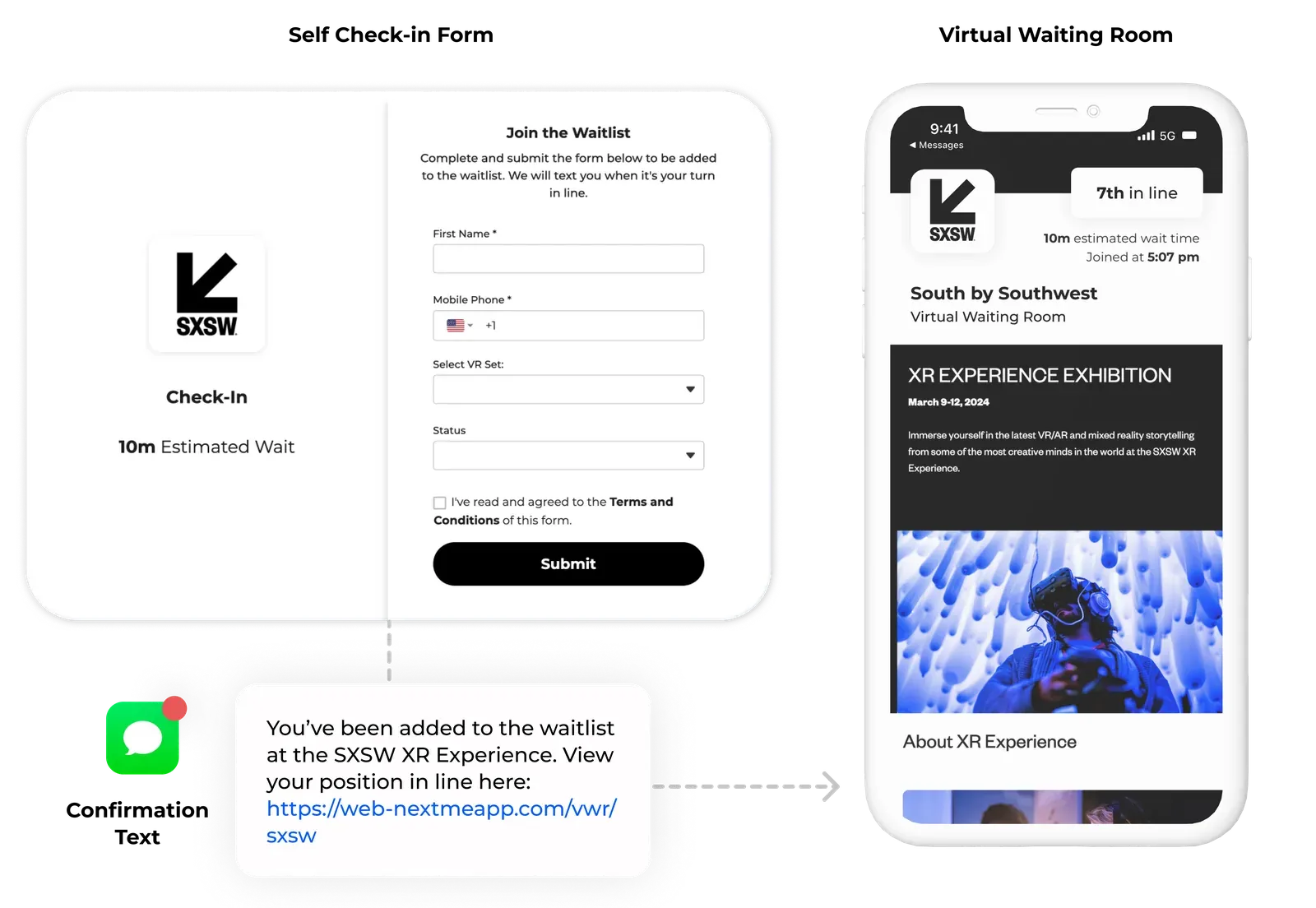
One mistake operators make consistently: treating queue software as a reactive tool. A virtual waitlist system can’t be deployed on the fly when a line is already three hundred people deep and guests are frustrated. The software needs to be configured, the QR entry points need to be placed, and staff need to know how to use the dashboard before doors open. The operators who get crowd flow right treat their waitlist software the same way they treat their PA system or their access control setup - it’s infrastructure that gets installed before the event, not a fix they reach for when something goes wrong.
What this looks like in practice
When NCompass International ran the Adult Swim Festival, the challenge wasn’t attendance. It was managing the demand for specific activations across a busy multi-zone venue. Guests were waiting up to three hours to access certain experiences. Physical queuing at that scale degrades the entire event experience, not just for the guests in line.
The solution was a virtual queue powered by NextMe. Guests joined activation queues from their phones, received SMS updates on their position, and engaged with brand social content while they waited rather than standing in a physical line. Wait times at targeted activations dropped significantly, and real-time analytics gave NCompass the data to prove event ROI to the brand partners involved. You can read the full NCompass International case study here.
This model, join by phone, wait freely, return on cue, is the practical architecture of modern event crowd flow management. It doesn’t remove the line. It removes the physical constraint of having to stand in it. And it only works because NCompass had the system configured and staff trained before the first guest arrived.
Measuring crowd flow performance
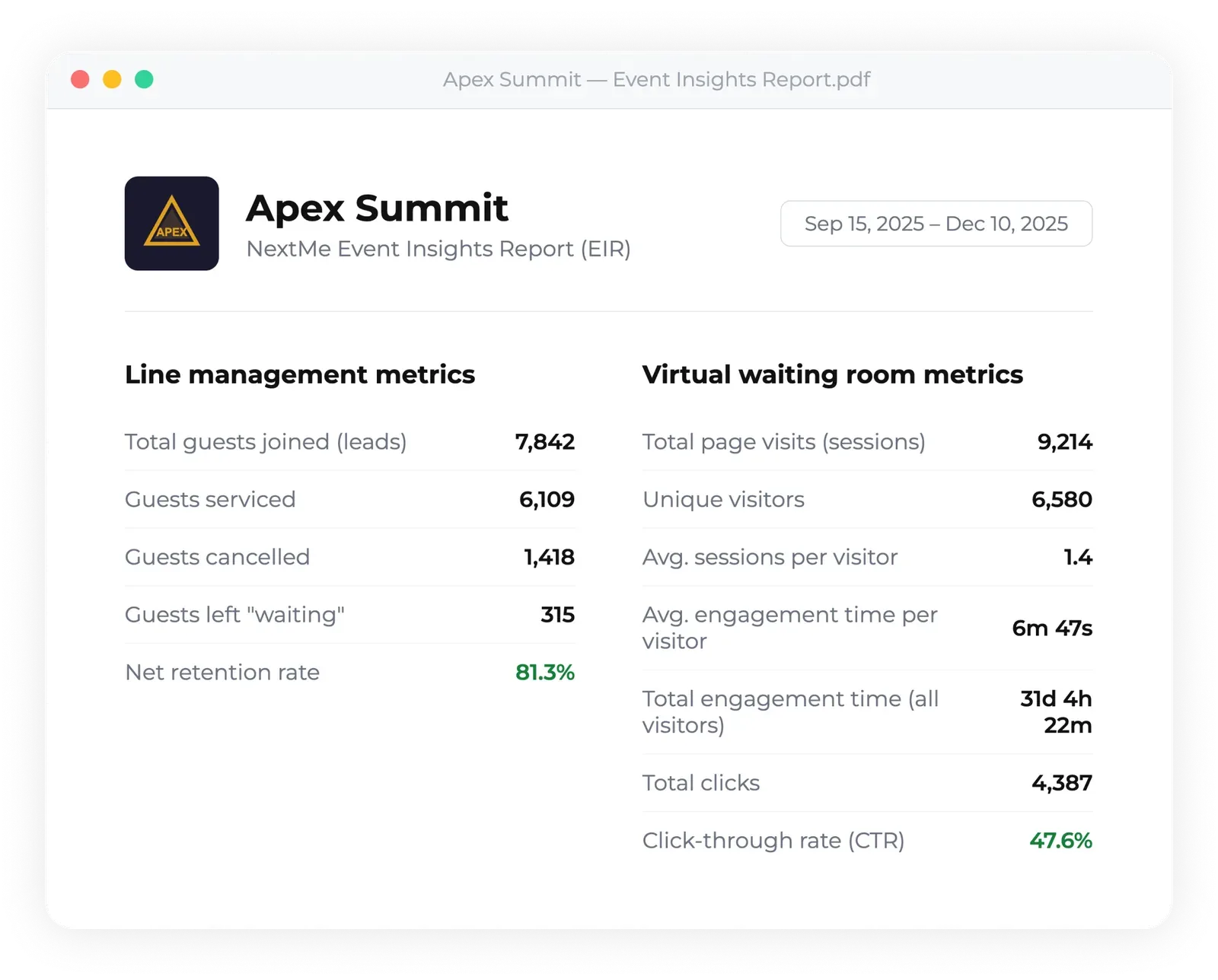
The shift to digital queue systems creates a secondary benefit that physical crowd management couldn’t deliver: data. Every interaction in a digital queue generates a record. Average wait time per station. Queue abandonment rate by time of day. Peak throughput windows. Guest return rate after joining a virtual queue.
This data serves two purposes. First, it allows real-time intervention. An operator watching live wait times can see a station approaching a critical queue depth and act before the line becomes a problem. Second, it creates a post-event report that is useful to both the operations team and the brand partners who paid to activate. The ability to show a sponsor “here’s how many guests engaged with your activation, here’s the average time they spent, here’s when your peak engagement window was” is a material upgrade on what a physical queue system could ever produce. The NextMe analytics dashboard surfaces this data in a format operators and brand partners can both read.
Conclusion
Event crowd flow management is not about eliminating lines. It’s about giving guests the information they need so that lines stay manageable, and giving operators the tools to act before a bottleneck becomes a story. The key word is before. The software, the QR placements, the staff training - none of it works if it’s being figured out while a crowd is already building. The events that handle flow well plan for it the same way they plan for sound and power: as non-negotiable infrastructure, not an afterthought.
NextMe gives event operators the queue infrastructure to make that happen, from QR check-in at entry to virtual waitlists at high-demand activations to real-time analytics that close the loop on sponsor ROI. If you’re planning a large-scale event and crowd flow is on your risk list, see how NextMe works for events.