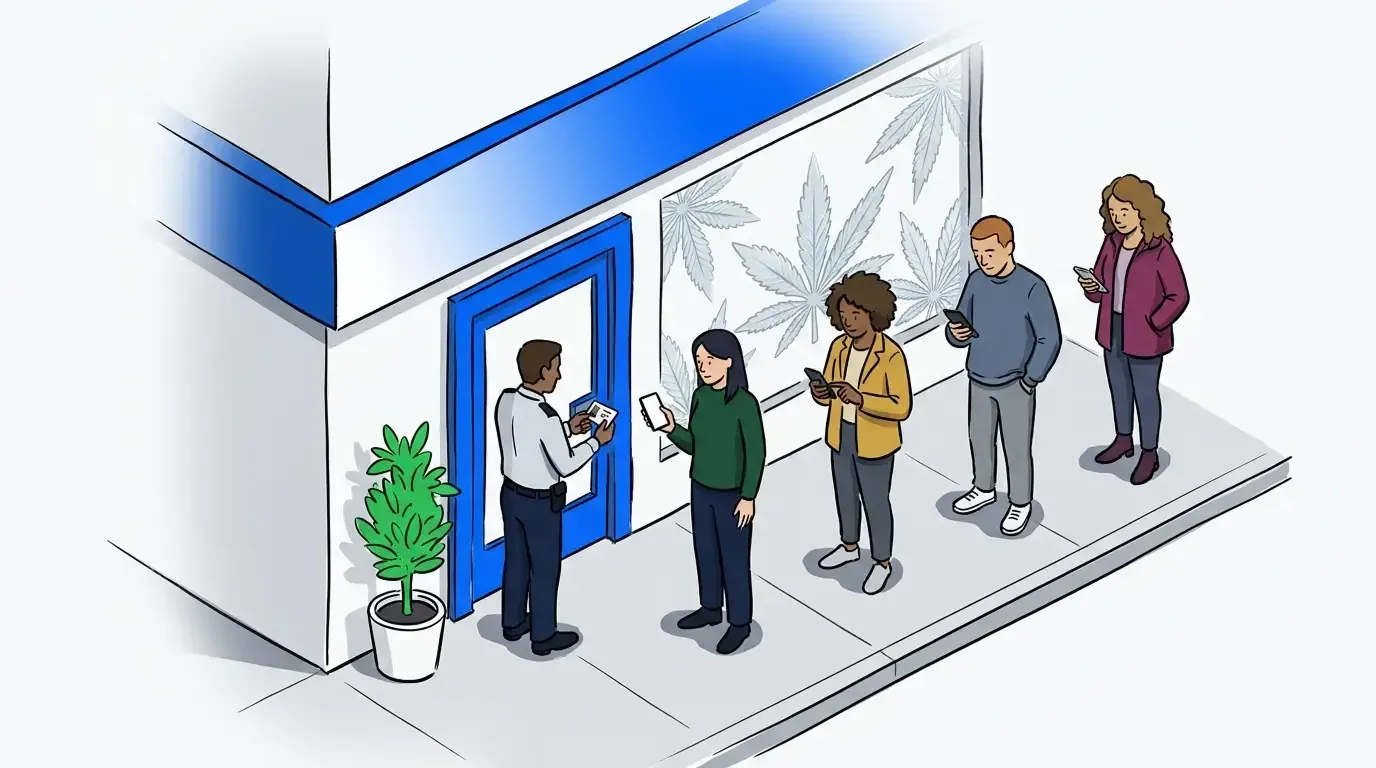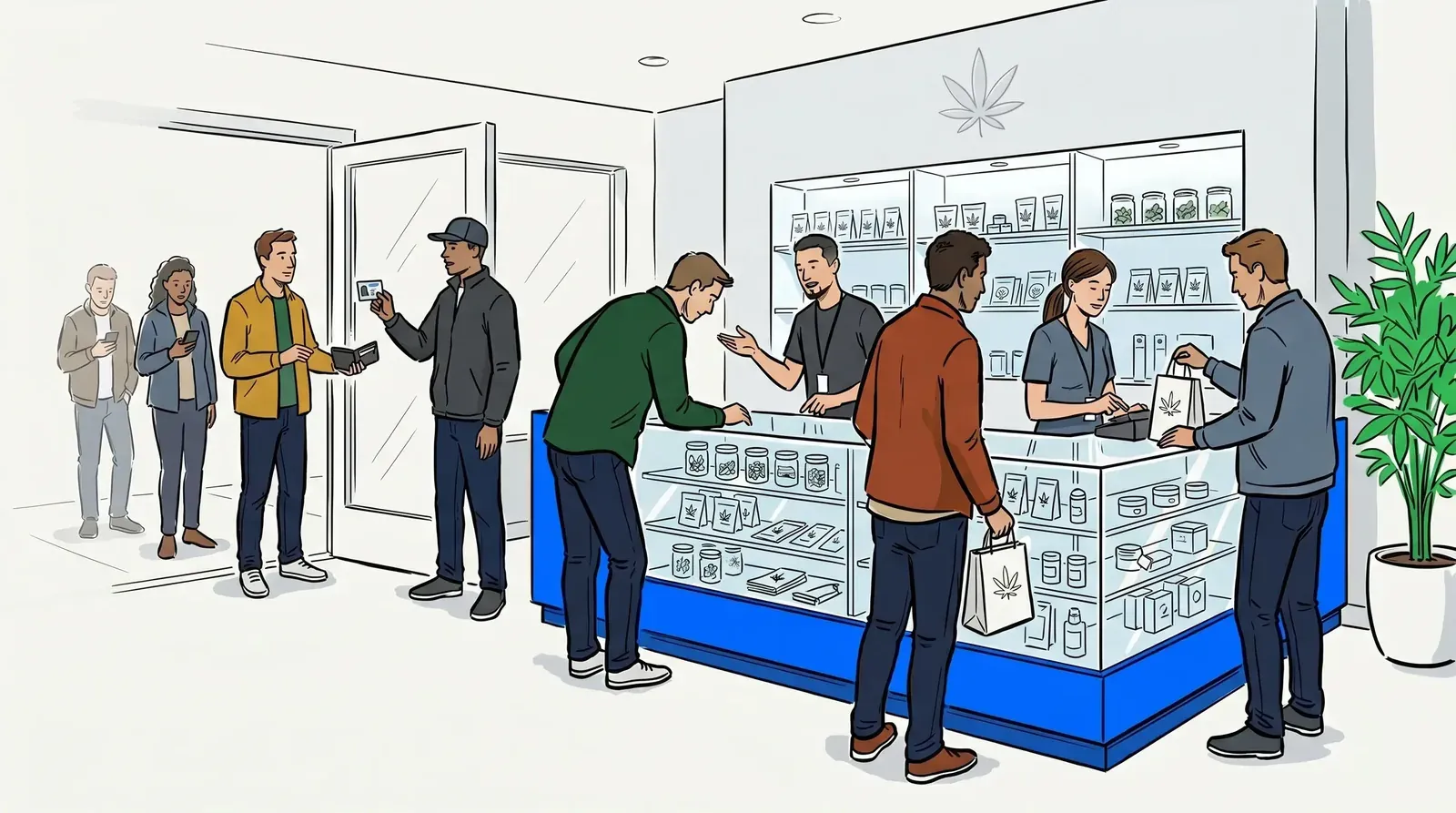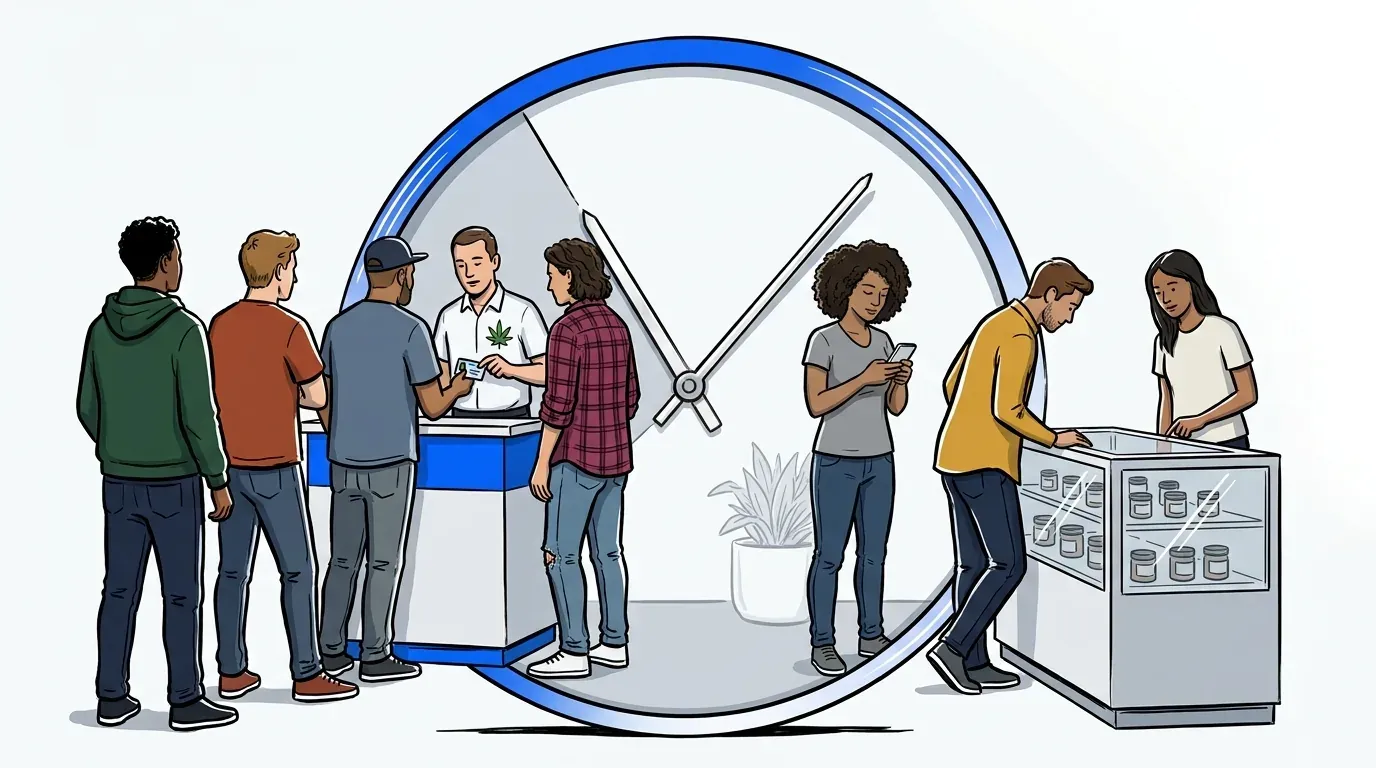
It’s Friday evening and the line at your dispensary is out the door. The instinct is to tell your team to move faster. In cannabis retail that instinct hits a wall almost immediately, because part of every visit is fixed by law and no amount of hustle compresses it.
Knowing how to reduce dispensary wait times starts with an honest split. Some of the minutes a guest spends with you are compliance minutes: age and ID verification, the capacity limit on your sales floor, the checks your state requires before a sale. Those aren’t yours to cut. The rest of the visit is operational slack, and that’s where the time is actually hiding.
This post breaks a dispensary visit into the steps that consume real time, shows which ones a queue system compresses, and names the ones you should leave exactly as they are.
How to reduce dispensary wait times
To reduce dispensary wait times, shorten everything around the compliance steps rather than the compliance steps themselves. Move check-in to the guest’s phone before they reach your door, hold people in a virtual queue instead of a packed lobby, let them browse the menu while they wait, and use visit data to find the step that’s genuinely slow. Age verification and capacity limits stay untouched.
In practice that means five changes:
- Let guests check in from their phone or a tablet at the door
- Hold the line virtually so the sales floor stays inside its capacity limit
- Send text updates so guests can wait in the car or nearby
- Put the menu in front of guests while they wait so they reach the counter decided
- Review visit data by hour to find where the backlog actually forms
None of these touch a regulated step. Every one of them removes time that sits around the regulated steps. That distinction is the whole game, and it’s why waitlist tools built for restaurant table turns tend to disappoint in a dispensary setting. For the fuller picture of why the two aren’t interchangeable, our post on why a dispensary queue system isn’t just a waitlist covers the systems side.
Where the minutes actually go in a dispensary visit
Walk a single guest through your store and time each step. Most operators are surprised by the split.
The verification itself is fast. Scanning an ID and confirming age takes seconds. What takes twenty minutes is the wait to be verified: the guest standing on the sidewalk while one staff member works through everyone ahead of them. The compliance step isn’t slow. The queue in front of it is.
The same pattern repeats inside. Your capacity limit isn’t what creates the backlog. The backlog comes from having no orderly way to decide who enters next, so guests bunch at the door and staff manage a crowd instead of a list. Then there’s consultation time, which varies widely. A returning guest who knows what they want is quick. A first-timer with questions takes far longer, and that’s time worth spending, not time to cut.
Staffing pressure makes all of it worse. MJBizDaily reports that 55% of budtenders turn over annually, with nearly a quarter gone inside their first month, and operators say the pattern hasn’t shifted. Turnover shows up on the floor as longer waits, especially when back-of-house staff get pulled forward to cover. A queue system won’t fix your hiring. It will stop a thin shift from becoming a crowd at your door.
Cut the wait before the door
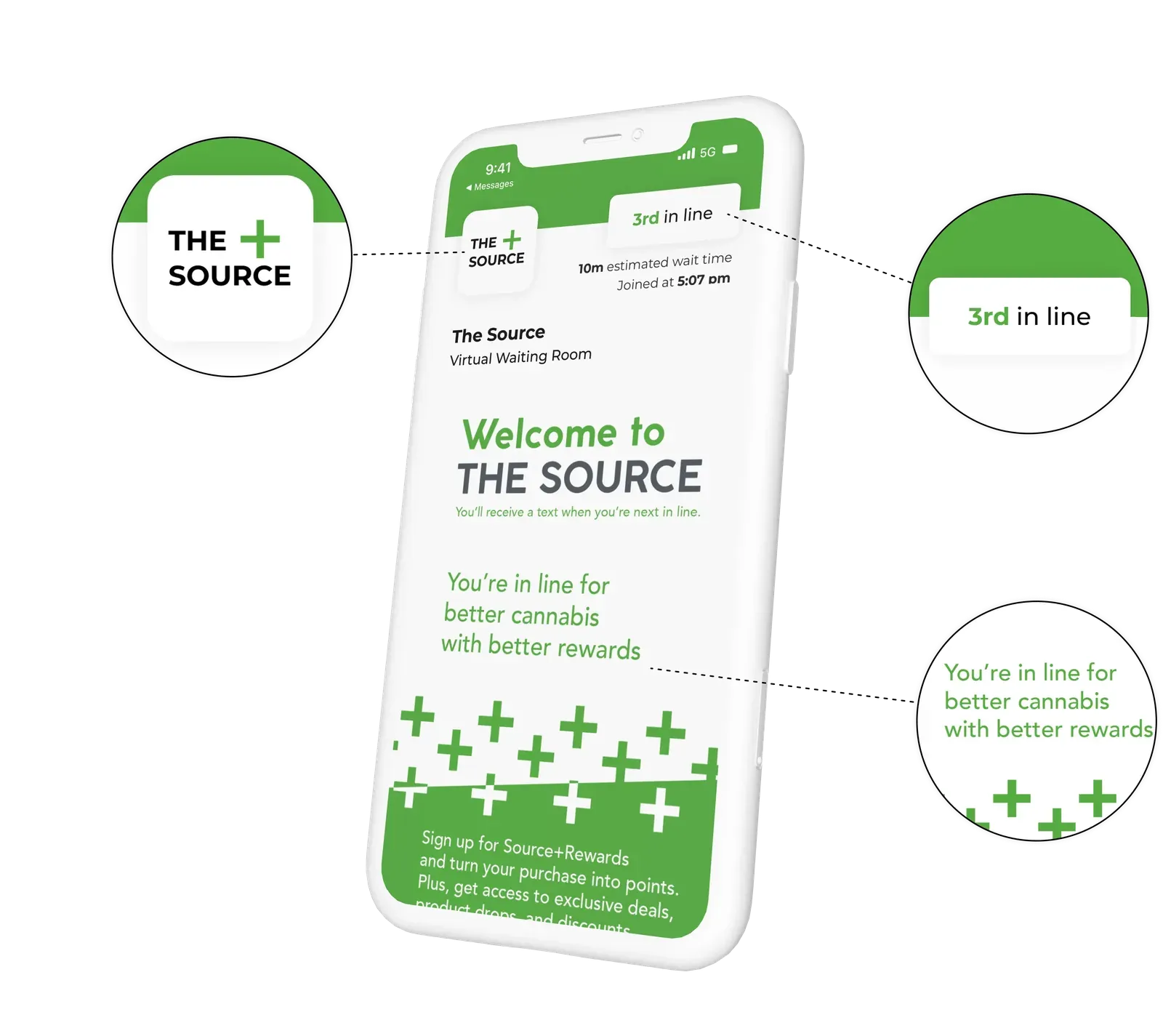
The single highest-leverage change is moving the start of the queue off your sidewalk. Guests scan a QR code or use a tablet at the entrance, join the line from wherever they are, and stop physically holding a place.
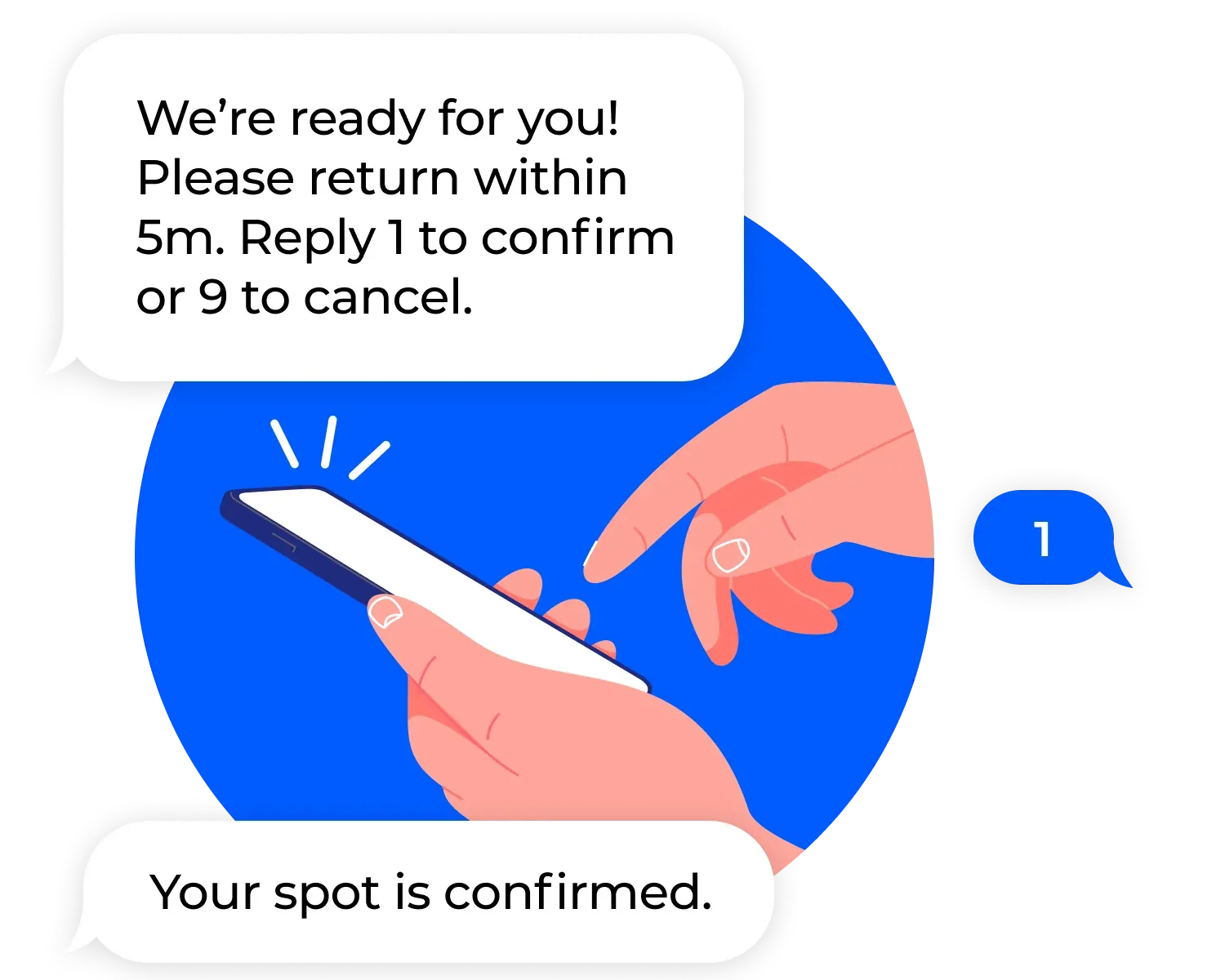
From there the queue does the pacing. Your team admits guests when the floor genuinely has room, so the capacity limit holds without anyone standing at the door turning people away. Text updates keep guests informed while they wait in the car or walk the block, and two-way messaging lets them reply 1 to confirm or 9 to cancel, which keeps the list honest as the evening moves.
Oasis Cannabis Dispensary in Downtown Las Vegas ran into this directly. Operating around the clock on pen-and-paper clipboards, their team struggled to tell curbside pickups apart from guests waiting for in-store service under capacity limits. Putting both into one queue gave staff a single list to work from instead of two improvised ones. Read the Oasis Cannabis Dispensary story for how that played out.
Let guests reach the counter already decided
Consultation time is the one step where cutting minutes can actively hurt you. A budtender who rushes a nervous first-time buyer costs you the basket and the return visit.
The better move is shifting the browsing earlier. A branded virtual waiting room puts your actual products in front of guests while they wait: the current menu, featured items, new arrivals, and the day’s deals, merchandised the way you’d lay them out in the store. Guests spend the wait deciding instead of standing.
That changes what happens once they’re through the door. A guest who already knows what they want clears the counter in a fraction of the time, and the whole line moves up behind them. The ones who still want guidance get a budtender who isn’t rushing, because the decided guests aren’t stacked up waiting their turn.
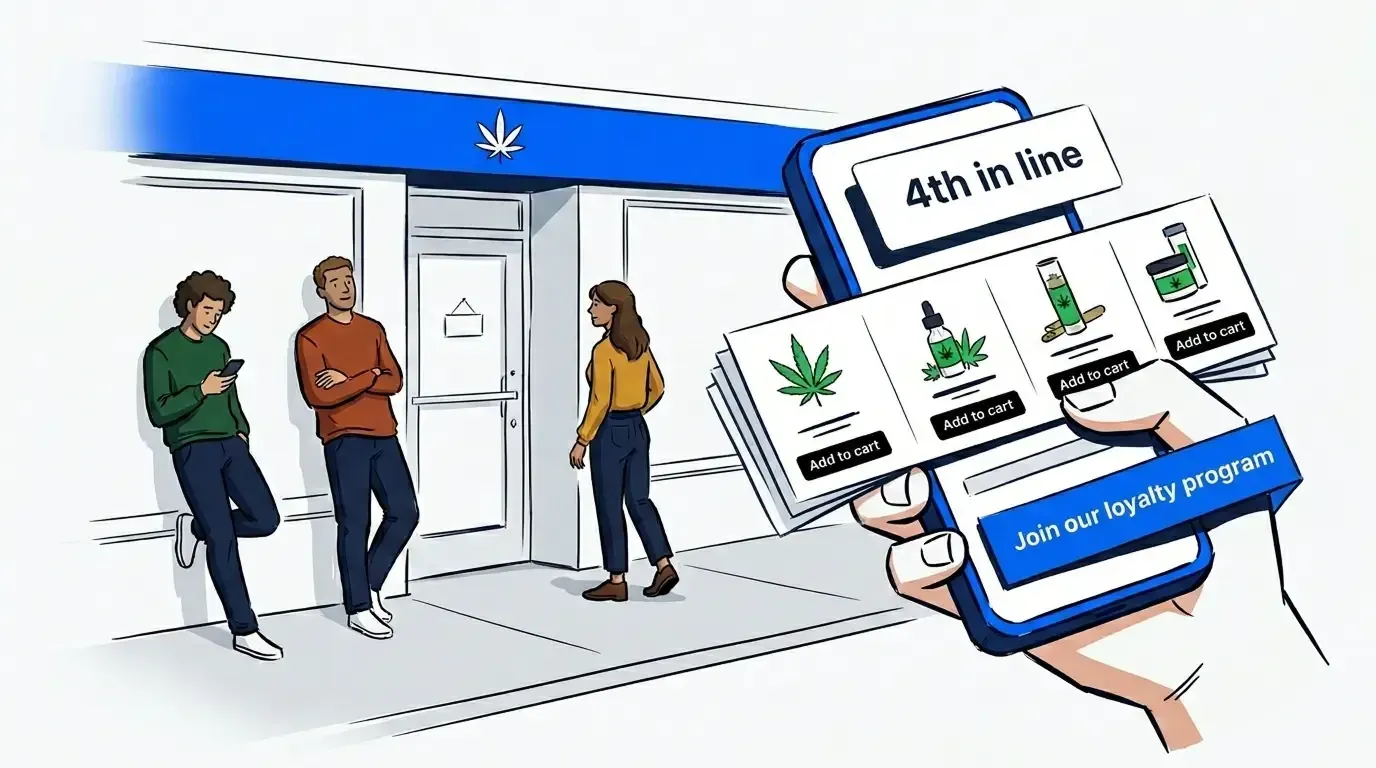
This is a throughput lever as much as a merchandising one. Our dispensary owner’s guide to virtual waiting rooms goes deeper on the engagement side.
Find the step that’s actually slow
Most dispensaries guess at where their time goes. Guessing sends you after the wrong step, which is how stores end up adding a budtender when the real bottleneck sits at the door.
A queue system logs every visit, so you get the shape of your day rather than an impression of it. Your analytics show how long guests waited by hour, how volume moves across a week, and where the line stretches. That turns staffing into a scheduling decision instead of an argument.
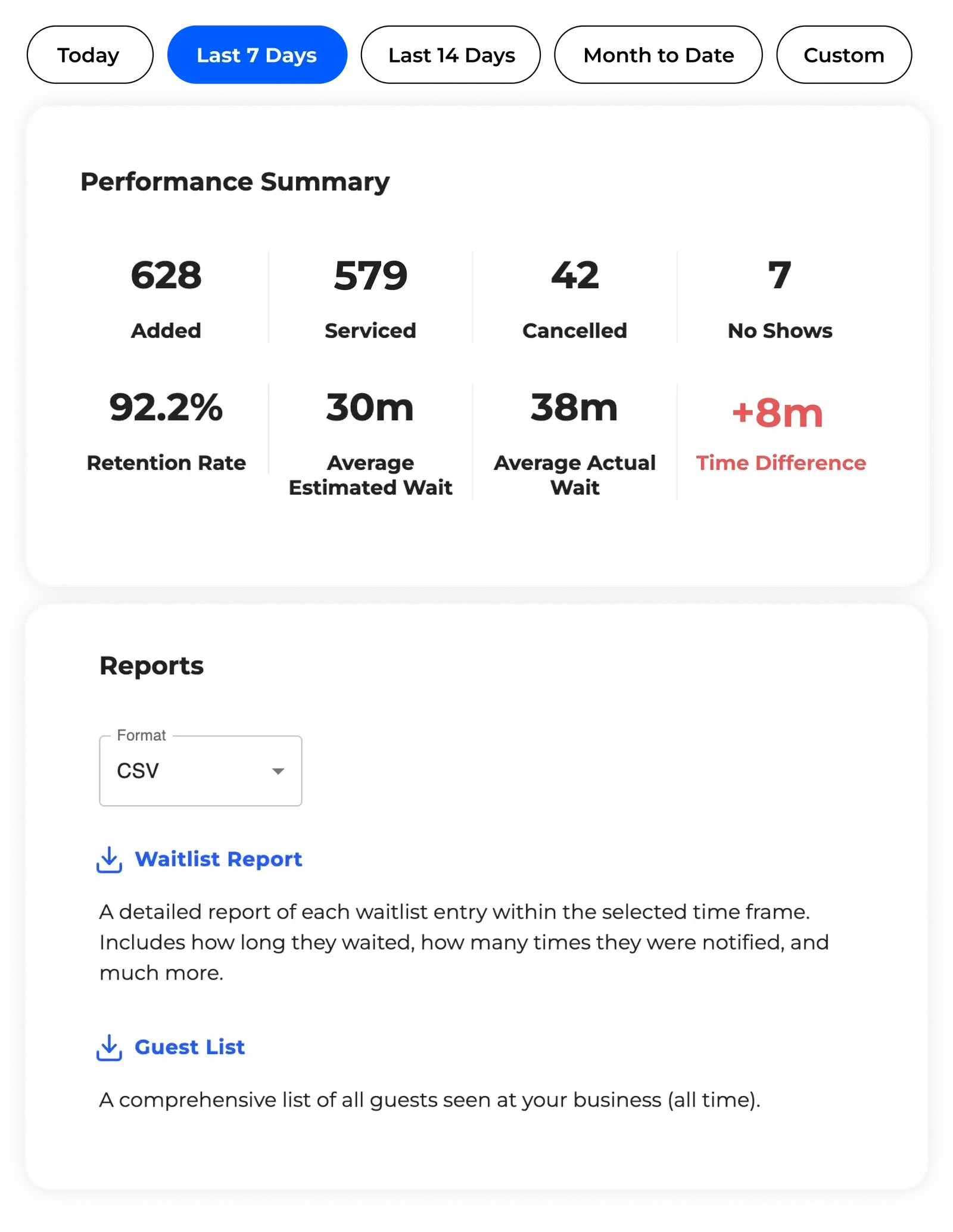
The same record supports your own compliance reporting, since you can pull visit volume and throughput whenever you need it.
The takeaway
A dispensary wait is made of two kinds of minutes, and only one kind belongs to you. Compliance minutes are fixed. The minutes spent queuing to reach a compliance step, bunching at a door, or standing at a counter undecided are all yours to remove, and there are usually more of them than operators expect.
Set this up before your next busy weekend, not during it. You can pull a budtender off the back to cover the floor mid-rush, but you cannot install a queue while sixty people are already waiting outside. Whatever you have running when the doors get busy is what you are stuck with. See how NextMe works for dispensaries.