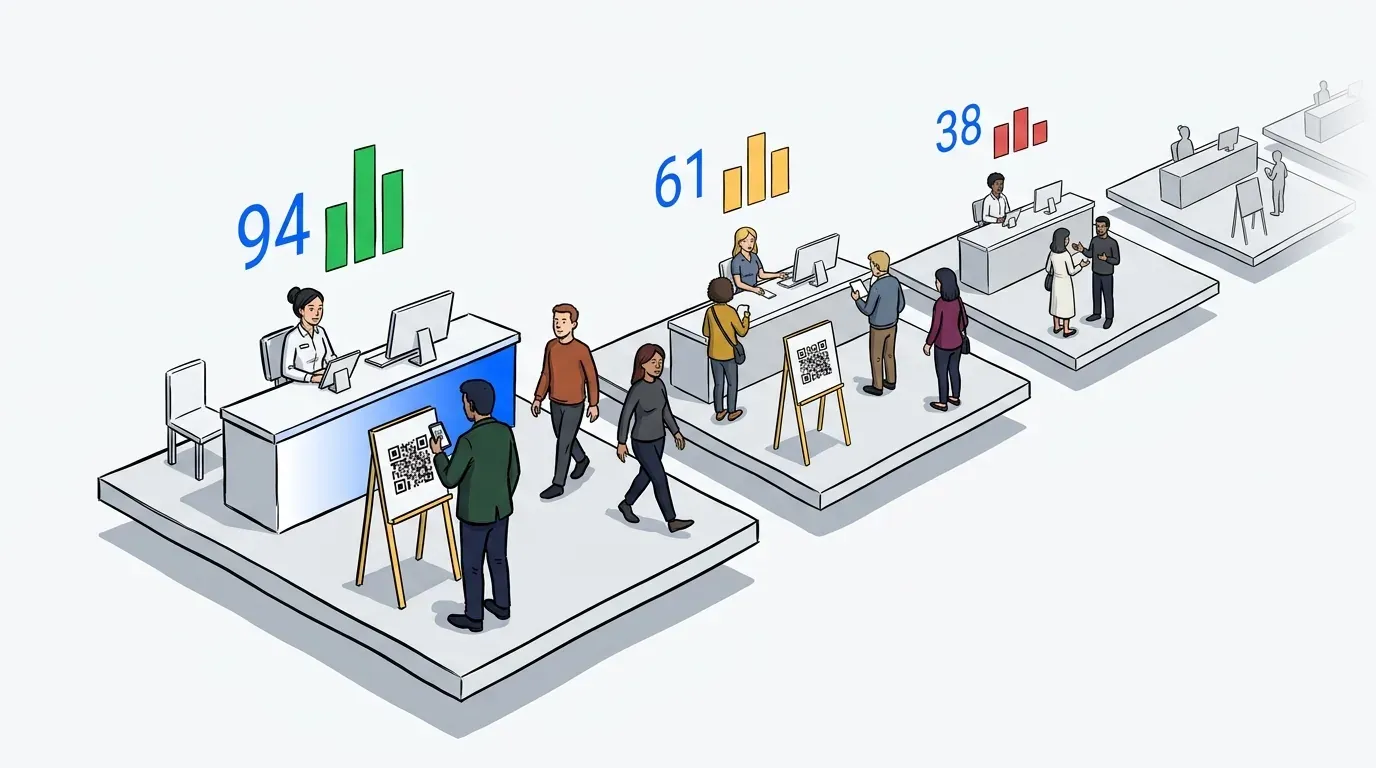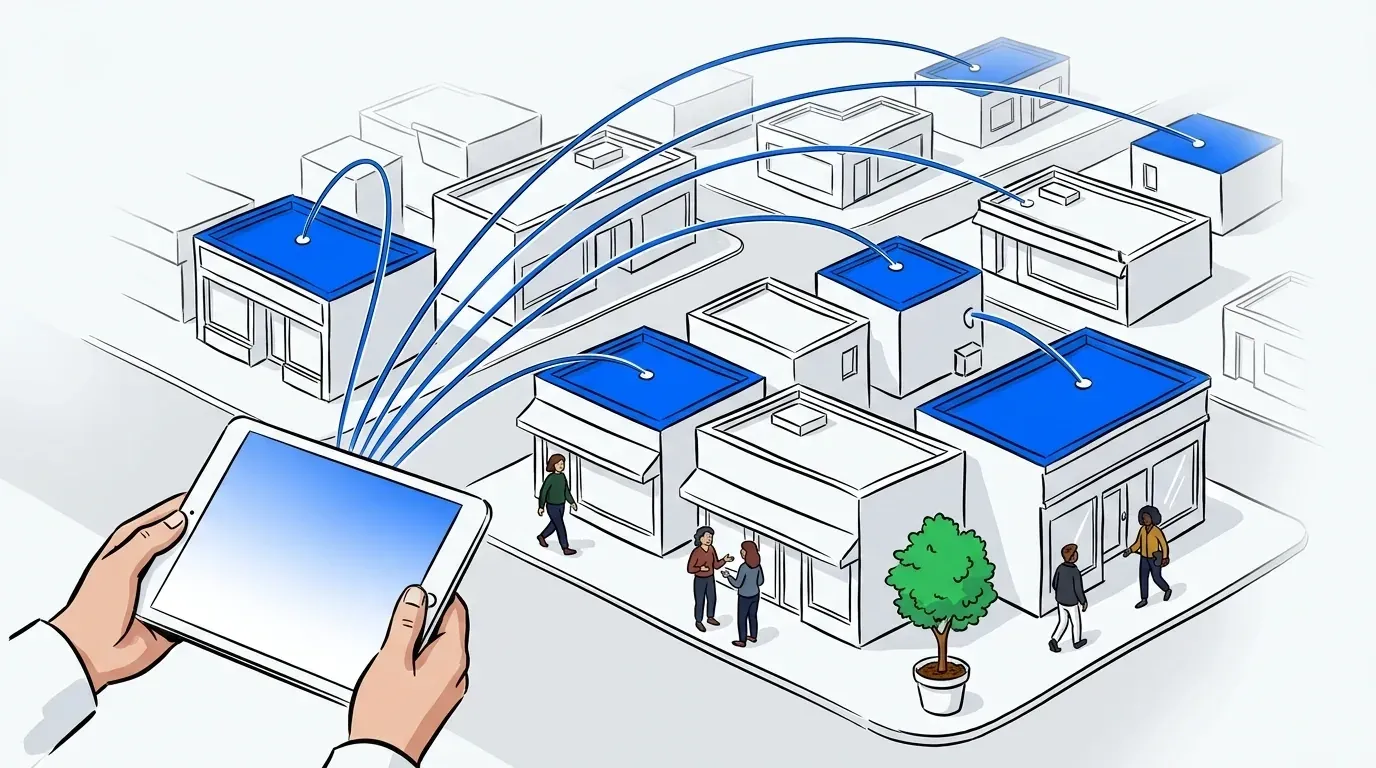
Most waitlist software treats the screen your guest stares at while waiting as an afterthought. Some tools show a number and a spinner. Others, built on consumer marketplaces, fill that screen with other nearby businesses. Either way, you’re handing off the most attention you will ever have from a guest.
So what is a virtual waiting room, and why does owning it matter? A virtual waiting room is the digital space a guest sees after they join your line and before you call them in. Every modern tool has some version of it. The real difference is who controls what runs on it.
This guide explains what a virtual waiting room is, how NextMe’s approach differs from other waitlist software, and what you can do when the surface belongs to you. The short version: the wait is brand real estate, and it should be yours.
What is a virtual waiting room?
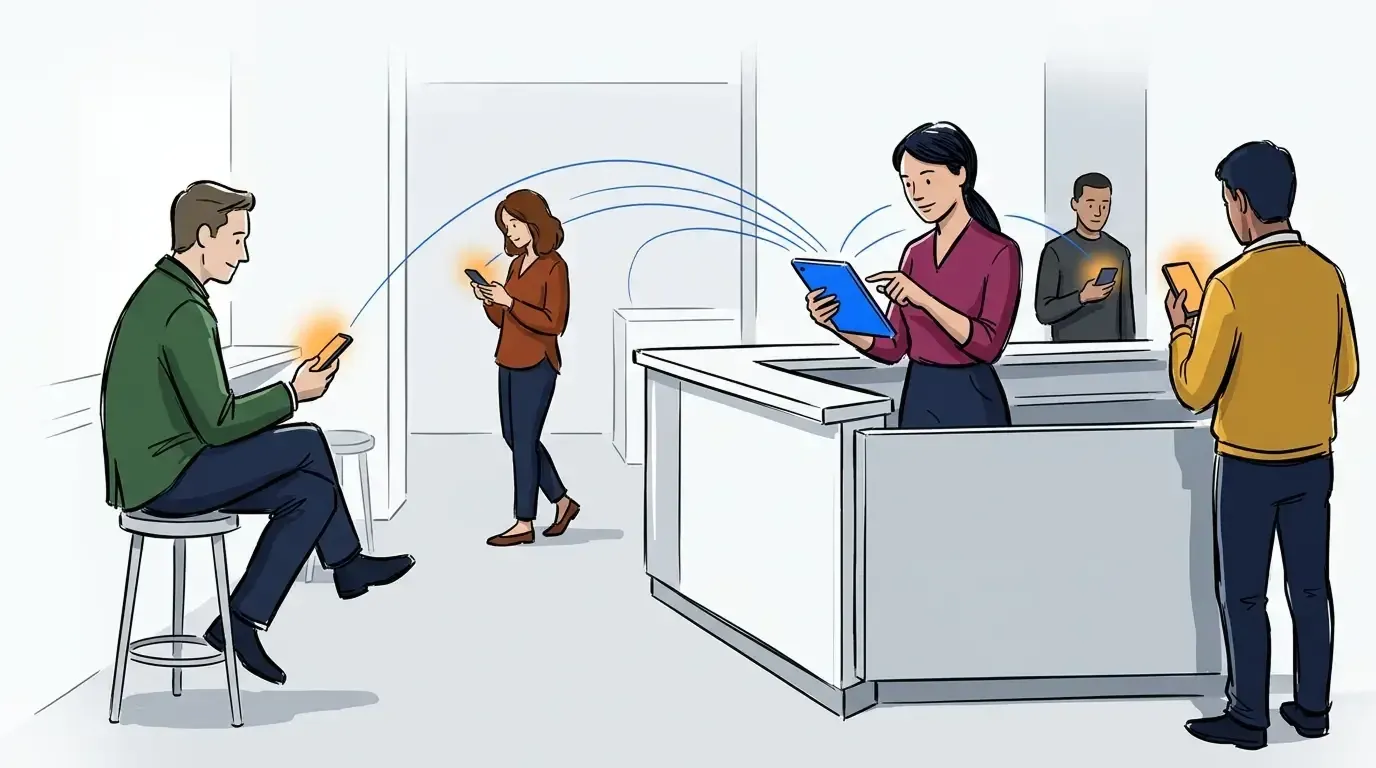
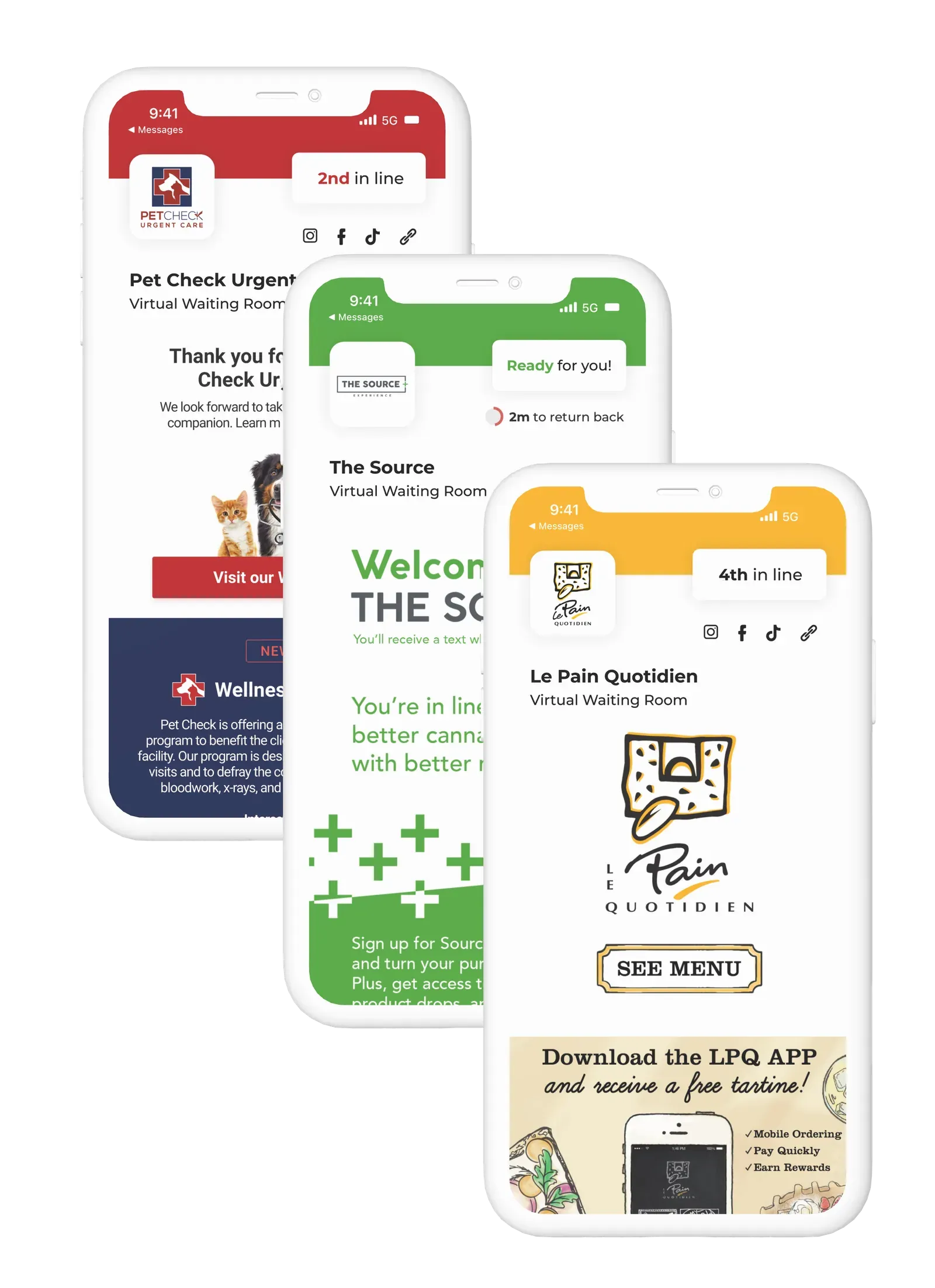
A virtual waiting room is the web page a guest sees after joining a queue and before being called in. It’s your own page, not an app to download. Instead of standing in a physical line, the guest waits from their phone, tracks their place, and sees whatever you choose to show them. It turns idle waiting into a controlled, branded experience.
The idea is simple. The execution is where tools split apart. A NextMe virtual waiting room lets a guest check their position, see an estimated wait, and get a text when it’s their turn. The business decides what else lives on that screen. You can see the full feature set on the virtual waiting room page.
The real difference is who owns the screen
Here is the part most buyers miss. Almost every waitlist tool gives you a waiting screen. Very few let you own it. That one distinction decides what the wait can do for your business.
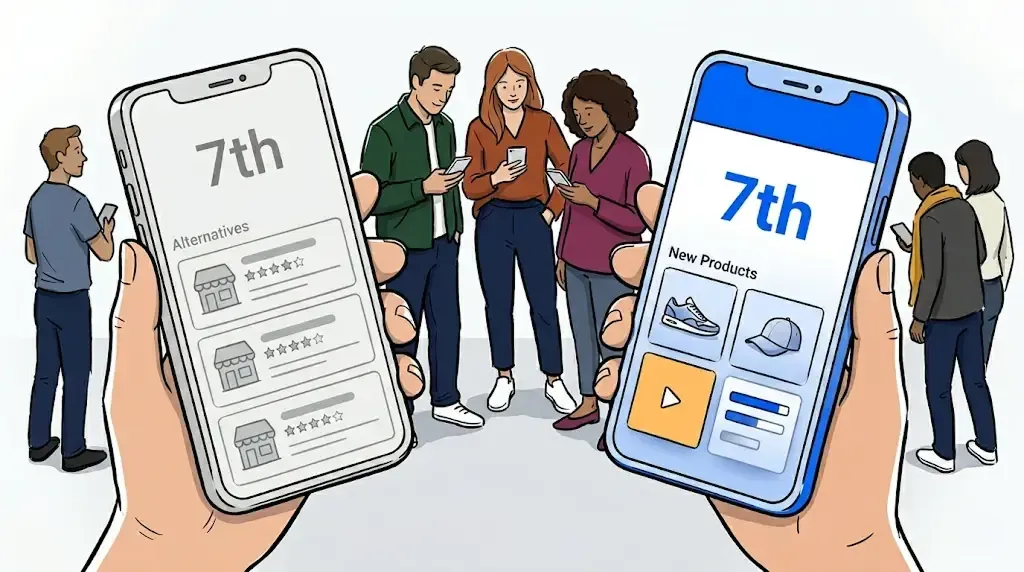
Some tools run on a consumer marketplace. Their model depends on keeping guests inside their app, so the waiting screen can surface other nearby businesses. Your guest waits on your line while looking at someone else’s options. Other tools ship a bare placeholder, a number on a blank screen. Neither one works for you.
Decades of research on the psychology of waiting found that occupied time feels shorter than unoccupied time. A blank screen wastes that window. A screen full of competitors works against you. An owned screen does neither.
NextMe takes the opposite position. The waiting room is yours, and NextMe’s waitlist management keeps the line moving while the screen stays under your control. A visible, managed line already signals demand, so the smart move is to own the wait, not apologize for it.
How does NextMe’s virtual waiting room differ from other waitlist software?
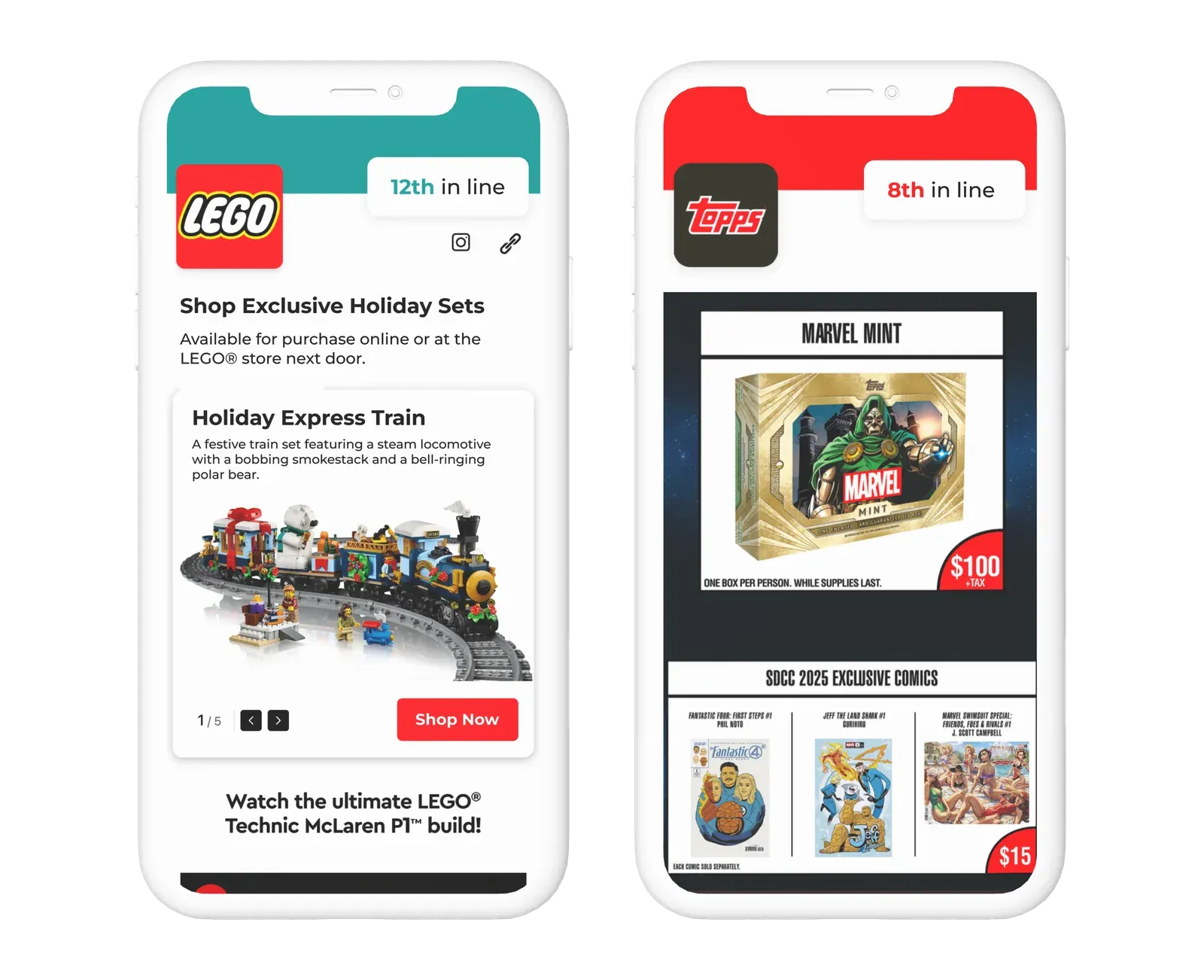
NextMe’s virtual waiting room differs from other waitlist software in one core way: the business owns the surface and controls every element on it. Other tools either show a bare placeholder or, on marketplace-based platforms, surface competing businesses to your guest. With NextMe, you decide what the wait promotes, who it features, and what goal it drives.
Guests do not glance at a NextMe virtual waiting room once and forget it. So far in 2026, over 215,000 guests have viewed one more than 1.6 million times. That is an average of over 7 views per guest. They keep checking their place in line, and each return is another moment with your brand on your terms.
That ownership opens doors other tools close. Because the screen is yours, you can recommend the coffee shop next door and even set up a revenue share with them, instead of a platform pushing your competitors in front of your guest. It also pairs with self check-in at the entrance, so the owned experience starts the moment a guest arrives.
What you can do when you own the wait
When the surface belongs to you, the wait becomes a tool. There are countless ways to use it, and you are not locked into a single format. A few of the most popular:
- A branded game or trivia round that keeps guests entertained
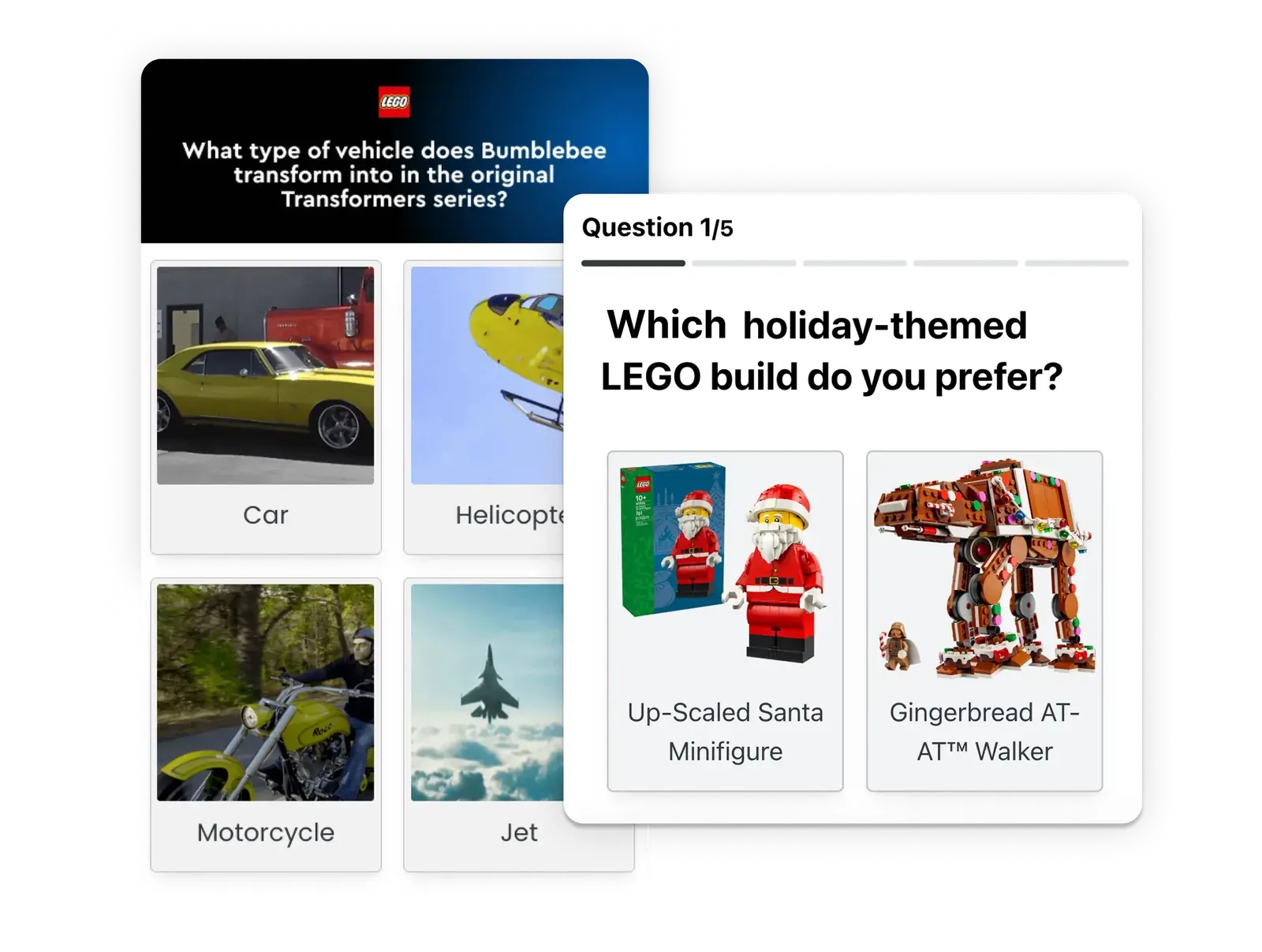
- Polls and quizzes that teach guests about your products and capture their answers
- Intake or pre-screening forms that speed up service once the guest is called
- Local area recommendations, from the nearest parking to where to grab a drink
- A revenue-share placement for the business next door
- A product carousel, pre-orders, and rewards, so guests buy and earn while they wait
- Sponsor placements you sell as paid media
- Lead capture and zero-party data you keep and own
Evereden put this to work at their pop-up at The Grove in Los Angeles. A branded skincare quiz ran in the virtual waiting room while guests waited. More than a third engaged with it, generating 755 clicks and 52 completions, and the activation held 92.3 percent of guests through to service. The full Evereden case study has the details.
Turning an owned wait into measurable results
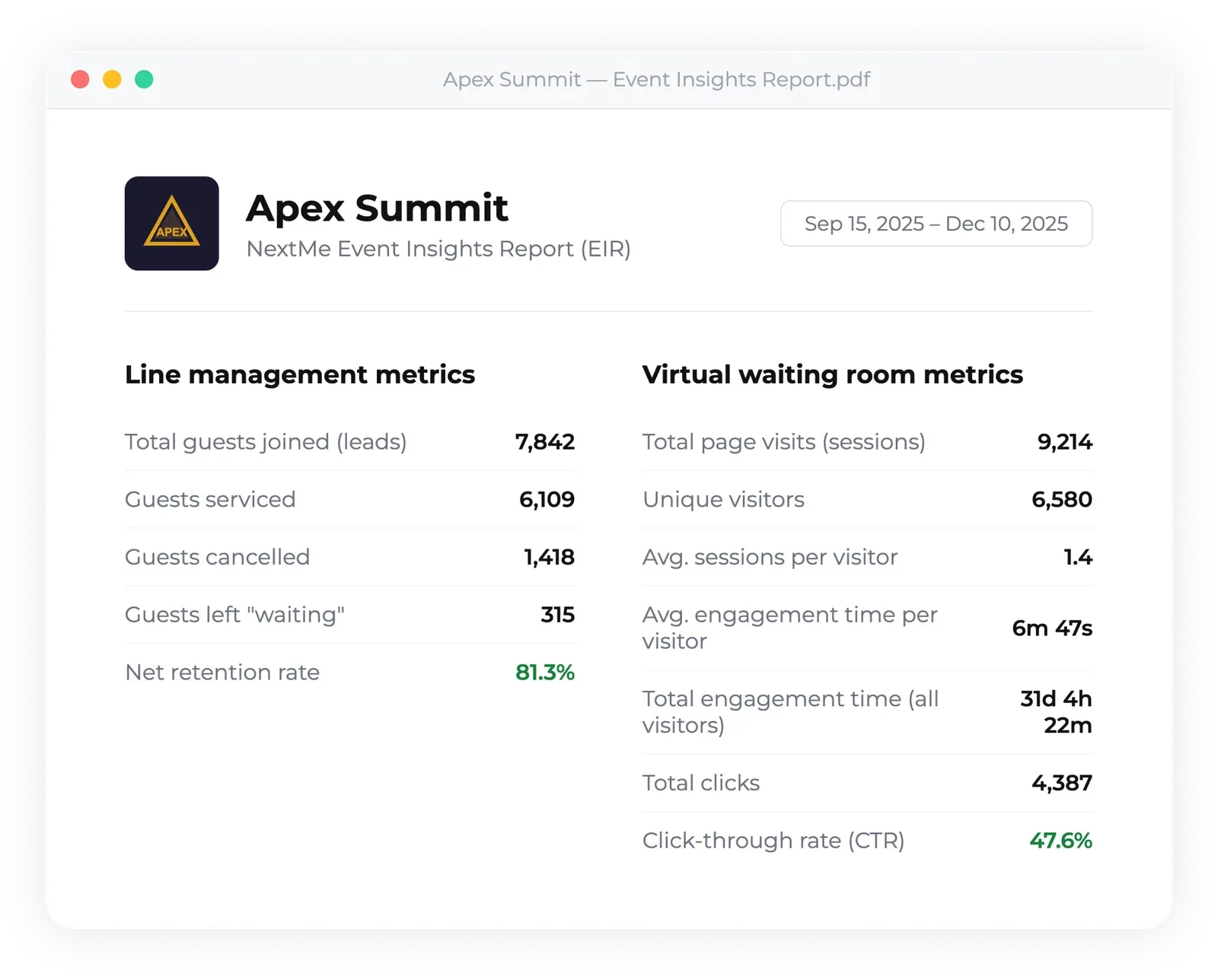
Owning the surface also means owning the data. Every quiz answer, poll response, and click belongs to you. NextMe’s analytics turn that activity into a report you can use for staffing, marketing, or proving value to a sponsor.
For event teams, this is how the wait becomes a line item sponsors will pay for. We walk through that in our guide to turning event sponsor engagement into measurable ROI.
Own the wait, don’t rent it
A virtual waiting room is one of the most valuable surfaces your business has. You have the guest’s full attention and they have nowhere else to be. The only question is whether you own that surface or hand it to a vendor. With NextMe, the wait is your brand real estate, and you decide what it does for you. See how the virtual waiting room works and put your wait to work.