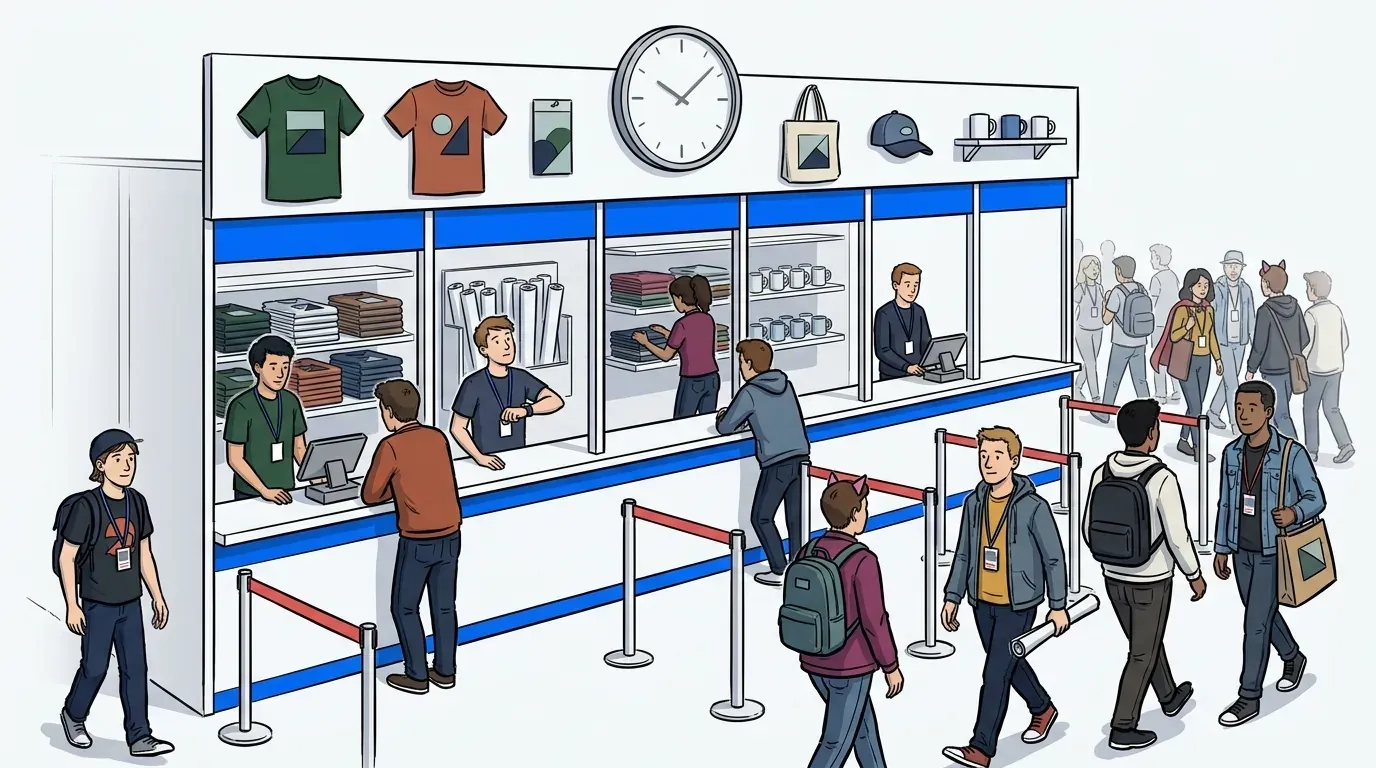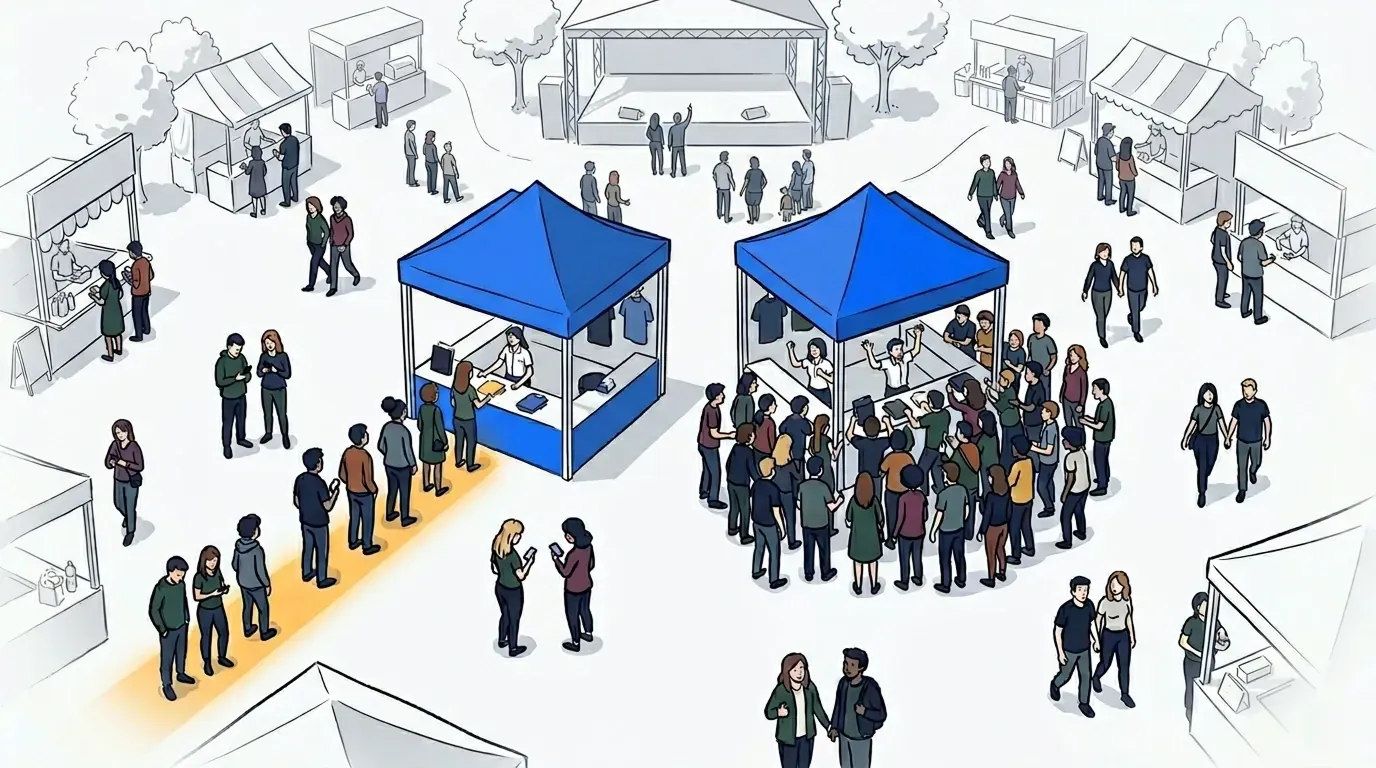
Festivals are a logistical pressure test. Thousands of guests arrive in waves, surge toward entry points at the same moment, and form dense queues outside activations, stages, and merchandise areas that can spiral out of control within minutes. When lines become unmanageable, the experience suffers: guests disengage early, brand activations lose throughput, and social media fills with frustration instead of content.
The goal is not to eliminate lines. Experienced festival operators know that a visible, well-managed queue signals demand and builds anticipation. The real objective is control. Festival queue management gives operators the tools to keep crowds moving predictably, protect the guest experience at every surge moment, and turn wait time into something genuinely valuable for guests and brand partners alike.
This guide covers how festival queue management works, what makes festivals uniquely difficult to manage, and how a virtual queue system helps operators stay in control from gates open to final activation close.
What is festival queue management?
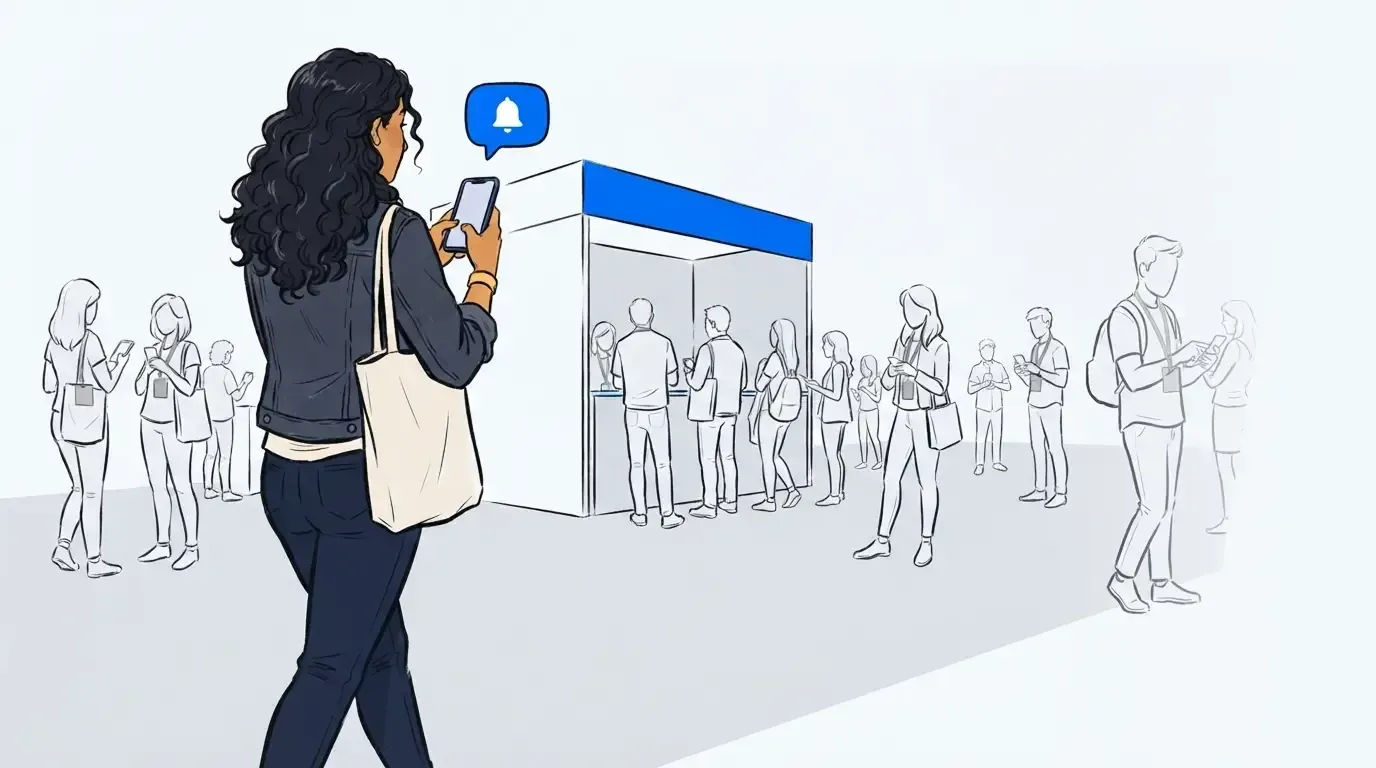
Festival queue management is the practice of organizing, sequencing, and communicating with attendee queues across the physical footprint of a festival - from entry gates and stage queues to brand activation lines and VIP access points. An effective festival queue management system replaces static physical lines with virtual queues that guests join by scanning a QR code, then wait freely until they receive an SMS notification to return.
Unlike a traditional queue, a virtual queue decouples arrival from waiting. Guests join the line without standing in it. They explore other areas of the festival, engage with nearby activations, grab food, or watch a set on a secondary stage. When their spot is ready, they get a text and walk straight through. For operators, this means fewer bottlenecks, shorter perceived wait times, and guests who arrive at a service point engaged rather than frustrated from standing still.
For a deeper look at how virtual queue systems work across event types, see The Complete Guide to Event Queue Management.
Why festivals are uniquely difficult to queue
Most events have predictable crowd flow. Festivals do not. Three distinct surge moments make festival queue management harder than at conferences or single-stage events.
The first is gate surge: a large share of attendees arrives in a compressed window at the start of the event, overwhelming entry points designed for steady trickle-in traffic. The second is headline moment surge: crowds migrate toward a marquee experience - a keynote, a main stage performance, a featured activation - in the 30 to 60 minutes before it begins, creating sudden density in walkways and at everything nearby. The third is activation surge: a brand experience draws a spike of interest at an unscheduled moment, often triggered by social media or a nearby crowd effect, and queue depth doubles faster than staff can respond.
Each surge type overwhelms a static queue almost immediately. Lines spill into walkways, block emergency egress routes, and create fire code compliance risk. Guests who encounter a 45-minute wait at an activation often decide it is not worth it and move on, costing the brand a meaningful impression and costing the organizer a guest who disengages from the broader event.
A virtual queue system addresses each surge type differently. Gate queues use timed-entry waves tied to ticket zones. Headliner queues use virtual waitlists with estimated return times communicated by SMS. Activation queues use QR-based self check-in that caps the active line automatically and holds additional guests in a digital queue until capacity opens.
How festival queue management works with NextMe
Deploying a virtual queue at a festival follows a consistent pattern regardless of event scale. Here is how operators set it up across a typical festival footprint.
- Map your queue points before gates open. Identify the locations that historically generate the deepest lines: main stage entry, flagship brand activation, merchandise, VIP access, and any limited-capacity experience. Each queue point gets its own QR code and capacity threshold in the NextMe dashboard.
- Deploy QR signage at each entry point. Guests scan to join the queue from their phones. No app download required. Staff monitor queue depth and guest count in real time from the operator dashboard.
- Set capacity thresholds for each queue. The system holds additional guests in a digital waitlist when the active queue reaches a defined size, showing a real-time position update while they explore the rest of the event.
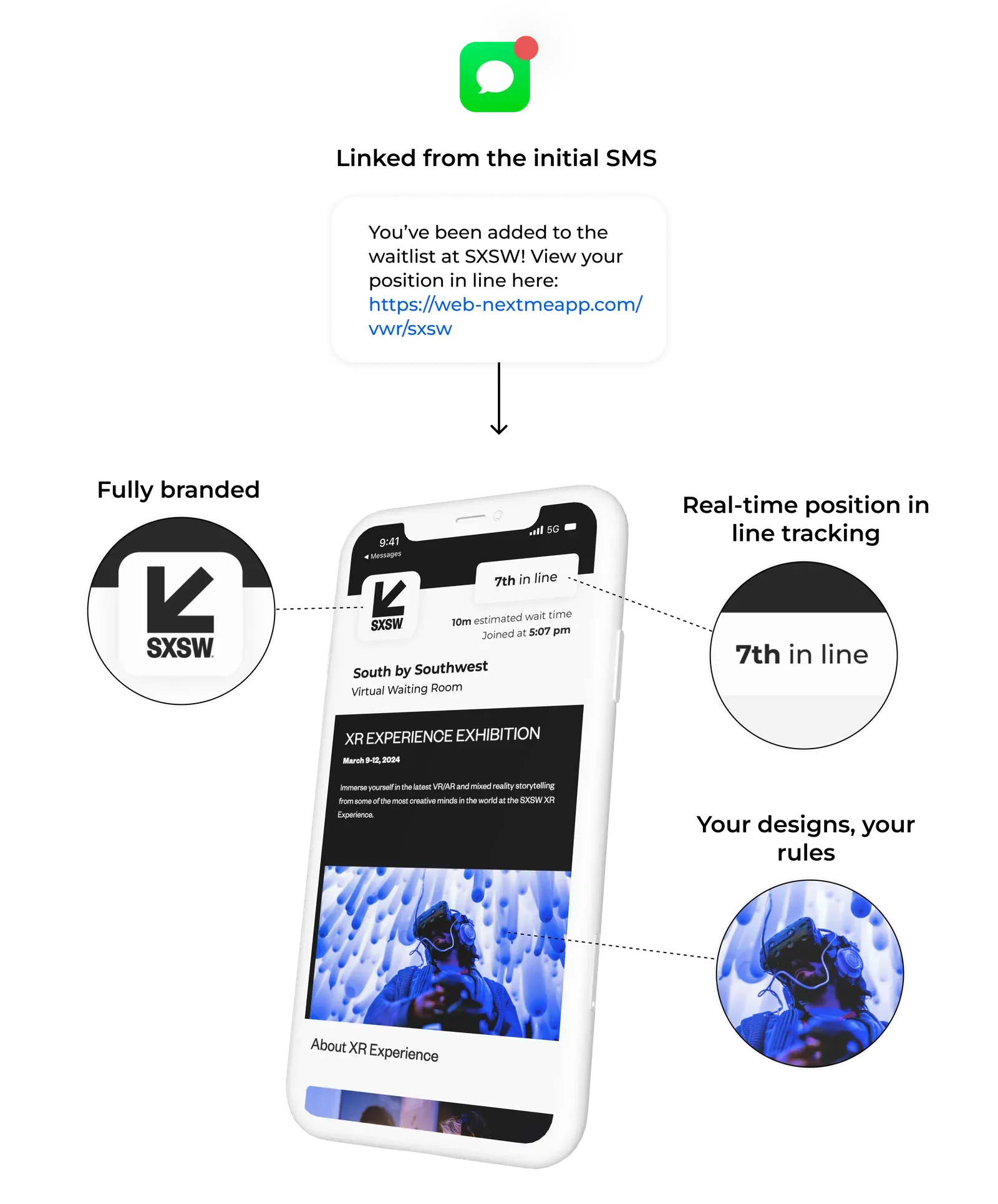
- Send SMS notifications when guests are called. Guests receive a text with their position and an estimated return time. They stay engaged with the festival until they are needed.
- Use the operator view to call guests back in batches. Staff trigger the next group from the waitlist management dashboard, sending automated SMS to the next wave without manual intervention.
Real results: NCompass International at the Adult Swim Festival
Brand activations at festivals carry real commercial stakes. According to the EventTrack 2026 report from Event Marketer, 61% of consumers are more inclined to purchase after attending a live brand experience. That purchase intent only converts if guests actually make it through the activation - and that depends entirely on how the queue is managed.
NCompass International, a leading brand experience agency producing high-impact activations for major global brands, faced this challenge directly. Managing large crowds and long wait times at exclusive brand experiences was undermining the value of the activations themselves. Guests spent their time standing in line rather than engaging with the brand.
After deploying NextMe’s virtual waitlist at the Adult Swim Festival, the results were significant. NCompass saw a 40% increase in activation throughput, meaning more guests moved through the experience in the same time window. Perceived wait times dropped by 50%, with guests staying engaged with brand content via the virtual waiting room instead of standing idle. Real-time analytics gave the brand client measurable data on guest flow and activation impact, turning a qualitative experience into a reportable ROI story.
“NextMe allowed us to eliminate long lines while giving our guests a seamless way to engage with our activations. It’s a game-changer for experiential marketing.” - Paul Ioakim, Director of Development and Special Events, NCompass International
The same pattern plays out across other festival formats. At SXSW, NextMe powered self check-in and guest flow management across brand activations spanning music, film, and interactive programming. The SXSW case study shows how a virtual queue handles the unpredictable surge dynamics of a multi-day, multi-venue festival footprint.
How the virtual waiting room turns wait time into brand engagement
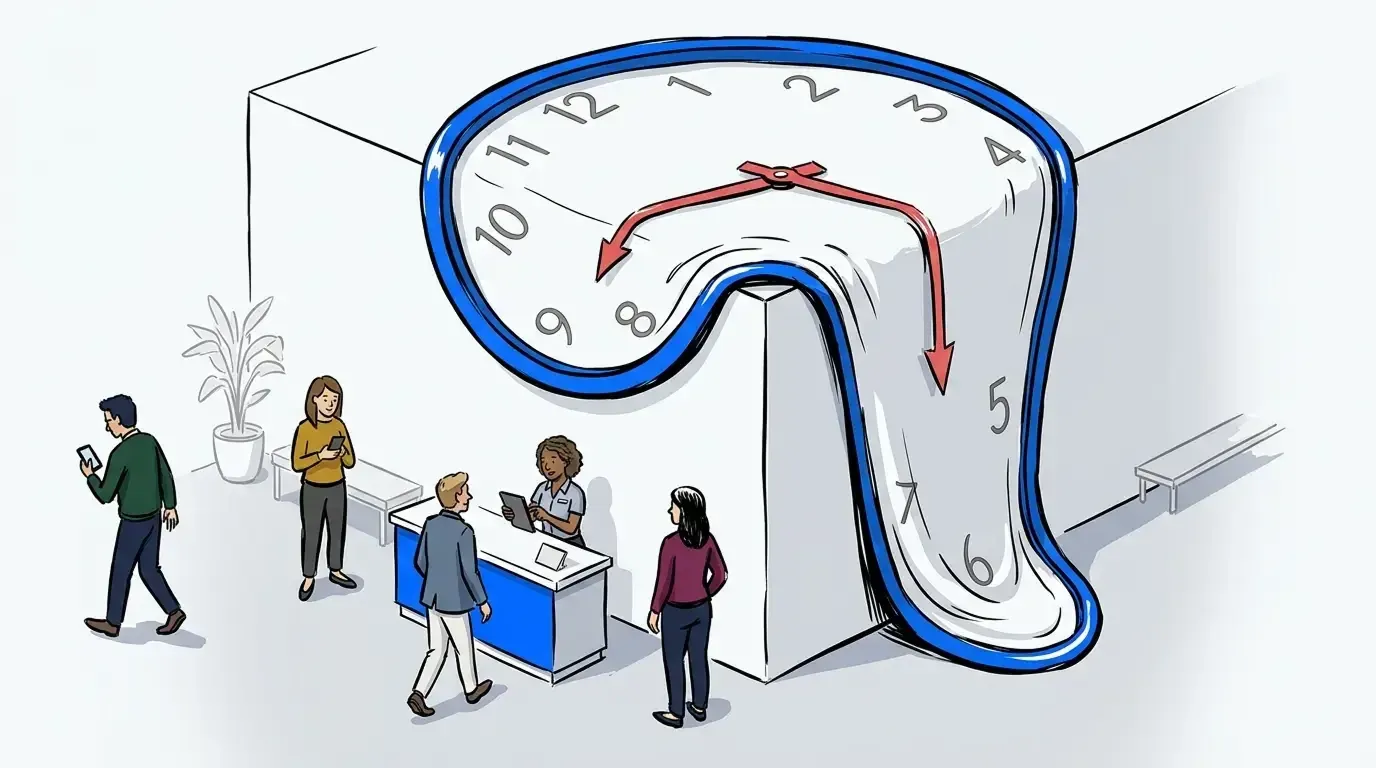
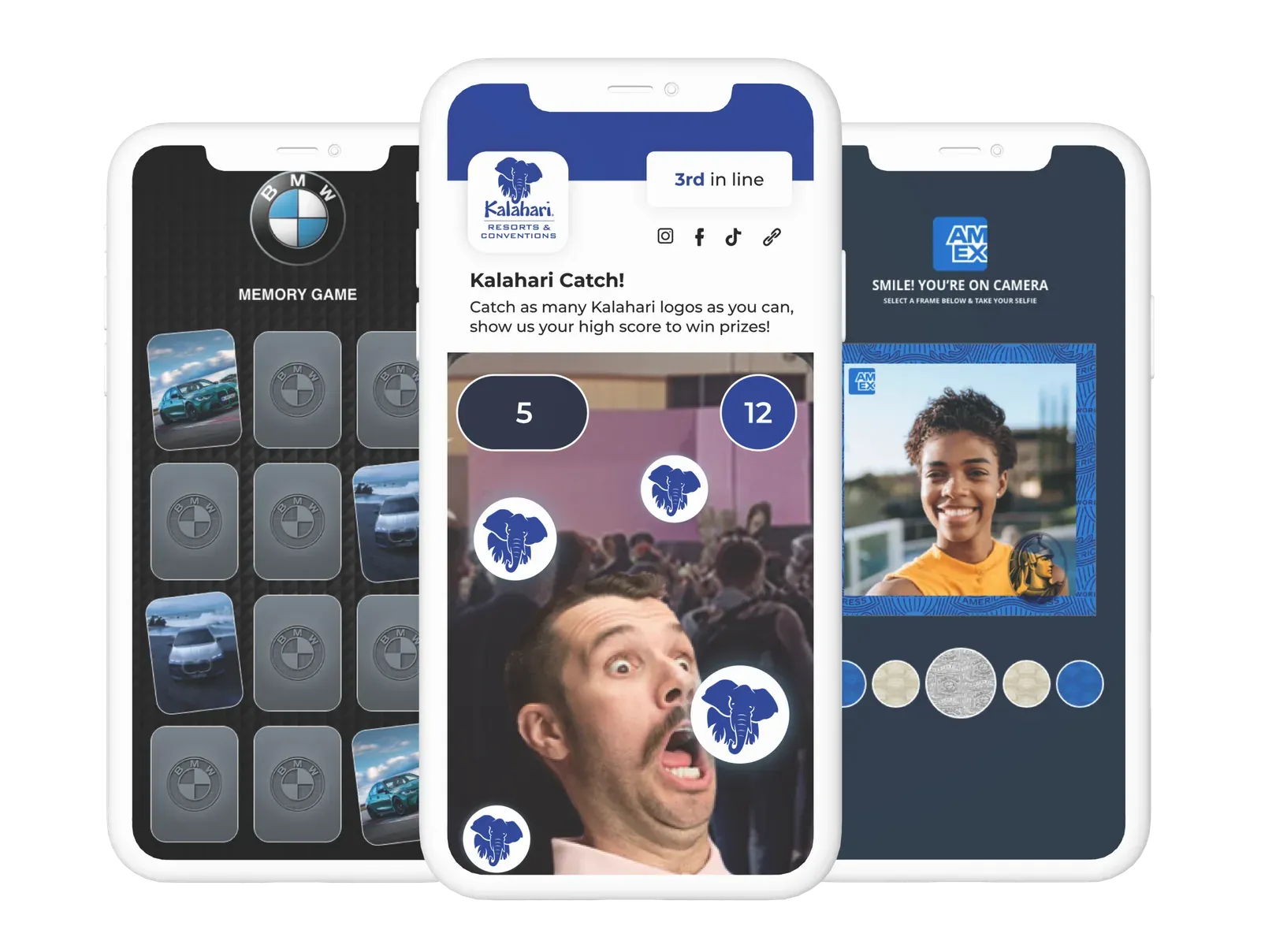
The most underused asset at any festival activation is the wait itself. Guests in a physical line have nothing to do. Guests in a NextMe virtual queue are on their phones - and the virtual waiting room gives brands direct access to that attention.
While guests wait for their SMS notification, the virtual waiting room displays sponsor content, runs interactive polls and quizzes, surfaces product carousels with embedded checkout, and captures zero-party data that feeds back into the brand’s CRM. For experiential marketers measuring activation ROI, this is the difference between a guest who waited and left and a guest who engaged, purchased, or opted in while waiting.
NCompass saw this directly at the Adult Swim Festival: higher engagement with brand content was one of the four headline outcomes. The virtual waiting room converted idle wait time into active brand interaction at scale.
Keep your festival crowds moving with NextMe
Festival queue management is not a nice-to-have. It is the operational layer that determines whether a brand activation hits its throughput targets, whether guests leave satisfied or frustrated, and whether the event team can respond to surge moments before they become incidents. The three festival surge moments - gate, headliner, and activation - are predictable. The tools to manage them are available.
NextMe was recently named a 2026 Event Tech Innovator by BizBash, recognizing its work powering guest flow and brand engagement across festival and experiential formats.
NextMe is trusted by experiential agencies and event operators across music, entertainment, comedy, and brand activation formats. If you are planning a festival and want to see how a virtual queue fits your footprint, explore NextMe for events.