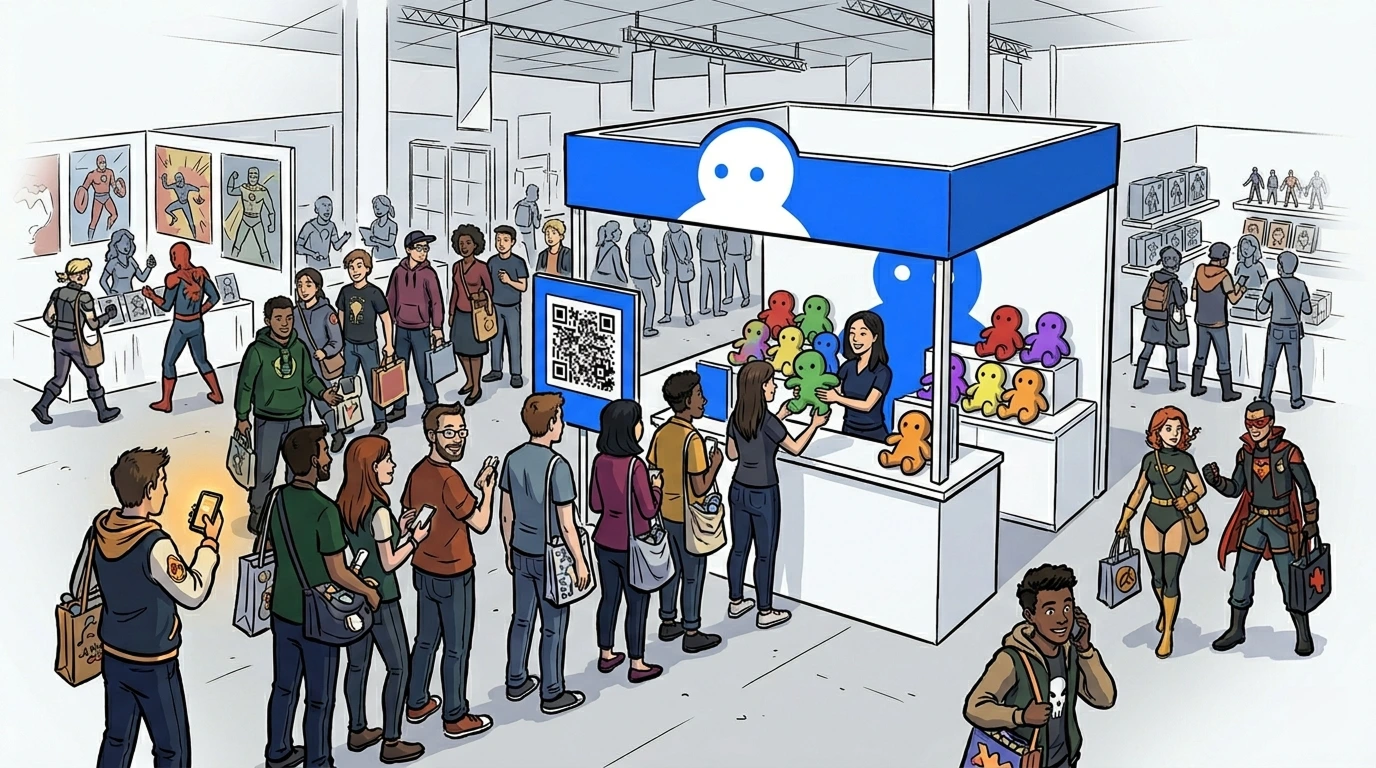
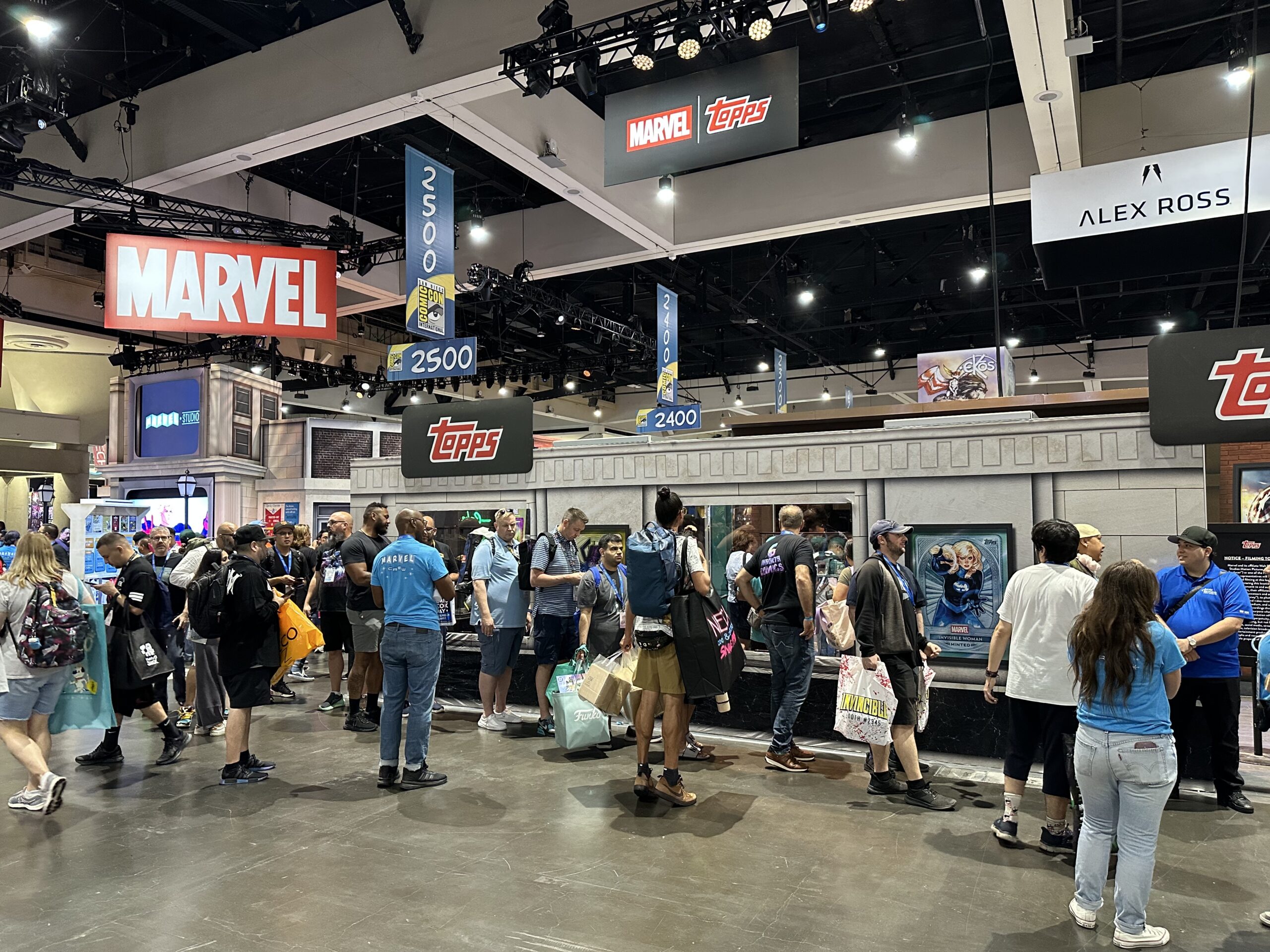
If you have ever run a booth at San Diego Comic Con, Wondercon, or any major fan convention, you know what happens when something goes right: the line gets long, fast. Fans queue up for autographs, activations, exclusive giveaways, and limited product drops. The booth you planned for 30 people is holding 200. And that’s where things can go sideways quickly.
The challenge for exhibitors is not eliminating the line. San Diego Comic Con alone draws over 135,000 badge holders annually. With all 2026 badges already sold out, the event is expected to draw hundreds of thousands of additional visitors across the Gaslamp District. A visible, managed queue at your booth is one of the most powerful demand signals on a convention floor. Other attendees see it and want to know what they are missing. The real challenge is controlling that line: keeping it safe, keeping fans informed, and turning the wait into something your brand owns rather than something that happens to you.
This guide covers how exhibitors and brand activation teams manage fan lines at major conventions, from the basics of queue setup to the smarter approach of converting your booth queue into an engagement layer that works for sponsors and fans alike.
Why convention booth queues need a system
Fan conventions are not trade shows in the traditional sense. Attendees are deeply invested in what they are waiting for. They will wait 45 minutes for a brand activation they care about. They will also walk away in frustration if they feel ignored, uninformed, or like the line is unmanaged.
The core problem is not capacity. It’s information. A fan standing in line without any update does not know if they are three minutes from the front or 30. That uncertainty drives walkouts. It creates tension. And when lines snake into adjacent booths or block fire egress paths, it creates real safety and compliance problems on the convention floor. For more on how to think about crowd movement as a discipline, see our complete guide to event crowd flow management.
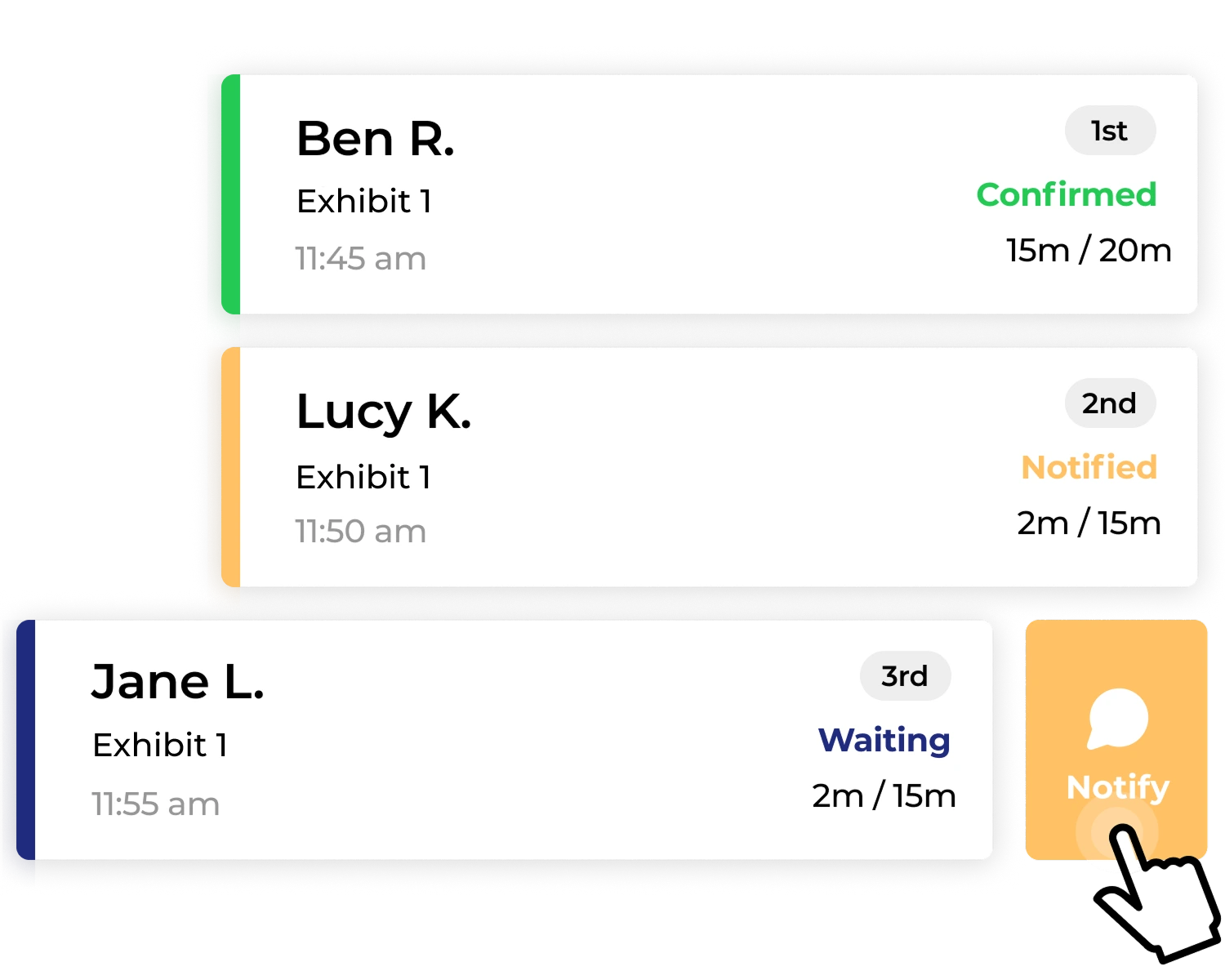
A queue management system changes that equation. Fans check in digitally, get an estimated wait, and receive an SMS when it is their turn. They can explore the rest of the convention floor instead of holding a physical spot. Your booth staff stop managing the line and start managing the experience.
How to set up a comic con booth queue before doors open
The single biggest mistake exhibitors make is treating queue management as a reactive problem. By the time the line is unruly, your options are limited. Setup happens before doors open, not after. Here is the sequence that works:
- Consider your service capacity. Have an idea of how many fans you can handle per 15 or 30-minute window. This drives everything downstream.
- Configure your digital waitlist. Set up your queue with the right fields: name, contact number for SMS, and any activation-specific intake questions (t-shirt size for a giveaway, consent for a photo op, product preference for a demo).
- Place QR codes at the entry point and at line sight lines. Fans who see the queue from 20 feet away should be able to scan in before they even reach the booth. This is the check-in moment, and the sooner it happens, the better your queue data becomes.
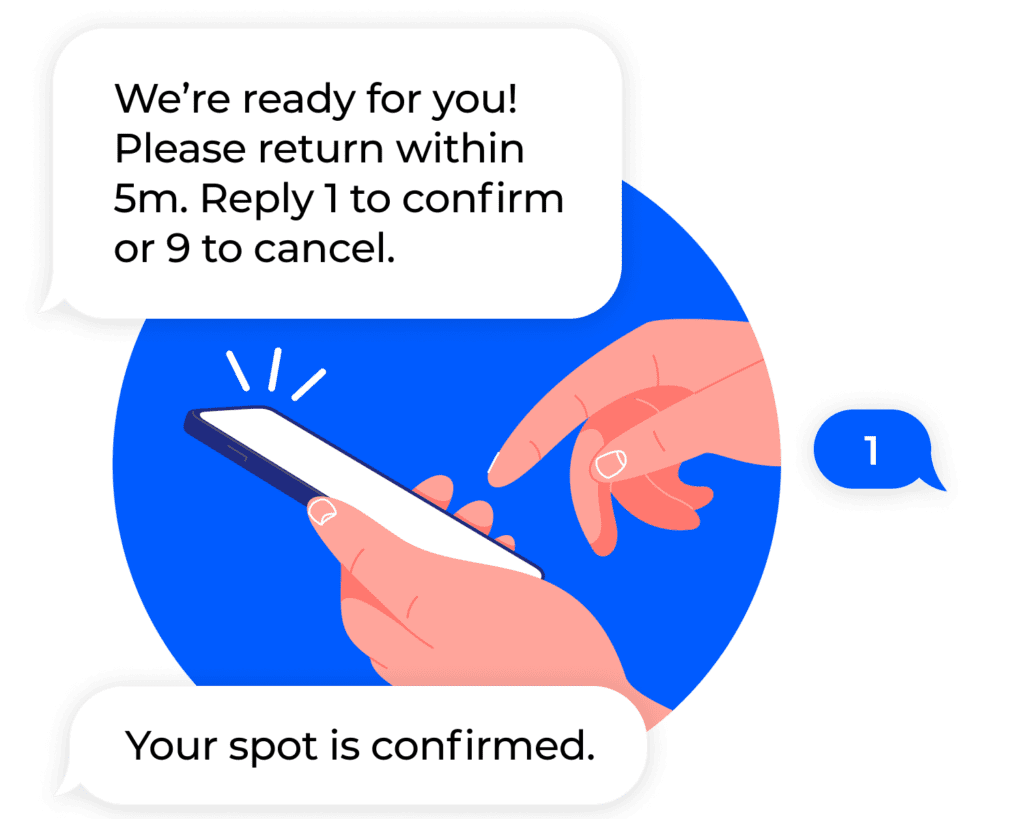
- Brief your booth staff on the callback flow. Staff should know how to advance the queue, how to handle no-shows (reply 1 to confirm, 9 to cancel), and who manages escalations.
- Load your virtual waiting room content. The VWR is what fans see between check-in and their callback. This screen real estate is yours to brand and customize to meet your brand goals (more on that below).
HudsonGray, the agency behind SYFY’s activation at San Diego Comic Con, used this approach to standardize appointment-based queuing at their SDCC booth. The result: fewer complaints from attendees and staff, and for the first time, clean fan wait time data they could use to improve future activations. Read the full HudsonGray case study.
For a deeper look at how this approach applies to trade shows specifically, see our guide on trade show booth crowding risks and how to get ahead of them.
The virtual waiting room as brand real estate
At a major fan convention, your booth queue is not dead time. It is the moment of highest intent in the entire activation. Fans who have already joined your line are engaged. They have opted in. They are waiting specifically because they want what you have.
That waiting window, which can run 20 to 60 minutes at a high-demand SDCC activation, is sponsor real estate. The virtual waiting room (the screen fans see after they check in) can carry brand content, product reveals, exclusive video, polls, quiz questions, or giveaway entries. For brands running co-sponsored activations, it is a named placement with a measurable audience.
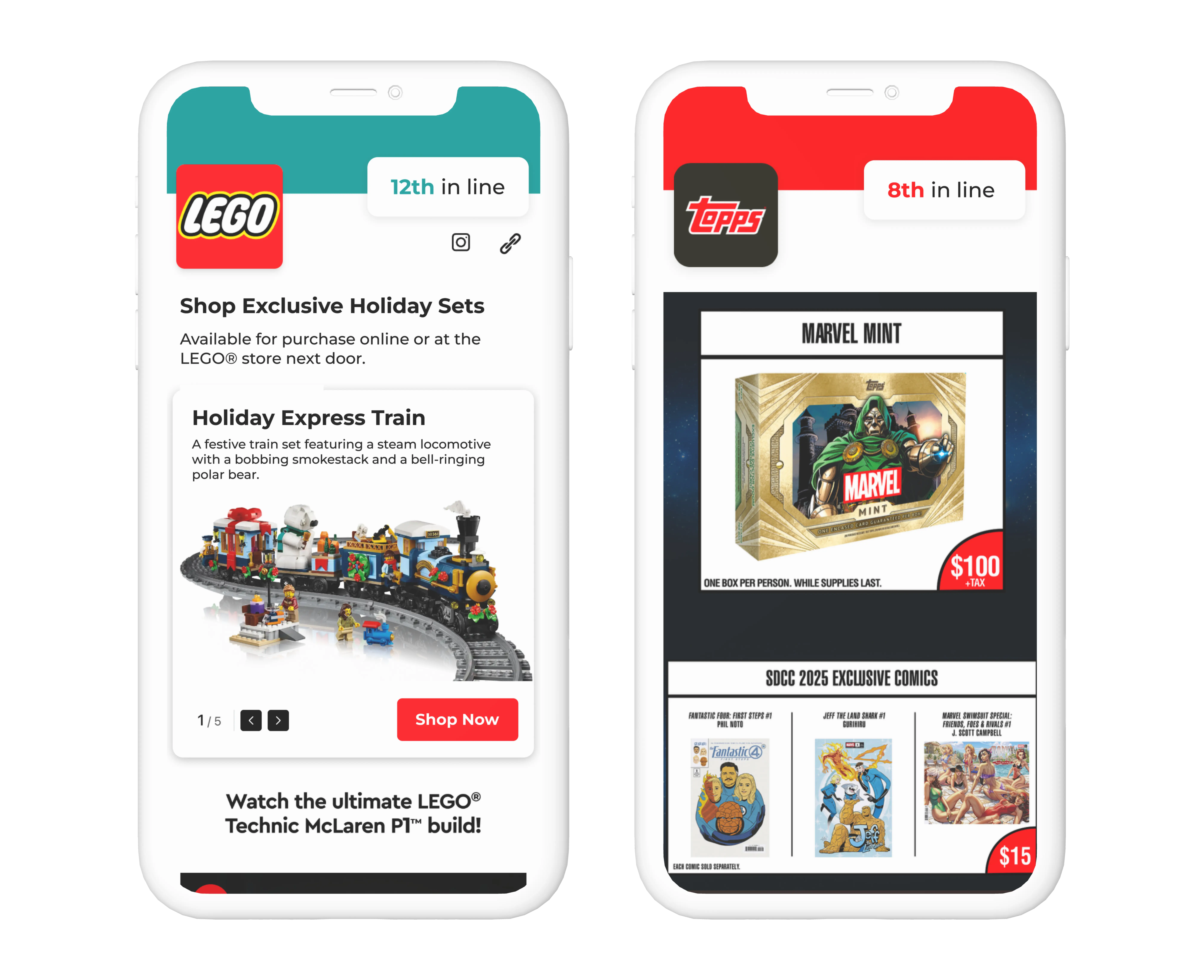
Peacock used this at their San Diego Comic Con activation to manage a high-demand queue, stay compliant with city safety regulations, and collect digital waivers during the wait window rather than at the booth. The activation ran without a physical line holding attendees in place. See the Peacock case study for details.
This is the shift that separates exhibitors who manage queues from those who activate them. For a full walkthrough of how to configure a VWR for brand activations, see How to Set Up a Brand Activation Virtual Waiting Room That Captures Leads.
Managing compliance and safety at fan conventions
Convention venues and city regulators take fire egress and crowd safety seriously. A physical queue that blocks an aisle or stacks into a neighboring exhibitor’s space is not just a bad look. It can draw a floor manager response and, in worst cases, result in activation shutdown.
A digital queue removes the physical stack entirely. Fans are in the queue the moment they scan the QR code. Their physical location becomes irrelevant. They can browse adjacent booths, grab a drink, or sit down. When their turn comes, they get an SMS and return. The booth space stays clear. Staff are not managing a crowd, they are managing a guest list.
For high-demand activations where demand significantly outstrips capacity, this is not optional. It is the mechanism that lets the activation run safely at all.
Capturing first-party data during the wait
Every fan who checks in to your booth queue provides at least a name and phone number. That is first-party contact data collected at the highest point of intent in the activation. At scale, across a three-day convention, that list has real value.
The intake form can go further. You can ask fans which characters they are there for, what products they are interested in, or whether they consent to follow-up communications. These are zero-party data points collected in context, which is the hardest kind of consumer data to get anywhere else.
Marvel’s brand activation queue management approach demonstrates this at scale: a high-demand fan experience with controlled throughput and a data layer that feeds post-event reporting. Read the Marvel case study.
For the full strategy on how brand activation waitlists drive engagement and sponsor ROI, see How to Use a Brand Activation Waitlist to Drive Engagement at Live Events.

Frequently Asked Questions
How do exhibitors manage long lines at Comic Con?
Most exhibitors running high-demand activations at Comic Con now use digital queue management software. Fans scan a QR code to join the line, receive an SMS with their position and estimated wait, and get a callback notification when it is their turn. This removes the physical stack at the booth and lets fans use their wait time anywhere on the convention floor.
What is a virtual waiting room for a convention booth?
A virtual waiting room is the digital screen fans see after they check in to your booth queue. It sits between check-in and their callback notification. Exhibitors load it with brand content, video, polls, or exclusive reveals. For sponsors, it is a named placement with a captive, opted-in audience during a high-intent wait window.
Can a digital queue help with convention floor safety compliance?
Yes. Convention venues and city regulators require clear fire egress and aisle access. A physical line that stacks into adjacent booths or blocks walkways creates compliance risk. A digital queue removes the physical stack entirely because fans hold their place on their phone rather than in person. This is how high-demand activations like Peacock at SDCC have stayed compliant while still running fully at capacity.
Does the same system work for multiple days at a convention?
Yes. A digital queue resets between days and maintains data across the full event run. Exhibitors can see cumulative wait time data, throughput by hour, and total fan contacts captured across all three or four days of a convention. This data feeds directly into post-event reporting for sponsors and brand partners.
What is the best queue management setup for a small exhibitor booth?
For smaller booths, the setup is the same but lighter. A single QR code at the booth entry, a basic intake form with name and phone number, and SMS callbacks are enough to manage flow without adding booth staff. NextMe works on any device, requires no hardware, and can be configured in under an hour before a convention opens.
Make your booth queue work for you
The exhibitors who get the most out of major fan conventions are not the ones with the shortest lines. They are the ones who turned their queue into a system: controlled throughput, informed fans, clean data, and a virtual waiting room that doubles as branded media inventory during the wait.
With Fanatics Fest in New York and SDCC 2026 approaching this summer, now is the right time to get your booth queue set up before you are managing it reactively on the floor. See how NextMe works for events and brand activations, or explore the virtual waiting room to see what your fans can see while they wait.