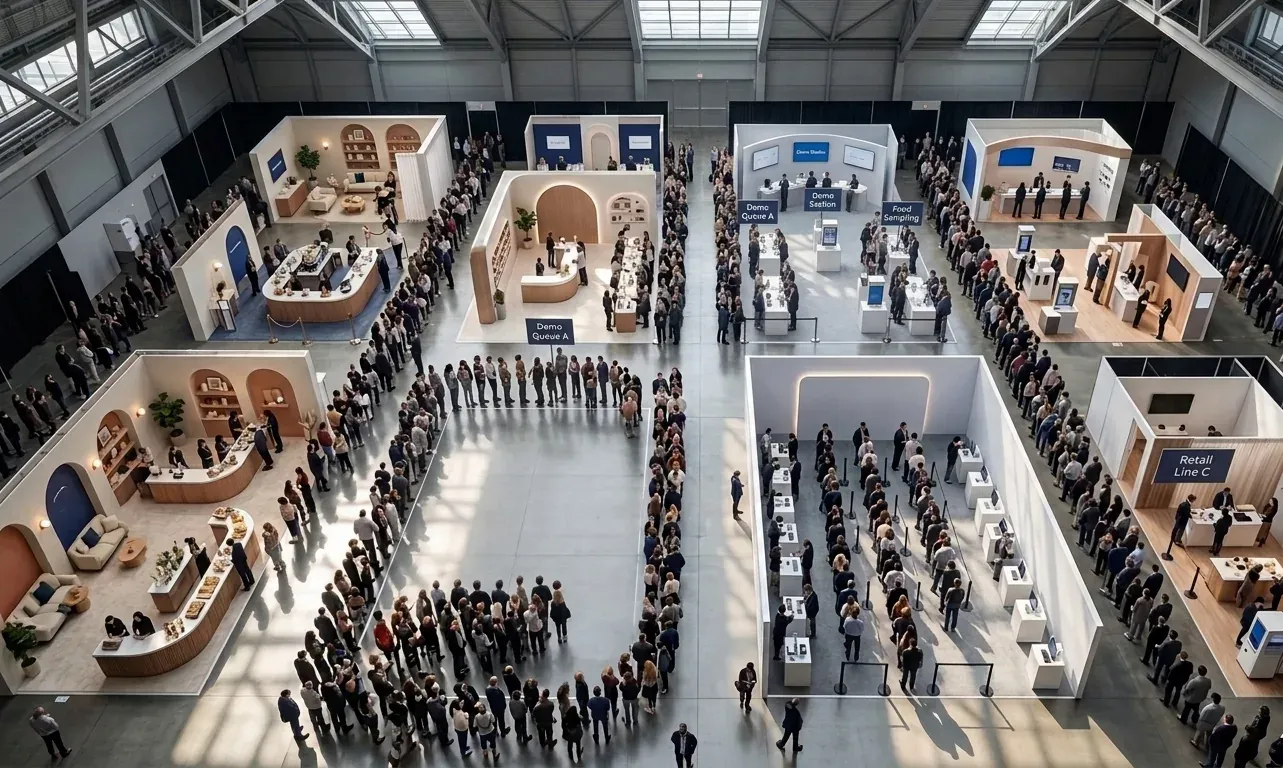
Trade show booth crowding costs more than floor space. It quietly cuts demo throughput, hides walkaways, and turns a busy booth into a bad attendee experience.
You might have seen this already this week. A booth gets attention, the line builds, and then the crowd becomes the story instead of the experience.
Key Takeaways:
- Trade show booth crowding is usually a flow problem, not just a popularity problem.
- A visible line can help attract attention, but only up to a point.
- If guests wait longer than 10 to 15 minutes without clear updates, drop-off risk rises fast.
- Rigid appointment scheduling usually breaks at live events where timing shifts all day.
- The better model is hybrid: keep a short visible line and move overflow into a virtual queue.
- Waiting time can become branded engagement time when guests get useful content on their phones.
- The right system should improve booth demo throughput without pretending to remove every line.
Why trade show booth crowding gets expensive fast
Trade show booth crowding becomes a real problem when demand outgrows the space and guests stop knowing what to do next. The issue is not that people are interested. The issue is that long, unmanaged waiting creates uncertainty, blocks traffic, and makes your booth feel harder to approach.
A busy booth is good, until the crowd starts pushing people away
A visible line can help. Honestly, that part matters. At a trade show, some crowd around a booth signals interest. People notice motion. They notice demand. They get curious.
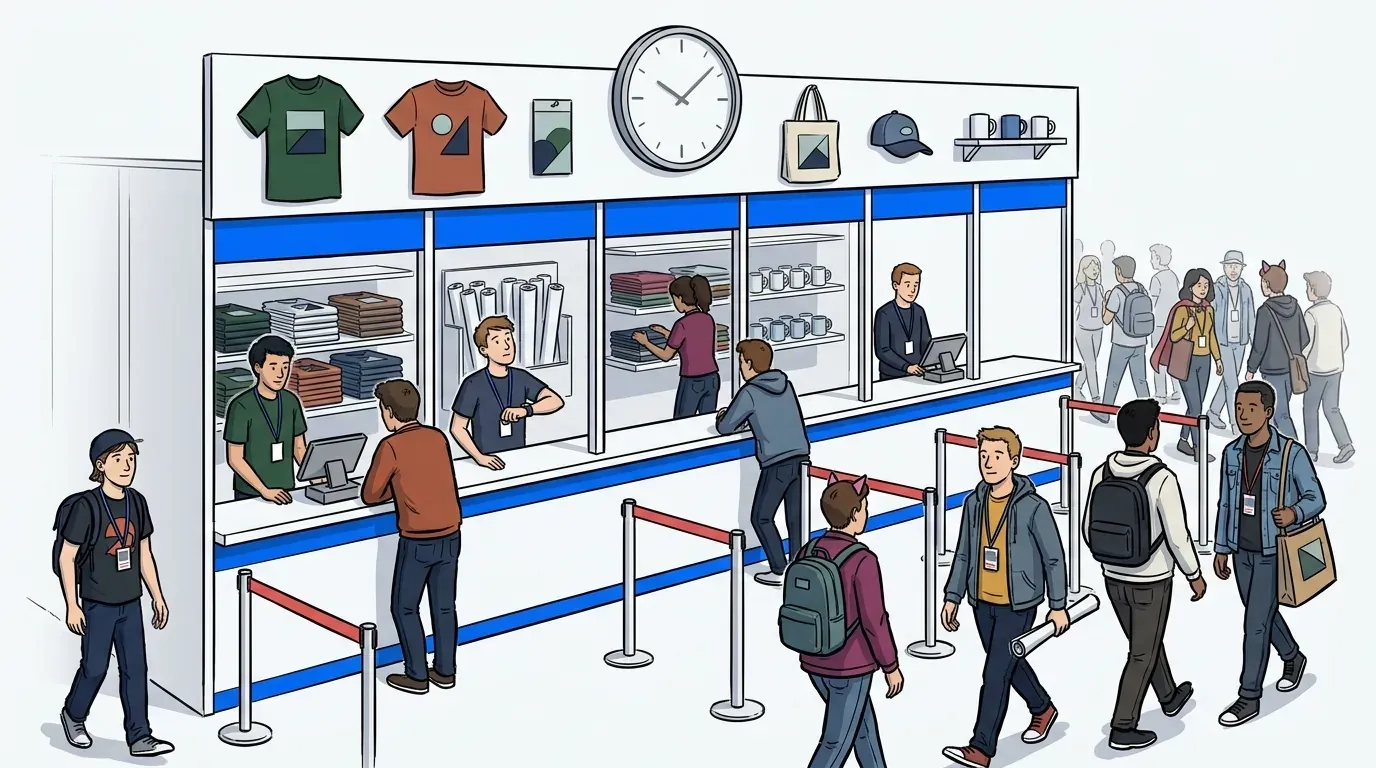
But there is a threshold. If your wait spills far enough to interrupt neighboring traffic, block sightlines, or force attendees to ask staff basic line questions, your booth is no longer creating buzz. It is creating friction. Trade show booth crowding stops being social proof and starts becoming a deterrent.
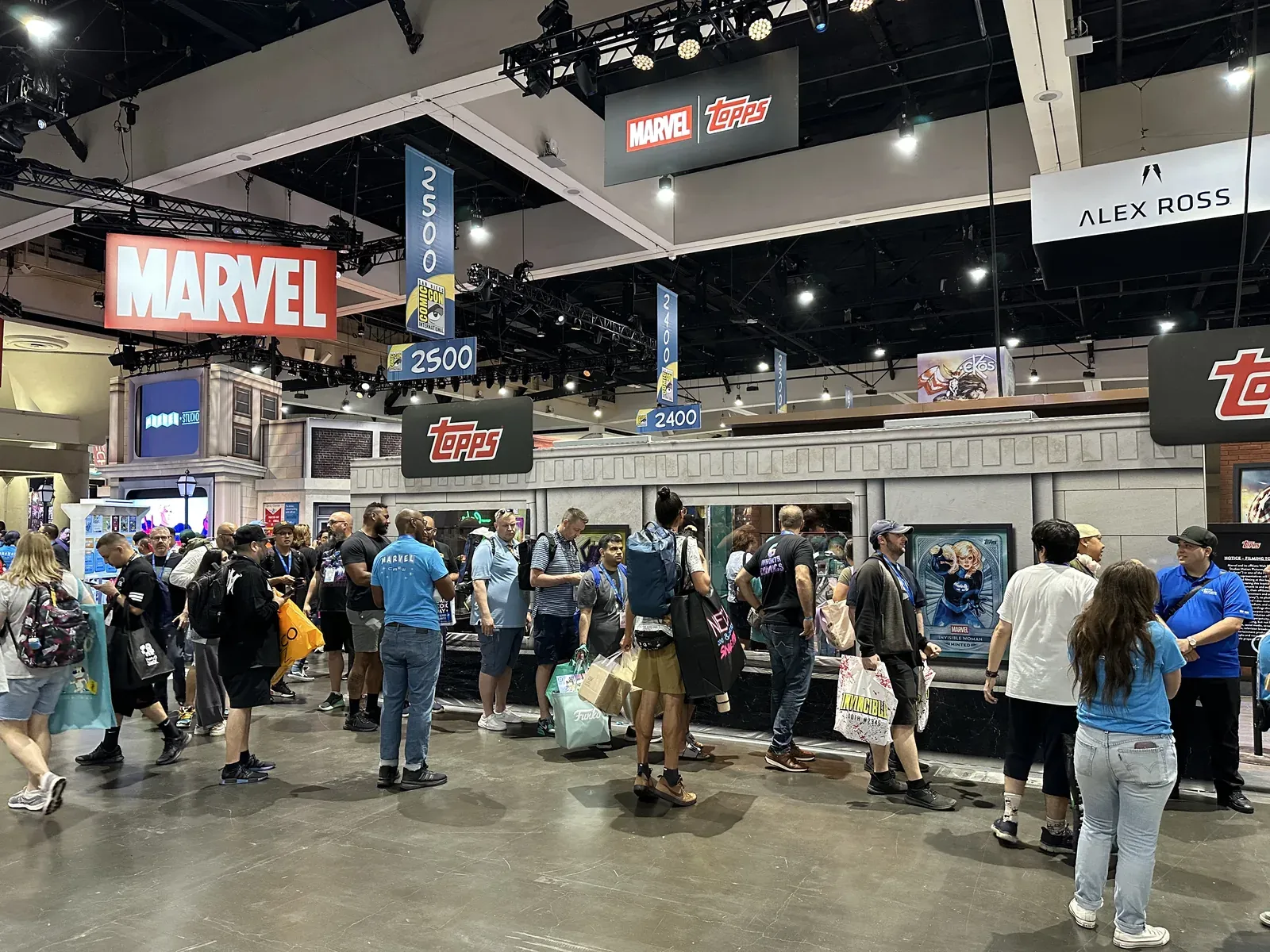
A mid-market event team sees this happen around 11:20 a.m. The product demo is strong, the aisle is packed, and two staff members are now stuck answering the same question over and over: how long is the wait? Meanwhile, one attendee gives up and heads to the next activation. Another never walks over at all. That loss rarely makes it into the event recap.
The real problem is uncertainty, not waiting itself
Most guests can tolerate a wait when the experience feels worth it. Theme parks figured this out years ago. People will wait for something they want if they know what is happening, how long it might take, and when to come back.
That is why trade show booth crowding is really an uncertainty problem. Guests do not know whether the line is moving, whether they should stay nearby, or whether stepping away means losing their place. Staff do not know how many qualified prospects are leaving because nobody is tracking the walkouts.
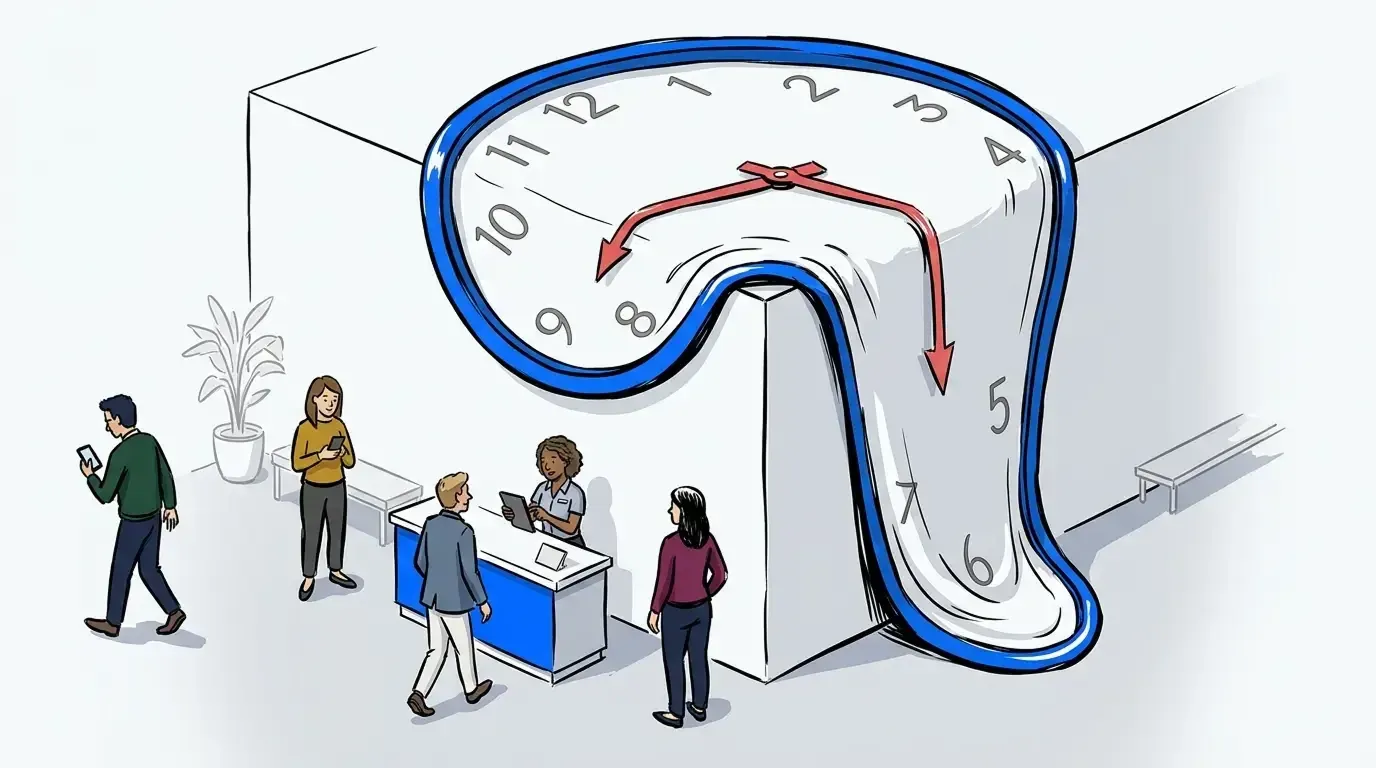
Some teams try to solve this with tighter scheduling. That can work for controlled office visits. It usually breaks at live events. Demo lengths run long. Speakers start late. A VIP arrives early. Rigid appointment scheduling works for offices, not live events where timing constantly shifts. When the floor changes every 20 minutes, the system has to flex with it.
The hidden cost shows up in throughput, staffing, and brand perception
Trade show booth crowding reduces throughput because the bottleneck is rarely the demo itself. It is the intake, the waiting, and the handoff between people who are ready now and people who need to return later.
The math gets ugly fast. If a booth runs 8-minute demos and loses just 2 minutes per guest to manual line wrangling, that is a 25% drag on capacity. Over a 6-hour high-traffic window, that can mean dozens of missed interactions. When the size of the crowd grows faster than your ability to move people through it, you’ve got a gap problem.
We were surprised to find how often event teams accept that gap as normal. It feels like success because the booth looks packed. But packed is not the same as productive. And when your team ends the day hoarse, behind, and still unsure how many people walked away, the crowd has already become too expensive. So what should replace that old model?
How high-performing event teams control the crowd without killing demand
The best event teams do not try to erase every line. They control how much of the line stays visible, how much moves into virtual waiting, and how guests stay informed while they wait. That shift keeps demand visible without letting trade show booth crowding take over the booth.
Start with a crowd diagnosis before you change the flow
Three questions usually tell you whether your booth has a mild line problem or a serious crowding problem. First, are staff spending more than 20% of their time answering wait-time questions instead of running demos? Second, do guests have to stand in place to protect their spot? Third, does the line interfere with surrounding traffic or nearby exhibitors?
If the answer is yes to two or more, you do not have a simple line. You have an operational risk. Most teams wait for a bigger failure before acting on that distinction.
Consider a headshot or demo station at a large conference. By noon, the queue doubles. Staff start improvising with paper notes, verbal estimates, and hand signals. A few attendees stay. A few circle back. A few disappear. The team feels busy, but they are no longer in control. That is usually the moment when trade show booth crowding begins to cut into demo throughput.
There is a case to be made for staying fully physical if demand is low and the experience is short. That is valid. If your average wait stays under 5 minutes and space is generous, a traditional line may be enough. Past that point, the risk climbs.
Use visible overflow to protect buzz and free the floor
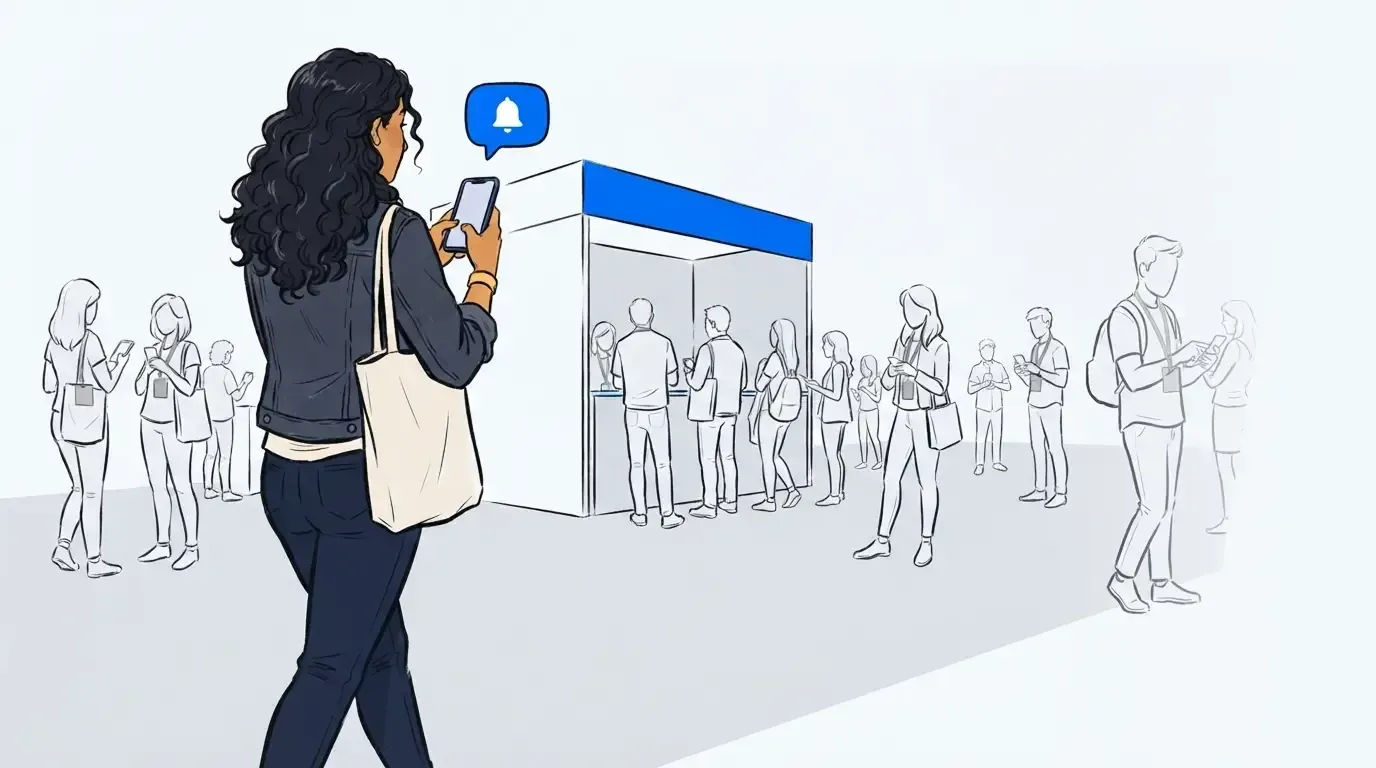
Visible overflow is simple: keep a short physical line to preserve curiosity and social proof. Move the overflow into a virtual queue so guests can wait from their phones and return when space opens up.
This matters because the old all-or-nothing assumption is wrong. You do not need to choose between one giant physical line and no visible line at all. A hybrid setup gives operators control. You decide how much demand stays visible and how much moves out of the aisle.
Here is a simple rule: when the visible line reaches 6 to 10 people, depending on booth footprint, switch new arrivals into overflow. In practice, one staff member at the booth entrance can manage this in real time, watching line length and redirecting new arrivals to the virtual queue once the threshold is reached. That keeps the booth looking active without creating a traffic jam. It also makes staffing easier because the team is not policing a crowd that keeps changing shape.
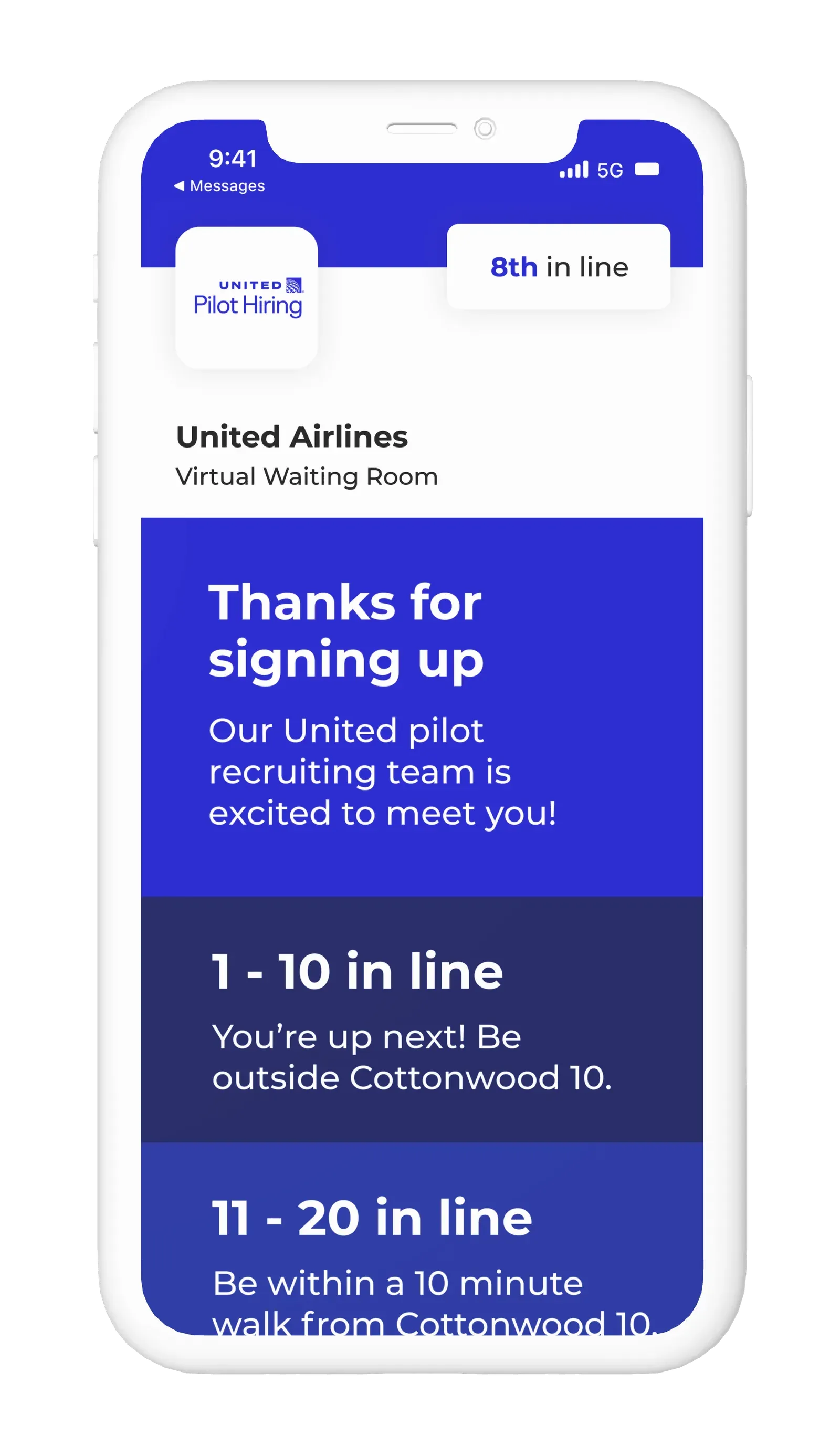
United Airlines faced this exact problem at the WAI conference. Interest in their recruiting booth was strong, but long physical lines stretched for hours and disrupted foot traffic. Once attendees could join the wait digitally and receive updates as their turn approached, the results were significant: 95% of attendees stuck around despite peak wait times stretching two hours, and the booth floor stayed organized and comfortable even during the busiest periods. Attendees also spent an average of over four minutes browsing branded content in the virtual waiting room while they waited, turning idle time into active engagement before the conversation even started.
Replace fixed appointments with flexible time windows
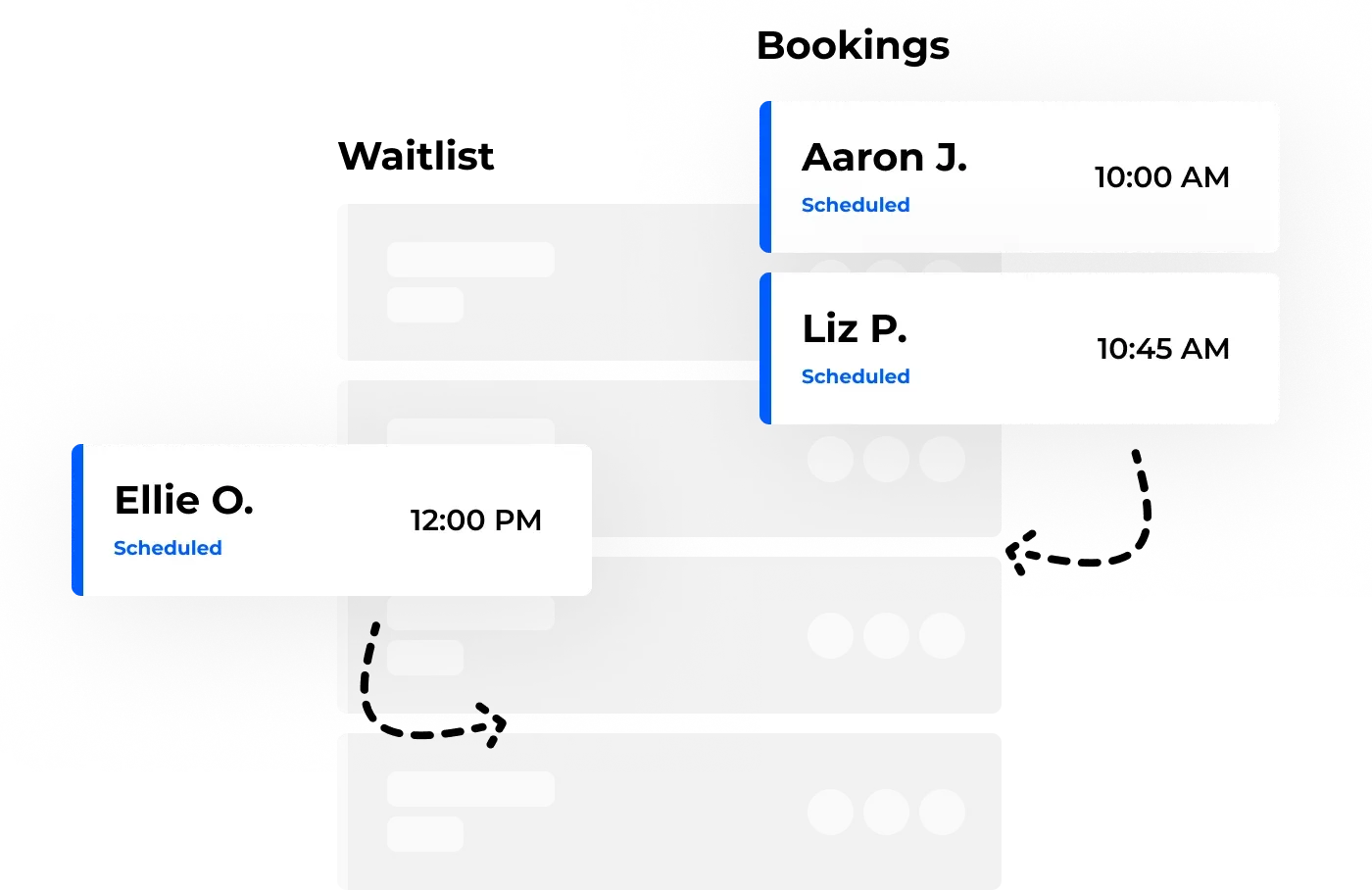
Question: what happens when your noon demo runs to 12:11 and three new groups arrive at 12:05? A rigid booking grid starts lying to everyone. That is why fixed slots often fail in live event environments.
A better approach is to give guests a time window to return, such as a 1 to 2 p.m. slot, rather than a fixed appointment minute. Then update them if that window shifts as the queue moves. A simple rule: if your service time varies by more than 20%, use flexible windows. If it varies by less than 10%, scheduled slots may still work. Knowing which scenario applies to your event will save your team from building more structure than the event actually needs.
This is also where trade show booth crowding improves. Not because waiting disappears, but because the waiting becomes mobile. Guests can grab coffee, visit another booth, or stay engaged nearby without feeling trapped. That freedom changes the mood around the activation.
One conference team used this kind of approach for a hands-on lab environment with dozens of stations. The result was 35% more 1:1 product demos. Not every booth will see that exact lift. Still, the mechanism is clear: when people can wait without standing still, more of them stay in the funnel.
Turn wait time into branded engagement, not dead time
A virtual queue should do more than hold a place. This is where many queue tools stop too early. They organize the line, sure, but they waste the wait.
The stronger model keeps guests inside a branded digital environment while they wait, one that actually prepares them for the experience ahead. For event teams, that can mean sponsor placements, product content, maps, FAQs, games, polls, or simple pre-demo context that makes the eventual interaction smoother.
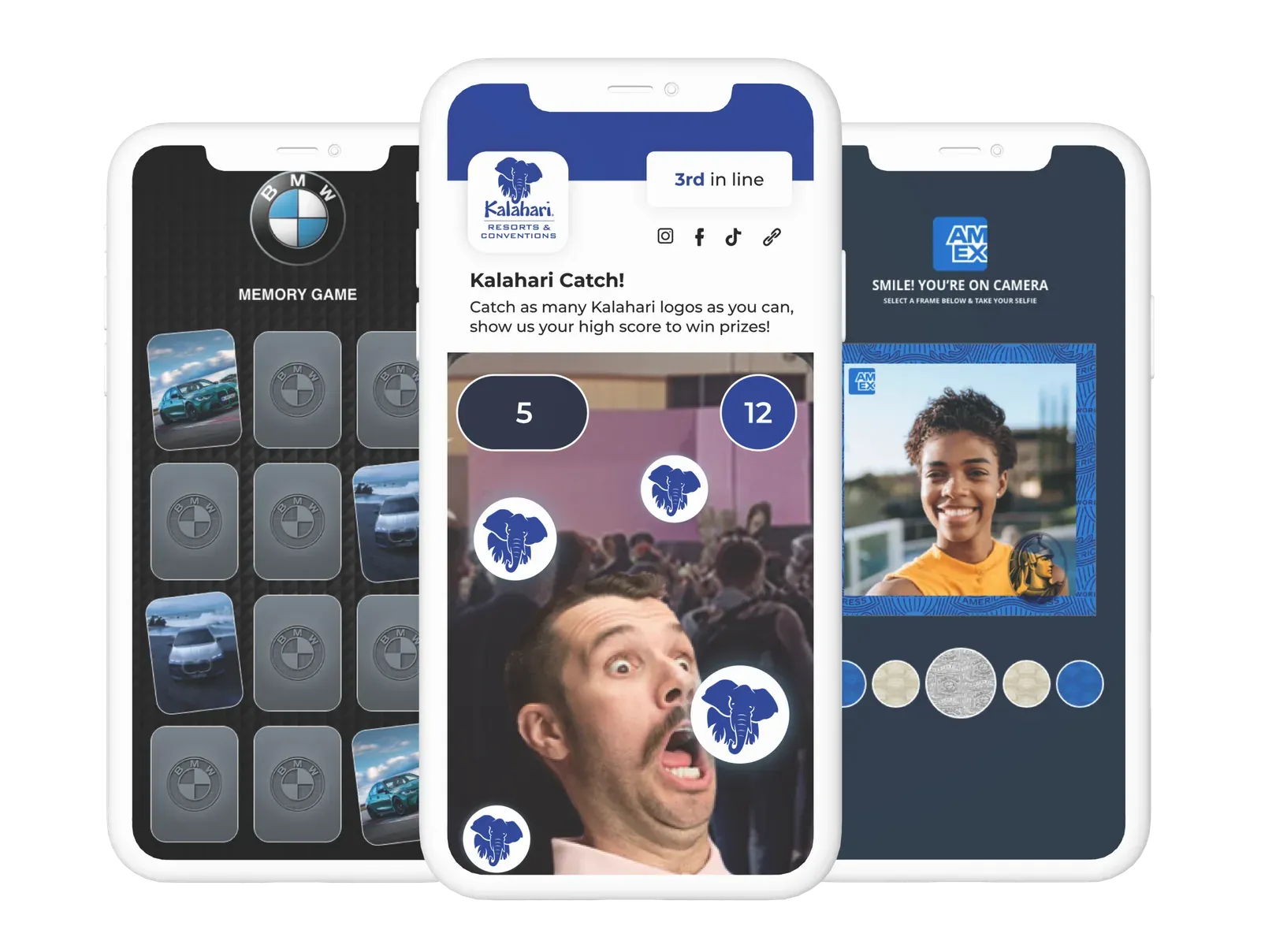
At SXSW, exhibitors used a branded waiting flow with self check-in, QR access, and SMS updates. The result was 32% more attendees retained who otherwise may have walked away. That outcome makes sense. If guests stay informed and occupied, they are less likely to disappear into the crowd.
Here is what most event teams miss: trade show booth crowding and sponsor value are tied together. If wait time is just idle time, your crowd is a cost. If wait time becomes a branded engagement surface, your crowd starts producing value before the demo even begins.
Measure the line like a revenue system
Most teams count scans, leads, or completed demos. Few measure the waiting experience with the same seriousness. That is a mistake. If you cannot see where the queue breaks down, you cannot improve throughput.
Track four numbers: average physical line length, average wait time, abandonment rate, and throughput per hour. If one worsens while the others stay flat, you know where to look. For example, if throughput is stable but abandonment rises, communication is probably failing. If the line is long but wait time is low, perception may be the issue instead of actual capacity.
Perceived wait time is one number most event organizers should not ignore. People act on how waiting feels, not only on how long it really is.
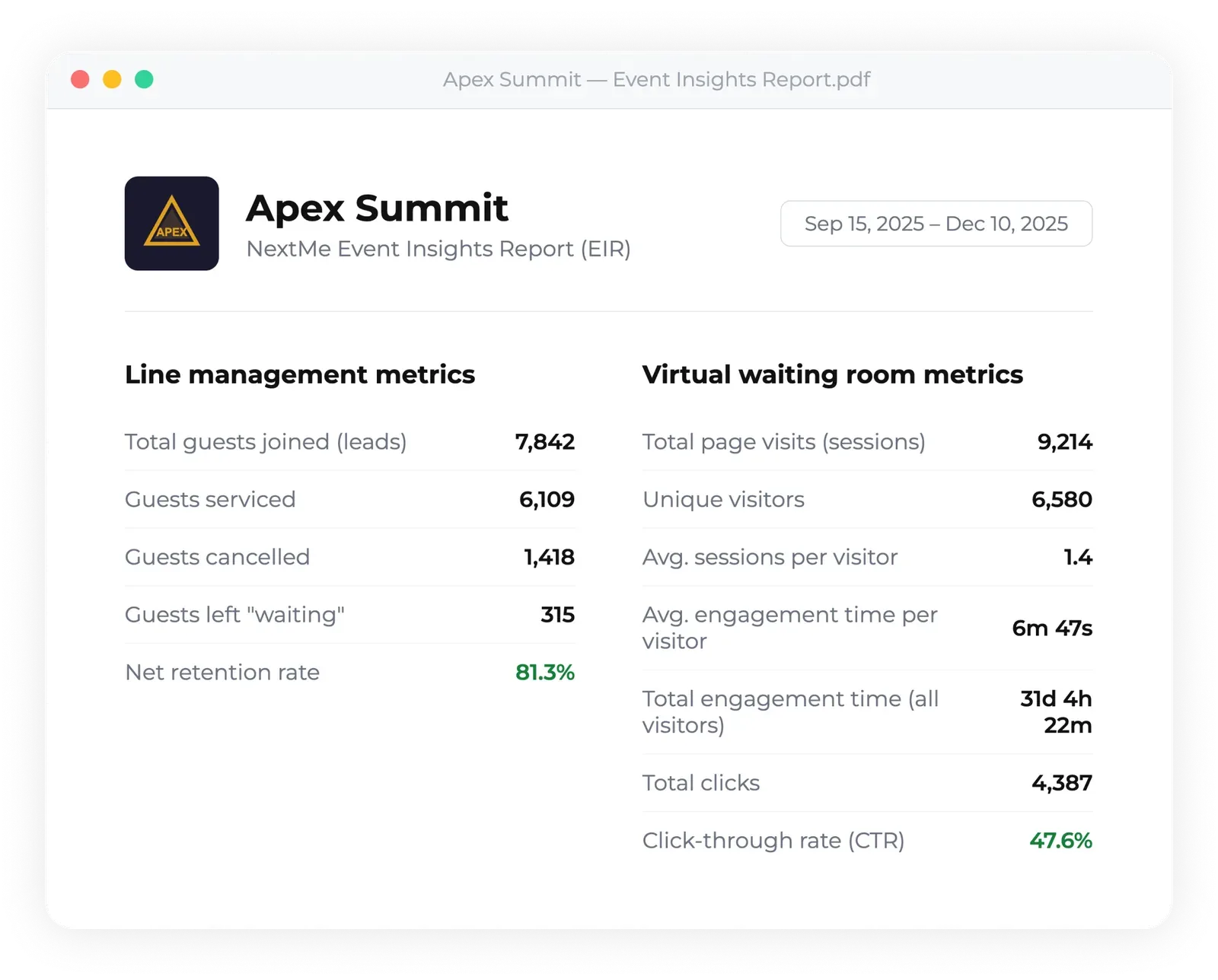
How NextMe fits the hybrid queue model for live events
NextMe is a modern virtual waiting room for in person experiences. For event teams dealing with trade show booth crowding, it supports the hybrid model instead of forcing an all-or-nothing setup. That means you can keep some visible line presence while moving overflow into a virtual queue and giving guests a clear way to return.
NextMe keeps the queue moving while guests wait from their phones
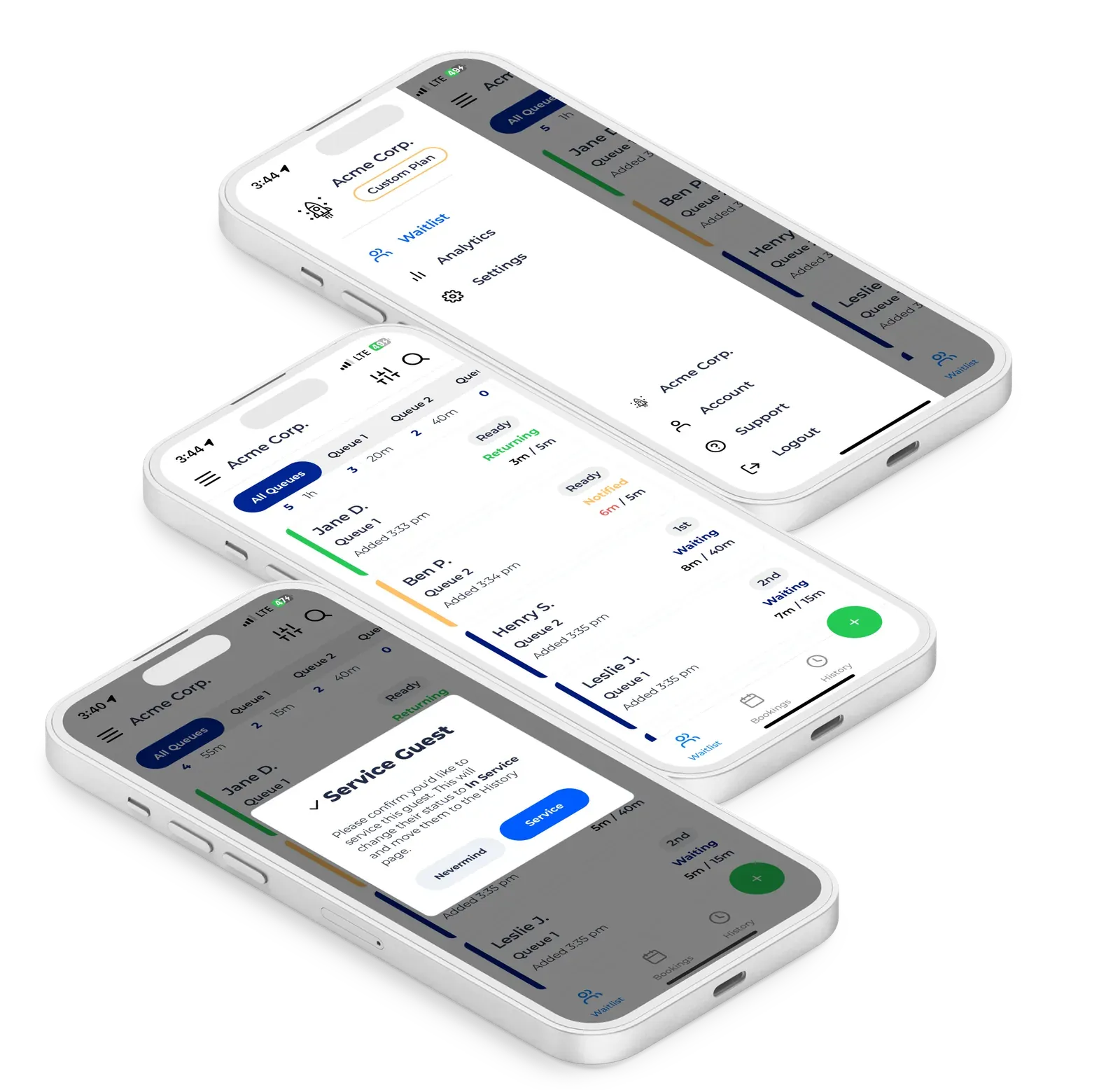
NextMe is a hybrid queue solution. Guests can join through self check-in using a QR code, kiosk, or link, then receive SMS notifications as the queue moves. They do not need to download an app. Staff manage the flow through real-time waitlist management and a live dashboard that shows who is waiting, who is next, and who is being served.
That matters when trade show booth crowding starts to hurt throughput. Instead of forcing every guest to stand in the same line the whole time, operators can shorten the physical queue and move overflow into a branded web-based virtual waiting room. Guests stay informed. Staff stay in control. The booth stays more open.
NextMe does not promise exact wait times, and it does not replace broader event operations systems. That limitation is fair and worth saying out loud. What it does is give teams a clearer, more flexible way to manage guest flow in real time.
NextMe turns waiting into branded event engagement
This is the part many teams care about most. NextMe’s virtual waiting room can include branded guest engagement content such as sponsorships, product carousels, games, polls, videos, maps, social feeds, and calls to action. So the wait is not just a holding zone. It becomes a branded engagement space.
For high-demand booth demos, that can change the economics of the line. A guest who would have been stuck in a crowded aisle can instead monitor status from their phone, stay connected to the brand, and return when close. NextMe also supports multiple queues within one waitlist for multi-station activations, which helps when a booth runs more than one demo path or service area.
NextMe gives event teams data after the booth closes
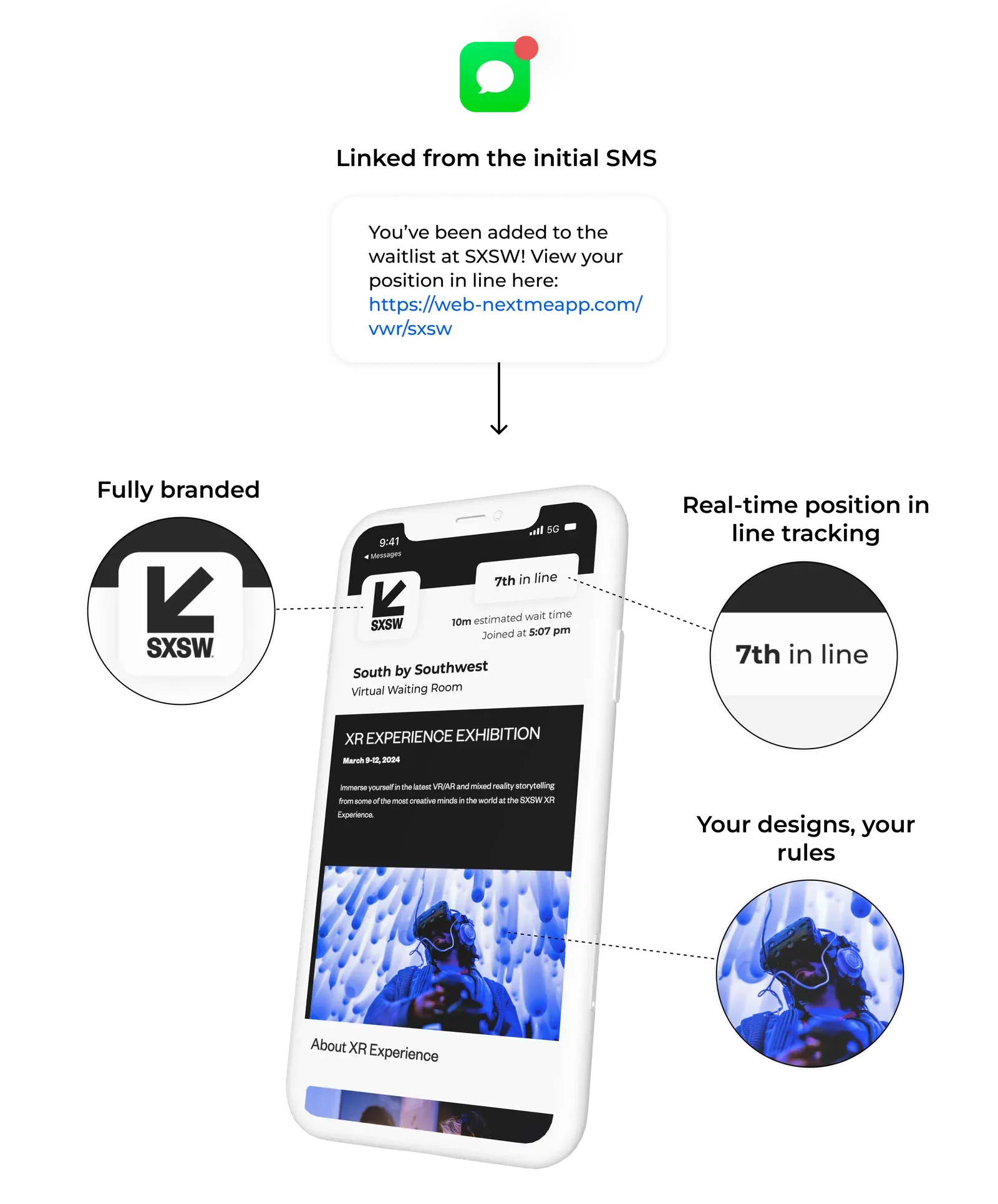
A crowded booth can feel successful while hiding serious waste. That is why NextMe includes analytics and reporting built around the questions event teams actually need to answer after the floor closes: how long did guests wait, where did bottlenecks form, and did branded content get engagement while people waited? Those answers matter most when you are planning the next activation instead of guessing from memory.
Not every team needs premium support or onsite help, and that’s fine. Some activations are simple. Others are not. For larger or more complex event environments, NextMe also offers onboarding, dry runs, a dedicated account manager, and optional premium or onsite support. The point is simple: the system is built for real-world waiting, especially when timing shifts and booth demand spikes.
A better booth flow starts before the next crowd hits
Trade show booth crowding is not proof that your event is working. It is only proof that demand showed up. The real test is whether your team can convert that demand into more demos, better guest flow, and a stronger brand experience.
A short visible line can build interest. A long unmanaged one usually costs you more than it gives back. The better approach is hybrid: keep some line presence, move overflow into virtual waiting, and give guests a clear reason to stay engaged until it is their turn.
If your next activation needs a more controlled way to handle booth demand, get in touch.