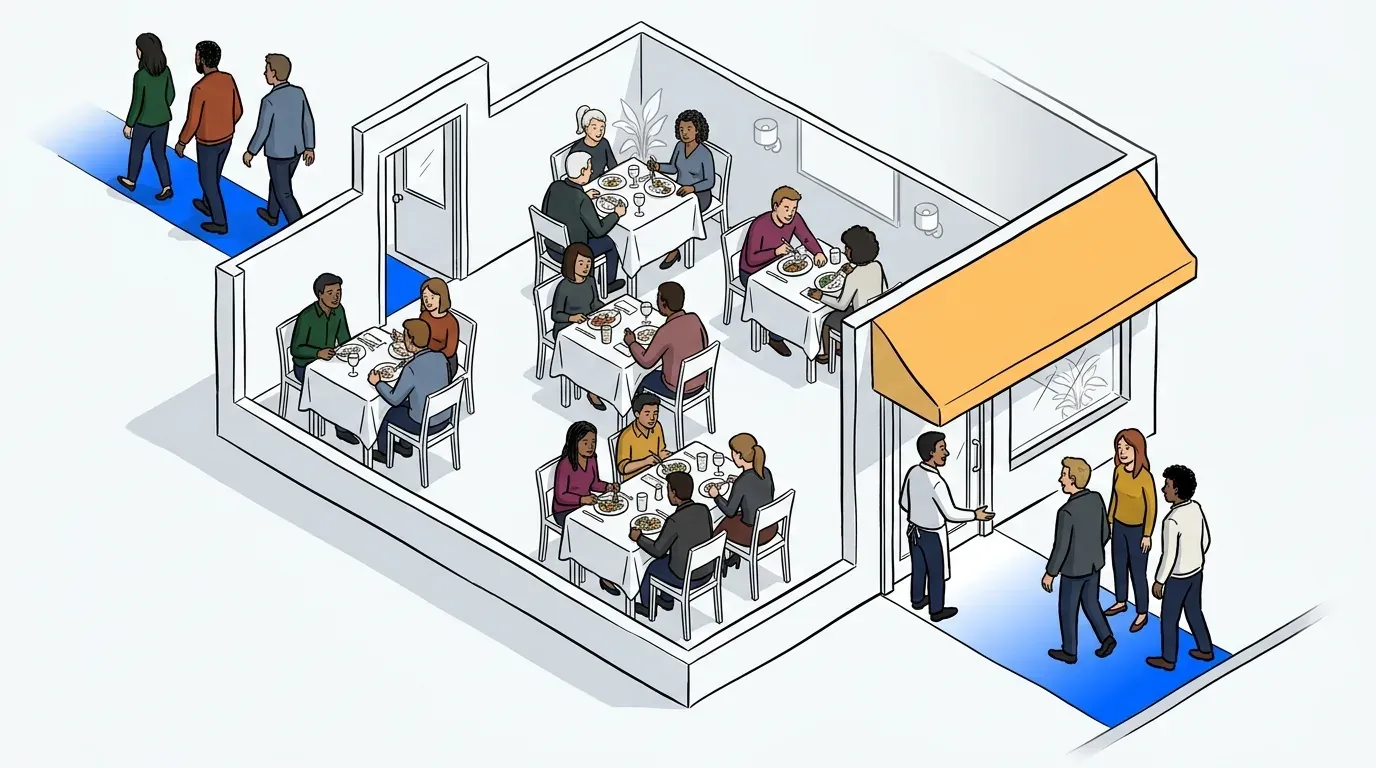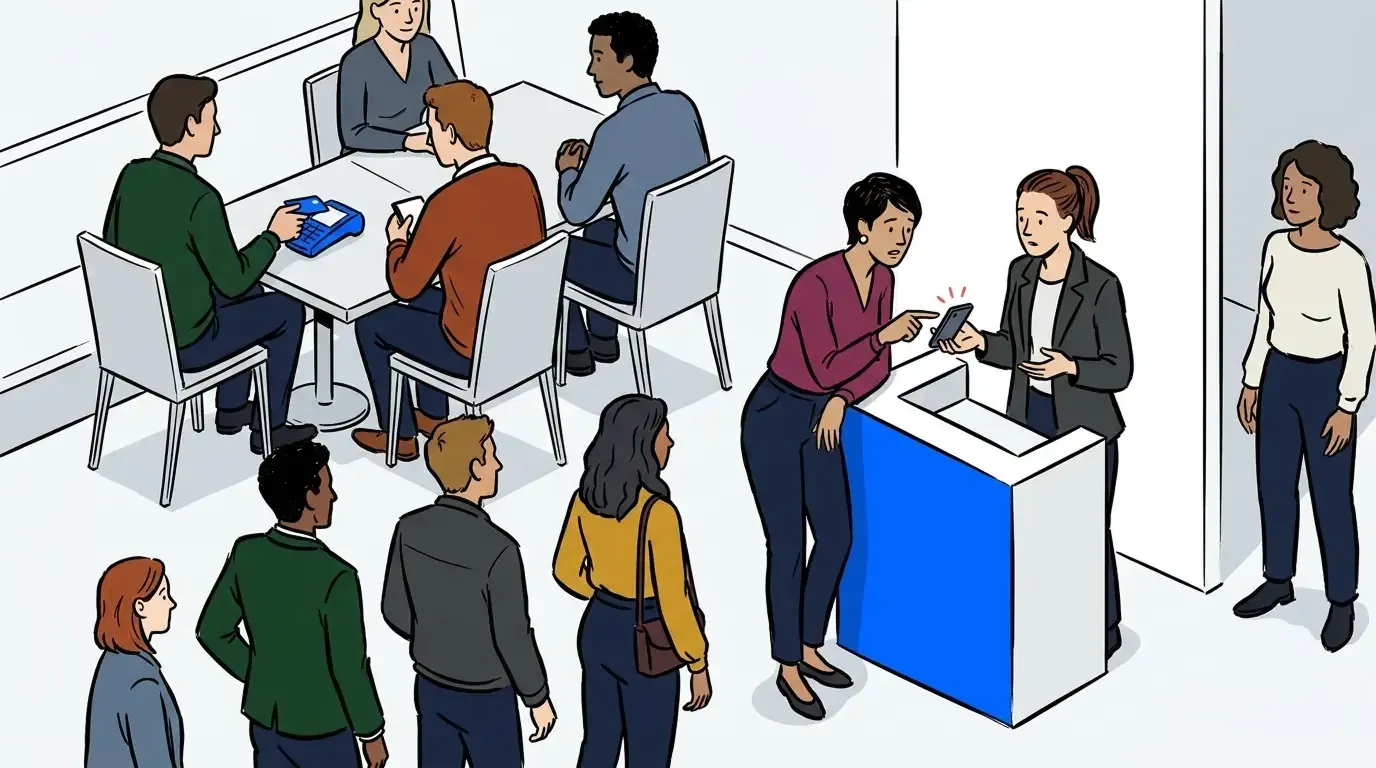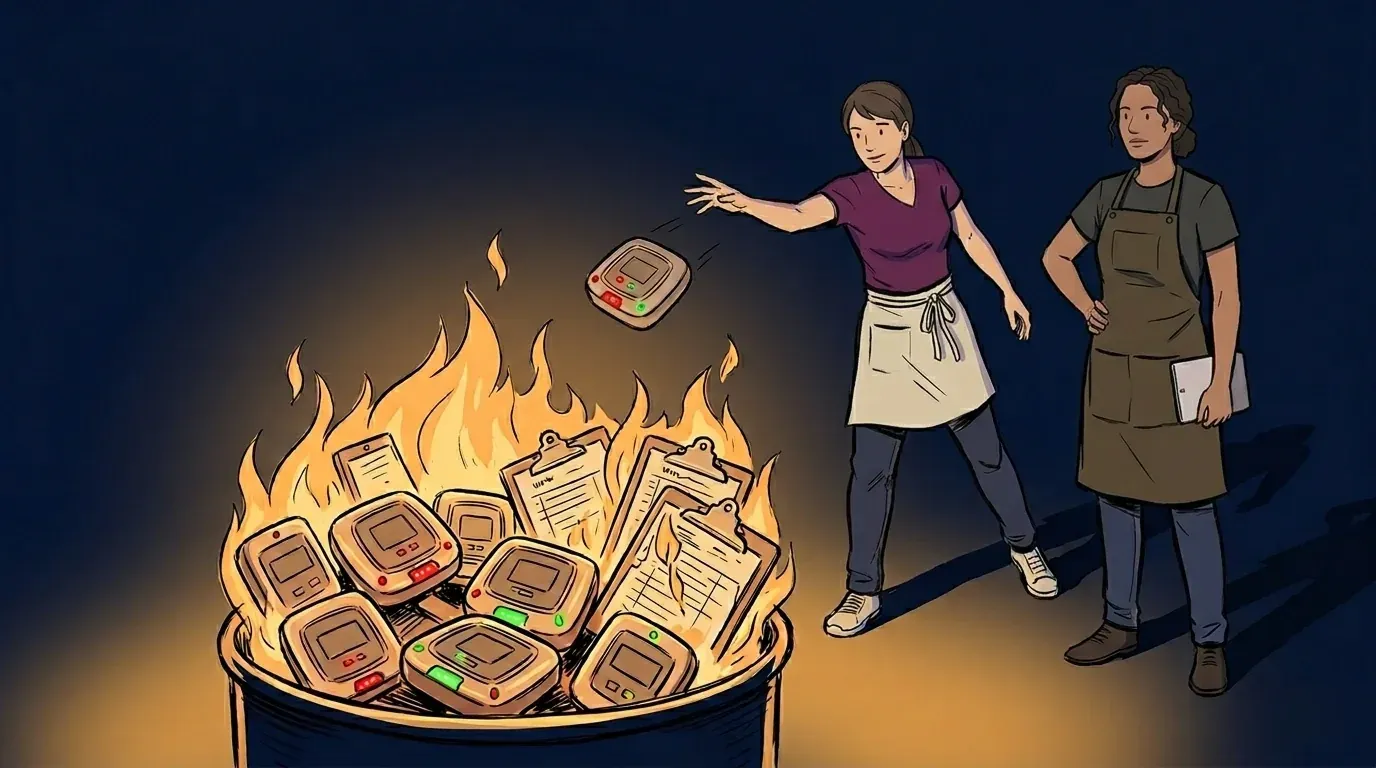
On a Friday night at 7pm, your host is managing a 45-minute wait, juggling a clipboard, a ringing phone, and a lobby full of impatient parties. Three couples walk in, see the chaos, and walk back out. You’ll never know their names, and they’ll never sit in your dining room.
That gap between the guests who walk out and the guests you actually seat is a revenue problem. And for most restaurants, the root cause is not the number of tables. It is the tool managing the queue.
A restaurant digital waitlist replaces the phone, the clipboard, and the manual callback loop with a system that guests can join from their phones, track in real time, and confirm with a text. This post breaks down how it works, what it changes for your floor, and why the restaurants seeing the biggest throughput gains are the ones that made the switch first.
What a restaurant digital waitlist actually does
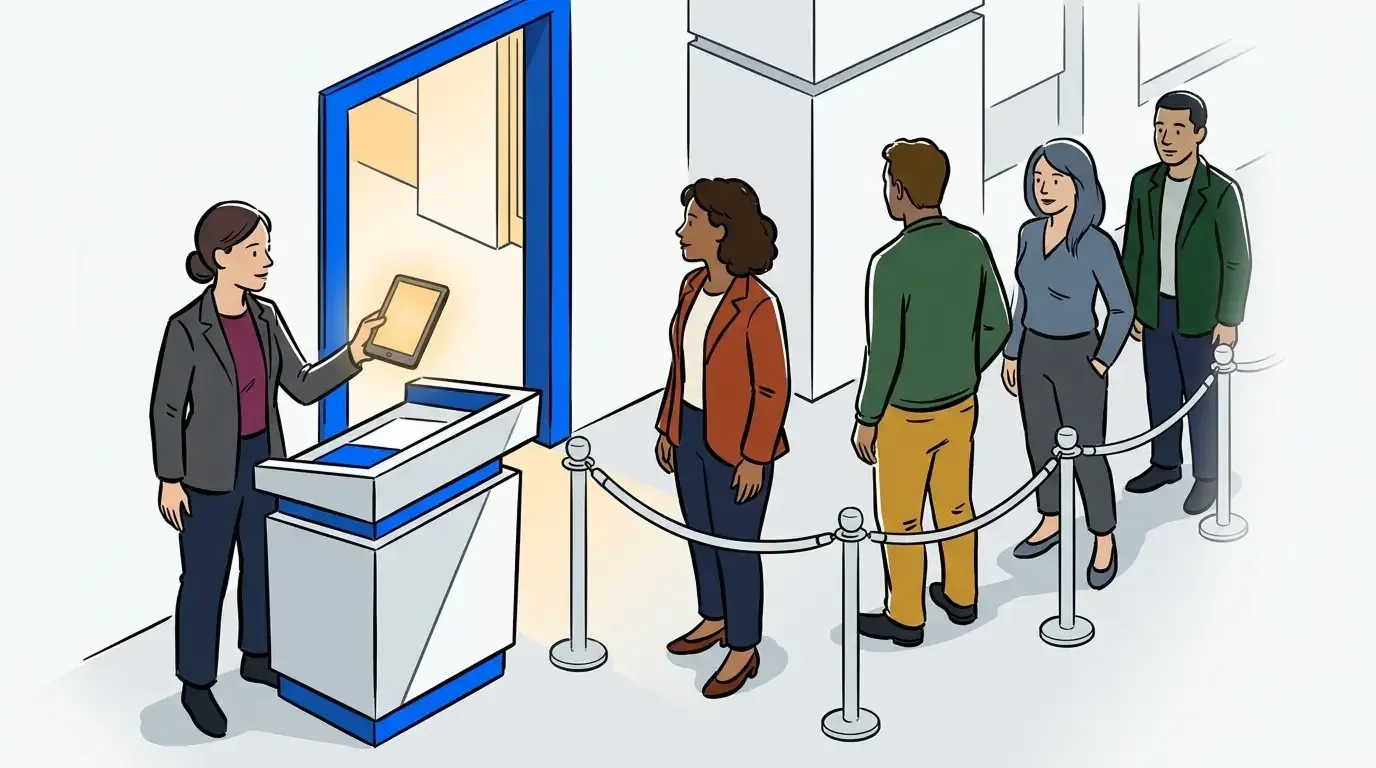
A digital waitlist is not a reservation system. It does not ask guests to book days in advance. It handles the walk-in reality: a guest arrives, joins the list from their phone or at a kiosk, and waits anywhere they choose until their table is ready.
The core mechanics are simple. When a party arrives, the host adds them to the list and captures the party size and a phone number. The guest gets an SMS confirmation immediately. As the queue moves, they get an update when they are next. When the table is ready, the host sends a notification and the guest walks in.
For restaurants that run on walk-in traffic, this replaces one of the most friction-heavy parts of the front-of-house operation. Guests who would have stood awkwardly near the host stand (or worse, given up and left) can now wait at the bar, browse nearby, or sit in their car. They stay engaged because they have real information.
Mama Lu’s saw measurable improvement in wait time complaints after switching to a digital waitlist, with guests rating the wait experience higher even when actual wait times held steady. The information made the difference.
How the SMS loop works
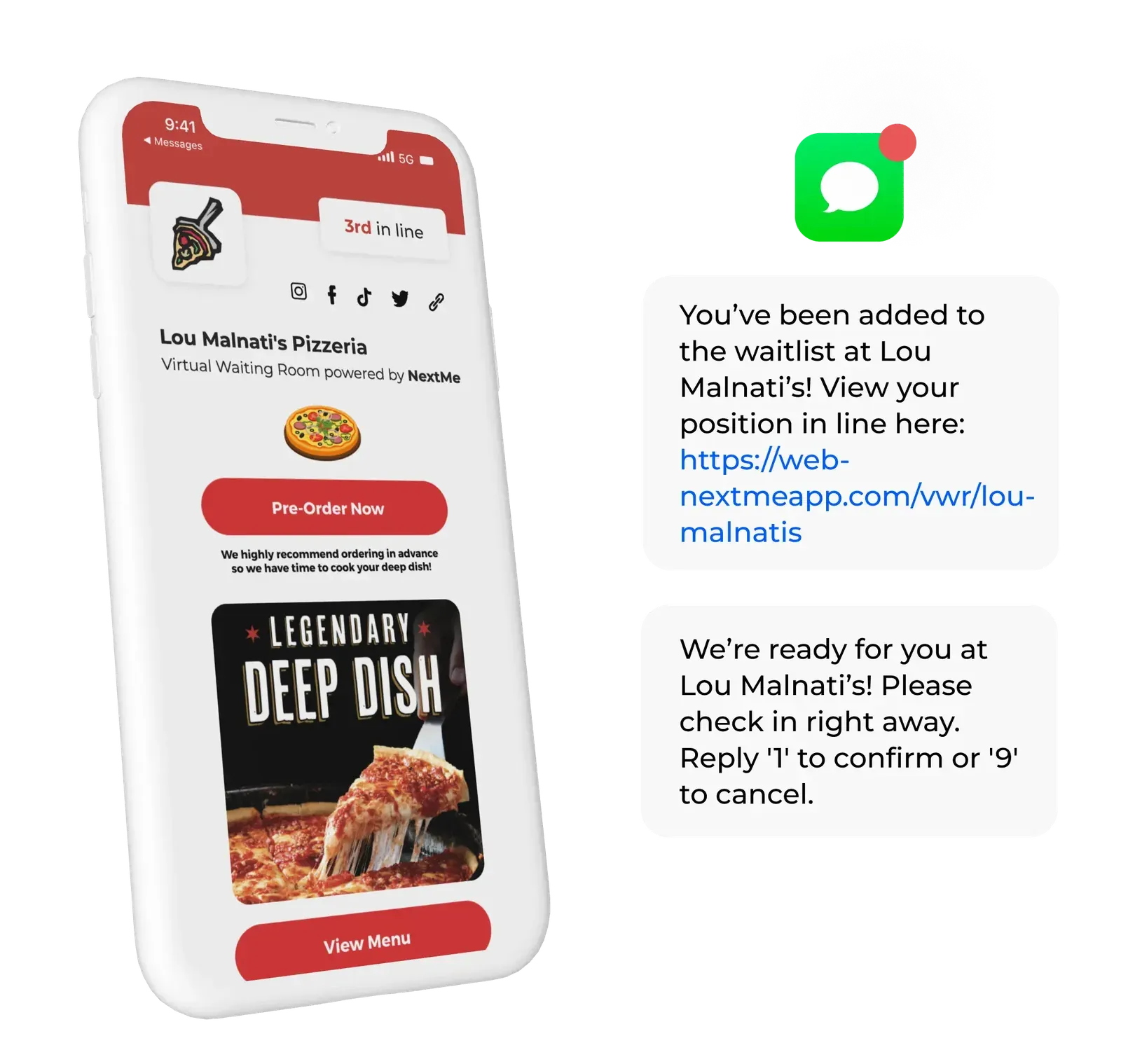
NextMe communicates with waiting guests through SMS only. There are no app downloads, no email threads, and no push notifications that require a smartphone. A standard text message is all it takes.
When a guest joins the list, they receive a confirmation text with their position and estimated wait. As parties ahead of them are seated, the system updates their position automatically. When their table is ready, the host triggers a notification from the dashboard. The guest replies 1 to confirm or 9 to cancel.
That two-way loop does two things at once. First, it tells the host immediately whether the party is coming back in - no more walking the lobby or calling out names. Second, it catches the cancellations before they become dead tables. When a guest replies 9, their slot opens and the host moves to the next party without a gap.
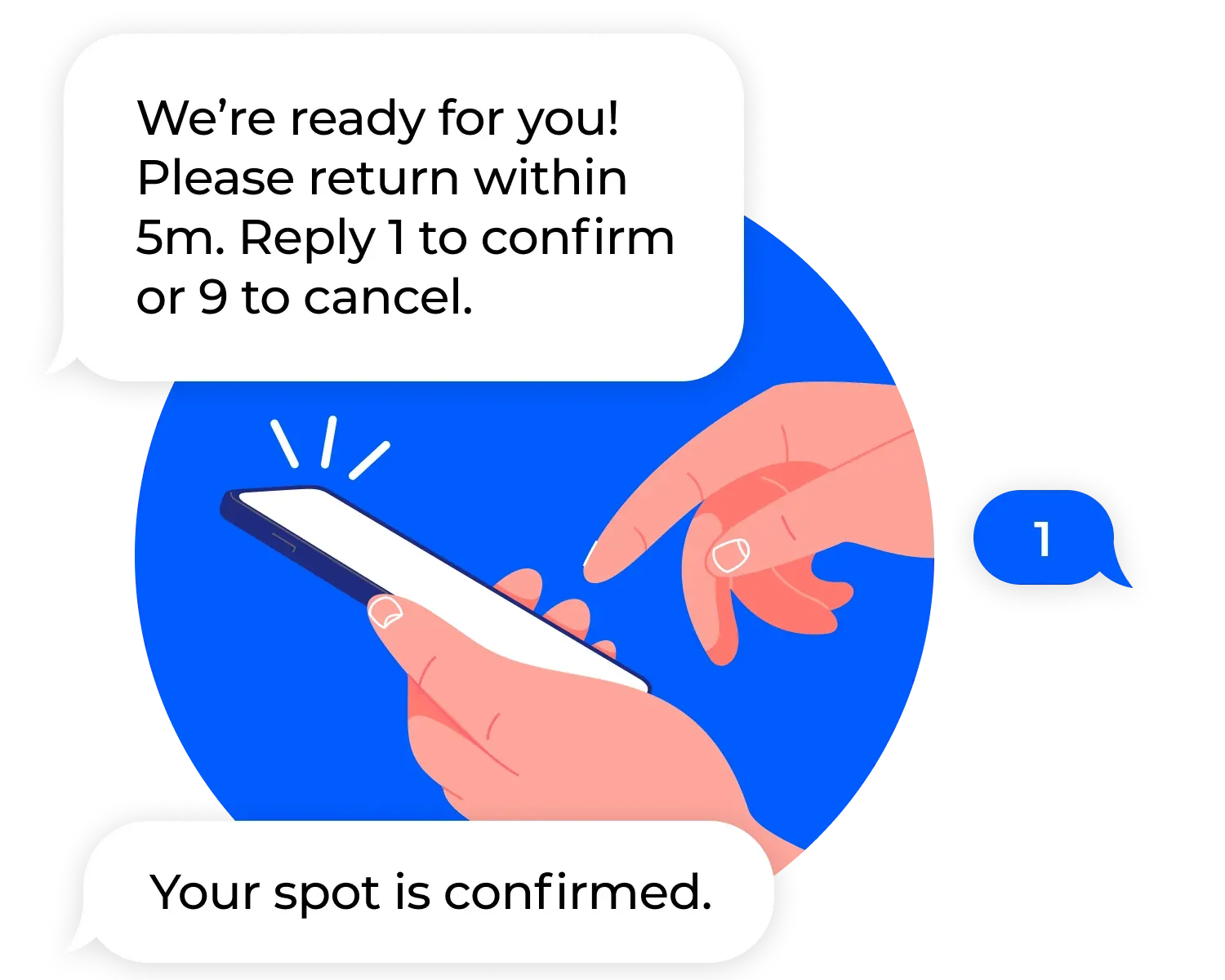
The impact on no-show gaps is real. When guests have an active SMS thread reminding them of their spot, they are far more likely to respond and return rather than quietly drift elsewhere. For more on how this reduces no-shows specifically, see how restaurants can reduce no-shows with a digital waitlist.
What operators see on their end
The host dashboard shows the full queue in real time: party size, wait time elapsed, current position, and SMS status for every guest. Adding a party takes about 20 seconds. Calling them back is a single button press.
For multi-location groups, this visibility compounds quickly. A manager can see queue depth across locations from one screen, spot bottlenecks before they cascade, and make staffing decisions based on actual data rather than end-of-shift memory.
Black Bear Diner rolled out NextMe across their chain specifically to reduce walk-outs during peak hours. Visibility into the queue gave floor managers the ability to call guests back faster and recover tables that would have otherwise sat empty. Read the full Black Bear Diner case study.
The waitlist analytics dashboard captures wait time trends, average party sizes, and throughput by shift - giving you the data to adjust staffing, test quote times, and measure the impact of operational changes over time.
The business case: more covers per shift
The math on a digital waitlist is straightforward. More guests confirmed before their table is called means fewer empty tables between turns. Fewer empty tables means more covers per shift. More covers per shift means more revenue from the same physical footprint.
The conversion from walk-in to seated guest is the metric that matters. A clipboard system loses guests in the callback gap - the 90 seconds between “your table is ready” and the moment the host realizes the party is gone. A digital waitlist eliminates that gap through SMS confirmation before the turn.
Restaurants running a busy Friday-to-Sunday window often find the biggest gains not from faster service but from tighter queue management. They were not losing guests to long waits. They were losing them to uncertainty. A digital waitlist solves that problem directly.
Getting started is fast
NextMe works on any tablet or smartphone. There is no hardware to install, no IT setup, and no lengthy onboarding process. Most operators are running their first live queue within 30 minutes of signing up.
The host interface is designed for a busy front-of-house: large buttons, simple party input, and a clean queue view that reads at a glance. Staff can be trained in a single pre-shift briefing.
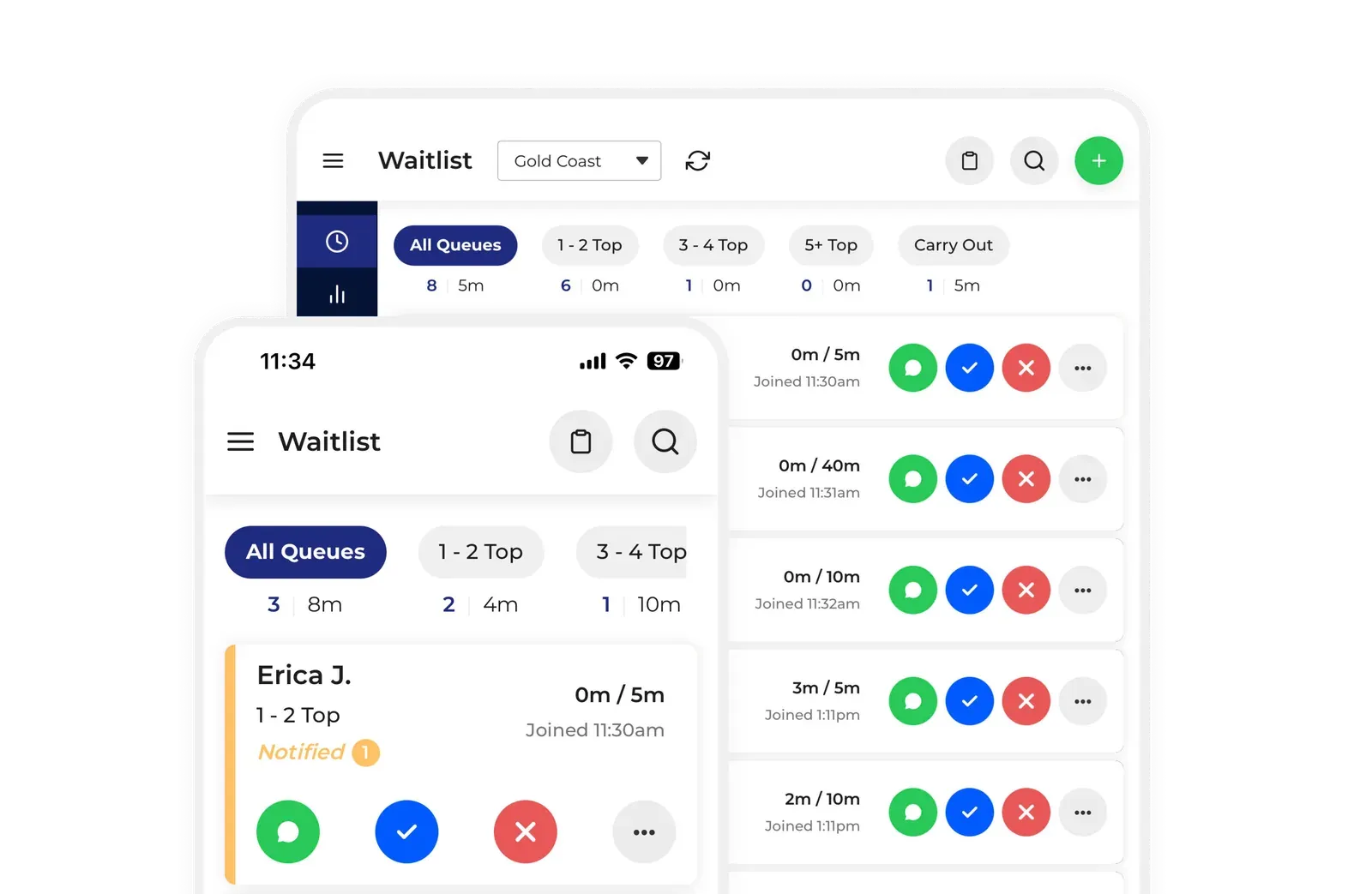
For restaurant operators evaluating options, NextMe’s restaurant waitlist management tools are built specifically for the walk-in and mixed-seating model - not adapted from a reservation system or a generic queue tool.
Conclusion
A busy restaurant is a math problem. The number of tables is fixed. The number of covers you seat depends on how fast and accurately you turn them. A restaurant digital waitlist tightens that process by keeping guests informed, confirming their return before their table is called, and giving the host real-time visibility into every party in the queue.
Clipboards or buzzers do none of that. A phone call doesn’t either. If you want to see how a digital waitlist fits your front-of-house operation, NextMe is free to try and works on any device you already have behind the host stand.