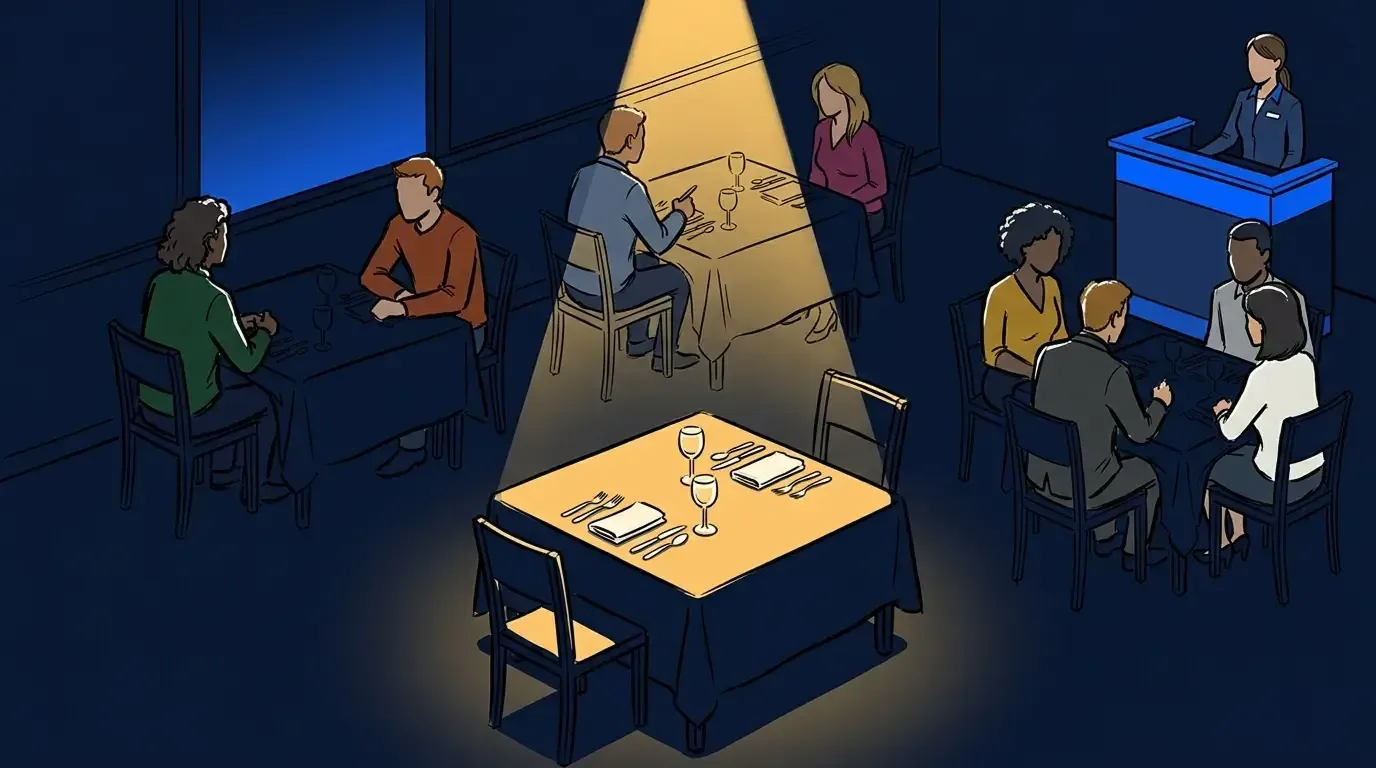
A table sits empty. The party joined your waitlist an hour ago, confirmed their spot, and then disappeared. No call, no text, no show. You’ve turned away other guests to hold it, and now peak service is running with gaps you can’t fill.
No-shows are one of the most frustrating problems in restaurant operations. They aren’t just a nuisance: they represent real lost revenue, wasted staff time, and a floor that runs below its potential on your busiest nights. And unlike reservation no-shows - which have always been a known risk - waitlist no-shows feel like a problem that should be easier to solve.
It is. The right restaurant queue management system gives operators the tools to reduce no-shows before they happen: through automated confirmation messages, well-timed reminders, and a check-in flow that keeps guests connected to their place in line. This post covers how each piece works and why it matters for your bottom line.
How confirmation messages reduce no-shows
The most effective no-show prevention happens the moment a guest joins your waitlist. A confirmation message sent immediately after sign-up does three things: it sets expectations, it gives the guest a record of their place in line, and it creates a two-way communication channel before they walk away.
Most guests who become no-shows don’t intend to. They join, get distracted, and lose track of time or forget where they are in the queue. A confirmation message with a clear wait estimate and a link to their queue status removes that uncertainty. They know they’re on the list. They can check in from wherever they are.
SMS is the right channel for this. Email gets ignored; apps require downloads. A text message lands immediately, reads in seconds, and doesn’t require the guest to open anything. NextMe sends SMS confirmations automatically at sign-up, with no manual step required from your front-of-house team.
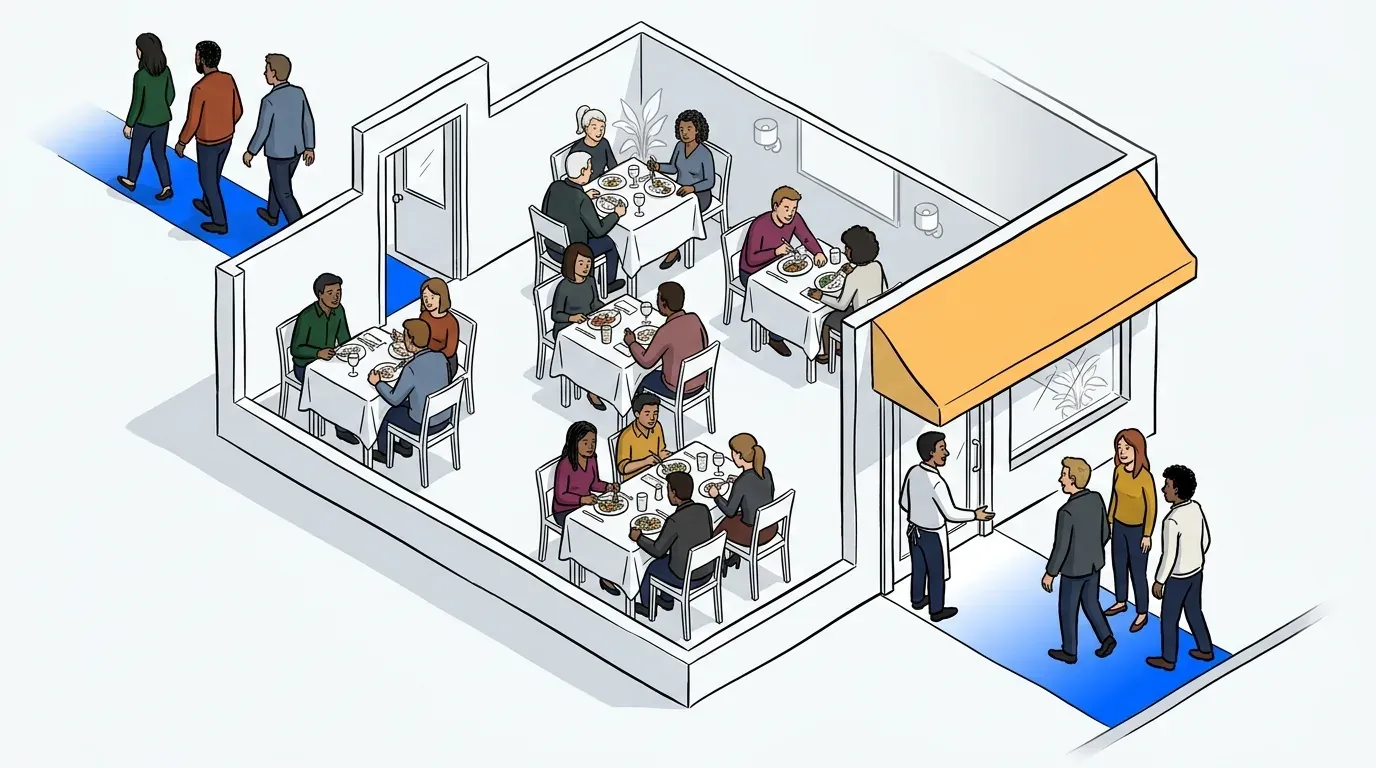
Restaurants that have moved away from physical pager systems see an immediate reduction in walk-aways because guests no longer have to stay within range of a buzzer. The SMS confirmation creates the same tether digitally - guests can wait in their car, grab a coffee nearby, or browse the block, and they stay engaged with their position in line.
Why reminders close the gap between join and arrival
A confirmation gets a guest to commit. A reminder gets them to show up.
Timing matters here. A reminder sent too early is ignored. A reminder sent too late doesn’t give the guest enough notice to return. The optimal window varies by restaurant type, but a message sent when the guest is 10-15 minutes from being seated - with a clear prompt to confirm they’re still coming - captures most of the no-show risk window.
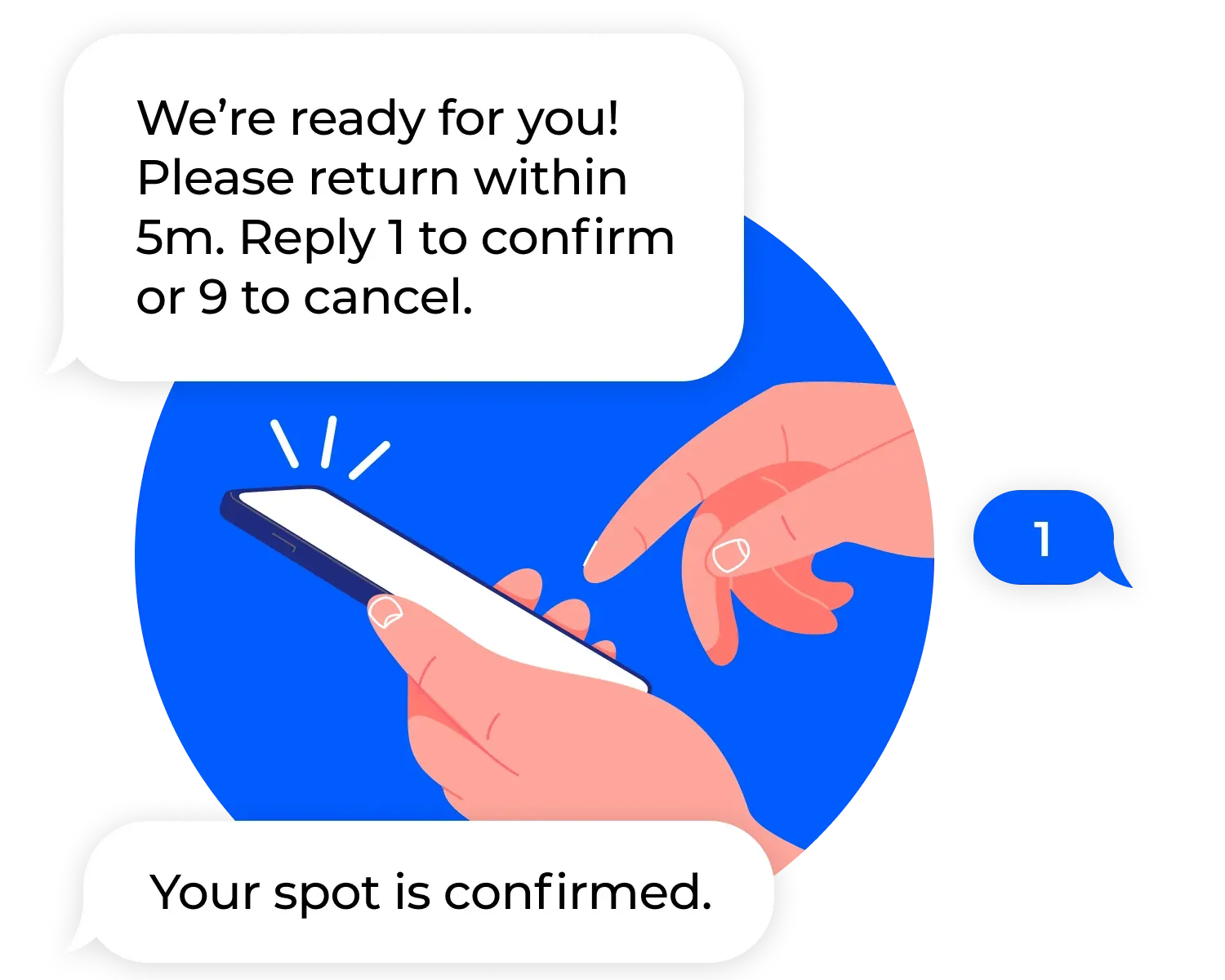
The key word is “confirm.” A one-way reminder tells the guest they’re almost up. A two-way confirmation gives them a chance to respond: reply 1 to confirm your spot, or 9 to cancel. Research into SMS reminder behavior found that 42% of diners say SMS reminders actively prevent them from forgetting or skipping a restaurant booking - and that 58% are more likely to cancel in advance when given easy digital cancellation options. Both outcomes work in the operator’s favor: you either get a confirmed cover, or you get early notice to fill the slot.
Reservation no-shows have been well-documented as costly for the industry. But waitlist no-shows are a newer problem - and the difference between a reservation and a waitlist spot is psychological as much as operational. The waitlist feels more informal to guests. Automated reminders close that gap by making the commitment feel real.
The virtual waiting room keeps guests engaged while they wait
Confirmation messages and reminders reduce no-shows by keeping guests informed. But the deeper driver of no-shows is disengagement: the guest who joined your waitlist and then mentally checked out while they waited somewhere else.
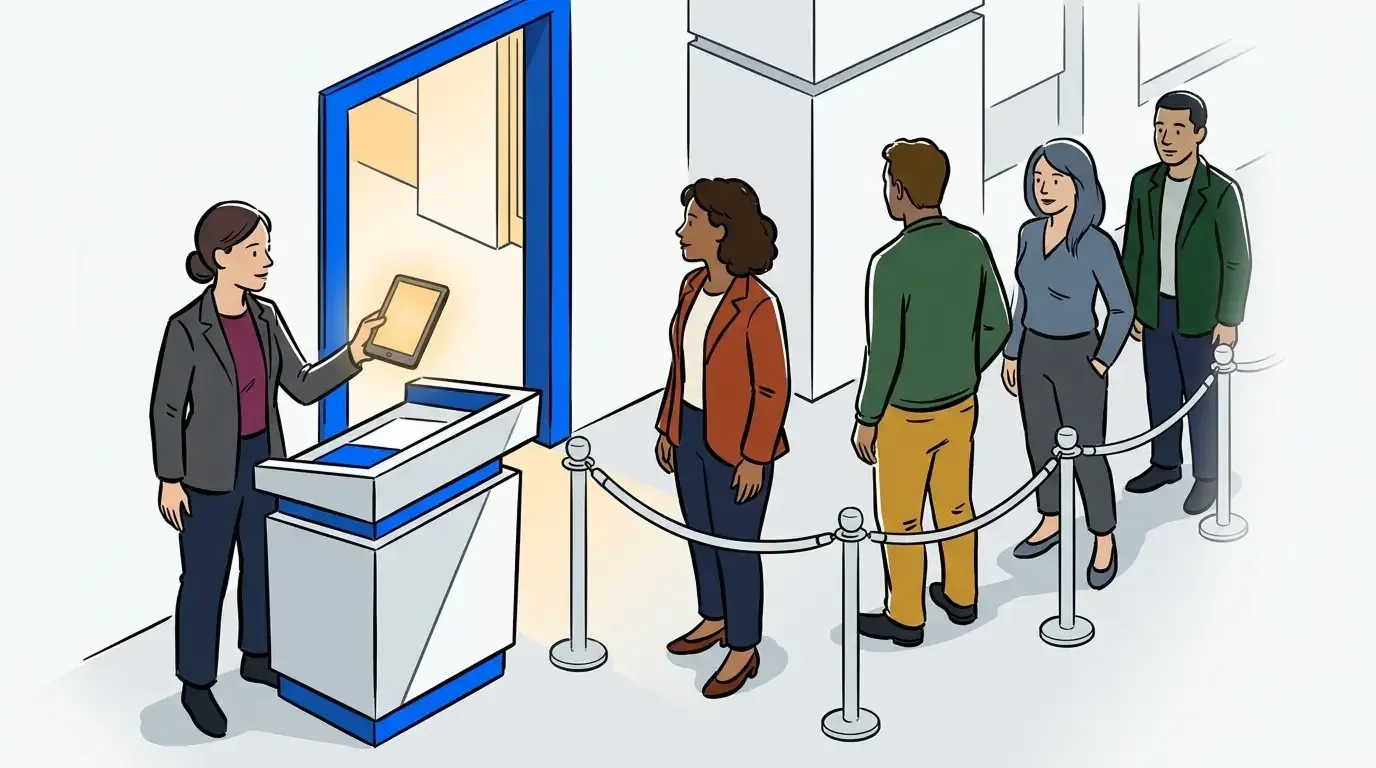
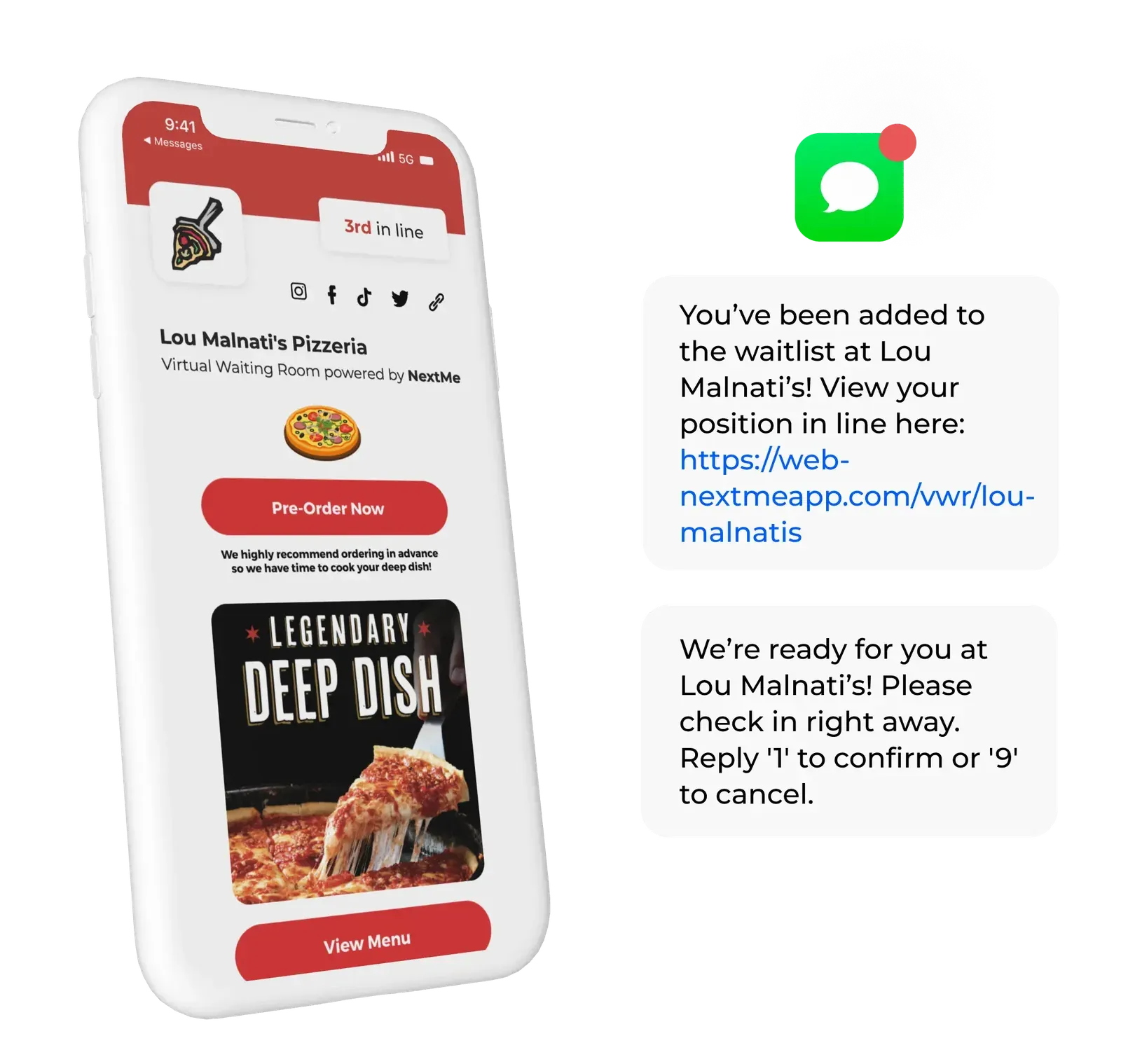
A virtual waiting room addresses this directly. Instead of leaving guests with nothing between sign-up and seating, the VWR gives them a live queue status view, your brand, and optionally content you choose: a menu preview, a special offer, or a short video. Guests who are actively watching their position in line don’t wander off.
The mechanics are straightforward. When a guest joins your waitlist, they receive a link to their virtual waiting room view. They can see their estimated wait time, their place in the queue, and any content you’ve set up. NextMe’s waitlist management tools let operators customize this view without any technical setup.
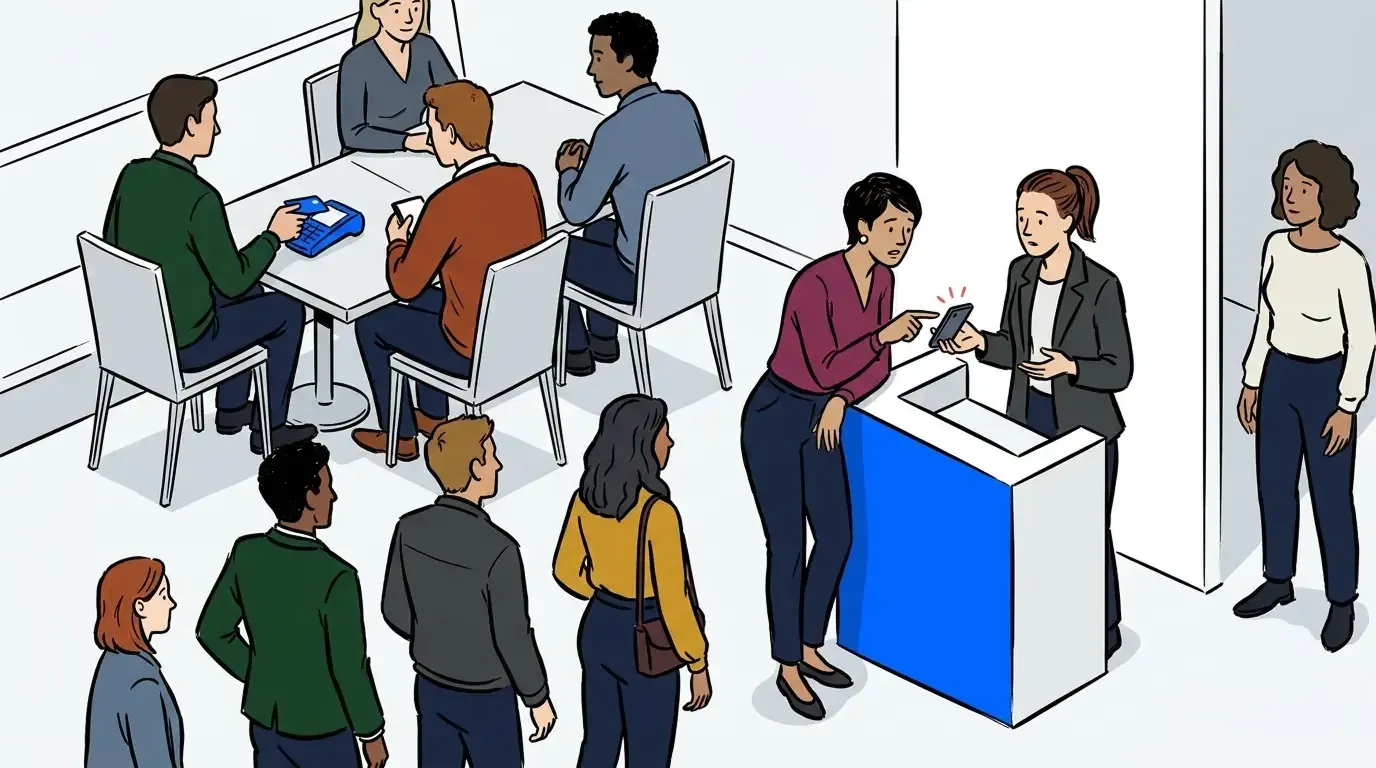
For high-volume restaurants, this also reduces front-of-house interruptions. Guests who can see their own queue status stop approaching the host stand to ask “how much longer?” Your team can focus on seating, not status updates.
Why a restaurant queue management system pays for itself
The case for a digital waitlist isn’t just operational - it’s financial. No-shows have a direct cost: a two-top no-show on a Saturday night is a cover lost, with no ability to fill it. A four-top is worse. At scale, even a modest reduction in no-show rate has a meaningful impact on revenue per service.
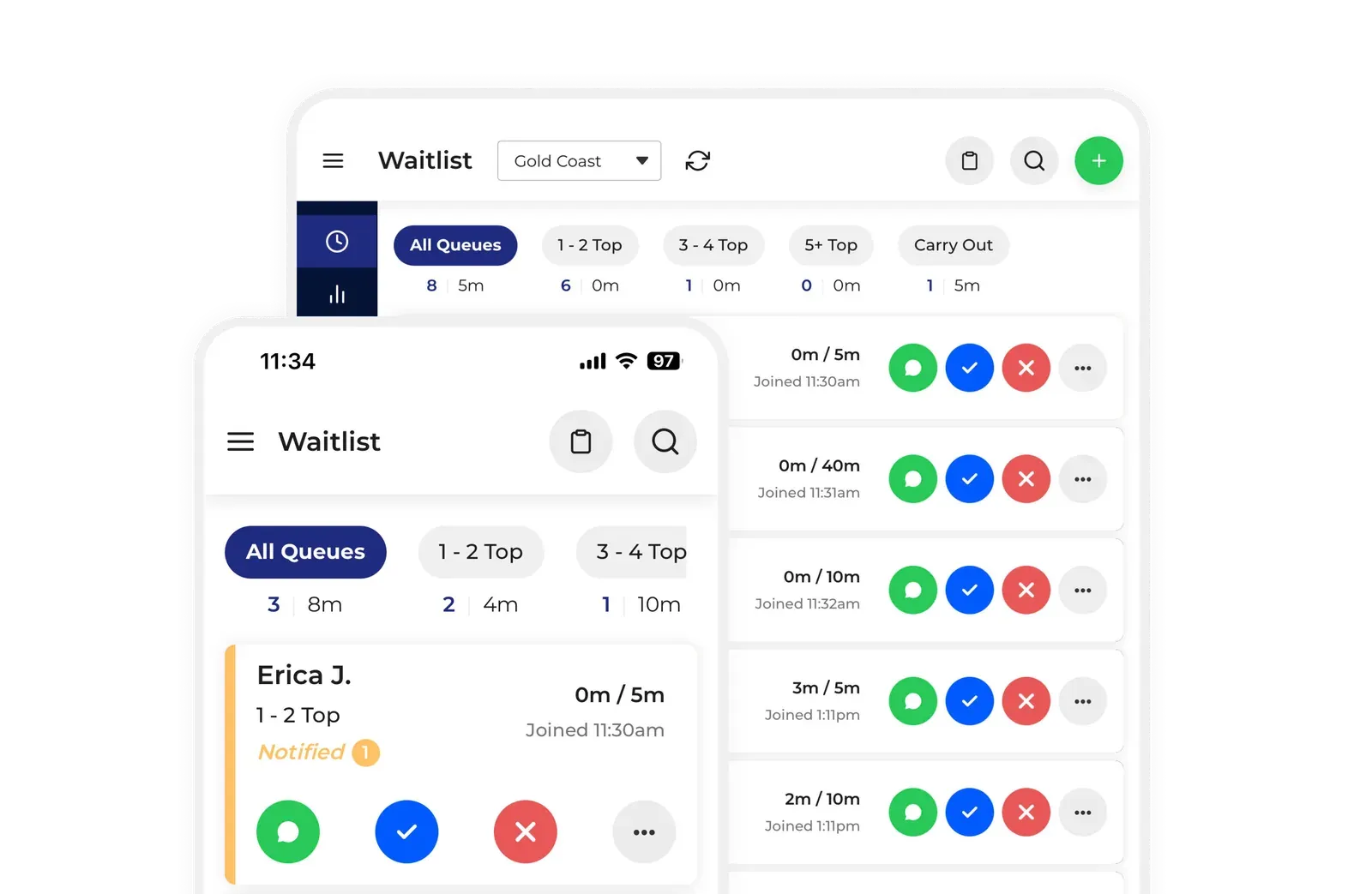
The secondary benefit is data. A restaurant queue management system gives you a record of every waitlist join, every confirmation, every no-show, and every seated cover. Over time, this tells you which nights have the highest no-show rate, which party sizes are most likely to disappear, and whether your wait time estimates are accurate enough to set realistic expectations. Accurate estimates reduce frustration, which reduces abandonment, which reduces no-shows.
A third benefit is staff workload. Every SMS that goes out automatically is a call your host doesn’t have to make. Every two-way confirmation that comes back - reply 1 to confirm, 9 to cancel - is a piece of real-time capacity data your team doesn’t have to chase. The system does the follow-up work so your staff can focus on the floor.
If you’re still evaluating what to look for in a digital waitlist for your restaurant, the guide to choosing the right restaurant waitlist app covers the key criteria in detail.
Conclusion
No-shows on your waitlist are a solvable problem. The right restaurant queue management system puts automated confirmations, timed reminders, and a live virtual waiting room between sign-up and seating - keeping guests connected to their spot and giving your team the real-time capacity data to respond when someone drops out.
The result is a floor that runs closer to its potential on every service: fewer empty tables, less staff time chasing guests, and better data to improve wait time accuracy over time. See how NextMe’s restaurant queue management works for your operation.