Every Friday night, restaurants across the country are losing customers they will never get back. A guest walks in, sees the wait, and walks out – not because the food isn’t worth it, but because there was no system to give them confidence that their place in line was secure.
A digital waitlist app changes that. But with several options on the market, ranging from standalone tools built specifically for restaurants to add-ons bundled into larger POS platforms, it matters which one you pick. The wrong choice can mean clunky guest experiences, hidden costs, or a dependency on a platform that doesn’t actually serve your restaurant’s needs.
This guide covers what to look for when choosing an app for restaurant waiting list management in 2026, how the leading options compare, and what questions to ask before you commit.
What makes a restaurant waiting list app worth using
The best app restaurant waiting list solutions share a core set of capabilities. Before comparing tools, it helps to know what the baseline should look like – and where the meaningful differences between products actually sit.
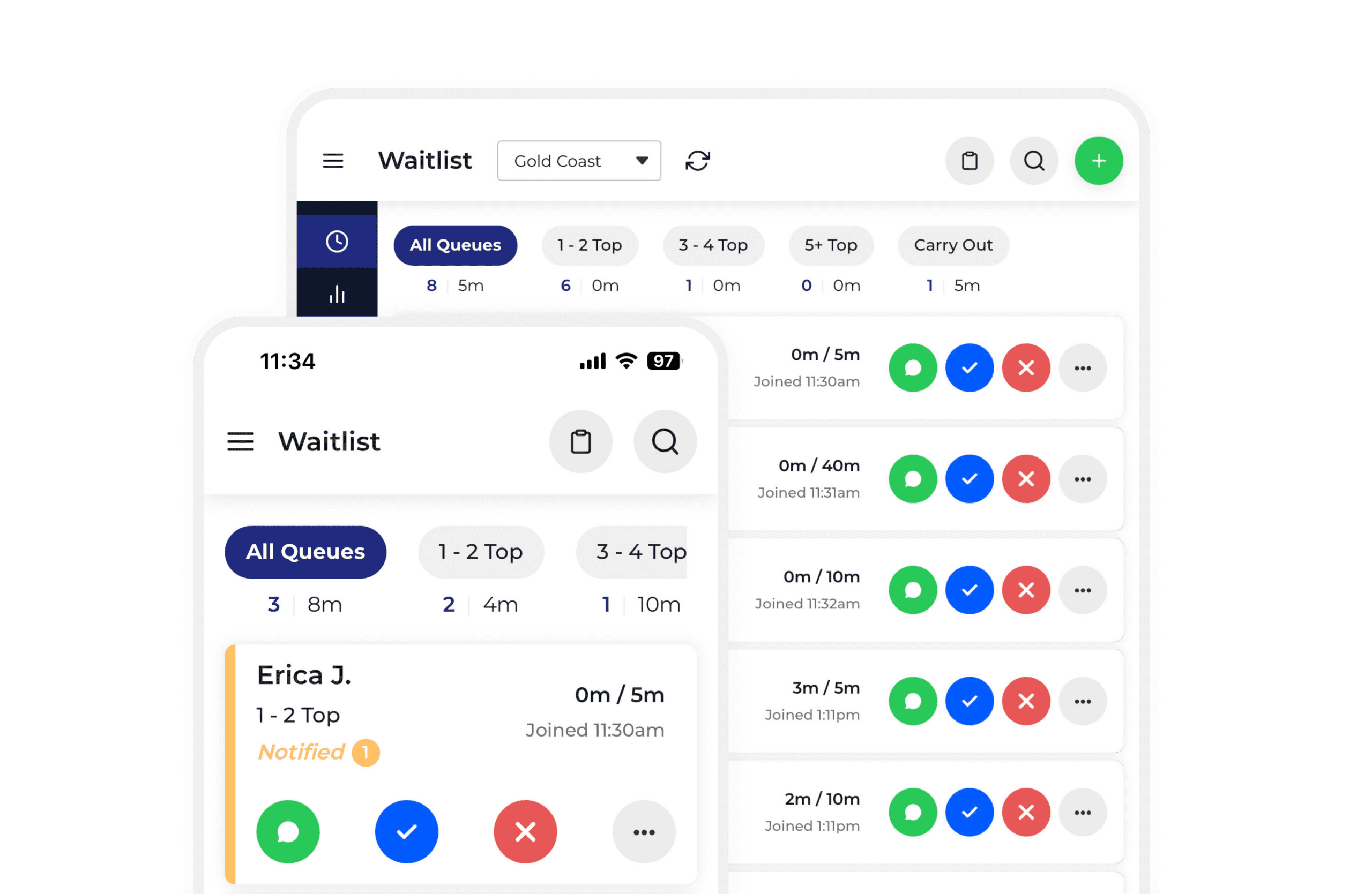
A good restaurant waitlist app should:
- Let guests join the waitlist by text, QR code, or at the host stand – with no app download required on their end
- Send automated SMS updates so guests know their wait status without having to stand at the door
- Give the host team a clean, fast interface for managing the queue from any device
- Handle walk-ins and scheduled reservations in the same system without creating two separate workflows
- Provide basic analytics so you can see average wait times, peak hours, and walkout patterns over time
If a tool is missing more than one of these, it is not a serious contender for a restaurant doing meaningful volume.
The bundled vs. best-in-class decision
One of the most common mistakes restaurants make when choosing a waitlist app is defaulting to whatever their POS provider offers. Toast Tables, Square’s waitlist feature, and OpenTable’s front-of-house tools are all real products – but they are add-ons, not purpose-built waitlist systems.
Ecosystem lock-in is the real risk here. When your waitlist is bundled with your POS, you trade flexibility for convenience. If the bundled product has limitations (and they usually do) you have no leverage to change it without overhauling your entire tech stack. You’re also paying for a feature built to serve a broader platform strategy, not your specific guest flow problem.
For restaurants that primarily manage walk-in traffic rather than advance reservations, a standalone waitlist app is typically more capable, more affordable, and easier to switch away from if your needs change. We’ve covered this dynamic in more detail in Do Restaurants Win or Lose When Review Sites Manage Their Waitlist? The same logic applies to POS bundling.
SMS notifications: the feature that actually reduces walkaways
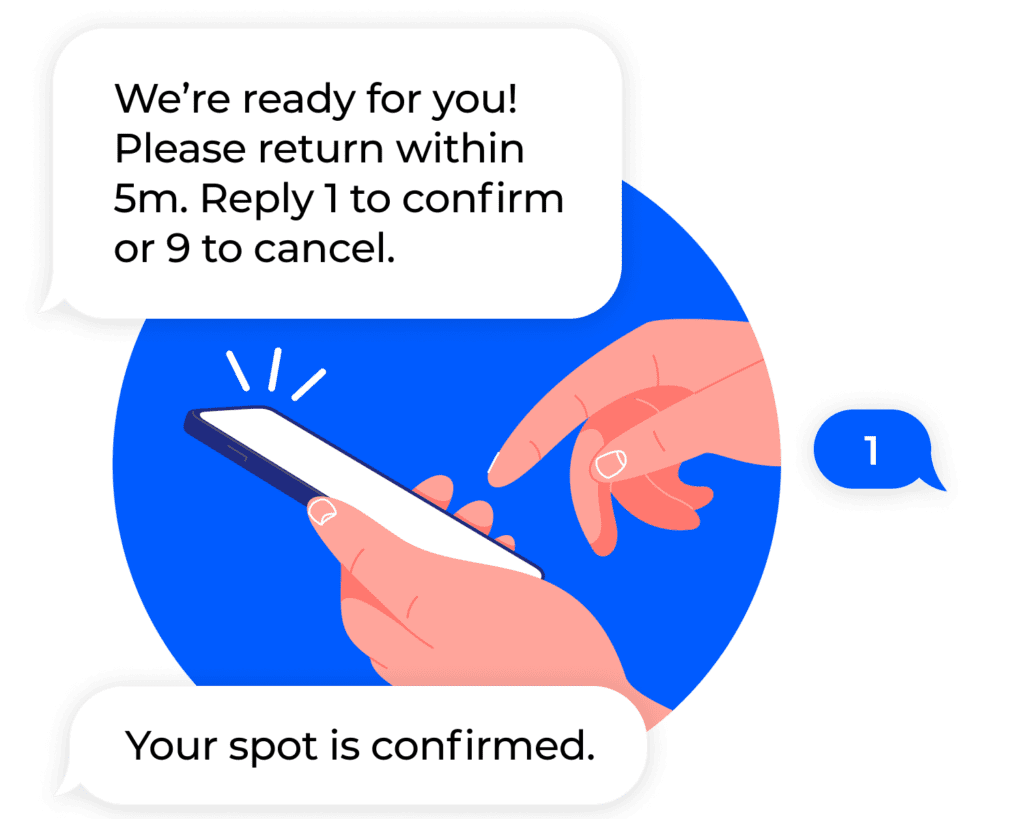
The single highest-impact feature in any restaurant waiting list app is SMS notifications. When a guest can join the waitlist and then walk around the block, browse their phone, or wait in their car, they stop watching the door. A text when their table is ready brings them back – and keeps them from walking out.
Not all SMS implementations are equal. Look for:
- Automated messages when a guest is added, when their estimated wait updates, and when they’re called back
- Two-way texting so guests can reply to confirm or cancel
- Customizable message templates so the communication matches your restaurant’s voice
Southport Grocery, a beloved Chicago brunch spot, switched to NextMe and saw an 18% improvement in online reviews – largely because the wait experience stopped being a point of friction. They also saved over $2,000 by eliminating pagers. Read the full Southport Grocery case study.
Self check-in and the virtual waiting room
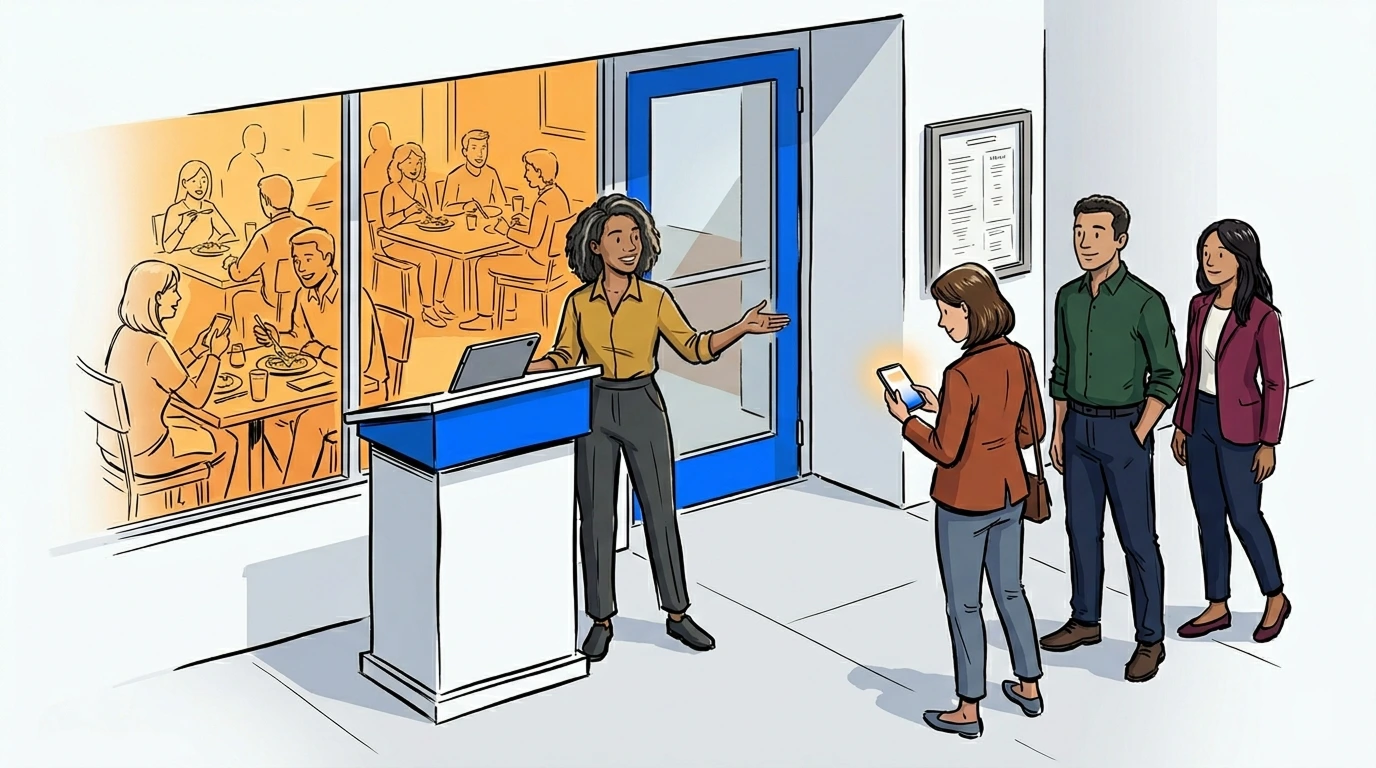
A growing number of restaurant waitlist apps now include a self check-in feature that lets guests add themselves to the waitlist via a QR code at the entrance or a link sent by text. This reduces pressure on the host stand during peak hours and is increasingly expected by guests who don’t want to wait in a second line just to get on the first list.
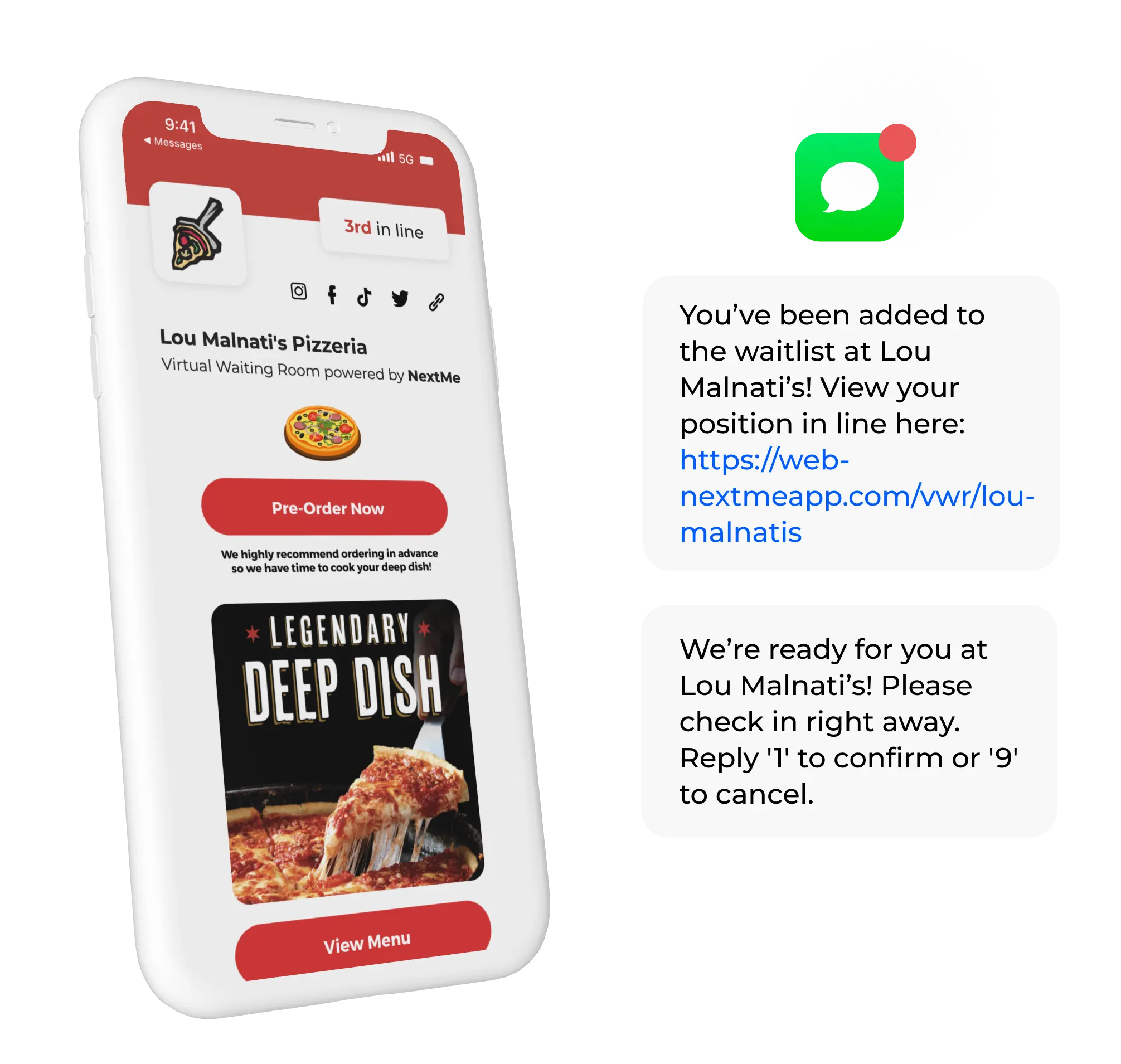
The virtual waiting room is the next step. Instead of a guest standing near the door watching other tables fill, they receive a link where they can see their position in the queue, check their estimated wait, and even browse content – a menu, a featured special, a loyalty program signup – while they wait. For restaurants managing high-volume Friday and Saturday nights, the virtual waiting room keeps guests engaged and reduces the perceived wait time even when the actual wait doesn’t change.
Lou Malnati’s, one of Chicago’s most recognizable deep-dish institutions, uses NextMe’s virtual waiting room to manage their notoriously busy dining rooms. The ability to keep guests informed and engaged while they wait outside has become part of the Lou Malnati’s guest experience.
What to look for if you run multiple locations
Multi-location restaurant groups have different requirements than single-unit operators. If you’re evaluating waitlist apps for a group, add these to your checklist:
- Centralized reporting across all locations so you can compare performance without pulling data manually from each site
- Location-level customization so each restaurant can adjust branding, message templates, and queue settings independently
- User permissions that let you assign manager-level access at the location without sharing admin credentials
Black Bear Diner, a multi-location chain operating across the western US, uses NextMe to standardize waitlist management across their units while preserving the local, community-centered guest experience each location is known for. See the Black Bear Diner case study.
For restaurants with a serious labor cost challenge, a well-implemented waitlist app also reduces the number of staff-hours spent on manual queue management. We covered this in depth in Waitlist App Helps Restaurants During Labor Shortages.
How the main options compare in 2026
Here is a plain-language view of where the major contenders stand for restaurant operators focused on walk-in management.
NextMe is purpose-built for restaurants and other walk-in service businesses. It covers the full waitlist stack – SMS notifications, virtual waiting room, self check-in, bookings, and analytics – in a single product. It is designed to be set up in under an hour and run without training. The guest experience is mobile-first and requires no app download. Strong for single-unit restaurants and multi-location groups.
Waitlist Me is a longtime competitor with a similar core feature set. It covers the basics well and is competitively priced. Where it falls short relative to NextMe is the virtual waiting room and the depth of the guest-facing experience. It is a practical option for operators who need a lightweight solution and don’t prioritize the engagement layer.
TablesReady focuses specifically on the restaurant and retail walkup queue. It is clean and functional. It is lighter on multi-location features and less suited to restaurants with mixed walk-in and reservation volume.
Toast Tables Waitlist is bundled into their respective POS platform. Toast is convenient if you’re already on their platform, but they carry the tradeoffs described above: limited flexibility, ecosystem dependency, and a feature set designed around the platform’s broader roadmap, not your specific queue management needs. The ROI comparison in Restaurants Save Time and Money With a Waitlist App is worth reading before committing to a bundled tool.
Frequently asked questions
What is the best app for managing a restaurant waiting list?
The best app for a restaurant waiting list depends on your volume and what you need from the guest experience. For restaurants managing walk-in traffic, a purpose-built tool like NextMe covers SMS notifications, self check-in, and virtual waiting rooms in a single product. POS-bundled options like Toast Tables are convenient but less flexible.
Do restaurant waitlist apps require guests to download anything?
No. The best restaurant waitlist apps are designed so guests can join via text message or QR code scan with no app download required. The host adds guests manually, or guests add themselves through a self check-in link or kiosk.
How much does a restaurant waitlist app cost?
Restaurant waitlist apps vary in pricing. Standalone tools like NextMe and Waitlist Me are typically more affordable than paying for a waitlist add-on through a POS provider. The cost difference is worth evaluating, especially for single-unit operators managing a tight labor budget.
Can a waitlist app work alongside a reservation system?
Yes. A good restaurant waitlist app handles walk-ins and scheduled bookings in the same queue. NextMe’s bookings feature lets restaurants manage appointment-based visits alongside spontaneous walk-ins without separate systems or manual merging.
What should I look for in a waitlist app for a multi-location group?
Look for centralized reporting across locations, location-level customization, and user permission controls. Tools built specifically for restaurant operations tend to offer stronger multi-unit support than POS-bundled waitlist features.
The right waitlist app makes every shift smoother
The right app for restaurant waiting list management is not a complicated decision once you know what to look for. SMS notifications and a clean host interface are the baseline. A virtual waiting room and self check-in separate the tools that improve the guest experience from the ones that just digitize the clipboard. And for multi-location operators, centralized reporting and permissions make the difference between a tool that scales and one that creates more admin work.
NextMe was built specifically for this use case. If your restaurant is managing walk-in volume and losing guests to walkaways or rough wait experiences, it is worth taking a closer look at NextMe’s waitlist management for restaurants.