Physical lines can kill booth momentum in under 10 minutes when they block aisles, hide staff, and make late arrivals walk past your activation. If you’ve dealt with booth traffic this week, you already know the real problem isn’t attention. It’s what happens after people show up.
Booth traffic management matters because trade show demand breaks fast once a line gets too long, space gets tight, or guests stop understanding where to go next. The goal is not to remove every visible line. The goal is to keep traffic moving, keep guests informed, and keep demand from turning into friction.
Key Takeaways:
- Booth traffic management is the practice of controlling how attendees approach, enter, wait for, and move through a booth experience.
- A visible line can create interest, but once it blocks access or raises uncertainty, it starts reducing throughput.
- If more than 15 to 20 people are standing still at a booth with no clear instructions, operators should move overflow into a virtual queue.
- The best event setups separate three things: attraction, check-in, and service delivery.
- Guests tolerate waiting far better when they know their status, expected timing, and when to return.
- Event teams should measure booth flow with simple numbers: joins per hour, served per hour, average wait, and walkaways.
- A hybrid queue usually works better for events than an all-physical or all-appointment model.
If booth traffic management is already becoming a problem for your team, book a demo to review a cleaner event flow before your next activation.
What booth traffic management really means at events
Booth traffic management is the system event teams use to control guest flow at a booth from first approach to final interaction. It covers line length, check-in, wait communication, space use, staffing, and throughput. At trade shows and brand activations, good traffic management keeps demand visible without letting congestion take over.
Booth traffic is not the same as booth success
A crowded booth looks exciting. For a while. Then the math changes. Once people can’t tell where the line starts, how long the wait is, or whether the experience is worth it, interest turns into hesitation.
That shift happens faster than many teams expect. A booth with 8 people waiting can still feel active. A booth with 25 people packed into a narrow footprint often feels blocked, confusing, and harder to approach. In practice, that means the same traffic that signaled demand at 11:00 a.m. can start suppressing demand by 11:20 a.m.
A lot of teams still treat booth traffic as a top-of-funnel win. The better view is operational. Traffic only counts if the booth can absorb it. If your line is longer than your service capacity for more than two attendee cycles, the booth is not busy. It’s bottlenecked.
The line is only one part of the flow
Booth traffic management includes the visible line, but it also includes the hidden moments that shape guest behavior. Check-in speed matters. Return timing matters. Staff handoff matters. Even the space around the booth matters.
At SXSW, Inc. Media had to keep crowds from blocking public areas while still handling heavy walk-in demand. That kind of event pressure exposes a simple truth: unmanaged overflow doesn’t stay contained. It spills into aisles, frustrates guests, and creates risk for the activation itself.
A useful test is to watch where confusion appears first. If guests keep asking, “Am I in the right place?” the issue is wayfinding. If they ask, “How much longer?” the issue is status visibility. If they leave without asking anything, the issue is usually that the line already looked too time intensive.
The goal is control, not zero waiting
Some waiting is normal at a high-interest booth. In fact, a short visible line can signal demand. That part is fair. Trade show marketers often want energy around the activation, and a completely empty approach zone can create the wrong impression.
The problem starts when the line gets too long, consumes too much space, or traps attendees in place. That’s why the strongest booth traffic management setups control how much of the line stays visible and how much moves into a managed queue. A booth should show demand. It shouldn’t punish people for it.
That distinction matters because the next question is practical: if standing in line all day is the wrong model, what should replace it?
Why unmanaged booth demand breaks faster than most teams expect
Unmanaged booth demand breaks because event environments are messy, time-compressed, and space-limited. Walk-ins arrive in bursts, service times vary, and attendees won’t protect your process for you. Once uncertainty rises, line abandonment and missed leads follow quickly.
A day on the floor makes the problem obvious
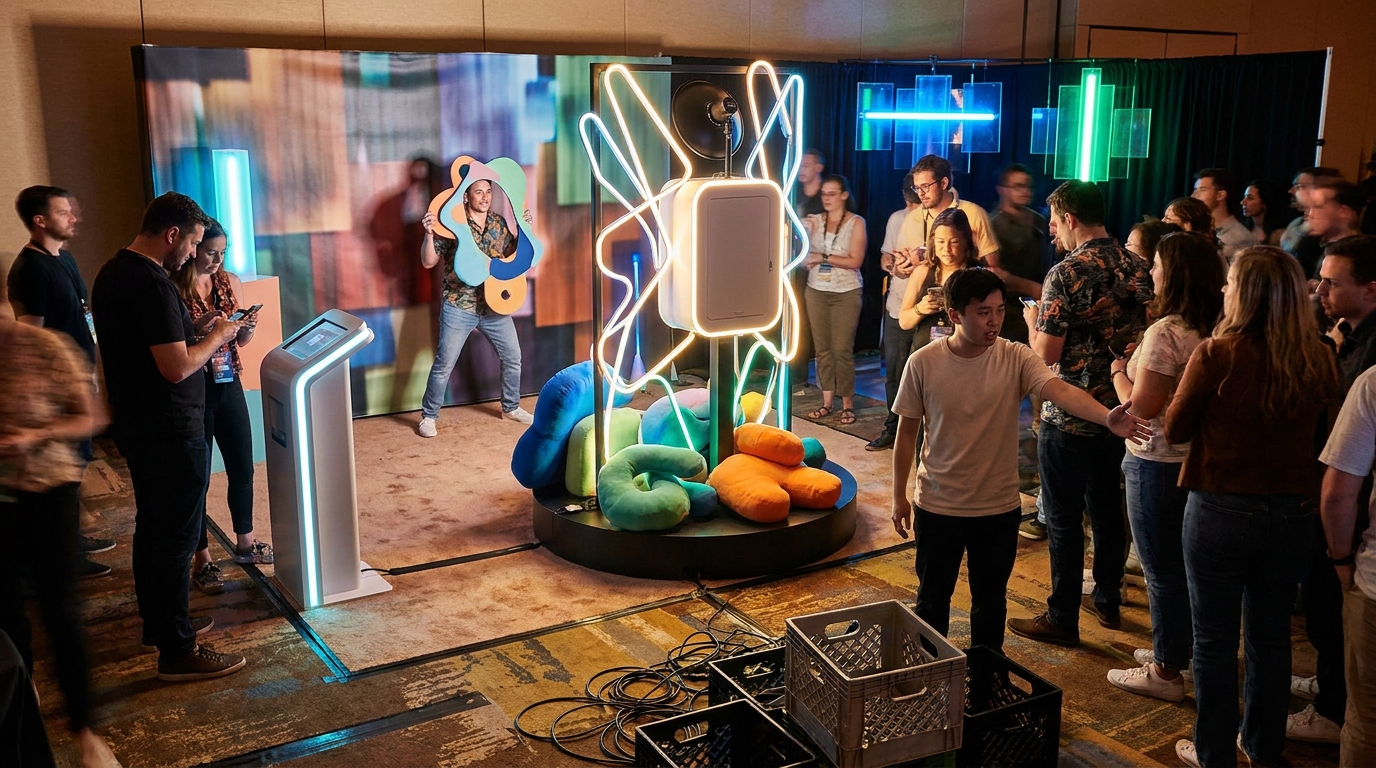
Picture a product demo booth at 1:15 p.m. A session just ended. Twenty people arrive in six minutes, three want a full demo, eight want swag, five are asking whether they need to register, and the rest are hovering because they don’t know if the line is worth joining.
One staff member starts answering questions. Another keeps giving rough wait estimates without real visibility. By 1:25 p.m., the aisle is crowded, two qualified prospects leave for another meeting, and a nearby exhibitor is annoyed because your line is spilling into shared space. That sequence is common. It doesn’t require a bad team. It only requires a surge.
Traditional physical lines fail first at live events because the environment keeps changing. Service times stretch. VIP interruptions happen. A speaker mentions your booth. A giveaway starts. The old approach assumes a smooth flow. Events rarely behave that way.
Uncertainty creates more damage than waiting itself
People wait for things they value. They wait for concert merch, celebrity meet-and-greets, demos, and exclusive samples. What they don’t like is uncertainty. Not knowing whether the line moves in 5 minutes or 45 changes how they judge the whole experience.
That point showed up clearly in several event deployments. At BMW’s nationwide test-drive tour, the challenge wasn’t just high demand. It was keeping attendees informed about status so the experience didn’t feel disorganized under pressure. Across 25 cities, better queue communication helped support a 26% increase in test drives. That is not a minor lift. It suggests that flow and clarity directly affect participation.

The practical rule is simple. If your team can’t tell a guest what happens next in one sentence, the queue is already too opaque. At a booth, that sentence should be obvious: join here, wait from your phone, return when notified.
The cost shows up in four places
The first cost is lost throughput. If staff spend 20 seconds answering the same wait question 60 times in a day, that’s 20 minutes gone before they even deliver the experience. At a booth with short interactions, 20 minutes can equal 8 to 15 missed conversations.
The second cost is walkaways. In crowded environments, attendees rarely announce they are leaving. They just leave. A useful threshold is abandonment risk after 12 minutes of unclear standing time. If the line feels static and the next step is vague, a lot of people decide the booth can wait. Then it never does.
The third cost is reduced sponsor or brand value. When attendees stand shoulder to shoulder staring at a rope stanchion, they are not engaging with your message. They are just waiting. That is dead time unless you turn it into something else.
The fourth cost is staff drag. Floor teams get pulled from hosting into traffic control. Morale drops fast when good event staff become human barricades. Nobody wants that.
This is where booth traffic management stops being a line problem and becomes an operating model problem.
What better booth traffic management looks like in practice
Better booth traffic management separates demand capture, waiting, and service into distinct steps. Guests should be able to join quickly, stay informed while mobile, and return at the right moment. That structure reduces crowding without hiding demand completely.
Start by diagnosing your current queue shape
Before changing anything, event teams should sort their booth into one of three patterns. That diagnosis determines the right fix.
If guests arrive steadily and service is under 3 minutes, a short physical line may be enough. If arrivals come in bursts and service runs 5 to 12 minutes, use a hybrid queue with a visible front and virtual overflow. If service is highly variable or the footprint is tight, move most of the wait off the floor immediately.
A quick diagnostic helps:
- Count average arrivals in 15-minute blocks during peak periods.
- Measure average service time for one interaction type.
- Multiply the two to estimate peak waiting load.
- If projected standing guests exceed the space for 10 to 15 people, move overflow out of the physical line.
- If staff answer wait-status questions more than 10 times in 15 minutes, your communication model is too manual.
That may sound basic, but it works. Booth traffic management gets better when teams stop guessing and start measuring the pressure points directly.
Separate check-in from the actual experience
Many booths collapse because the line for registration becomes the line for everything. That is a mistake. High-performing event setups make check-in fast and keep the deeper experience protected.
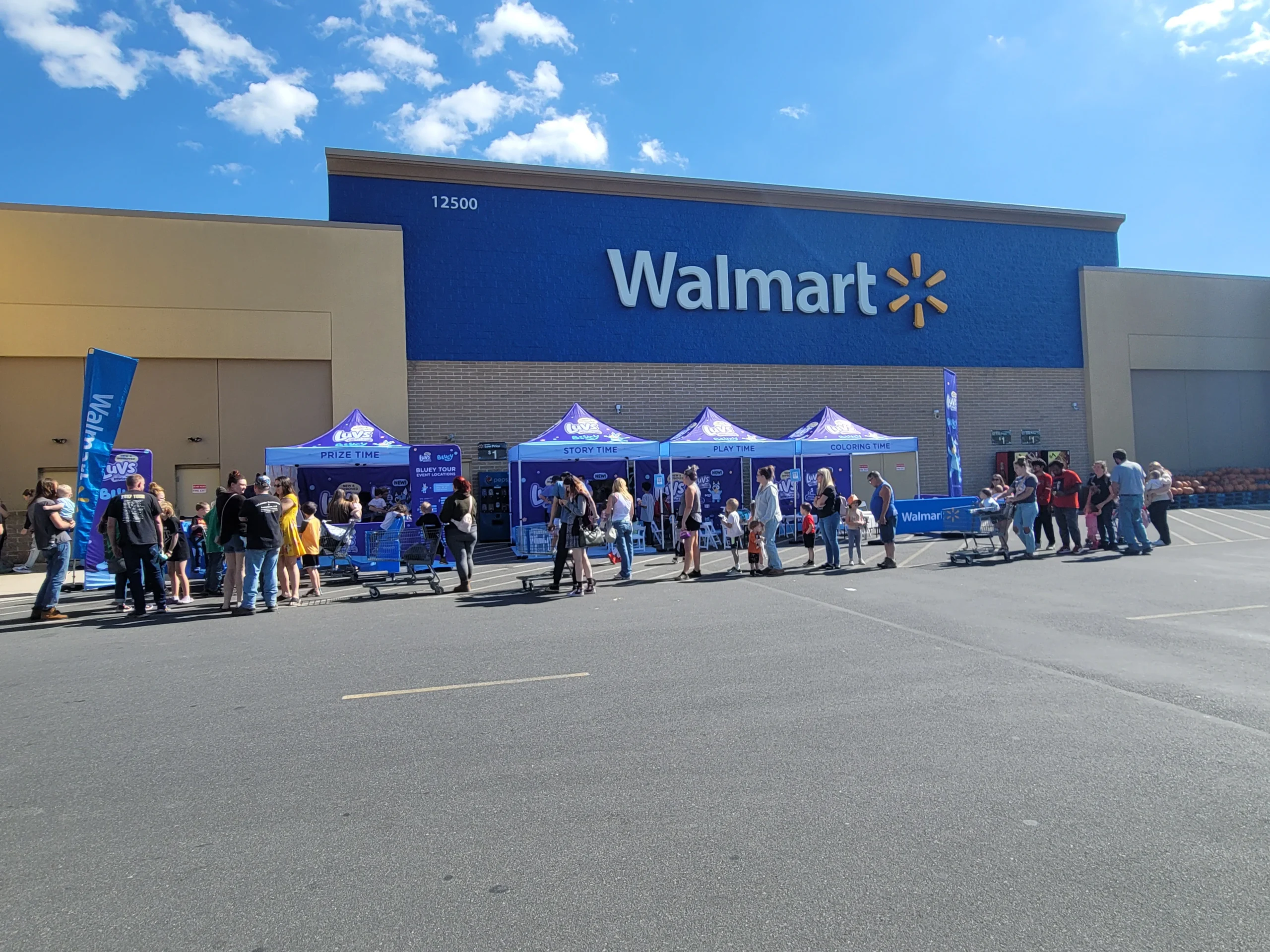
One reason the Bluey meet-and-greet run by Eventus worked well was that guests could register quickly through QR-based self check-in instead of forcing field managers to manually intake every person. That reduced staff load and improved guest flow. More importantly, it removed a useless bottleneck at the front of the experience.
For most booths, check-in should take under 30 seconds. If it takes longer than a minute, too much is happening too early. Strip it down. Capture only what staff really need to route the guest and manage the queue.
This is also where physical design and signage matters. Put the join point at the edge of the footprint or line to return and check-in, not deep inside it. People should understand the process before they commit. Good booth traffic management is partly software, yes, but it is also choreography.
Keep a short visible line and move overflow elsewhere
A visible line can still be useful. It shows activity. It helps late arrivals identify the booth. It can even create social proof. But it needs a cap.
For most event booths, a visible standby line of 5 to 10 parties is enough. Once that line grows beyond the footprint or starts blocking sightlines, overflow should shift into a virtual queue. That gives operators control over space while preserving some visible demand.
This hybrid model is especially useful when booth traffic comes in waves. Trade show floors do not behave like appointment books. A speaker mention, influencer appearance, or giveaway announcement can double demand in minutes. Rigid scheduling often breaks under that kind of surge. A hybrid queue bends better.
At Comic-Con, one agency used a virtual waitlist so fans could explore other activations instead of standing still for up to two hours. That produced a 25% increase in brand engagement. The connection is not mysterious. Mobile guests stay in the event. Trapped guests stare at the floor.
Give attendees three pieces of information every time
Guests do not need perfect precision. They need useful clarity. In booth traffic management, three pieces of information usually do most of the work: confirmation, status, and return signal.
First, confirm they are in. Second, show that the queue is active. Third, tell them when to come back. If any one of those is missing, uncertainty returns.
This is where many teams overcomplicate things. They build scripts, signs, and manual explanations, then wonder why staff still spend the day repeating themselves. A simpler rule works better: every guest should be able to answer three questions at any moment. Am I checked in? How is the line moving? What should I do next?
Mid-show planning gets easier when that answer is built into the queue itself. If you want a closer look at how that can work on the floor, see it in action.
Measure booth flow with numbers you can act on
Good booth traffic management needs metrics, but not an overloaded dashboard. Four numbers are enough to guide most event teams: joins per hour, served per hour, average wait, and walkaways or abandonment.
Those numbers tell you where the system is breaking. If joins spike but served per hour stays flat, capacity is the issue. If average wait rises while abandonment rises with it, communication is probably weak. If one station outperforms another by 30% with the same offer, staffing or process needs attention.
A practical benchmark helps here. If average wait exceeds 15 minutes for a standard booth experience and guests are still physically standing in line, you should redesign the flow before day two. If abandonment tops 10% during peak periods, the setup is already costing leads.
That may feel strict. It should. Events are short. The floor doesn’t give you many chances to recover.
Where NextMe fits in a modern event queue setup
NextMe fits event environments that need a hybrid way to manage long lines without forcing every guest to stand still. It is built for in person experiences where operators want to keep some physical line presence while moving overflow into a virtual waiting flow. For booths, that matters when traffic is heavy, space is limited, and timing shifts throughout the day.
A hybrid queue keeps guests informed and mobile
NextMe is a modern virtual waiting room for in person experiences. Guests can join through self check-in using a QR code, kiosk, or link, then receive SMS notifications as their status changes. That means operators do not have to force every attendee to remain in one physical line the whole time.
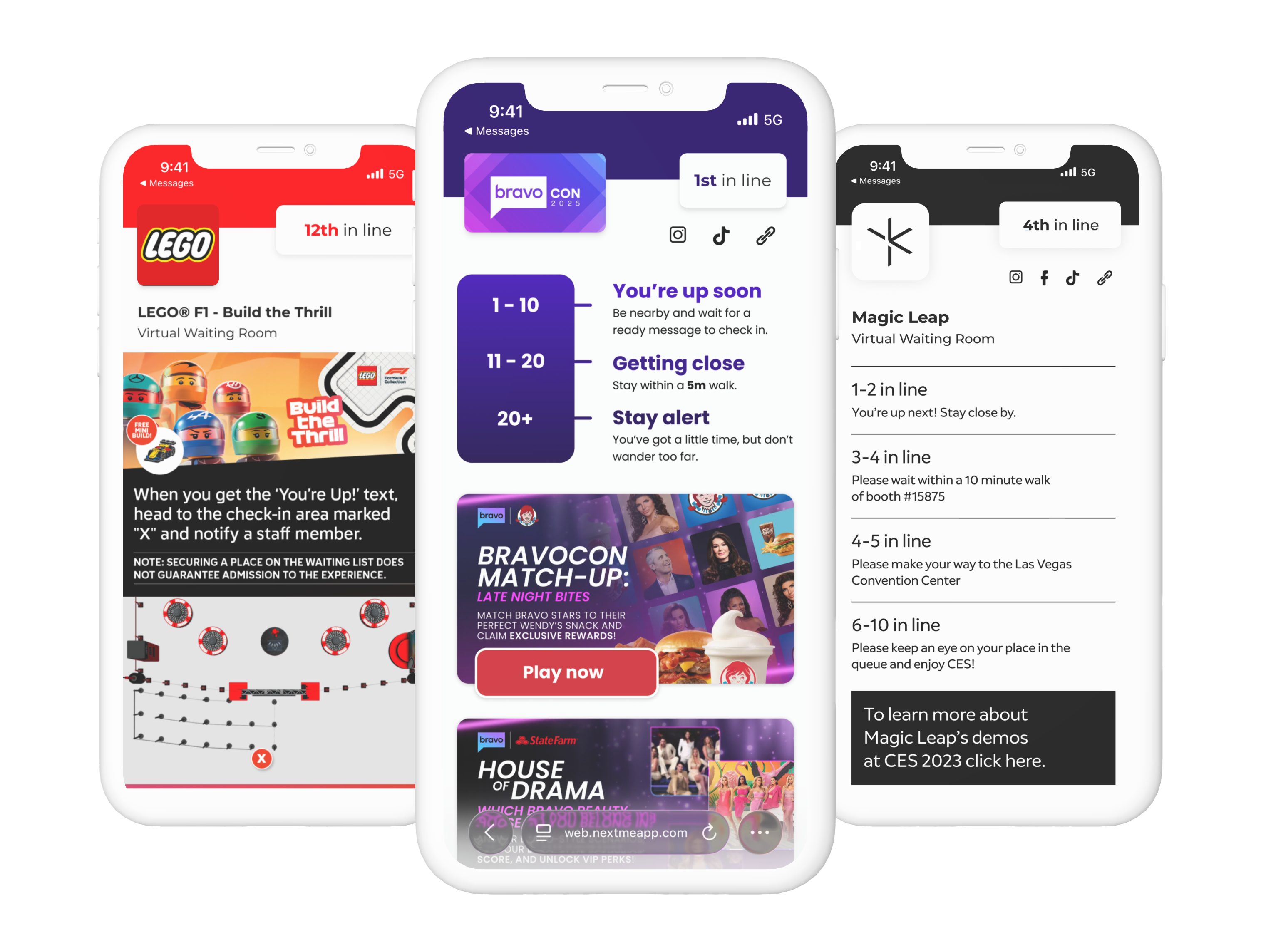
The setup is practical for high traffic pop ups, brand activations, conferences and trade shows because it supports real world waiting. A short visible line can stay in place near the booth. Overflow can move into a virtual queue. Guests stay informed, stay mobile, and return when it is time. That is a better fit for event floors than rigid appointment logic or unmanaged walk-up chaos.
This also keeps the system grounded. NextMe does not claim to remove all lines or predict exact wait times. It gives operators more control over how much of the line stays visible and how much moves off the floor.
The event team gets operational control and post-event insight
On the operations side, NextMe includes waitlist management and a real-time staff dashboard for managing queue order, guest status, and notifications as traffic changes. For booths running more than one experience, multi-queue management allows separate queues within the same waitlist. That matters for activations with different stations, talent lines, demos, or service tiers.
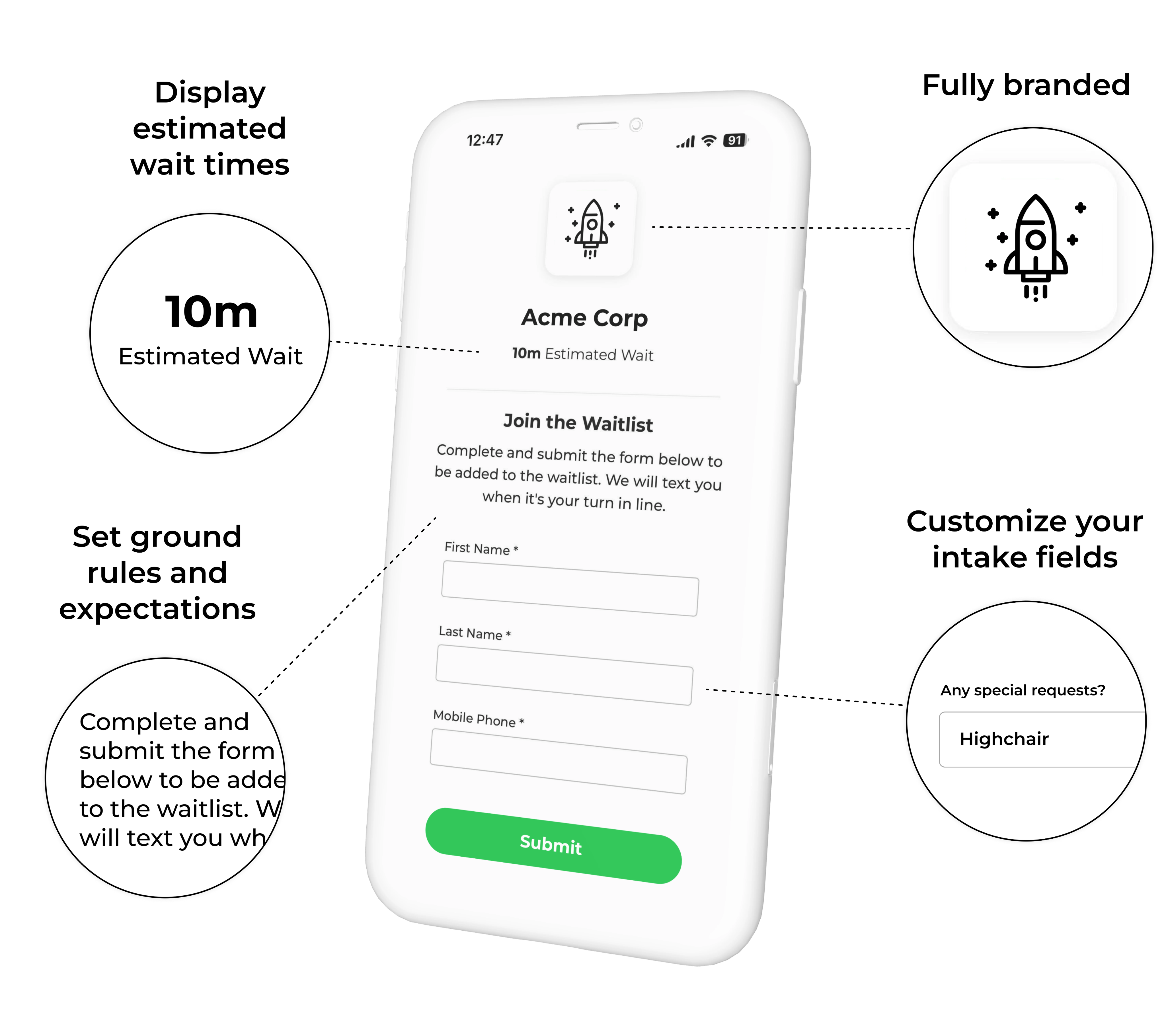
For the guest side, the virtual waiting room can carry branded engagement content such as sponsorships, product carousels, videos, maps, social feeds, and calls to action while people wait. In plain terms, the wait does not have to be dead space.
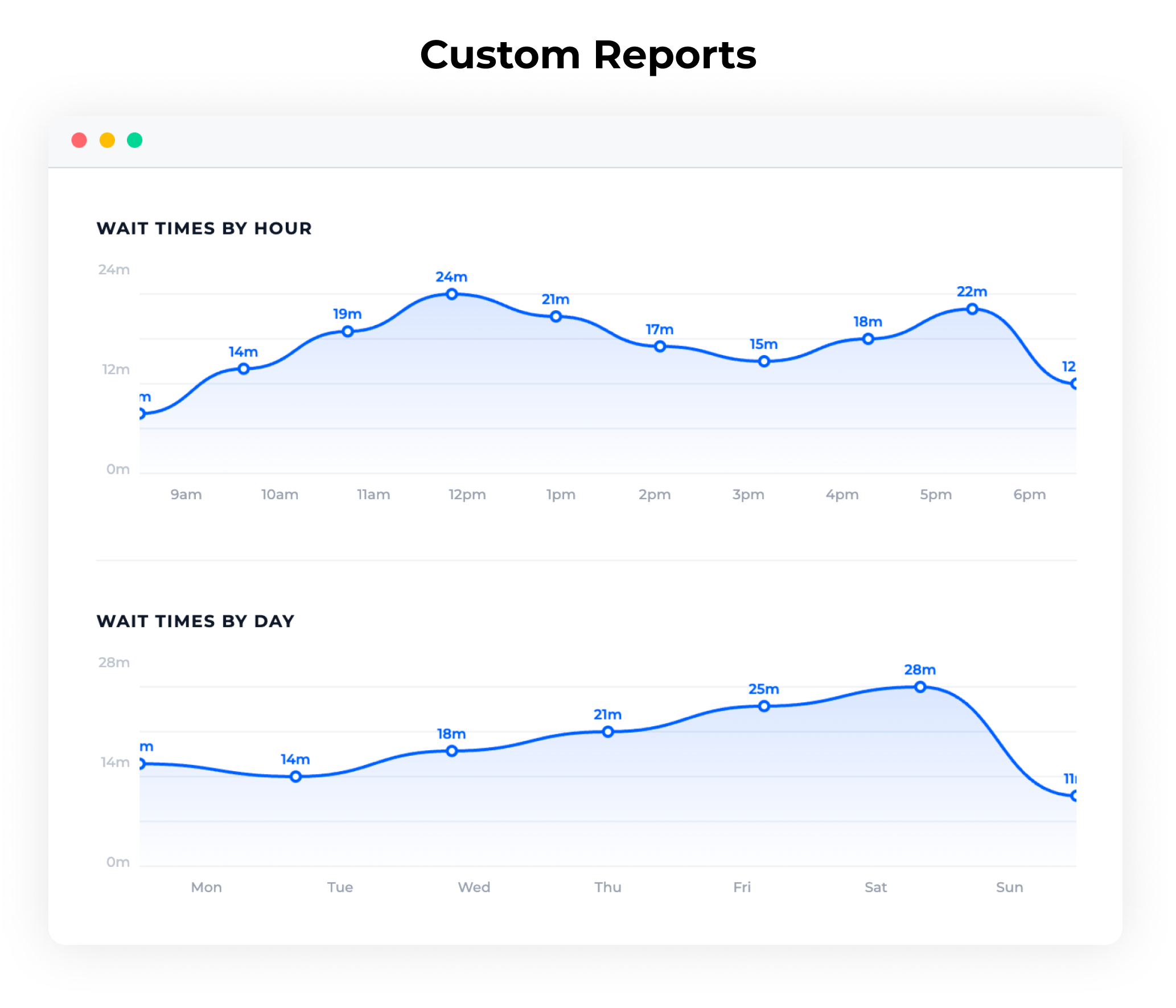
After the event, analytics and Event Insight Reports help teams review wait times, throughput, and engagement patterns. That reporting matters for event directors who need to prove what happened on the floor, not just say the booth felt busy. If your team is trying to build a cleaner booth traffic plan before the next show, get in touch and map out the flow in advance.
Better booth flow starts before the doors open
Booth traffic management is not just crowd control. It is experience design under pressure. When the line gets too long, too static, or too unclear, the booth starts losing value even while it looks popular.
The strongest event teams do not try to eliminate all waiting. They control it. They keep a little visible demand, move overflow into a better queue, and make sure guests know what happens next. That is usually the difference between a crowded booth and a well-run one.