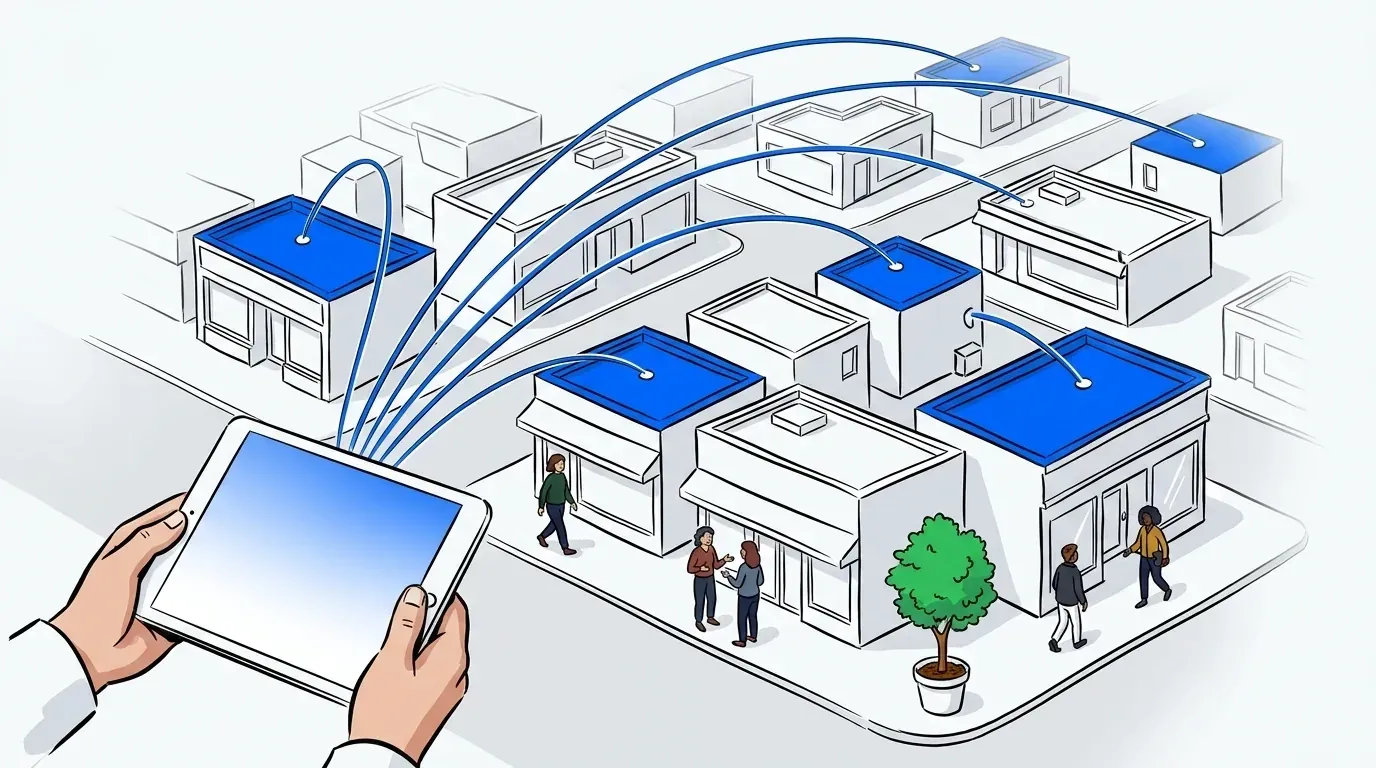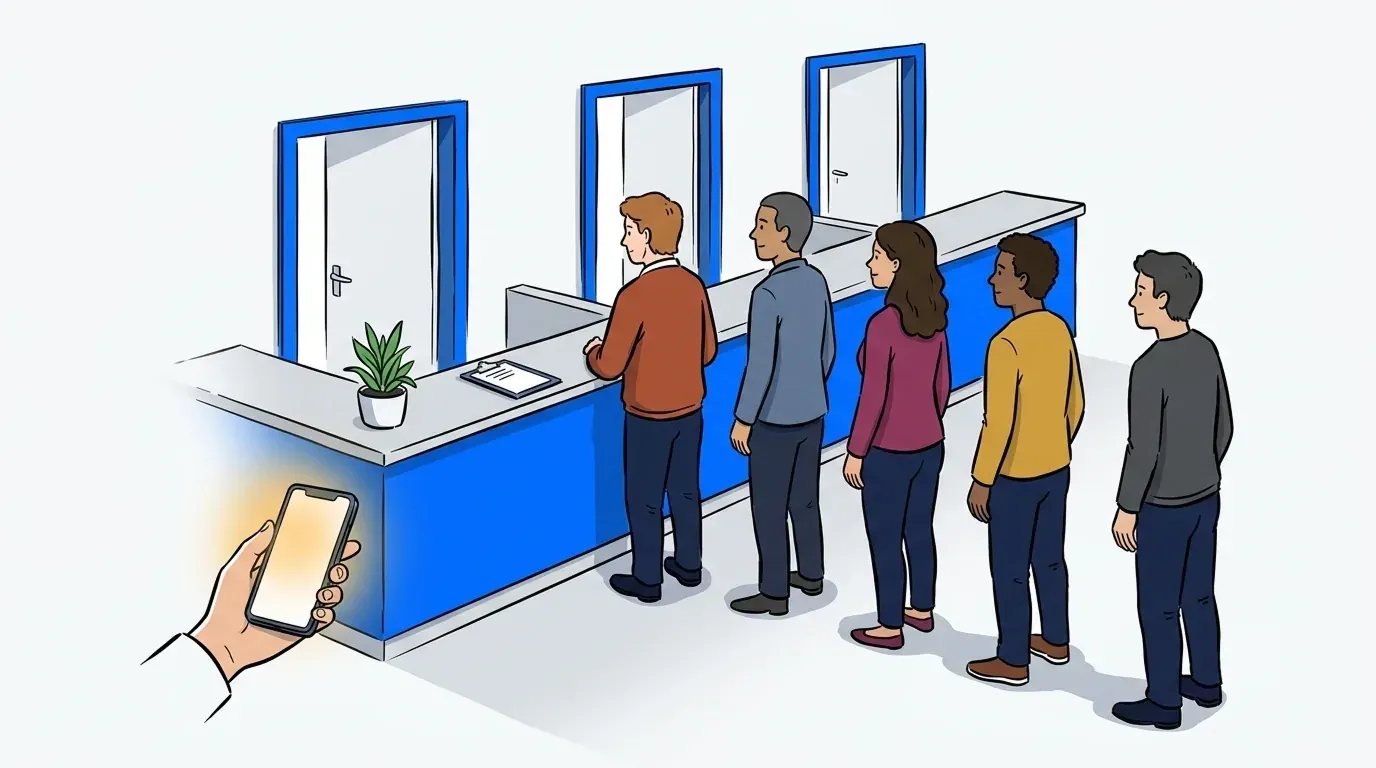
Choosing between NextMe and WaitWell usually comes down to a shortlist of real operational questions: can it handle more than one location, can it automate the routing work your staff does by hand, and will guests actually get notified when it matters. Both platforms are built for organizations well beyond a single walk-in line.
WaitWell has built a strong reputation in higher education, government, and healthcare for its configurable multi-service routing. NextMe runs that same multi-location, multi-service depth, with per-location settings, business-wide analytics, automated queue-transfer messaging, and a virtual waiting room that does more than show a status screen.
This comparison looks at where each platform is genuinely strong, and where the reviews tell a different story than the marketing.
NextMe vs WaitWell at a glance
Both NextMe and WaitWell support multi-location, multi-service operations with automated visitor notifications and staff dashboards. The differences show up in engagement tooling, notification reliability, and how much configuration it takes to get there.
| Factor | NextMe | WaitWell |
|---|---|---|
| Multi-location support | Per-location settings plus aggregated business-wide analytics | Multi-location and multi-service routing |
| Workflow automation | Field-based auto queue assignment, automated queue-transfer messaging | AI-powered routing and analytics |
| Guest engagement | Branded virtual waiting room with polls, product carousels, sponsor content | Status-focused queue view |
| Notification reliability | Carrier-level deliverability validation, real-time queue refresh | Often reviewed as inconsistent (see below) |
| Settings and customization | Self-serve, same-day setup | Deep but reviewed as hard to navigate by some users |
| Support model | Phone and chat support for all customers, dedicated account manager and white-glove setup available | Dedicated account manager, white-glove setup |
| Track record | Building and iterating with customers since 2015 | Founded in 2020 |
Reviewers on G2’s Enterprise Queue Management category page consistently point to ease of setup and a clear, intuitive interface as the factors that separate a platform buyers stick with from one they eventually work around. That is the lens worth applying to any multi-location queue system, not just the feature list on a pricing page.
Multi-location support and workflow automation
NextMe is built for organizations running more than one location or more than one service line. Per-location settings let a business set independent values for expiration thresholds, booking display, and guest data policy at each site, while a business-wide analytics view aggregates performance across every location without switching between dashboards.
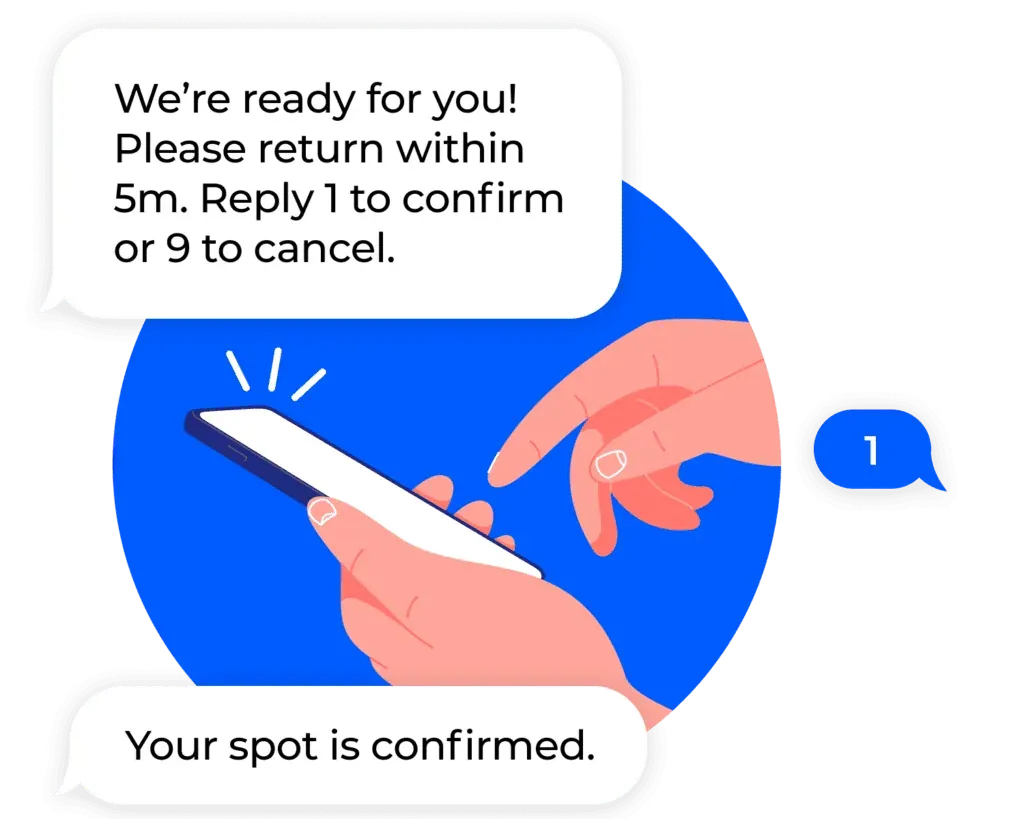
On the automation side, queue transfer messages send a customized text the moment a guest moves to a new queue, so multi-service routing does not mean guests lose visibility mid-transfer. A custom field can also auto-assign guests to the correct queue based on their answers, which removes a manual triage step for clinics and offices juggling multiple service types. Repeat guest recognition prefills returning guests’ information automatically, and the table view interface was built specifically for high-volume queues that need to fit more parties on screen without scrolling.
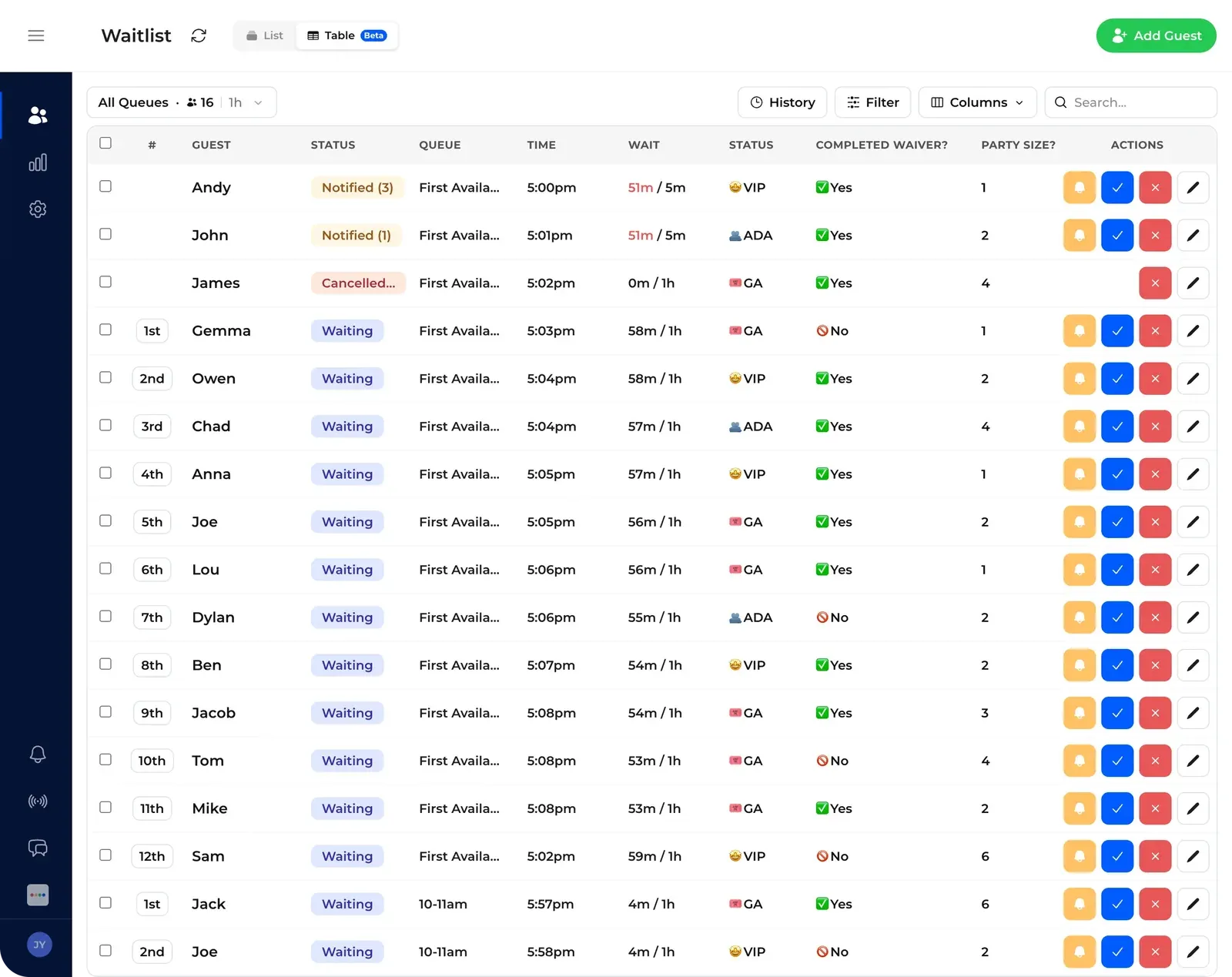
For businesses in regulated or compliance-heavy environments, waiver capture lets guests complete a liability waiver as part of self check-in, compatible with common waiver tools. This is enterprise-grade routing and reporting depth, built into a platform that a practice manager or ops lead can configure themselves, without a dedicated administrator or a lengthy onboarding process.
Where WaitWell’s reviews reveal real limitations
WaitWell earns genuinely strong marks for ease of use and customer support, and its public-sector and higher-education track record is real. That said, the review record on G2 and Capterra surfaces limitations worth knowing before you commit.
G2’s WaitWell review page carries recurring tags for Missing Features, Limited Customization, and Customization Difficulty, alongside a Difficult Navigation tag. WaitWell’s own team has publicly acknowledged that its settings section has grown lengthy enough to make finding a specific setting a challenge, and they are working on it. On Capterra, one long-term user described WaitWell’s queue notifications as inconsistent, with alerts sometimes delayed, missed, or out of sync with real-time queue changes, which made staff fall back on manually watching the queue during busy periods. Another reviewer noted there is currently no way for staff to accept or deny individual appointment requests.
NextMe has approached notification reliability as an ongoing engineering priority rather than a fixed feature. Recent updates specifically improved message deliverability validation to reduce carrier spam-filtering.
Where NextMe’s virtual waiting room adds something WaitWell doesn’t
The clearest structural difference between the two platforms is what happens on the guest-facing screen while someone waits. WaitWell’s queue view is built to show status. NextMe’s virtual waiting room is a branded surface that can run polls, quizzes, product carousels, and sponsor content, turning wait time into an engagement channel rather than dead air.
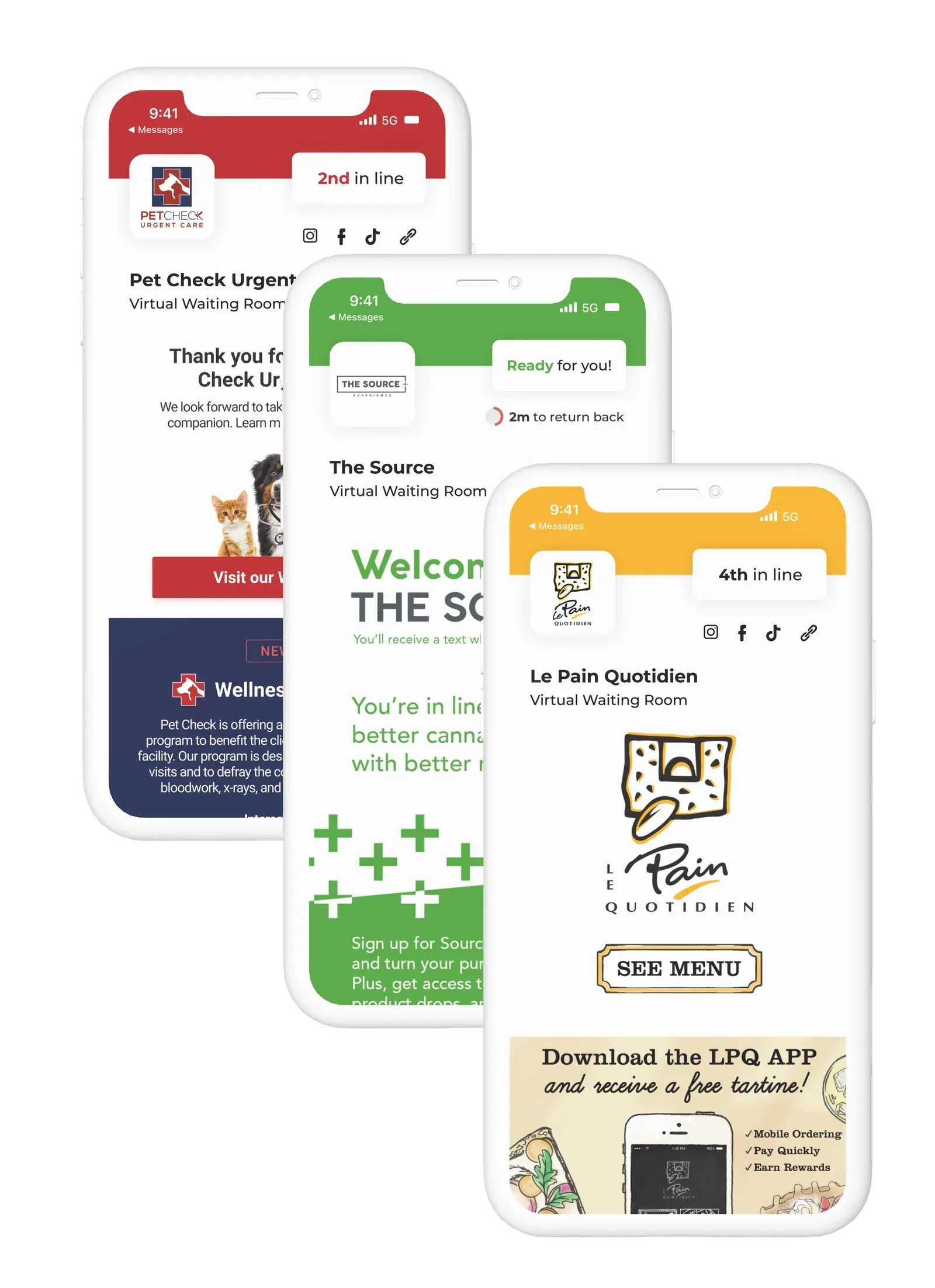
NextMe has been building and refining its platform since 2015, five years longer than WaitWell, which launched in 2020. That track record spans everything from healthcare deployments to large-scale activations for LEGO, Peacock, BMW, and many other highly reputable brands. That range, from a single clinic to a statewide government agency to major consumer brand activations, is the direct answer to the idea that NextMe is built for one size of business only.
Looking for a WaitWell alternative?
Setup friction, notification reliability concerns, and an overly complicated user experience are some of the most common reasons teams start looking for a WaitWell alternative. NextMe is built to handle the same multi-location and multi-service complexity, with a virtual waiting room and analytics stack WaitWell does not match. For a deeper look at what to evaluate in any queue management for healthcare purchase, including a full vendor comparison table, see our healthcare waitlist software buyer’s guide.
The right fit comes down to depth, not size
WaitWell and NextMe both support multi-location, multi-service organizations, but the details diverge in workflow automation, notification reliability, and what guests actually see while they wait. NextMe adds a branded engagement surface and enterprise-grade automation on top of that same depth, not just a simpler alternative. If that sounds like what your organization needs, see how NextMe works.