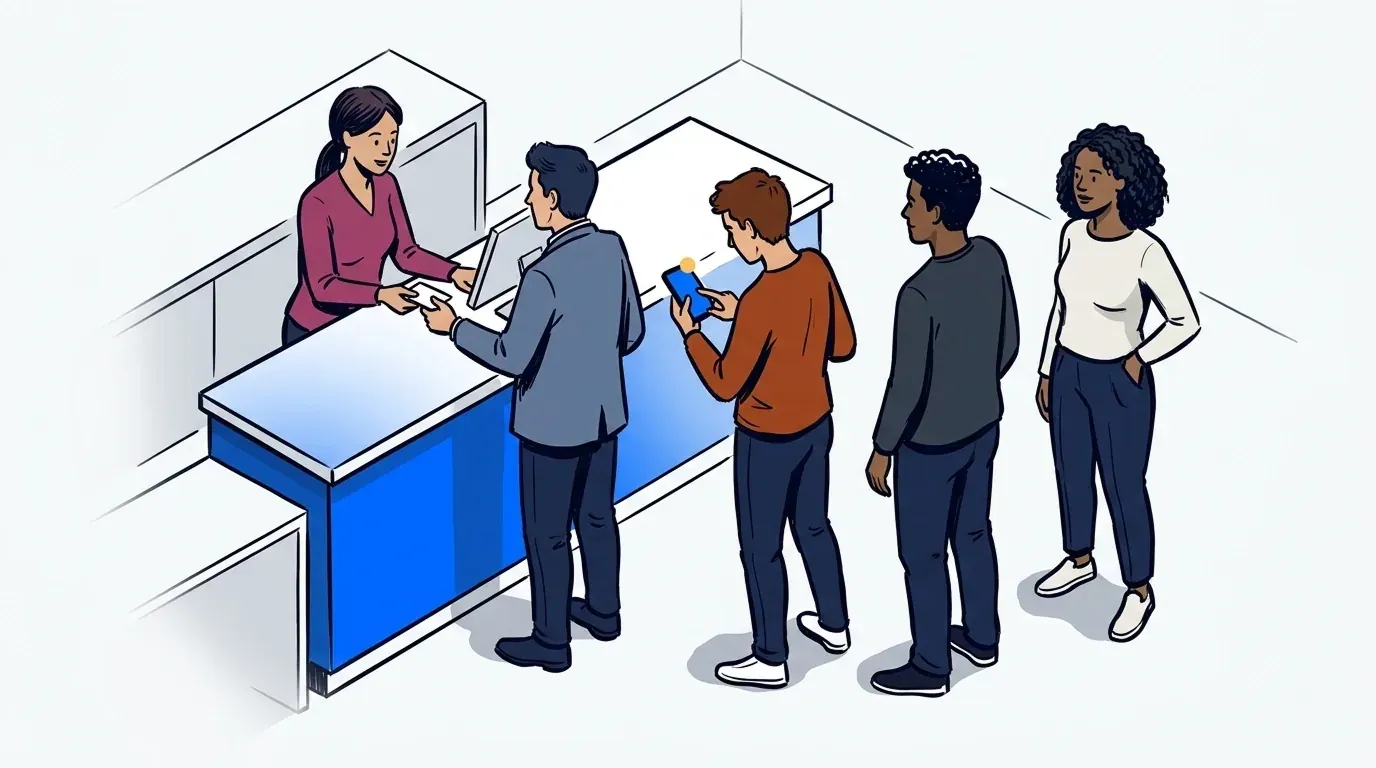
The customer experience in a retail store lives or dies at the checkout. Stores invest in displays, product selection, and staff training, and yet a slow, unmanaged queue at the end of the visit can undo all of it. Customers standing in a line that isn’t moving make a quiet calculation: is what I came to buy worth staying for?
A lot of the time, the answer is no. They put the item down and walk out. No complaint, no explanation - just gone. And because it happens silently, many store managers never see it as a queue problem. They see it as a slow day.
This post explains how checkout lines damage the customer experience in retail stores, why the damage often goes unmeasured, and what operators can do to fix the underlying problem without adding staff or rebuilding their floor layout.
What the customer experience in a retail store actually depends on
Customer experience in retail stores covers a lot of ground: store layout, product selection, staff friendliness, pricing clarity, and the checkout process. Most of these elements get attention. The wait rarely does - at least not in a structured way.
Research from the National Retail Federation consistently identifies long wait times as one of the top reasons customers do not return to a store. The checkout line is often the last interaction a customer has before leaving. If it goes badly, it shapes how they remember the entire visit. A great product selection and a friendly floor team can be undone by ten minutes standing in an unmoving queue with no sense of how long it will take.
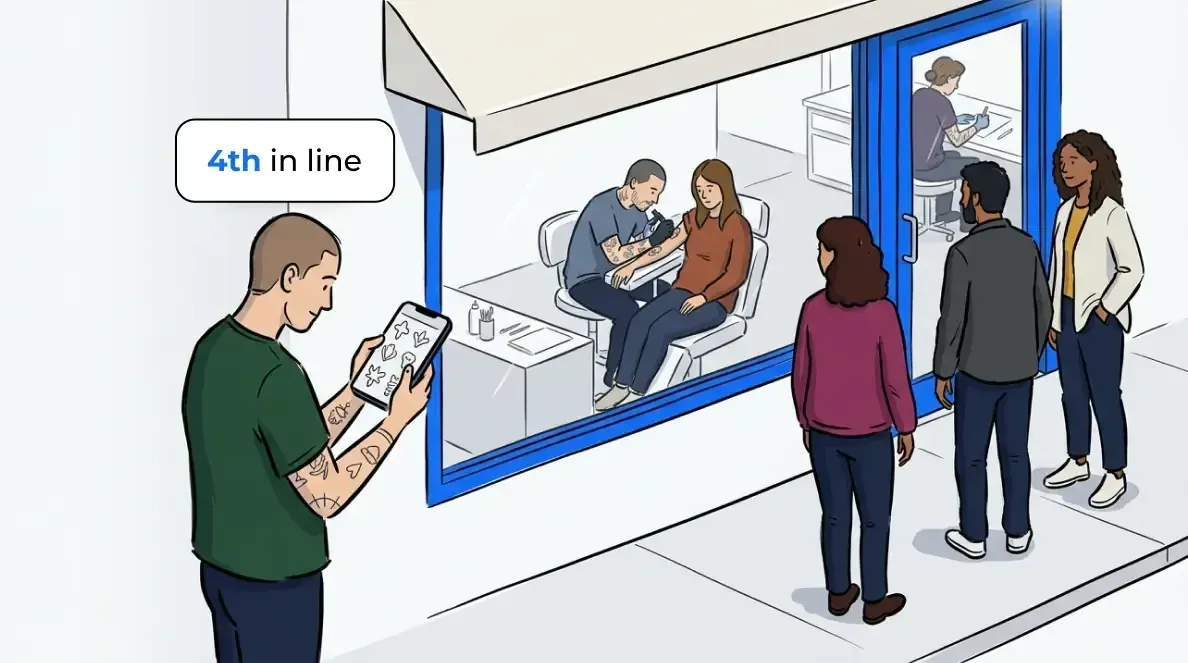
The problem is not always speed. It’s uncertainty. Customers who know they are second in line and will be seen in three minutes will wait. Customers who have no idea whether the line has stopped, whether another counter is about to open, or whether the person at the front has a complicated return will not. The wait feels longer, the frustration compounds faster, and the decision to leave becomes easier.
Why retail walkouts are harder to track than they look
Most stores track sales, transaction counts, and average basket size. Few track the customers who left without buying. That data does not exist in the POS unless someone abandoned a cart, and even then the connection to queue frustration is indirect.
The result is that walkouts caused by wait times are often invisible to management. A busy Saturday with a 15% walkout rate looks like a good day in the sales report. The lost revenue is real but there is nothing to measure it against.
Retailers who have installed queue management systems often describe the same discovery: they expected to reduce complaints, and they did - but they also saw transaction counts increase on the same footfall, because fewer customers were leaving before completing a purchase. The line did not get faster. Customers just knew what to expect, and that was enough to make them stay.
This connects to a broader principle worth naming: the customer experience in a retail store during a wait is not primarily a speed problem. It is an information problem. When customers know where they are in the queue and roughly when they will be served, the perceived wait drops - even if the actual wait stays the same. Remove the uncertainty, and you remove the friction that drives walkouts. Stores that treat the customer experience in a retail store as an information challenge, not a throughput challenge, tend to see the biggest improvements.
If you have already read about how retail queue management keeps customers calm during peak hours, this post looks at a different dimension: not just peak hour behavior, but how the wait experience shapes the overall visit and whether customers come back.
What happens when customers have to wait without any information
The cascade starts quickly. A customer joins a line with no visible indication of how long it will take. After two or three minutes with no movement, they start looking for signals: is anyone else frustrated? Has another counter opened? Is the staff member at the counter dealing with something complicated?
Without answers, the customer’s mental timer starts running fast. Studies on perceived wait time show that an uncertain wait consistently feels longer than a known wait of the same duration. A customer told they have a seven-minute wait is more patient than a customer who has been waiting five minutes with no information at all.
The downstream effects go beyond the immediate visit. Customers who experience a frustrating checkout are less likely to return, more likely to leave a negative review, and more likely to describe the experience as “the store was disorganized” rather than “there was a long line.” The queue problem becomes a brand perception problem.
This dynamic is especially acute in service-based retail contexts: tailoring and alterations studios, device repair counters, specialty consultation areas, pharmacies, and beauty counters. These are high-consideration purchases where the customer is already invested. A bad wait experience at the end of that journey is a significant let-down.
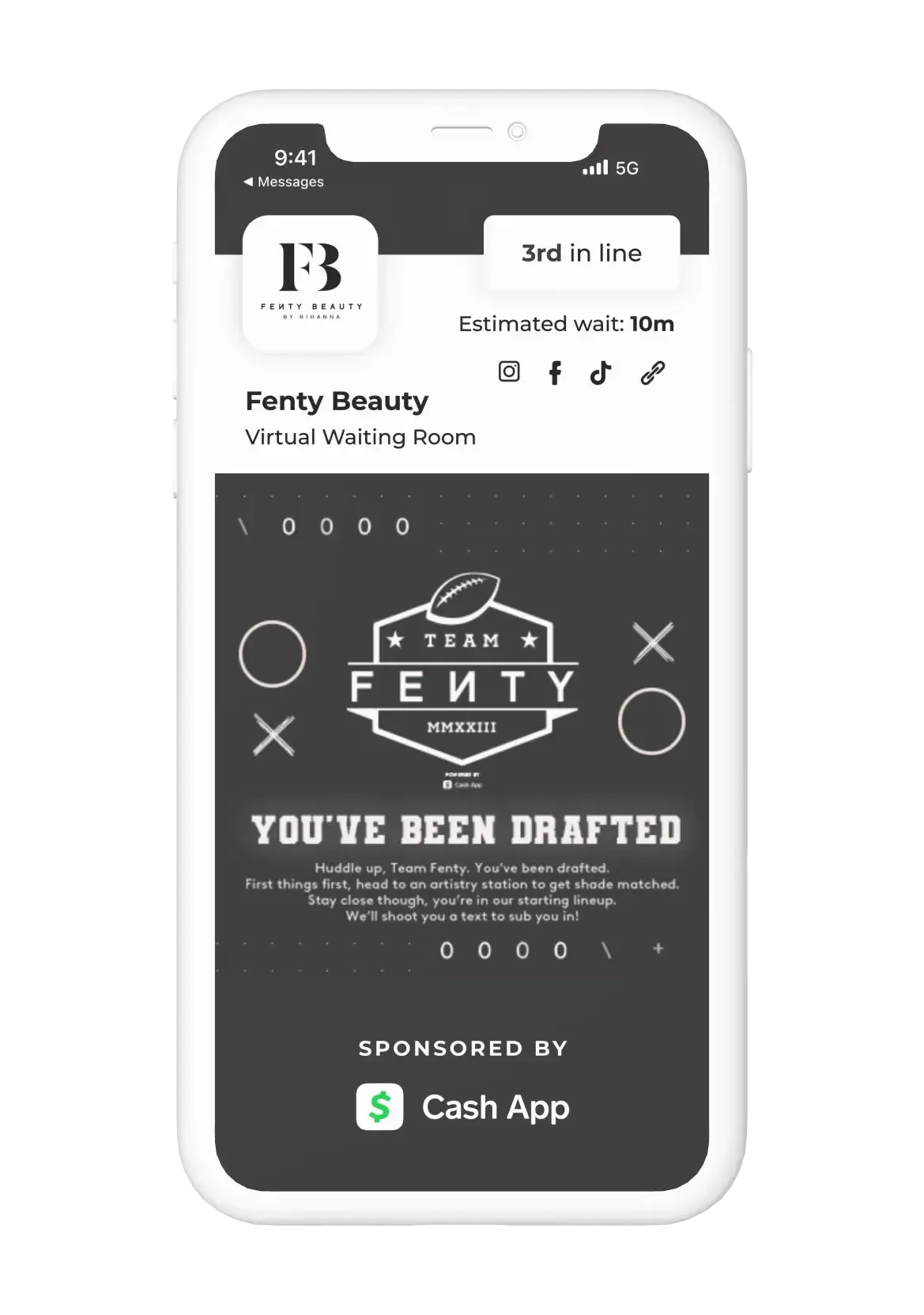
Fenty Beauty’s approach to managing high-demand product launches illustrates what the alternative looks like. By using NextMe’s virtual waiting room at retail activations, customers received SMS updates letting them know their place in the queue and when to return to the counter. Instead of standing in a physical line that moved unpredictably, they browsed freely and came back when called. That’s not a faster queue, it’s a managed one - and the customer experience is fundamentally different.
How a virtual waiting room changes the retail wait
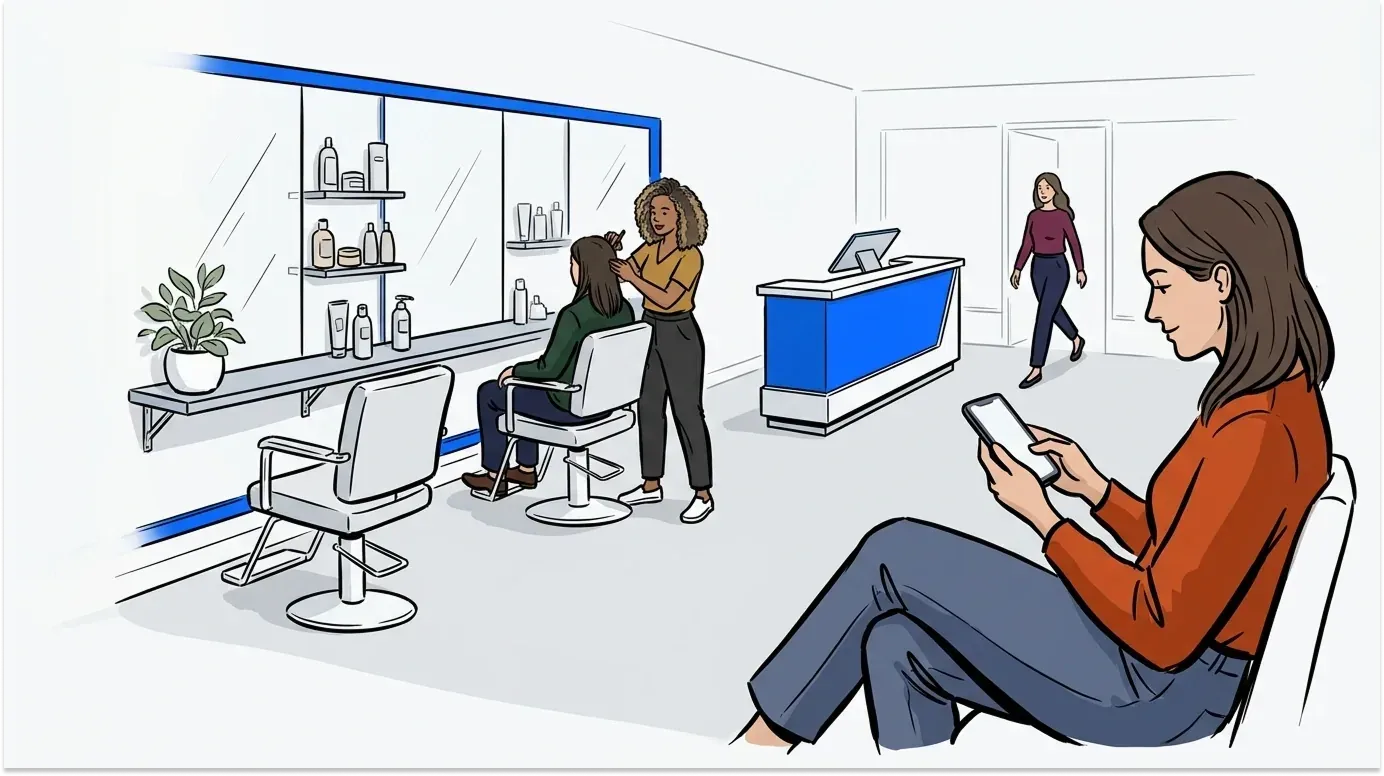
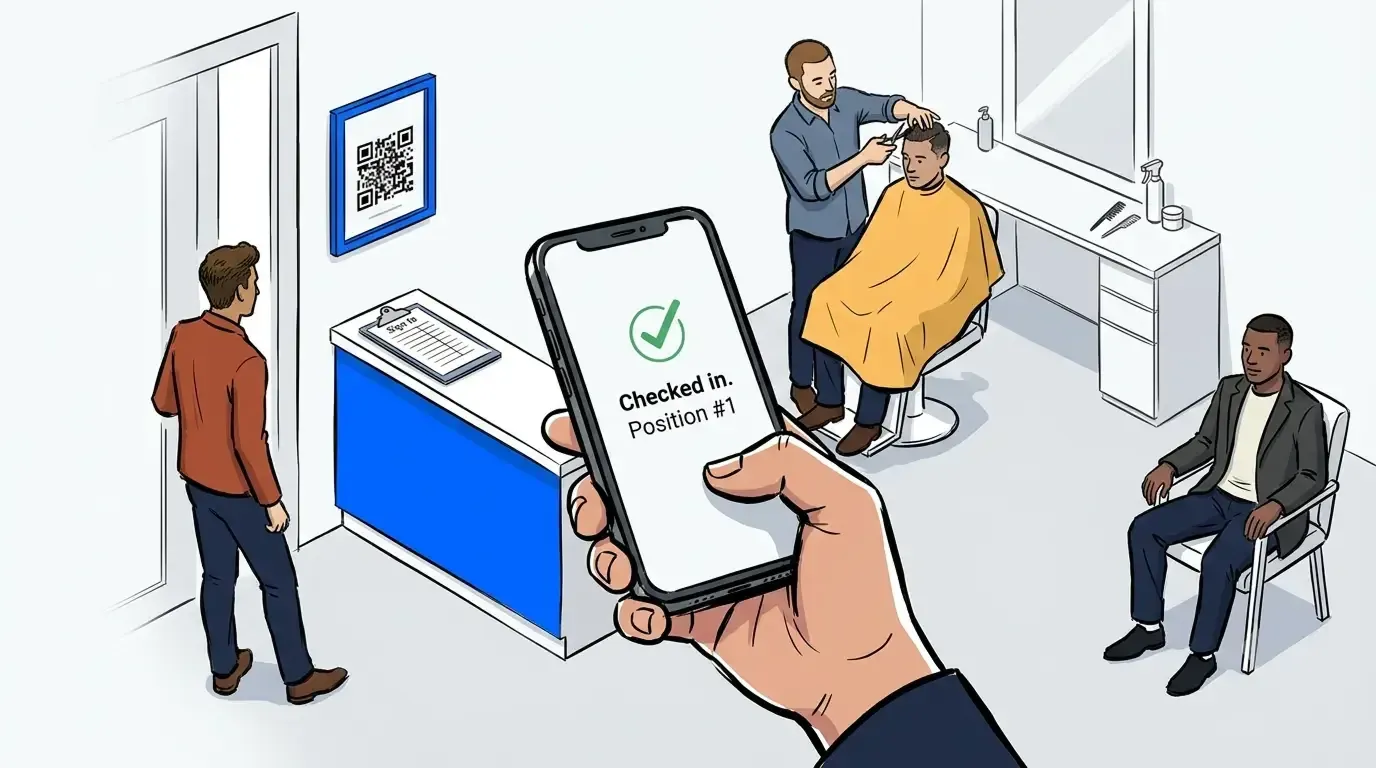
A virtual waiting room replaces the physical queue with a digital one. Customers check in - at a kiosk, by scanning a QR code, or by joining via a link - and then receive SMS updates about their position and estimated wait time. They do not need to stand at the counter. They can continue shopping, wait in their car, or grab a coffee nearby.
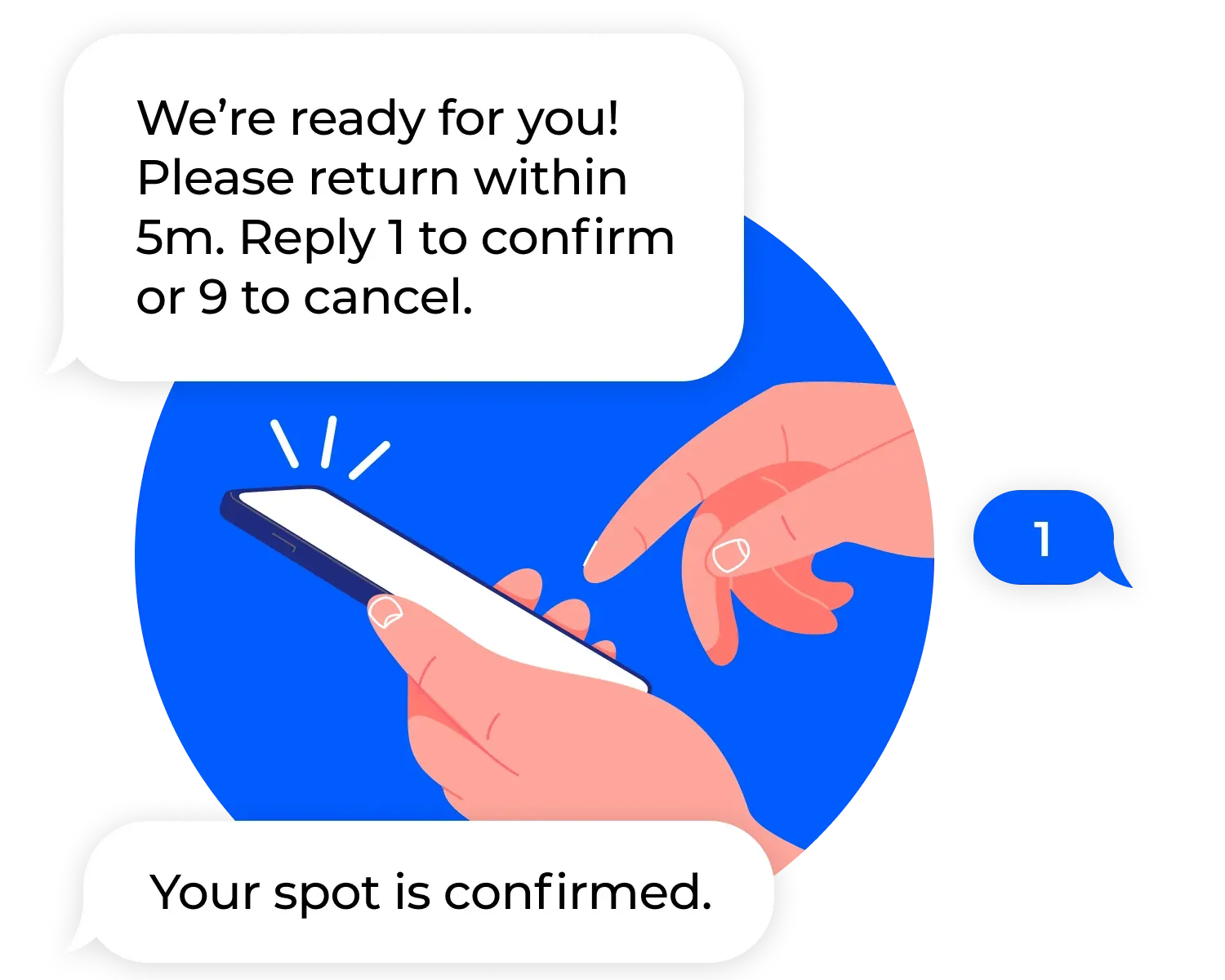
When it is their turn, they get a text. The message is simple and direct. They come back, they are seen immediately, and the transaction happens without the frustration of having stood in an unmoving line for twenty minutes.
This model works well for a wide range of retail contexts where walkouts are a live problem - not just high-demand launches. A device repair counter that regularly has a 30-minute wait, a specialty fitting service that books up quickly on weekends, a pharmacy consultation area during flu season. Any context where customers need to wait but do not need to stand still benefits from this model.
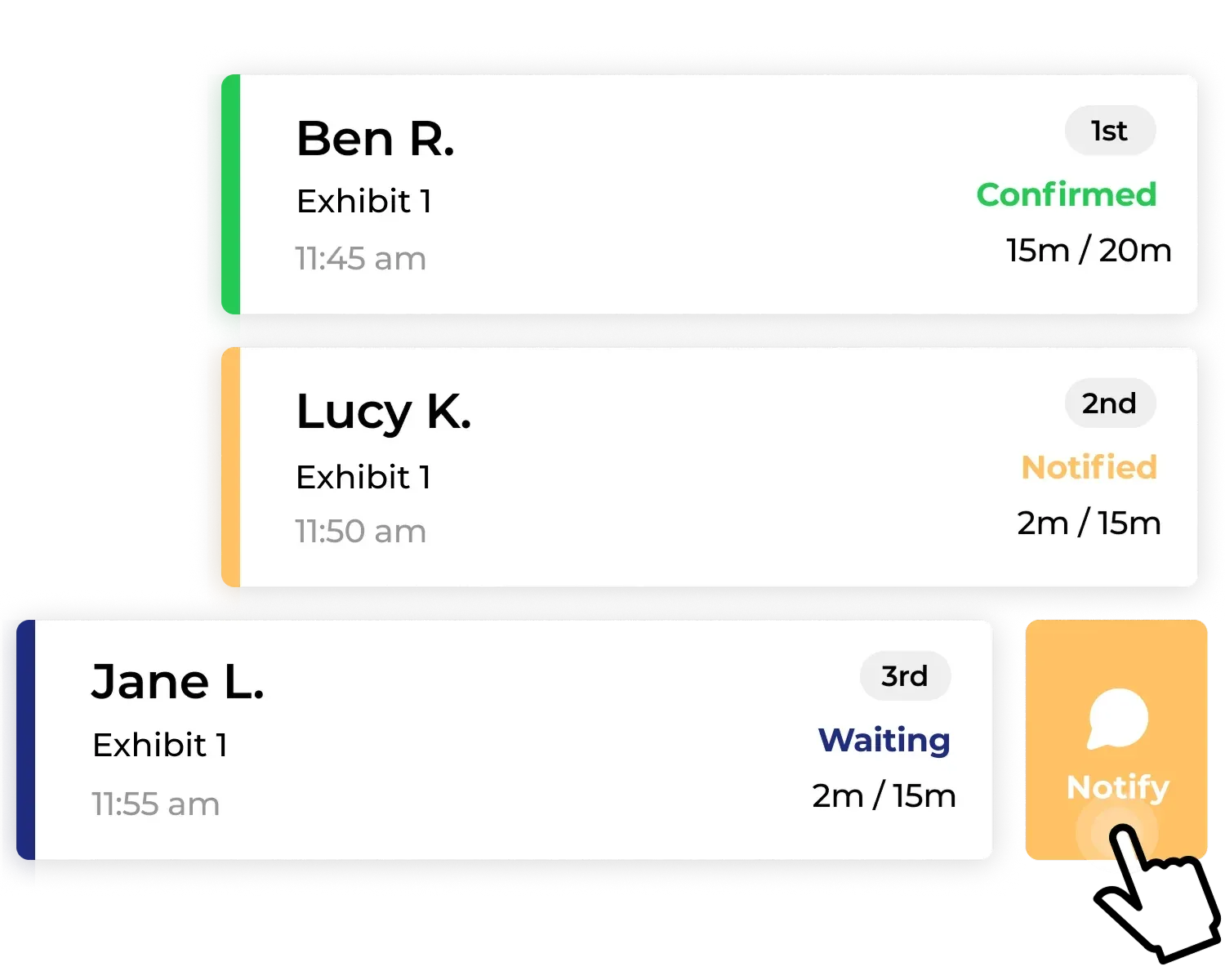
The operator side of this is equally important. Staff at the counter get a clear dashboard: who is in the queue, how long each person has been waiting, and who is next. Instead of managing an anxious cluster of people in front of them, they are working from a clean list. That reduces interruptions, improves accuracy, and makes the busiest periods easier to handle.
What this looks like in practice
The setup is simpler than most store managers expect. NextMe works on any device - a tablet at the counter, a phone in a staff member’s pocket, or a kiosk near the entrance. No hardware installation is required. The system is running within minutes, and staff training takes less than an hour.
Customers join the queue through whichever method fits the store’s setup: a QR code on a sign near the service area, a link texted to them at the door, or a simple self check-in tablet mounted near the counter. Once they are in the system, they get a confirmation text and then a follow-up when it is their turn.
Operators can see the full queue in real time: who has been waiting the longest, which customers have been notified, and how wait times are tracking across the day. If a counter opens up unexpectedly, staff can pull the next customer immediately. If the queue is building faster than expected, they can adjust staffing before it becomes a problem.
Retailers with multiple service points (a main checkout, a returns counter, a consultation area, etc.) can run separate queues from the same dashboard. Each counter manages its own list, and customers are directed to the right queue at check-in without confusion or doubling up.
Conclusion
Long checkout lines do not just frustrate customers in the moment. They shape how customers feel about the store, whether they come back, and what they say to others. The good news is that the fix is not about speed - it’s about information. A customer who knows what to expect will wait. A customer left guessing will leave.
If your store has service counters that back up during peak periods, a digital queue is the most practical way to improve the customer experience without adding staff or restructuring the floor. See how NextMe works for retail and try it free.