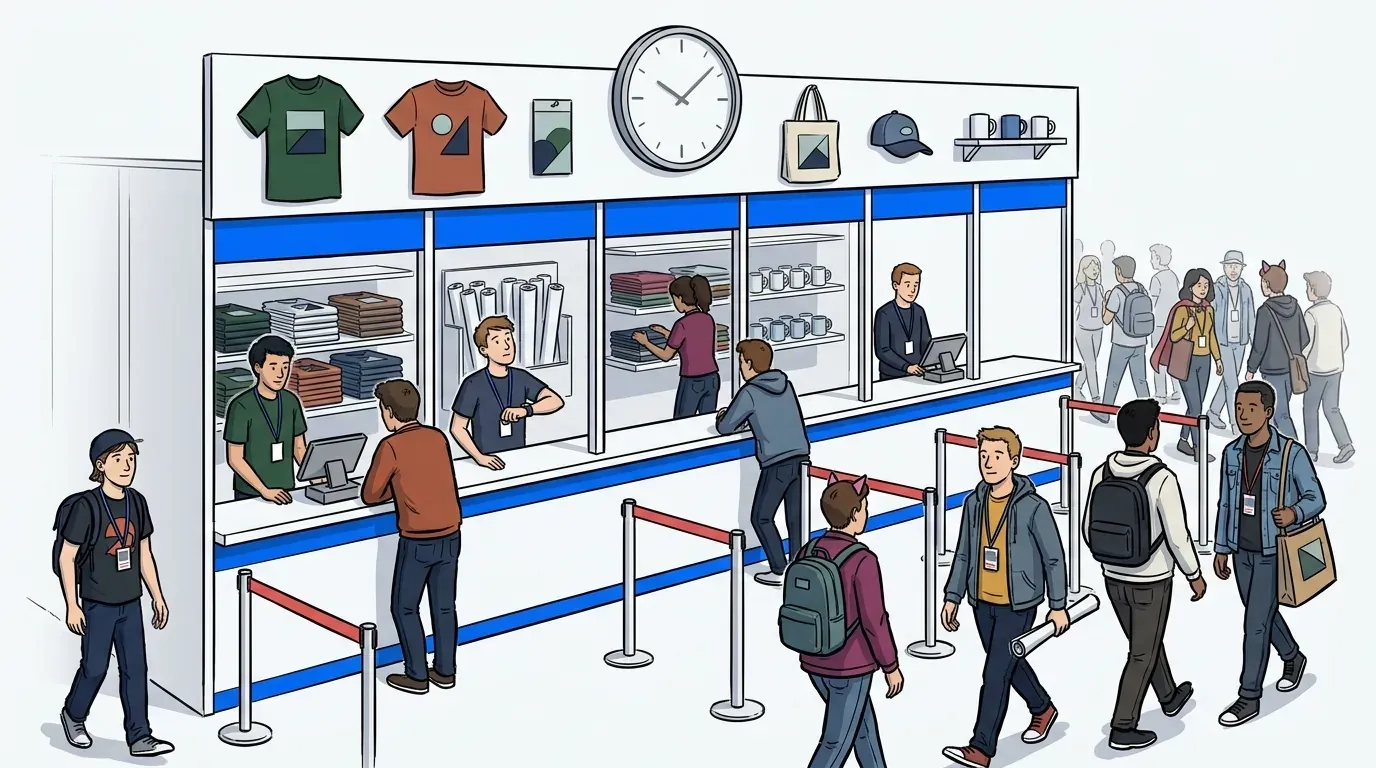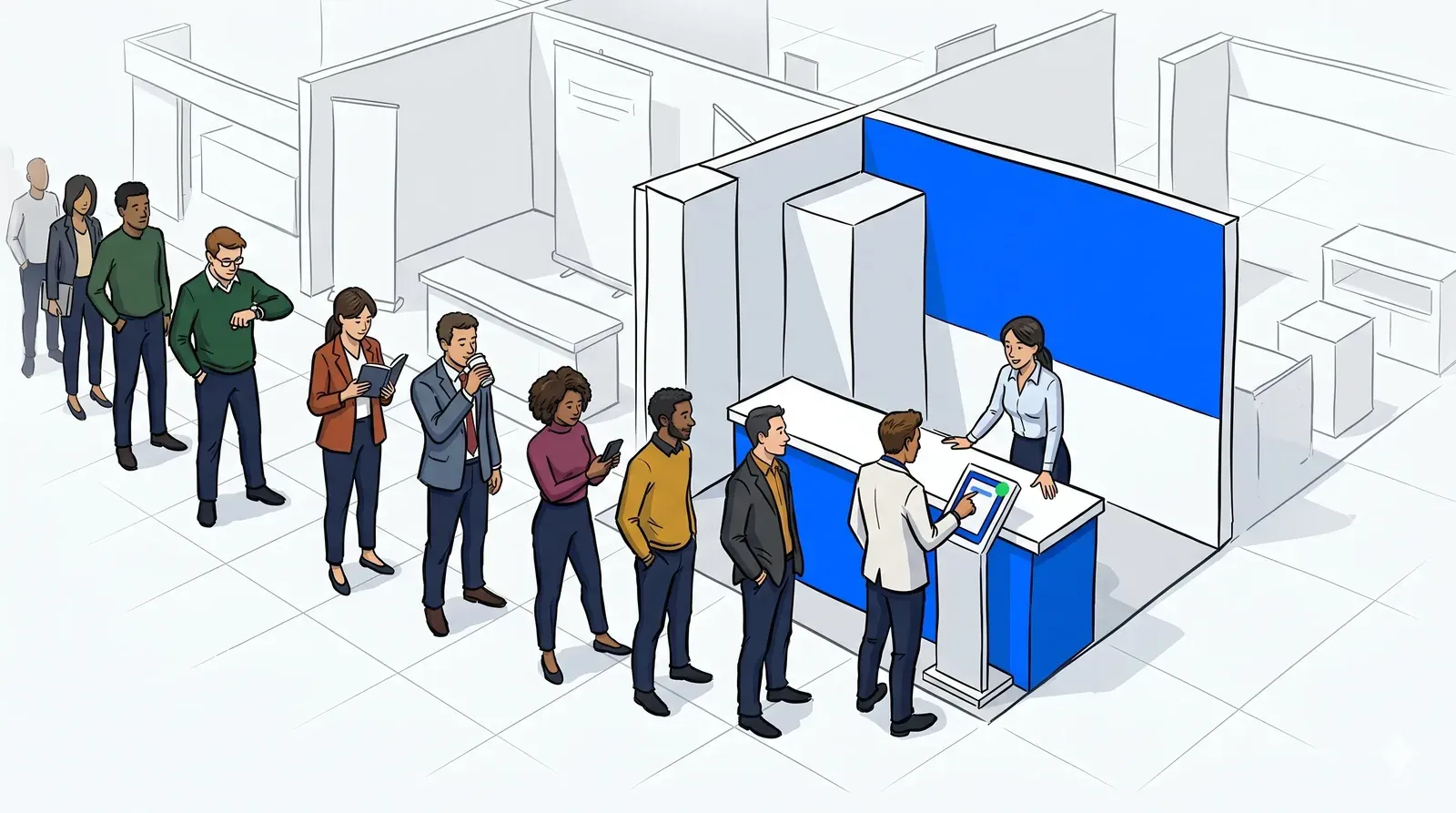
You’ve invested in the booth, the collateral, the staff, and the travel. People are stopping. Interest is real. And then the line at your booth gets too long, and half the people in it drift away before you ever get the chance to talk to them.
For exhibitors at trade shows and conferences, an unmanaged booth queue doesn’t just create a bad experience. It costs leads. Every person who walks away from a crowded booth without leaving their information is a missed conversion that no follow-up sequence can recover.
This guide covers what trade show booth queue management actually looks like in practice, why the goal isn’t eliminating your line but controlling it, and the steps you can take to make sure no interested visitor slips through the cracks.
What is trade show booth queue management?
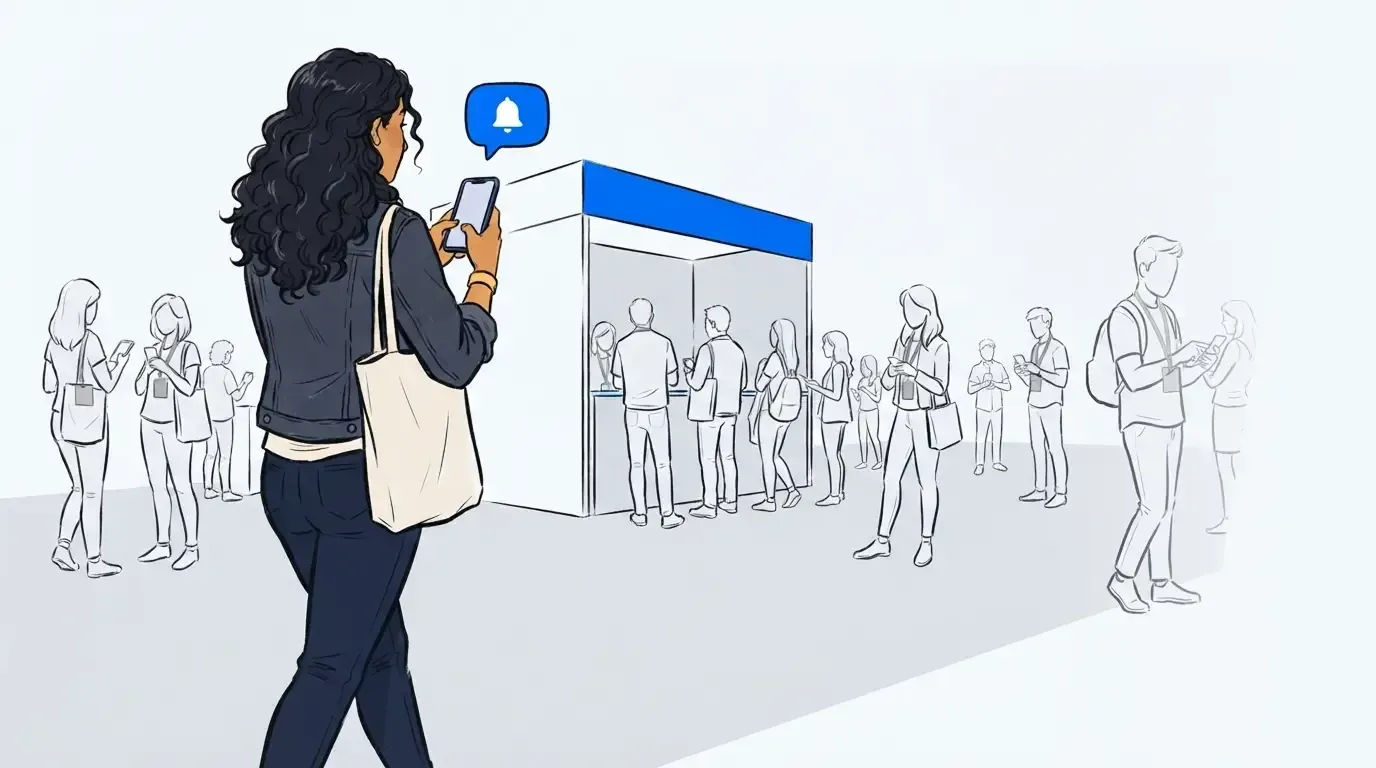
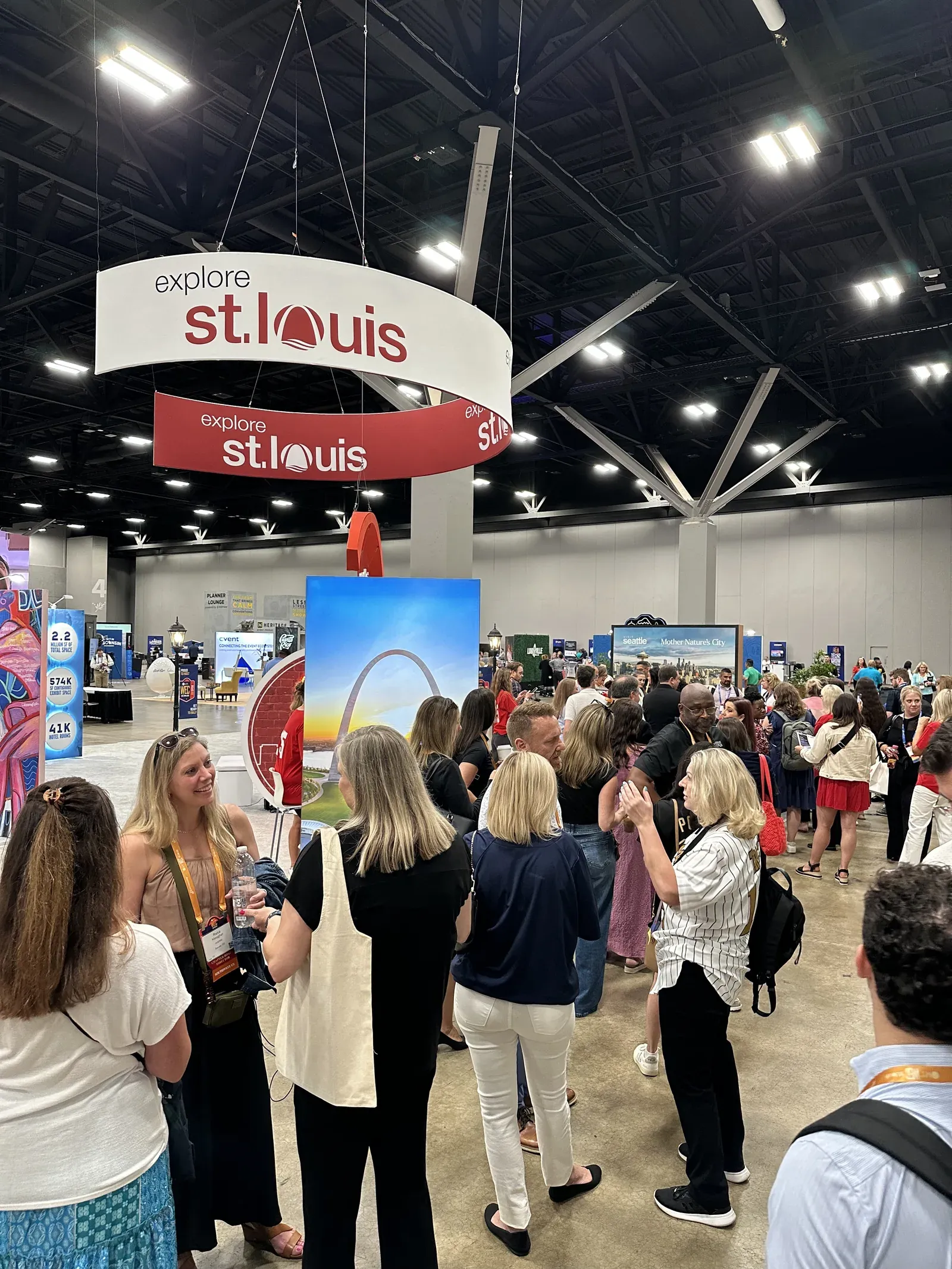
Trade show booth queue management is the process of organizing, tracking, and communicating with visitors who want to engage with your booth when multiple people arrive at the same time. Instead of requiring visitors to wait in a physical line, a managed queue gives each person a place in line and a way to wait nearby, browse the show floor, and receive a text when it’s their turn.
The critical distinction is this: a visible, active line at your booth signals demand. It tells other attendees that your booth is worth stopping at. The problem isn’t the line, it’s an unmanaged line that creates a bad experience and drives visitors away before they ever speak with your team. Effective trade show booth queue management keeps your line visible and controlled without making people stand in place.
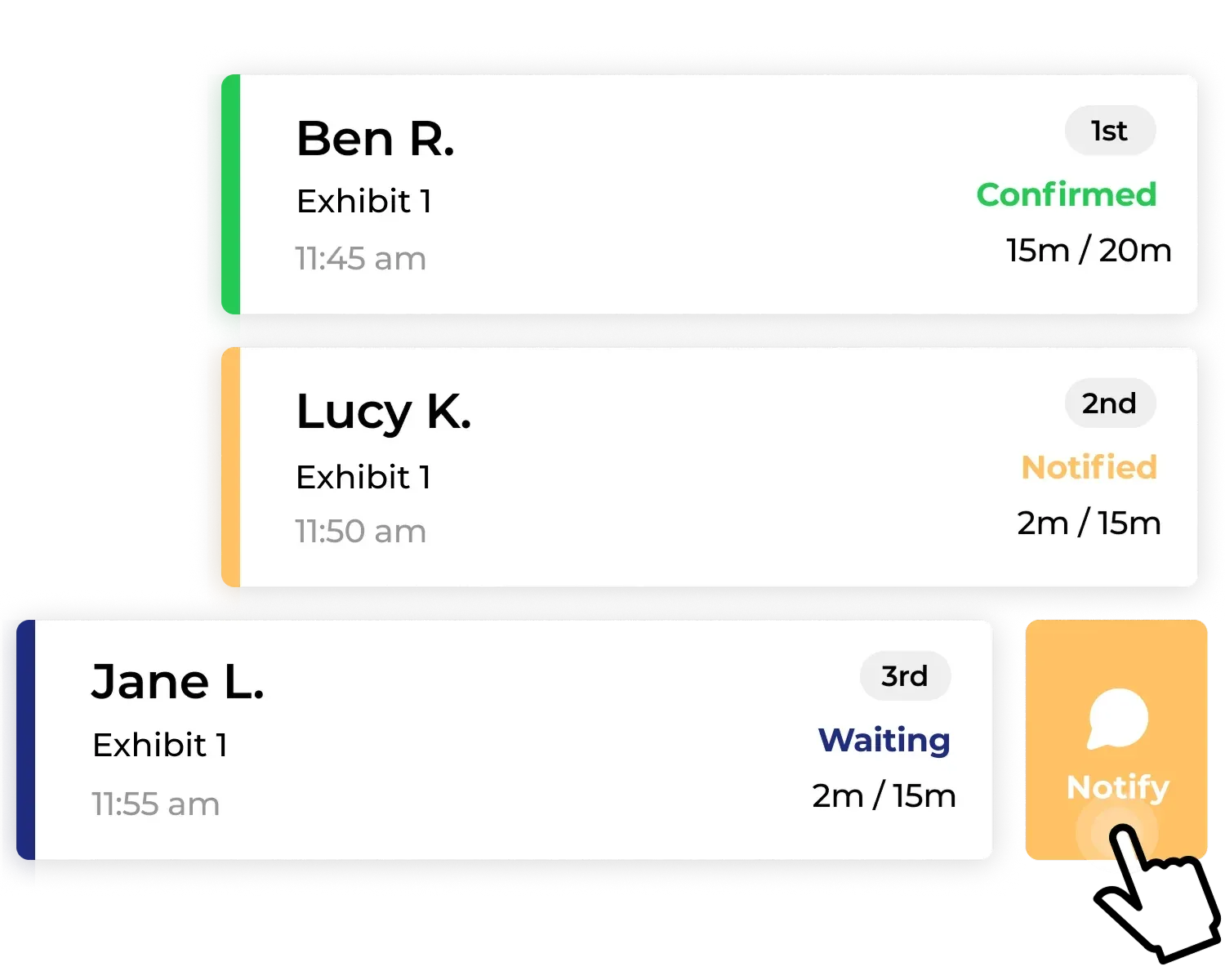
Digital tools designed for virtual queue software for events make this straightforward. Visitors check in with their name and contact information, receive an estimated wait time via SMS, and stay free to explore the show floor until they’re called. Your team gets a live operator dashboard showing everyone in line and can notify people when it’s their turn with a single tap.
Why unmanaged booth lines cost you leads
The economics of trade show lead capture are unforgiving. You’re competing for attention in a crowded hall, where every attendee has dozens of booths to visit and a limited number of hours to cover the floor. When your booth line looks long and disorganized, the mental calculation is quick: “I’ll come back later.” Most don’t come back.
There are three specific moments where unmanaged queues lose leads:
- Visible crowding with no structure. Attendees see a group of people clustered around the booth and can’t tell if there’s a line or how long it is. They move on.
- No way to hold a visitor’s place. A prospect is interested but doesn’t want to stand still for 15 minutes. With no queue option, they leave and there’s no record they were ever there.
- Staff overwhelmed and unable to greet new arrivals. When your team is deep in a demo, incoming visitors get no acknowledgment. The implicit message is that their time doesn’t matter.
According to Pure Exhibits’ First Time Trade Show Exhibitor Guide, one of the most common exhibitor mistakes is understaffing booths and losing qualified visitors during peak traffic because staff are already engaged. In practice, that means lead loss often starts at the booth itself, long before the post-show follow-up process begins.
How to manage your trade show booth queue step by step
The setup for digital booth queue management is fast and most teams have it live in under 10 minutes. Here’s how to implement it at your next event:
- Set up a check-in point at the front of your booth. This is typically a tablet or a QR code displayed on signage. Visitors scan the QR or enter their name and phone number at the tablet to join the queue. The act of checking in captures their contact information before the conversation even starts.
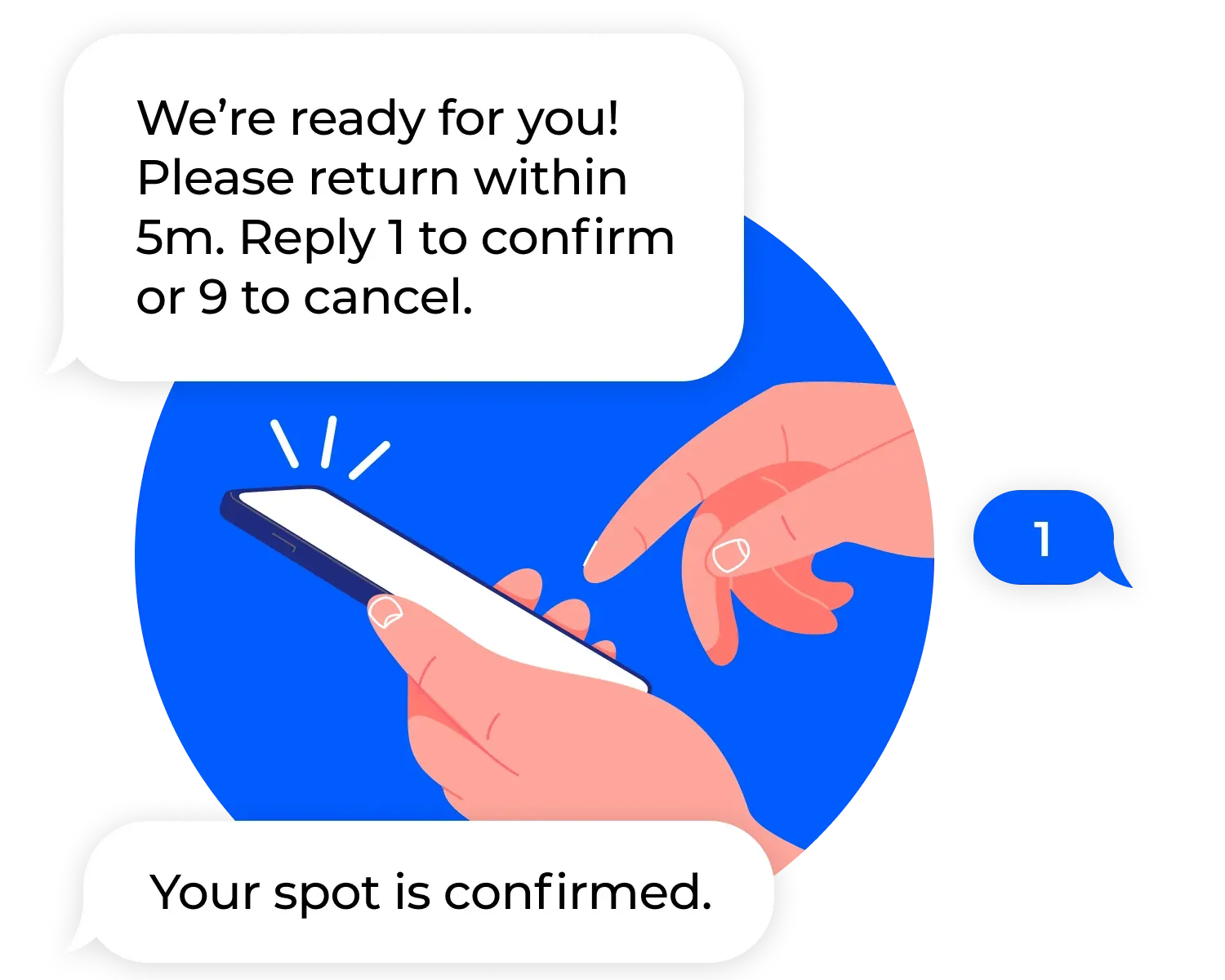
- Confirm the entry with an SMS message. The system sends the visitor an automatic text acknowledging their place in line and an estimated wait. This gives them permission to leave your immediate area and browse nearby. They’re confirmed, not forgotten.
- Give your staff a live queue dashboard. Your team sees everyone in line in real time, including how long each person has been waiting. This lets staff prioritize, set expectations with new arrivals, and keep the experience organized even during busy surges.
- Notify visitors when it’s almost their turn. When a staff member is ready, they send a text from the dashboard. The visitor gets a message telling them to start heading back to the booth.
- Review queue data after the event. Your waitlist data is a record of every visitor who checked in, when they arrived, and how long they waited. This is a structured lead list with timestamps. Far more useful than a stack of business cards.
The capture-first principle: managing your line is a lead gen tactic
Most exhibitors think about booth queue management as an operations problem. The goal, in that framing, is to keep things from getting chaotic. That’s part of it, but it misses the bigger opportunity.
The moment a visitor joins your digital queue, they’ve given you their phone number. That is a qualified lead. They haven’t just walked past your banner, they’ve actively raised their hand and waited to talk to you. Your queue is not just a crowd control tool. It’s the first step in your lead capture funnel.
This “capture-first” approach reframes how you set up your booth experience. The check-in point isn’t just a waiting mechanism, it’s an intentional moment where your process captures contact information for every interested visitor, including the ones your team doesn’t have time to engage with during a busy stretch.
For exhibitors evaluating their options, a comparison of line management approaches for event operators is worth reviewing alongside this guide to find the right fit for your booth size and team.
What good trade show booth queue management looks like in practice
Companies across industries use virtual queuing solutions to manage exhibitor booth flow at conferences and trade shows. The pattern across successful implementations is consistent: check-in at the booth entry point, SMS-based hold confirmation, staff notification when ready, and post-event queue data used for follow-up.
NextMe’s work at South by Southwest (SXSW) demonstrates how a virtual queue system handles massive, unpredictable foot traffic at one of the world’s largest multi-venue events - and how that same infrastructure translates cleanly to high-traffic B2B conference and trade show environments. The SXSW case study shows how the team managed guest flow across activations at scale, reducing congestion while improving the attendee experience.
For exhibitors at large conferences and conventions, the events industry page covers how NextMe’s event queue management tools are used across activation types.
Conclusion
Trade show leads are expensive to generate. You’ve paid for the booth, the travel, and the staff time. Most of your competition is losing qualified visitors to disorganized lines and missed introductions. A digital waitlist turns your booth queue from a friction point into the first step of your lead capture process.
The mechanics are simple: visitors check in, get an SMS confirmation, wait freely, and come back when called. Your team stays organized, no one falls through the cracks, and every interested visitor is in your follow-up list whether or not you had time to speak with them. See how NextMe handles waitlist management and virtual waiting room features for events and activations.