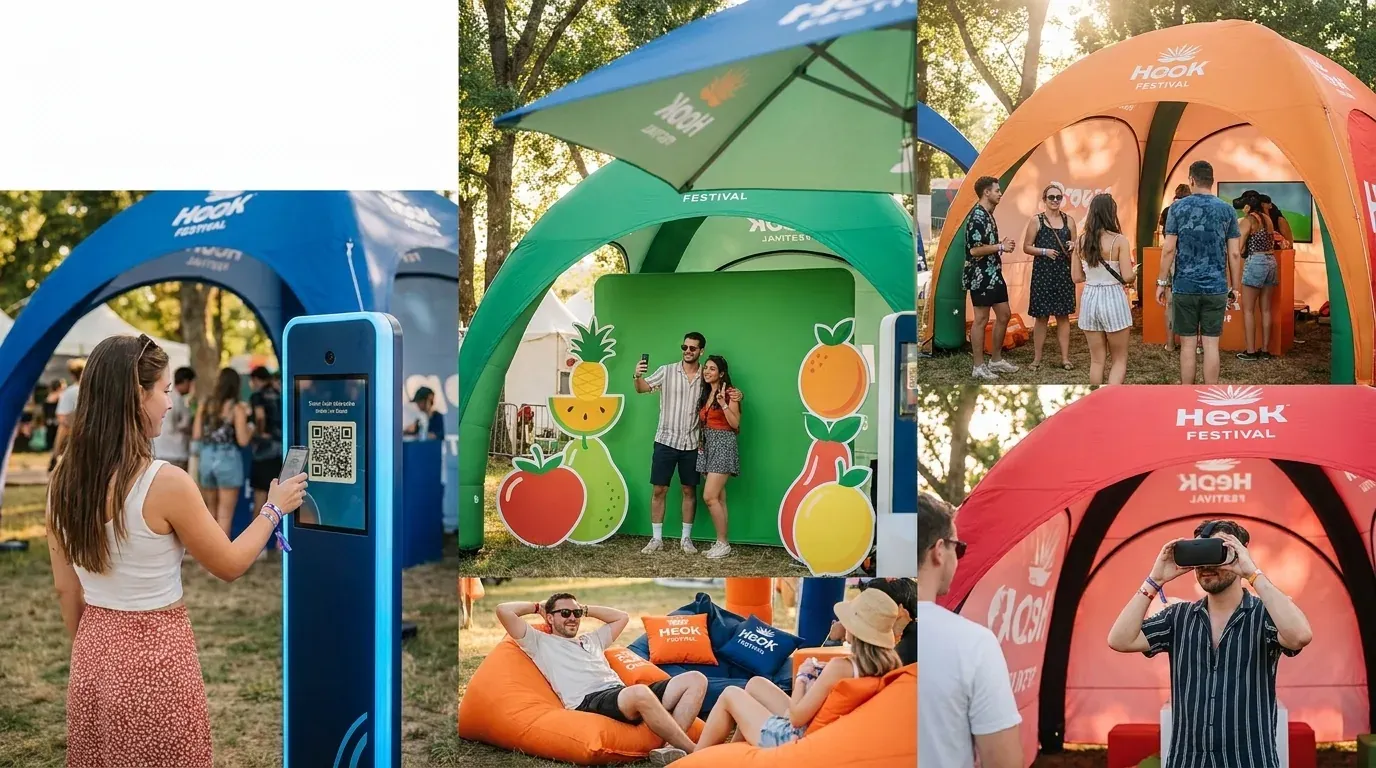
A two-hour line can make a booth look popular. It can also quietly kill the rest of your event. That tension is exactly why more teams are looking for alternative ways to manage long line instead of forcing every guest to stand in the same place the whole time.
For event organizers, the best alternative isn’t always “no line at all.” It’s a better mix of visibility, movement, and communication, so guests stay informed, stay mobile, and come back when they’re actually needed.
Key Takeaways:
- The strongest line management alternatives don’t remove all physical lines. They control them.
- If a visible line starts blocking traffic, hiding your booth, or pushing wait times past 20 to 30 minutes, you need a hybrid setup.
- Event guests tolerate waiting better when they know their status, their rough timing, and what to do next.
- Good alternatives also create more brand touchpoints, because guests can explore, shop, sample, or engage while they wait.
- For activations with multiple stations, separate queues usually work better than one master line.
- The best event teams measure throughput, abandonment, and engagement, not just crowd size.
Why traditional lines stop working at live events
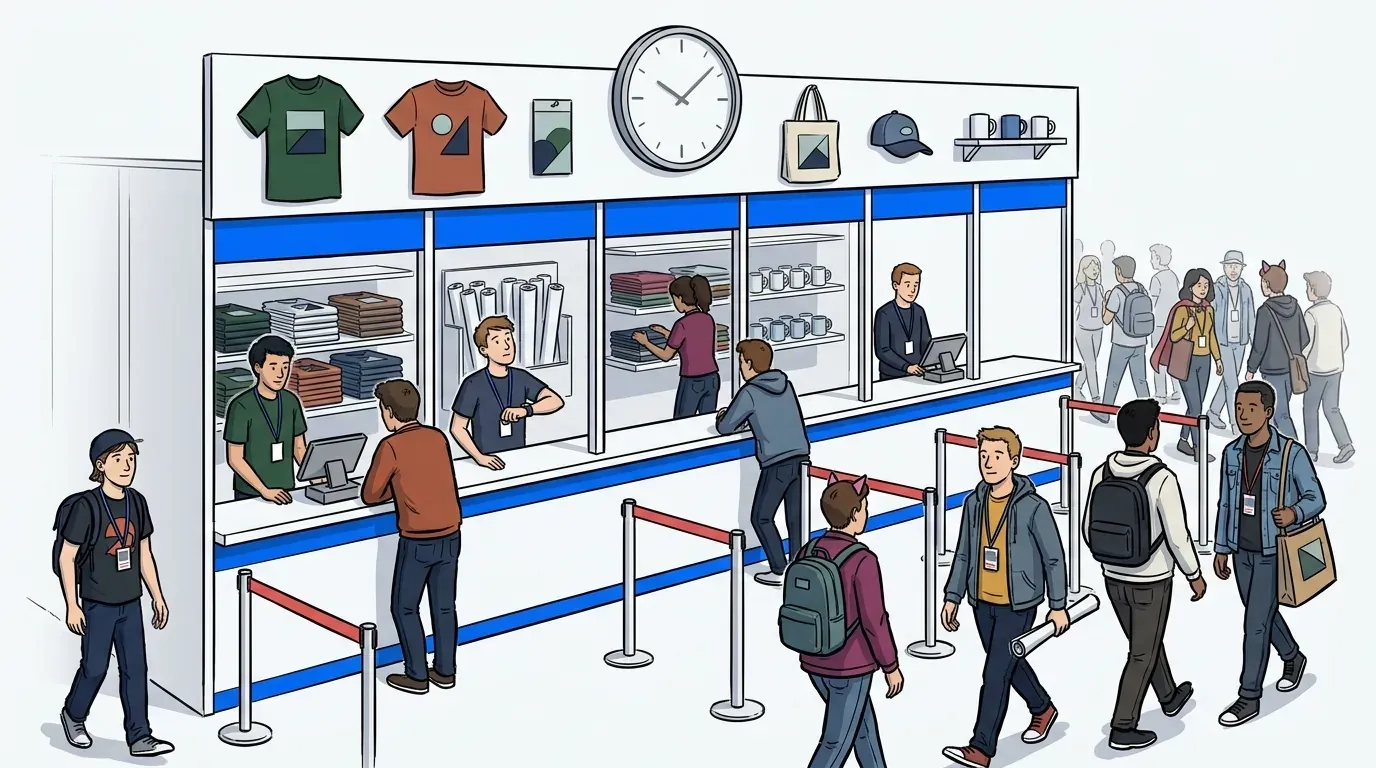
Traditional lines break down when guest demand becomes harder to see and harder to control. A physical line can create curiosity and demand at first, but once it gets too long, it starts consuming space, staff attention, and guest goodwill. At that point, you don’t just have a waiting problem. You have a flow problem.
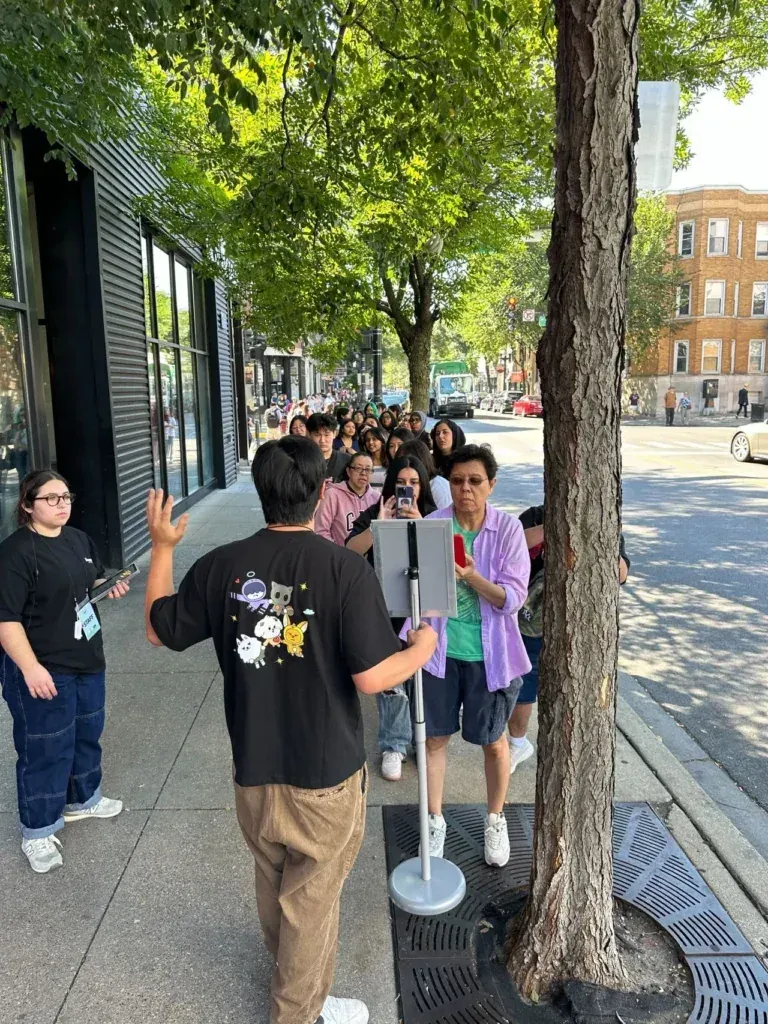
A long line can signal demand, then turn into friction
A visible line isn’t automatically bad. For many activations, a line does something useful. It signals interest. It makes the experience feel worth checking out. That’s valid, and event teams know it.
The problem starts when the line stretches beyond what the space can support. A good rule is simple: if guests can’t see the front experience from where they’re standing, the line is already too long to be doing marketing work. Now it’s just taking up room. At that point, one of the most practical line management alternatives is keeping a manageable visible standby line while moving overflow into a virtual queue.
That shift matters more than it sounds. A physical line is like a storefront window. A little bit of it creates buzz. Too much of it blocks the entrance.
An activation at Comic-Con faced this exact issue, with waits reaching up to two hours. The line showed demand, sure. It also trapped fans in place and reduced the time they could spend engaging with the rest of the experience. That is where a line management alternative becomes operational, not cosmetic.
If long lines are already hurting the event, this is the question that follows: what should replace them?
The real problem is uncertainty, not waiting itself
Guests don’t usually hate waiting for something they want. They hate not knowing what’s going on. If they don’t know whether the line is moving, whether they can step away, or whether they’ll lose their spot, frustration rises fast.
That distinction changes how event teams should evaluate line management alternatives. If the setup still leaves people confused, it isn’t much of an upgrade. A numbered ticket can organize the crowd, but if guests still have to hover nearby for 45 minutes, the experience hasn’t improved much.
At busy events, uncertainty creates extra labor too. Staff end up answering the same questions over and over:
- How much longer?
- Am I still in line?
- Can I leave and come back?
- Did I miss my turn?
When three or more staff members are spending part of every hour on status questions, that’s a sign the line system is doing a poor job of communication. Fix the communication, and the line often gets easier to manage.
That operational drag is easy to miss from a distance. Up close, it feels messy. Guests get restless. Staff get pulled away from service. The booth starts to feel crowded even before capacity is technically hit.
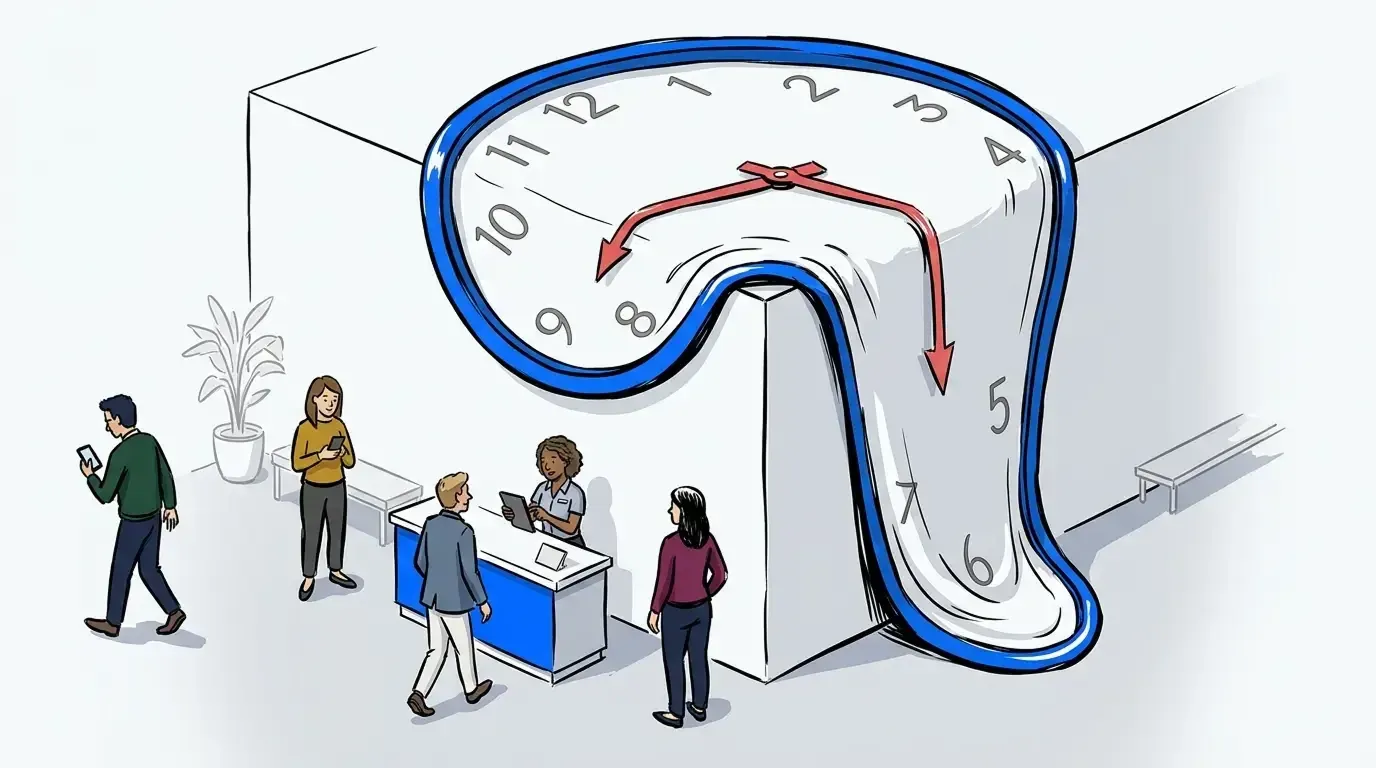
Standing in one place wastes event time
The old approach assumes the guest has to stay in the waiting area. For events, that’s often the wrong assumption. Trade shows, fan conventions, brand activations, and fan zones are all built around movement. People want to browse, network, attend key note sessions, eat, post, and explore.
When a guest spends 60 minutes standing in one spot, the event loses more than comfort. It loses secondary engagement. It loses sponsor exposure. It loses sales moments that happen between destinations.
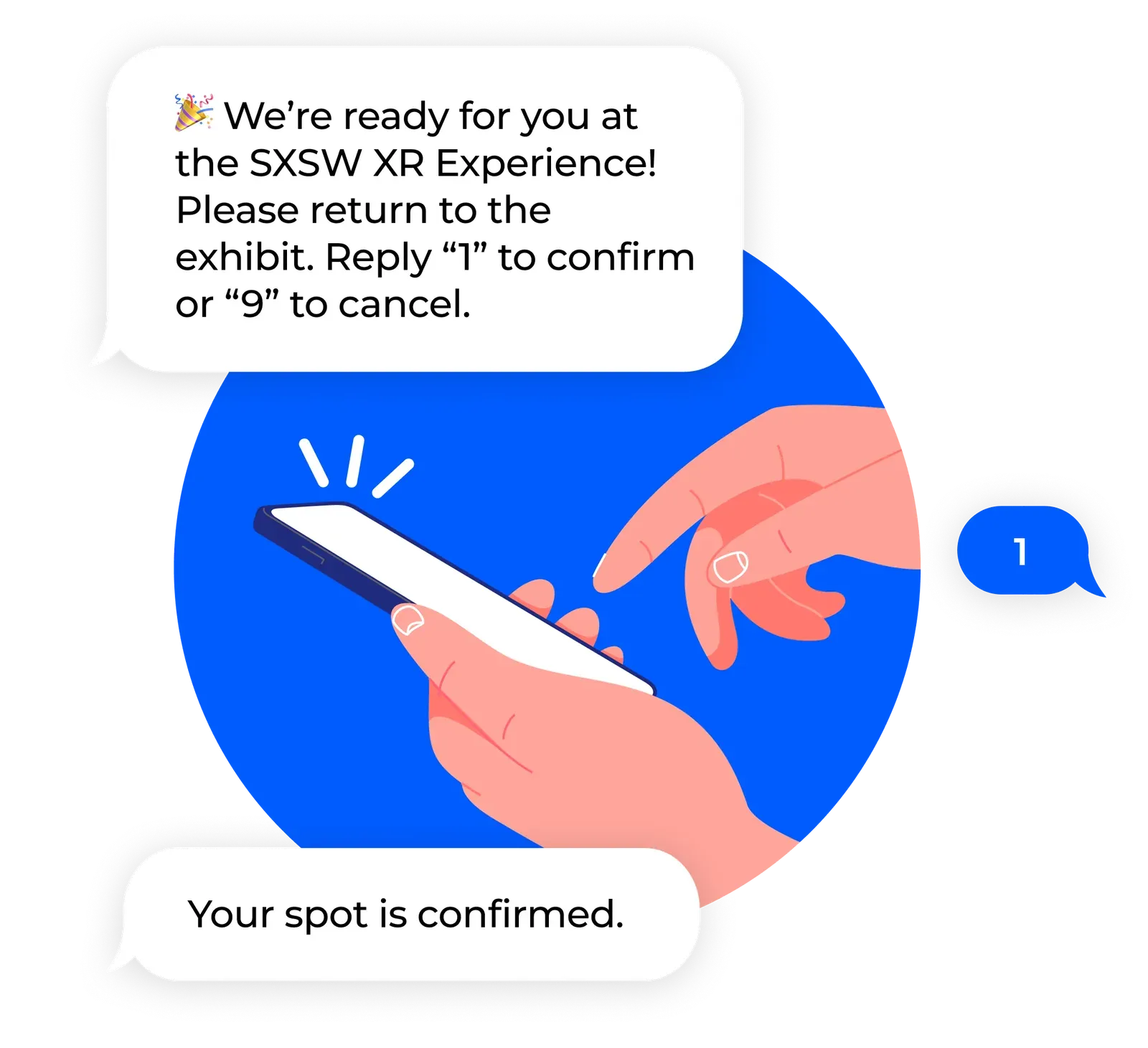
That isn’t theoretical. At CES, one exhibitor managed about 1,200 attendees per day for demos and used a mobile-accessible waitlist so people could explore the show while waiting. At SXSW XR exhibits, a modern virtual waiting room helped retain 32% more attendees who might otherwise have walked away. Those numbers point to a useful threshold: if your average wait is over 15 minutes and guests are forced to stand still the entire time, you should be testing line management alternatives immediately.
A line that keeps people captive isn’t proof of demand. It’s proof your event flow needs a better design.
Six line management alternatives event organizers should actually consider
The best line management alternatives give operators control over space, guest expectations, and return timing. Some are better for low-volume activations. Others only make sense when traffic spikes. The key is matching the format to the real shape of demand.
1. A short standby line plus virtual overflow
This is usually the most effective option for live events. You keep a small visible line to show momentum, then move additional guests into a virtual queue once the standby line hits a set limit.
The limit should be physical, not emotional. If your standby line exceeds 8 to 15 parties in a tight footprint, or 10 minutes of visible waiting, switch overflow into a virtual system. That gives operators a simple trigger instead of relying on gut feel. It also prevents the common mistake of waiting too long to change modes.
This approach works because it respects both sides of the event. The visible line keeps the activation looking active. The virtual overflow protects the floor from crowd buildup. For most brand activations, that balance is stronger than forcing an all-digital or all-physical model.
A nationwide automotive tour used this kind of thinking well. High demand for test drives could have created static, frustrating queues. Instead, organizers used mobile updates so attendees knew when their turn was coming and could stay engaged elsewhere. The result was a 26% increase in test drives.
If your event still benefits from some visible demand, this is often the first alternative worth testing. Curious what that setup can look like in practice? You can book a demo to see how a hybrid queue fits a live event floor.
2. QR code self check-in from the event floor
QR-based self check-in is one of the simplest line management alternatives for busy activations because it reduces the need for staff-heavy intake. Guests scan, enter their details, and join the queue without standing at a registration desk.
This works best when arrival volume comes in waves. Think keynote breaks, expo hall opens, celebrity appearances, or product drops. If more than 25 guests can hit the same station within 10 minutes, self check-in is often better than manual sign-up. Below that, staff-managed intake may still be enough.
The benefit isn’t just speed. It also cleans up the front edge of the experience. Instead of guests forming a knot around a clipboard or table, the queue begins digitally and the physical footprint stays lighter. For crowded environments, that matters.
One pop-up retail event saw a 300% increase in customer intake speed after using QR codes for self check-in. That’s the kind of result event teams should pay attention to, because intake is usually the first place congestion starts.
3. Time-window bookings instead of rigid appointment slots
Some event teams jump from open lines straight to fixed appointments. That can work for controlled service settings, but live events rarely run that neatly. Traffic fluctuates. Sessions run late. Guests get pulled into other parts of the show.
A better alternative is often a flexible time-window model. Instead of promising an exact minute, you give guests a return range. If your service duration varies by more than 20% from guest to guest, rigid appointments will probably create backlogs by mid-event. Flexible windows absorb that variance better.
This is one of the more overlooked line management alternatives because it sounds less precise. In practice, it can be more realistic. Event operations don’t need fake precision. They need systems that can survive real-world timing.
And yes, there is a tradeoff. A looser window can feel less premium than a fixed slot. That’s fair. But for events with walk-ins and changing pace, a flexible return window usually protects throughput better than a schedule that collapses after the first delay.
4. Separate queues for separate stations
A single line feels simple, but it often hides the real bottleneck. If one station takes three minutes per guest and another takes ten, one master queue creates the illusion of fairness while slowing everyone down.
Separate queues are better when station service times differ by more than 2x. That’s a useful decision rule. If your fast lane and slow lane have very different handling times, split them. Multi-station activations almost always benefit from this.
Career fairs for headshots, resume building, glam bars, 1:1 demo booths, and meet-and-greets tend to need this structure. One event with multiple high-demand stations, including headshots and resume help, used separate virtual waitlists and saw a 30% increase in station throughput plus a 37% increase in time spent networking. That second number matters. Good queue design doesn’t just move people. It gives them event time back.
A single line can look organized. It can also quietly punish your fastest stations.
5. A branded virtual waiting room instead of idle dead time
Some line management alternatives solve the crowd problem but ignore the brand problem. Guests may no longer be standing in a hallway, but they still have nothing to do. That is a missed opportunity.
A branded waiting environment changes the job of the queue. It stops being only a holding area and starts becoming an engagement layer. For events, this can include sponsor placements, product content, maps, videos, games, or calls to action that keep the guest connected while they wait.
This matters most when wait times cross 10 minutes. Below that, simple status updates may be enough. Once the wait gets longer, idle time becomes either a brand opportunity or a loss. There usually isn’t much middle ground.
At several event activations, teams used the wait period to increase sponsor visibility and drive additional engagement while attendees were away from the physical line. That matters because the best line management alternatives should improve both flow and marketing value.
Mid-event, that is often the turning point. You stop asking, “How do we store the line?” and start asking, “How do we optimize the wait and down time?” If you want to see it in action, that shift becomes a lot easier to picture.
6. Mobile notifications with return prompts
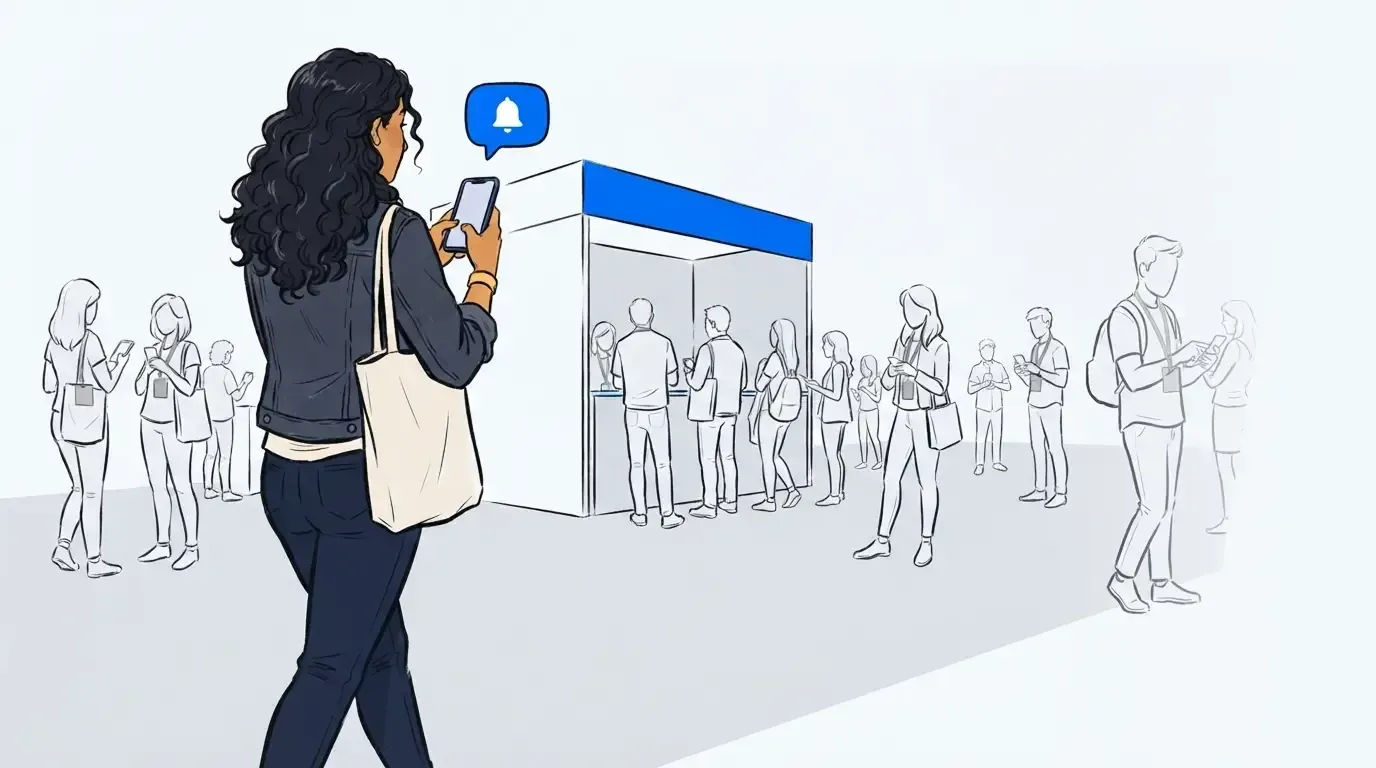
Text updates are one of the most practical line management alternatives because they solve the biggest source of guest stress: not knowing when to come back. A guest who knows their status behaves very differently from a guest who has been left guessing.
This is especially important for waits over 15 minutes. Below that, guests may stay nearby anyway. Above that, you need a communication loop. If people have to keep physically checking whether they’re next, the queue design is still broken.
The strongest setups use three message moments:
- Confirmation that the guest is in line
- Status updates and branded engagement while they wait
- A return message when their turn is getting close
That sequence sounds basic. It isn’t. Miss any one of those and confusion creeps back in. Event teams often assume the confirmation text alone is enough. It usually isn’t.
At large events, this gets even more important because volume spikes happen all at once. Any alternative to physical lines needs to handle those bursts without leaving guests in the dark.
How to choose the right line management alternative for your event
The right line management alternative depends on wait length, space limits, and how variable your service time is. If you choose based on trend alone, you’ll probably overbuild or under build. The better move is to diagnose the event first.
Start with three practical diagnostic questions
Before choosing between line management alternatives, event teams should answer three questions. Not in theory. On paper.
First, how long can a visible line be before it blocks traffic, creates safety issues, or changes the brand feel? For many booth environments, that threshold is around 10 to 20 people. For tighter venues, it’s less.
Second, how variable is the service time? If one guest takes four minutes and the next takes twelve, rigid scheduling gets risky fast. High variability usually points toward virtual queuing or flexible windows.
Third, what should guests be doing instead of standing there? If the honest answer is “networking, exploring, shopping, or engaging with sponsors,” then keeping them trapped in a physical line is probably the wrong design.
Those questions do something useful. They force the team to design the wait around the event goal, not around habit.
Match the format to the failure point
Different alternatives solve different failures. That sounds obvious, but plenty of teams still pick tools based on familiarity rather than fit.
If the failure point is intake speed, use self check-in. If the failure point is physical crowd buildup, use hybrid visible line plus virtual overflow. If the failure point is missed return timing, use mobile status updates. If the failure point is wasted guest time, add branded engagement while they wait.
There is a case for simple paper lists or basic take-a-number systems at very small activations. That deserves saying. If your total demand is low and average waits stay under 10 minutes, a lightweight method may be enough. Still, once waits push beyond that range, those simple tools start costing more than they save.
What works at 20 guests per hour often fails at 120. Scale exposes every weak assumption.
Measure the line like an event performance channel
Most teams judge a line by appearance. That is too shallow. A smarter way to compare line management alternatives is to track a few operating numbers that actually reveal performance.
Watch these:
- average wait time
- line abandonment rate
- guests served per hour
- time spent engaging elsewhere while waiting
- throughput by station
- return rate after notification
If abandonment rises above 10%, your wait design needs review. If one station serves 40% fewer guests than another with similar demand, split the queue or rebalance staffing. If guests are waiting more than 20 minutes with no communication, fix that first before changing everything else.
Analytics turn line management from guesswork into event planning. That is the difference between “the line felt long” and “the line cost us 60 qualified interactions.”
How NextMe supports hybrid waiting at events
NextMe is built for event teams that need more control over how much of the line stays visible and how much moves into virtual waiting. It is a modern virtual waiting room for in person experiences, not an all-or-nothing replacement for every physical line.
A hybrid queue gives guests freedom and operators control
NextMe lets guests join through self check-in using a QR code, kiosk, or link, then receive SMS notifications about their status and when to return. That setup works well for events where organizers want to keep a short standby line visible while moving overflow into a virtual queue.
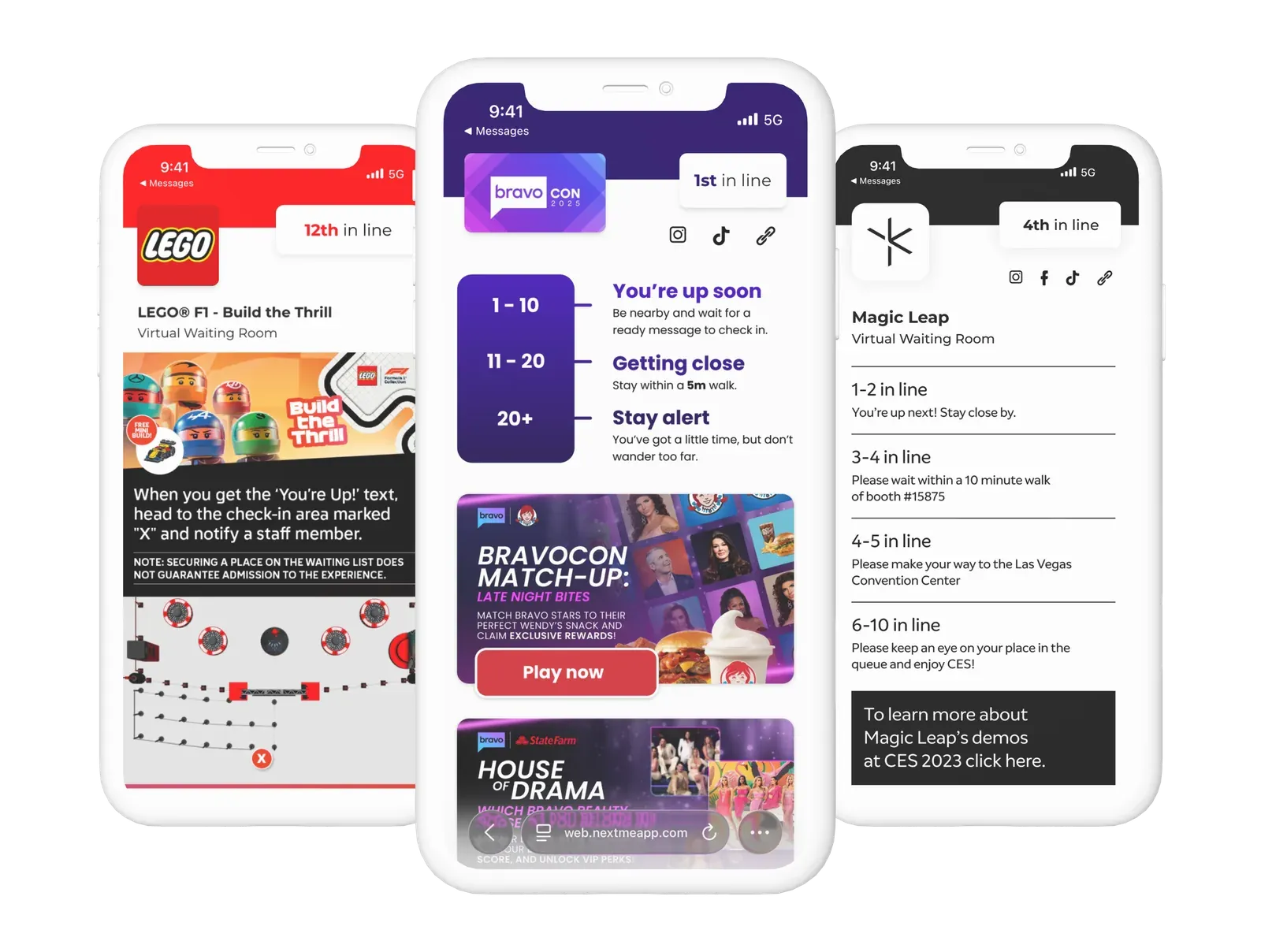
The Virtual Waiting Room is web-based and branded, so guests can track their place and engage with event content while they wait. For event teams, that means the wait can become useful space instead of dead space. Sponsored content, product carousels, games, videos, maps, and calls to action can all live there. That supports the operational goal and the brand goal at the same time.
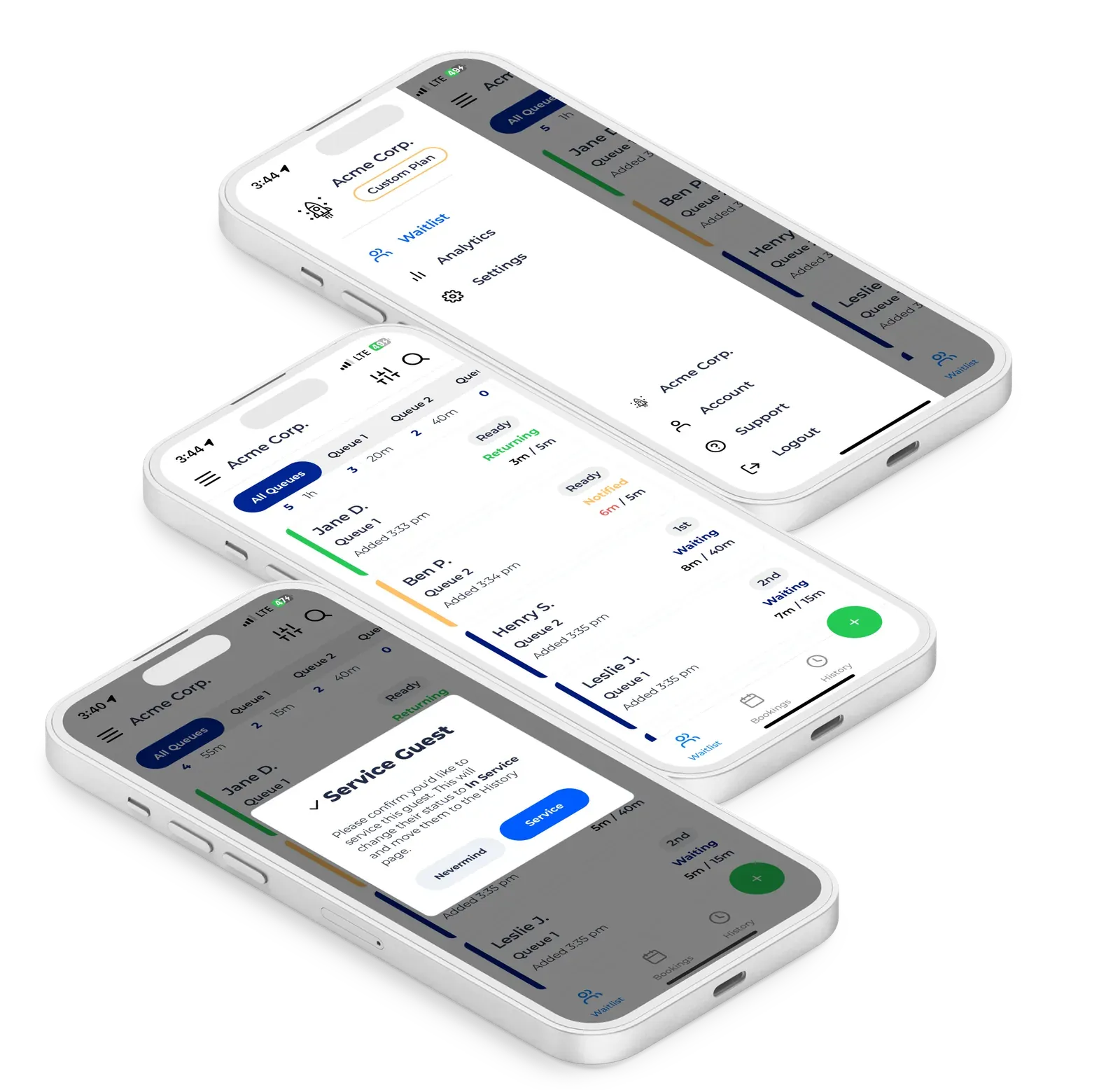
NextMe also supports multiple queues within one waitlist, which is useful for multi-station activations. Staff manage guest flow from a real-time dashboard available on web, iOS, and Android, with live visibility into who is waiting, who is next, and who is being served.
Event teams can measure what changed after the crowd clears
Queue management should not end when the event ends. NextMe includes analytics dashboards and exports, and event licenses include Event Insight Reports with throughput and Virtual Waiting Room engagement metrics.
That matters because the real cost of long lines is often hidden until later. You lose conversations. You lose sponsor value. You lose guests who walk away quietly. Better reporting helps operators see what actually happened and what to change next time.
For high-traffic events, NextMe also offers high velocity SMS and added protections for simultaneous high-volume joins on event plans. And because live events rarely leave much room for mistakes, event support can include recorded onboarding, dry runs, a dedicated account manager, and optional premium or onsite support.
For organizers trying to compare line management alternatives in a practical way, the goal is simple: keep guests informed, mobile, and ready to return at the right time. If that is the direction your event needs, get in touch.
The best alternative keeps the line from becoming the event
The best line management alternatives do not pretend every line should disappear. They give operators better control over when a visible line creates energy and when it starts creating friction.
For events, that balance matters. Guests want clarity. Staff need control. Sponsors want attention. And the floor needs to keep moving. The strongest setup is usually the one that keeps a manageable line in sight while giving guests the freedom to wait from their phones and return when ready.