Most retail CX conversations focus on the sale: the right product, the right price, a frictionless checkout. Those things matter. But the moments that determine whether a customer returns often happen before and after the transaction, not during it.
The way a customer is greeted when they arrive, how a wait is handled at a service counter, whether a post-sale commitment lands cleanly: these are the points where repeat business is built or lost. Retailers that treat everything outside the transaction as overhead tend to discover the cost of that decision in reviews, not in their own observations.
This post covers the full retail CX picture: the drivers, the friction points, and where each lever fits, for operators who want to improve retention, not just satisfaction scores.
What customer experience in retail actually covers
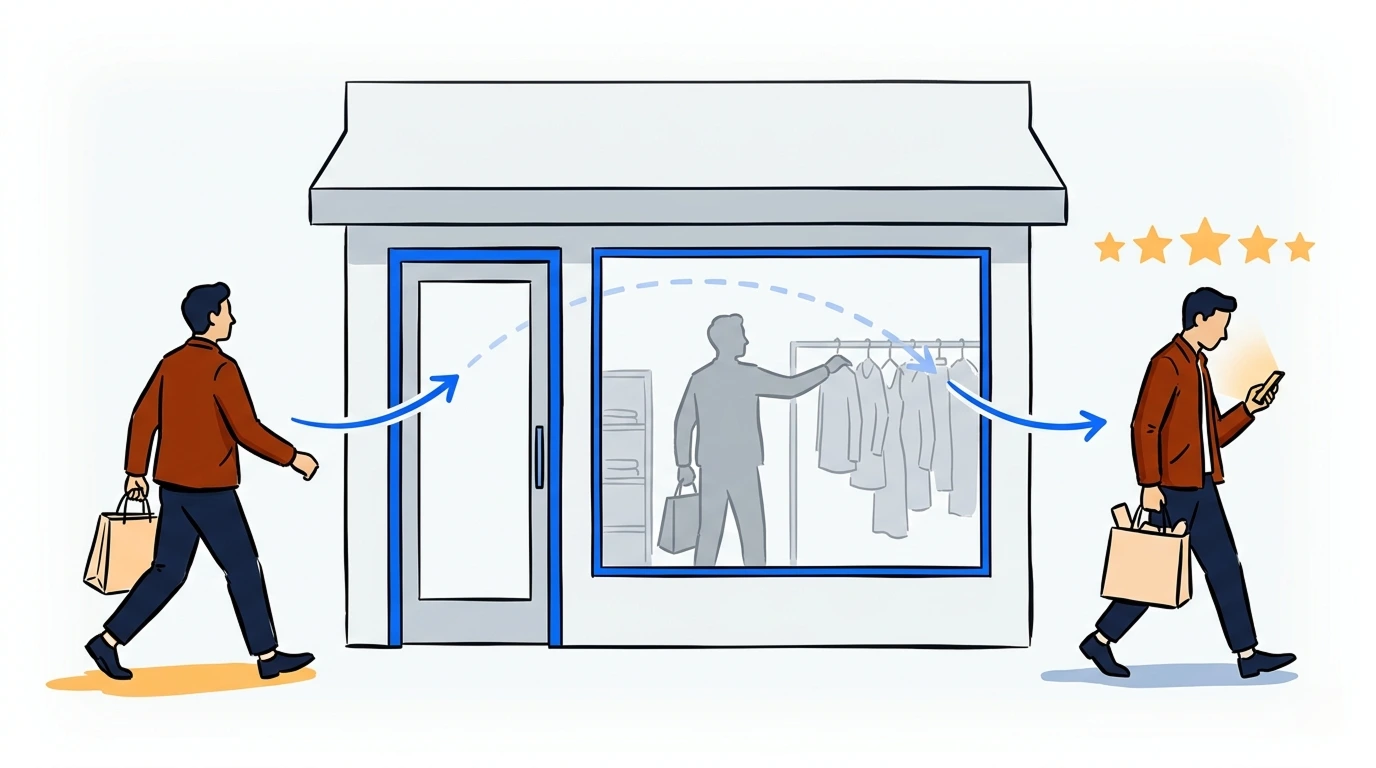
Customer experience in retail is the cumulative impression a shopper forms from every touchpoint across their visit – from arrival through to any follow-up contact after they leave. It includes the physical environment, staff interactions, wait times, communication clarity, and how problems get handled when they arise.
It’s not the same as customer service. Customer service is reactive: it responds to problems after they occur. Customer experience is the whole system. A store can have skilled, warm staff and still deliver a poor customer experience if the arrival is confusing, the wait is unmanaged, or the post-sale handoff breaks down.
That distinction matters because it changes where you look for improvement. Raising your CX ceiling requires examining the full visit, not just the service counter.
The touchpoints that carry the most weight
Customers don’t evaluate their experience based on a single interaction. They weigh the whole visit. But certain moments carry disproportionate influence on how that visit is remembered and whether they come back.
Arrival and first contact. The first thirty seconds set a tone that’s hard to reverse. A cluttered entrance, no clear indication of where to go, or a wait with no acknowledgment creates immediate friction. A clean, readable arrival experience, even in a busy store, signals that the customer’s time is understood.
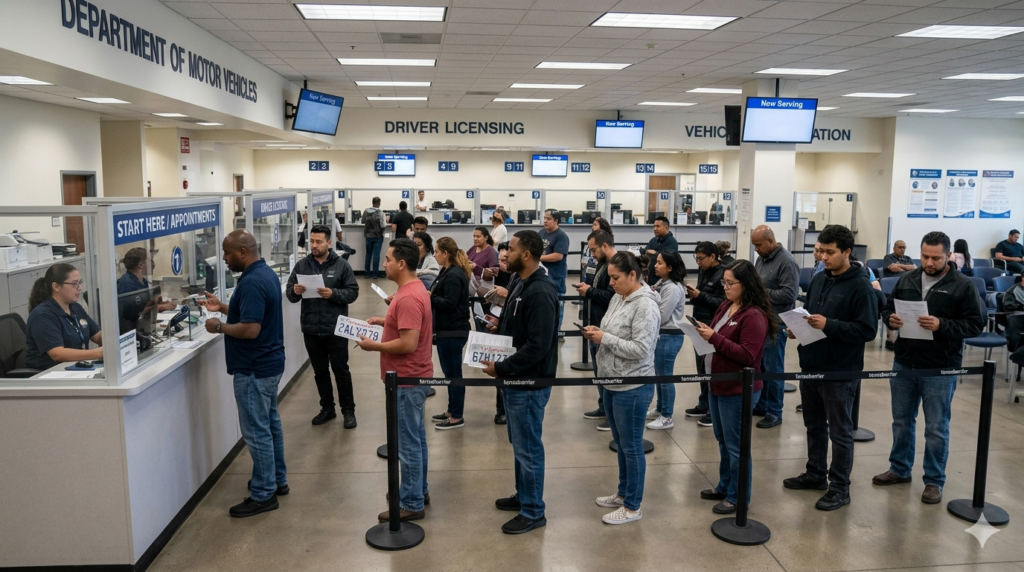
The wait. Waiting is unavoidable in service-based retail. Unmanaged waiting, however, is one of the most reliable generators of negative reviews. According to the Zendesk CX Trends 2026 report, 88% of customers now expect faster response times than they did a year ago – and in physical retail, that expectation extends directly to how waits are communicated and managed. Customers can tolerate a wait. What they struggle with is not knowing what’s happening while they do it.
The service interaction. This is where most CX investment lands, and it’s the right priority. Staff knowledge, attentiveness, and efficiency are central to how a visit is evaluated. But a strong service interaction is less effective when it’s preceded by a poor arrival or followed by a broken handoff.
Post-sale follow-through. If a customer was given a timeline (a repair ready by Thursday, a callback when stock arrives, etc.) and that commitment wasn’t honored or communicated, that failure is what they carry. Reliable follow-through converts one-time buyers into regulars at a higher rate than any single service interaction.
Where wait management fits in the customer experience in retail
Wait management is one component of retail CX, not a proxy for all of it. But it’s a component worth isolating because it’s the most common blind spot in service retail, and the one most directly tied to walkout behavior.
The core problem with unmanaged waiting isn’t the duration, it’s the information gap. Customers who don’t know how long they’ll wait, whether they’ve been seen, or when their turn is coming tend to leave or disengage. Customers who have a clear place in a queue and know they’ll be notified when it’s their turn behave differently. They browse, stay engaged with the store, and feel that their time is being respected.
For a detailed breakdown of how checkout lines and service waits specifically drive walkout behavior (and what the fix looks like operationally), check out our article on how long checkout lines hurt the retail customer experience.
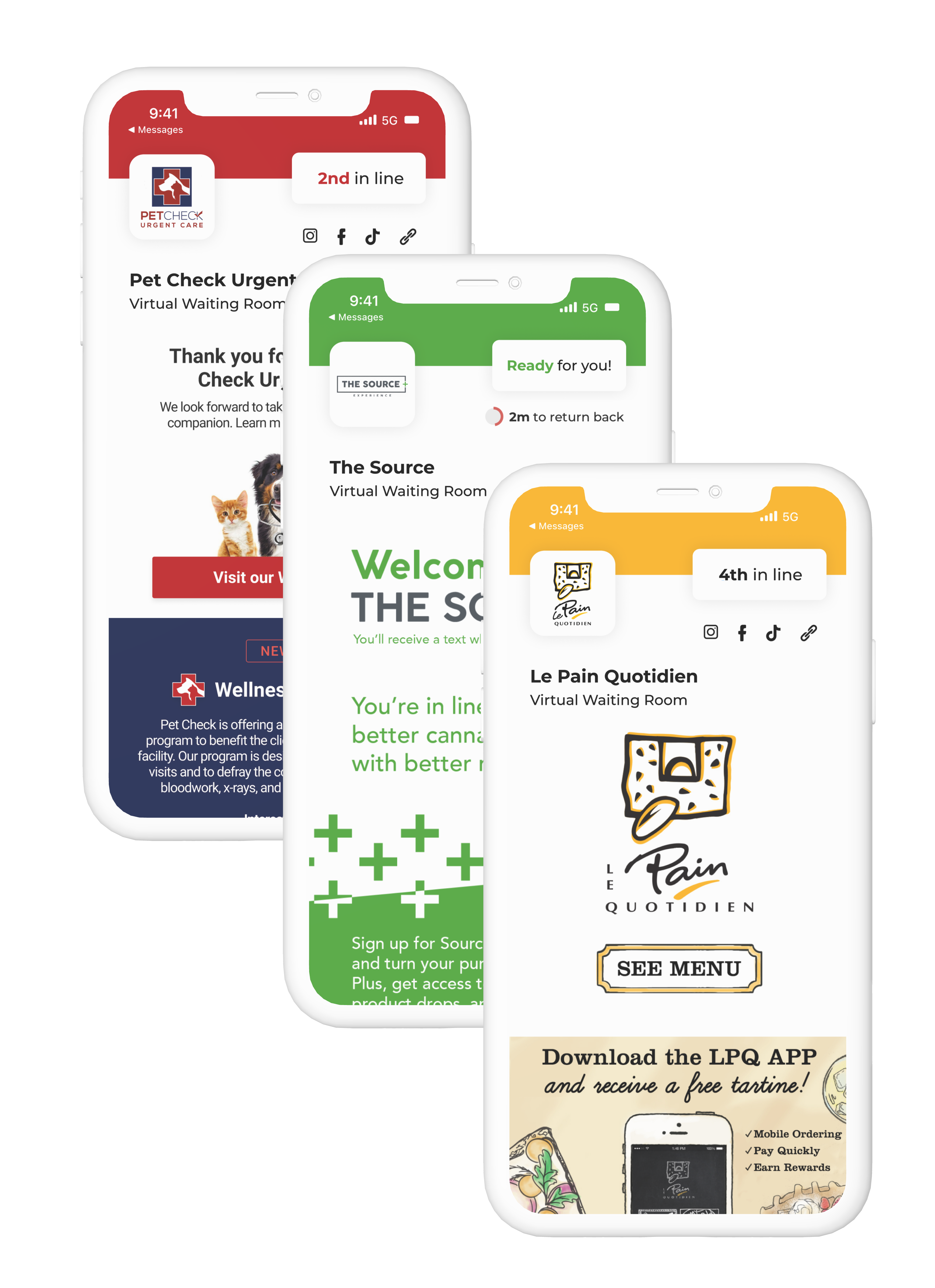
Brands that have built wait management into their CX approach treat it as a hospitality layer, not just an operations tool. Fenty Beauty’s use of a virtual waiting room during high-demand product launches gave customers a branded, informed holding experience rather than a chaotic in-store queue. The wait became something that reflected the brand rather than contradicting it.
Communication as a CX lever
Communication is one of the easiest and most underused retail CX improvements available to most operators. The majority of in-store communication happens at the transaction point. What precedes and follows it is often silence.
In service retail contexts where customers arrive, wait, and are called when ready (repair shops, tailors, beauty counters, pharmacy consult windows, etc.) customers operate in an information vacuum between arrival and service. They don’t know if they’ve been seen, how long the wait is, or whether the process is working. That uncertainty compounds over time and is consistently cited in negative reviews even when the service itself was fine.
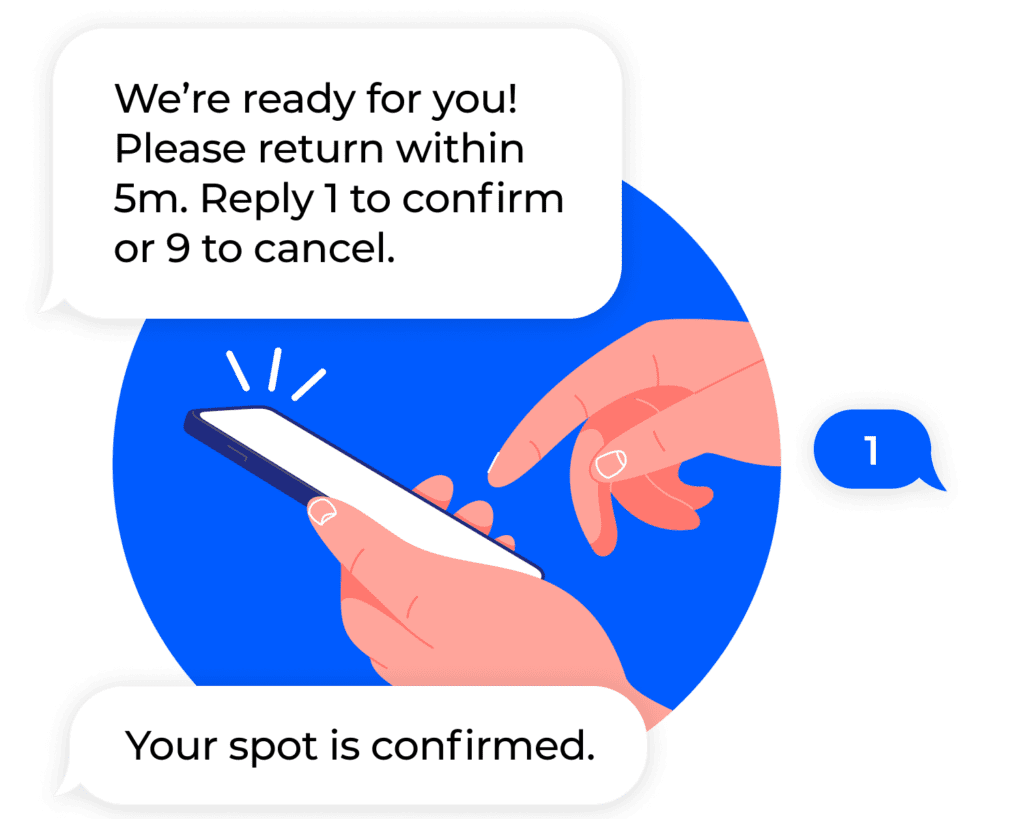
SMS-based wait updates address this at low operational cost. A customer who receives a confirmation when they join the queue and a notification when their turn is approaching has had a measurably different experience than a customer who waited without any signal.
Self-service check-in and what it changes for staff
In retail environments with variable foot traffic, a self-service check-in point shifts the arrival experience in ways that benefit both customers and staff.
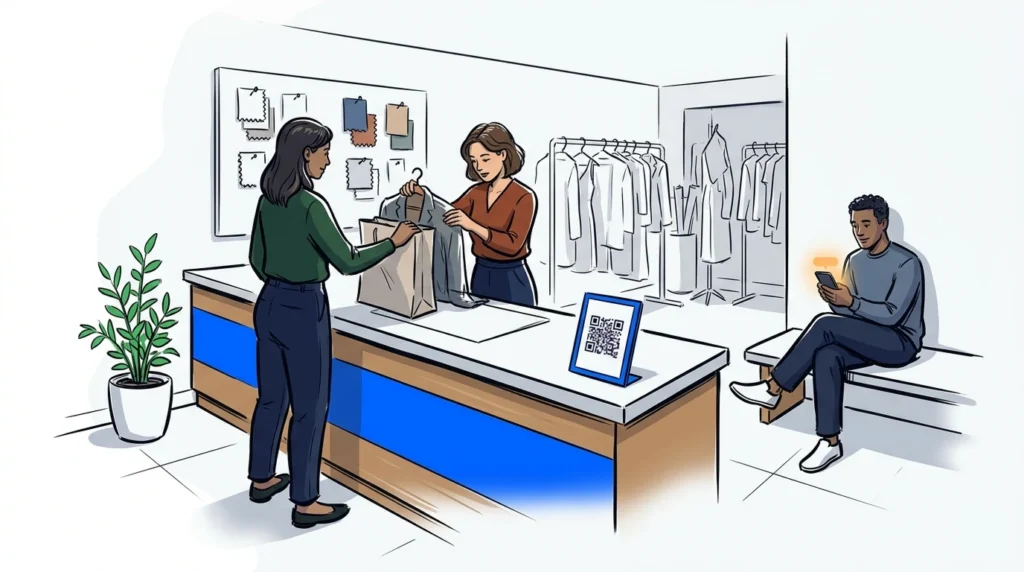
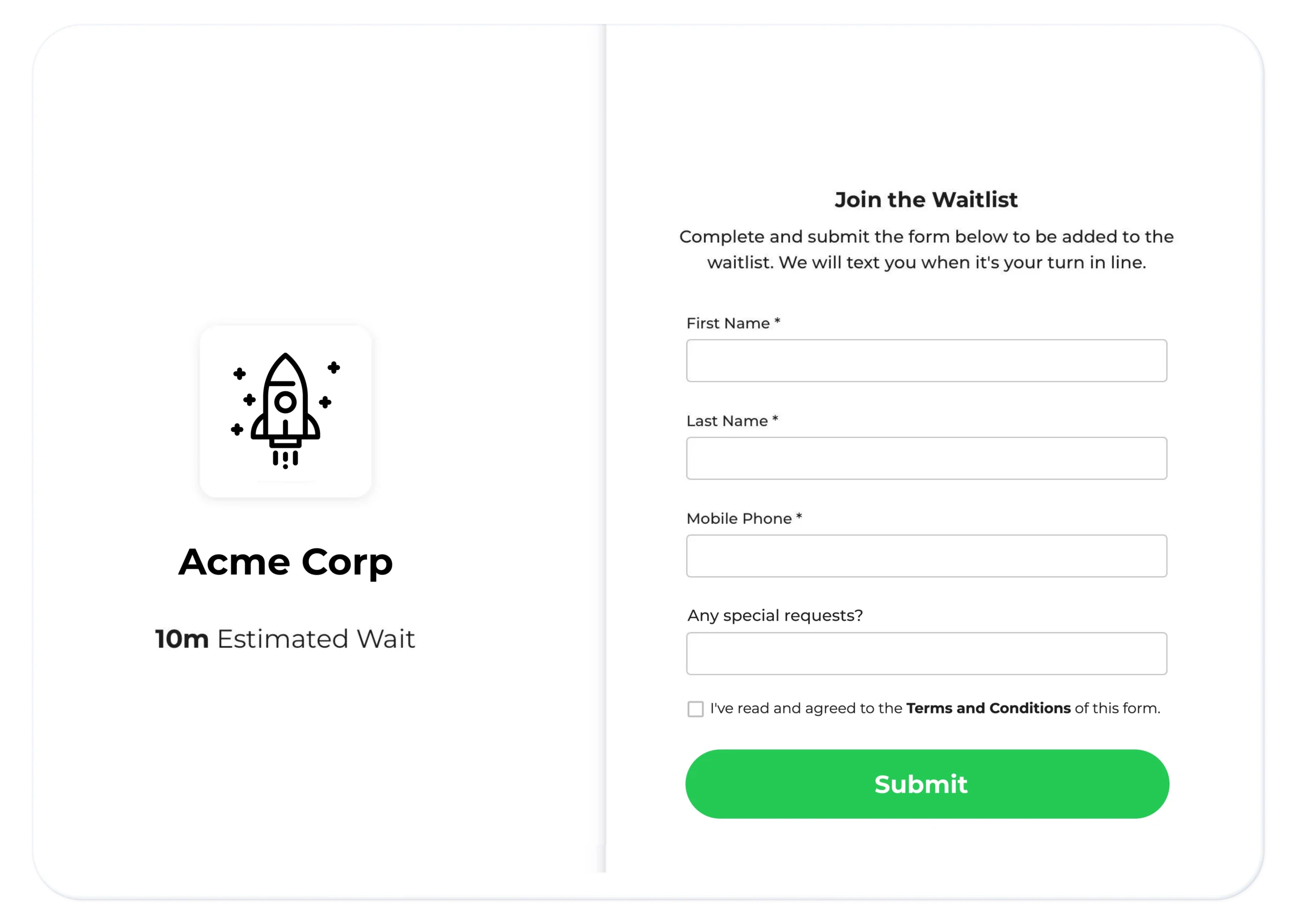
For customers, it provides immediate acknowledgment. The act of checking in, whether via a tablet at the entrance or a QR code scan, creates a clear moment of queue entry. Customers who know they have a confirmed place are less likely to hover, interrupt staff, or leave. The check-in itself is a small behavioral signal that reduces anxiety and increases visit commitment.
For staff, it removes the door-watching task. When customers can add themselves to the queue without needing to locate a team member, staff can focus entirely on the customer in front of them rather than monitoring the entrance simultaneously. The quality of the service interaction tends to improve when staff aren’t managing two contexts at once.
Frequently asked questions
What is customer experience in retail?
Customer experience in retail is the full impression a customer forms across every interaction with your store, from arrival through post-sale follow-up. It encompasses the environment, staff interactions, wait times, communication, and how friction is handled – not just the transaction itself.
Why does retail customer experience affect retention more than satisfaction?
Satisfaction measures how a customer felt during a single visit. Retention is driven by the cumulative pattern across visits. Customers tend to return based on whether friction was reliably absent, not just whether one interaction was positive. A single excellent service interaction followed by a long unmanaged wait can still result in a customer choosing a competitor next time.
Is queue management the same as retail customer experience improvement?
No. Queue management addresses the wait and arrival components of the customer journey. It is one lever within a broader CX system that also includes staff quality, communication, environment, and post-sale follow-through. Improving the wait experience typically has an outsized return because it’s a high-friction point that’s frequently underinvested in, but it doesn’t substitute for the other elements.
What’s the simplest CX improvement for a small service retail business?
Start with the communication gap around the wait. A customer who receives an SMS when they join the queue and a notification when their turn approaches has had a fundamentally different experience than a customer who waited in silence, regardless of how the service interaction itself went. This is low-cost to implement and directly addresses the most common complaint in service retail reviews.
Start with the friction, not the features
The most reliable path to a better customer experience in retail is identifying the highest-friction moment in your current visitor journey and reducing it. For most service retail businesses, that moment is the wait – not because the wait is too long, but because it’s unacknowledged.
Build from there. Arrival, communication, service, follow-through: each has a ceiling, and each is worth raising in order. The compounding effect of improvements across the whole visit is what converts first-time shoppers into the customers who refer others.
For more on how retail businesses are managing the queue experience specifically, see how stores are using queue management to cut walkouts or visit NextMe’s retail queue management page.