84% of attendees say in-person events are their top choice for connecting with brands face to face (Freeman). That’s a massive opportunity, and one that’s surprisingly easy to squander. Poor booth traffic management tactics can turn that excitement into a 45-minute wait, and by the time someone finally reaches your team, the goodwill is gone. Worse, they may not even stick around that long.
A packed booth can look exciting. But if guests feel trapped, confused, or ignored, that same line starts to work against you. For event organizers, the goal isn’t to eliminate every visible line. The goal is to stop long lines from becoming friction.
Key Takeaways:
- Booth traffic management tactics work better when you control line length, not just line order.
- A visible line can create demand, but long unmanaged lines scare people away.
- The best event queue setup is usually hybrid: some guests stay visible, while overflow waits virtually.
- If guests don’t know what’s happening, they assume the line is worse than it is.
- Strong event operations give guests freedom to move, clear updates, and a simple return path.
- Good waiting systems should also create measurable value through engagement and reporting.
- The most effective booth traffic management tactics protect both throughput and the brand experience.
Why bad booth traffic management tactics cost more than you think
Booth traffic management tactics fail when they treat every guest the same and every line the same. That sounds organized, but it usually creates waste, crowding, and confusion. In a live event setting, the real problem isn’t always the line itself. It’s the uncertainty around it, and the space it eats up.
The line you see is only part of the problem
At a trade show or fan event, a short visible line can actually help. It signals demand. It tells people something worth seeing is happening. But once that line starts wrapping around the booth, blocking neighbors, or forcing staff to answer the same question every 30 seconds, the math changes.
Picture a headshot station at 11:15 a.m. The first ten guests are fine. By 11:45, the line is three rows deep, one staffer is trying to keep people calm, and another is guessing at wait times because nobody really knows who’s next. Meanwhile, people who might have joined just keep walking. They don’t want the hassle.
If a line spills beyond the area you can confidently manage, it stops building demand and starts creating loss. For most booths, that threshold arrives long before the team admits it.
The old fix is still surprisingly common
Most event teams still rely on one of three weak fixes:
1. They keep everyone in a physical line.
2. They hand out rough instructions.
3. They force the experience into rigid time slots that don’t match how events really move.
None of those options work well when demand spikes without warning.
A physical line ties people to one spot. Pagers are hard to maintain and replace, not to mention it keeps them waiting in the same area up to 50 feet. Rigid appointments can help in controlled environments, but live events aren’t controlled. Sessions run late. Foot traffic surges. Talent arrives behind schedule. Your booth traffic management tactics need room to bend without breaking.
Some teams do prefer visible lines because they feel easier to control. That’s valid up to a point. But once guests start asking whether they’ll miss their turn if they grab coffee or visit a keynote session, you’re not managing flow anymore. You’re managing anxiety.
The hidden cost is what guests stop doing
The worst losses rarely show up as a dramatic failure. They show up quietly. A guest leaves the line and never comes back. A sponsor misses a chance to engage someone during the wait. An exhibitor team spends prime event hours crowd-controlling instead of having real conversations.
Freeman’s event trend research keeps pointing to the same basic truth: attendees want meaningful experiences, not dead time. You can see the same shift in how successful activations are run now. Waiting is no longer just an operations issue. It’s part of the experience design.
If your booth traffic management tactics keep people physically stuck, you don’t just lose space. You lose attention. So what should event organizers control instead?
The real booth traffic problem is uncertainty, not demand
Booth traffic management tactics improve fast when you stop treating heavy demand as the enemy. Demand is usually a good sign. Uncertainty is what turns good demand into a bad guest experience. Once you see that clearly, the operating model changes.

Guests can handle a wait if they understand it
People wait for things they want. That’s normal. They wait for customer merch, photo ops, glam bars, aura readings, puppy play dates, celebrity meet-and-greets, live demos, and limited-edition drops. What they don’t handle well is feeling like they’ve been forgotten.
That difference matters more than most teams realize. A guest who sees a 25-minute wait and gets updates will often stay engaged. A guest who hears “it shouldn’t be too long” with no follow-up starts looking for the exit. Same wait. Very different experience.
We think this is where a lot of event teams go wrong. They focus on compressing wait time at all costs when they should first reduce uncertainty. If you can lower uncertainty by 50%, the wait often feels far more manageable even before you speed anything up.
Booth traffic needs a hybrid model, not an all-or-nothing one
The common assumption is that you either keep a physical line or you move everything virtual. That’s too simplistic for live events. The better model is hybrid.
A hybrid queue keeps some demand visible while moving overflow into a virtual waiting flow. That gives operators more control over space and gives guests more freedom. It also matches the reality of an event floor, where visibility matters but crowd buildup can become a problem fast.
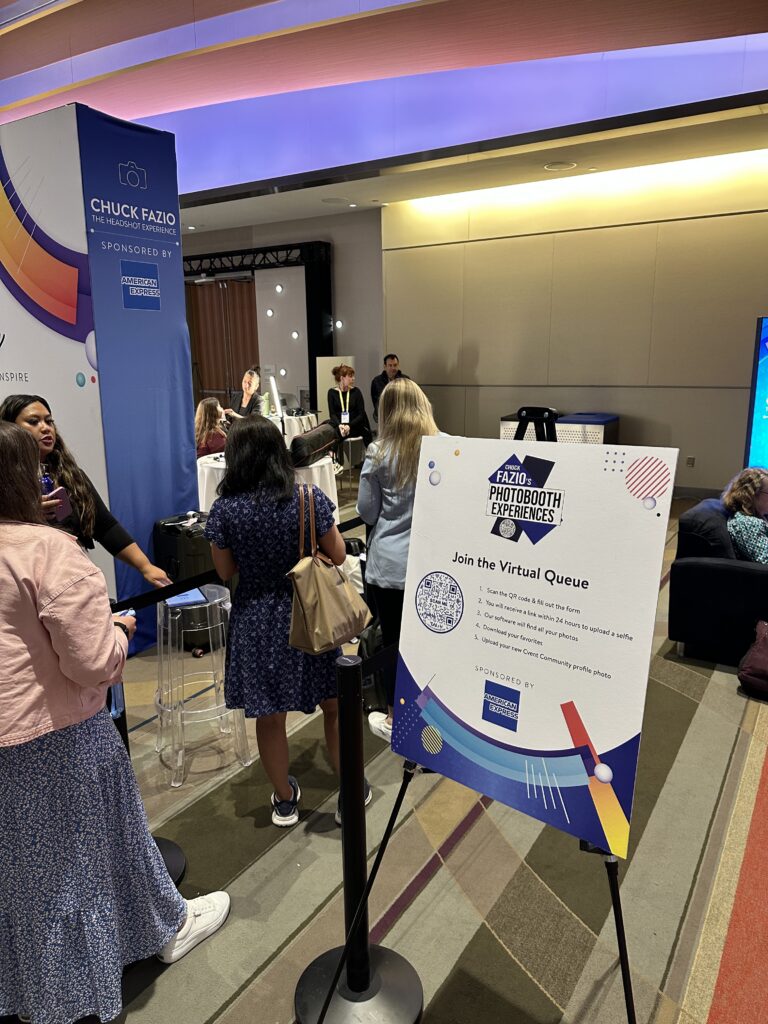
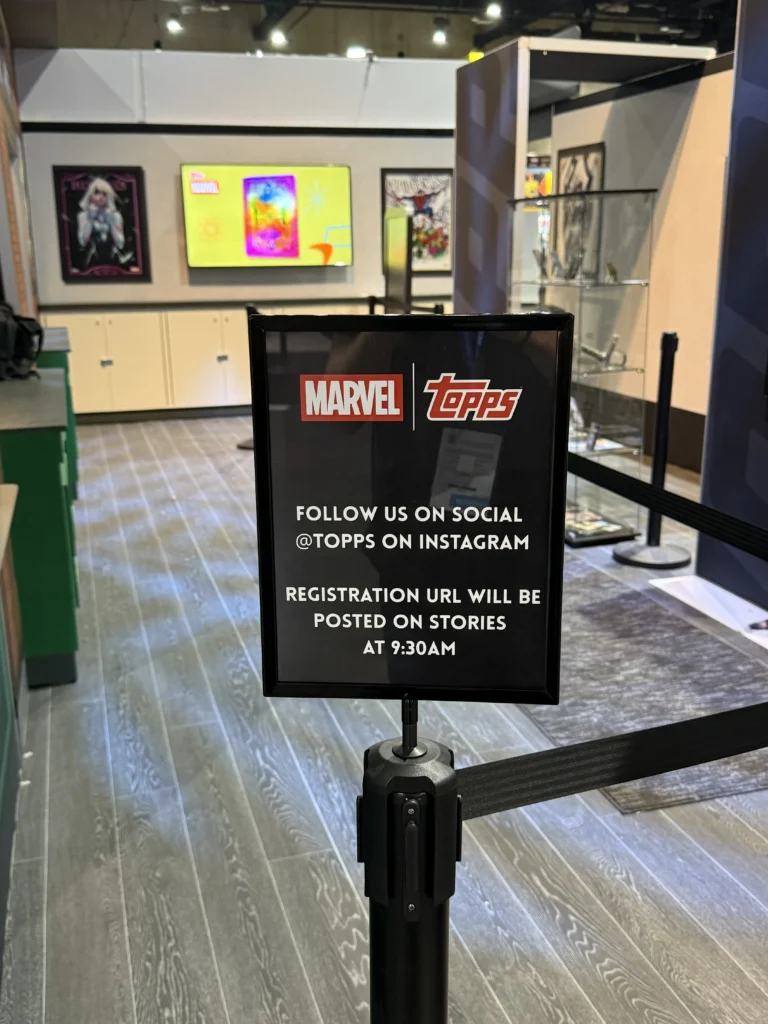
You can see this logic in action across high-demand activations. At Comic-Con, Topps used a digital wait approach after early crowd issues created stress for staff and confusion for fans. Staff got a more organized flow, and fans had clearer visibility into their wait status. At Cvent CONNECT, a photography booth dealing with waits that stretched beyond two hours used QR-based queueing so attendees could track their place from their phones instead of standing still the whole time. One attendee compared it to a theme park experience because it felt simple and predictable.
That comparison isn’t random. Theme parks learned this years ago. The experience improves when the guest feels informed and mobile, not trapped.
The right question is how much line should stay visible
This is the operating question I wish more organizers asked. Not “How do we remove the line?” but “How much line should remain visible before it starts hurting us?” That’s a much better planning lens.
If the line is helping attract people and staying within your controlled footprint, keep part of it visible. If it’s blocking access, causing repeat questions, or pushing people away from nearby exhibitors, move more of the queue into a virtual flow.
That concession matters because visible demand does have value. There is a case to be made for letting some of that energy stay public. But only if you can control it. The buzz lines create are useful. Spillover isn’t.
Once you accept that uncertainty is the real problem, the next move becomes obvious: build booth traffic management tactics around clarity, mobility, and return timing.
How to build booth traffic management tactics that actually work
Booth traffic management tactics work best when they follow a simple structure: capture demand fast, release pressure from the booth, keep guests informed, and bring them back in a controlled way. That’s the operational backbone. Without it, you end up improvising all day.
Start with a traffic diagnosis before the doors open
A good booth flow starts with diagnosis, not software. Event organizers need to know which kind of line problem they have before they try to fix it. That’s why the first tactic should be diagnostic.
Use this three-question queue pressure check before the event:
- Will demand likely spike in bursts, not evenly across the day?
- Will guests have something useful to do nearby while they wait?
- Will a physical line create crowding, brand risk, or missed neighboring traffic?
If you answer yes to two or more, you probably need hybrid booth traffic management tactics, not a physical-first approach. If you answer yes to all three, you should assume your line will break the space unless you move overflow off the floor quickly.
This sounds basic, but teams skip it all the time. They plan for average demand instead of peak demand. Then peak demand shows up and exposes the whole setup. Not fun.
Make joining the queue faster than asking for help
The fastest queue wins. Not the fanciest one. If guests need to find a staffer, ask three questions, and wait for manual entry just to get in line, your intake is already too slow.
What works better is a low-friction join path. QR code. Kiosk. Simple link. The point is to let guests enter the flow in seconds. At high-volume events, that matters a lot because each extra step creates a new bottleneck right at the front.
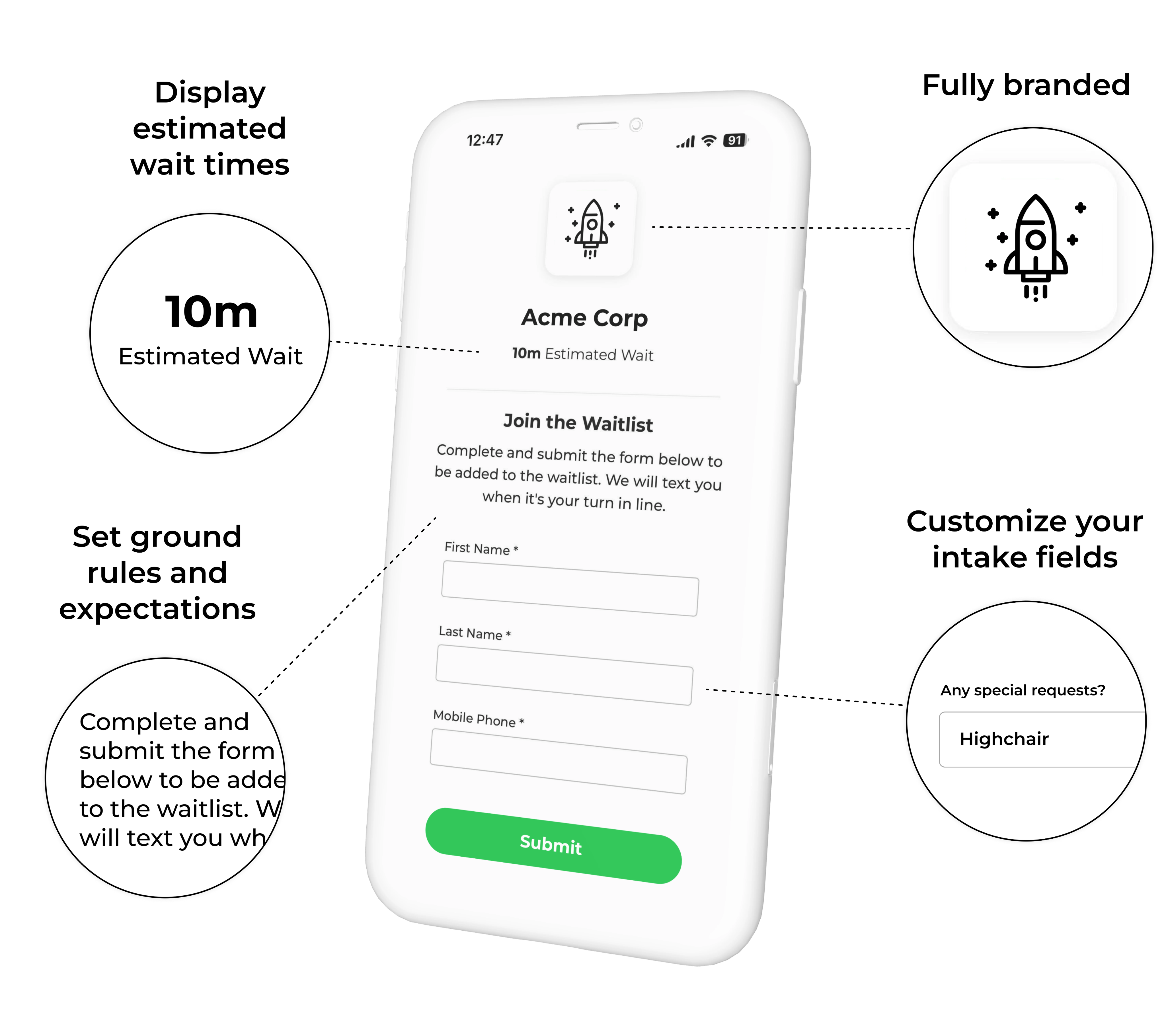
Before this kind of setup, many booths have the same ugly scene: one staff member stuck at intake, another trying to answer wait questions, and a third waving people into rough groups. After a cleaner intake flow, staff can focus on experience and throughput instead of traffic policing.
The threshold we like here is 15 seconds. If a guest can’t understand how to join in about 15 seconds, your intake design is too complicated. Booth traffic management tactics should lower cognitive load, not add to it.
Set return expectations
Guests need more than a place in line. They need expectation setting.
Message one confirms they joined. Message two updates them while they wait. Message three tells them when it’s time to return. That’s it. Not a flood of alerts. Not silence either.
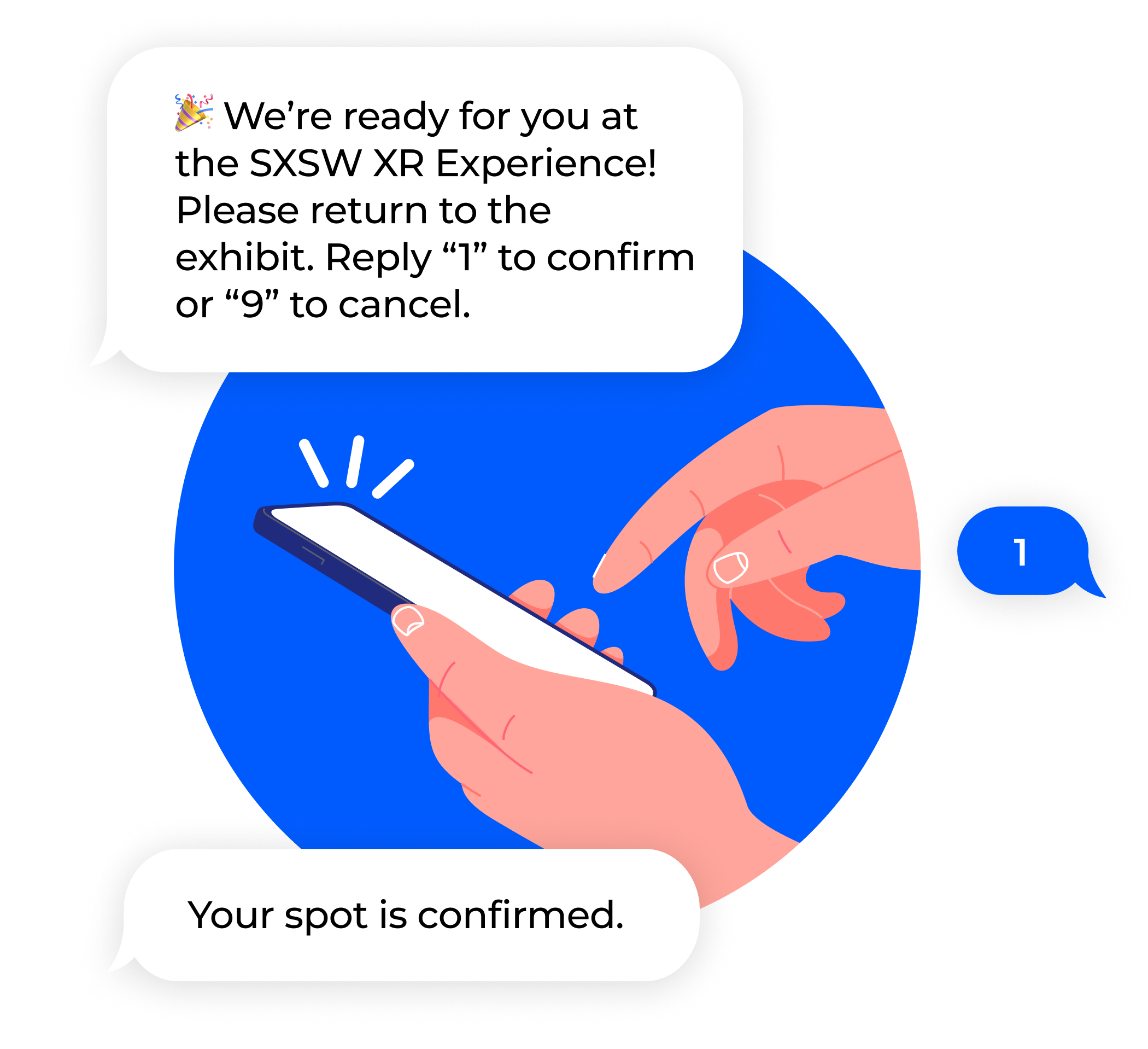
This is where many operations teams underestimate communication. They think the queue itself is enough. It isn’t. Guests want to know that the line is moving, that they still have their place, and that they won’t miss their turn if they step away. If they don’t get that reassurance, they behave like they might lose everything. They hover. They crowd. They ask staff for constant updates.
The result is predictable. Staff burnout goes up. Guest confidence goes down. The line feels more chaotic than it really is.
Turn wait time into usable event time
Strong booth traffic management tactics give waiting guests something useful to do. Sometimes that means freeing them to network. Sometimes it means keeping them engaged with branded content. Often it means both.
At a career fair, for example, waiting in place is expensive because every minute in line is a minute not spent meeting employers, attending sessions, or visiting sponsors. The Mom Project saw a 37% increase in time spent networking after attendees were freed from standing in line at high-demand stations. That’s a strong reminder that queue design affects the whole event, not just one activation.

The same pattern shows up in brand activations. When guests can roam, sample, explore, or interact with other content while they wait, the event feels larger and more generous. Waiting becomes part of the experience instead of a dead zone.
Build for peak surges, not the average hour
Average demand is comforting and mostly useless. Your booth traffic management tactics should be built for the busiest 30 minutes of the day. That’s when line breakdown hurts your team, your neighbors, and your sponsors.
If your process would feel shaky during a 30-minute surge, it isn’t event-ready. That means you need to test queue joins, staff roles, communication timing, and return flow before the floor gets busy.
A dry run matters here. So does role clarity. One person owns intake exceptions. One person owns queue movement. One person owns guest handoff at the front. If one person is doing all three during a rush, you’re understaffed or underplanned for that station.
Is surge planning overkill for smaller activations? Sometimes. But if your activation includes limited-time giveaways, talent appearances, personalized services, or photo ops, you should assume a burst is coming. The event floor is calm until it isn’t predictable. Then it gets messy fast.
Measure success with flow metrics, not vibes
You need numbers. Otherwise every post-event conversation turns into opinions. One person says the line looked huge, another says guests seemed happy, and nobody can prove what actually happened.
The better approach is to track a few operational metrics that reveal whether booth traffic management tactics are working:
- average wait time
- throughput by hour
- line abandonment or walkaways
- queue volume by station
- engagement during the wait
- return timing efficiency
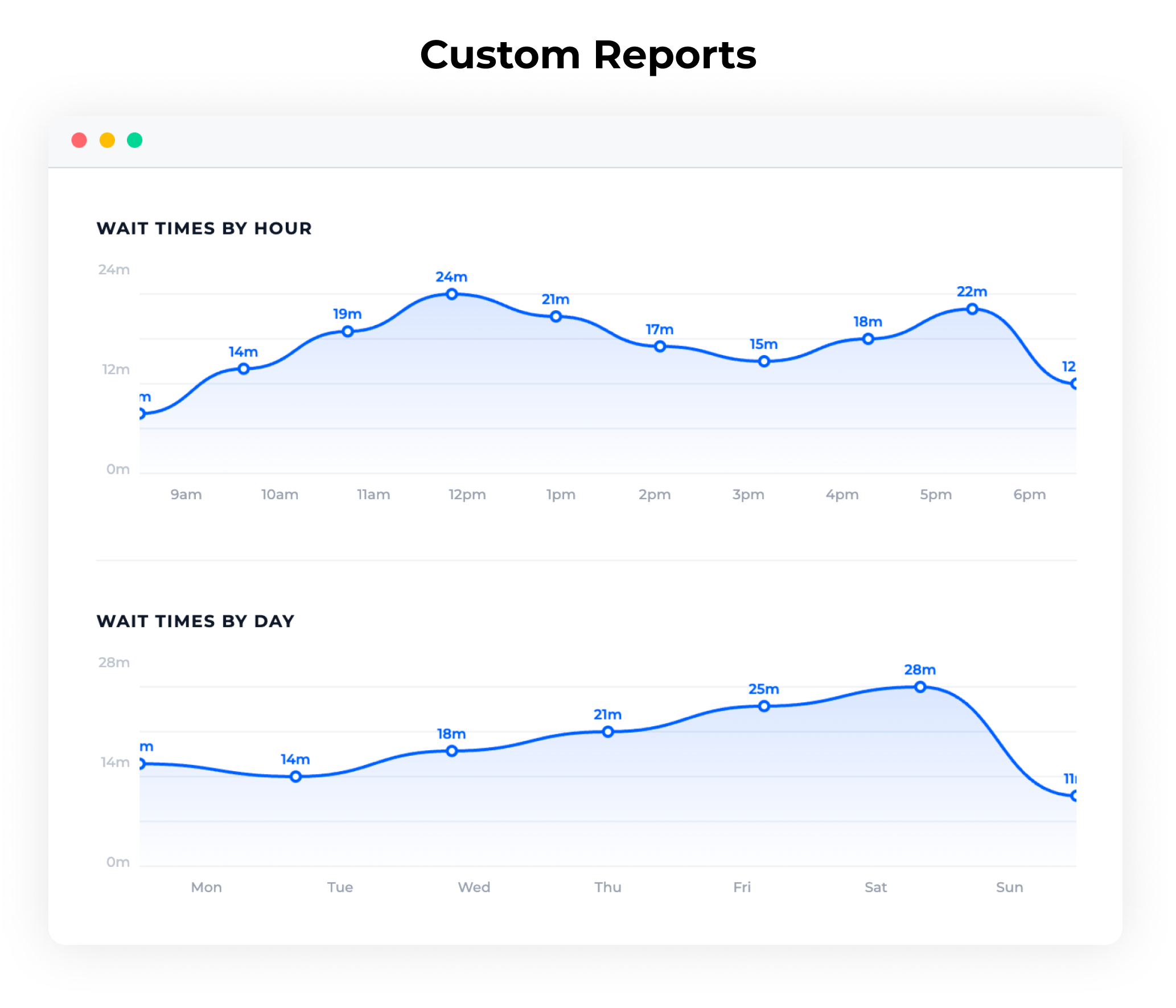
We know, “vibes” are still how a surprising number of events get judged. But if you want better planning next time, you need evidence. A booth line is like an airport gate. From a distance it can look chaotic even when boarding is on schedule, or calm even when delays are piling up. The visible scene doesn’t always tell the operational truth.
Once you build that measurement habit, your next event gets easier to plan because you’re not starting from memory. You’re starting from data.
How NextMe supports hybrid event queue control
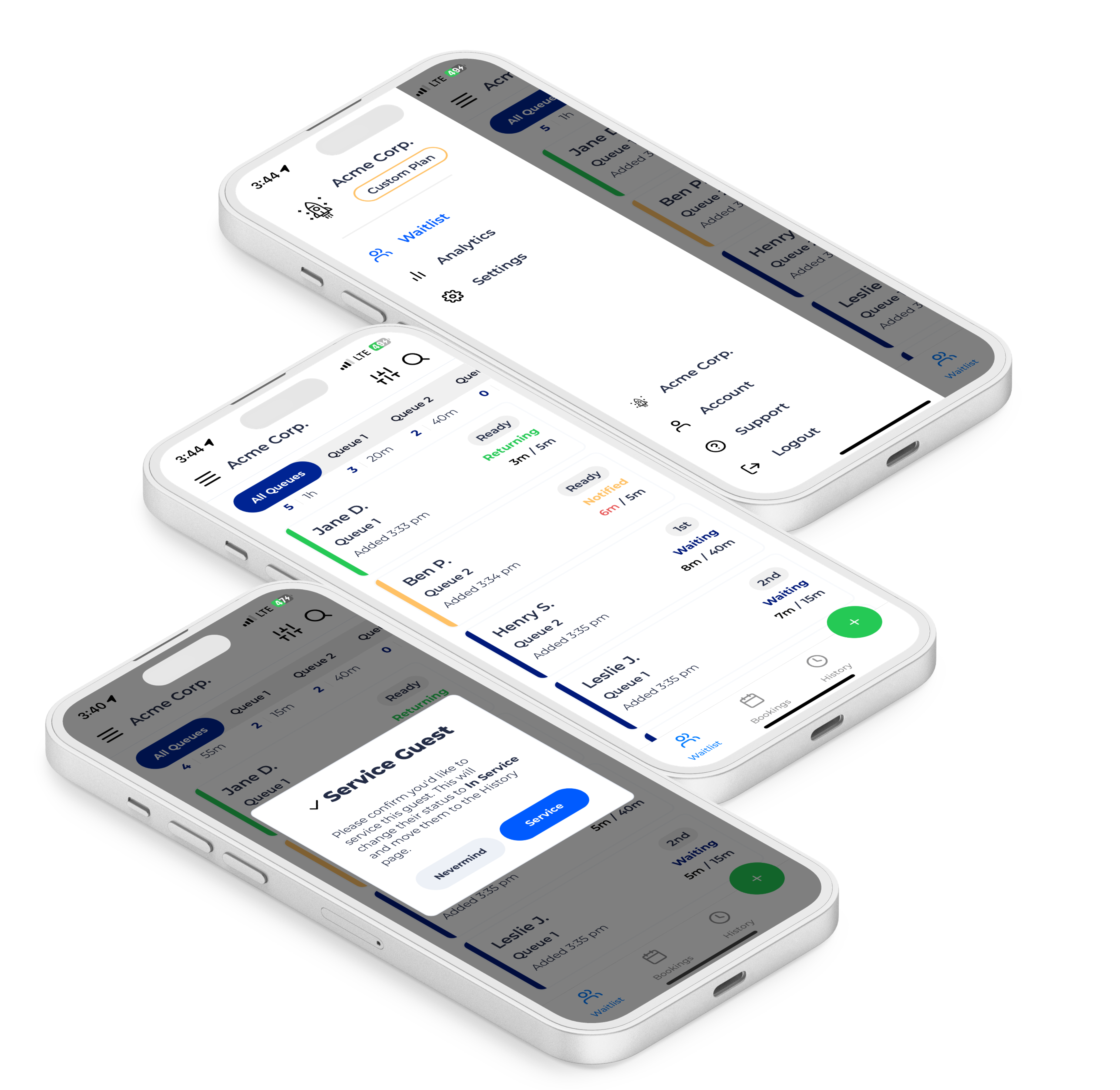
NextMe is a modern virtual waiting room for in person experiences. For event organizers, it supports a hybrid queue model where guests join digitally, wait from their phones, get text updates, and return to a shorter physical line when space opens up. That matters because the goal isn’t to erase every visible line. It’s to keep long lines from turning into friction.
A simpler way to move overflow out of the booth
NextMe gives operators a few clear ways to bring guests into the queue. Guests can use self check-in through a QR code, kiosk, or link, and staff can also add people directly when needed. From there, waitlist management and the real-time staff dashboard give the event team a live view of who is waiting, who is next, and who is being served.
That combination is useful at busy activations because it reduces crowd build-up without forcing an all-or-nothing change. You can keep some physical presence at the booth while moving overflow into a virtual waiting flow. Guests stay informed through SMS notifications, and staff keep control over queue movement from the dashboard. If you’d like to look at how that works in a live event setting, book a demo.
Better waiting can also create measurable event value
NextMe’s Virtual Waiting Room gives guests a branded web-based page they can access from their phones without downloading an app. For events, that space can include sponsorships, product carousels, games, polls, videos, social feeds, maps, and other branded guest engagement content. So the wait doesn’t have to become dead time.
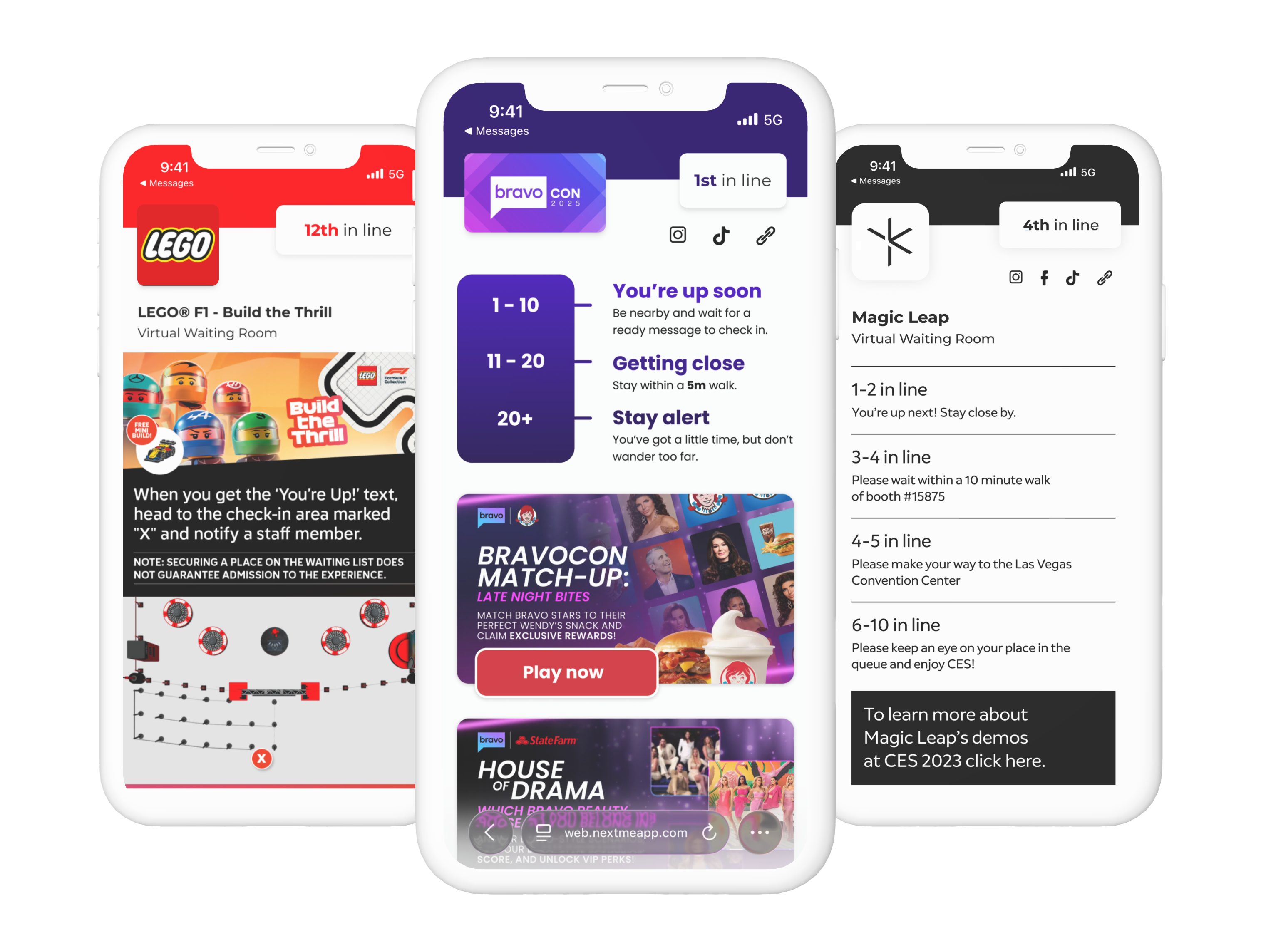
NextMe also supports multi-queue management for multi-station activations, which is useful when one event experience includes several lines under the same waitlist. After the event, analytics and Event Insight Reports help organizers review throughput, engagement, and queue performance. That’s important for teams that need cleaner reporting, not just cleaner lines.
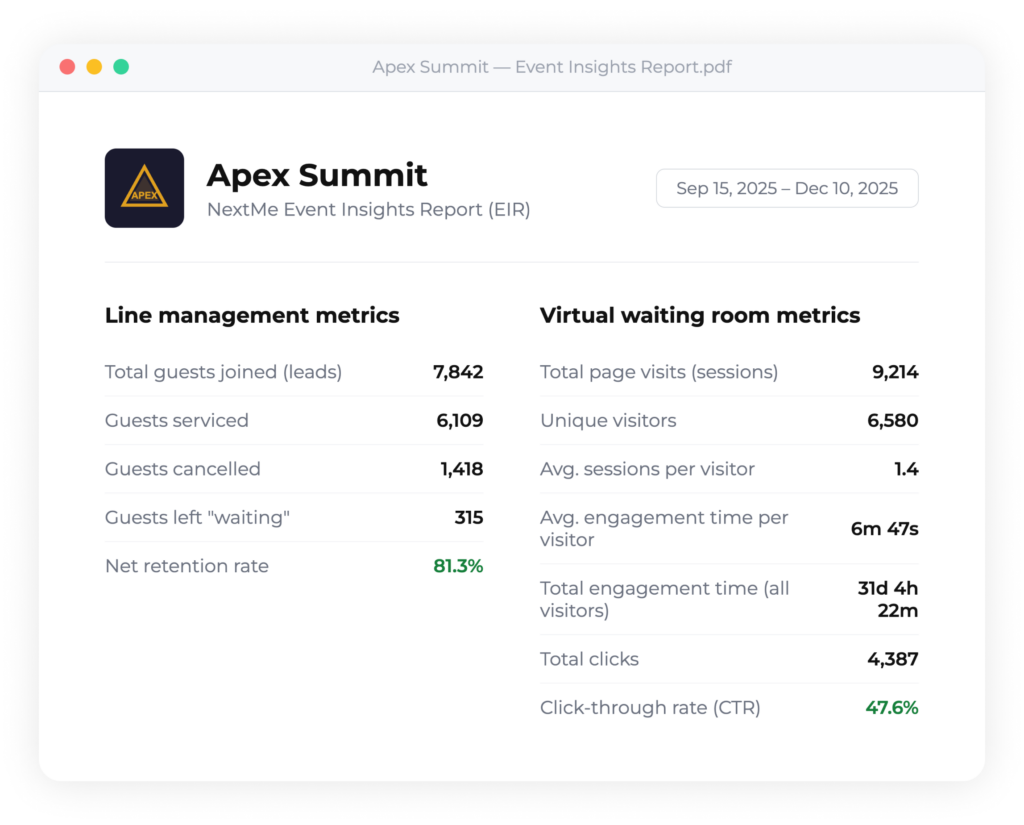
To be clear, NextMe doesn’t promise to remove all lines or replace every event system around it. It gives operators more control over how much line stays visible and how much moves into a virtual queue. For many event teams, that’s the more practical answer. If that sounds like the setup you’re trying to build, get in touch.
What better booth traffic looks like in practice
Booth traffic management tactics get better when you stop treating the line as a single object to remove. What you’re really managing is space, attention, timing, and guest confidence. That’s why hybrid queue control works so well for events. It keeps some visible demand in place while giving guests the freedom to wait from their phones and return when it’s time.
For event organizers, that shift is practical. It protects guest retention, reduces crowding, and creates a better attendee experience without pretending every line should disappear. The line is not always the problem. Long, unmanaged, uncertain waiting is.