When it comes to marketing, relevance is everything. Everyone talks about targeted, contextual advertising, but very few channels actually deliver it. The restaurant industry, currently navigating one of its most competitive periods in recent memory, is a prime example of a space where the gap between marketing intention and execution remains wide open.
After expanding NextMe into the Chicago market, we gained meaningful insight into the challenges facing restaurant operators, investors, and brands looking to connect with diners. Here’s what we learned, and how we built around it.
The intent-to-execution gap
Restaurants are a viable target for both brands and agencies, and they also have strong potential for internal marketing. The problem isn’t ambition, it’s calibration.
Time and again, we’ve seen campaigns fall flat not because the idea was wrong, but because the incentive offered was mismatched with the effort required to receive it. Consumers are discerning, especially when food is involved. They don’t respond well to feeling low-balled, and they certainly won’t jump through hoops or opt into unwanted messages just to access an offer.
Context matters more than category
There’s also a tendency to make surface-level assumptions about restaurant audiences. A fast casual restaurant might not seem like an obvious fit for a premium brand at first glance but when you factor in cuisine type, price point, location, and customer demographics, a compelling and relevant strategy can absolutely emerge.
The takeaway: successful restaurant marketing, whether internal or cross-brand, requires real research on both sides before a campaign ever launches.
The best moment to reach a diner
Here’s the insight that shaped our product direction: the best time to reach a restaurant patron is while they’re waiting.
Regardless of wait time or restaurant type, there is no moment when a diner is more focused on the restaurant, its menu, and its offerings than when they’re anticipating their table. That attention is valuable and largely untapped.
How NextMe puts this into practice
NextMe was built to solve the waitlist problem and unlock this marketing moment at the same time.
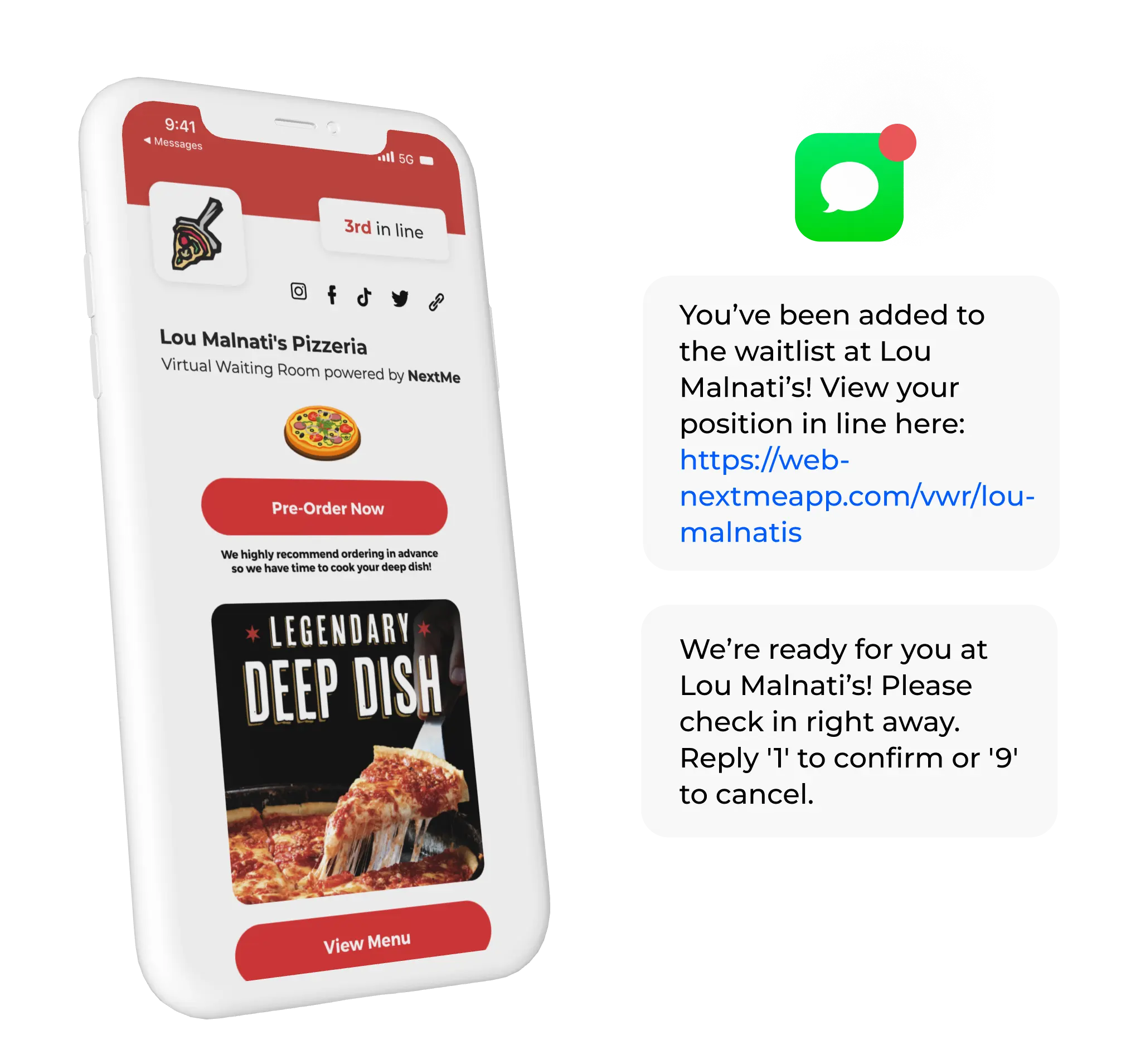
When a guest arrives, a host adds them to the digital waitlist using their name and phone number. No app download required. NextMe then sends the guest a text message with a personalized link to their virtual waiting room – a page that shows their real-time position in line alongside menus, specials, partner content, and more.
This means that by the time a guest sits down, they’re already familiar with the menu, aware of current promotions, and primed to engage. For restaurants, that translates to smoother service. For brands, it’s a rare opportunity to reach an actively engaged, contextually relevant audience.
We’ve invested heavily in making NextMe’s platform simple enough for any restaurant to activate internal campaigns with ease, while also building out the infrastructure that allows brands and agencies to pursue thoughtful, well-segmented targeting across our restaurant network.
The waiting room has always been wasted space. We think it’s time to change that.