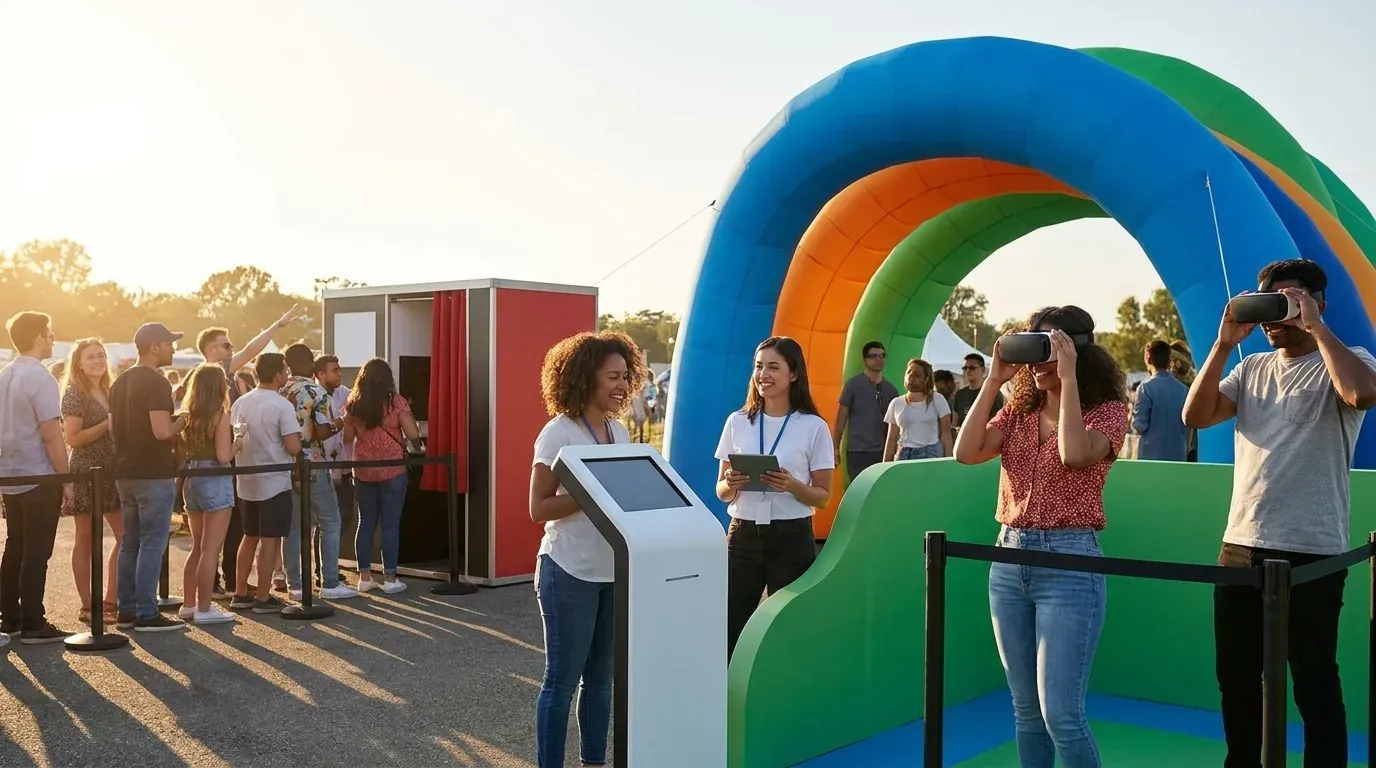
Most event organizers think they need bigger venues. Or more staff. Or better crowd control barriers.
They’re solving the wrong problem.
The real issue isn’t space or headcount. It’s that guests have no idea what’s happening while they wait. They don’t know if the line is moving. They don’t know if they’ll get in. They don’t know if they should grab food or risk losing their spot.
So they stand there. Frustrated. Checking their phones. Asking staff the same question every five minutes: “How much longer?”
That’s not a capacity problem. That’s an information problem.
Key Takeaways:
- Event teams need visibility into real-time guest flow, not just more staff or space
- Guests tolerate waiting when they know what’s happening and can move freely
- Virtual waiting rooms turn idle wait time into branded engagement opportunities
- Flexible queue systems adapt to unpredictable event timing better than rigid schedules
- Post-event performance data helps organizers prove ROI and improve future activations
Why most event queue solutions miss the point
The visible line trap
A visible line creates buzz. It signals demand. People see a crowd and assume something worth experiencing is happening inside.
But there’s a threshold. Once the line wraps around the block, it stops being a signal and becomes a deterrent. Guests walk past because they assume the wait is too long. Others join the line, wait 20 minutes, then leave because they have no idea how much longer it will take.
Event teams often think the solution is eliminating the line entirely. Move everyone into a virtual queue. Clear the sidewalk. Problem solved.
Except that creates a new problem. With no visible line, passersby don’t know the activation exists. The buzz disappears. Foot traffic drops.
The appointment scheduling mismatch
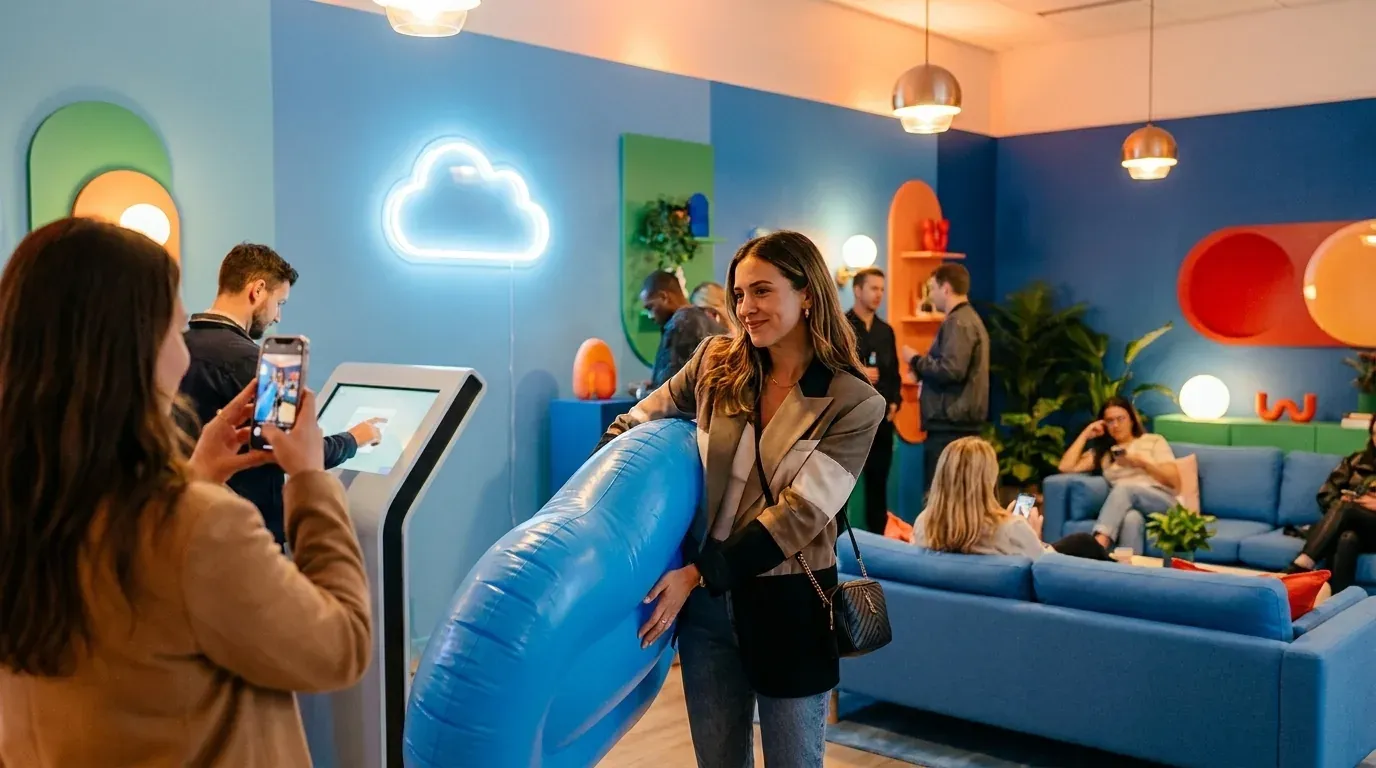
Some organizers try to solve this with advance appointment. Book your time in advance. Show up at 2:15 PM. Get your experience. Move on.
This works for medical offices and hair salons. It fails at live events.
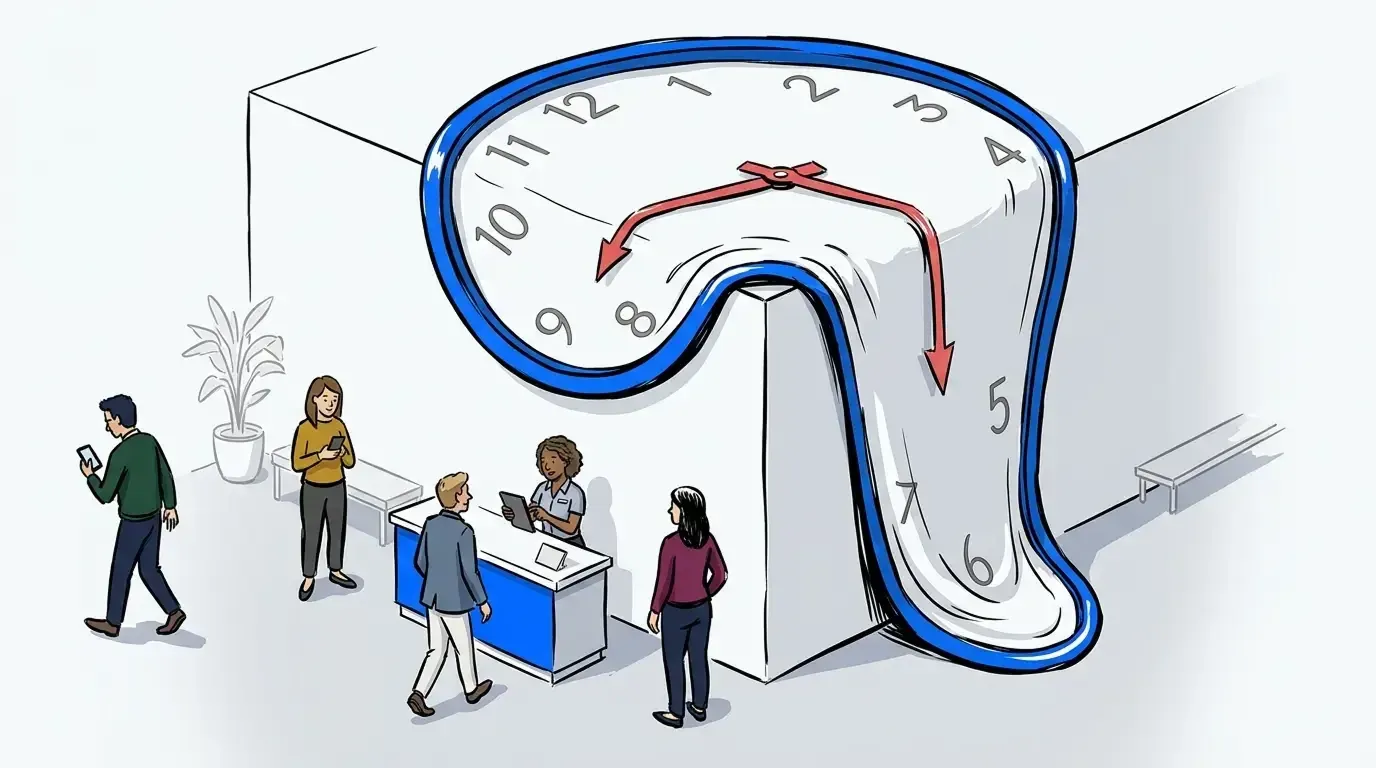
Events don’t run on a fixed schedule. A product demo that’s supposed to take five minutes stretches to eight when a guest asks detailed questions. A photo op that should process 12 people per hour slows down when someone needs help with their costume. Talent runs late. Equipment breaks. Traffic patterns shift.
Rigid appointment slots assume predictability that doesn’t exist. Guests show up on time and still wait because the previous slot ran over. Or they arrive early and can’t check in yet. Or they miss their window entirely because they were stuck in another line across the venue.
The physical barrier problem
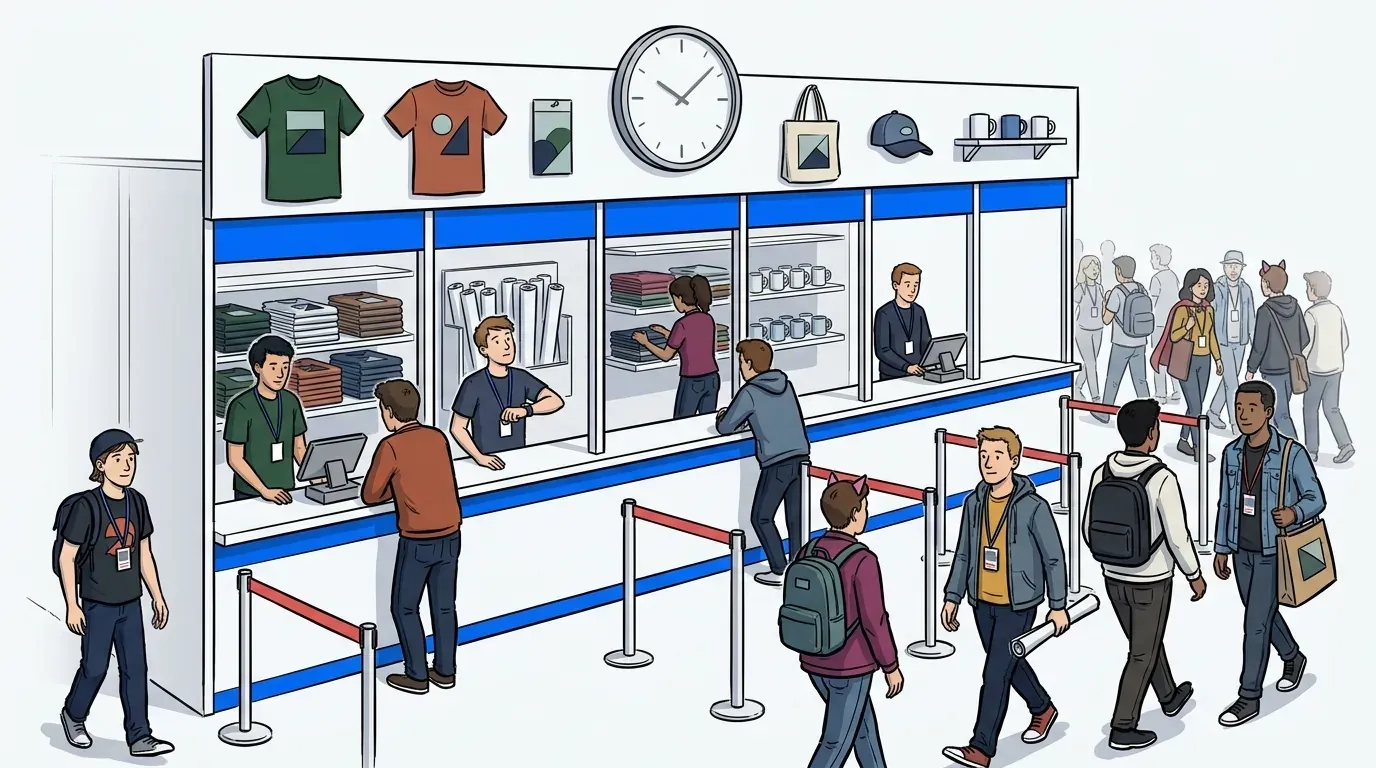
Traditional queue management relies on physical barriers. Stanchions. Ropes. Tape on the floor. Staff holding clipboards.
These tools organize people, but they don’t communicate with them. Guests still don’t know how long they’ll wait. They still can’t leave without losing their place. They still crowd around staff asking for updates.
Physical barriers also consume space. At a trade show or festival where every square foot costs money, dedicating 30 feet of aisle space to a queue line means less room for the actual experience. Neighboring exhibitors complain. Fire marshals get involved. The event starts to feel cramped and chaotic instead of exciting.
What event operators actually need instead
Real-time visibility into guest flow
Event teams need to see what’s happening right now. Not five minutes ago. Not based on yesterday’s estimates. Right now.
How many guests are waiting? How many are currently being served? How long is each interaction taking? Which station has the longest backup? Where are guests dropping out of the queue?
This visibility changes how teams operate. Instead of reacting to complaints, they can adjust before problems escalate. Move staff from a slow station to a busy one. Notify guests about longer-than-expected waits before they get frustrated. Make real-time decisions based on actual data instead of guesswork.
Most event software doesn’t provide this level of visibility. Registration platforms track who checked in, but not what happened after. Scheduling tools show appointments, but not actual throughput. Spreadsheets and clipboards capture names, but nothing about flow patterns or bottlenecks.
Guest communication that doesn’t require staff intervention
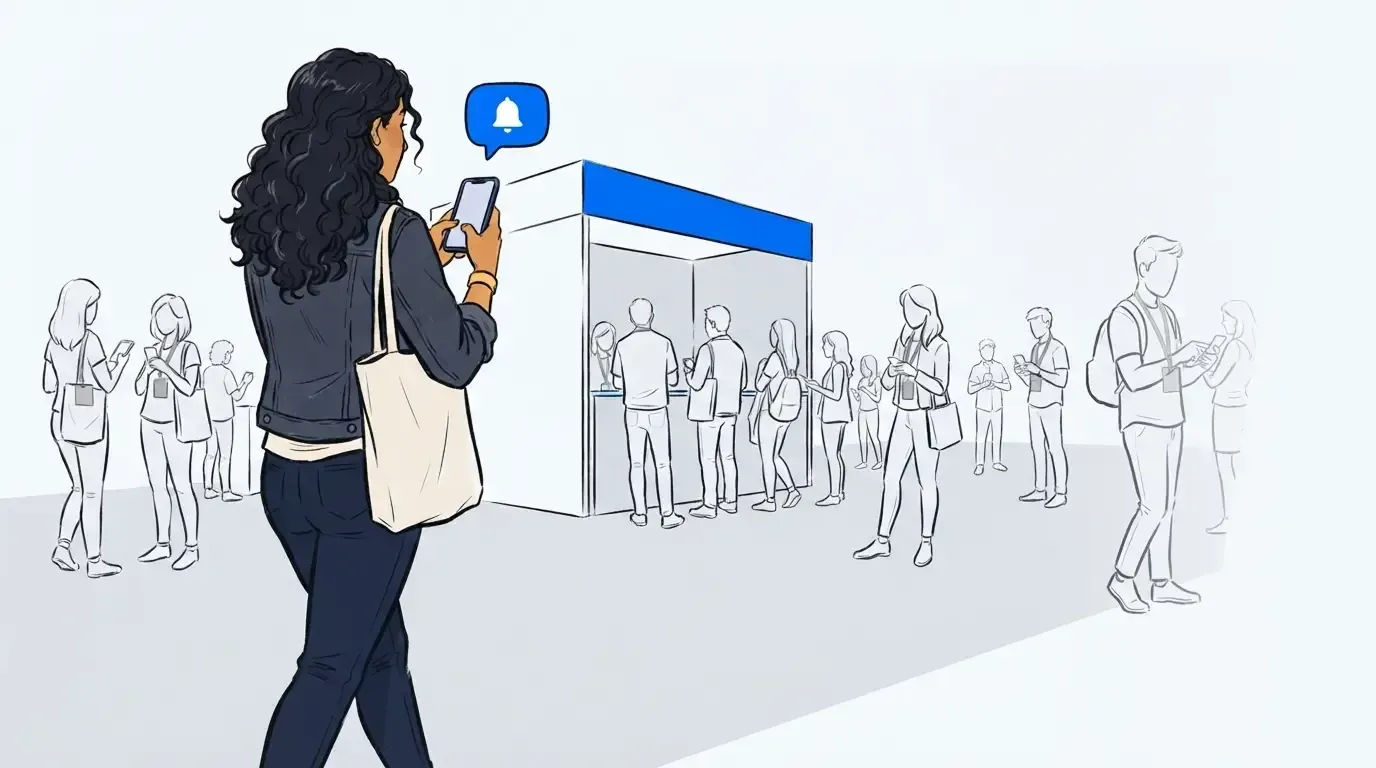
Guests need updates without having to ask. When they join a queue, they should immediately receive confirmation. As the line moves, they should get progress updates. When it’s almost their turn, they should receive a notification telling them to head back.
This communication has to work without staff involvement. Event teams don’t have the bandwidth to manually text hundreds of people throughout the day. The system needs to handle it automatically based on queue position and estimated timing.
Text messages work better than apps for this. Guests don’t want to download an app for a single event. They definitely don’t want to keep checking an app to see if their turn is coming up. A simple SMS that arrives when it matters is enough.
The communication also needs to set realistic expectations. If the wait is 45 minutes, tell them 45 minutes. Don’t say 20 minutes to make it sound better. Guests can handle accurate information. What frustrates them is being misled.
Flexibility to adapt to unpredictable timing
Events don’t run on rails. A celebrity guest might show up 30 minutes late. A technical demo might take twice as long as planned. Lunch rush might hit harder than expected.
Queue systems need to flex with these changes without breaking. If timing shifts, the system should automatically adjust wait estimates and notify affected guests. If a station closes temporarily, guests in that queue should be rerouted or given updated information.
This flexibility is why time-window queues work better than rigid appointment slots for events. Instead of “your appointment is at 2:15 PM,” it’s “you’re in the 2:00-2:30 window, and we’ll text you when we’re ready.” Guests get structure without the stress of missing an exact time.
How virtual waiting rooms change the experience
Turning wait time into engagement time
The traditional approach treats waiting as dead time. Guests stand around. Scroll their phones. Get impatient.
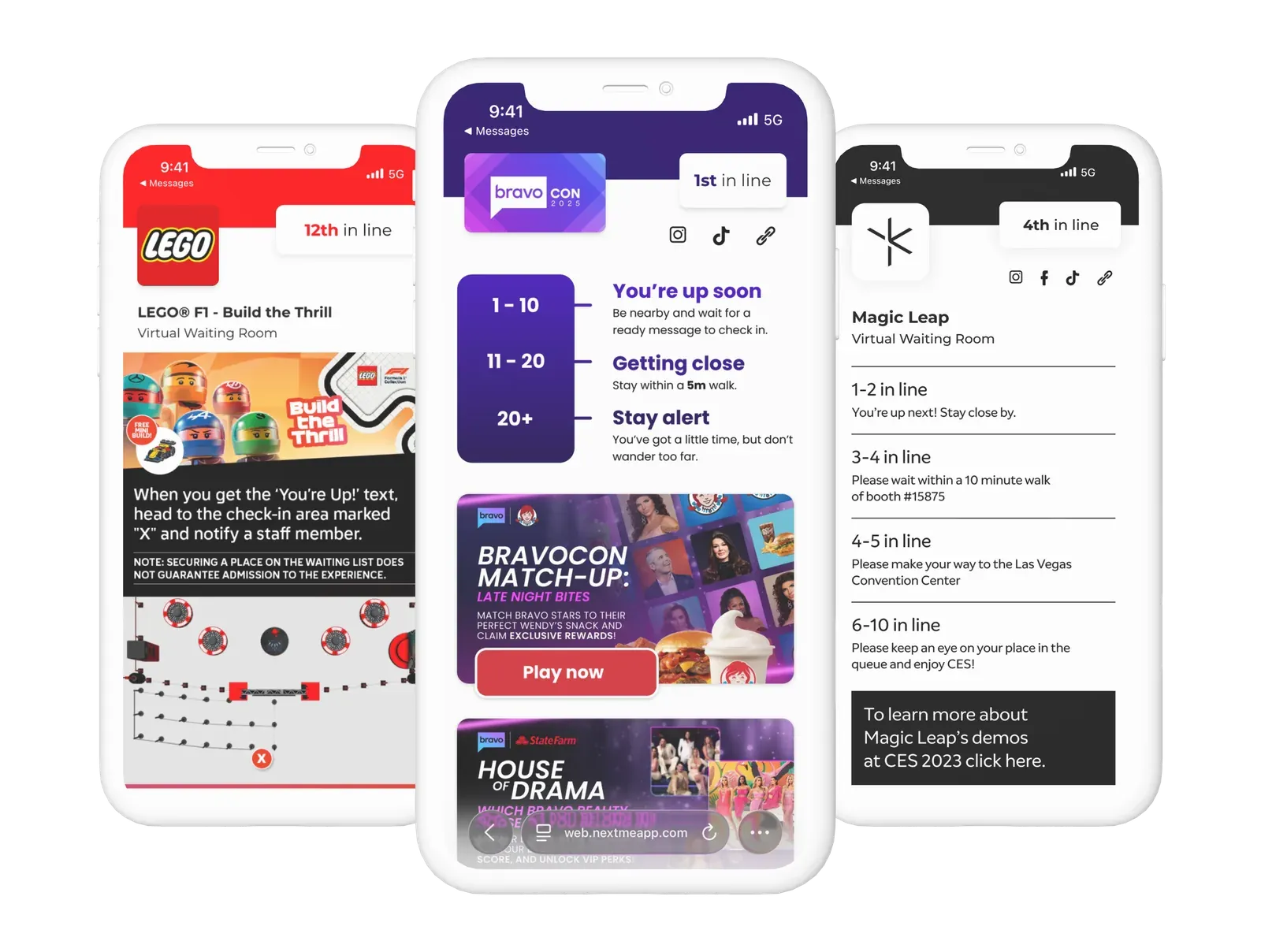
Virtual waiting rooms flip this. Instead of standing in line, guests receive a link to a branded web page where they can see their queue position, estimated wait time, and engage with content while they wait.
For events, this becomes valuable real estate. Sponsors can display their logos and messages. Brands can showcase product carousels. Organizers can embed games, polls, videos, or social feeds that keep guests entertained and connected to the experience.
This isn’t just about keeping people busy. It’s about extending the brand experience beyond the physical activation. A guest who spends 20 minutes engaging with sponsor content in the virtual waiting room has 20 minutes more exposure than someone who just walked up and walked in.
Freedom to move without losing your place
The biggest shift is mobility. Guests don’t need to physically stand in line for hours anymore. They join the queue, get confirmation, and move on. They can grab food. Visit other booths. Meet up with friends. Explore the venue.
When it’s almost their turn, they receive a text telling them to head back. They return to a much shorter physical line and get their experience.
This freedom reduces frustration and increases throughput. Guests who would have left the line to take a break and never returned now stay engaged because they can move freely. Guests who would have skipped the activation entirely because the line looked too long now join because they know they don’t have to stand there the whole time.
Measurable performance data
After the event, organizers need to prove ROI. How many people participated? How long did they wait? How many dropped out? Which time slots were busiest? How did wait times compare to previous events?
Virtual waiting rooms capture all of this automatically. Every guest who joins the queue generates data. Every notification sent, every status change, every completion gets logged.
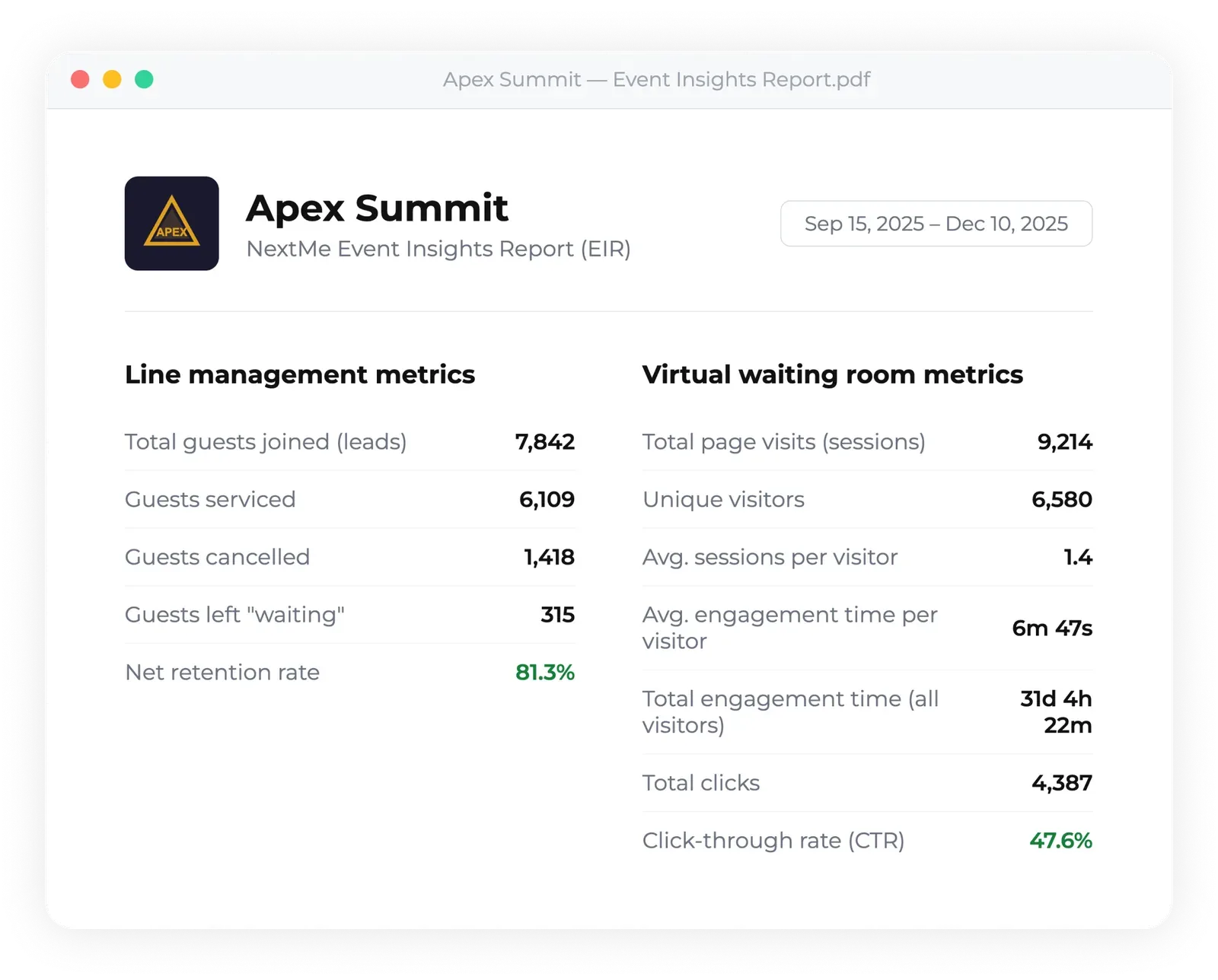
This data feeds into post-event reports that show exactly what happened. Event Insight Reports break down throughput metrics, engagement rates, and operational performance in ways that spreadsheets and manual counts never could.
For sponsors, this data proves value. Instead of saying “we had a lot of traffic,” organizers can show “1,200 guests engaged with your content for an average of 18 minutes each.” That’s measurable brand exposure tied to actual behavior.
How NextMe handles what event teams need
Live queue management for multi-station events
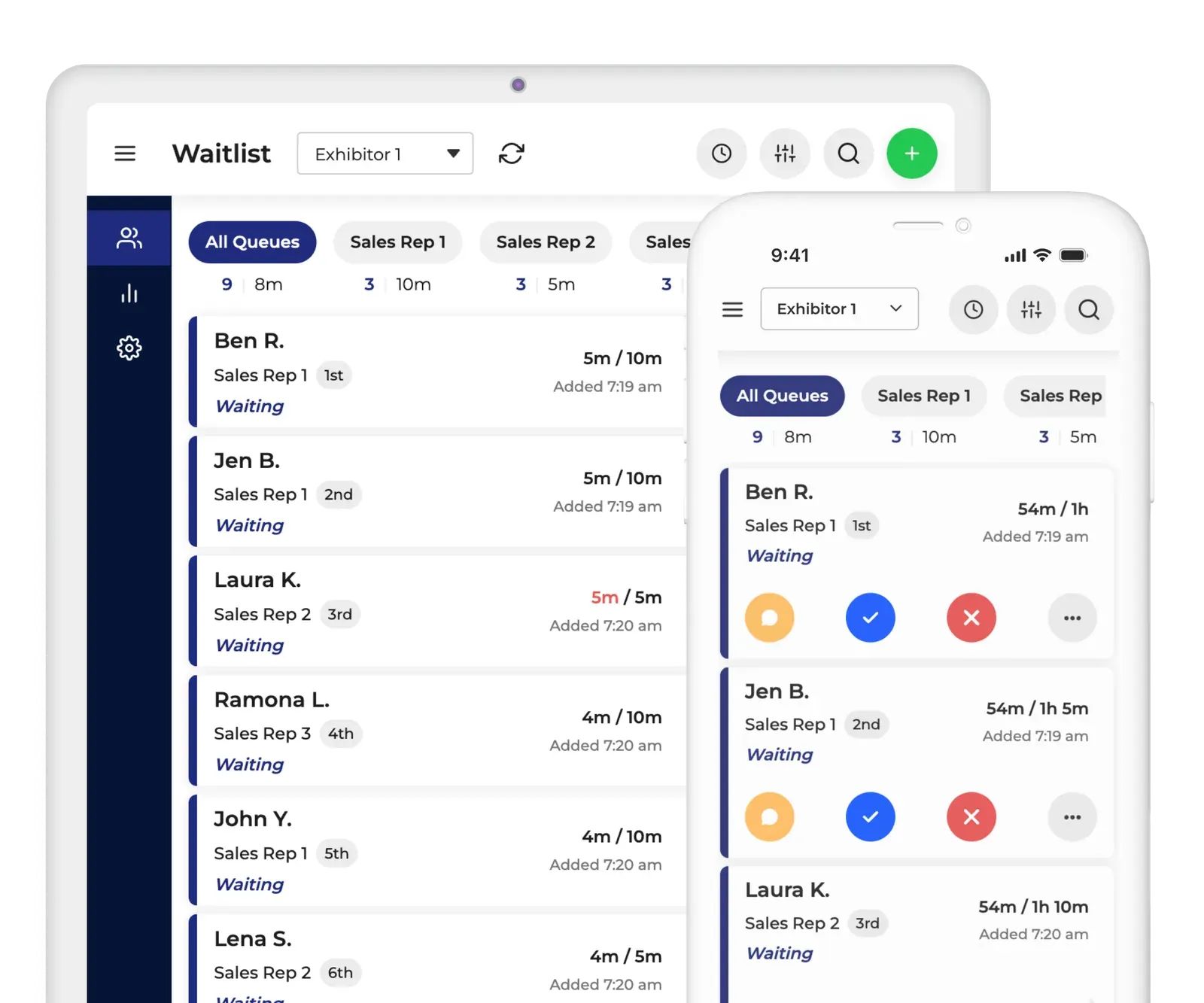
NextMe’s waitlist management system gives event teams real-time visibility into every queue across the activation. Whether it’s one station or ten, staff see who’s waiting, who’s being served, and who’s next.
The dashboard works on phones, tablets, and computers, so team members can manage the queue from anywhere on the floor. They don’t need to be tethered to a desk or a specific device.
For events with multiple stations or experiences, NextMe supports unlimited queues per waitlist. Each station gets its own queue, but staff manage everything from a single interface. No switching between tools or losing track of different lines.
SMS notifications that work at scale
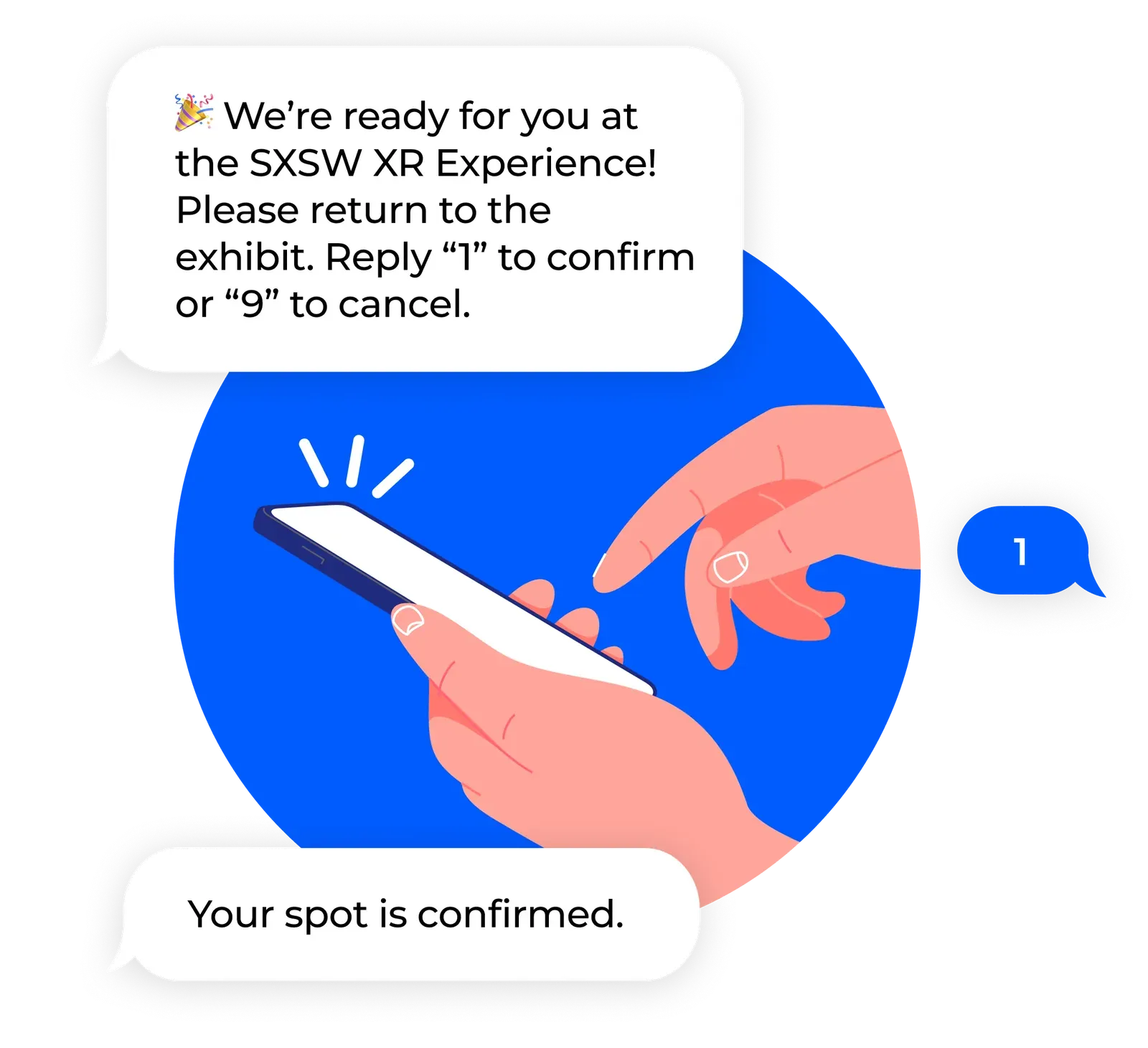
NextMe sends text messages to guests as the queue moves, including join confirmations, progress updates, and return notifications.
For large events, NextMe supports simultaneous high-volume joins with high velocity SMS and burst capacity handling on event plans. When a brand activation opens and a surge of guests scans the QR code at once, the system is built to support that demand.
Guests receive a link to the Virtual Waiting Room where they can track their position and see estimated wait times. The page updates dynamically as the queue changes and displays live queue information as they wait.
Virtual waiting room branded for your event
The virtual waiting room isn’t just a status page. It’s branded real estate that reflects the event’s identity and extends the experience.
Event organizers customize the page with logos, colors, sponsor assets, and engagement content. Product carousels showcase sponsor offerings. Games and polls keep guests entertained. Videos, maps, and social feeds reinforce the event’s themes.
For sponsors, this turns wait time into measurable value. Guests can engage with branded content while they wait, and organizers can use Virtual Waiting Room engagement metrics to understand how that space performed. See it in action to explore customization options.
Event Insight Reports for post-event ROI
After the event, NextMe generates Event Insight Reports that break down performance metrics. Total guests served. Average wait time. Peak traffic periods. Virtual Waiting Room engagement and throughput metrics.
These reports give organizers the data they need to show results to stakeholders and improve future activations. Instead of relying on rough estimates, they can review post-event summaries based on queue data collected throughout the experience.
For events with sponsors, the reports help quantify sponsor value with Virtual Waiting Room engagement insights and event performance data. That gives teams a clearer way to connect wait-time engagement to event outcomes.
The path forward for event queue management
Event organizers don’t need more staff or bigger venues. They need systems that give guests information, mobility, and engagement while providing teams with visibility and control.
Virtual waiting rooms solve the core problem: guests don’t know what’s happening while they wait. By replacing physical lines with flexible queues, automated notifications, and branded engagement spaces, organizers create better experiences and capture measurable performance data.
The events that get this right turn waiting from a necessary friction into a branded opportunity. Guests stay informed. Sponsors get exposure. Teams operate efficiently. And organizers have the data to prove it all worked.
Get in touch to see how NextMe helps event teams manage lines without chaos.